
I tested six rice cookers across capacity, cooking tech, ease of use, and cleanup. These are the ones I reach for depending on batch size and the kind of rice I want.
I cook rice nearly every week and have run these machines through regular meals, batch cooking, steaming, and slow-cooked recipes. I focused on real-world performance: texture, consistency, how well different grains cook, and daily convenience.
This roundup covers everything from a 20-cup family workhorse to compact Zojirushi models and induction-driven premium machines. I’ll tell you which I grab for sushi rice, which I use for big family meals, and which one I recommend when counter space matters.
I compared capacity, heating technology (fuzzy logic, induction, dual heating), preset variety, steaming/slow-cook functionality, cleanup, and day-to-day reliability. My picks reflect time in my kitchen and repeated use rather than spec sheets alone.
1. Aroma Housewares ARC-150SB — 20-Cup Digital 3-in-1 Rice Cooker – Best for Big Families
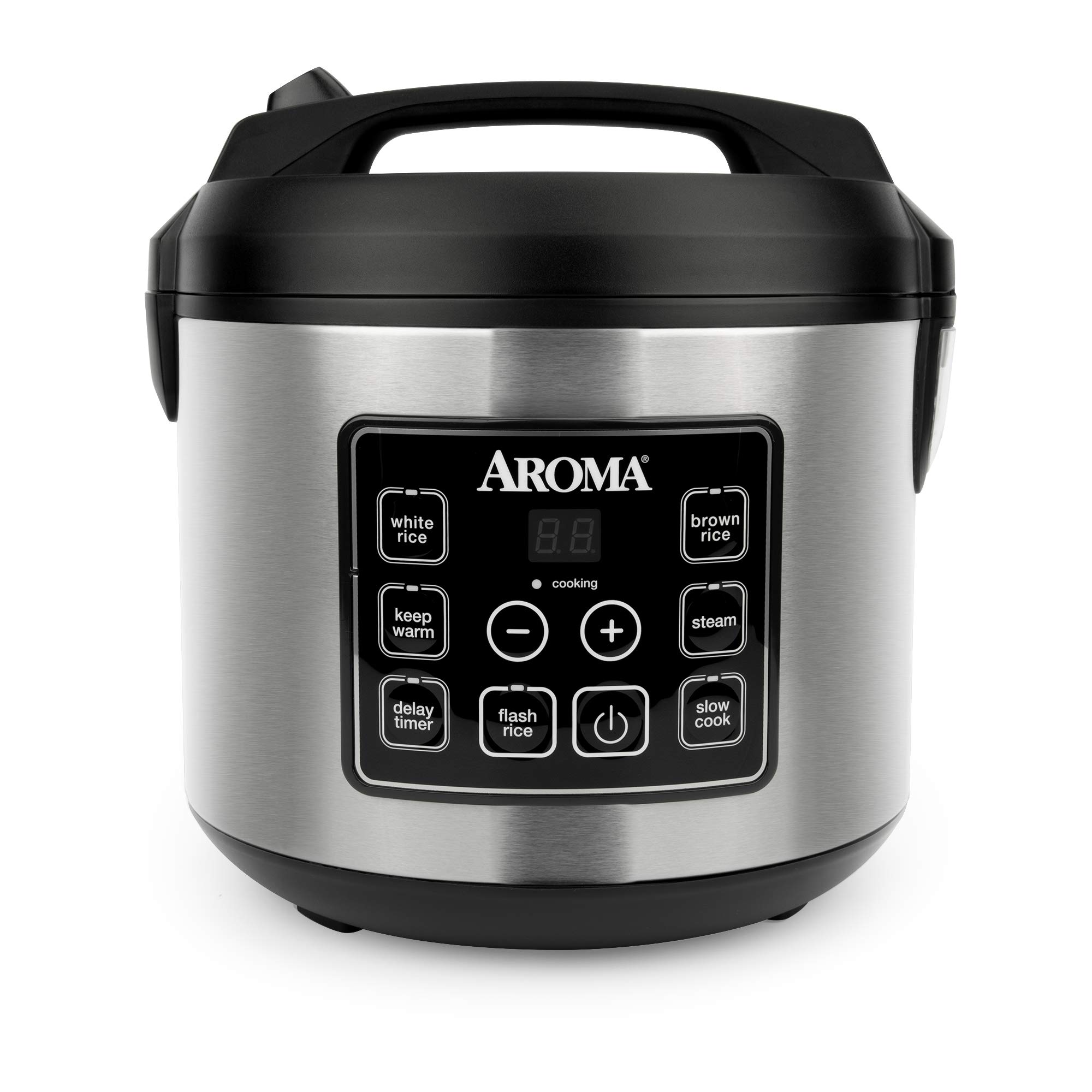
A large-capacity, affordable 3-in-1 cooker that handles rice, steaming, and slow cooking with simple digital controls.
Why I picked it: Huge capacity plus steam and slow-cook features make it a versatile family workhorse.
Best for: Feeding a crowd, meal-prep, and steaming veggies while rice cooks.
One of the most budget-friendly ways to get a 3-in-1 cooker with lots of capacity.
Pros
- Very large 20-cup cooked capacity
- Steamer tray for hands-off steaming
- Slow-cook function expands use
- Programmable 15-hour delay timer
- Inner pot and accessories remove for easy cleaning
Cons
- Bulky footprint takes counter space
- Basic digital interface
- Finish is functional, not premium
My take
When I need to feed a family or prep big batches, this Aroma is the one I reach for. The 20-cup cooked capacity handles multiple meals in one go and the steam tray lets me cook vegetables or proteins at the same time—perfect for a one-pot dinner.
I rely on the white- and brown-rice presets and the Flash Rice option when I’m short on time. The Sensor Logic temperature control produced fluffy rice reliably; I didn’t have to babysit a single cycle. The automatic Keep-Warm is genuinely useful for busy evenings.
Cleanup is straightforward: the inner pot, steam tray, spatula, and measuring cup all come out and wash easily. It’s not a showpiece, but it’s rugged and consistent—after several weeks of heavy use it’s still going strong in my kitchen.
2. Zojirushi NS-ZCC10 Neuro Fuzzy Rice Cooker — 5.5-Cup – Best for Sushi and Precision
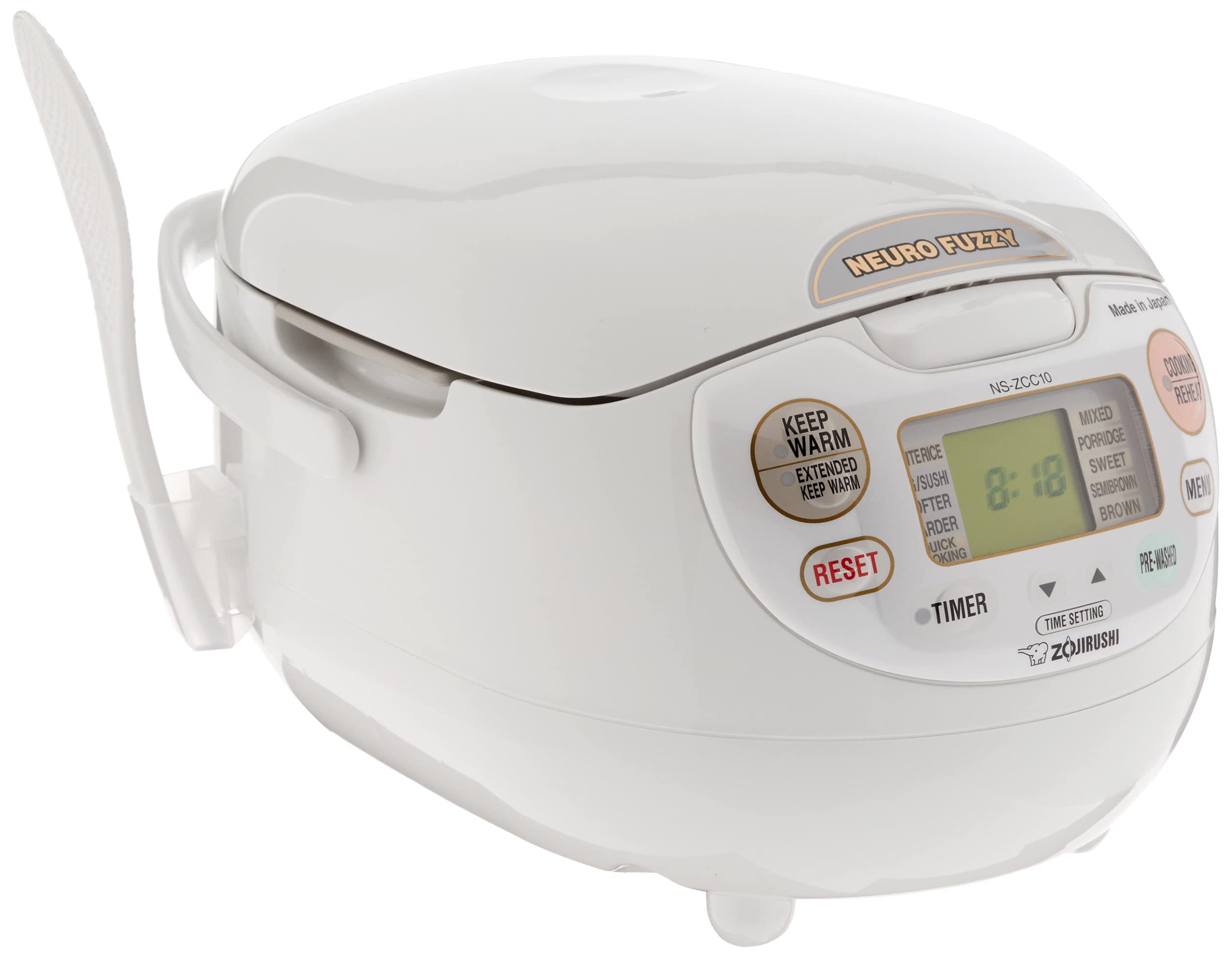
A precision-focused cooker with Neuro Fuzzy logic and multiple menus tailored for sushi, mixed, and brown rice.
Why I picked it: Neuro Fuzzy adjustments give predictable, restaurant-quality results for delicate rice types.
Best for: Sushi rice, anyone who prioritizes consistently excellent texture.
A higher-cost, performance-first option worth it for precision and consistency.
Pros
- Neuro Fuzzy logic for smart adjustments
- Extensive menu options for rice types
- Spherical nonstick pan for even heating
- Retractable power cord and tidy design
Cons
- Smaller capacity for large households
- More expensive than basic models
My take
This Zojirushi feels deliberate—every cycle seems to make tiny adjustments to temperature and timing, and those adjustments add up. When I make sushi rice or jasmine, the texture is very consistent and forgiving.
I appreciate the variety of menu settings; switching between regular, sushi, and brown rice is easy and reliable. The nonstick spherical pan distributes heat evenly, which helped reduce hot spots I used to get on the stove.
There are small conveniences I came to love: the retractable cord, the little tune when cooking finishes, and the extra measuring cup. For me, it’s the machine I reach for when I want restaurant-style rice without fuss.
3. Zojirushi Micom NS-LGC05XB — 3-Cup Compact Rice Cooker – Best Compact
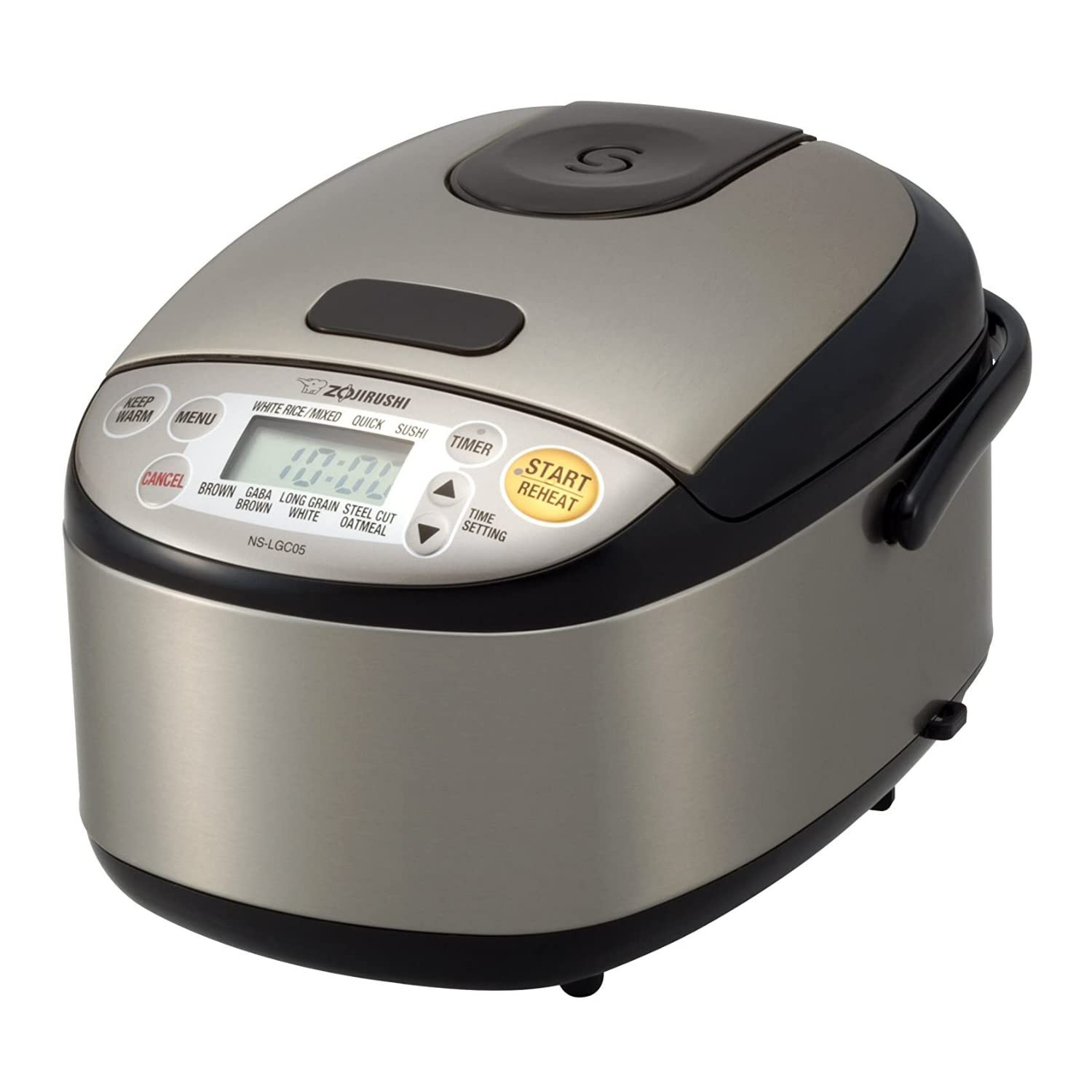
A compact, dependable cooker that handles tiny batches, steel-cut oats, and GABA brown rice without wasting counter space.
Why I picked it: Small footprint, thoughtful menus, and excellent durability for singles or couples.
Best for: Singles, couples, dorms, or anyone cooking small batches.
A premium compact option — durable and worth the investment for small households.
Pros
- Cooks as little as 1/2 cup
- GABA brown and steel-cut oatmeal settings
- Fold-down handle and retractable cord
- Durable and long-lasting
Cons
- Limited capacity for larger households
- Higher price for a small cooker
My take
I use this Zojirushi when I want perfect rice without excess. It’s compact but engineered—settings like GABA brown and steel-cut oatmeal make it more versatile than a typical tiny cooker.
Rice texture is consistently spot-on. I’ve used it weekly for years and it still looks and performs like new. The retractable cord and fold-down handle make it easy to store or move when I need counter space back.
If you live alone or cook for two, the convenience and precision of this compact Micom make it my go-to. It’s the little appliance I’d grab if I had to pick just one rice cooker.
4. COSORI Rice Cooker — 10 Cup, 18-in-1 Fuzzy Logic Rice Maker – Best for Versatility
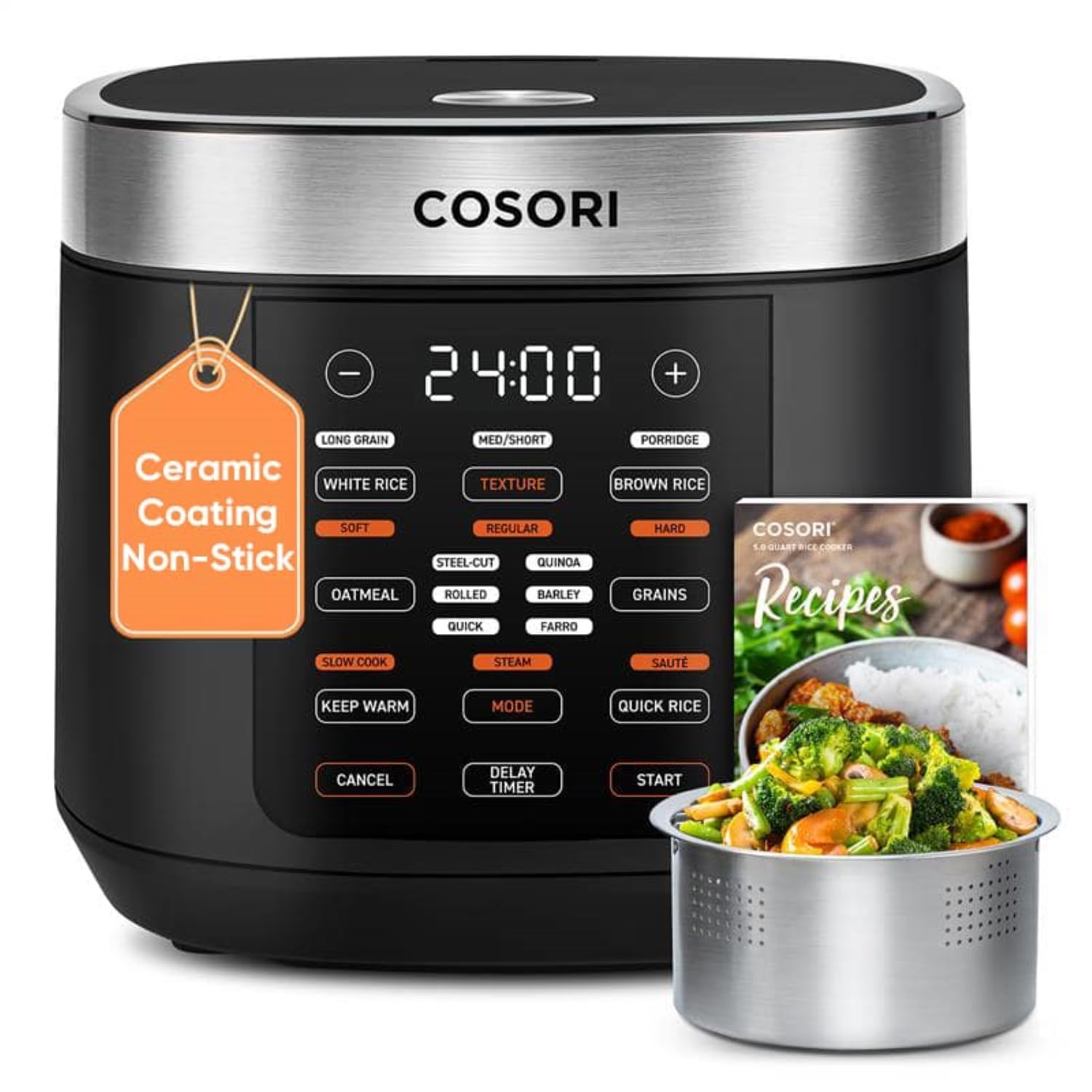
An 18-function cooker with dual heating elements, quick-cook mode, and a dishwasher-safe ceramic inner pot for easy cleanup.
Why I picked it: Wide function set and dual heating deliver consistent results for many grains and dishes.
Best for: Home cooks who want one appliance to do rice, grains, steaming, sautéing, and slow-cooking.
A solid mid-range value considering the feature set and easy cleanup.
Pros
- 18 cooking functions for wide versatility
- Dual heating elements for even texture
- Dishwasher-safe ceramic inner pot
- Quick Rice mode for fast meals
- Includes stainless-steel steamer basket
Cons
- Steamer not intended for rice
- Learning curve with many functions
- Heavier than basic models
My take
The Cosori became my all-purpose cooker: I sauté vegetables, slow-cook soups, steam fish, and cook rice in the same pot. The Sauté mode really extends what I can do without dragging out pans.
Dual heating elements noticeably reduce condensation and sogginess. I used the Quick Rice mode on busy mornings and still got good texture—useful when I need rice fast without sacrificing quality.
Cleanup is easy; the ceramic-coated pot rinses clean and the removable lid parts are dishwasher-safe. If you want a single machine that replaces several appliances, this one covers a lot of ground.
5. CUCKOO CR-0675FG — 6-Cup Uncooked (12-Cup Cooked) Micom Rice Cooker – Best for Busy Families
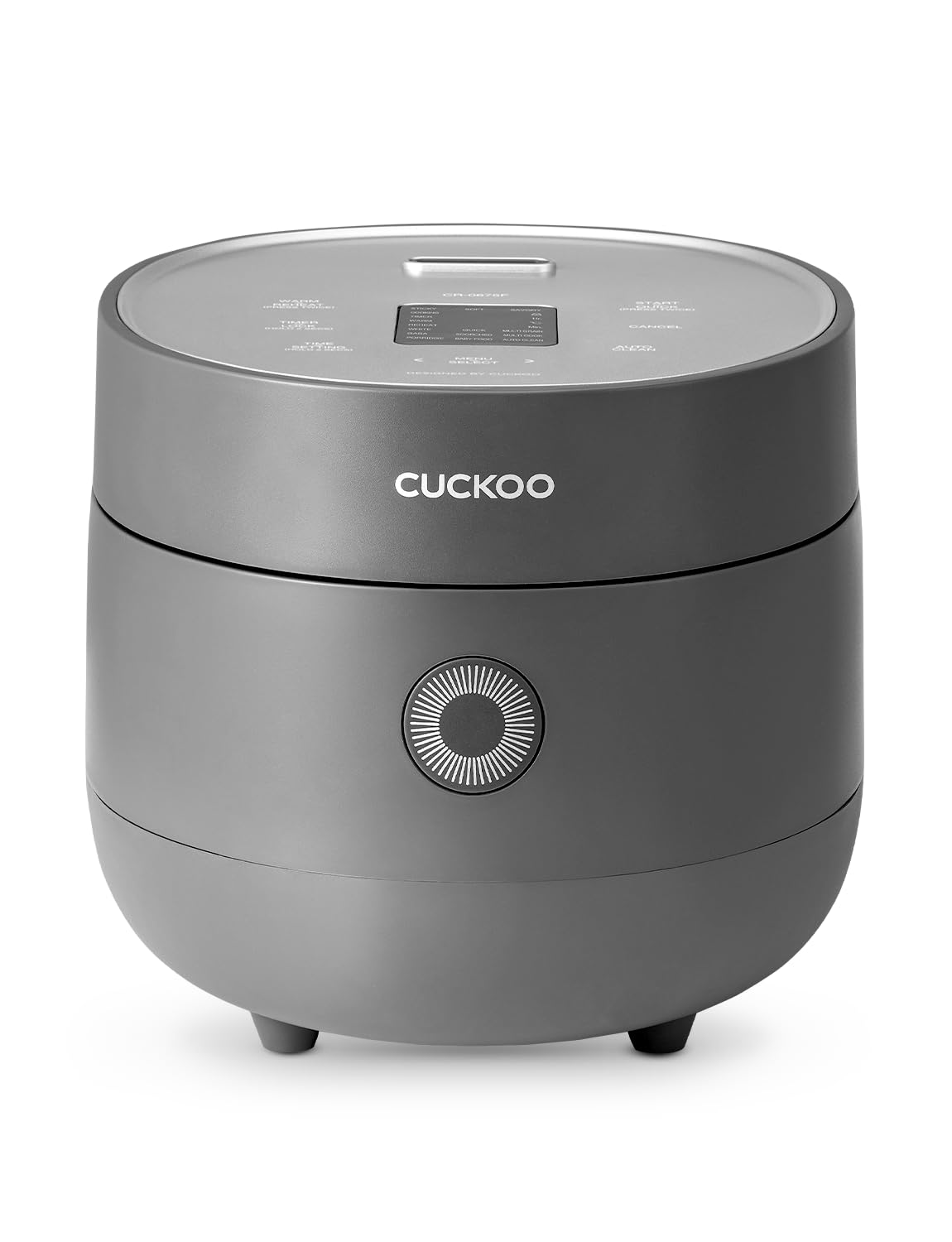
A Korean-brand cooker offering a large cooked capacity, fuzzy logic, self-clean, and a broad set of menus for everyday versatility.
Why I picked it: Big cooked capacity with strong fuzzy-logic automation and easy cleanup.
Best for: Families and anyone who needs larger cooked batches and reliable, set-and-forget performance.
Good value for a higher-capacity cooker with many automated features.
Pros
- Makes up to 12 cups cooked rice
- Fuzzy Logic tech for consistent results
- Self-clean setting simplifies maintenance
- Durable nonstick inner pot
- Useful reheat and quick modes
Cons
- Menu system takes getting used to
- Larger footprint than compact models
My take
This Cuckoo is the one I use when I need a big pot of rice for the week. It handles white, brown, and mixed grains without fuss; the fuzzy logic smooths out cook times and temperatures automatically.
The self-clean option and removable lid save me time on maintenance. Rice rarely sticks to the nonstick inner pot and the machine reheats evenly when I warm leftovers.
It’s a dependable, modern-feeling cooker that balances capacity and convenience—especially handy for families or meal preppers who want consistent results without complicated fiddling.
6. Zojirushi NP-HCC10XH — Induction Heating Rice Cooker and Warmer (5.5-Cup) – Best for Precision Heating
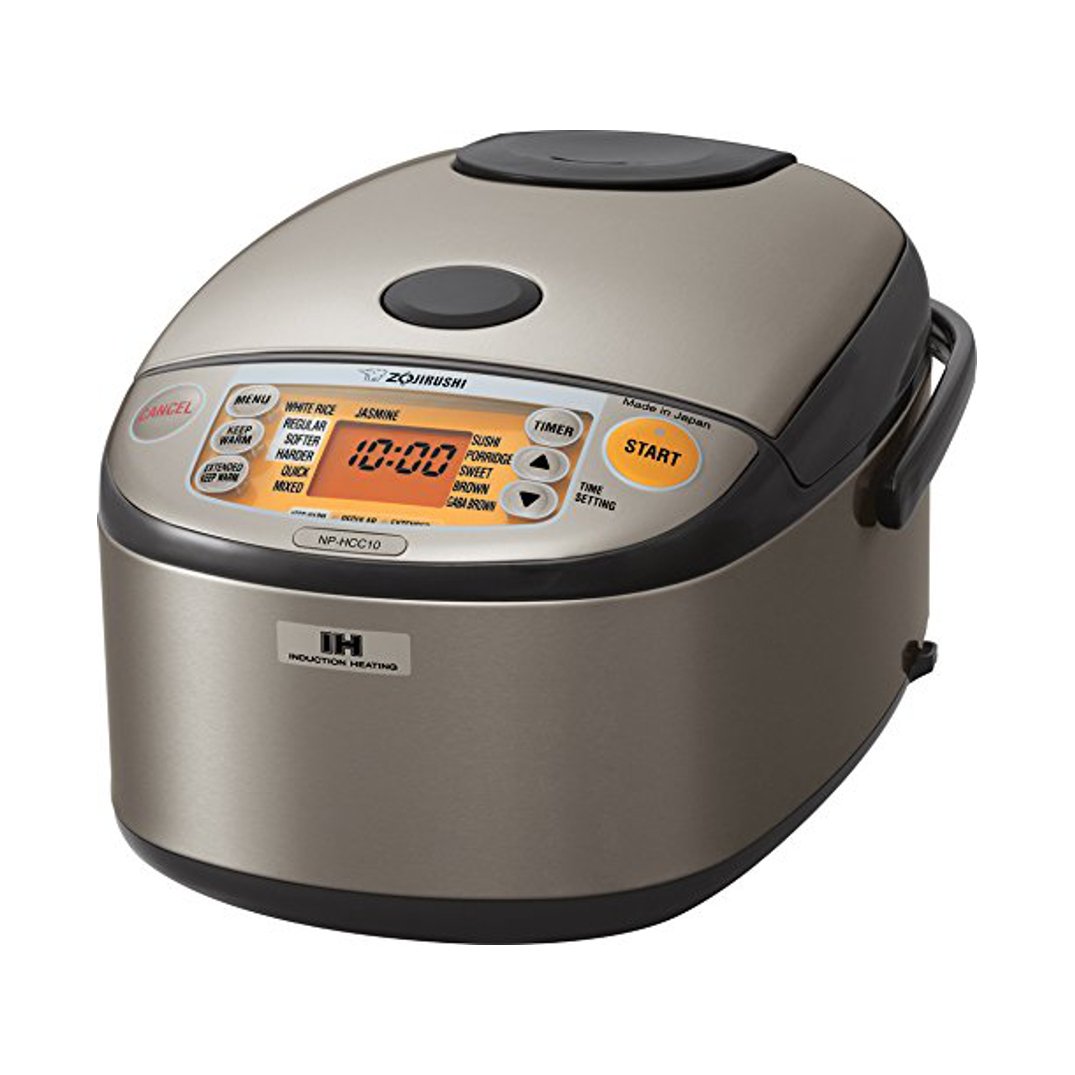
An induction-heated model with triple heating for exceptional control, ideal for brown rice, GABA activation, and nuanced textures.
Why I picked it: Induction heating plus side and lid heaters deliver superior, even results across rice types.
Best for: Serious home cooks who want the best texture for brown, sushi, and GABA rice.
Top-tier, premium investment for precision and advanced heating performance.
Pros
- Induction heating for efficient, even heat
- Triple heater (bottom/side/lid) for uniform cooking
- Excellent for brown and GABA rice
- Extended keep-warm keeps rice ready
Cons
- Higher-cost, premium appliance
- Heavier and larger than basic models
My take
Induction makes a real difference. I noticed improved texture and moisture control—especially with brown and GABA rice, which came out creamier and more tender than with conventional heaters.
The triple-heater design heats more uniformly, so I rarely see dry edges or undercooked centers. I used it for sushi, jasmine, and porridge and each came out with nuanced texture that elevated the meal.
This is the cooker I pick when I want the best possible rice and don’t mind investing in performance. It’s been a game changer in my kitchen for specialized uses.
How I Choose a Rice Cooker (And What You Should Consider)
Capacity
I match capacity to how I cook: a 3-cup model is perfect for singles or couples, a 5–6 cup uncooked model is best for small families, and 10+ cup cooked capacity is what I use for meal prep or big households.
- Cooked vs. uncooked capacity matters—check both.
- Bigger pots are great for batch cooking but take up space.
Heating Technology
I pick fuzzy-logic models for reliable, hands-off results. For the ultimate texture control, induction and multi-heater systems beat conventional heating every time.
- Basic heater: simple and affordable.
- Fuzzy logic: smart adjustments for consistent rice.
- Induction/multi-heater: best for nuanced textures and brown/GABA rice.
Functions and Versatility
If I want one appliance to replace others, I prioritize models with steaming, sauté, and slow-cook modes. For simple rice every day, fewer menus can be less confusing.
- Steamer included? Great for one-pot meals.
- Sauté and slow-cook expand usage beyond rice.
- Quick-cook modes matter when time is tight.
Cleanup and Daily Use
I prefer removable inner pots and dishwasher-safe parts. Nonstick or ceramic pots that rinse clean quickly save me time, and features like a removable inner lid make maintenance easier.
- Removable lid and dishwasher-safe parts speed cleanup.
- Nonstick vs ceramic—ceramic is easy to clean but check durability.
- Extras like spatula holders and retractable cords improve daily life.
Frequently Asked Questions
Which cooker makes the best sushi rice?
I use the Zojirushi Neuro Fuzzy for sushi rice because it adjusts temperature and timing to produce the right stickiness and texture without fuss.
Can I steam vegetables while the rice cooks?
Yes—models with a steam tray (like the Aroma and Cosori with their included steamer baskets) let me steam veggies or proteins while rice cooks below, saving time and dishes.
Is induction heating worth the extra cost?
For me, induction is worth it when I want superior, even texture—especially for brown and GABA rice. It’s a premium step up if you prioritize performance.
How do I choose capacity?
I pick capacity based on typical meal size: 3-cup uncooked for one or two people, 5–6 cups uncooked for small families, and larger (10+ cooked) for meal prep or bigger households.
How important are dishwasher-safe parts?
Very—devices with removable, dishwasher-safe inner pots and lids save me time on cleanup and make daily use much more convenient.
Final Take
I’ve depended on each of these machines for different needs: big families get the Aroma’s capacity, precision-focused cooks get Zojirushi’s Neuro Fuzzy or induction models, and the compact Zojirushi serves singles and couples perfectly.
Choose based on the rice you cook most often and the features you’ll actually use. Whatever you pick from this list, you’ll get better, more consistent rice than stovetop guessing ever delivered for me.
