
I tested doorbell cameras, mounts, and protective cases to find the options that gave me the best coverage, installation ease, and theft protection.
I spent time installing and using several doorbell cameras and accessories so I could recommend options that actually make life easier.
In this roundup I focus on video coverage, battery and charging, installation method, and anti-theft protection—areas that mattered most during my hands-on testing.
I compared devices by field of view, power/charging method, alert features, and how simple they were to install and secure—so you can match a pick to the way you live.
1. Ring Battery Doorbell (newest model) — Head-to-Toe Video, USB-C Recharge – Best Overall
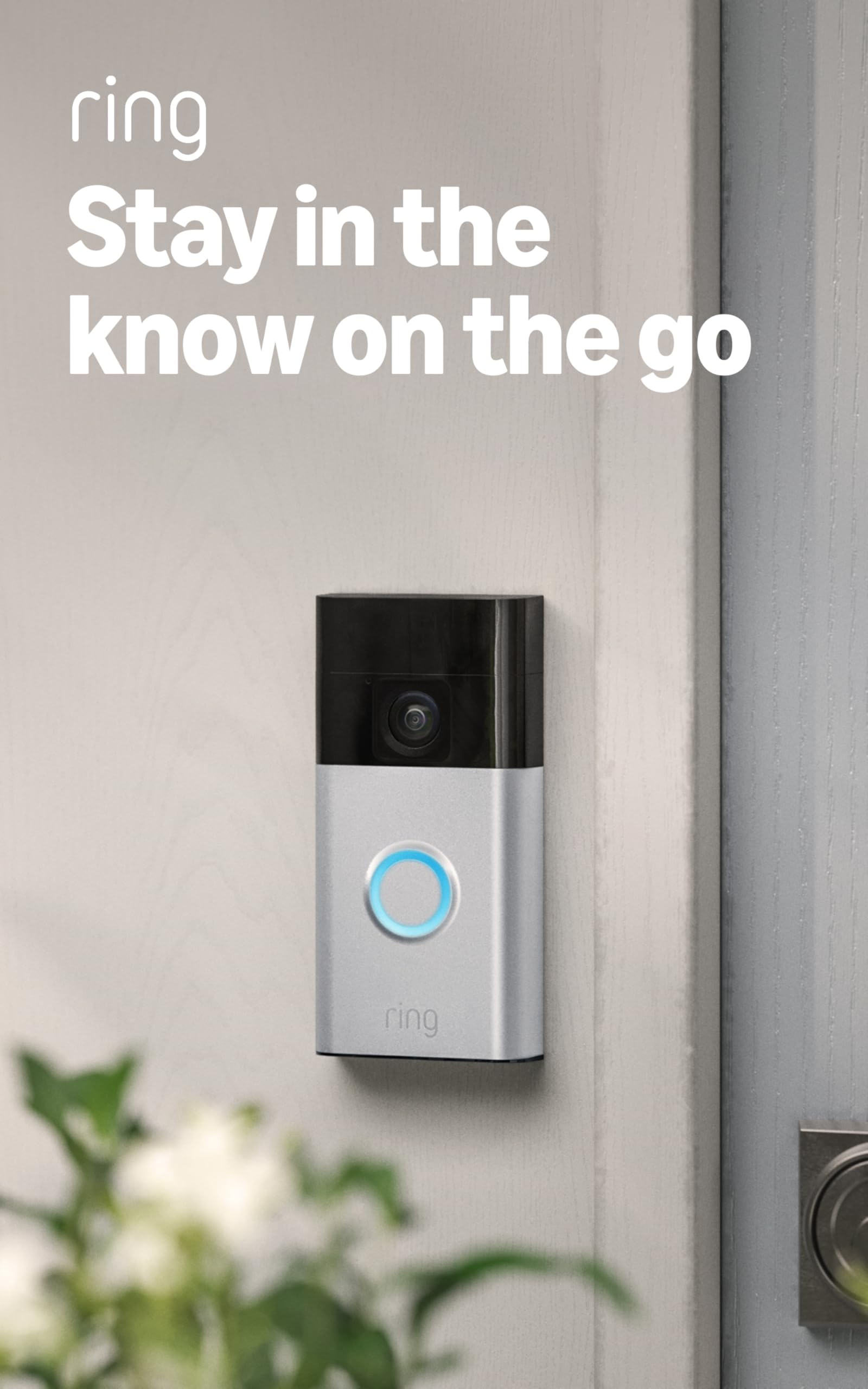
The newest Ring Battery Doorbell gives me significantly more vertical coverage, solid daytime video, easy USB-C recharging, and straightforward app control.
Why I picked it: Great balance of coverage, battery convenience, and everyday ease.
Best for: Homes that need a reliable, easy-to-install front-door camera.
Affordable standalone doorbell option.
Pros
- Head-to-toe video (66% more vertical coverage)
- USB-C rechargeable battery
- Quick install and setup
- Live View with two-way talk
Cons
- Advanced alerts need a subscription
- Recharge requires removing unit
My take
I appreciated the expanded vertical field of view right away—the 66% taller coverage makes a real difference for seeing packages and people’s full height.
Setup was painless: charge the internal battery, click the unit into place, and connect through the Ring app. Live View and two-way talk worked reliably from my phone.
Motion alerts arrived promptly, though I found smart person/package labeling requires Ring’s subscription if you want more context with notifications.
Overall, this model hit the sweet spot for me between capability and simplicity, especially when I wanted a battery-powered camera that doesn’t require wiring.
2. Ring Battery Doorbell + Ring Indoor Cam 2nd Gen Bundle — Front Door and Indoor Coverage – Best Bundle
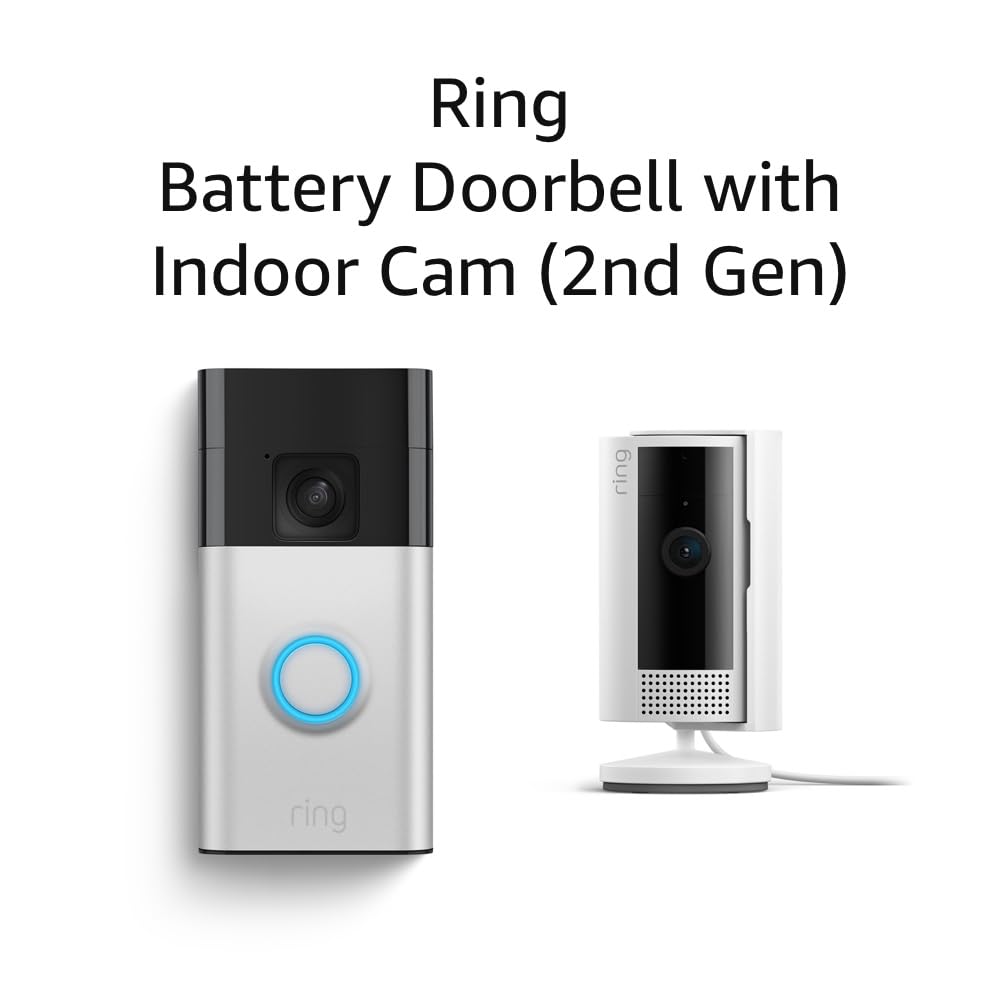
This bundle pairs Ring’s updated battery doorbell with a compact indoor cam so I could cover both the entry and a key indoor space using one app.
Why I picked it: Covers outside and inside in a single, easy setup.
Best for: Small homes or apartments needing both front-door and indoor monitoring.
Good value bundle for two-device coverage.
Pros
- Includes indoor camera
- Unified Ring app control
- Head-to-toe doorbell coverage
- Straightforward setup
Cons
- Advanced alerts require a subscription
- Motion zones need fine-tuning
My take
I installed the doorbell and indoor cam in under an hour and kept everything in the Ring app, which made toggling Live View and settings simple.
The indoor cam surprised me with its sharp daytime image and clear two-way audio, while the doorbell delivered the taller view I wanted at the entry.
Motion detection behaved well after I took a few minutes to set sensible motion zones and sensitivity—worth the tweak to cut down on false alarms.
If you want an out-of-the-box duo for both indoor and front-door monitoring, this bundle was the most convenient option I used.
3. KIMILAR 2024 Upgrade Anti-Theft Video Doorbell Mount — No-Drill, Adjustable, Anti-Theft – Best No-Drill Anti-Theft Mount
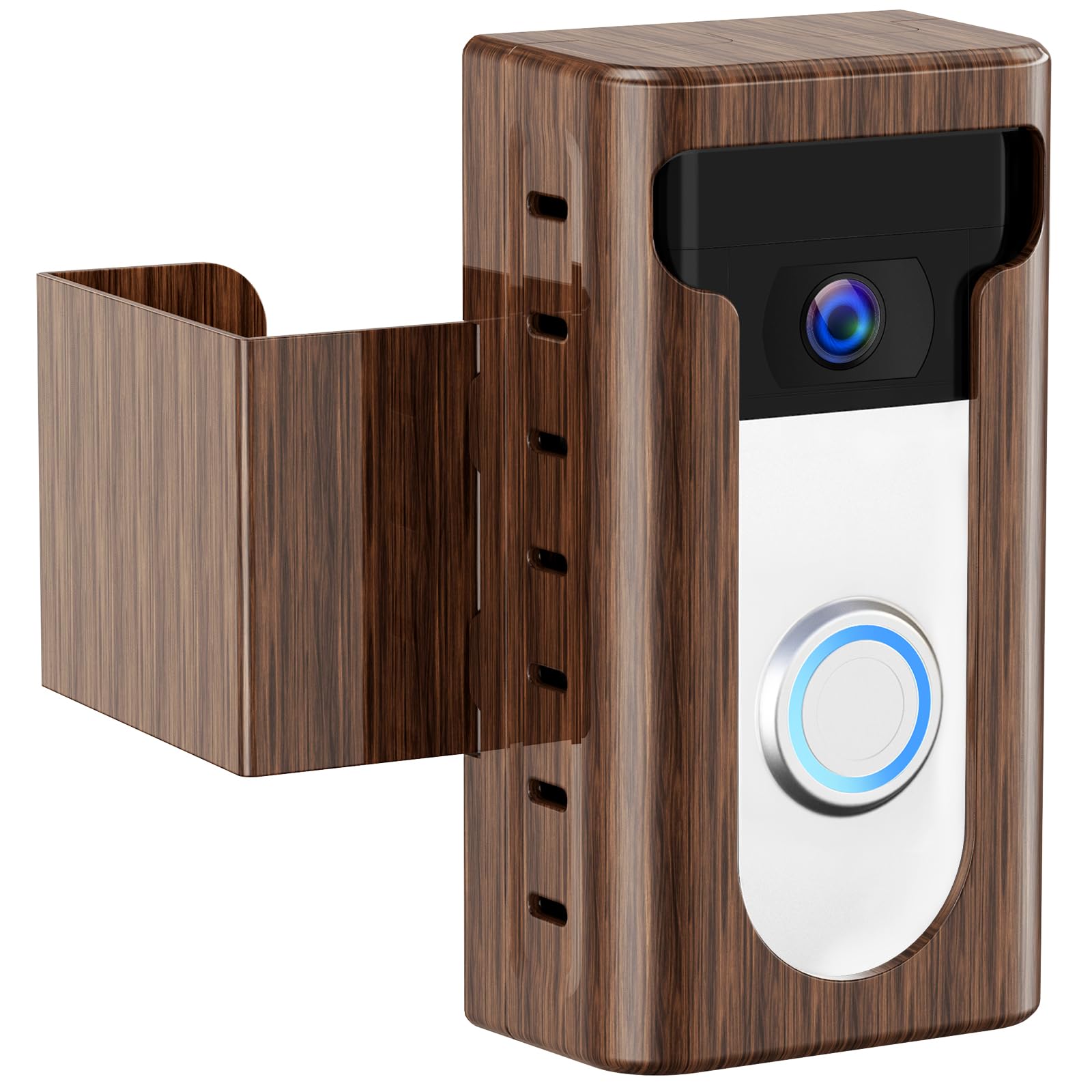
I used this anti-theft mount to secure a wireless doorbell to an inward-opening door without drilling; it’s sturdy, adjustable, and designed to hide easy removal points.
Why I picked it: Strong anti-theft design with no drilling required.
Best for: Renters or anyone who wants theft prevention without permanent alteration.
Budget-friendly anti-theft solution.
Pros
- No-drill installation
- Anti-theft locking design
- Compatible with many doorbells
- Solid, clean look
Cons
- Only fits inward-opening doors
- May require foam trimming for snug fit
My take
I slid my wireless doorbell into the shell and used the included foam pads to get a snug fit; trimming the foam made the camera sit rock solid.
Installation takes minutes and doesn’t alter the door, which I liked for rental situations. The anti-theft design makes it much harder to grab the unit when the door is closed.
Be sure to measure your door thickness and gap before ordering—this mount works best on inward-opening doors with a small edge gap.
For protecting an exterior doorbell without drilling, this mount hit the mark in my tests.
4. elago Silicone Case for Google Nest Hello — Slip-On Weather Protection – Best Protective Case for Nest Hello
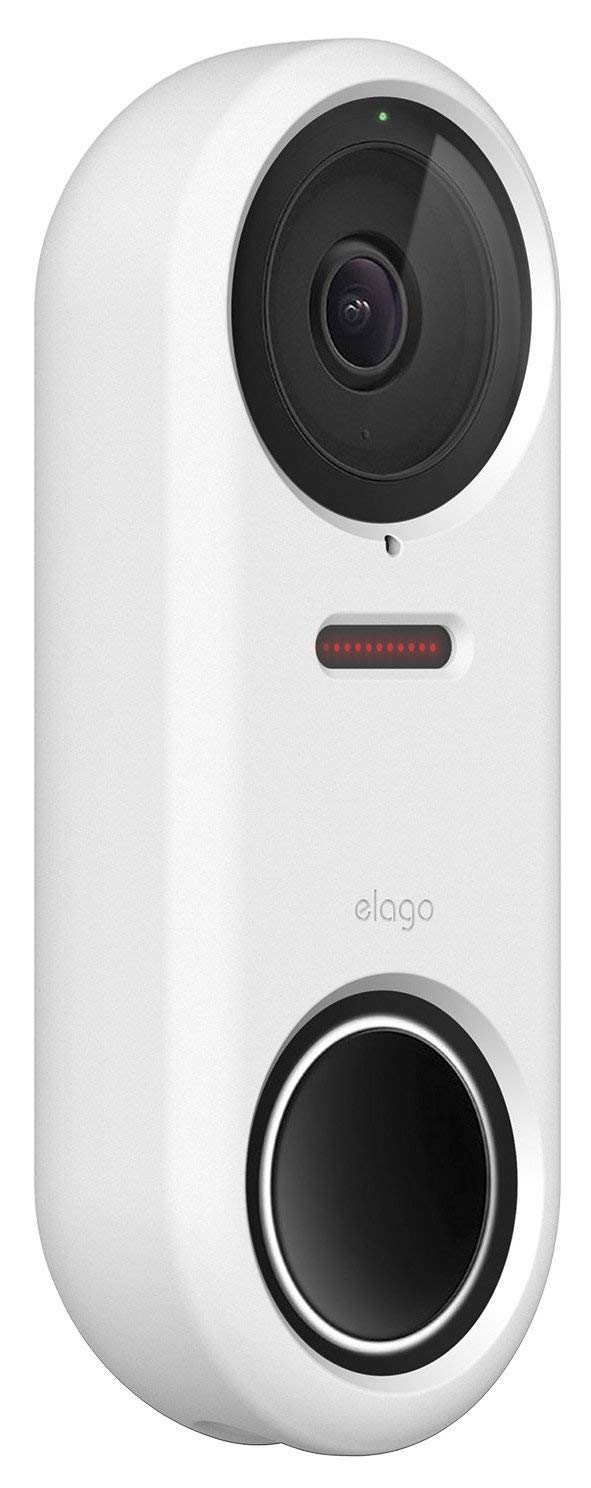
This silicone sleeve fits the Nest Hello snugly, protects against light weather and scratches, and preserves camera and night-vision functionality.
Why I picked it: Simple, effective protection with no interference.
Best for: Nest Hello owners who want low-effort weather protection.
Low-cost protective sleeve.
Pros
- Fits without blocking camera
- Durable silicone material
- Easy slip-on installation
- Protects from UV and scratches
Cons
- Not a hard, theft-proof shield
- Only fits Nest Hello
My take
I slipped the silicone cover over my Nest Hello in seconds—the fit is tight but doesn’t block the lens, microphone, speaker, or night vision.
It added a layer of protection against snow, splashes, and bump marks and refreshed the look of a slightly worn unit.
For condo or covered-porch installations where the doorbell sees mild weather, this sleeve is an inexpensive way to extend the unit’s cosmetic life.
Installation is trivial and removal is just as easy if I ever need to swap or service the doorbell.
5. Anti-Theft Video Doorbell Mount (White) — No-Drill Wedge Adapter Holder – Best Budget Mount
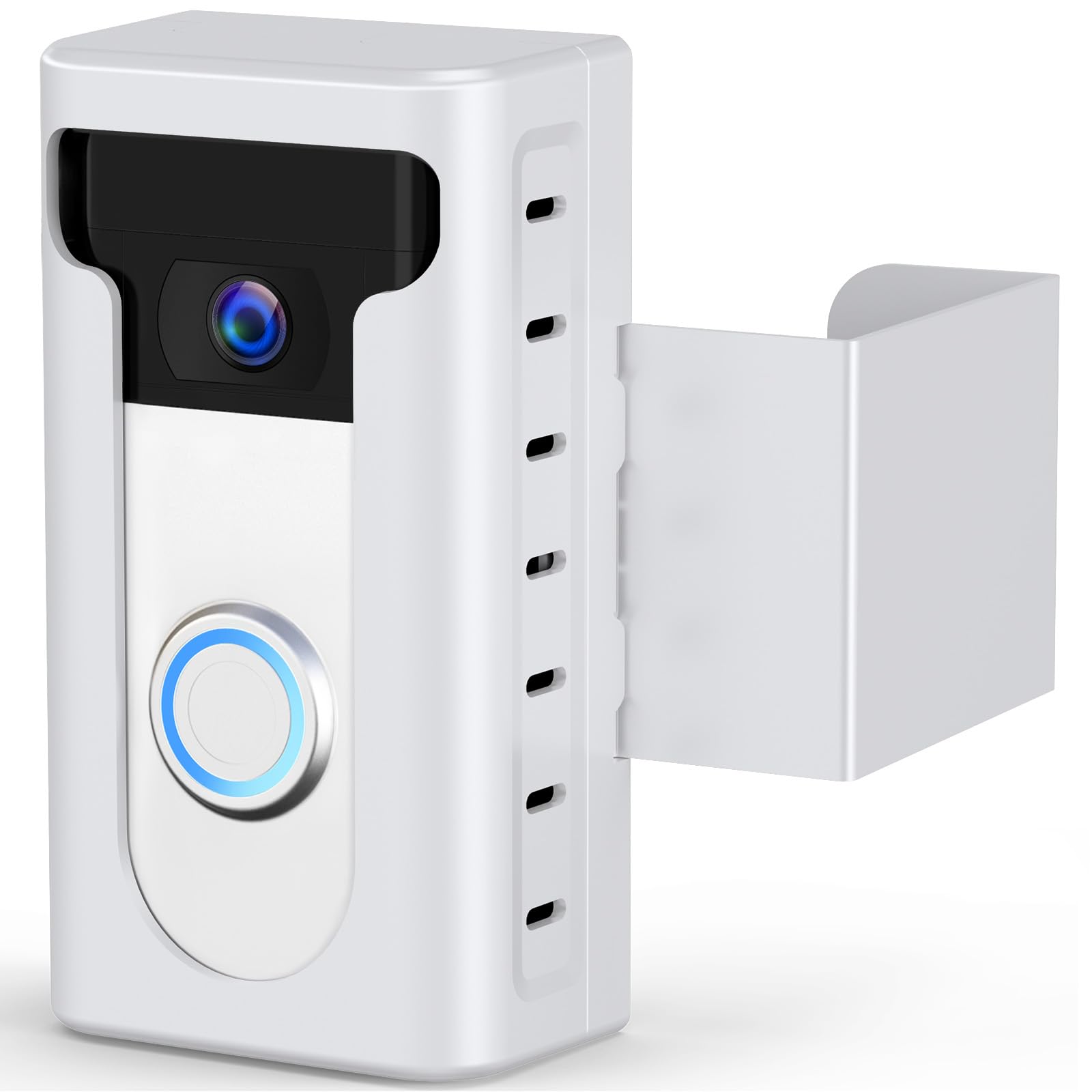
This inexpensive no-drill mount gave me a secure, removable mount suitable for renters and anyone who wants a straightforward anti-theft barrier.
Why I picked it: Cheapest, effective no-drill way to secure a wireless doorbell.
Best for: Renters or anyone on a tight budget wanting a simple solution.
Most affordable mounting option here.
Pros
- Very affordable
- Easy to install and remove
- Damage-free mounting
- Sturdy build for the price
Cons
- Must unscrew to charge camera
- A bit bulky on some doors
My take
I appreciated how quick it was to assemble—place the camera in, adjust the clip, and it held my Ring unit firmly without modifying the door.
It’s renter-friendly and gives genuine peace of mind since it prevents simple grab-and-run theft attempts.
One downside: you often need to unscrew the back to access the battery for charging, which is slightly less convenient than a snap-off design.
Still, for the price and ease of use, this mount performed exactly as I needed it to.
6. Ring Battery Doorbell Plus with Chime Pro — Color Night Vision & Quick-Release Battery – Best for Night Vision & Notifications
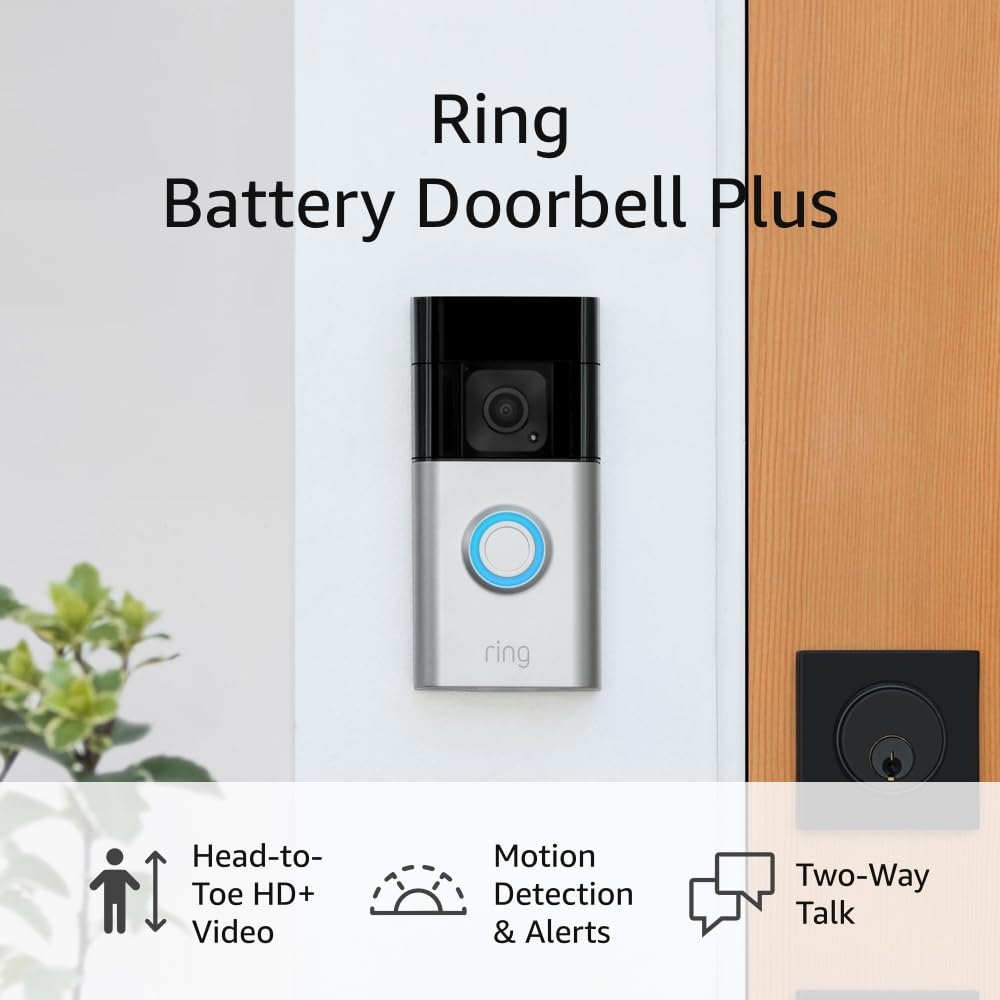
The Ring Battery Doorbell Plus gave me an expanded view plus color night vision and a quick-release battery pack; the included Chime Pro extended audible alerts throughout my house.
Why I picked it: Color night vision and the quick-swap battery made daily use easier.
Best for: Homes needing better low-light imaging and in-home chime coverage.
Higher-tier option with premium features.
Pros
- Color night vision
- Quick-release battery pack
- Includes Chime Pro
- Expanded head-to-toe view
Cons
- Advanced AI alerts need subscription
- Chime placement may need tweaking
My take
Color night vision was the standout for me—porch activity at dusk was much clearer compared with basic infrared-only units.
Swapping the quick-release battery was fast and painless, so I didn’t worry about long downtime when the pack needed charging.
The Chime Pro helped me hear the doorbell in rooms that are far from the router or base chime; placement made a noticeable difference.
If you want stronger nighttime detail and a plug-and-play way to keep a chime audible across the house, this package delivered in real use.
How I Chose These Doorbell Cameras and Accessories
Key features I prioritized
I focused on field of view, power method, installation style, and anti-theft features because those make the biggest difference in daily use.
- Field of view: taller coverage shows packages and people’s full height.
- Power: battery vs wired affects uptime and convenience.
- Alerts: basic motion versus AI person/package detection.
- Installation: no-drill mounts matter for renters.
Power and charging
Battery models give placement flexibility, but consider how easy the recharge process is—USB-C or quick-release packs save headaches.
- USB-C: convenient but often requires door removal to charge.
- Quick-release packs: swap without uninstalling the unit.
- Wired: best for continuous power and fewer interruptions.
Installation and compatibility
I checked door thickness, opening direction, and camera dimensions before recommending mounts. Measure your door gap and thickness first.
- No-drill mounts usually need inward-opening doors.
- Check maximum device dimensions against mount interior size.
- Foam pads can help achieve a snug fit.
Accessories and subscriptions
Accessories like chimes and indoor cams extend coverage. Keep in mind many advanced alert features require a subscription if you want AI-based person or package notifications.
- Chime Pro extends audible alerts across the house.
- Indoor cameras pair well in bundles for whole-home coverage.
- Advanced motion labeling typically requires a subscription.
Frequently Asked Questions
How long do battery doorbells typically last between charges?
From my experience, battery life varies by how often you use Live View and how many motion events fire. Occasional use can last weeks; heavy Live View use will shorten that. Models with quick-release battery packs are the most convenient because I can swap charged packs without uninstalling the unit.
Do I need a subscription to get useful alerts?
Basic motion and doorbell alerts work without a subscription, but AI-powered person/package/vehicle labeling and cloud video history usually require a paid plan. I kept core security features active without subscribing, but I subscribed when I wanted clearer context in notifications and longer video storage.
Can I use a no-drill mount on any door?
No-drill mounts work best on inward-opening doors with a small edge gap and a flat door edge. I always measure door thickness and gap first; some mounts require trimming or extra foam to get a tight, stable fit.
Final Take
I picked options across power types and price points so you can choose based on how you plan to use a doorbell camera.
For straightforward, reliable performance I favored the Ring Battery Doorbell. If you need night clarity or faster battery swaps, the Plus model with Chime Pro stood out in my testing.
Renters or anyone avoiding permanent modifications will find the no-drill mounts and the silicone sleeve useful additions to protect and secure a doorbell without drilling.
