
I tested six drawing and colored pencil options across color count, core feel, portability, and accessories to find the best sets for beginners, traveling artists, and pros who need buttery blending.
I spend a lot of time sketching, shading, and coloring, so I selected these kits based on color range, core quality, durability, and how useful they are in real projects.
My picks include everything from travel-ready graphite kits to large color collections for blending and illustration. Below I explain what each set does best and when I reach for it.
I split the list between color-heavy collections and graphite/sketch kits. For broad palettes I favor the Castle 120 or Amazon Basics; for precision sketching I prefer Staedtler or the Norberg & Linden kit; Prismacolor is my go-to when blending and layering matter most.
1. Amazon Basics Colored Pencils, Premium Soft Core, 72 Count – Best for Beginners
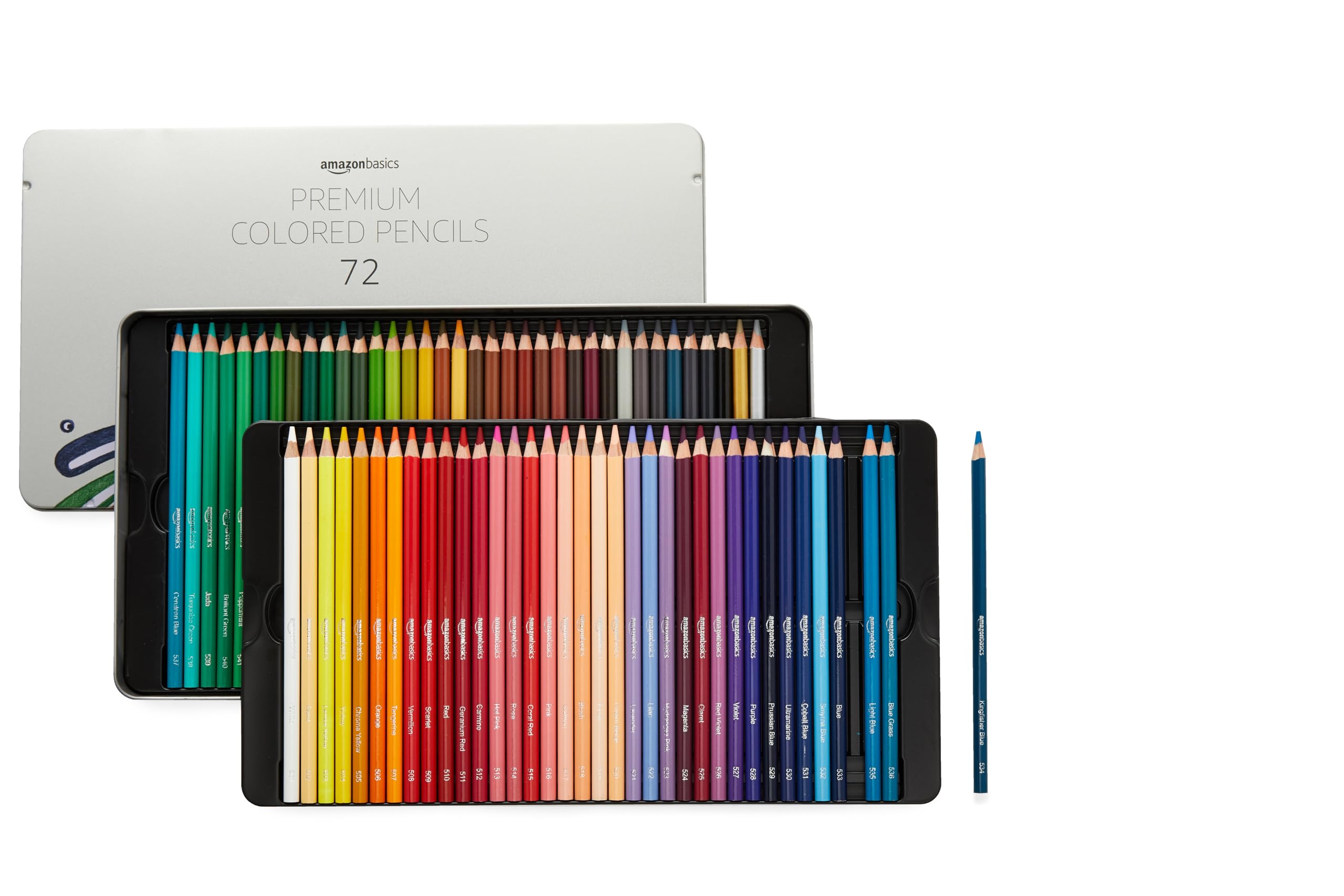
A large, pre-sharpened 72-color tin with soft, blendable cores and sturdy construction.
Why I picked it: I picked it for its big color range, pre-sharpened readiness, and durable tin storage.
Best for: Coloring books, hobby drawings, and family art sessions.
Very affordable and excellent value for casual use.
Pros
- 72 vibrant colors
- Pre-sharpened and ready
- Thick cores resist breakage
- Durable tin with tray
Cons
- Not archival-grade pigments
- Soft cores less suited for fine detail
My take
I reach for this set when I want lots of hues without fuss. The pencils arrive pre-sharpened, so I can start coloring immediately, and the tin keeps everything organized in a way I actually use.
The cores lay down smooth and blend better than I expected for a value set. They’re ideal for coloring books and relaxed sketches; I wouldn’t rely on them for archival, gallery work, but they make everyday color work fast and enjoyable.
2. Castle Art Supplies Colored Pencils Set, 120 Premium Soft Core – Best Color Range
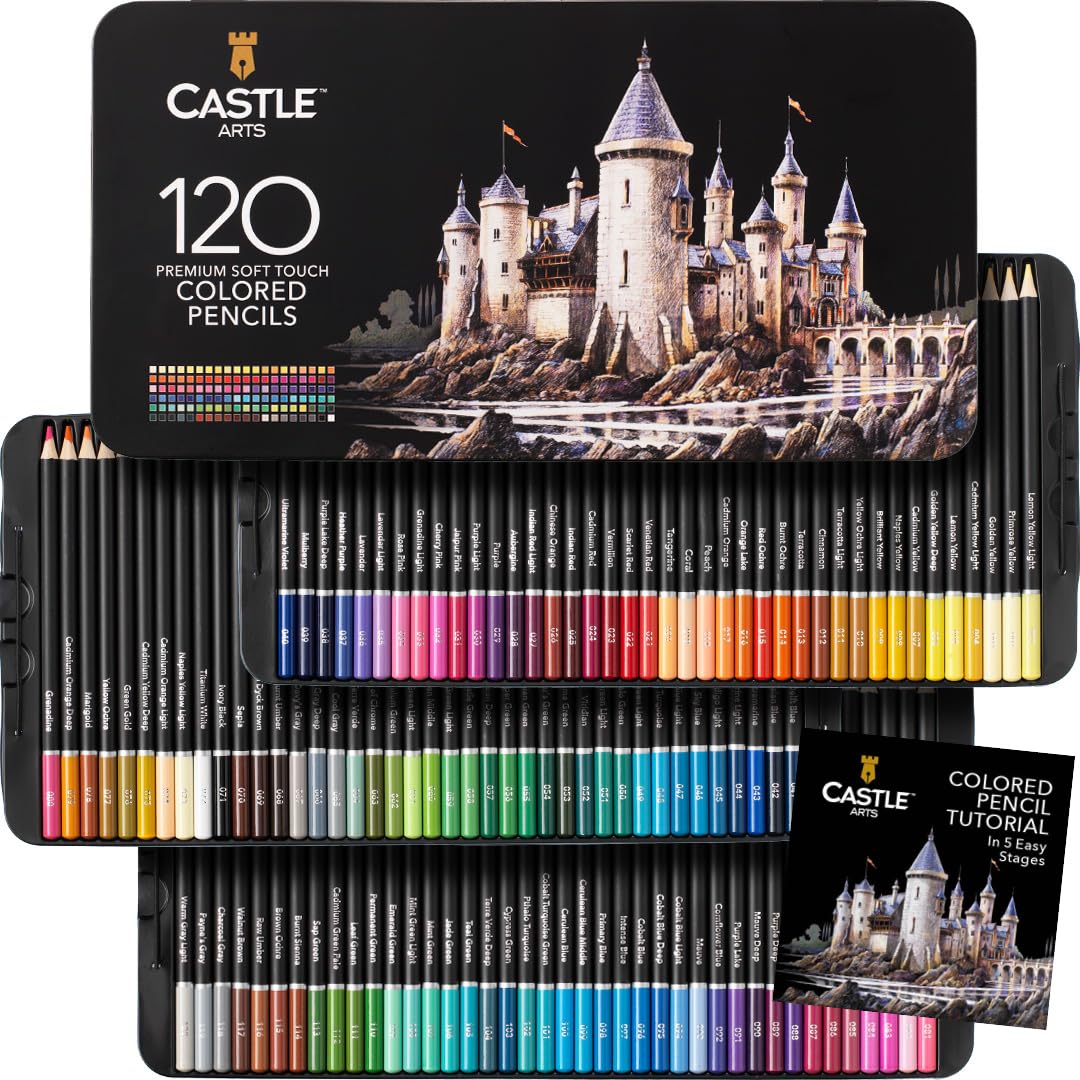
A massive 120-pencil set arranged in a three-layer presentation tin with numbered, named pencils and a color chart.
Why I picked it: I chose it for the sheer variety and the tidy, numbered organization that speeds up color selection.
Best for: Artists who want an extensive palette for layering, illustration, and adult coloring.
Excellent value for an expansive, 120-color offering.
Pros
- 120 distinct hues
- Numbered and named for quick choices
- Buttery, blendable cores
- Handy fold-out swatch/tutorial
Cons
- Large and bulky to transport
- Some hues are closely similar
My take
When I need very specific tones, this set is the first one I reach for. The pencils are organized by color families, and having numbers and names saves me time when I’m layering multiple passes.
The cores feel soft and creamy without being crumbly, so layering and burnishing is straightforward. The three-layer tin and swatch sheet make it easy to catalog favorites and keep replacements on hand.
3. Staedtler Lumograph Graphite Drawing and Sketching Pencils, Set of 6 – Best for Sketching
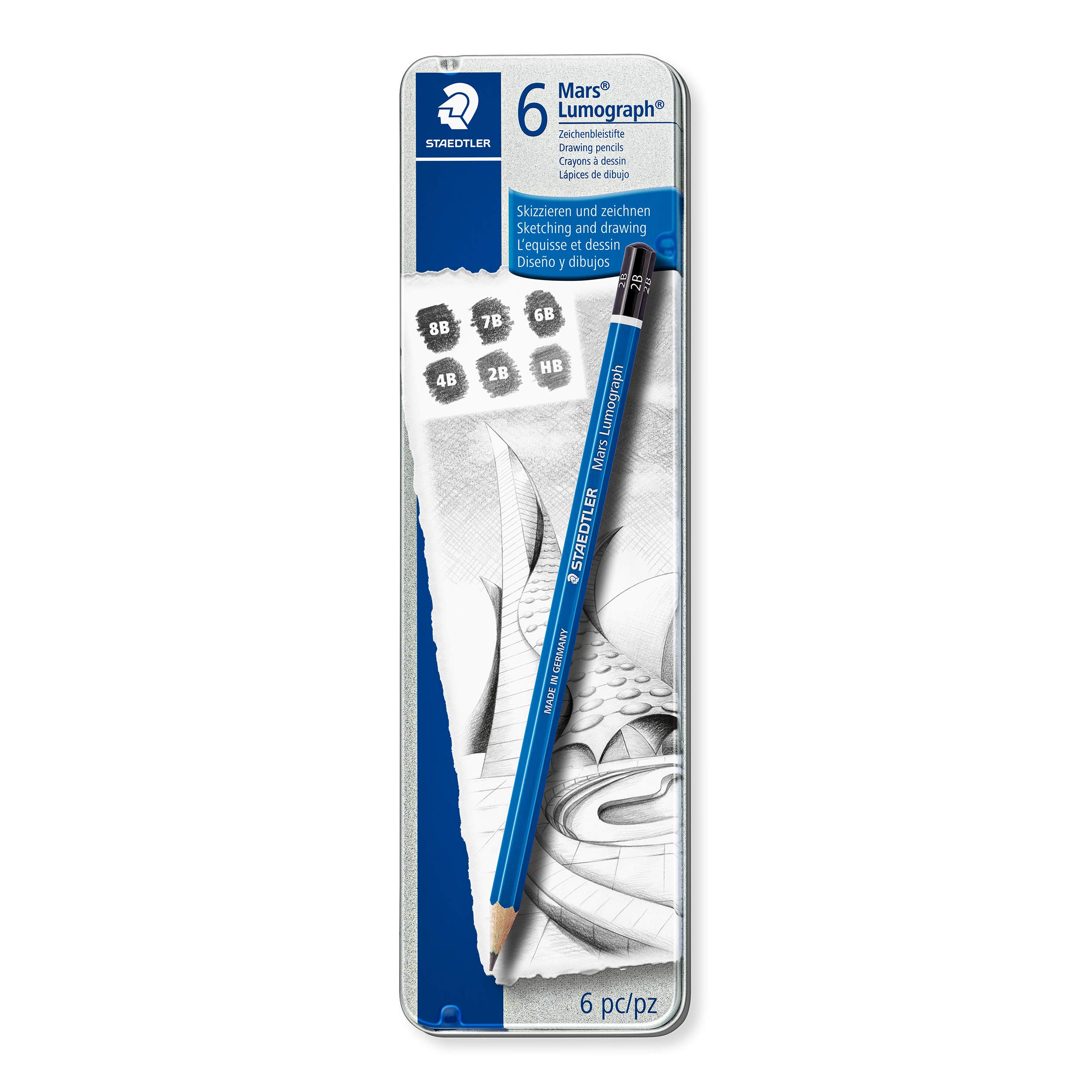
A compact set of six graphite grades in a metal tin, built for precise sketching and technical drawing.
Why I picked it: I value the consistent laydown and clearly marked grades for quick, accurate sketch work.
Best for: Figure drawing, studies, and technical sketches that need reliable graphite control.
A dependable, mid-range choice for serious graphite work.
Pros
- Clear grade markings
- Durable, consistent leads
- Comfortable hexagonal barrels
Cons
- No eraser included
- Limited to six grades
My take
I use these pencils when I need predictable graphite tones and clean transitions. The Lumograph cores hold a point well and don’t disappear after a few strokes, so my lines stay crisp during longer sessions.
The hexagon barrels feel secure in my hand, and having the grade printed on the pencil means I never have to guess. For focused sketching, this tin is compact and reliable.
4. Castle Art Supplies 40-Piece Drawing and Sketching Set with Tutorial – Best Starter Kit
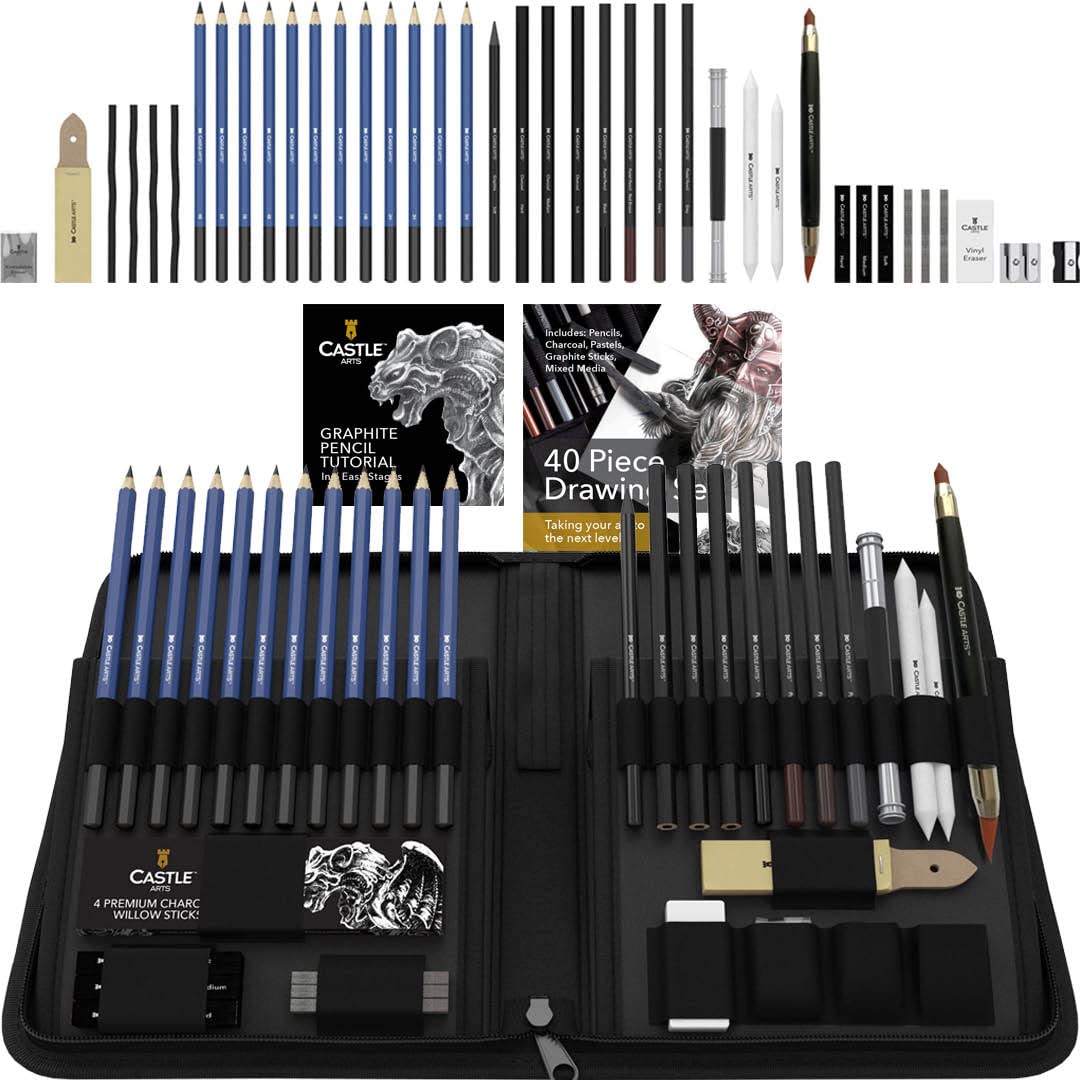
A curated 40-piece kit with graphite, charcoal, blending tools, and a 20-page instruction book in a zippered case.
Why I picked it: I recommend it for the variety of tools and the travel-friendly, organized case.
Best for: Beginners and students wanting a ready-to-use kit to explore multiple media.
Budget-friendly way to get a full starter toolkit.
Pros
- Comprehensive tool selection
- Compact zippered carrying case
- Includes tutorial and demos
Cons
- Display backing doesn’t fully self-support
- Some items feel entry-level
My take
I keep this kit around for travel and teaching demos. It unfolds neatly and the zippered case protects everything in transit, which makes on-location sketching realistic rather than stressful.
The selection is generous: graphite and charcoal pencils, sticks, blenders, erasers, and a guide that helps me and others try techniques quickly. A couple of the pieces feel more like practice-grade, but they’re exactly what I want when exploring new approaches.
5. Prismacolor Premier Colored Pencils, Soft Core, 36 Count – Best for Blending
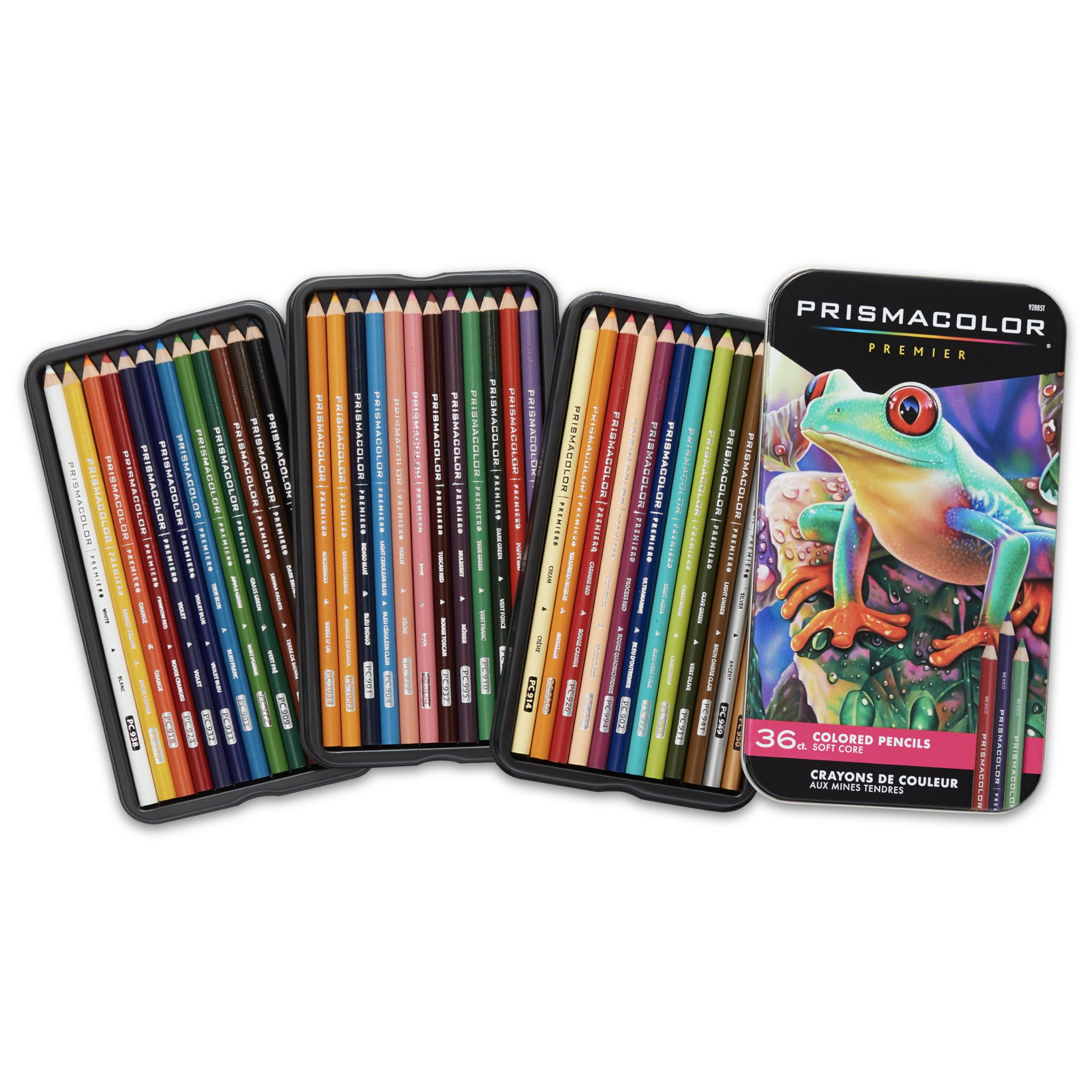
A 36-pencil professional-oriented set with ultra-smooth, creamy cores made for superior blending and shading.
Why I picked it: I reach for these when I need seamless blends and deep, saturated layers.
Best for: Advanced shading, professional illustration, and artwork that requires buttery layering.
A premium option that’s worth the extra expense for pros.
Pros
- Ultra-smooth, creamy cores
- Excellent for layering and blending
- Strong, thick leads
Cons
- Higher-priced choice
- Limited to 36 colors
My take
When blending and subtle transitions matter, Prismacolor Premier is my top pick. The cores feel almost buttery on paper and respond beautifully to light pressure and repeated layering.
I can sharpen them to a fine point for details or use the full core for soft shadowing. For finished pieces where color depth and smoothness matter, these pencils consistently deliver.
6. Norberg & Linden XL Drawing Set — Graphite, Charcoal, Pads, and Tools – Best Complete Travel Set
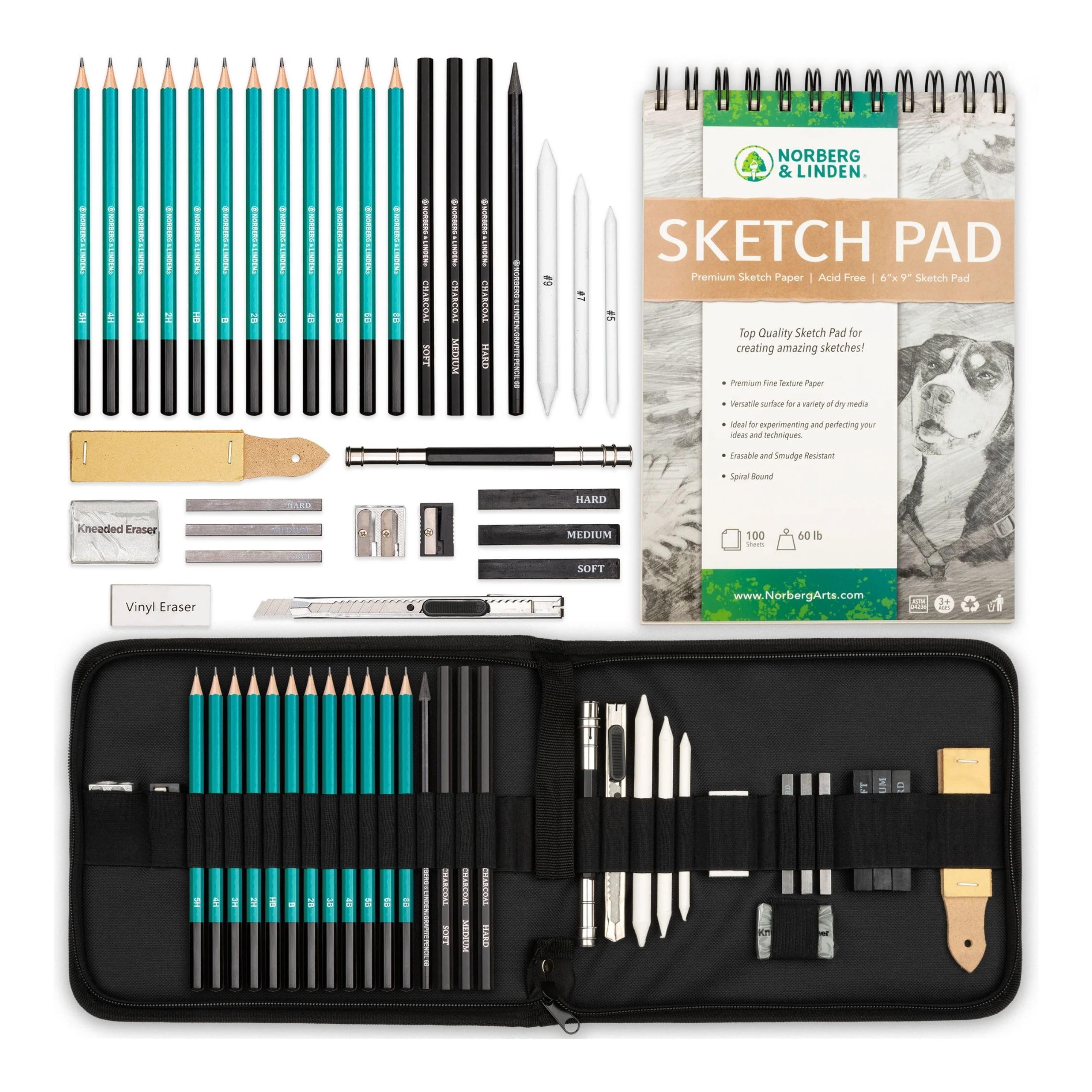
A full drawing kit with a wide graphite range, charcoal, blending tools, and a 100-page sketch pad in a zippered case.
Why I picked it: I value the all-in-one portability and the broad tonal range from 8B to 5H.
Best for: On-the-go sketching, students, and anyone who wants one kit for many techniques.
Great value as a complete, travel-ready kit.
Pros
- Wide tonal range (8B–5H)
- Includes sketchpad and extras
- Zippered case for travel
Cons
- Some tools feel basic
- Not all items are artist-grade
My take
I pack this set for trips and classes because it really is a kit: pencils, charcoal, sticks, erasers, blenders, sharpeners, and a 100-page pad all live together neatly in the zippered case.
The tonal spread covers everything I need for expressive sketches and careful studies, and the extra tools (kneaded eraser, stumps) save me from hunting down separate supplies. For quick practice and on-location work, it’s indispensable.
How I Choose Drawing Pencils
Pick by medium and purpose
I decide whether I need colored pencils for blending and illustration or graphite/charcoal for tonal sketching. That choice immediately narrows the field.
If I’m working on finished art, I favor artist-grade pigments and thicker cores. For practice or travel, I prefer compact, multi-tool kits.
- Colored pencils: look for creamy cores and lightfast pigments.
- Graphite: choose a range from H (hard) to B (soft) for versatility.
- Travel kits: prioritize a sturdy case and essential extras.
Understand core types and grades
I pay attention to core softness: softer cores (B numbers) give richer, darker marks and blend easier; harder cores (H numbers) give crisper lines and finer detail.
For colored pencils, wax-based cores offer smooth layering and burnishing; oil-based cores feel slightly different and resist wax bloom.
- Soft cores = smooth blending, faster wear.
- Hard cores = precision, lighter marks.
- Check if pencils are pre-sharpened if you need instant use.
Consider accessories and storage
I often choose sets with a case, a swatch sheet, and useful extras like erasers, blenders, or a tutorial—those items speed up my workflow.
A good sharpener and a kneaded eraser are small purchases that improve results more than upgrading a single pencil often does.
- Swatch colors before committing to a set.
- Prefer tins or zip cases for travel durability.
- Look for clearly labeled grades and color names.
Frequently Asked Questions
Which pencil set should I buy first as a beginner?
I usually recommend a starter kit with a variety of tools and a compact case—sets like the Castle 40 or Norberg & Linden give a range of media so you can explore graphite, charcoal, and basics without buying individual items.
How do I sharpen colored pencils without breaking the core?
I use a quality handheld or two-stage sharpener, turn the pencil instead of the sharpener, and avoid forcing it when the core seems warm. For soft cores, a blade-type sharpener gives a long tapered point with less stress on the lead.
What’s the best way I blend colored pencils?
I build layers from light to dark, use gentle pressure for each pass, and finish with burnishing or a solvent (if appropriate) for seamless transitions. Prismacolor-style soft cores and a white pencil or colorless blender help create smooth blends.
Final Take
If you want a huge palette, the Castle 120 gives the most options; for buttery blending and finished pieces, Prismacolor Premier is my top pick.
For sketching and technical work I keep Staedtler Lumograph on my desk, and for a travel-ready all-in-one kit I pack the Norberg & Linden set. If you’re just starting out, the Amazon Basics or Castle 40 kit will get you experimenting quickly.
Whichever set you choose, focus on the cores and the accessories you’ll actually use—those make the biggest difference in daily practice.
