
I tested a range of concentrates, preventers, and a surfactant so you can pick the right weed-killer for lawns, driveways, and beds. My picks focus on speed, long-term control, and getting the most out of your sprayer.
I spend a lot of hours tending turf, beds, and gravel areas, so I evaluated these products for speed, coverage, and lasting control.
Across concentrates, extended-control formulas, and a dedicated surfactant, I prioritized ease of mixing, how well the sprays stick and penetrate, and whether treated areas stayed weed-free through the season.
Read on for the best option if you want faster brown‑out, longer prevention, or a simple booster to make your herbicide work better.
I compared products by how quickly they produce visible results, whether they kill to the root, their suitability for spot treatment versus large-area use, and any built-in mixing or measure features that make application easier. I also tested a surfactant to see how much it improves coverage when added to tank mixes.
1. Southern Ag Surfactant for Herbicides Non-Ionic, 16oz, 1 Pint – Best Surfactant
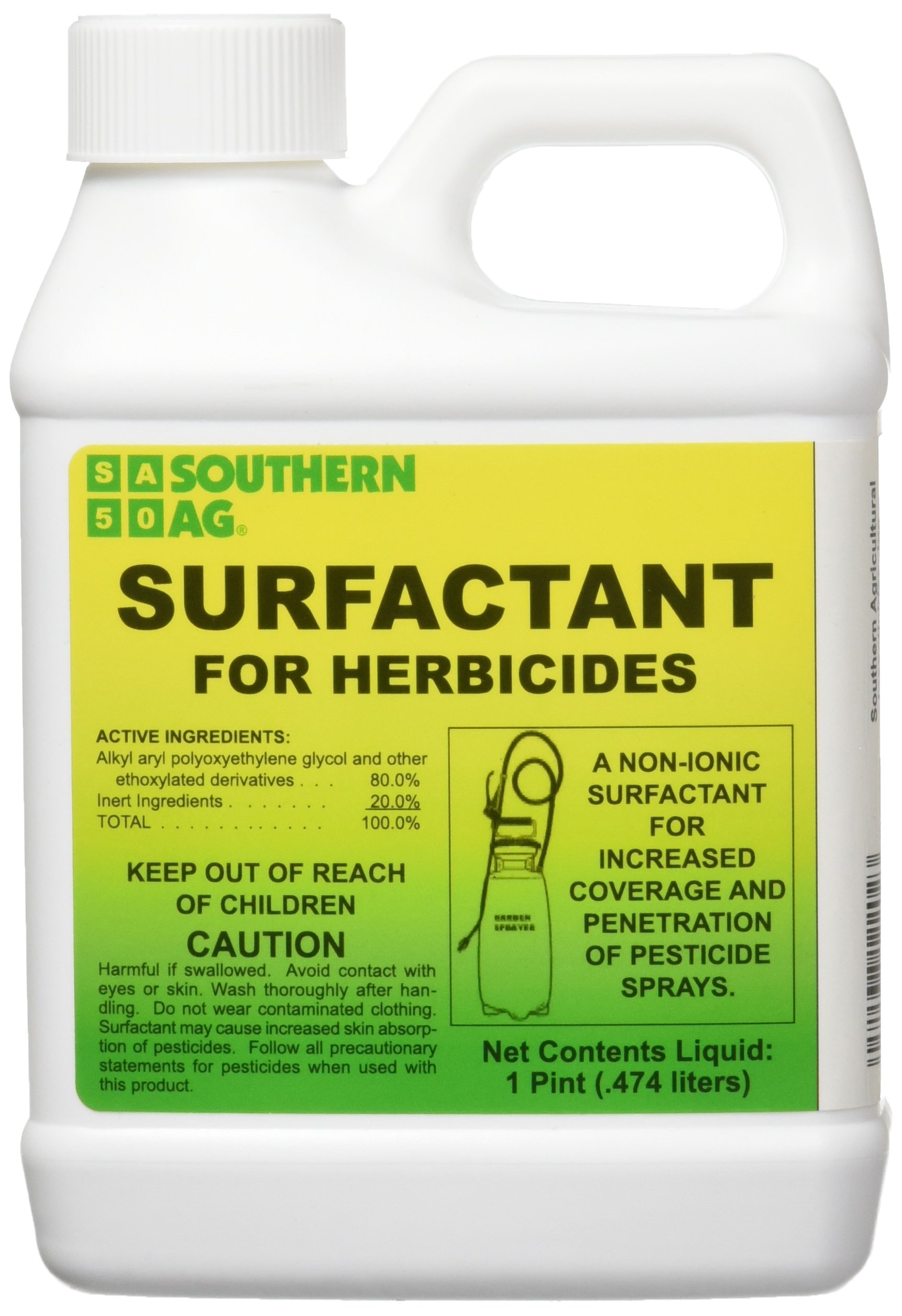
I use this non‑ionic surfactant whenever I want herbicides to wet, stick and penetrate target weeds better—especially on waxy or hairy leaves.
Why I picked it: Improves spreading and absorption for many herbicides.
Best for: Boosting performance of tank sprays and spot treatments.
Affordable add-on that stretches herbicide effectiveness.
Pros
- Non-ionic, broad herbicide compatibility
- Improves spray coverage
- 16-ounce bottle lasts multiple applications
Cons
- Requires careful label checks for compatibility
- Not a herbicide by itself
My take
When I need a herbicide to actually reach the leaf and move into the plant, I add this surfactant. The non‑ionic formulation noticeably reduces surface tension so sprays coat blades and broadleaf weeds instead of beading up and running off.
I’ve used it with broadleaf herbicides and glyphosate mixes; I saw better uniform coverage and faster browning on hard-to-wet species. The 16‑ounce size gives me several tankfuls for spot jobs and small yards.
My routine is to check the herbicide label first, add the surfactant at the recommended rate, and apply when weeds are actively growing. This isn’t a weed killer on its own, but it makes the products I pair it with work measurably better.
2. Roundup Super Concentrate Weed & Grass Killer – Includes Easy Measure Cap, 0.5 gal. 0.5 Gal Super Concentrate – Best for Large Areas
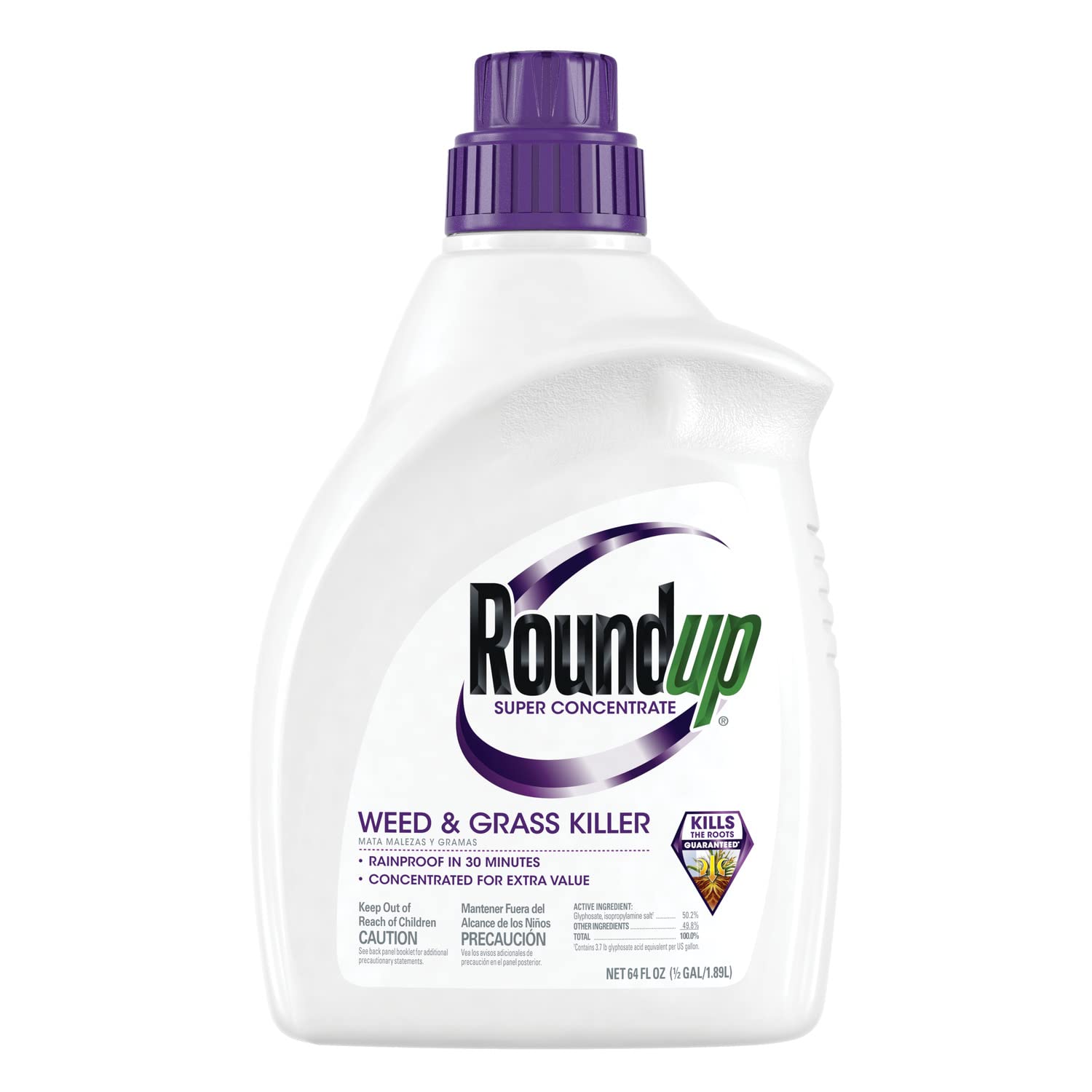
I reach for this Roundup concentrate when I need to treat driveways, fence lines, or replace turf across wide swaths efficiently.
Why I picked it: Easy-to-measure concentrate built for widespread use.
Best for: Large-area applications and driveway/edging work.
Economical choice for treating bigger areas.
Pros
- Designed for tank sprayers
- Rainproof in 30 minutes
- Works across many surfaces
Cons
- Non-selective—will kill desirable plants
- Needs careful measuring for best results
My take
For large patches of weeds and grass I don’t want back, this concentrate is straightforward to mix and apply. The included measuring cap makes preparation simple and I can cover more ground per tankful compared with ready‑to‑spray bottles.
I applied it around patios, along fences, and on gravel where I wanted a clean slate. In warm conditions I saw yellowing and wilting within a few days and reliable browning after a week.
This product is versatile for many non‑planting areas, but because it’s non‑selective I protect nearby ornamentals during application. Follow the label mixing rates and avoid overapplication for best economy.
3. RM43 Concentrated Extended Control Weed Killer 1-Gallon Weed Preventer – Best Long-Term Control
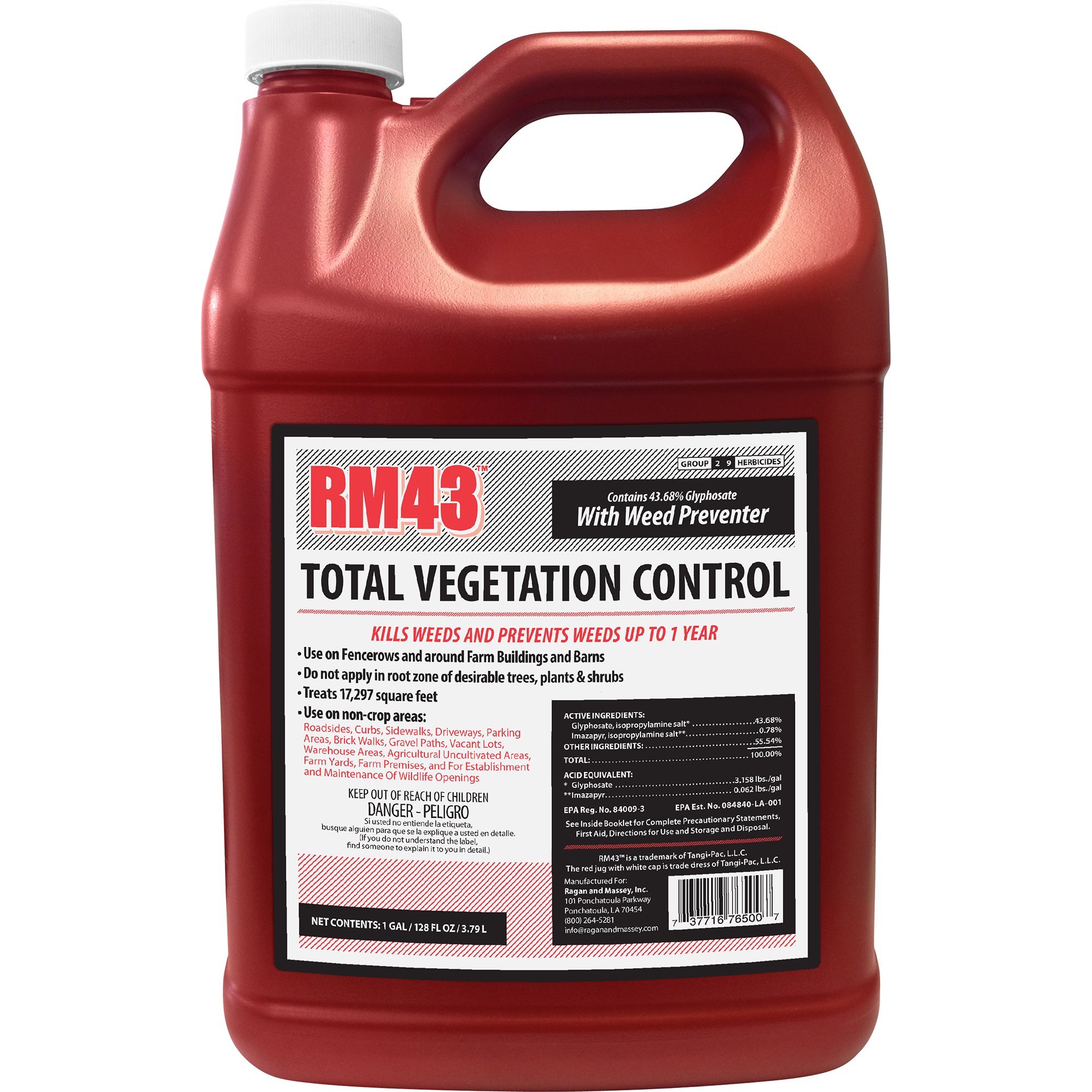
When I want aggressive, long‑lasting control down to the roots, RM43 is my go‑to concentrated solution.
Why I picked it: High-concentration glyphosate plus lasting control.
Best for: Areas where I want season-long vegetation control.
Premium option for deep, long-lasting results.
Pros
- Kills to the root
- Long residual control
- Very concentrated—small amounts go far
Cons
- Stronger formulation requires careful handling
- Not suitable near desirable plants
My take
I used RM43 where I wanted to remove persistent weeds and prevent regrowth across a large gravel area. It’s a potent concentrate that works into roots; results take a week or so but treated plants don’t return like they do after lighter sprays.
A little goes a long way in my experience—I dilute per the label and one gallon covers substantial ground. That intensity is why I reserve it for spots I want cleared for months at a time.
Expect to wait for the product to systemicly act, but if season‑long control is the goal, this formula delivers superior persistence compared with basic concentrates.
4. Spectracide Weed And Grass Killer Concentrate 40 Ounces, Use On Patios, Walkways And Driveways 1 Pack 40 Ounce – Best Fast-Acting Spot Treatment
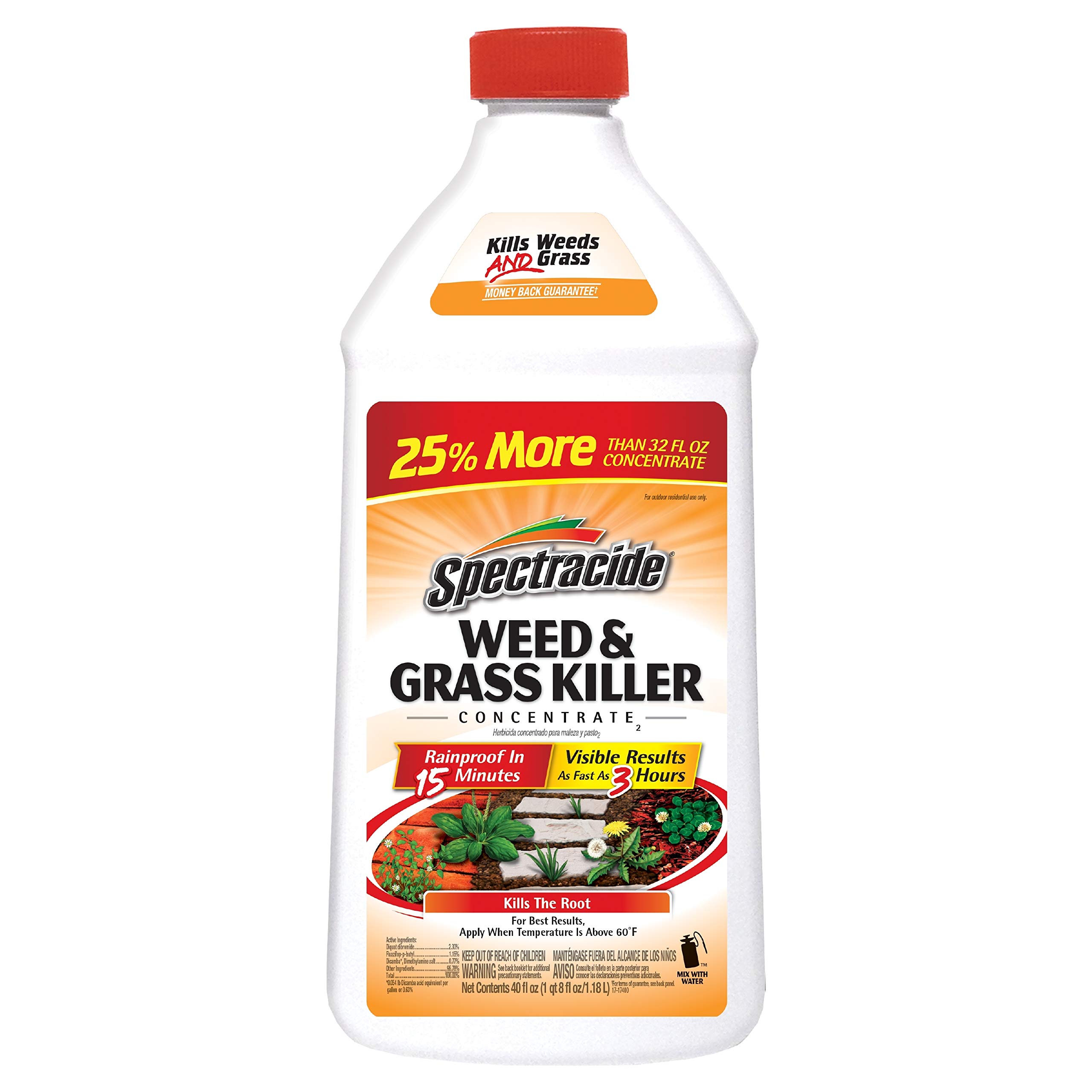
I keep Spectracide on hand for quick spot jobs where I want visible results fast and a product that’s forgiving for patio and walkway use.
Why I picked it: Very fast visible results and quick rainproof time.
Best for: Spot treating patios, driveways, and cracks.
Budget-friendly concentrate for frequent spot applications.
Pros
- Visible results in hours
- Rainproof in 15 minutes
- Good value for spot work
Cons
- Non-selective—will damage nearby plants
- Best in warm weather
My take
When I need weeds gone fast around hardscapes, Spectracide produces visible browning within hours and won’t wash away if rain follows later in the day. For me, that reliability is invaluable for quick touchups.
I mix it into my tank sprayer for targeted applications and protect desirable plants while spraying. The short rainproof window and fast action let me clear weeds and replant nearby the next day in many cases.
This is not a residual preventer, so I use it for spot control rather than long-term suppression. For small jobs it’s affordable and effective.
5. Roundup Concentrate Plus Weed and Grass Killer – Includes Easy Measure Cap, 64 oz. 64 oz. 1 Pack – Best Economical Concentrate
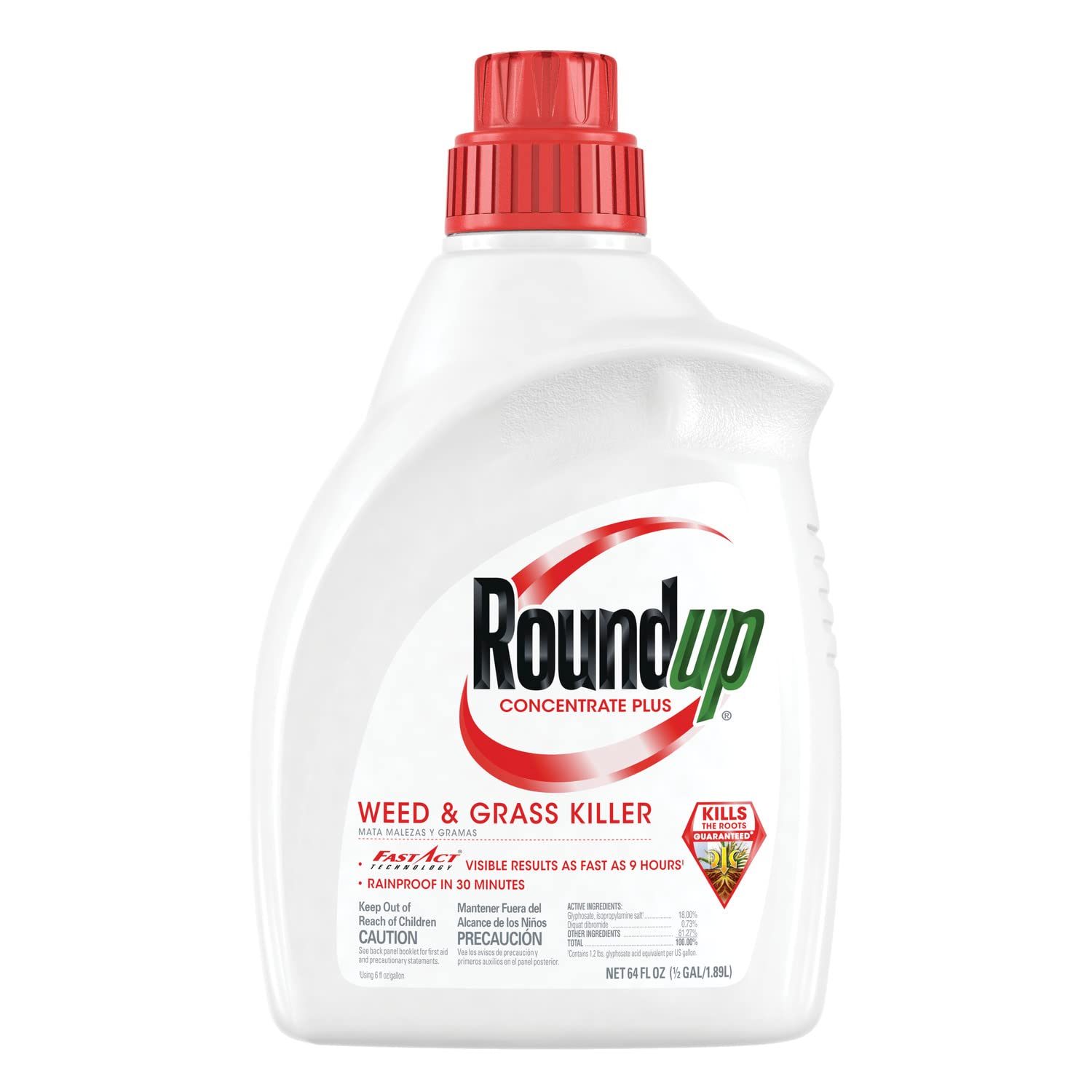
This Roundup concentrate balances fast visible action with economical coverage; I use it for large yard projects where quick brown‑out matters.
Why I picked it: FastAct technology and easy measuring cap for reliable results.
Best for: Clearing weeds before landscaping or major projects.
Good value for large-volume treatments.
Pros
- Fast visible results
- Easy-measure cap included
- Works on tough weeds
Cons
- Container design can be awkward to pour
- Non-selective—protect nearby plants
My take
When I prepped areas for landscaping, this concentrate gave visible results in under a day and left treated plants brittle and easy to remove within two weeks. The measuring cap makes mixing straightforward for my sprayer.
It’s a dependable general‑purpose concentrate for large jobs—mix, spray, and expect rapid plant decline. Just be careful with the pour ergonomics; I often transfer to a familiar container to avoid spills.
I treat non-planting zones with this and always shield desirable vegetation. For clearing and prepping ground, it’s a practical choice.
6. Roundup Concentrate Max Control 365 Vegetation Killer, 32 oz. (Not Sold in NY) – Best for Year-Long Prevention
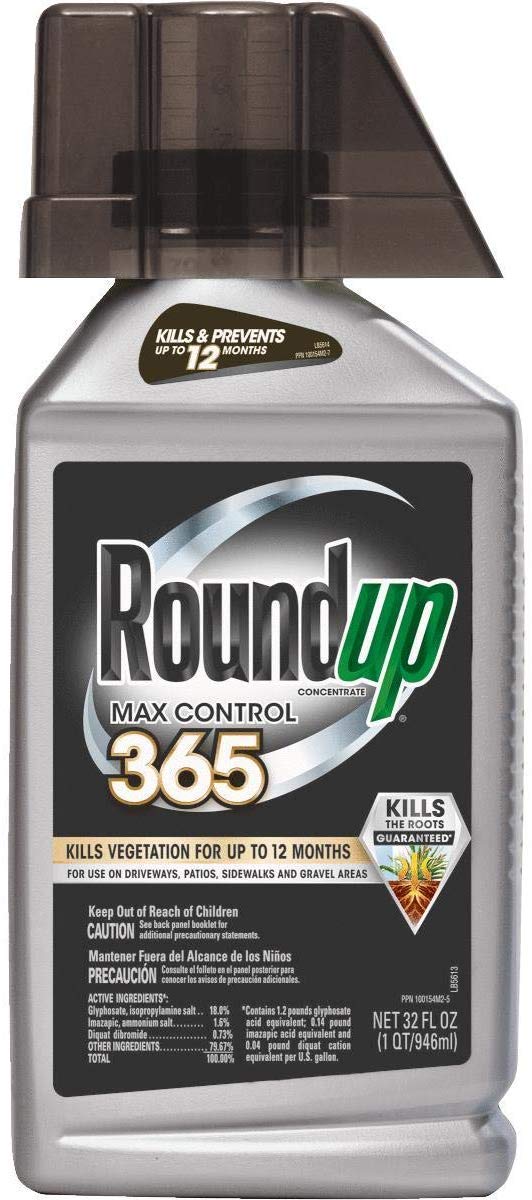
When preventing weeds for months is a priority, I use this to create a soil barrier that suppresses regrowth after treatment.
Why I picked it: Kills to the root and provides up to 12 months of prevention.
Best for: Driveways, sidewalks and gravel areas needing long-term control.
More expensive option but designed for year-long prevention.
Pros
- Up to 12 months prevention
- Kills to the root
- Rainproof in 30 minutes
Cons
- Requires full coverage for prevention
- Can damage nearby desirable plants
My take
I used Max Control 365 on a gravel driveway where I wanted fewer repeat applications. When applied per label and fully covered, the treated areas stayed mostly weed‑free for months.
It’s important to use the recommended mixing rate and thoroughly coat the soil; partial or spotty coverage reduces the preventive benefit. I found the built‑in measure cap helpful for accurate mixing.
Because it creates a residual, I reserve it for non‑planted surfaces or places where I don’t plan to grow anything for an extended period.
How I Choose a Weed Killer for Lawns
Product type and intended use
I decide first whether I want spot treatment, whole‑area replacement, or prevention. Non‑selective concentrates are great for driveways and bed prep; selective options or careful shielding are needed around turf and ornamentals.
Concentrates are efficient for large areas; ready‑to‑spray is convenient for quick touchups.
- Spot treatment: choose fast-acting formulas
- Large areas: pick concentrates with measuring caps
- Long-term prevention: use a product formulated for residual control
When to add a surfactant
I add a non‑ionic surfactant when I’m dealing with waxy, hairy, or hard‑to‑wet foliage. It improves coverage and uptake and can make systemic herbicides more reliable.
- Use surfactant with systemic herbicides for tougher weeds
- Check the herbicide label for surfactant compatibility
Application and timing tips
I apply herbicides during active growth and in temperatures recommended on the label. For fast visual results, warm, sunny days speed uptake. For residual preventers, full, even coverage is essential.
Protect desirable plants and avoid spraying before expected heavy rain—even products with short rainproof windows need that initial drying time.
- Apply in calm wind to prevent drift
- Follow label mixing rates for safety and effectiveness
- Use protective gear and rinse equipment after use
Safety and environmental considerations
I always follow label directions for personal protective equipment and disposal. Non‑selective products will kill anything they contact, so I take measures to protect ornamentals and pollinator plants.
If minimizing residual soil impact matters, opt for fast‑acting spot treatments rather than long‑residual preventers.
- Keep sprays off desirable plants
- Store concentrates securely
- Follow local regulations for restricted formulations
Frequently Asked Questions
Do I need a surfactant with every herbicide?
Not always. I add a non‑ionic surfactant when dealing with waxy or tough leaves or when the herbicide label recommends it. Surfactants improve spreading and uptake but are not a substitute for following label instructions.
How long before I see results after spraying?
It varies. Fast‑acting concentrates can show yellowing or wilting in hours to a few days; systemic and extended‑control products can take a week or more to fully act as they move into roots.
Can I plant in treated areas?
That depends on the product. Some fast‑acting formulas allow replanting within a day, but preventers with residual activity require waiting per the label. I always check the product directions before replanting.
Final Take
If I want to boost any herbicide’s performance, I add the Southern Ag surfactant. For large, economical coverage I pick a Roundup concentrate. When I need season‑long prevention or the deepest root kill, RM43 or Roundup Max Control 365 are my choices depending on whether I want maximum persistence or a balance of speed and coverage.
Match the product to the job—spot treatment, area prep, or prevention—and apply carefully. With the right mix, timing, and protection, you’ll keep problem weeds under control while protecting the plants you want to keep.
