
I tested six induction-ready cookware sets across materials and price points. These are the sets I kept coming back to for even heat, durability, and everyday usability.
I spent hands-on time cooking with a range of induction-ready cookware so I could tell you which sets actually perform on a glass-top range. My goal was to evaluate heat distribution, usability, durability, and how each set handles real meals—eggs, sauces, searing, soups, and sheet-pan work.
Below I break down the sets that stood out for different needs: the best overall stainless set, a premium pro-style option, standout nonstick choices, a hard-anodized searing set, an affordable colorful option, and the largest value-packed collection.
I tested for even heating on induction, oven range limits, handle comfort, and everyday cleanup. Where I mention oven temps and materials, those come from the product specs I used in the kitchen.
1. Farberware Classic Series 10-Piece Stainless Steel Cookware Set – Best Overall
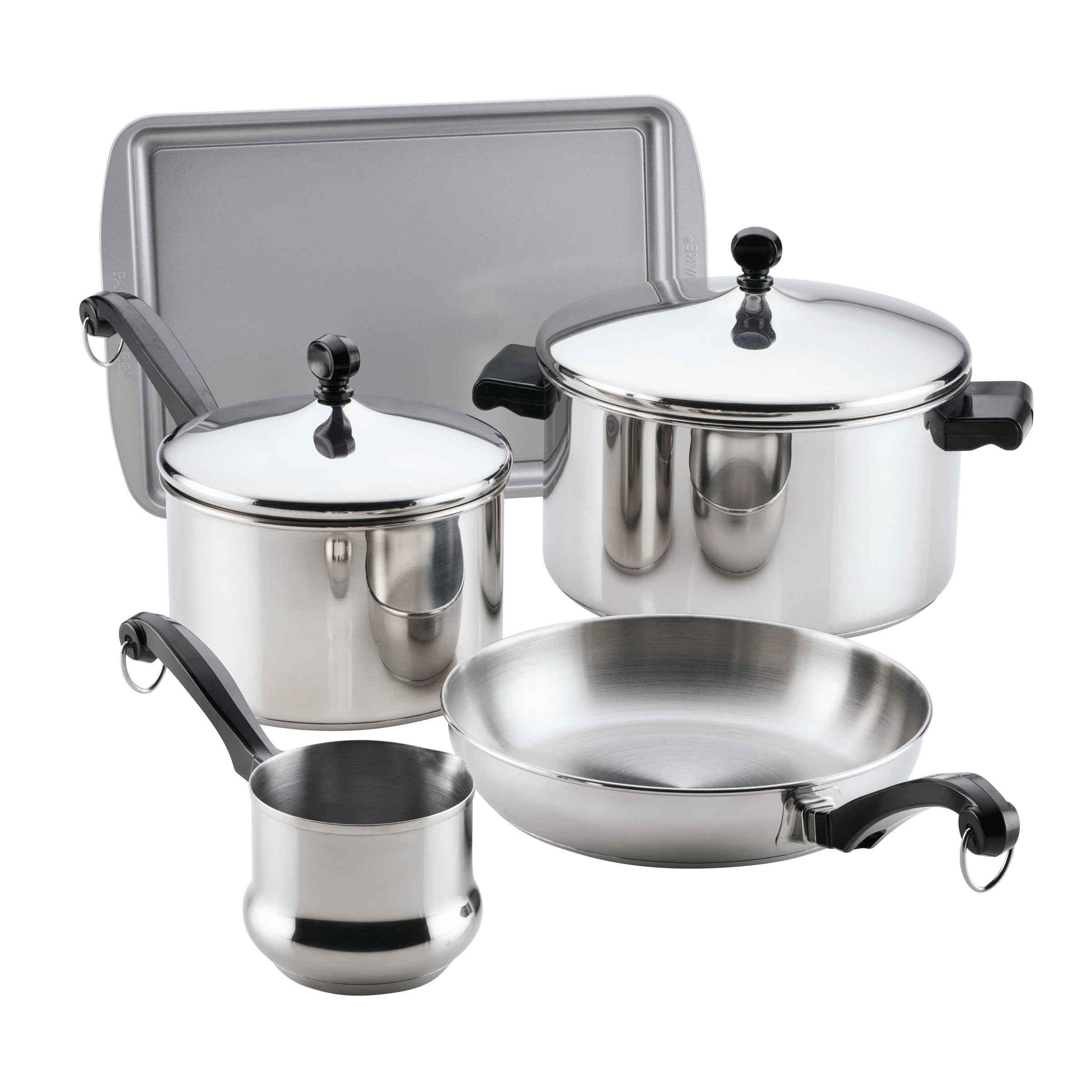
A versatile stainless set with full-cap bases for fast, even heating and a practical cookie sheet and utensils included.
Why I picked it: Balanced performance and thoughtful extras—mirrored stainless, solid bases, plus a baking sheet and tools.
Best for: Everyday cooks who want a durable stainless set that works on induction.
Affordable midrange option.
Pros
- Even heating from thick aluminum core
- Includes cookie sheet and three tools
- Stainless steel lids—durable and safe
- Dishwasher-safe pieces for quick cleanup
Cons
- Lids are not glass—can’t watch food
- Not ideal for very high-heat searing
- Handles can get warm under high heat
My take
I used the Farberware set for soups, rice, pan sauces and sheet-pan baking. The full-cap base with a thick aluminum core heats quickly and eliminates the hot spots that frustrate stainless cookware—sauces never scorched when I simmered gently.
I appreciated the included 9 x 13 cookie sheet; it held its shape in the oven and produced even browning. The stainless lids feel indestructible compared with glass lids and I liked not worrying about breakage in the dishwasher.
For everyday tasks—boiling, simmering, sautéing at moderate heat—this set is dependable. If you primarily sear steaks at very high temperatures, I’d look to a heavier-bottomed searing pan, but for most families this set hits the sweet spot between performance and practicality.
2. Jamie Oliver by T-fal Cook Smart 10-Piece Uncoated Stainless Steel Set – Best Premium
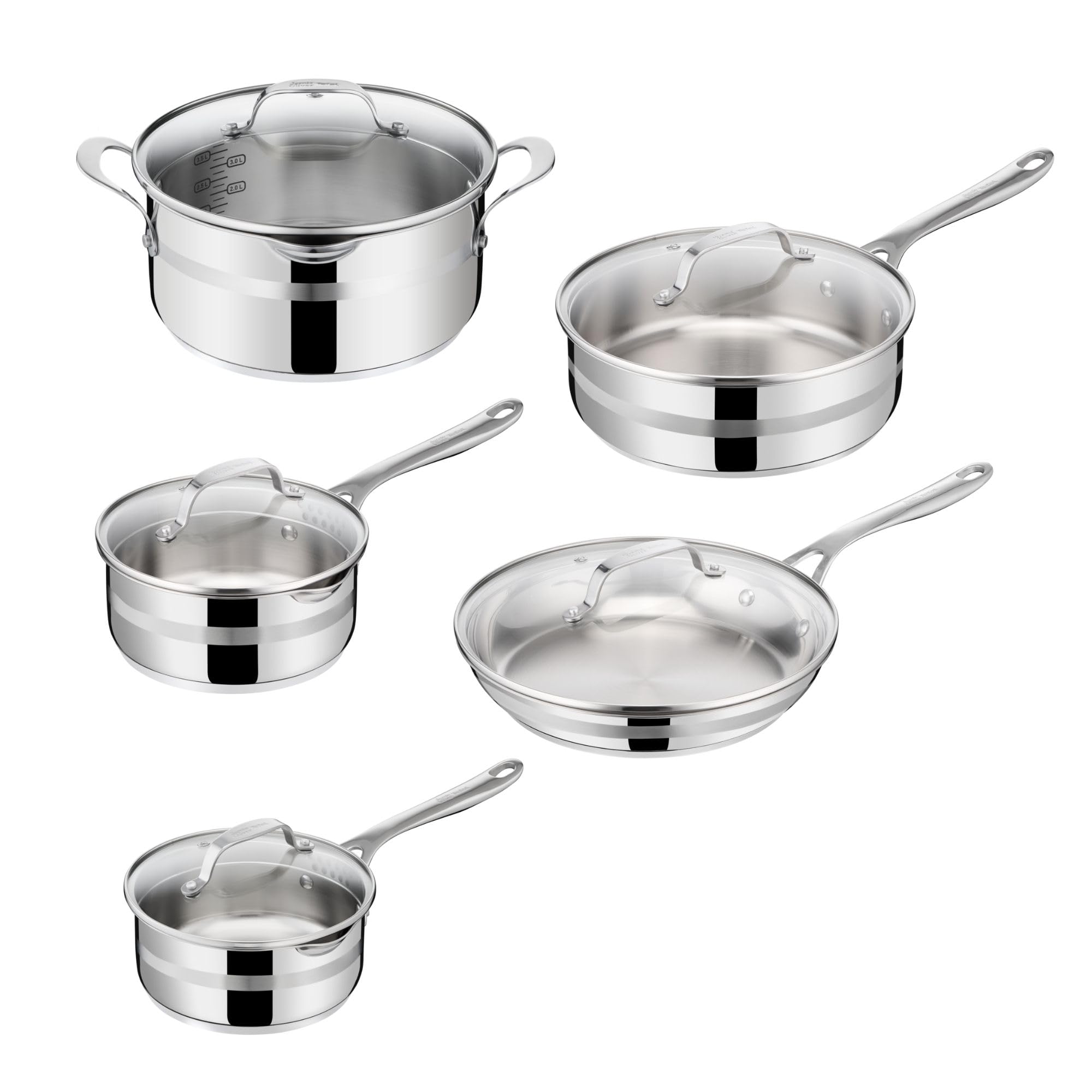
Professional-minded stainless with a Thermo-Fusion induction base and oven-proof performance up to 500°F.
Why I picked it: Thermo-Fusion base and uncoated 18/10 interior for true searing and oven finishing.
Best for: Home cooks who want pro searing, oven finishing, and long-term durability.
Premium option.
Pros
- Thermo-Fusion base for very even heat
- Uncoated 18/10 stainless for searing
- Oven-safe up to 500°F for finishing
- Riveted cast handles feel rock-solid
Cons
- Heavier than budget sets
- No nonstick interior—requires technique
- Higher upfront investment
My take
I reach for the Jamie Oliver by T-fal set when I want restaurant-style browning. The uncoated stainless interior sears beautifully and the Thermo-Fusion base prevents hot spots when I move from stovetop to oven.
Handles are substantial and stay secure when I transfer a pan to the oven; I’ve taken pieces up to the full 500°F spec to finish braises and gratins without issue.
This is the set I use when texture and sear matter most. It asks for a little more attention than nonstick cookware, but the results—crispy edges and even caramelization—are worth it.
3. Kitchen Academy Granite Black 12-Piece Nonstick Cookware Set – Best Nonstick
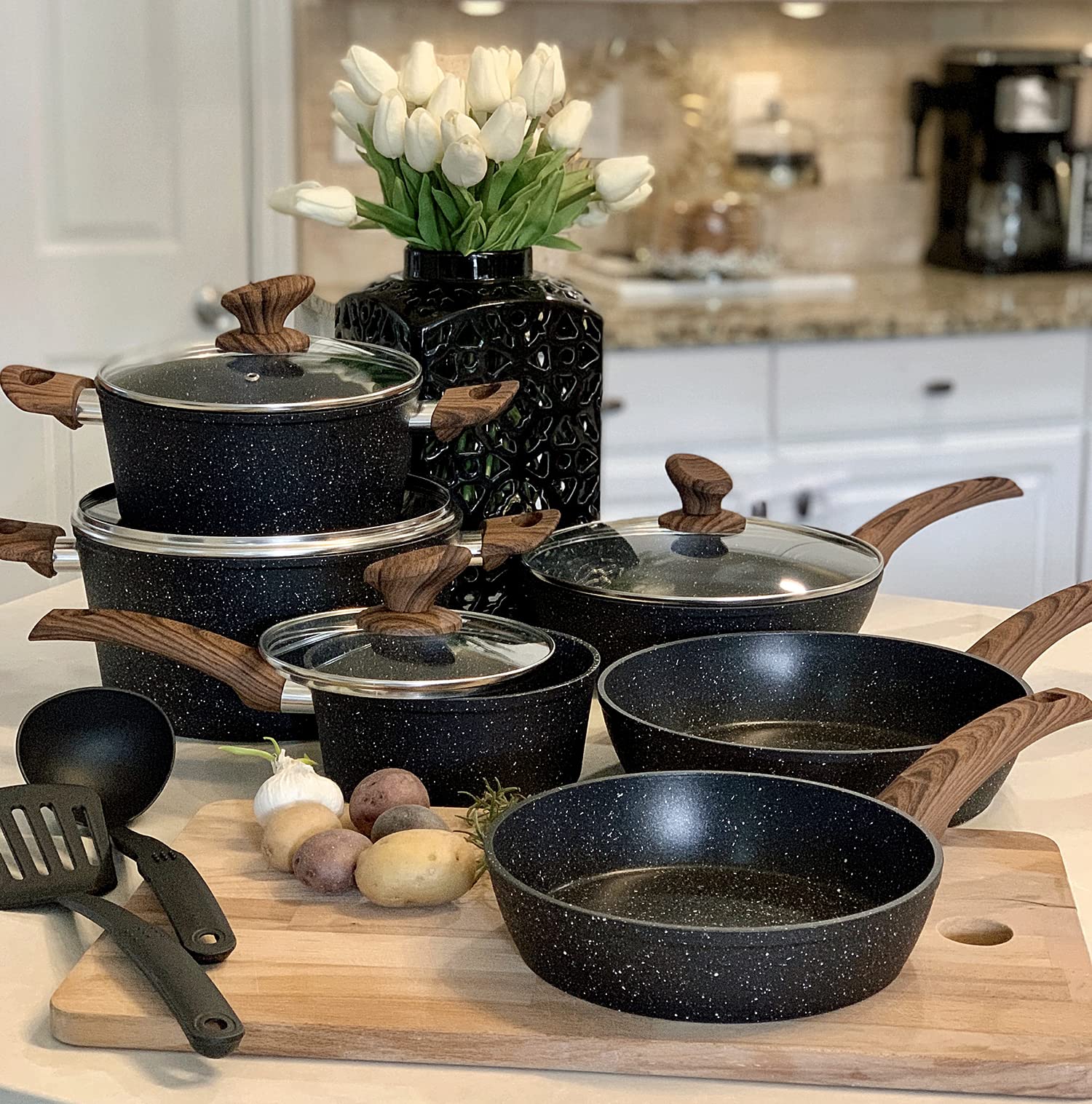
Granite-style nonstick that heats quickly, resists sticking with acidic foods, and is induction compatible.
Why I picked it: Reliable nonstick release and a full complement of pans for everyday cooking.
Best for: Anyone who wants easy food release and low-fat cooking on induction.
Budget-friendly nonstick.
Pros
- Strong granite nonstick release
- Heats quickly with aluminum core
- Safe with acidic foods
- Comfortable Bakelite handles
Cons
- Hand-wash recommended to preserve coating
- Bakelite handles limit oven use
- Avoid metal utensils to protect finish
My take
I used the Kitchen Academy set for eggs, tomato-based sauces, and quick sautés. Food slid right off the surface and cleanup was mostly a wipe-and-rinse affair when I followed the hand-wash recommendation.
The pans warm up fast thanks to the aluminum core and the flat sides help prevent splatter when I stir delicate dishes. I cooked everything at medium heat as the manufacturer recommends, and the pans browned and finished evenly.
If you want an easy-care, affordable nonstick that works on induction and handles acidic foods without flavor transfer, this set is a solid choice—just protect the coating and don’t put the hot Bakelite handles in a hot oven.
4. KitchenAid Hard Anodized Induction Nonstick 10-Piece Set – Best for Searing
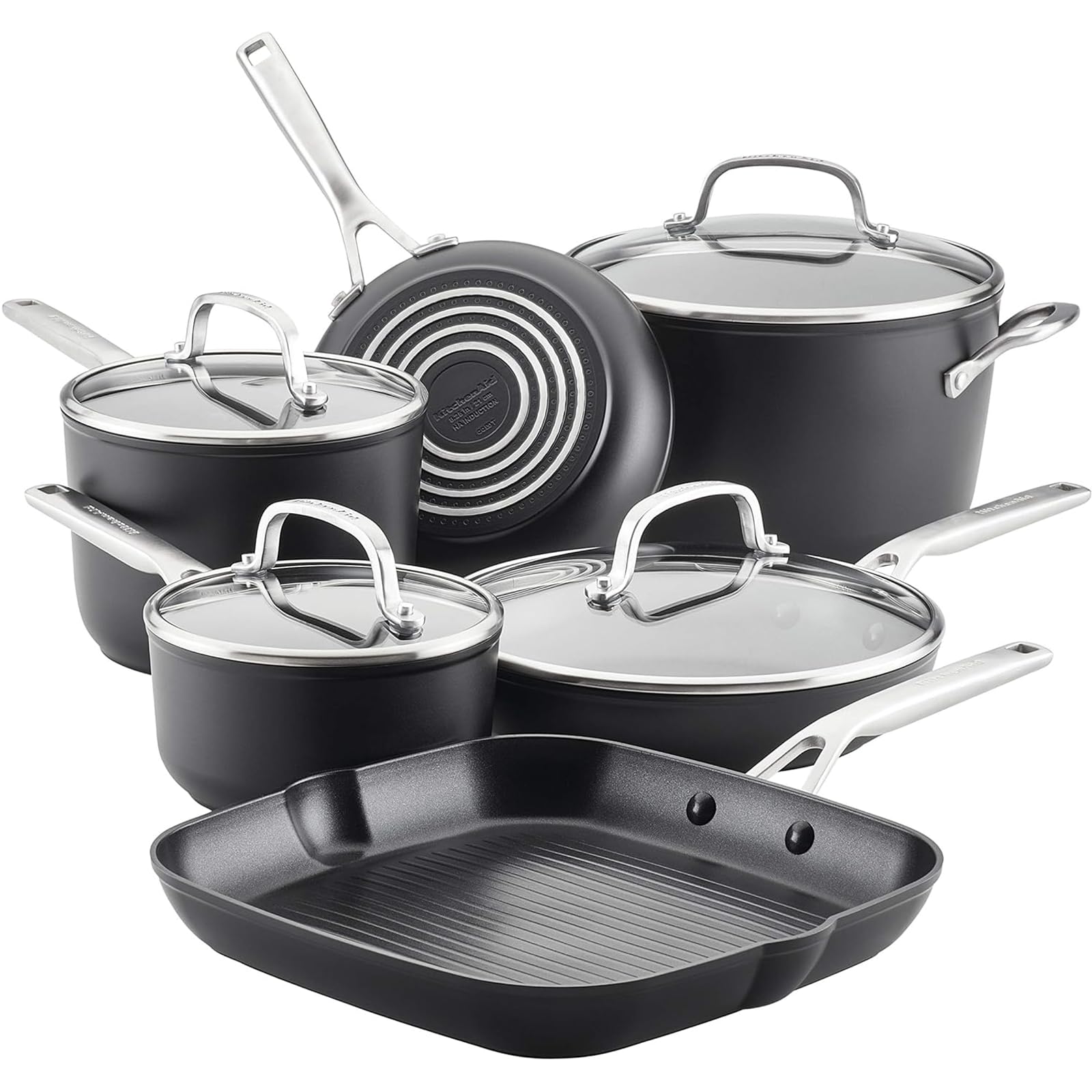
Hard-anodized aluminum with a triple-layer nonstick finish and forged bases for even browning on induction.
Why I picked it: Thick forged base and robust nonstick make searing and cleanup effortless.
Best for: Searing, daily nonstick cooking, and oven finishing up to 500°F.
Higher-end within nonstick category.
Pros
- Thick forged base for even heat
- Triple-layer nonstick release
- Oven-safe to 500°F without lids
- Tempered-glass lids let me monitor food
Cons
- Lids can scratch if mishandled
- Set is on the heavier side
- Use gentle cleaners to preserve finish
My take
I relied on this KitchenAid set for quick sears, veggies and soups. The thick base delivered consistent browning and the triple-layer nonstick made cleanup nearly effortless—most residues wiped away with a soft cloth.
The grill pan in the set gave a great sear on steaks on my induction cooktop, and the tempered glass lids helped me hold temperatures without lifting the lid.
One caution: I noticed a scratched lid on a piece that was carefully hand-washed, so I treat lids with extra care. Overall, the pans themselves remained dependable for everyday use and heavier cooking.
5. Cook N Home 12-Piece Nonstick Pots and Pans Set (Turquoise) – Best Value
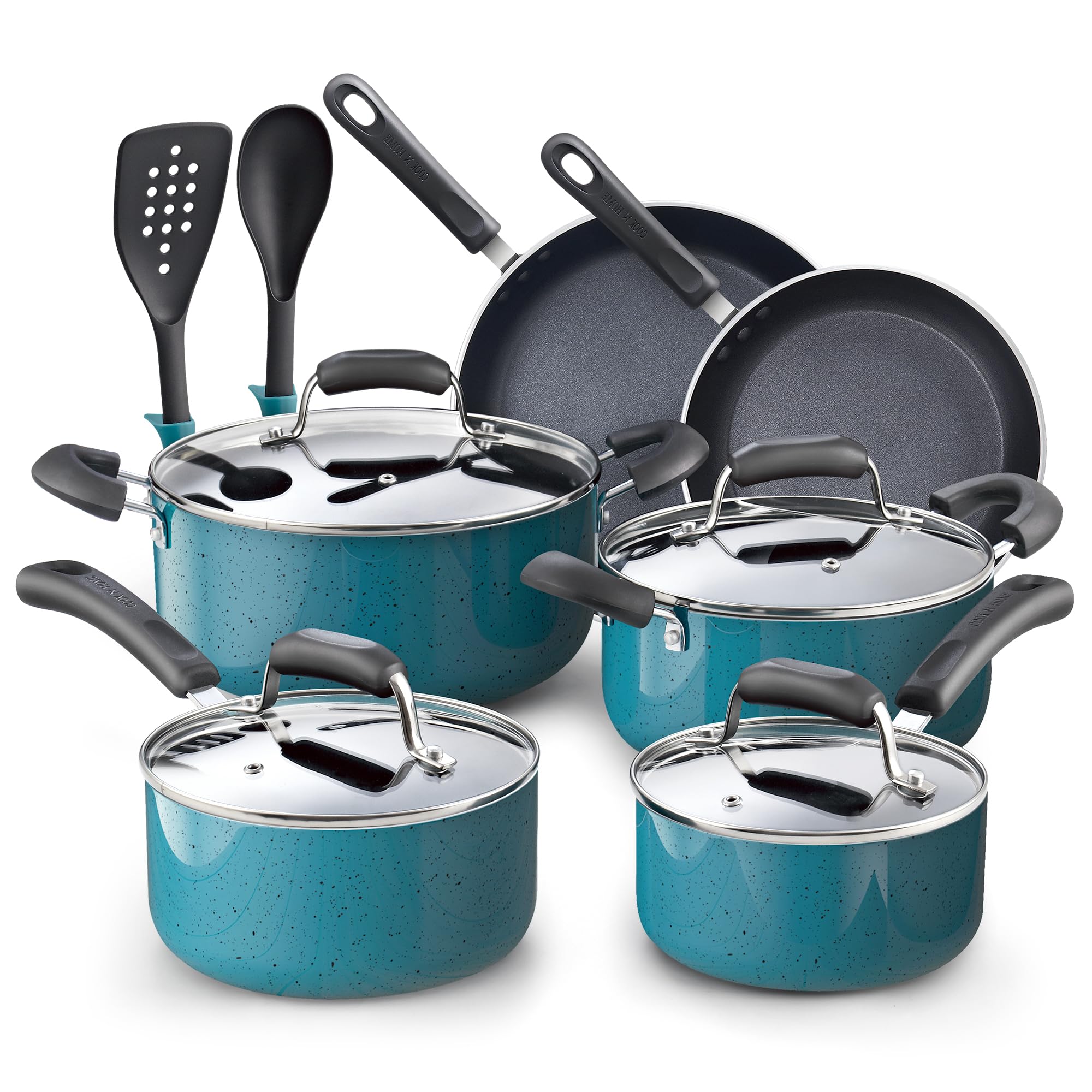
Thick-gauge aluminum construction, tempered glass lids, and a wide range of useful sizes in a colorful finish.
Why I picked it: Strong heat conduction and a useful piece selection at a friendly price point.
Best for: Shoppers who want a complete, everyday set without fuss.
Very affordable choice.
Pros
- Thick aluminum for quick, even heating
- Tempered glass lids with steam vents
- Soft-touch handles stay comfortable
- Looks great on the stove
Cons
- Occasional shipping damage reported
- Nonstick needs care to last
- Provided utensils are basic
My take
I used this Cook N Home set as my daily go-to for weeknight dinners and found it reliably even-heating and easy to handle. The tempered lids with vents let me watch stews and simmering sauces without losing steam.
The turquoise finish held up well and cleaning was straightforward when I avoided metal utensils. I did encounter one dent on arrival in one kit, but the cookware itself performed well once in regular rotation.
For a bright, practical set that covers all the basics and performs at an accessible price point, this one delivers.
6. CAROTE 24-Piece Nonstick Titanium Cookware Set – Best for Large Households
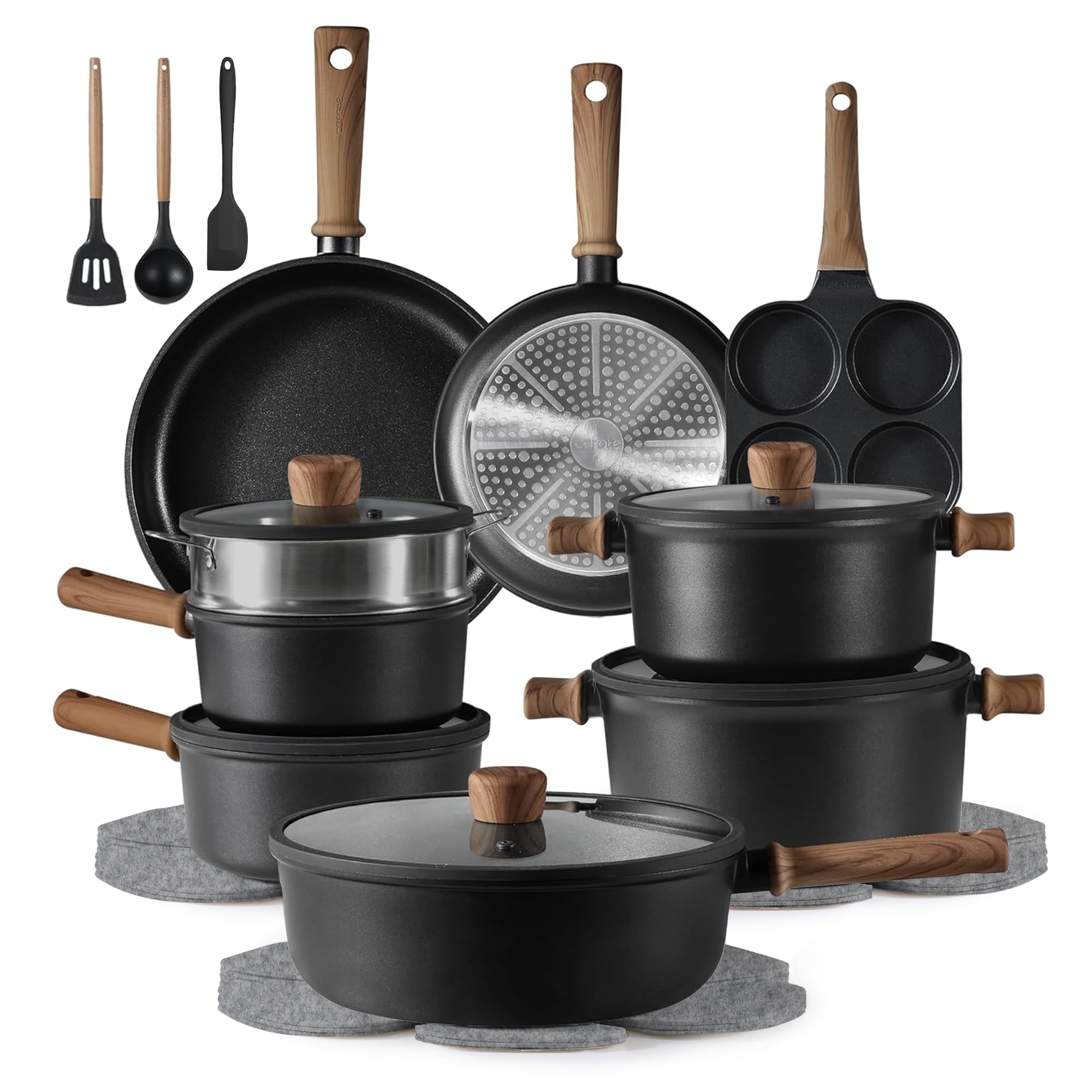
Large, comprehensive set with a titanium nonstick finish, silicone-sealed glass lids, and die-cast aluminum construction for even heat.
Why I picked it: Extensive piece count and strong titanium nonstick make feeding a crowd easy.
Best for: Families or cooks who want many sizes and accessories in one buy.
Great value for a large set.
Pros
- Excellent titanium nonstick release
- Die-cast base for uniform heat
- Silicone-sealed lids lock in moisture
- Comes with warranty and many pieces
Cons
- Assembly required for handles
- Hand-wash recommended to avoid residue
- Set takes more storage space
My take
I assembled the CAROTE pieces in minutes and immediately appreciated how nothing stuck—even eggs came out perfectly. The titanium finish really lives up to the easy-release claims and cleanup was minimal after most meals.
The silicone-sealed glass lids created a tight seal that kept braises and stews beautifully moist, and the die-cast aluminum bottoms distributed heat evenly across the induction surface.
This is the set I reach for when I’m cooking several dishes at once or feeding a group—plenty of sizes mean I rarely need a second pan, and the included warranty provides reassurance.
How I Choose Induction Cookware
Materials and What They Mean
I prioritize a magnetic base for induction compatibility—stainless or aluminum with a bonded steel base works best. Hard-anodized aluminum heats fast and resists warping, while 18/10 stainless is unbeatable for searing and oven work.
Nonstick coatings make cleanup effortless, but they require gentler care. If I need high-heat searing, I prefer uncoated stainless or a heavy forged base.
- Stainless steel with aluminum core: even heating and durability
- Hard-anodized aluminum: durable, excellent heat conduction
- Nonstick/titanium: easy release, lower heat recommended
Base and Heat Distribution
I test pans for a flat, robust base that sits fully on my induction element. A multi-layer or full-cap base reduces hot spots and gives consistent browning.
If you often move pans from stovetop to oven, check the oven-safe temperature—some sets reach 500°F while others limit lids or handles to lower temps.
- Full-cap or bonded bases for best conduction
- Forged or thick bases help with heavy searing
- Check oven-safe temps for both pan and lids
Handles, Lids, and Practicality
I prefer riveted or cast stainless handles for a secure grip—some plastic or Bakelite handles feel comfortable but will limit oven use. Tempered glass lids are handy for monitoring food, while stainless lids are virtually indestructible.
Dishwasher-safe claims are useful, but I often hand-wash nonstick pans to extend coating life.
- Riveted/solid handles for durability
- Tempered glass lids for monitoring
- Consider storage footprint for large sets
Set Composition and Value
I match the set size to my cooking habits: a 3–5 piece core is enough for minimalists, while 10–24 piece sets suit families or multi-course cooks. Look for essential items (saucepan, sauté pan, frypan, stockpot) plus extras you’ll actually use.
Warranty and replacement-lid availability have saved me headaches; I consider those perks when a set feels close between choices.
- Prioritize pans you’ll use daily
- Look for manufacturer warranty and parts availability
- Choose a set that fits your storage and cooking style
Frequently Asked Questions
How can I tell if a pan will work on my induction cooktop?
I use a simple magnet test—if a magnet clings to the bottom, the pan will work on induction. Also check the product notes for “induction compatible” or a bonded steel base.
Can I use metal utensils on these pots and pans?
I avoid metal on nonstick interiors to preserve the coating. For stainless or hard-anodized surfaces I’ll use metal tools, but softer silicone or wooden utensils are my go-to to extend cookware life.
Do I need to hand-wash all induction cookware?
I follow the manufacturer’s care guidance. Many stainless and hard-anodized sets are dishwasher-safe, but hand-washing is kinder to nonstick coatings and will extend performance.
Final Take
After cooking with every set in this roundup, I found that the right induction cookware depends on how you cook: choose stainless for searing and oven work, hard-anodized for heavy daily use, and titanium or granite nonstick for low-effort cleanup.
If you want my single recommendation for most people, the Farberware Classic set offers the best balance of performance, useful extras, and everyday practicality on induction cooktops.
Whichever set you pick, pay attention to base construction, oven limits, and care instructions—those factors determine how the cookware performs and how long it lasts.
