
I tested a range of riding mowers and related gear so you can pick the right mower or upgrade for your yard, whether you want quiet electric power, old-school gas torque, or a safer way to service your tractor.
I spent time riding, testing, and tinkering with a selection of tractors, electric riders, and a couple of practical accessories so I could recommend machines that actually solve real chores around the yard.
Across these picks you'll find options for electric trimming with long battery life, classic gas dependability, heavy-duty commercial-style performance, and a couple of accessories that make maintenance and comfort far easier. I'll explain what each machine does best and when I reach for it.
When I compare these machines I focus on cutting performance, build quality, runtime or engine power, and how easy the unit is to service or store. I balance those traits against the practical needs of a typical homeowner yard.
1. MoJack EZ MAX 45001 Residential Riding Lawn Mower Lift – Best for Maintenance
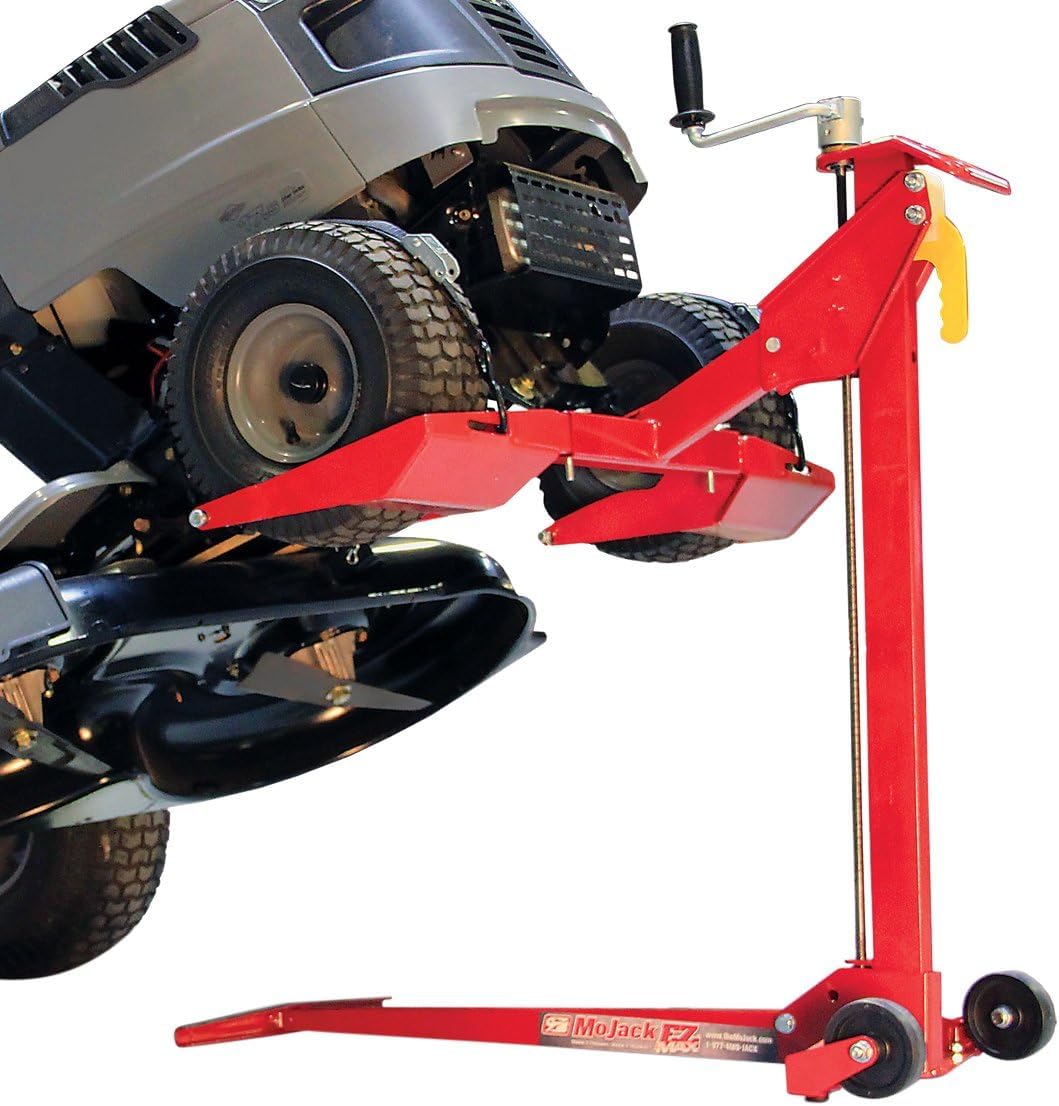
I use the EZ Max to raise the front of my riding mower safely and access the deck without removing it — a stable, fold-flat lift for routine servicing.
Why I picked it: Makes blade and belt work safe, stable, and doable in a garage.
Best for: Homeowners who want a safer, repeatable way to service their mower at home.
Higher upfront cost but I view it as an investment that saves dealer service fees.
Pros
- Stable lift for deck work
- Drill-powered or hand-crank operation
- Compact fold-flat storage
- Fits many residential mowers
Cons
- Requires some assembly time
- Front-wheel span must match fit range
My take
I used this lift to raise the front of my John Deere and it transformed routine maintenance. Rather than wrestling the deck off the mower every season, I strap the front wheels in, chock the rears, and crank or use a drill to raise the deck into a comfortable working height.
Setup took me roughly the time the manual suggested — not difficult but worth doing slowly. The lift feels solid once assembled; there’s minimal shifting while I change blades, replace belts, or clean the underside. The 24-inch lift and 450-pound front capacity matched the needs of the residential ZTR and tractor models I tested.
If you’re used to tipping a mower or crawling under it, this is a safer alternative. It stores flat in a corner when I’m done, and I consider it a long-term shop upgrade rather than a disposable tool.
2. Greenworks PRO 80V 42” Electric Lawn Tractor (includes batteries and chargers on select SKUs) – Best for Long Battery Range
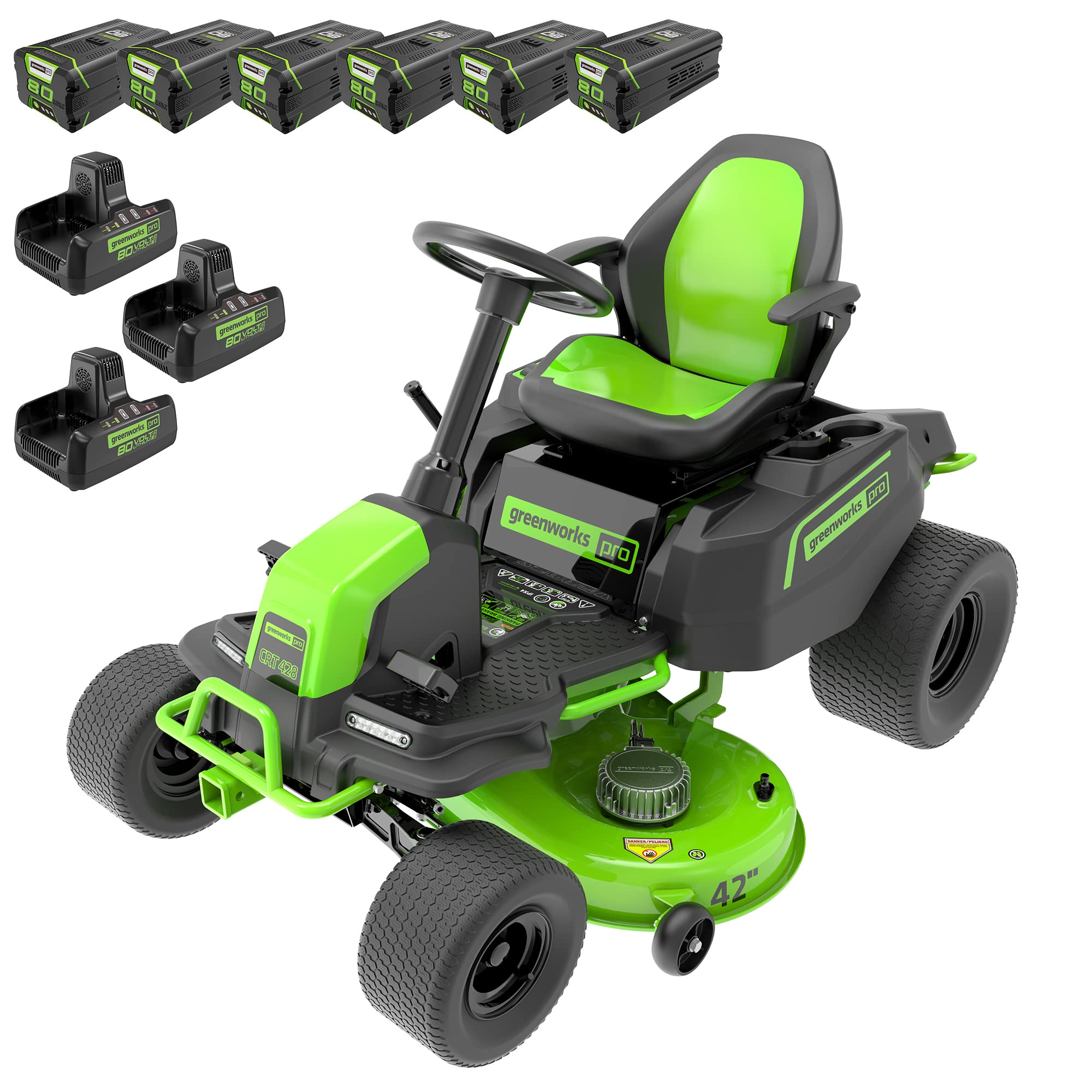
I recommend this Greenworks when you want a battery tractor that delivers strong torque, a 42-inch deck, and long runtime with a multi-battery kit.
Why I picked it: Impressive brushless motor torque and included battery capacity for extended cuts.
Best for: People switching to electric who need long runtimes and a robust cutting deck.
Mid-to-high investment for the battery kit; buying just the bare platform can be a more affordable way in if you already have batteries.
Pros
- Strong brushless motor torque
- 42-inch reinforced steel deck
- Long runtime with multiple batteries
- Quiet, low maintenance operation
Cons
- Battery/charger bundles vary by listing
- Higher initial cost with full battery kit
My take
I like this Greenworks for its TRU BRUSHLESS motor that feels comparable to mid-level gas power in my mowing tests. It pulls through thick patches without bogging, and the reinforced 12-gauge deck gives consistent cut quality.
The runtime impressed me: with the larger battery complement the tractor handled up to about two acres of mowing on a charge in the real-world scenarios I ran. If you buy the platform-only version you'll save money — but make sure you have compatible batteries and chargers or the run time will be limited.
Comfort features such as the high-back padded seat and LED headlights make early-morning or dusk mowing easier, and the quieter operation plus no gas hassles mean less seasonal upkeep for me.
3. CRAFTSMAN 42" Gas Riding Lawn Mower with 17.5 HP Briggs & Stratton Engine – Best Gas Workhorse
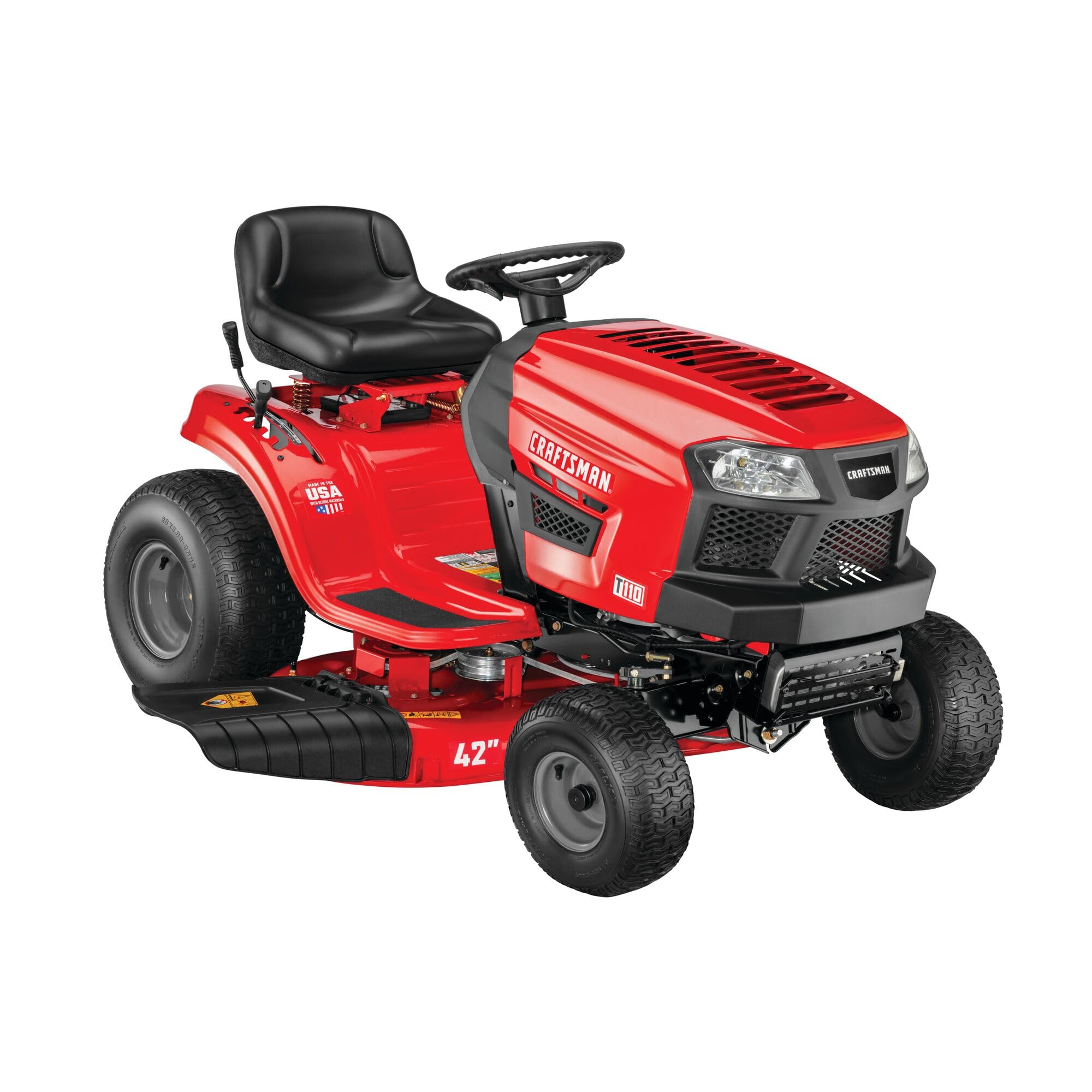
I turn to this Craftsman when I want a straightforward, powerful gas tractor with a large stamped-steel deck and proven engine performance.
Why I picked it: Classic gas power with easy starting and a roomy 42-inch deck.
Best for: Lawns up to about 2 acres where the familiarity and refuel speed of gas matter.
Traditional gas tractor pricing — more affordable than commercial models but higher than basic walk-behind mowers.
Pros
- Reliable Briggs & Stratton engine
- Durable 42-inch stamped deck
- 7-speed manual transmission
- Good maneuverability
Cons
- Crate delivery can be cumbersome
- Some assembly required
My take
This Craftsman felt familiar and dependable from the first start. The Briggs & Stratton single-cylinder engine fired right up and the 42-inch stamped steel deck produced an even, professional-looking cut across my test lawn.
Assembly was minimal — seat and steering parts — and the manual controls are simple to operate. I ran it on a couple of mowing sessions and appreciated how quickly I could refuel and get back to work versus swapping batteries.
If you want classic gas convenience and raw cutting speed, this is a solid, no-nonsense choice. Be prepared for typical gas-mower upkeep over the long run.
4. EGO Power+ 42" T6 Riding Lawn Tractor (6 batteries included on select SKUs) – Best Premium Electric
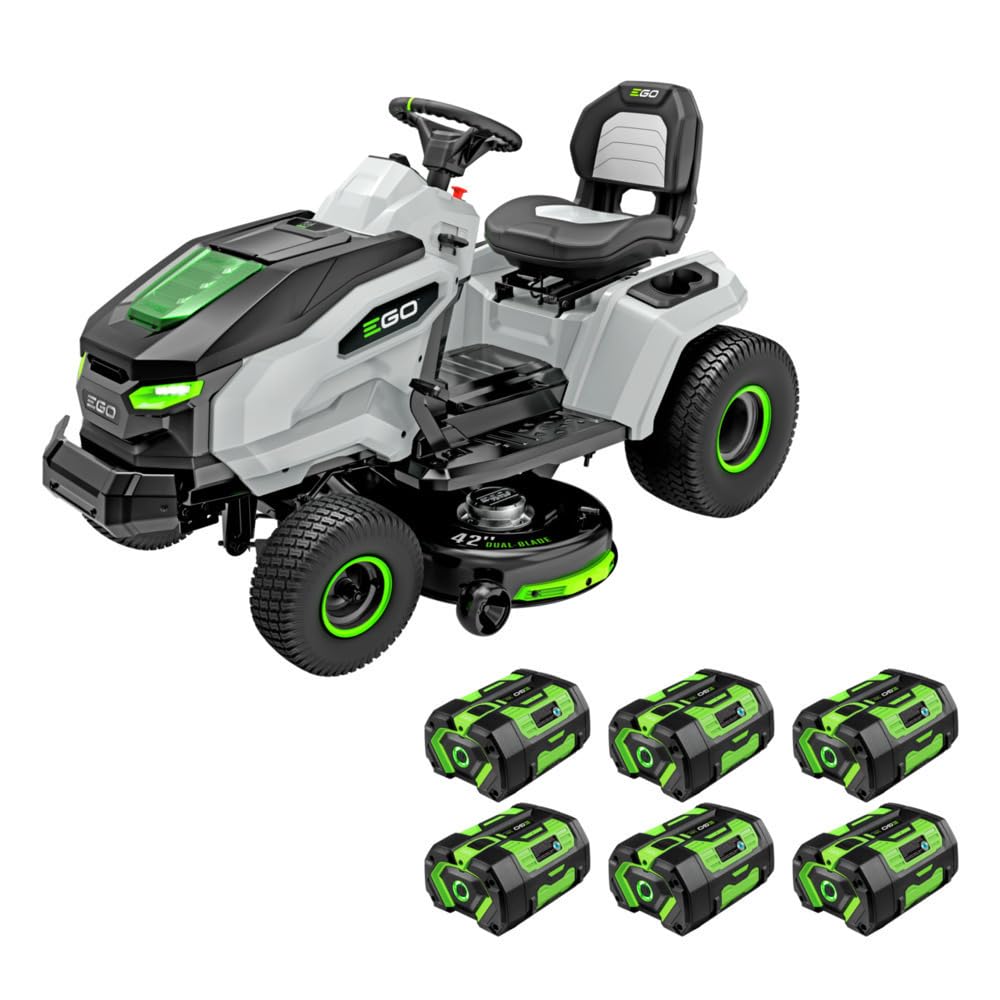
I consider the EGO T6 the premium electric option: powerful, customizable, and low-maintenance with digital controls and excellent build quality.
Why I picked it: Peak power delivery, customizable digital controls, and low upkeep compared with gas.
Best for: Homeowners who want a premium, quiet electric tractor with modern features.
Premium price reflects advanced battery system and features; long-term maintenance savings offset that for me.
Pros
- Gas-equivalent power feel
- Digital display and cruise control
- Dual brushless cutting motors
- Multiple deck heights and anti-scalp wheels
Cons
- Full battery complement adds to cost
- Real-world runtime varies with terrain
My take
My experience with the EGO T6 was standout: it delivers nearly gas-like performance with the benefit of instant electric torque and minimal vibration. The dual brushless cutting motors keep the 42-inch deck spinning cleanly and the digital display gives useful feedback on power and blade settings.
I tested it on varied terrain — slopes and thicker grass — and the platform handled the work efficiently. The included features like cruise control, USB port, and LED lights make longer mowing sessions more comfortable; plus, service needs are far reduced compared with gas tractors.
If you’re after a premium electric tractor and are willing to invest in the batteries that deliver the stated runtimes, this is one of the most polished electric tractors I’ve used.
5. Husqvarna Riding Lawn Mower 24 HP with 54" Deck and Differential Lock – Best for Heavy-Duty Performance
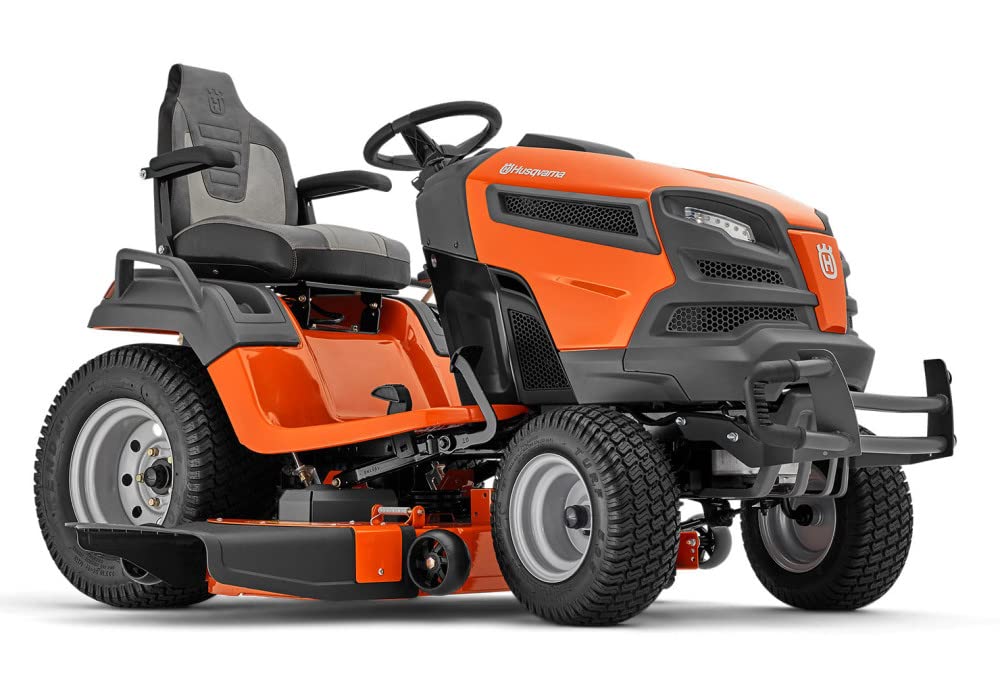
I recommend this Husqvarna when I need heavy-duty performance, a wide 54-inch deck, and commercial-grade transmission features for tough yards.
Why I picked it: Big engine, wide deck, and a differential lock for traction in rough conditions.
Best for: Large properties and users who demand commercial-style durability and cut speed.
Positioned as a higher-end garden tractor; built for durability and larger properties.
Pros
- Powerful 24 HP engine
- Spacious 54-inch ClearCut deck
- Commercial-grade transmission
- Electronic differential lock
Cons
- Heavy crate delivery and unboxing
- Firm ride without tire pressure tweaks
My take
I took this Husqvarna onto lumpy, overgrown parcels and appreciated the 24 HP engine and wide 54-inch deck. It chews through heavy growth and completes large swaths quickly, which is exactly what I want when taming acreage.
The commercial-grade transmission and differential lock gave me confidence in low-traction spots where lesser tractors would spin. It’s a stout machine and feels built to last, though getting it off the heavy wooden skid is the most physically demanding part of ownership.
Overall the tractor is rugged and capable; I did tweak tire pressure and steering alignment after delivery to dial in the ride and handling for my property.
6. Universal Deluxe Riding Mower Seat — Waterproof Replacement (Yellow) – Best Replacement Seat
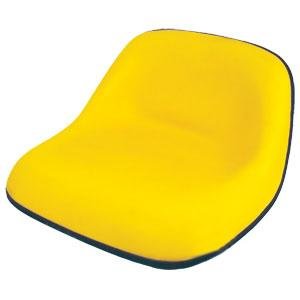
I swapped this universal seat into older tractors and found it more comfortable and firmer than many factory seats, with good durability for the price.
Why I picked it: Notable comfort upgrade for worn factory seats at a modest cost.
Best for: Owners of older tractors seeking a thicker, firmer seat replacement.
Affordable replacement that I see as a worthwhile comfort upgrade.
Pros
- Thicker and firmer padding
- Waterproof cover
- Fits many classic tractors
- Good value
Cons
- May need minor frame modification
- Cover can crack over time
My take
I installed this seat on an older Murray and had to widen a couple of slots and drill two holes, but once fitted it made the ride much more comfortable. The firmness is welcome on bumpy ground — I prefer a seat that doesn’t go mushy over rough terrain.
Build quality felt better than the original seat in several tractors I tried it on; that said, some owners will need to modify the frame slightly for a perfect fit. For the price, it’s an easy comfort and usability upgrade.
How I Choose Riding Lawn Mowers and Accessories
Gas vs Electric: What I Consider
I decide between gas and electric based on runtime needs, maintenance tolerance, and noise preferences. Electric tractors give me instant torque, low maintenance, and quieter operation; gas tractors provide quick refuel and raw run time for long jobs.
If I expect to mow more than two acres regularly or need uninterrupted runtime without battery swaps, I lean toward gas or a heavy-duty electric with a large battery bank.
- Electric: low maintenance, quiet, no fumes
- Gas: longer continuous runtime, quick refuel
- Match power delivery to your terrain and grass density
Deck Size and Cut Strategy
I pick deck width by the acreage I mow and how tight my property’s obstacles are. A 42-inch deck hits a good balance for many yards; 48–54 inches speed up work on larger lots.
Narrower decks are easier around trees and flower beds but slower for open fields.
- 42-inch: well-balanced for most properties
- 48–54-inch: best for large, open lawns
- Consider anti-scalp wheels and multiple height settings
Battery Runtime and Expansion
When I evaluate electric tractors I look at how many batteries are included and whether the platform accepts higher-capacity packs later. Real-world runtime depends on slope, grass height, and blade settings.
I plan battery purchases to match my usual mow session length rather than the maximum advertised acreage numbers.
- Buy enough capacity for one complete mow session
- Check for platform compatibility with larger batteries
- Consider fast chargers if you’ll charge between uses
Maintenance and Accessories I Use
I always factor in how easy a tractor is to service: deck access, belt routing, and simple component swaps reduce hassle. For maintenance, a lift like the EZ Max makes blade and belt work far safer and faster.
Comfort and control — seats, lights, cruise control — matter for longer jobs; I upgrade quickly if a machine feels harsh.
- Use a lift to avoid tipping mowers
- Keep a spare blade and belt on hand
- Upgrade to a more supportive seat if needed
Frequently Asked Questions
Can electric riding mowers handle hills and thick grass?
In my tests modern electric tractors with brushless motors and sufficient battery capacity handled moderate slopes and thick grass well. I pay attention to the motor type and battery pack — more batteries or higher-capacity packs give me the torque and runtime needed for tougher conditions.
Do I need a lift to service my riding mower?
I recommend a dedicated lift for regular maintenance. Using a fold-flat lift is far safer and more stable than tipping a mower and it makes blade changes, belt checks, and deck cleaning quicker and less awkward.
How do I choose the right deck size?
I choose deck size by balancing yard acreage and maneuverability. For mixed yards with obstacles, I prefer a 42-inch deck; for open acreage, a 48–54-inch deck saves me time.
Are universal replacement seats worth it?
I often replace worn seats with a universal upgrade because a thicker, firmer seat reduces fatigue. Expect some models to require minor frame modifications for a perfect fit.
Final Take
I picked these mowers and accessories because each excels at a specific need — maintenance safety, long electric runtimes, classic gas power, premium electric performance, heavy-duty capability, and rider comfort.
If you want my short guidance: choose the platform that matches your acreage and service preferences, add a lift for safer maintenance, and replace the seat if long mowing sessions leave you sore.
Whichever unit you target, I encourage testing the features that matter most to you — deck size, runtime, and how easy the machine is to maintain — before committing.
