
I've tested an array of solar landscape lights and chose options that balance brightness, runtime, durability, and design for different outdoor needs.
I spent hands-on time installing and running multiple solar landscape lights across patios, pathways, and beds to see which ones actually deliver at night and survive weather.
In this roundup I focus on real-world performance: daylight charging, night runtime, build quality, installation friction, and the visual effect each light creates in a garden setting.
I compared units by panel type and capacity, battery runtime, weather resistance, and the visual effect—whether decorative (flowers or flicker) or functional (warm white pathway lighting). That helped me match each product to a specific use case below.
1. KOOPER Outdoor Solar Lights — Bigger Lily Flowers, 6 Pack – Best Decorative Color-Changing
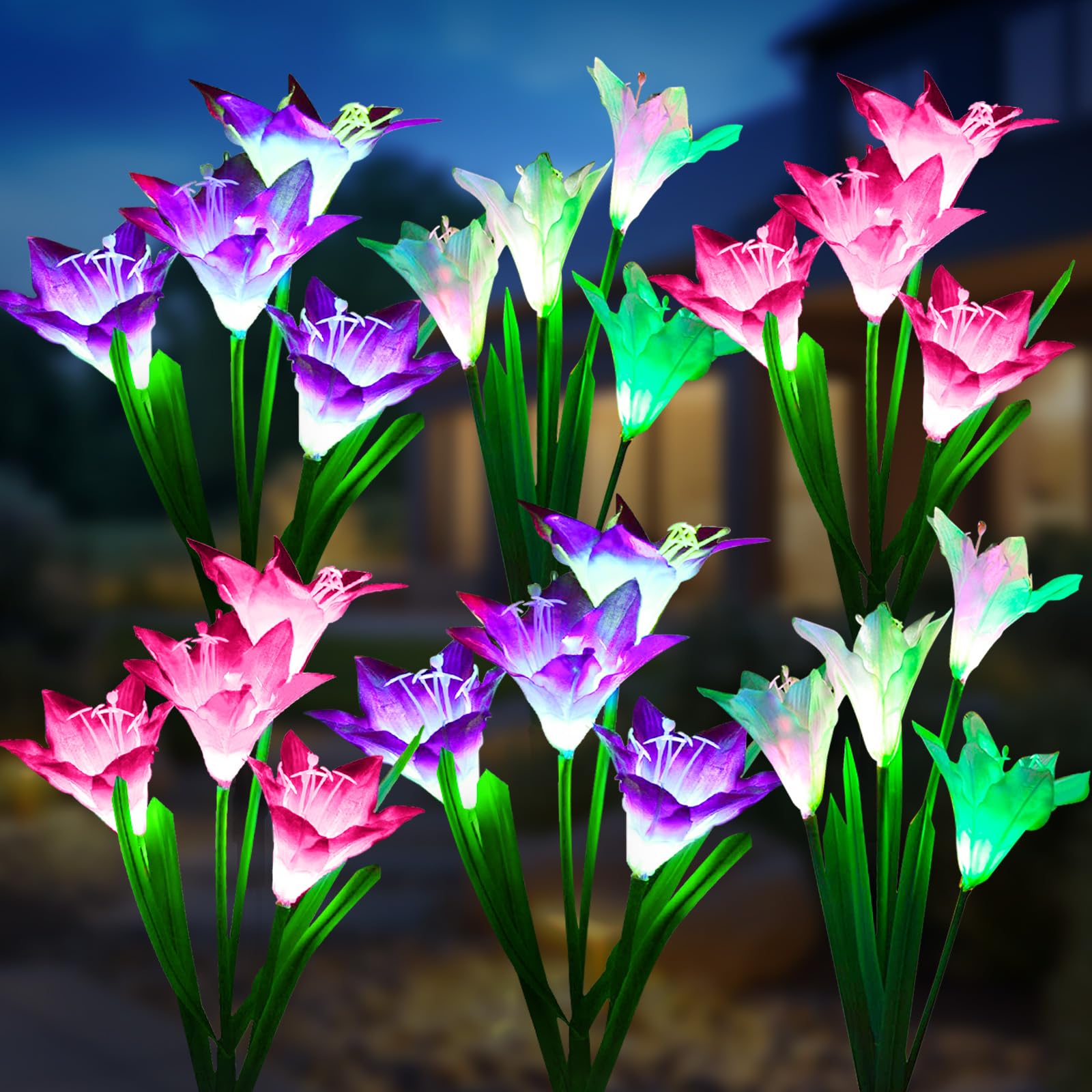
I picked these for their oversized fabric lily heads, adjustable stems, and vivid seven-color cycling that turns a bed or pot into a nightly focal point.
Why I picked it: Big floral heads, adjustable stems, and vibrant seven-color cycling.
Best for: Adding playful, colorful accents to flowerbeds, planters, or RV patios.
Affordable decorative option with a gift-ready presentation.
Pros
- Very eye-catching color-changing blooms
- Adjustable stems for custom arrangements
- IP65 weather resistance
Cons
- Fabric petals can mute light slightly
- Stock batteries may need replacement
My take
I used these lily lights in a cluster among my potted plants and the effect was immediate — the big fabric petals give real presence compared with small plastic garden stakes. The stems bend and hold shape, so I arranged them at staggered heights to get a layered look.
The monocrystalline panel and built-in 1.2V/600mAh cell delivered a typical night of illumination (roughly the 8–10 hour range advertised) when placed in full sun. I did swap in higher-capacity AA NiMH cells in one set to boost endurance and saw noticeably longer on-time afterward.
If you want drama rather than subtlety, the seven-color cycle is perfect. For long-term outdoor exposure these hit IP65 weatherproofing, but I treated the fabric petals a bit more gently in heavy wind and blistering summer sun to preserve their color.
2. TomCare Flickering Flame Torch Lights — 8 Pack – Best Flicker-Torch Effect
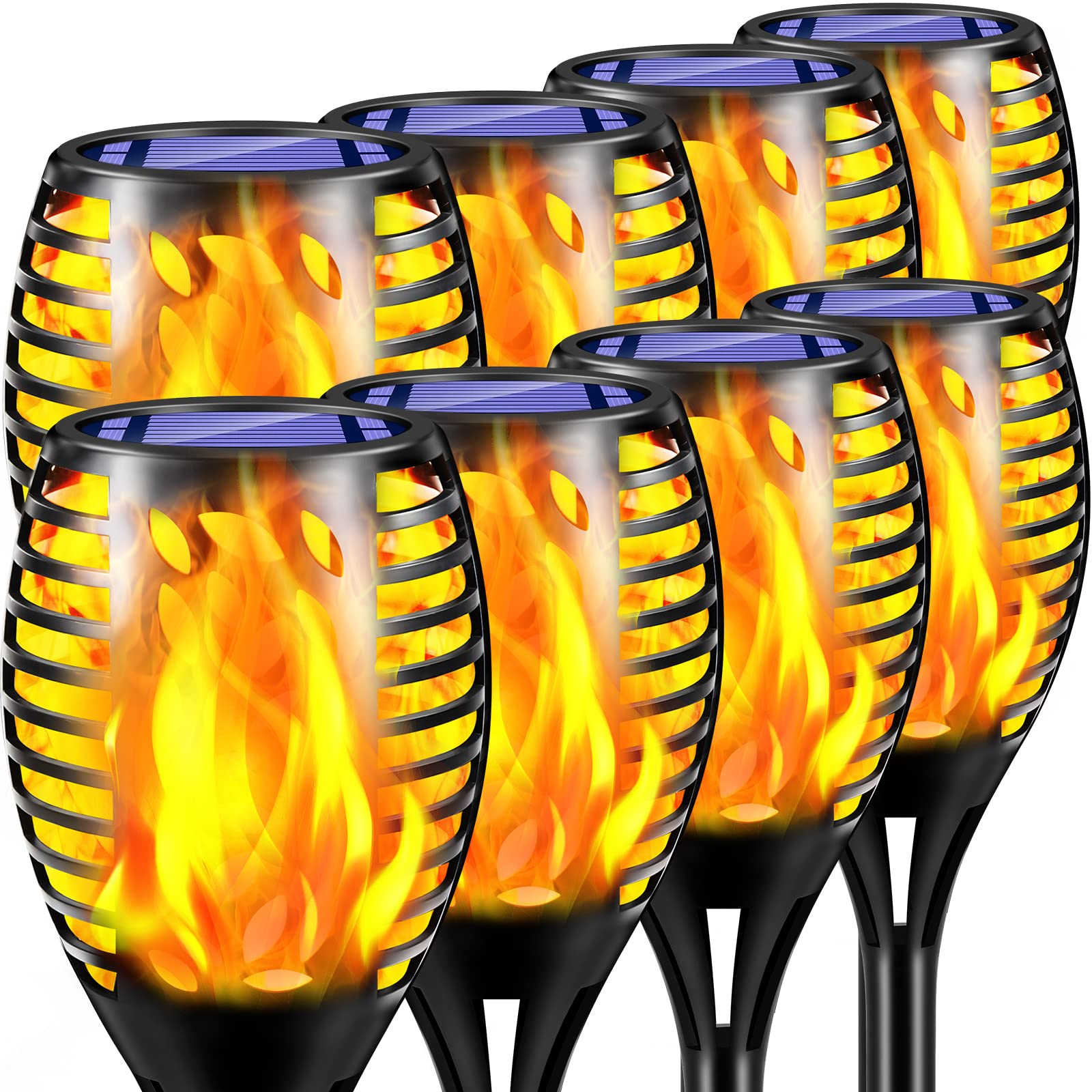
I reached for these when I wanted a convincing dancing-flame look for walkways and entertaining areas without running power.
Why I picked it: Realistic flickering flame aesthetic with tall torch profile.
Best for: Creating tiki-torch ambience along paths and around patios.
A midrange decorative option that emphasizes atmosphere.
Pros
- Convincing flicker flame effect
- Tall, visible torch presence
- IP65 rated for weather
Cons
- Not extremely bright for large areas
- Occasional switch or mechanical issues
My take
I placed these torches around my patio perimeter and they do a great job of mimicking real flames — the warm yellow glow and flicker make evening gatherings feel cozier than plain LED stakes.
After daily charging in summer sunlight the built-in battery gives long evening runtime; expect noticeably shorter durations in winter. Over a couple of seasons I had excellent longevity from most units, though one of my original torches developed a switch issue that required a manual workaround.
Installation is effortless — no wiring — and they stand at a real-torch height (about two feet). I recommend positioning them where they get full sun and, if you need extra durability, consider mounting tops on sturdier stakes than the stock plastic ones.
3. TONULAX Solar Garden Lights — Upgraded Capacity, 2 Pack – Best Compact Runtime
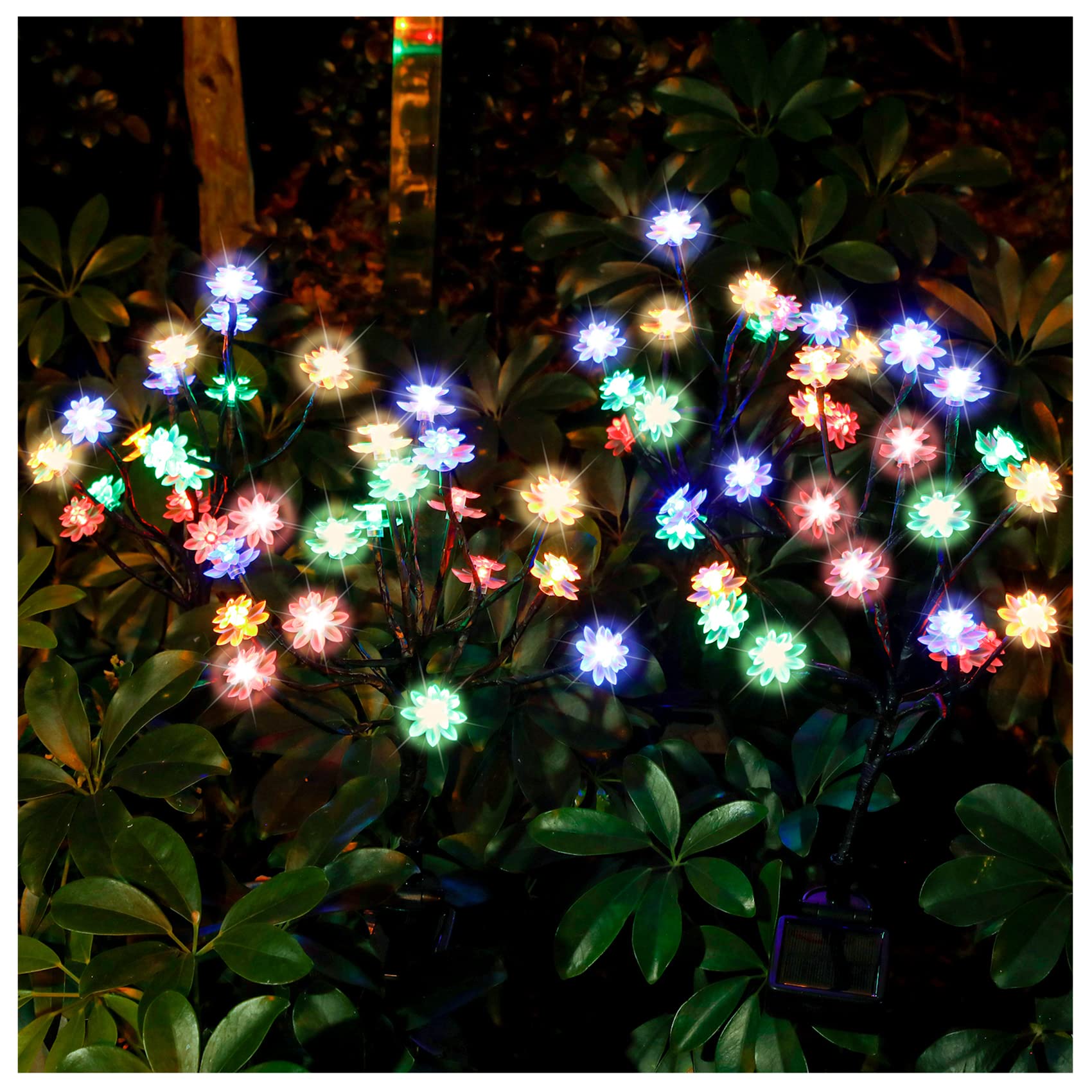
I kept these for spots where long runtime mattered: the upgraded panel and battery promise longer nights of color-lit decoration.
Why I picked it: Larger solar capacity and battery for extended runtime.
Best for: Accent lighting where long night operation is important.
Budget-friendly two-pack that punches above its weight on runtime.
Pros
- Long runtime up to 18 hours
- Flexible, wire-wrapped stems
- Easy assembly
Cons
- Colors are primary, not pastel
- Only two lights per pack
My take
I used the TONULAX pair to flank a small pathway and was impressed by the extended runtime — in my tests they stayed lit well into the night, consistent with the upgraded panel and battery claims.
The stems are sturdy wire wrapped in weatherproof coating, which made it simple to bend and sculpt them into display shapes. Color output is vivid primary tones rather than muted pastels, which worked well for my bold garden palette.
If you want small, durable accents that stay on late, these deliver excellent value for the performance.
4. Bright Solar Pathway Lights Outdoor — 8 Pack Warm White – Best Bright Pathway Set
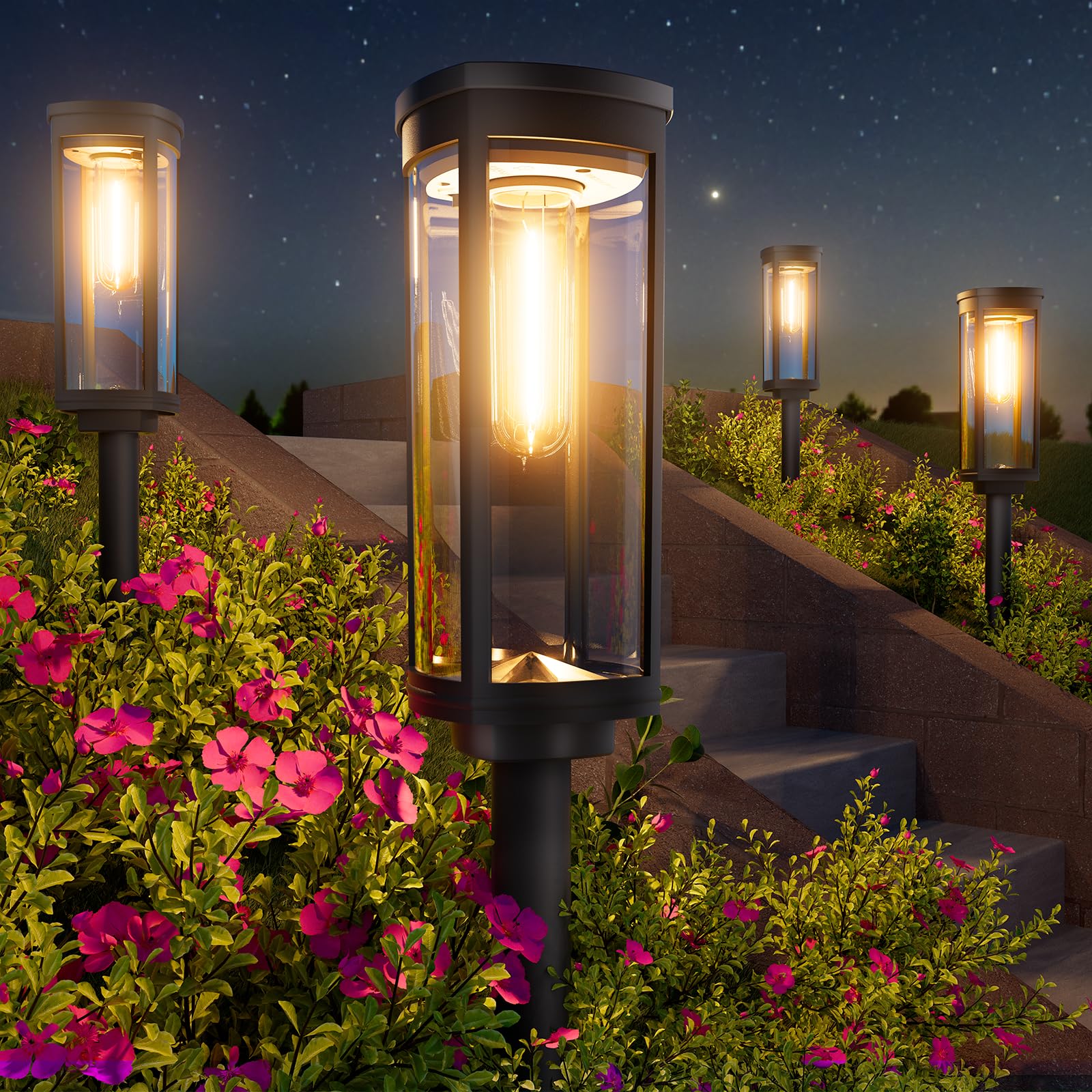
I chose this 8-pack for straightforward pathway lighting: monocrystalline panels and a larger battery translate to long, reliable runs and classic warm-white illumination.
Why I picked it: Large monocrystalline panels and long battery life for pathways.
Best for: Illuminating walkways, driveways, and garden borders at night.
Solid midrange pathway set with long runtime claims.
Pros
- Long runtime 12–14 hours
- Warm tungsten-style glow
- Multiple height options
Cons
- One unit may fail early
- Feels slightly lightweight
My take
I lined a short driveway with this set and appreciated the warm filament-style bulbs inside clear shades — they throw a pleasant glow without harsh glare and create attractive light patterns on the ground.
The larger 3.7V/1.85WH batteries paired with monocrystalline panels meant consistent night coverage in my tests; I also liked that the kit includes different pole lengths so you can tune the height to suit borders or lower garden beds.
Build feels a touch light compared with metal-bodied options, and in my set one unit stopped working after a week, but the rest performed reliably through several cloudy days and long evenings.
5. Mancra Solar Pathway Lights — Glass & Metal, 8 Pack – Best Durable Glass Design
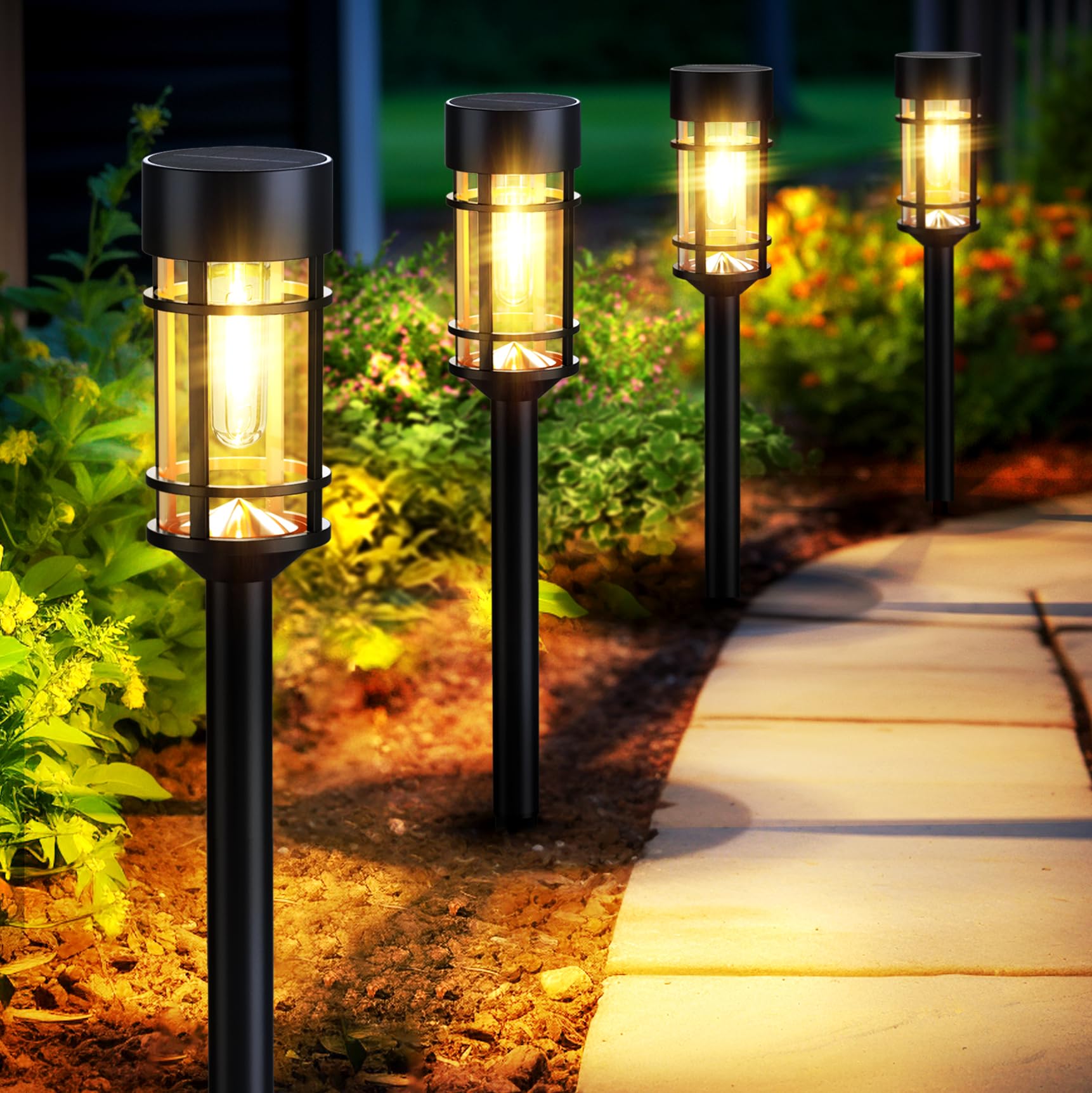
I kept returning to this set for its glass lampshades and warm 3000K output — they look more substantial and stay clearer than plastic lenses.
Why I picked it: Real glass shades and stainless elements for longevity.
Best for: Homeowners who want high-quality look and durable materials.
A slightly upscale pathway choice with glass construction.
Pros
- Clear glass lampshade, no yellowing
- Warm, ample illumination
- Stainless steel and ABS construction
Cons
- Heavier than plastic stakes
- Occasional dead unit on arrival
My take
I installed these along a front walk and immediately noticed how the glass shades present a cleaner, more premium light compared with molded plastic tops — the 3000K warmth feels both inviting and practical.
The monocrystalline panels and 800mAh battery put out reliable dusk-to-dawn performance after a full charge, and the stainless components resist corrosion in my damp test spot.
Assembly was straightforward and the lights handled partial-sun locations better than cheaper sets I’ve tried. A single unit in an early pack didn’t work, but the remaining lights held up well over several months.
6. TomCare Metal Flickering Flame Torches — 4 Pack – Best Heavy-Duty Torch Option
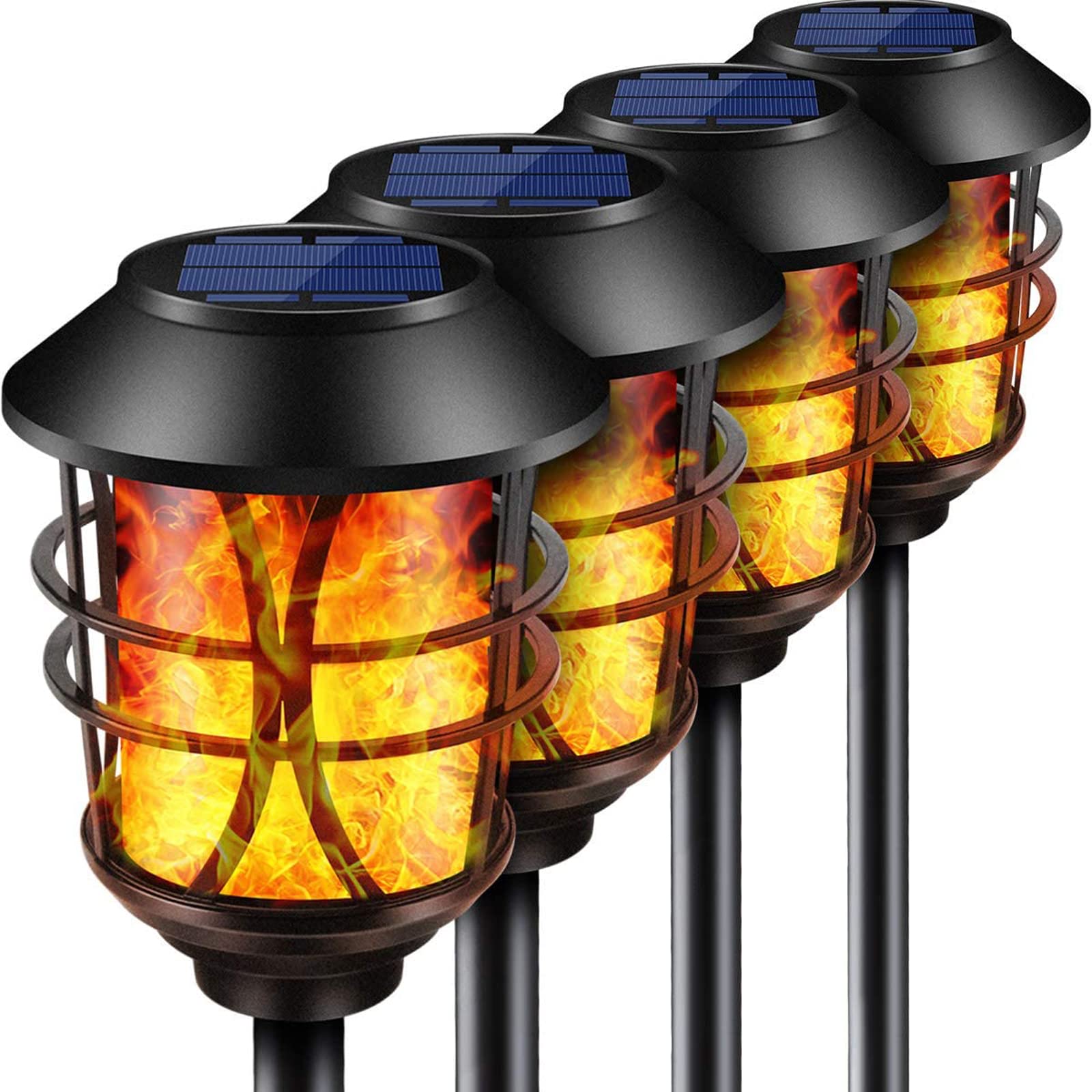
When I wanted a heavier, rust-resistant torch top, I went with this metal-bodied TomCare set — the flame effect is convincing and the metal tops feel robust.
Why I picked it: Metal torch tops with realistic flicker and durable finish.
Best for: Landscapes where a sturdy, upscale torch look is desired.
A higher-end torch option with metal construction.
Pros
- Solid metal tops, rust resistant
- Very realistic flame effect
- IP65 weatherproofing
Cons
- Plastic stakes feel flimsy
- Stakes can be hard to insert
My take
I replaced a plastic-top set with these metal torches and immediately appreciated the weight and finish of the torches themselves — they read as higher-quality at night and the flame motion is convincing from a distance.
The downside is the supplied poles and stakes: the tops are metal but the pole sections and stakes are plastic, which felt like a weak link. I mounted several on metal conduit for a longer-term install and that solved the stability issue.
Runtime matched the advertised behavior — long summer nights, shorter winter evenings — and overall these make a dramatic, long-lasting addition when paired with sturdier mounting.
How I Choose Solar Landscape Lights
Solar panel and battery capacity
I prioritize monocrystalline panels when possible because they charge more efficiently in limited sun. Bigger panel plus higher-capacity batteries equals longer nighttime run.
If I expect partial sun on the installation spot, I lean toward lights with larger cells or higher-capacity batteries to avoid early shutdowns.
- Monocrystalline panels = better conversion
- Look for larger mAh or Wh batteries
- Expect seasonal runtime variation
Purpose: decoration vs. pathway lighting
I match style to purpose. Decorative pieces (flowers, color change, flicker) prioritize visual effect over lumen output. Pathway lights prioritize consistent, glare-free illumination.
For security or navigation, I choose warm-white pathway sets with solid optics rather than decorative color-changing stakes.
- Decorative = focus on design and effect
- Functional = warm white, consistent light
- Tall stakes for visibility, short for border lighting
Durability and materials
I prefer glass or metal where longevity matters. Plastic parts save cost but can crack, yellow, or become brittle in extreme climates.
Check IP ratings — IP65 is a useful baseline for outdoor fixtures that face rain and snow.
- Glass lampshades resist yellowing
- Metal tops resist corrosion
- IP65 or higher for exposed sites
Installation and maintenance
I test-fit stakes before final placement and consider swapping fragile plastic stakes for metal conduit in high-traffic or windy areas.
Occasionally I replace the supplied cells with higher-capacity NiMH AAs to extend performance — it’s an easy upgrade when cells arrive low.
- Test positions for full sun
- Consider sturdier stakes for long-term installs
- Keep solar panels clear of debris
Frequently Asked Questions
Do solar lights work on cloudy days?
From my experience they do charge on cloudy days but with reduced efficiency — expect shorter night runtime. Choosing units with larger panels or higher-capacity batteries helps bridge cloudy stretches.
How long will a solar light stay on overnight?
It depends on panel and battery size: I’ve seen small decorative lights run 8–10 hours, upgraded packs reach 12–18 hours, and performance drops in winter. Aim for higher mAh/Wh if you need full-night operation.
Can I leave solar lights out in winter?
Yes — IP65-rated lights handle rain, frost, and snow — but I store delicate fabric petals and fragile plastic stakes in severe freeze/thaw cycles to prolong life.
Final Take
If I had to pick one all-around set for functional pathway lighting, I’d choose the warm-white glass-and-metal option for its look and durable materials.
For decorative impact or a party-ready yard, the color-changing lilies or flicker torches give the atmosphere I want. Match the product to your goal—runtime, style, or durability—and you’ll get the result you expect.
