
I tested full RO systems and replacement filters to find reliable, easy-to-maintain options for under-sink and whole-house setups. These picks focus on fit, contaminant reduction, and real-world ease of use.
I’ve spent years installing and maintaining reverse osmosis systems in my home and for friends, so I know which parts make the biggest difference: pre-filters that protect the membrane, a reliable RO membrane, and post-filters that finish the taste.
In this roundup I covered everything from full NSF-certified systems to single replacement cartridges. I focused on compatibility, how straightforward each changeout is, and the practical impact on taste and TDS numbers in everyday use.
I grouped the options into three categories: complete RO systems that take care of contaminant reduction end-to-end, multi-year filter bundles that give long-term convenience and value, and single-stage or pre-filter cartridges that protect membranes or handle whole-house sediment. My picks reflect what I’d install depending on whether I want maximum contaminant removal, the best value over years, or a quick, low-effort replacement.
1. APEC Water Systems FILTER-SET-ES High Capacity Replacement Pre-Filter Set – Best Pre-filter Set
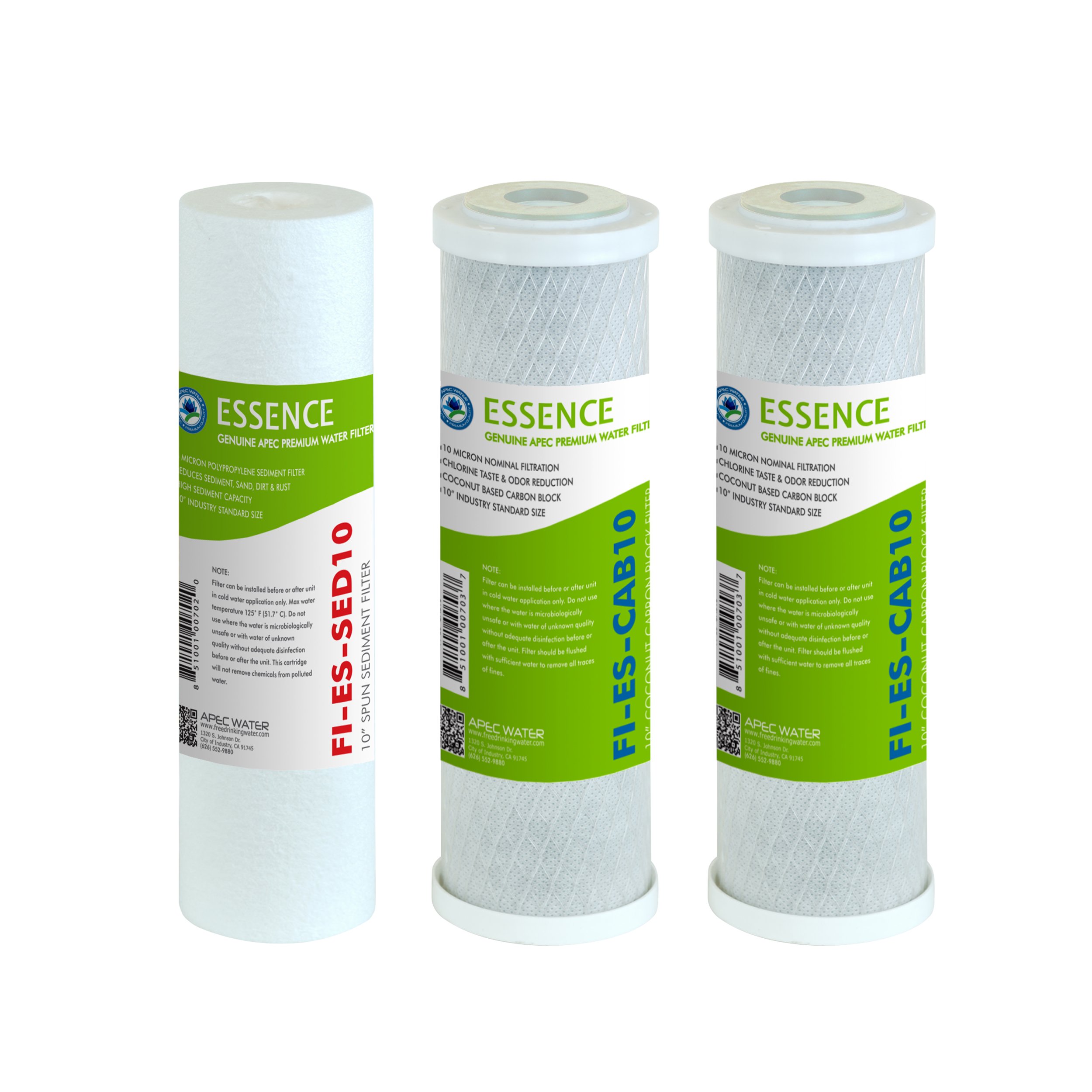
A three-stage pre-filter set with a 5-micron sediment stage and two 10-micron carbon blocks built to extend membrane life in APEC Essence and standard under-sink RO systems.
Why I picked it: High-capacity sediment plus dual carbon stages matched to the Essence series and common under-sink housings.
Best for: Owners of APEC Essence systems and anyone running a standard under-sink RO who wants reliable pre-filtration.
Affordable replacement set with long service life and easy changeouts.
Pros
- 5-micron sediment protection
- Dual 10-micron carbon blocks
- Fits standard under-sink systems
- Easy to change
- Helps extend membrane life
Cons
- Not a full membrane replacement
- Needs periodic annual changes
My take
I’ve used this pre-filter set on an Essence-series under-sink system since 2019 and it has consistently protected the membrane while improving taste. The 5-micron polypropylene stage captures visible sediment and the two 10-micron carbon blocks cut chlorine and off-flavors without restricting flow.
Installation and yearly swaps are straightforward — I can get the job done quickly without special tools. In my experience the set lasts well and represents a low-effort way to keep the RO membrane performing at peak efficiency.
2. iSpring RCC7 5-Stage Reverse Osmosis System, NSF/ANSI 58 Certified – Best NSF-Certified System
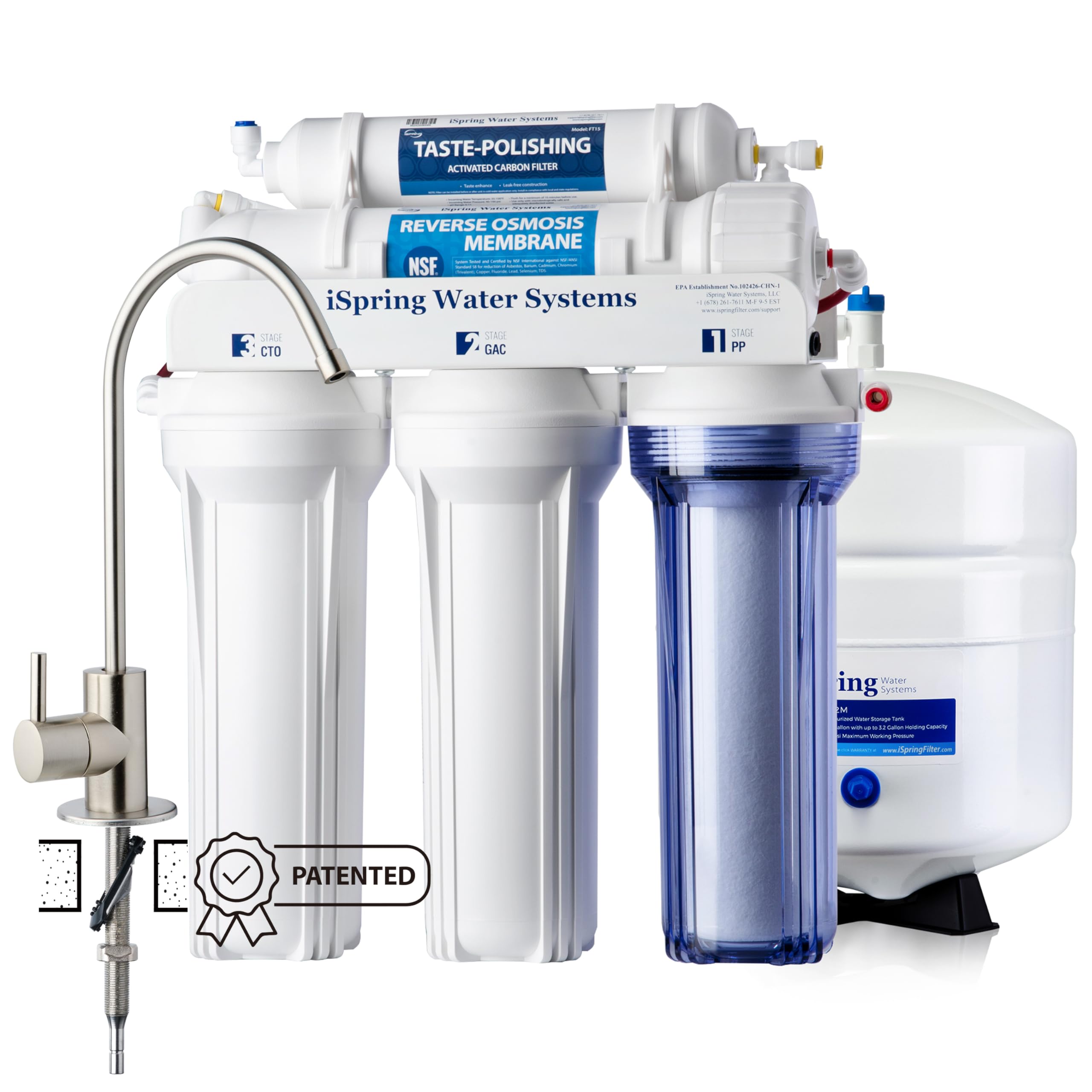
A full 5-stage under-sink RO system certified to NSF/ANSI 58 that reduces a wide range of contaminants and includes a lead-free faucet and easy-inspection housings.
Why I picked it: NSF certification, broad contaminant reduction, and sturdy, low-maintenance design.
Best for: Households who want lab-grade contaminant reduction and a durable under-sink system.
Higher upfront investment but built for long-term reliability and support.
Pros
- NSF/ANSI 58 certified
- Removes PFAS and many contaminants
- Transparent housing for inspection
- Lead-free designer faucet
- Quality components and support
Cons
- Produces wastewater during flushing
- Initial setup takes time
- Requires under-sink space
My take
I installed an RCC7 and appreciated how thorough the system is: it drops TDS substantially and handles contaminants down to 0.0001 microns. The transparent pre-filter housing makes visual checks simple, and the included faucet and tubing feel premium.
Setup took patience — there’s an initial rinse and multiple tank fill/flush cycles — but the payoff is clear water that tastes much better for cooking and drinking. I’ve also found the company’s spare parts and lifetime support handy when I needed quick troubleshooting.
3. iSpring F7-GAC 1-Year Replacement Filter Cartridge Pack, 7-Count – Best Replacement Pack
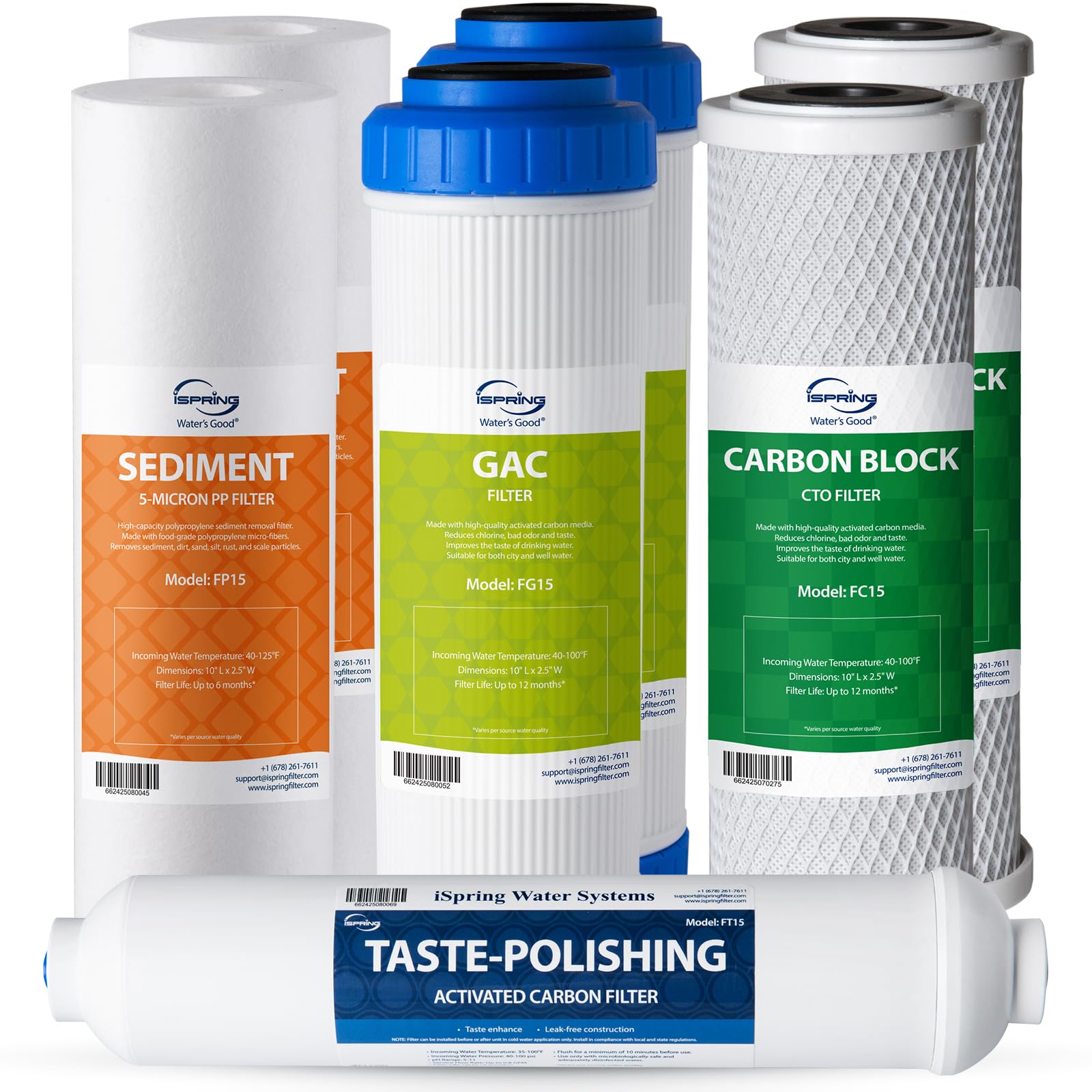
A complete one-year replacement pack for standard 5-stage RO systems that includes sediment, GAC, CTO, and a push-fit post-carbon filter for faster swaps.
Why I picked it: Complete seven-piece set with an upgraded push-fit post-carbon for quicker, secure changes.
Best for: Standard 5-stage RO owners who want a full yearly refresh in one purchase.
Good value for a full-year replacement kit.
Pros
- Complete 7-piece set
- Individually wrapped cartridges
- Push-fit post-carbon filter
- Designed for standard 5-stage systems
Cons
- RO membrane not included
- May not fit nonstandard systems
My take
I keep a pack of these on hand for annual maintenance. The sediment, GAC, CTO, and post-carbon stages work together to restore taste and clarity, and the FT15 push-fit post-carbon makes the final swap faster than older designs.
Installation is straightforward and the individually wrapped cartridges stay clean in storage. In my experience the set restores the system’s performance without fuss, though you’ll need a separate membrane if yours is due at the same time.
4. Aquaboon 1" Micron 10" Sediment Water Filter Cartridge (4-Pack) – Best Sediment Filter
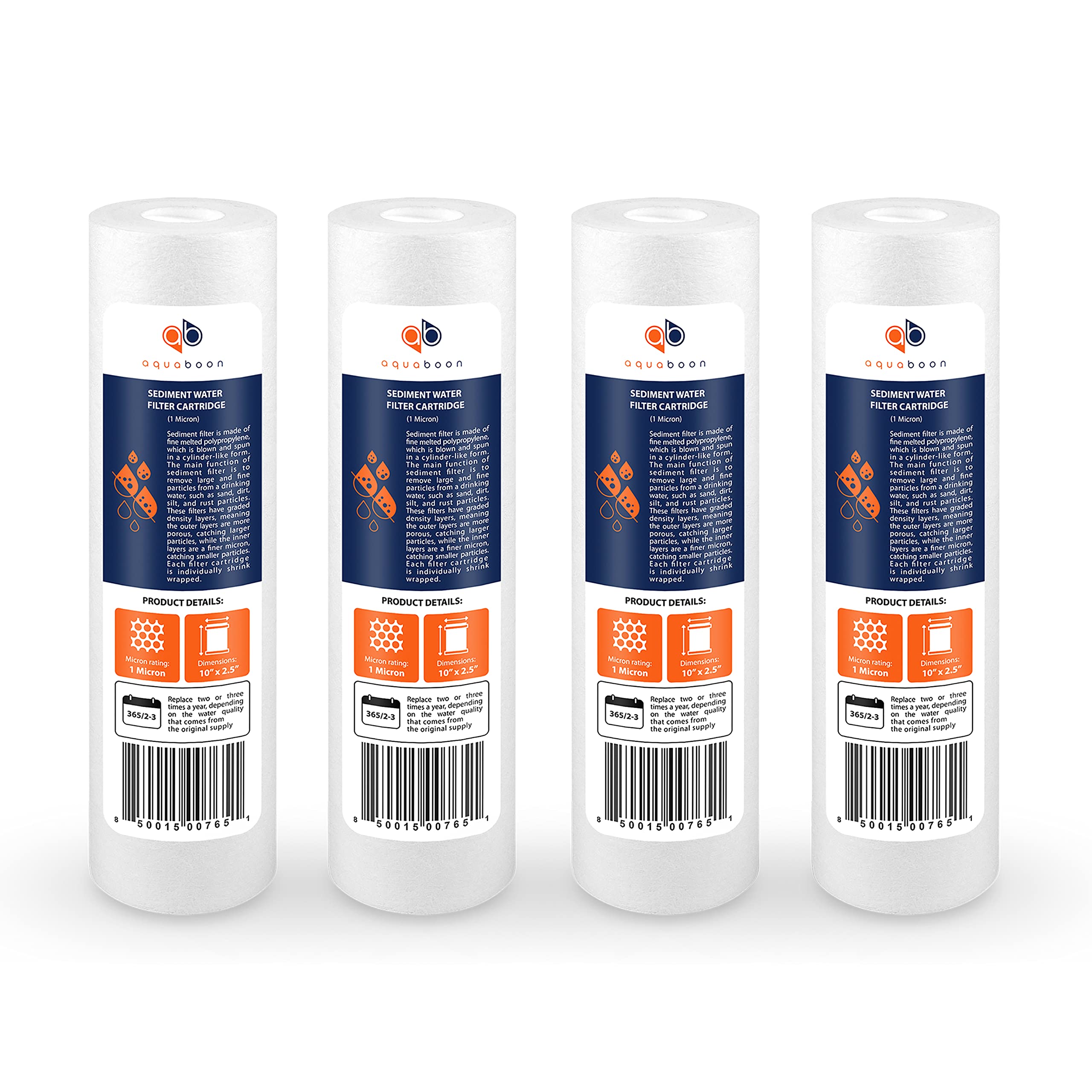
A 1-micron polypropylene sediment cartridge designed for whole-house and RO pre-filtration with graded-density construction for higher particulate capture.
Why I picked it: Finer 1-micron capture and wide compatibility make it ideal for heavy sediment or well water.
Best for: Well water users and whole-house pre-filtration to protect downstream equipment.
Very affordable sediment replacement in bulk.
Pros
- 1-micron filtration
- Graded-density capture
- FDA-grade polypropylene
- Broad compatibility
Cons
- Clogs faster than larger micron filters
- May require trimming to fit some housings
My take
I switched to a 1-micron Aquaboon cartridge when I noticed sediment build-up in fixtures, and it noticeably reduced that blueish residue in showers. The graded-density structure traps particles efficiently and the cartridge holds a lot of dirt before I have to change it.
Be aware a 1-micron element can clog sooner than 5-micron types, so I monitor pressure drop more often. The unit’s compatibility list is generous, though I once trimmed a fraction of an inch to get a perfect seal in an older housing.
5. Express Water 3-Year Reverse Osmosis Replacement Filter Set — 23 Filters with 50 GPD Membrane – Best Long-Term Bundle
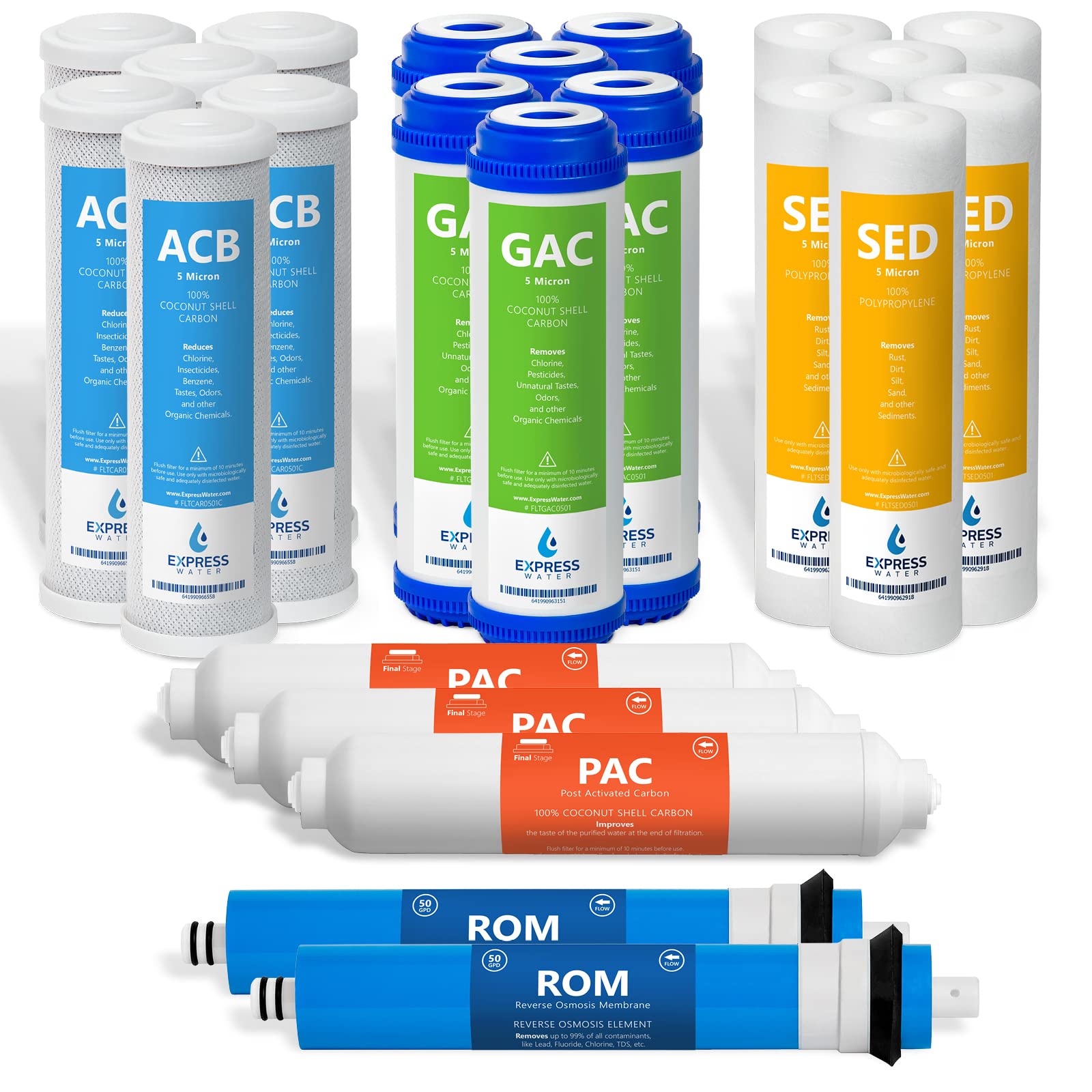
A comprehensive three-year replacement package that includes 23 filters and a 50 GPD RO membrane, designed to cover most standard 10" filter housings.
Why I picked it: Complete three-year supply with membrane included for long-term peace of mind and value.
Best for: People who want a long-lasting, all-in-one replacement solution and fewer order cycles.
Better long-term value than buying single replacements frequently.
Pros
- Includes RO membrane
- Three years of filters
- Comprehensive multi-stage coverage
- Fits standard 10" housings
Cons
- No filter wrench included
- Takes storage space
My take
I bought this three-year kit to avoid juggling multiple reorder dates, and having the membrane supplied was especially convenient. After running the system and checking TDS, my tank routinely read very low levels — often below 10 ppm.
Changing all the filters is a bit of an afternoon project, but once completed the system runs smoothly. The package delivers solid value over time, just note that a housing wrench makes the job easier and wasn’t included in my box.
6. Waterdrop WD-G3-CF Replacement Filter for WD-G3 Series, 6-Month Lifetime – Best Tool-Free Replacement
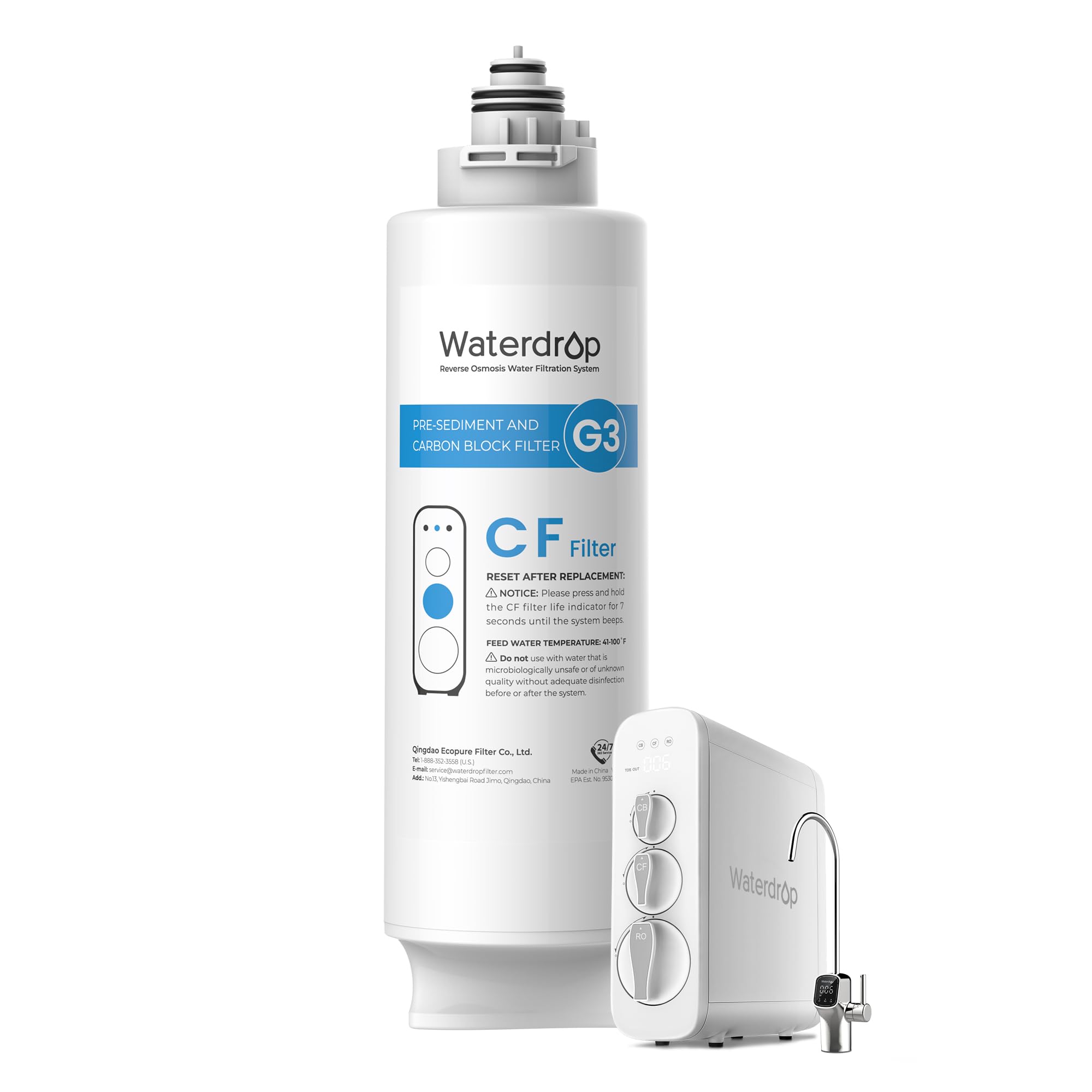
A twist-in 3-in-1 front filtration cartridge for Waterdrop WD-G3 models that uses coconut shell activated carbon and delivers six months or about 550 gallons of service.
Why I picked it: Tool-free twist replacement and coconut-shell carbon deliver quick swaps and good taste improvements.
Best for: Owners of compact Waterdrop WD-G3 systems who want fast, no-tools filter changes.
Moderately priced replacement with easy installation.
Pros
- Tool-free twist install
- Coconut shell activated carbon
- Six-month lifespan
- Compact design
Cons
- Compatible with only specific models
- Contains coconut shell carbon — allergy note
My take
Swapping this cartridge takes seconds — a simple twist and the new filter is seated. For compact Waterdrop systems that live under the sink, that tool-free design is a real time-saver.
Taste and odor improved noticeably after installation. The six-month service life has been consistent for me, and the small footprint makes this ideal where space is tight.
How I Choose Reverse Osmosis Filters
Understand filter roles
I break RO systems into three essential parts: pre-filters (sediment and carbon) that protect the membrane, the RO membrane itself that removes dissolved solids, and post-filters that polish taste.
When I evaluate a product I check whether it addresses the stage I need — protection, membrane replacement, or final polishing.
- Pre-filters: protect membrane, trap sediment, remove chlorine.
- RO membrane: reduces TDS and dissolved contaminants.
- Post-filters: improve taste and final clarity.
Fit and compatibility
I always confirm physical size and connection type — 10" cartridges, 1/4" quick-connect tubing, and model-specific twist-in parts differ across brands.
For whole-house or older housings I measure and compare the cartridge length; sometimes a tiny trim makes an imperfect fit workable.
- Match cartridge length and diameter.
- Check if the pack includes required fittings.
- Confirm membrane size and capacity (GPD).
Maintenance rhythm and cost
I plan filter changes as routine: pre-filters more often, RO membranes every 2–3 years depending on feed water, and post-filters yearly. That keeps TDS low and taste consistent.
Buying multi-year kits or bundled packs often reduces headaches and overall cost compared to single replacements.
- Sediment/carbon: 6–12 months typical.
- RO membrane: 2–3 years typical.
- Consider multi-year bundles for convenience and value.
Installation and space
I factor in under-sink space and whether I want tool-free or wrench-style changes. Transparent housings help me inspect pre-filters without disassembly.
If my water pressure is low I’ll plan for a booster pump; if it’s very high I add a pressure regulator to protect housings.
- Measure under-sink clearance before buying.
- Tool-free twist cartridges save time.
- Transparent housings simplify visual checks.
Performance versus wasted water
I accept that most RO systems generate waste water during membrane rinse cycles; I evaluate how much waste is produced versus how pure the product water is.
If conserving water is crucial, I lean toward systems with better recovery or plan to reuse waste where safe (e.g., irrigation).
- Expect several gallons of flush water per gallon produced.
- Check membrane GPD rating for household needs.
- Plan waste-water reuse if possible.
Frequently Asked Questions
How often should I change RO pre-filters and membranes?
I change sediment and carbon pre-filters about every 6–12 months depending on sediment load. I replace the RO membrane roughly every 2–3 years unless TDS readings climb sooner.
Can I use third-party replacement filters in my system?
I use third-party filters when they match size and connection type, but I check material and compatibility notes carefully. A correctly sized aftermarket cartridge can work well and save money.
Is installation something I can do myself?
Most under-sink RO installs are DIY-friendly if you’re comfortable with basic plumbing and following instructions. Expect an hour or two for a first-time install and be prepared for initial tank fill/flush cycles.
Final Take
If you want the cleanest water with minimal fuss, I recommend an NSF-certified full system like the iSpring RCC7; it’s my pick when contaminant reduction is the priority.
For ongoing upkeep, the iSpring and APEC replacement packs and the Express Water multi-year bundle simplify maintenance and deliver consistent taste improvements.
For well water or heavy sediment situations, I rely on 1-micron sediment cartridges to protect downstream equipment. And when convenience matters, the Waterdrop twist-in filters are unbeatable for quick swaps.
