
I tested compact and wall-mounted exhaust fans to find quiet, efficient options for small bathrooms up to whole-shop ventilation. Here are the models I’d reach for depending on room size and installation needs.
I swapped out old, noisy vents and installed a range of exhaust fans across bathrooms, garages, and workshops to see what actually works. In this roundup I focus on real-world performance: noise, airflow, installation hassle, and durability.
Whether you need a simple, compact fan for a small powder room or a heavy-duty shutter fan with thermostat control, I explain why each pick earned its spot and where I’d use it in my home.
I matched quiet operation, true airflow (CFM), and ease of install across compact ceiling models and wall-mounted shutter fans so you can pick the right type for your space and mounting constraints.
1. Broan-Nutone® Bathroom Exhaust Fan, 50 CFM, Modern Grille, Energy Star – Best Economy Ceiling Fan
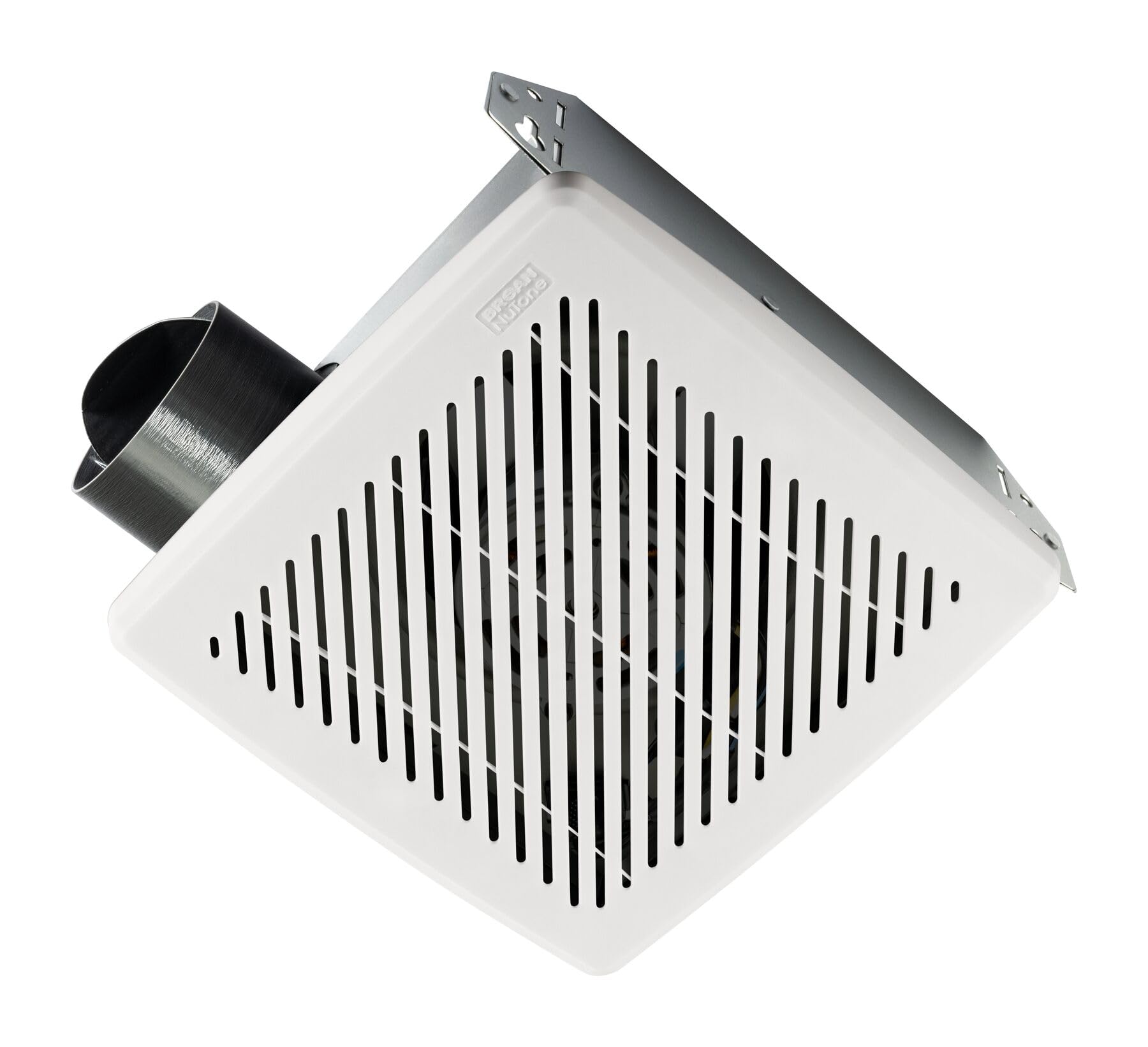
I found this Broan-NuTone unit to be a compact, efficient solution for small bathrooms and powder rooms where space and budget matter.
Why I picked it: Compact Energy Star fan that fits existing housings and installs quickly.
Best for: Small bathrooms up to ~45 sq. ft.; quick direct swap replacements.
An affordable, no-frills ventilation upgrade.
Pros
- Energy Star certified
- Compact housing fits tight spaces
- Modern, easy-to-remove grille
- Removable motor for easy service
Cons
- Only 50 CFM — not for large bathrooms
- Airflow noise can be noticeable at full power
My take
I installed this Broan in a small bathroom and appreciated how the housing matched older Broan boxes I already had — I literally plugged the new motor into the old housing and was done in minutes. The 50 CFM rating cleared steam and odors quickly in a compact room, and the Energy Star motor ran at a civil 2.0 sones.
The removable motor assembly and foldable mounting brackets made my install hassle-free without attic access. The updated bright white grille looks more modern than older models and snaps on and off easily for cleaning.
Keep in mind this is an economy model: it’s great for small rooms but won’t be enough for a master bath or long duct runs. I also noticed the sound is more of airflow moving than mechanical rattling — not loud, but present.
2. iLIVING 12" Wall Mounted Shutter Exhaust Fan, 960 CFM, Thermostat & Variable Speed – Best for Large Spaces (12")
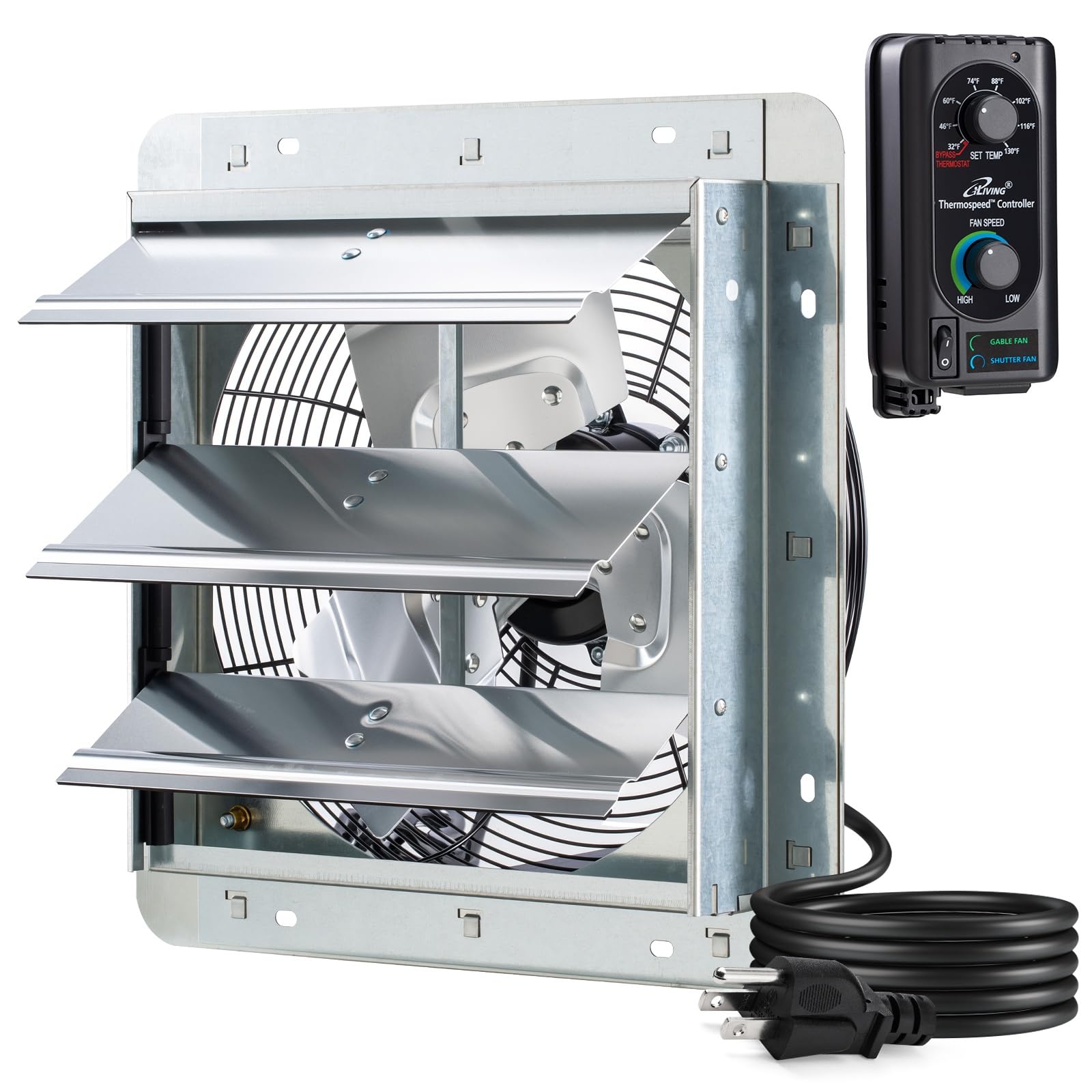
When I needed raw ventilation power and automatic temperature control for a big garage and workshop, this 12" iLIVING unit delivered.
Why I picked it: High CFM, thermostatic control, and rugged build for garages and commercial spaces.
Best for: Garages, workshops, greenhouses, and large commercial areas up to ~1400 sq. ft.
A mid-range industrial option with thermostat and speed control.
Pros
- Very high 960 CFM airflow
- Thermospeed controller included
- Heavy-duty galvanized frame
- Automatic shutters for weather protection
Cons
- Louvers can rattle in windy conditions
- Can be louder than ceiling fans at high speed
My take
I mounted the 12" iLIVING in a garage and the change was dramatic: heat and humidity dropped quickly when the fan cycled on. The Thermospeed controller made it easy to set a target temperature so the fan only runs when needed.
The industrial-grade construction — galvanized frame, aluminum blades, and OSHA-style guard — felt built to last. Installation required a wall cut and hardwiring, but the unit arrived fully assembled which saved me time.
If you care about quiet, remember shutter fans trade silence for airflow. I found the noise similar to a window fan at high speeds, but the airflow is far superior for large spaces. On balance, this is my go-to for garage or shop ventilation where power matters more than whisper-quiet operation.
3. iLiving 10" Wall Mounted Shutter Exhaust Fan, 820 CFM, Thermostat & Variable Speed – Best Mid-Size Shutter Fan (10")
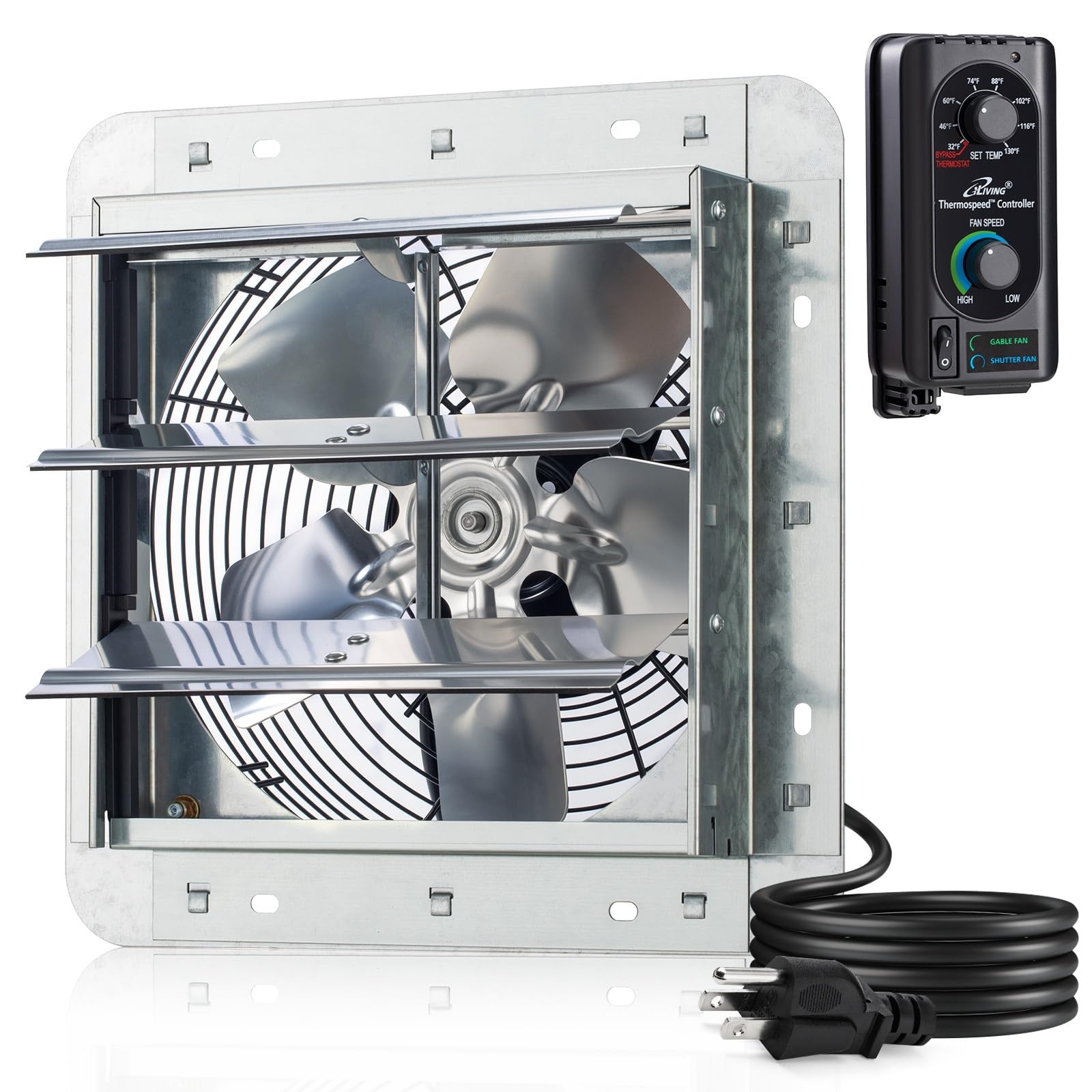
I used this 10" version when I needed strong exhaust in a medium shop and appreciated the balance of airflow and physical fit.
Why I picked it: Compact footprint with high CFM and thermostat control for tighter wall openings.
Best for: Medium garages, workshops, and greenhouses up to ~1,200 sq. ft.
Good value for a powerful, thermostat-equipped shutter fan.
Pros
- 820 CFM moves a lot of air
- Thermostat and speed control
- Well-built louver and blade assembly
- UL/cUL listed motor
Cons
- Wiring compartment can be cramped
- Some units require careful mounting alignment
My take
When my shed-to-workshop needed ventilation, the 10" iLIVING hit the sweet spot: plenty of airflow without the bulk of the 12" model. The Thermospeed controller let me automate when the fan runs, which I used to clear humidity and fumes after projects.
Build quality felt better than I expected at this level — the louvers open smoothly and the motor runs reliably. A few installation notes: the wiring compartment is tight, so allow a bit of patience when connecting ground and power.
Overall, I found this fan versatile and powerful for medium-sized spaces where a 12" might be overkill but a window fan won’t cut it.
4. iLIVING 16" Wall Mounted Shutter Exhaust Fan, 1200 CFM, Thermostat & Variable Speed – Best for Very Large Areas (16")
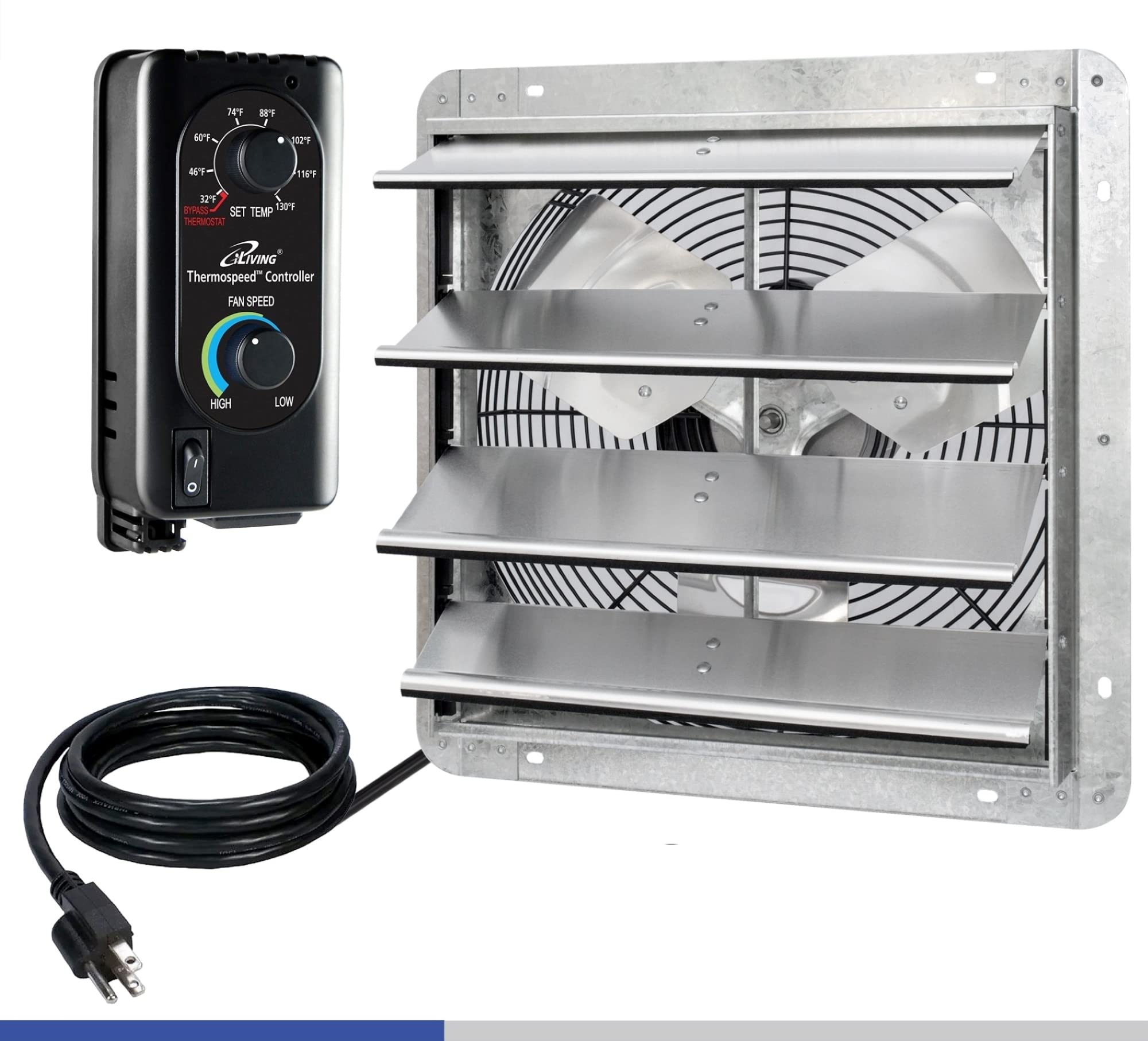
For a two-car garage and basement workshop I needed maximum extraction; this 16" iLIVING delivered steady, high-volume airflow with negligible vibration.
Why I picked it: Highest airflow in the lineup with robust construction and thermostat control.
Best for: Very large garages, workshops, barns, and commercial spaces up to ~1,800 sq. ft.
Higher-capacity option for heavy-duty ventilation needs.
Pros
- 1200 CFM for serious air exchange
- Sturdy construction and materials
- Thermostat control included
- Low vibration at full speed
Cons
- Larger cutout and mounting effort required
- Speed control less useful below full power
My take
I installed the 16" unit in a two-car garage and was impressed by how much airflow it produced while remaining stable and vibration-free. It pulled air aggressively enough to create useful negative pressure even with other openings in the space.
Installation was straightforward for a pro or competent DIYer, though the physical size means a larger wall opening and more support. I measured modest power draw relative to the airflow and found the louvers operate reliably.
One practical note: on lower speeds the louvers can struggle to stay fully open, so I tend to run it at higher settings for optimal flow. For large-area ventilation this is the model I’d choose.
5. AC Infinity AIRLIFT S10, 10" Shutter Exhaust Fan with 10-Speed Controller and EC Motor – Best Tech-Forward Shutter Fan
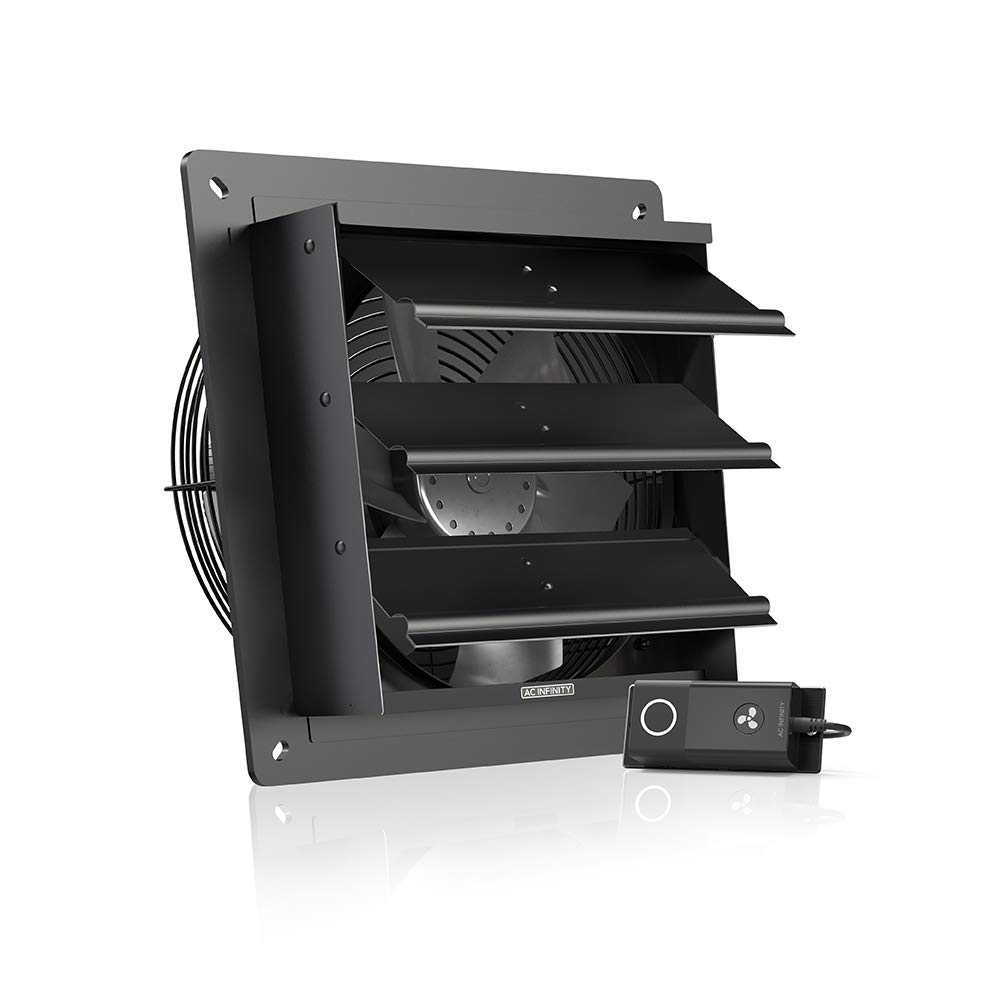
I picked the AC Infinity S10 when I wanted precise speed control, lower electrical draw, and a modern controller interface for a 10" wall mount application.
Why I picked it: EC motor with PWM control and a refined multi-speed controller for tunable airflow.
Best for: Sheds, grow rooms, garages, and spaces where fine speed/humidity control matters.
Premium feature set and precise control justify the higher-end positioning.
Pros
- Efficient EC motor with PWM control
- Ten precise speed settings
- IP44-rated frame resists moisture
- Dual ball bearings for durability
Cons
- Can be loud at higher speeds
- Bezel gaps may allow insects or drafts
My take
I installed the AIRLIFT S10 in a garage where I wanted app-like control and gentle low speeds for overnight operation. The EC motor and PWM-based controller give very linear, predictable speed steps — I liked how level 5 felt like a sweet spot for airflow versus noise.
Setup was easy once the opening was cut; pairing the controller or programming temperature/humidity triggers was straightforward. The build quality and finish felt premium compared with standard galvanized shutter fans.
If you need absolute silence at full power, understand that 10-speed shutter fans make noise as they move airflow. That said, for someone who wants fine control and energy efficiency, this is the most refined shutter fan I’ve used.
6. Panasonic WhisperValue FV-0510VS1, 50-80-100 CFM, Ultra-Quiet DC Motor – Best Quiet Ceiling Fan
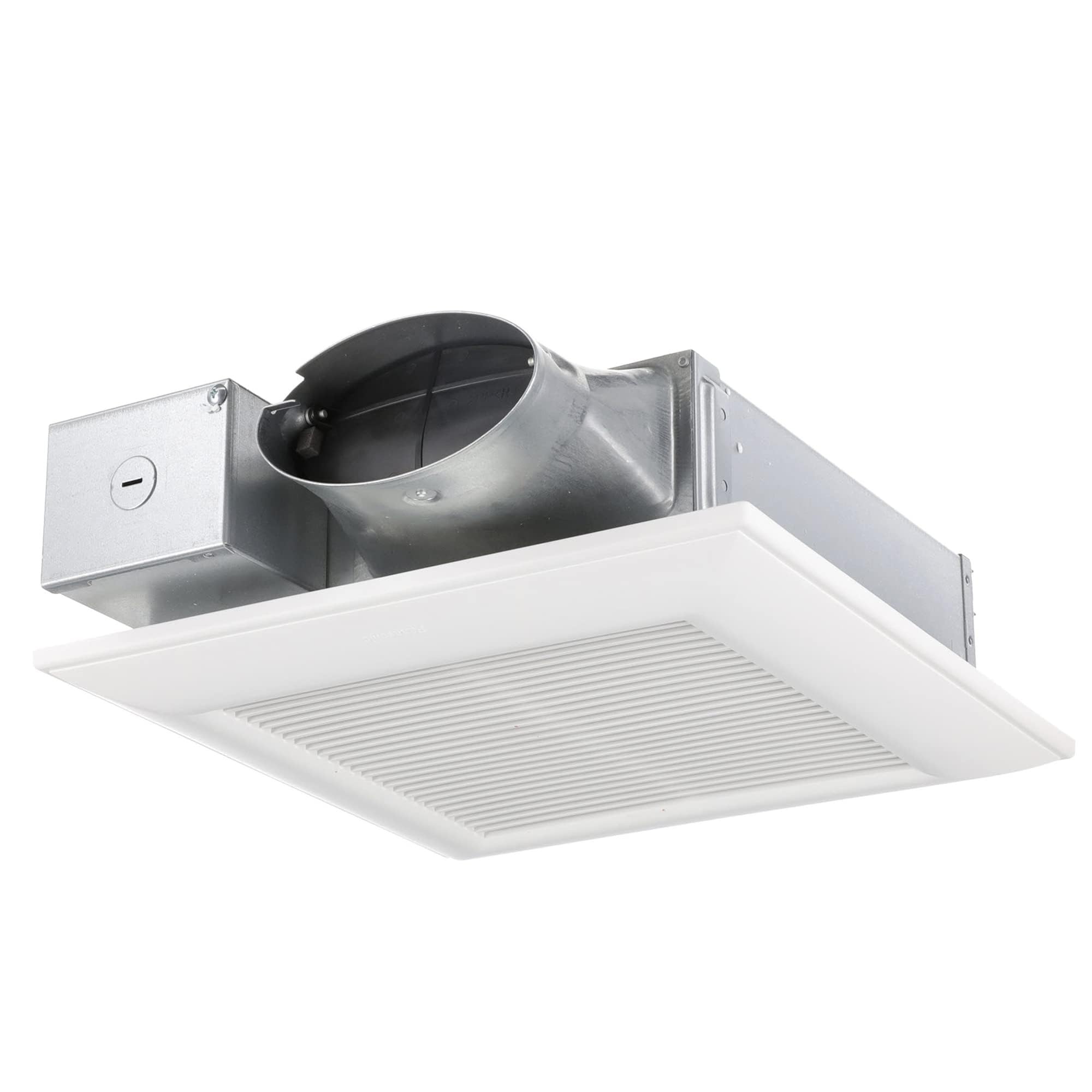
When I needed whisper-quiet performance and selectable airflow for a bathroom near bedrooms, the Panasonic WhisperValue was my top pick.
Why I picked it: SmartFlow DC motor and Pick-A-Flow options give quiet, efficient, adjustable ventilation.
Best for: Bedrooms-adjacent bathrooms, small to medium bathrooms needing low-noise operation.
A higher-end, energy-efficient option focused on quiet performance.
Pros
- Whisper-quiet DC/ECM motor
- Pick-A-Flow 50/80/100 CFM selector
- Slim housing fits tight joist bays
- SmartFlow adjusts to duct resistance
Cons
- Ceiling-side replacement can require attic access
- Higher upfront cost than economy fans
My take
I swapped a loud old fan for the Panasonic WhisperValue and immediately noticed how quiet it runs — I sometimes had to check the switch to confirm it was on. The ability to select 50, 80, or 100 CFM with a simple switch meant I could tune performance for a small powder room or a larger family bath.
The SmartFlow motor adjusts to resistance in the duct run so the fan delivers consistent airflow even with longer or complex ducts. Installation is easier than many high-performance models thanks to the shallow housing profile, but I did run into a situation where ceiling-side reconnection was finicky and I ended up using attic access.
For bathrooms near bedrooms or for anyone prioritizing low noise and energy efficiency, this is the unit I’d install first.
How I Choose a Bathroom Exhaust Fan
Match CFM to Room Size
I always start by sizing the fan to the room. For small powder rooms under 45 sq. ft., a 50 CFM fan is usually enough. Larger bathrooms or those with long duct runs need 80–100 CFM or more.
If the bathroom shares space with a tub or shower used often, I lean toward the higher end of the CFM spectrum to clear steam quickly.
- Up to 45 sq. ft. — ~50 CFM
- 45–100 sq. ft. — 80–100 CFM
- Over 100 sq. ft. — consider multiple fans or 100+ CFM
Ceiling vs. Wall (Shutter) Fans
I choose ceiling fans for quiet residential bathrooms and shutter wall fans for garages, shops, and large areas that need heavy extraction.
Wall-mounted shutter fans excel at powerful ventilation and are easier to mount where attic access is limited, but they are typically louder than ceiling models.
- Ceiling fans = quieter, suited for bedrooms and bathrooms
- Shutter fans = higher airflow for garages and workshops
Noise and Motor Type
I prefer DC/ECM motors for quiet, efficient operation. Sone ratings matter for bathroom comfort; lower is quieter.
For big spaces where noise is secondary to airflow, direct-drive AC shutter fans give the best CFM per dollar.
- DC/ECM motors — quiet, energy-efficient
- AC motors — powerful and cost-effective for large areas
Controls and Automation
Thermostats, humidity sensors, and variable-speed controllers are features I value because they keep the fan off unless needed. They reduce runtime and energy use while automating comfort.
If you want remote or app control, pick a model with a compatible controller or that integrates with third-party controllers.
- Prefer models with thermostat or humidity control for garages/grow rooms
- Look for PWM or multi-speed controllers for fine airflow tuning
Installation Tips I Use
Measure the existing housing and stud spacing before buying to avoid returns. Note whether you'll need attic access or a wall cutout for shutter fans.
Plan for proper ducting and a tight seal to preserve rated CFM; loose ducts and bends dramatically reduce real-world airflow.
- Verify housing dimensions and duct diameter before purchase
- Use smooth ducts and minimize bends for better performance
Frequently Asked Questions
How noisy should a bathroom fan be?
I expect bathroom fans to be as quiet as possible near bedrooms. For small bathrooms, look for fans around 1–2 sones or DC/ECM models labeled whisper-quiet. Shutter and high-CFM fans will be louder but necessary for garages and large spaces.
Can I replace an existing fan without attic access?
I often replace compact ceiling fans without attic access when the housing and mounting ears align. For larger units or if the housing orientation differs, attic access or wall mounting may be required.
Should I choose a thermostat or humidity controller?
I use humidity controllers in bathrooms to clear steam automatically and thermostats in garages or greenhouses to control temperature. Both reduce runtime compared with manual operation.
Do shutter fans need a screen or cover outside?
I recommend a protective screen or properly fitted louvers; shutters help keep weather out, but adding a screen prevents insects and debris from entering through larger bezel gaps.
Final Take
My picks cover the full spectrum: a budget-friendly Broan for small bathrooms, Panasonic for whisper-quiet residential installs, and a range of iLIVING and AC Infinity shutter fans when I need serious extraction or precision control.
Decide based on room size, mounting type, and whether quiet operation or raw airflow is most important. Once I matched those needs, installation and long-term satisfaction were straightforward.
