
I tested a range of AA batteries—lithium and NiMH rechargeables—to find the best options for solar-powered sensors, garden lights, and backup devices. Here are the ones I reach for depending on runtime, temperature, and‑
I built this roundup because I spend a lot of time setting up small solar-powered systems—garden lights, wireless sensors, and battery-backed cameras—and the right AA cell makes a big difference.
I focused on real-world needs: long shelf life for backup cells, cold- and heat-tolerance for outdoor solar gear, and rechargeable packs for devices that cycle daily. The selections below reflect what I actually use and why.
I compared these cells by type (primary lithium vs NiMH rechargeables), shelf life, temperature tolerance, cycle life, and real-world fit for solar gear. My picks favor long storage and stable output for outdoor solar devices, and higher-capacity NiMH for high-drain accessories.
1. Energizer Ultimate Lithium AA — ultimate shelf life and extreme temps – Best Long-Term Backup (Non-Rechargeable)
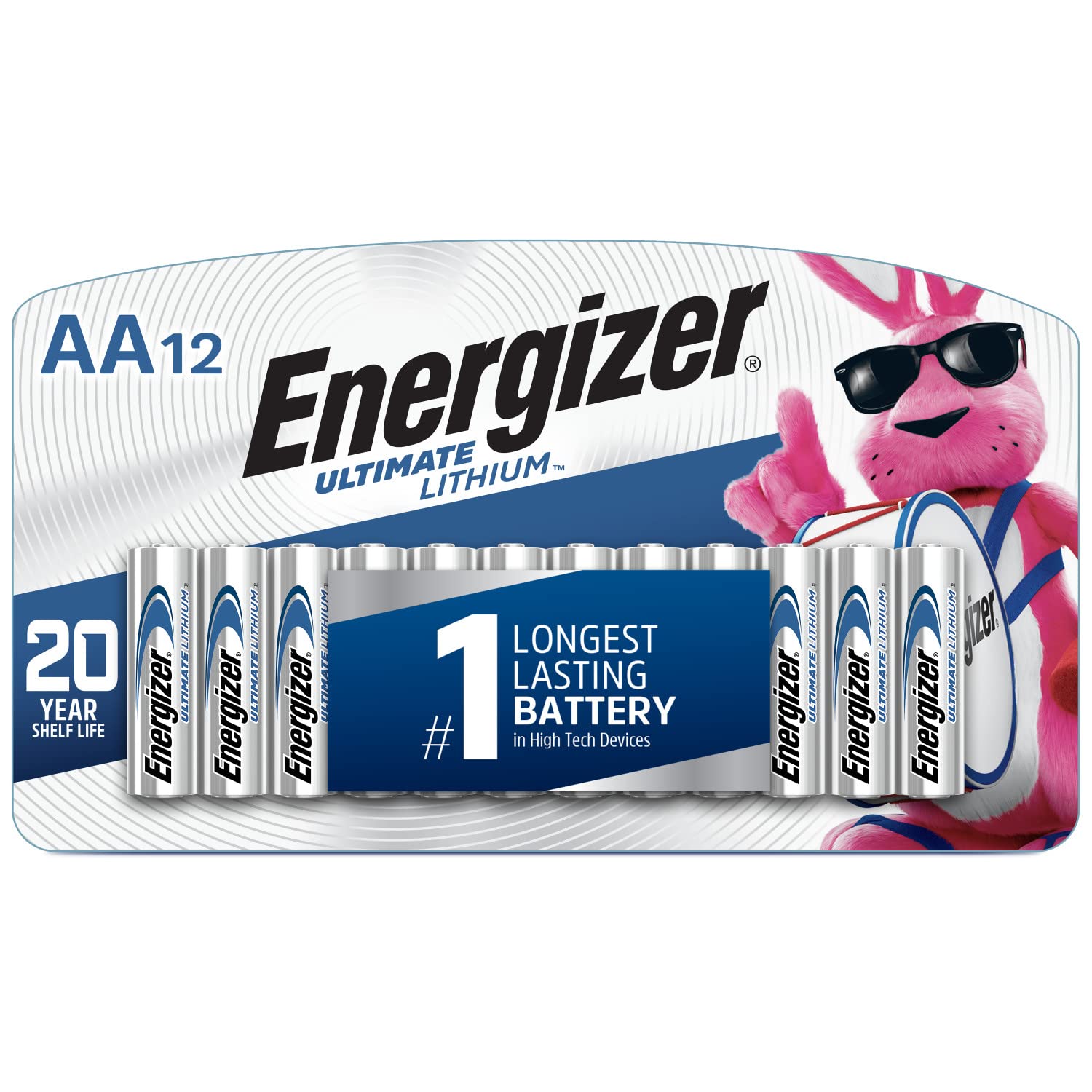
I rely on Energizer Ultimate Lithium when I need AA cells that won't fail after months in a solar sensor or security camera. They tolerate extreme temperatures and hold charge for decades in storage.
Why I picked it: Unmatched storage life and wide temperature range for outdoor solar gear.
Best for: Solar-powered sensors, outdoor cameras, and long-term backups.
Higher upfront cost but worth it for one-and-done, long-term use.
Pros
- Exceptional shelf life (up to 20 years)
- Operates in very cold and hot conditions
- Leak-resistant construction
- High energy density
Cons
- Not rechargeable
- Higher initial cost than alkalines
My take
When I put these Energizer Lithium AAs into my porch security camera and solar motion sensor, they stayed stable where alkalines had dropped off in cold weather. The -40°F to 140°F operational range and leak-resistant construction are features I took advantage of in winter and summer alike.
Their long storage life gives me confidence to stash spares with my solar kits without frequent replacement. For devices that sit idle for months and only wake occasionally, these provide reliable power without the maintenance of swapping or recharging.
I consider them an investment: I use them for critical, low-drain outdoor gear where failure is inconvenient or risky, and the peace of mind is worth the premium.
2. Energizer Power Plus Rechargeable AA (8 Pack) — dependable, reusable cells – Best Rechargeable Starter Pack
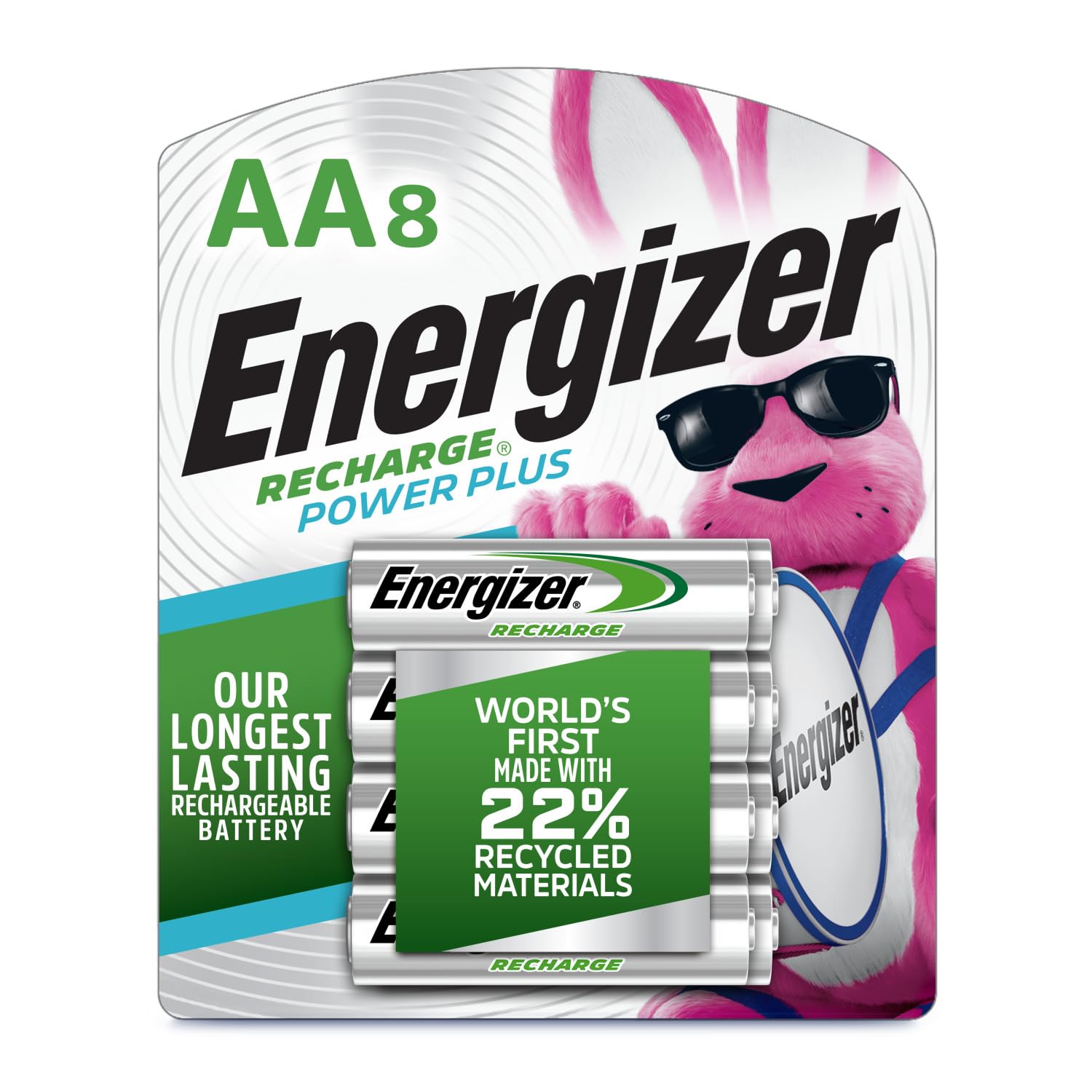
I choose this Energizer rechargeable pack when I want a dependable, reusable set for everyday solar accessories and household devices that see regular use.
Why I picked it: Solid mix of convenience, recycled materials, and dependable recharge cycles.
Best for: Remotes, controllers, and solar devices you change frequently.
Moderate investment that pays off with repeated reuse.
Pros
- Pre-charged and ready to use
- Made with recycled materials
- Good long-term lifespan
- Designed to prevent leaks
Cons
- Recharge speed depends on your charger
- Initial kit cost higher than disposables
My take
These Energizer Power Plus rechargeables are the ones I grab for household gear that I cycle often. They came ready to use and have stayed reliable across remotes, game controllers, and a couple of solar-powered toys I rotate through the yard.
I did notice recharge time depends heavily on the charger I paired them with; using a modern charger makes the experience painless, while older slow chargers take longer. Even so, the ability to recharge hundreds of times makes them a good value for regular-use devices in and around solar setups.
Their construction and leak-prevention give me confidence leaving them in semi-exposed devices that still see regular attention.
3. Energizer Recharge Universal AA (4 Count) — dependable NiMH for repeat use – Best Eco-Friendly Rechargeable
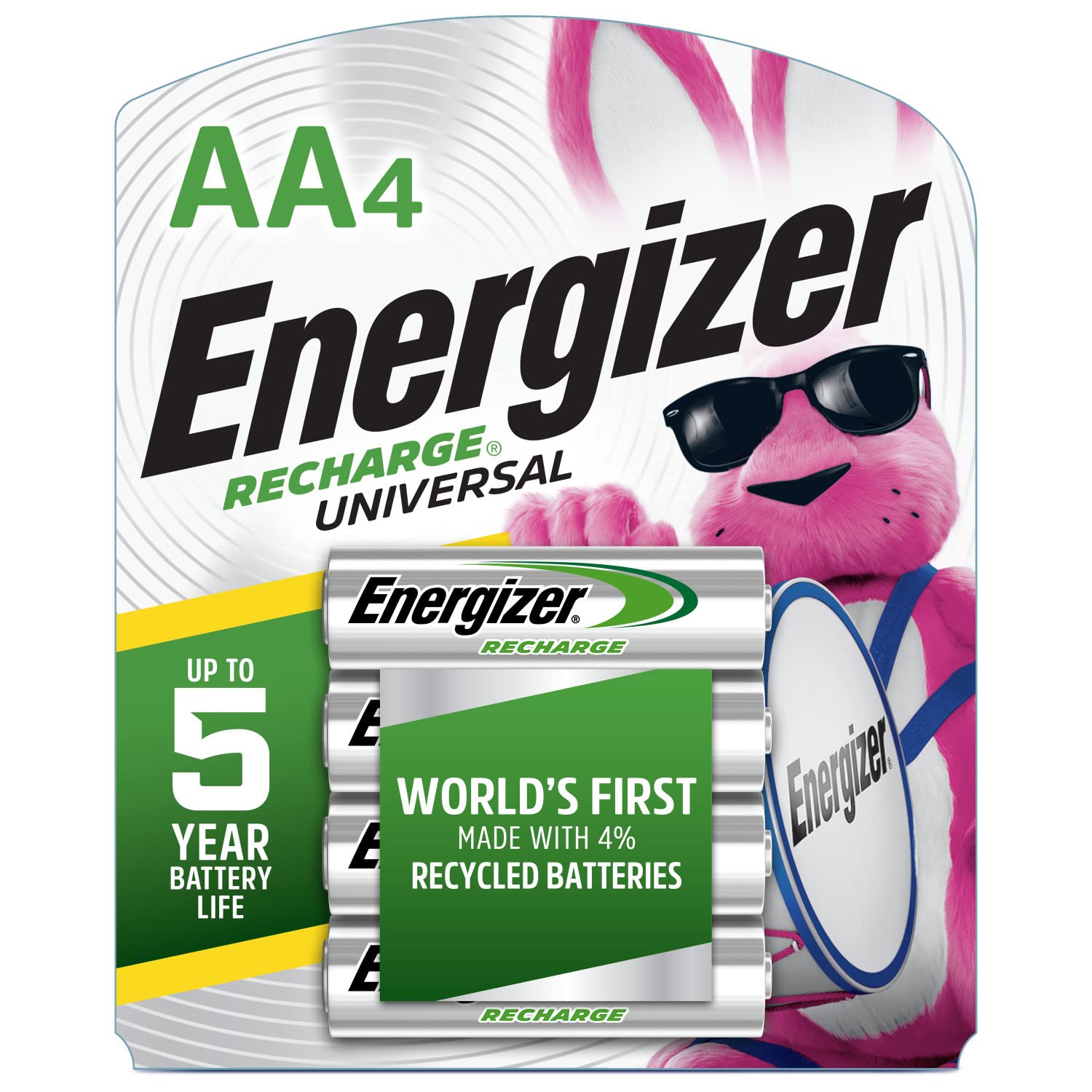
I picked the Recharge Universal AA when I wanted a compact, eco-minded pack that supports many recharge cycles and reduces disposable battery waste.
Why I picked it: High cycle count and pre-charged convenience for sustainable use.
Best for: Everyday electronics and solar accessories with regular charge cycles.
Cost-effective over time thanks to many recharge cycles.
Pros
- Pre-charged and ready out of the pack
- Can be recharged up to 1,000 times
- Reduces disposable battery waste
Cons
- Smaller pack size than some bundles
- Cycle claim lower than premium NiMH options
My take
I keep a set of these Energizer Recharge Universal AAs for devices that cycle daily—wireless remotes and garden sensors that I recharge on a schedule. They come pre-charged and the 1,000-cycle claim is appealing for anyone trying to cut down on disposables.
They feel dependable in everyday duty, and I appreciate the environmental upside. For densely power-hungry tasks I might reach for a higher-capacity cell, but for routine solar gear and household items, these strike a good balance.
Their compact 4-pack is perfect for someone starting a rechargeable rotation or topping up a charger with an extra set.
4. eneloop Panasonic AA (8 Pack) — low self-discharge and massive cycle life – Best for Long-Term Reliability
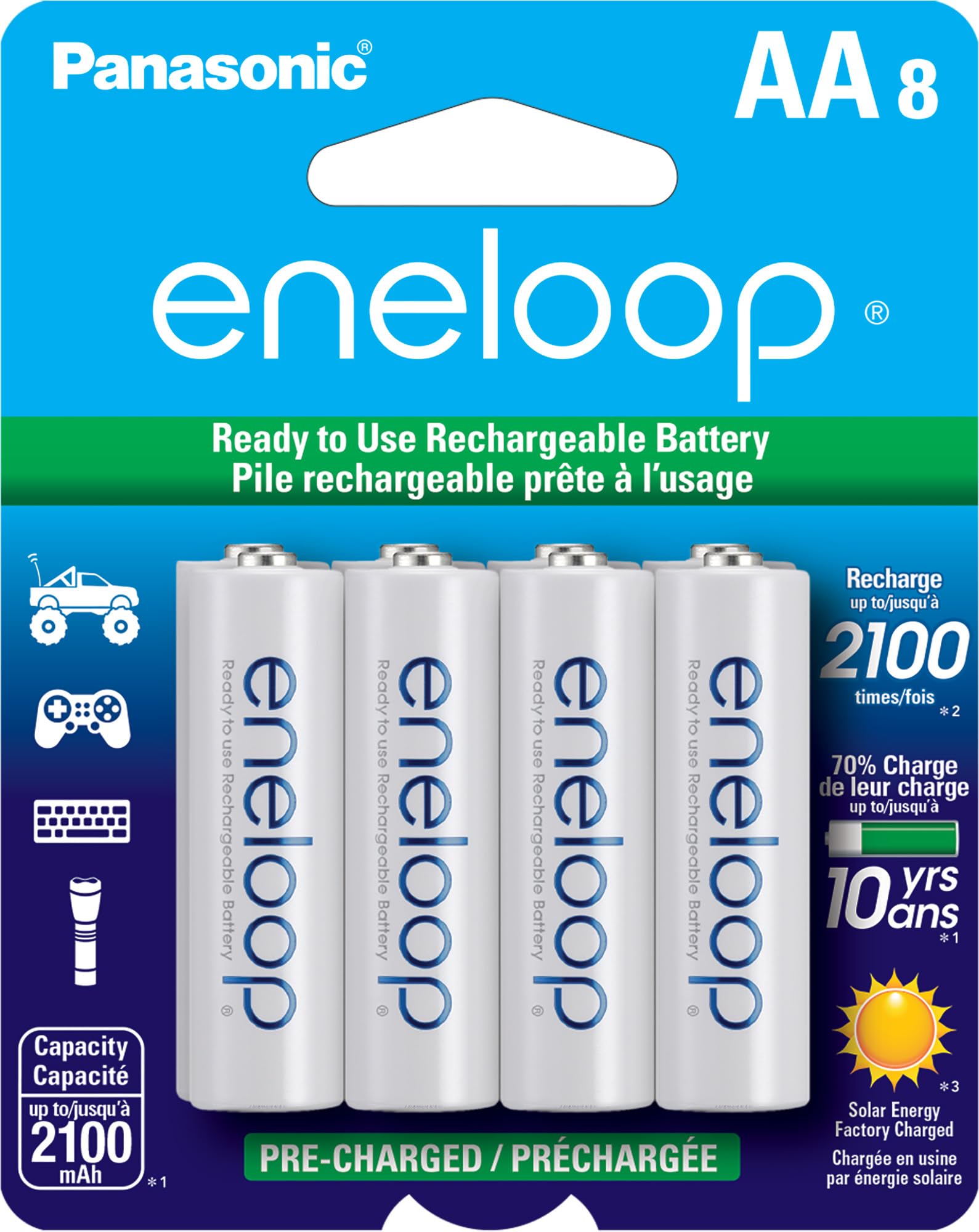
I rely on eneloop AAs when I want rechargeables that hold charge for years and survive thousands of cycles—ideal for seasonal solar gadgets and spares.
Why I picked it: Very low self-discharge and up to 2100 recharge cycles for long service.
Best for: Seasonal solar lights, backup kits, and devices that sit idle long periods.
Premium long-term value for heavy users and spares.
Pros
- Rechargeable up to 2100 times
- Holds ~70% charge after 10 years
- Pre-charged using solar power
- Performs in cool temperatures
Cons
- Not the highest capacity per cell
- Higher upfront cost for long-life tech
My take
eneloop AAs are my go-to when I need cells that I can leave in a drawer or inside seasonal solar lights and still expect them to work months later. Their low self-discharge is a real advantage for backup or seldom-used gear.
I've used these in battery packs that rotate through my solar holiday lights and handheld meters; they keep a healthy charge even after long storage intervals. The fact they’re pre-charged using solar power at the factory is a nice alignment with my solar-focused setups.
For any application where longevity and predictable recharge life matter, these are the most low-maintenance option I keep on hand.
5. Panasonic eneloop pro AA (4 Pack) — higher capacity for power-hungry gear – Best for High-Drain Devices
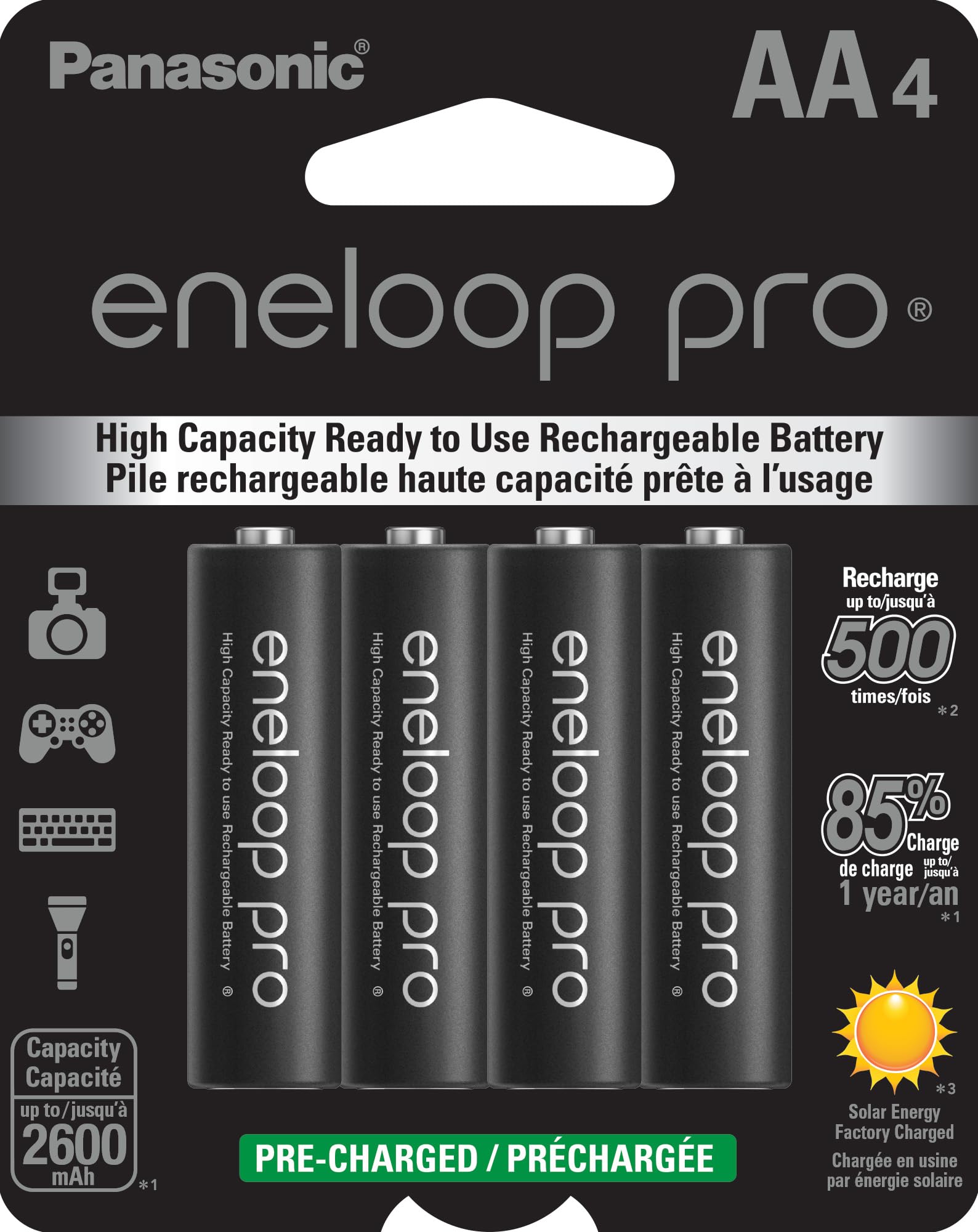
When I need extra capacity for flashes, high-power torches, or motors on solar garden equipment, I reach for eneloop pro for its higher mAh and steady output.
Why I picked it: Higher capacity and strong output for demanding devices.
Best for: DSLR flashes, high-drain torches, and power-hungry solar accessories.
Higher-capacity cells cost more but matter for high-drain use.
Pros
- Higher capacity for high-drain devices
- Pre-charged and ready to use
- Performs in low temperatures
Cons
- Fewer recharge cycles than standard eneloop
- Smaller pack size
My take
I use eneloop pro cells in my DSLR speedlights and a few high-drain solar accessories where sustained current matters. Their increased capacity delivers noticeably longer runtimes between charges, which is crucial in devices that demand bursts of power.
Because they sacrifice some cycle longevity for higher mAh, I treat them as the specialist option—perfect when runtime per session matters more than total cycle count. For heavy-duty, frequent-use gear, they perform very well.
6. Energizer Recharge Universal AA (16 Pack) — large supply for many devices – Best Bulk Pack
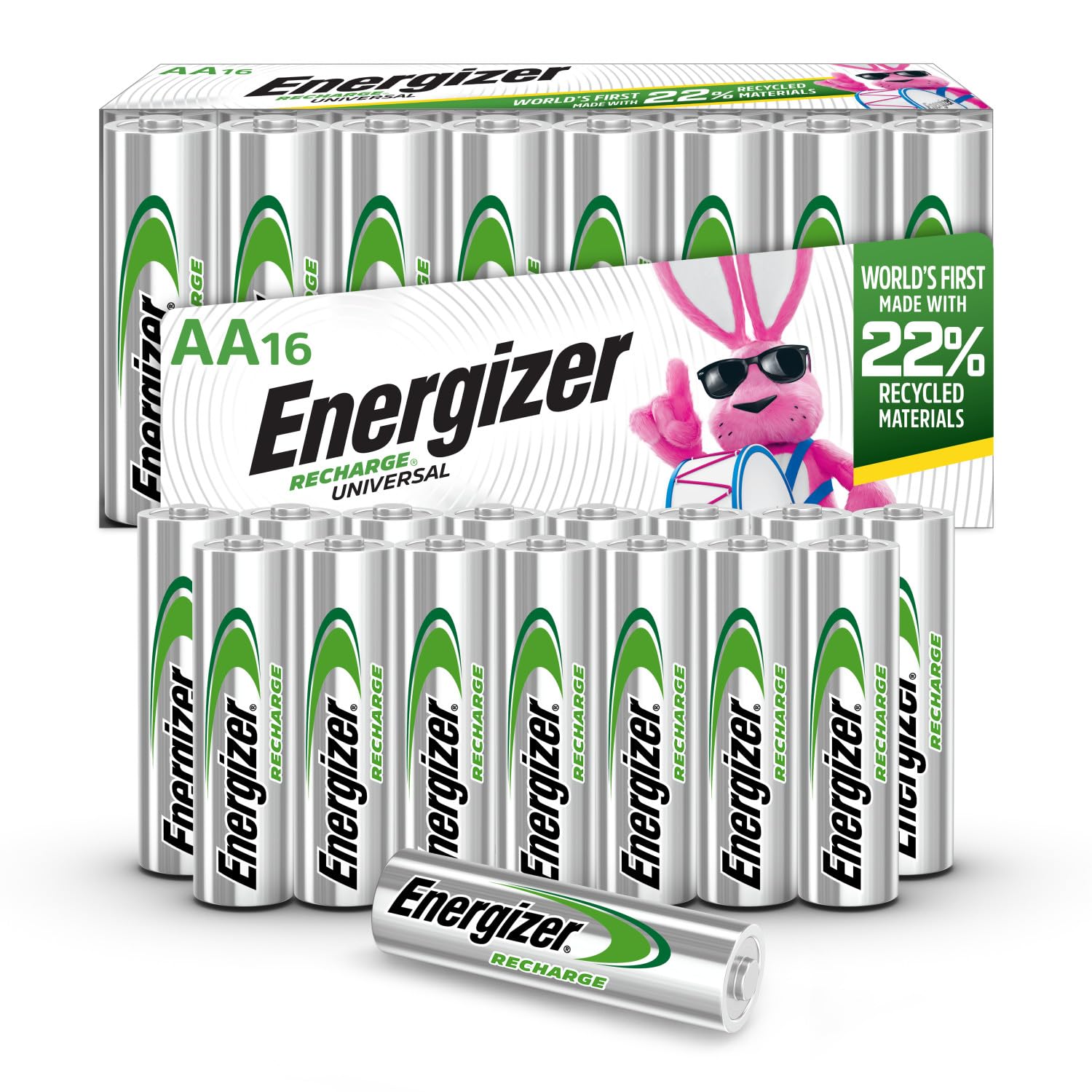
I keep the Energizer 16-pack on hand when I want bulk rechargeables for a household or a fleet of solar devices—easy to charge in groups and rotate through gear.
Why I picked it: Bulk quantity makes device management and charging cycles simpler.
Best for: Families, classrooms, or multiple solar fixtures needing many cells.
Good value per cell when you need a large supply.
Pros
- Large 16-cell pack for broad coverage
- Pre-charged and ready
- Good for bulk rotation
Cons
- More than necessary for light users
- Storage takes more space
My take
When I outfitted a backyard of solar decorations and several battery-powered sensors, the 16-pack let me standardize cells across devices and charge sets in bulk. That made maintenance straightforward—charge a batch, deploy a batch.
The convenience of having lots of matched cells outweighs the storage footprint for me. If you manage multiple solar fixtures or a classroom of devices, a bulk pack cuts down on fiddling and replacement trips.
How I Choose Batteries for Solar-Powered Gear
Pick the right chemistry
I choose primary lithium cells for devices that need decades of shelf life or must survive extreme temperatures. For devices I recharge frequently, I choose NiMH rechargeables—eneloop and similar cells—because they balance capacity, cycle life, and low self-discharge.
- Lithium (non-rechargeable): best for long-term spares and extreme temps.
- NiMH rechargeable: best for daily-use devices and bulk savings.
- High-capacity NiMH (eneloop pro): for bursts and high-drain electronics.
Cycle life vs capacity
I weigh how often I’m willing to recharge against how long each charge needs to last. eneloop standard cells promise enormous cycle life and retain charge for years, while eneloop pro trades some cycles for higher per-charge runtime.
- Choose high-cycle cells for long-term, repeated use.
- Choose high-capacity cells for power-hungry devices and longer sessions.
Temperature and outdoor performance
For solar gear exposed to cold or heat, I prioritize cells with documented temperature tolerance. Energizer Ultimate Lithium's wide operating range makes it my pick for sensors and cameras that face winters and summers.
- Check operating temperature ranges for outdoor use.
- Prefer leak-resistant construction for semi-exposed devices.
Practical deployment tips
I rotate rechargeables between devices so no single cell ages prematurely, and I keep a mix of lithium spares for critical backups. Use matched cells in multi-cell devices for best performance.
- Don’t mix old and new cells in the same device.
- Use matched cells in multi-cell packs for stable output.
- Store spares in a cool, dry place to extend shelf life.
Frequently Asked Questions
Can I use rechargeable AA batteries in solar garden lights?
Yes—I use NiMH rechargeables in many solar garden lights that have onboard charging circuits. Make sure the light’s charging circuit is compatible with NiMH chemistry and that you choose cells with low self-discharge if the lights sit idle between uses.
Are Energizer Ultimate Lithium AAs rechargeable?
No—those lithium AAs are primary cells with very long shelf life and wide temperature tolerance. I treat them as single-use spares for critical devices rather than rechargeables.
How should I store spare batteries for solar gear?
I store spares in a cool, dry place and keep lithium backups in their original packaging until needed. For rechargeables, I top them up before long deployments and rotate sets to avoid leaving one pack discharged for extended periods.
Final Take
I keep a mix of these batteries on hand: lithium AAs for long-term, worry-free backups and high-quality NiMH rechargeables for day-to-day solar devices.
If you want a single recommendation, choose lithium for unattended outdoor gear and eneloop (standard or pro depending on drain) for items you recharge and rotate regularly.
