
I tested a range of lawn sprinklers and an expandable hose so you can pick the right tool for your yard — from roaming traveling sprinklers for large lawns to durable metal spot heads for small beds.
I spend a lot of time watering lawns and gardens, so I picked six useful options that cover the common needs I run into: long runs, pop-up systems, compact metal spot sprinklers, and a flexible hose that makes setup painless.
Through hands-on use I focused on real-world durability, ease of setup, water coverage, and how each product handles pressure and terrain. Below I lay out when each tool shines and the trade-offs I ran into.
If you want automated coverage for large, open turf, I reach for the traveling sprinkler. For installed irrigation zones I prefer pop-up rotors from Rain‑Bird or Hunter. For simple, low-cost spot watering the metal 360° heads deliver the best value, and the expandable Pocket Hose is my go-to when I need a tangle-free, lightweight line to feed any of those sprinklers.
1. Pocket Hose 75 FT Copper Head Expandable Garden Hose with Pocket Pivot, No Tangles, AS SEEN ON TV, 360° Swivel, Tri-Tex Tubing, Force Field Jacket, Lead-Free, No-Kink, Anti-Burst w/APT – Best Expandable Hose
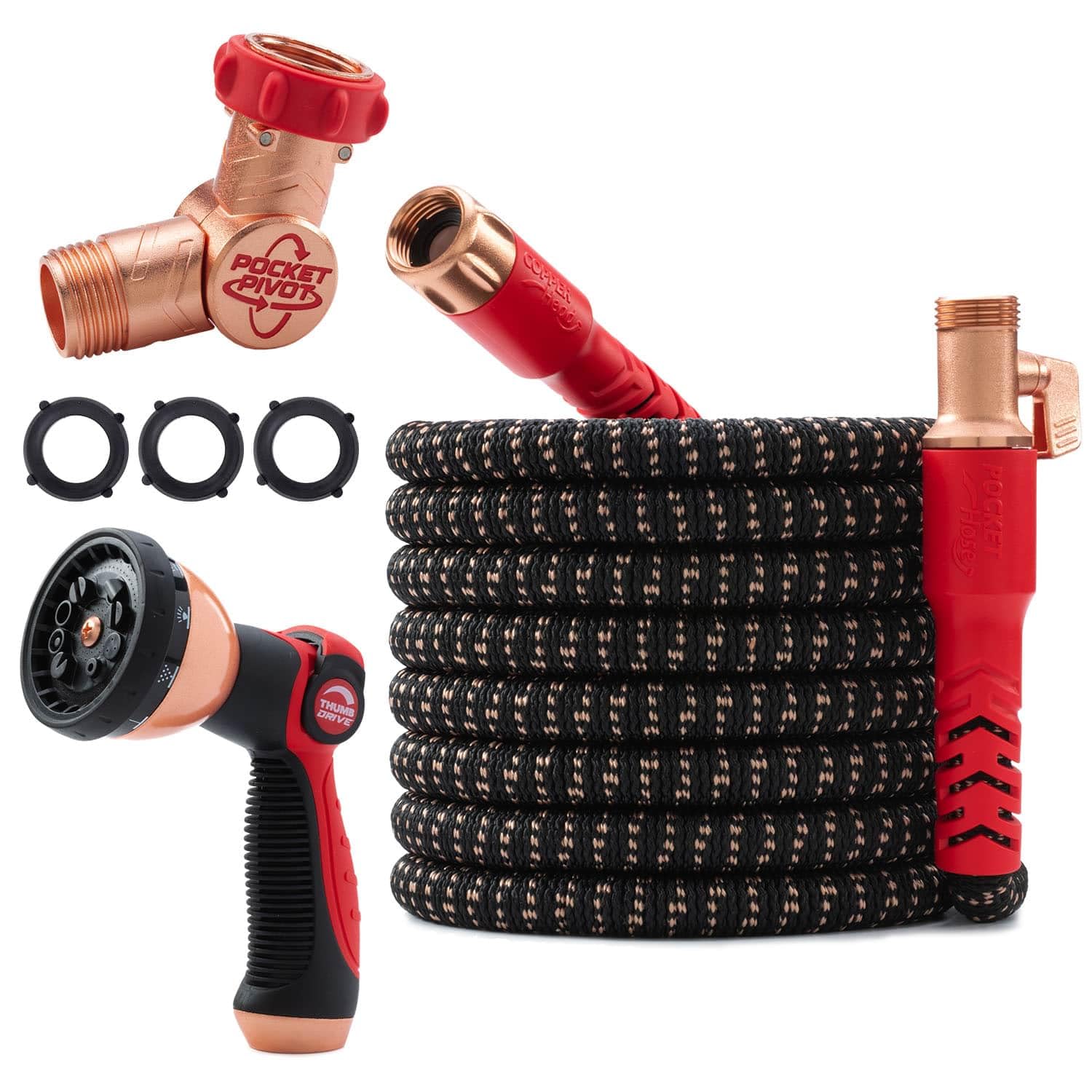
A lightweight, expanding hose that resists kinks, is easy to maneuver, and simplifies running water to sprinklers around the yard.
Why I picked it: Lightweight, tangle-resistant, and expands for long runs without the bulk of traditional hoses.
Best for: Feeding yard sprinklers where mobility and easy storage matter most.
Affordable compared with heavy-duty solid hoses; good value for frequent repositioning.
Pros
- Very lightweight and easy to handle
- Expands and contracts for compact storage
- Tangle- and kink-resistant design
- Faucet pivot reduces strain at the spigot
Cons
- Some units have reported early leaks
- Longevity can vary in harsh sun or freeze
My take
I replaced bulky rubber hoses with this expandable model across my front, side, and back yards because it’s incredibly easy to move. When filled it delivers solid flow and pressure, and when I turn the water off it contracts so I don’t fight coils on the lawn.
The included faucet pivot is a small but meaningful detail — it keeps the connector from kinking at the spigot and makes dragging the hose around beds effortless. I also appreciated that it’s lead-free and noticeably lighter for older family members in my household.
Full disclosure: I’ve had one unit spring a leak close to the faucet and I’ve seen longer-term durability vary between units. For me the convenience and no-kink performance outweigh that risk, but I keep a spare on hand if I plan heavy seasonal use.
2. Nelson Rain Train 13,500 Square Feet Cast Iron Outdoor Lawn Traveling Water Sprinkler for Yard, and Garden, with Auto Shut Off, Yellow – Best for Large, Unobstructed Lawns
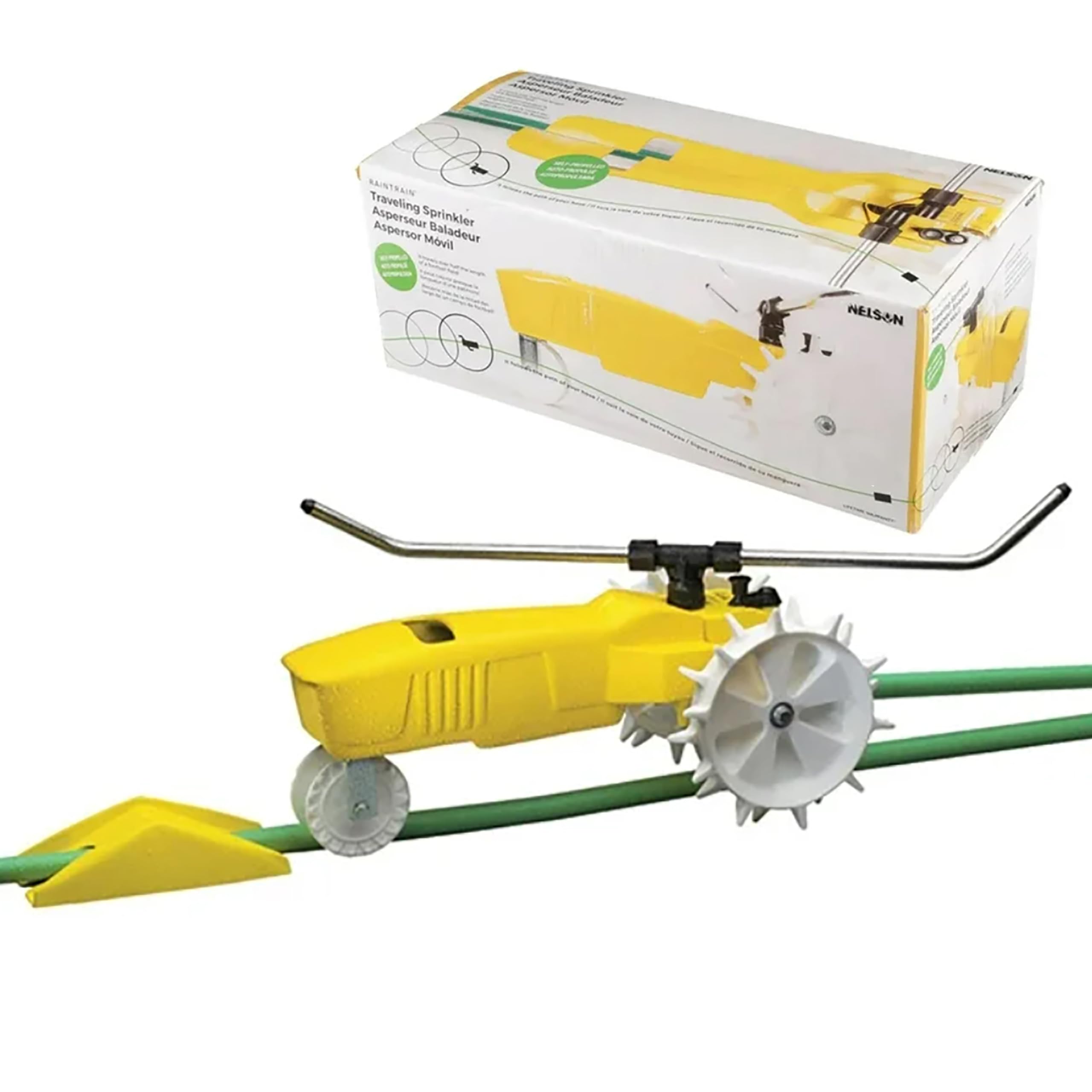
A heavy-duty traveling sprinkler that rolls along a laid hose to water very large, open lawns without constant attention.
Why I picked it: Covers very large areas automatically and offers adjustable speeds and auto shutoff for efficient soaking.
Best for: Huge, open lawns where moving a stationary sprinkler is tedious.
More of an investment but replaces repeated manual repositioning for large properties.
Pros
- Covers very large areas up to thousands of sq ft
- Three speeds for different saturation needs
- Robust cast-iron construction
- Automatic shutoff ramp prevents water waste
Cons
- Heavy to move (cast iron weight)
- Can occasionally jump the hose and require resetting
- May need gearbox maintenance over years
My take
When I need to water a big, open space I set this traveling sprinkler at the starting point, lay out a long hose, and walk away. It travels up to long runs and delivers a steady, adjustable spray while I handle other chores.
The selectable speeds are useful — I use low for a deep soak and higher speeds when I want quicker coverage. Its auto shutoff ramp is a practical design that lets me pause and reposition without wasting water.
It is significantly heavy compared with plastic options, and it’s worth noting that it can sometimes jump off the hose or require an occasional gearbox service after heavy seasons. On balance, for the labor it saves on large properties it’s become one of my most productive tools.
3. Rain-bird 5000 Series Rotor Sprinkler Head – 5004 PC Model, Adjustable 40-360 Degree Part-Circle, 4 Inch Pop-Up Lawn Sprayer Irrigation System – 25 to 50 Feet Water Spray Distance (Y54007) (2 Pack) – Best Pop-Up Rotor
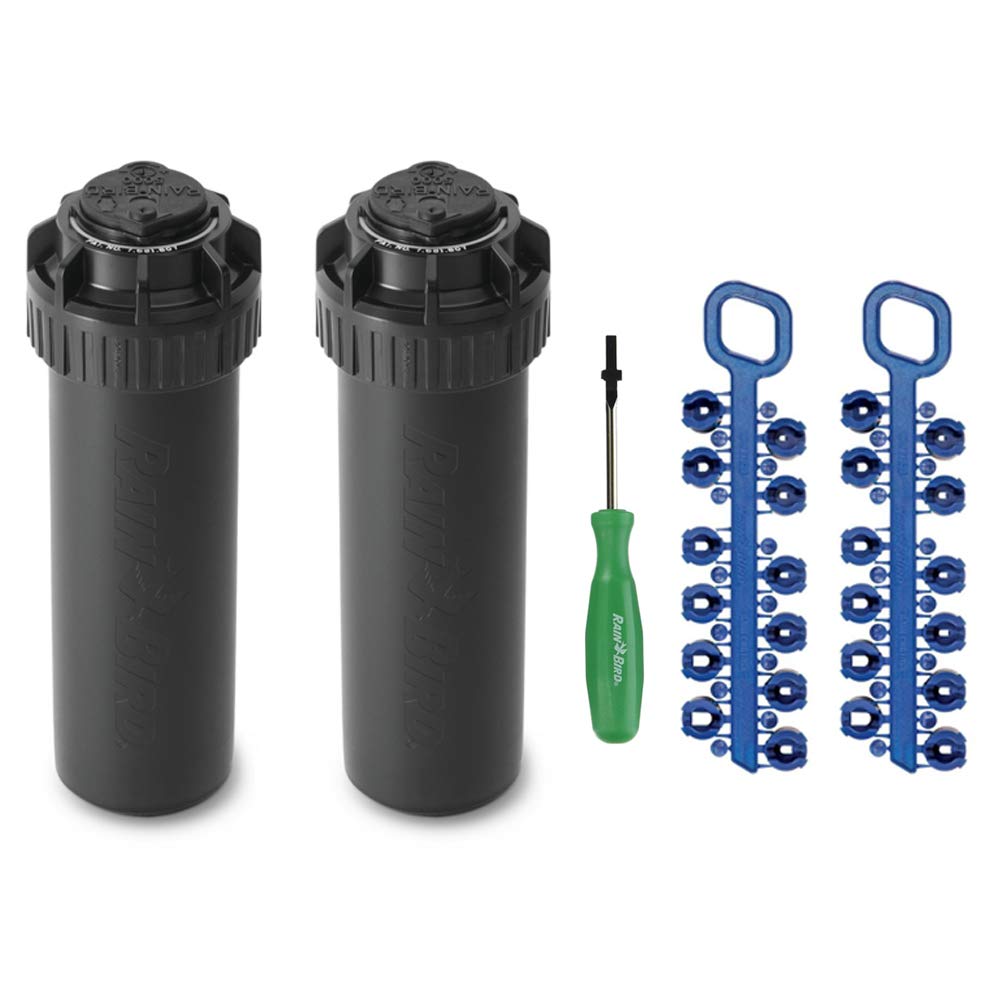
A reliable pop-up rotor that delivers even, wind-resistant coverage across medium to large lawn radii and offers easy top-access adjustments.
Why I picked it: Uniform distribution, long radius, and fast top-access adjustments made it a strong choice for installed systems.
Best for: Medium to large irrigation zones where uniform coverage and wind resistance matter.
A mid-range, cost-efficient rotor for reliable long-term use.
Pros
- Uniform Rain Curtain nozzle distribution
- Covers 25–50 feet reliably
- Top-adjustable arc and radius
- Self-cleaning arc adjustment port
Cons
- Nozzles sometimes arrive mixed in the box
- Requires matching pressure for best radius
My take
I use these rotors on zones where I want even coverage without misting or wind drift. The Rain Curtain nozzle produces large droplets that resist evaporation and keep water where it’s needed.
Top-access adjustments are a time saver — I can fine-tune the arc and radius with a screwdriver without digging. I’ve swapped these into existing systems and found they replace older heads cleanly and perform consistently.
They come with multiple nozzles for dialing in flow, though the pieces can arrive loosely packed. Once installed and tuned they provide dependable, low-maintenance service.
4. Hunter PGP-ADJ 3/4" Rotor Sprinkler Head, Adjustable 40°-360° Arc, 4" Pop-Up Gear Drive Lawn Irrigation Head, 22-52 ft Spray Distance, Preinstalled 3.0 GPM Nozzle 1 – Best for Professional-Grade Systems
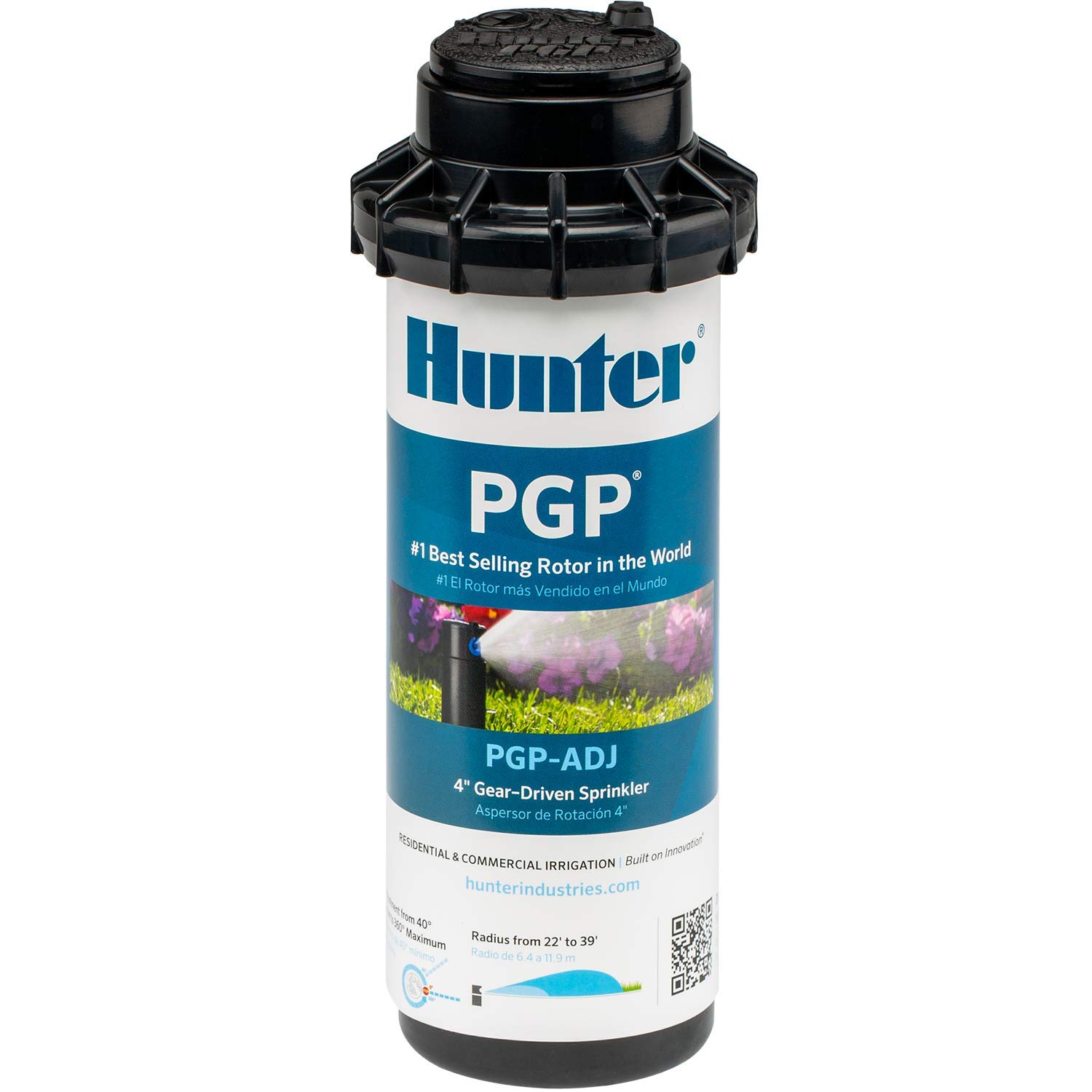
A pro-grade gear-driven rotor that delivers quiet, smooth rotation and broad adjustable coverage suited for demanding irrigation needs.
Why I picked it: Gear-driven reliability and wide operating pressure range make it my go-to for high-performance irrigation zones.
Best for: Installed systems where longevity and precise spacing matter.
A durable, professional option that pays off in fewer replacements over time.
Pros
- Smooth, quiet gear-driven rotation
- Wide radius up to ~52 feet
- Adjustable 40–360° arc
- Water-lubricated gears resist clogging
Cons
- Larger body needs more digging to replace
- Installation can be fiddly for newcomers
My take
I rely on the Hunter PGP-ADJ when I want a dependable rotor for an installed system. The gear-driven action is quiet and consistent, and it performs well across a broad pressure range.
The adjustable arc and radius let me space heads efficiently and cut down the number of heads per zone. In my experience the build quality holds up over several seasons with routine checks.
It’s worth noting that the PGP’s larger diameter means I dig a bit more when I replace it, and newcomers should budget time for careful installation. Once in, though, it’s a workhorse.
5. Hourleey 360 Degree Metal Spot Sprinkler, 2 Pack Circle Pattern Sprinkler with Gentle Water Flow for Small Area Yard Lawn Garden Watering, Coverage Up to 30FT (Blue) Blue 2 Pack – Best Simple Metal Spot Sprinkler
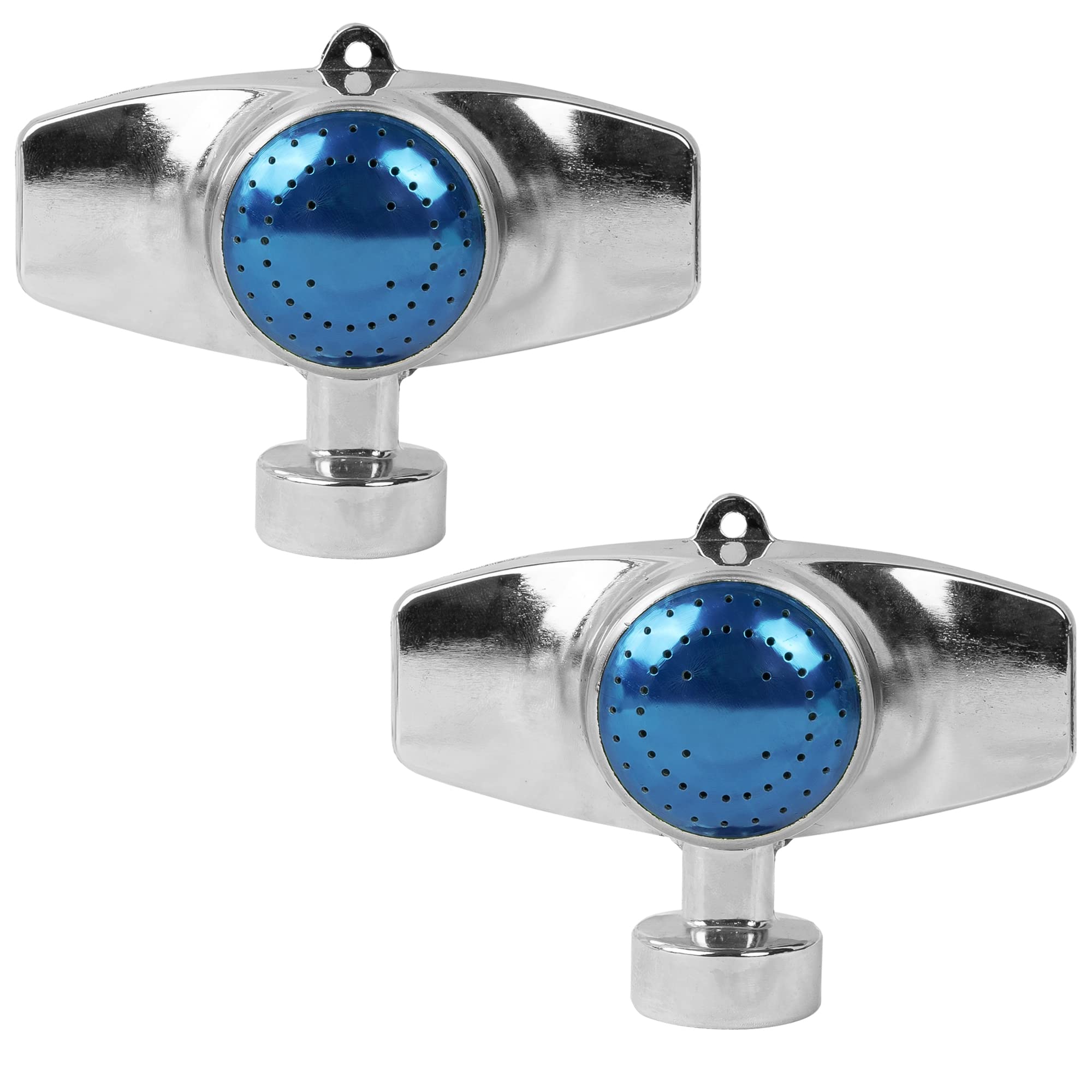
A solid metal 360° sprinkler that offers even, gentle coverage for small lawns and garden beds with a durable alloy build.
Why I picked it: Simple metal construction and up to 30ft coverage make this my pick for small-area, low-fuss watering.
Best for: Small yards, flower beds, and quick cooling for kids and pets.
Great value for basic, durable irrigation tasks.
Pros
- Heavy-duty metal construction
- Up to 30 ft coverage depending on pressure
- Gentle, even watering pattern
- Easy screw-on setup to standard hoses
Cons
- Not ideal for large lawns
- Coverage depends on water pressure
My take
For small lawns and planted beds I favor this metal spot sprinkler. It screws onto a standard garden hose in seconds and puts out a dependable circular pattern that soaks beds without blasting seedlings.
The alloy construction feels tougher than plastic alternatives and has held up well to repeated seasons in my yard. I like using two in series to shape coverage across irregular areas.
Because it’s a simple mechanical device, I don’t worry about electronics or seals — just set the flow and let it run while I handle other chores.
6. 360 Degree Metal Spot Sprinkler,Small Sprinkler Garden for Small Areas Lawn Sprinklers for Yard Circle Pattern with Gentle Water Flow Garden Watering (1, Yellow) Yellow 1 – Best Value Small-Area Sprinkler
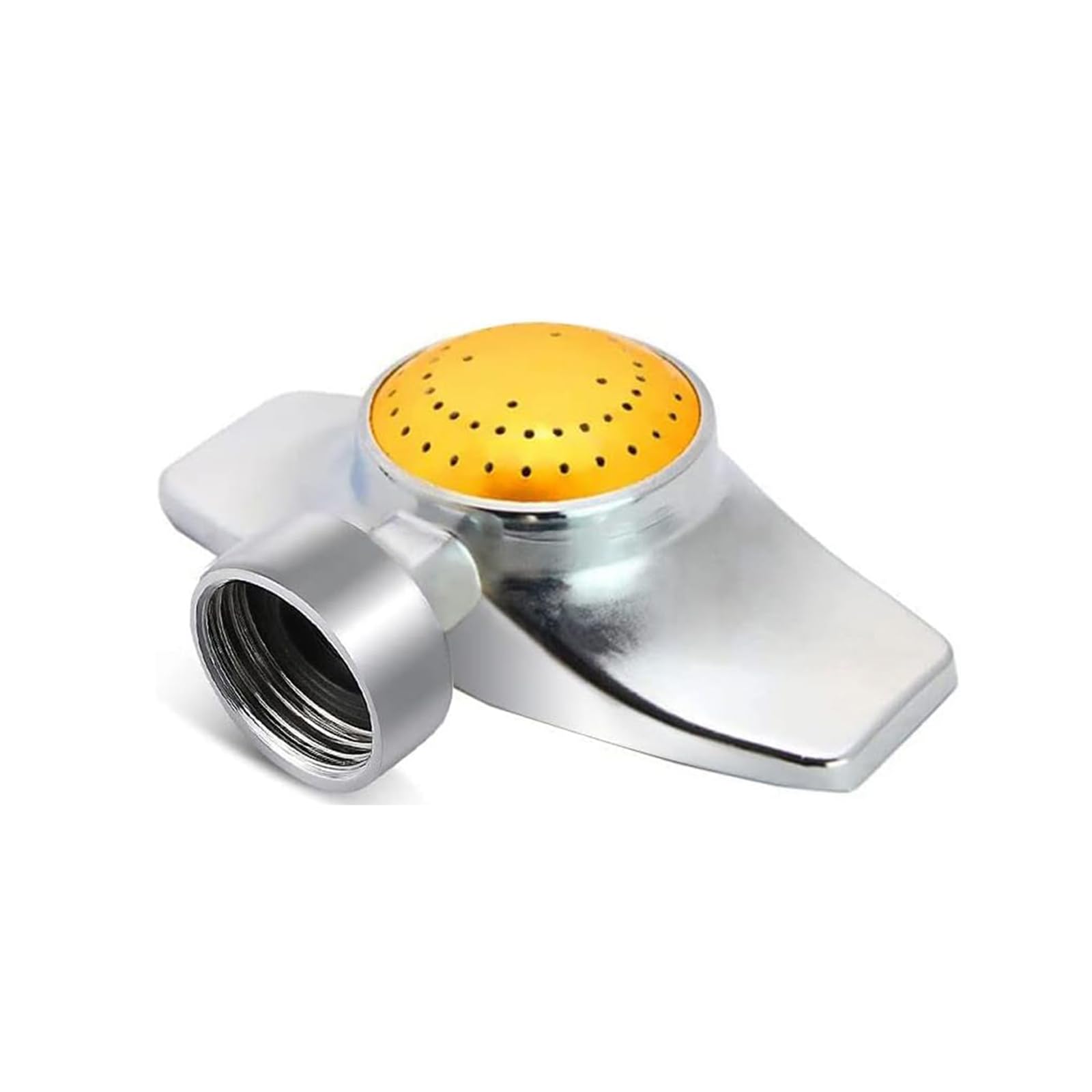
An inexpensive metal 360° sprinkler that gives reliable small-area coverage with easy hose compatibility and low fuss operation.
Why I picked it: Low cost, sturdy metal build, and simple performance for spot watering needs.
Best for: Budget-conscious gardeners and small patch watering.
Very affordable; ideal as a backup or for seasonal use.
Pros
- Sturdy metal construction for the price
- Adjustable coverage with simple water-pressure control
- Fits standard garden hose threads
- Great small-area performance
Cons
- Lighter metal than some premium models
- May need anchoring in soft soil
My take
I use this little metal sprinkler when I want a no-frills solution for a garden or small yard. It’s easy to screw onto a hose, the spray is even, and the unit stays put if the ground is firm.
The spraying distance scales with my water pressure — lower pressure gives a tight radius, higher pressure pushes closer to the stated maximum. It’s been a reliable, inexpensive option while I tune larger irrigation zones.
If you plan to leave it under high flow on soft soil, I’ll usually stake or anchor it, as it’s lighter than some older metal models but still delivers solid coverage.
How I Choose Lawn Sprinklers
Match the Tool to the Task
I start by defining the zone I need to water — a large open lawn, an installed irrigation zone, or a small bed. Each type of product below solves a different problem.
Traveling sprinklers are my choice for very large, uninterrupted lawns. Pop-up rotors are what I use for installed systems that need precise spacing. Metal spot sprinklers are the easiest and cheapest choice for small areas.
- Large open turf: traveling sprinkler or in-ground system
- Installed irrigation: pop-up rotors (Rain‑Bird or Hunter)
- Small beds and planters: metal 360° spot sprinklers
Key Specs I Check
Coverage radius, operating pressure, and connection size are the three specs I always confirm. These determine whether a head will reach where it needs to and work with my existing supply.
Material and serviceability matter too — metal bodies and gear-driven rotors last longer and are easier to maintain in the long run.
- Radius and spray pattern (ft) — ensures coverage
- Recommended pressure range (PSI) — matches your supply
- Hose/inlet size (3/4" vs 1/2") — avoids pressure loss
- Material (plastic vs metal) — durability trade-offs
Installation & Maintenance Tips I Use
I dig slightly larger holes than the head diameter to make replacements painless and keep spare nozzles and basic O-rings on hand.
For traveling sprinklers I use a heavier hose (5/8" where recommended) to minimize pressure drop and reduce the chance it will jump the hose.
- Use correct hose diameter for long runs to maintain pressure
- Keep spare nozzles and seals for pop-up rotors
- Check traveling sprinkler gearboxes seasonally
- Anchor small metal sprinklers in soft ground
Frequently Asked Questions
Can these sprinklers attach to a standard garden hose?
Yes — the metal spot sprinklers and many traveling heads use standard US hose threads (3/4"), and the Pocket Hose includes a faucet pivot to fit standard spigots. I always confirm inlet size before purchase to avoid adapters.
Do traveling sprinklers need a special hose or pressure?
I use a heavier 5/8" hose for long runs with a traveling sprinkler to reduce pressure loss; this keeps travel speed consistent and helps avoid the unit jumping the hose.
Which sprinklers work best at low water pressure?
Pop-up rotors that produce larger droplets (like the Rain‑Bird) and some traveling sprinklers will work acceptably at lower pressure. I avoid tiny misting heads when supply pressure is limited.
Are metal spot sprinklers worth it over plastic?
For me the metal heads last longer and resist breakage when dropped or stepped on. They’re an inexpensive way to get durable, simple watering for small areas.
Final Take
I have different go‑to tools depending on the job: a traveling sprinkler for big open lawns, Rain‑Bird or Hunter rotors for installed systems, and metal spot sprinklers for small beds. The Pocket Hose makes feeding any of these effortless when I need portability.
Pick the type that matches your yard size and water supply, and plan for a little maintenance — that’s how I keep my lawn consistently green with minimal babysitting.
