
I tested a range of pressure washers and foam accessories so you can match power, portability, and features to your projects—everything from lightweight electrics to high-output gas rigs.
I put these units and accessories through real cleaning tasks around my home and workshop so I could compare portability, raw power, and day-to-day usefulness.
My goal was practical: recommend tools that solve specific jobs—washing cars, stripping paint, cleaning driveways, and getting into tight detailing spots.
Below I break down each item, explain where it shines, and point out the trade-offs I ran into during use.
I included electric, gas, cordless, and foam-accessory options because the right tool depends on job size: I use electrics for regular home work, cordless for quick remote jobs, and gas units when I need maximum pressure and flow.
1. Westinghouse ePX3100v Electric Pressure Washer — 2100 Max PSI, Handheld – Best Lightweight Electric
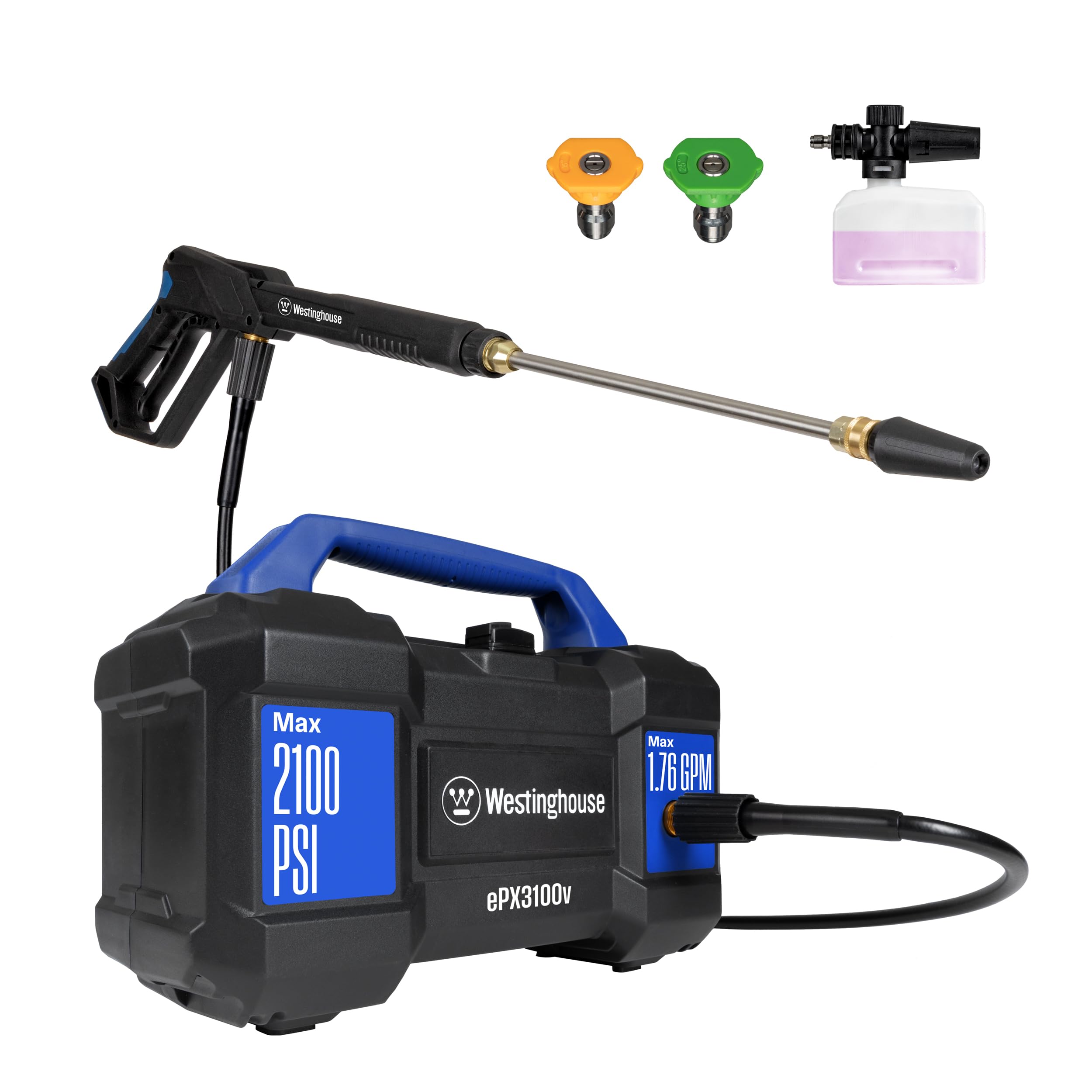
I relied on this compact Westinghouse when I wanted the most cleaning power without hauling a heavy unit—lightweight, portable, and surprisingly capable.
Why I picked it: Light, portable electric that still delivers real household cleaning power.
Best for: Quick car washes, decks, patio furniture, and routine home cleaning.
An affordable, entry-level electric option that punches above its size.
Pros
- Very lightweight and easy to carry
- Detachable foam cannon included
- Total Stop System to preserve pump
- Compact for tight storage
- 20' easy-coil hose
Cons
- No wheels for rolling
- Hose could be longer for vehicle washing
- Not for heavy commercial work
My take
I keep this unit for one-person jobs where lugging a full-size washer would be overkill. At roughly 17–18 pounds with its built-in handle, it moves around the yard easily and tucks away on a shelf when I'm done.
Pressure and flow surprised me for an electric this compact: enough to strip mildew from decks, blast dirt from patio furniture, and handle family cars. The detachable foam cannon made car and deck soap application simple and even.
I appreciated the Total Stop System; the pump rests when I'm not pulling the trigger, which I believe helps longevity. My only real gripes are practical: I wish the pressure hose were longer for washing vehicles without moving the unit, and it lacks wheels for easier movement over longer sessions.
2. Chemical Guys Snubby Pressure Washer Gun + EQP_310 TORQ Foam Cannon Bundle – Best Foam Cannon + Short-Gun
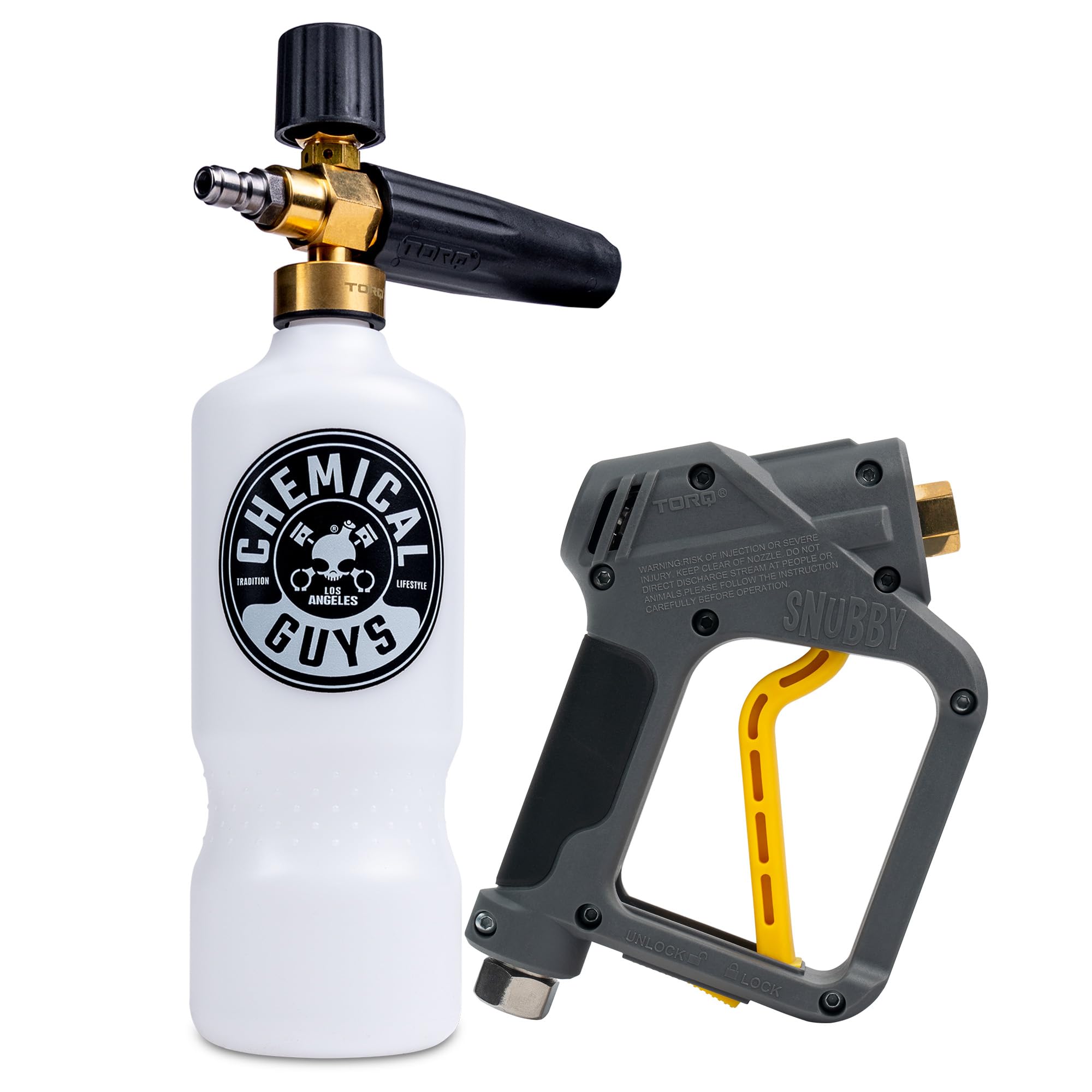
When I wanted better foam control and less arm fatigue, this snubby gun with the TORQ Max Foam 8 attachment was the upgrade I reached for.
Why I picked it: Brings foam application close and ergonomic control to any pressure washer setup.
Best for: Detailing cars, wheel wells, and tight spots where a long wand is awkward.
A targeted accessory purchase that improves control and foaming performance.
Pros
- Keeps foam cannon close at hand
- Ergonomic grip reduces fatigue
- Produces thick, clingy foam
- Includes universal adapters
- Solid build quality
Cons
- Requires a pressure washer to work
- Adds another component to manage
My take
I swapped this snubby gun onto my electric unit the first week I had it, and it immediately changed how I foam cars and detail tight areas. The short profile lets me keep the cannon close to the paint and wheel wells where precision matters.
The Max Foam 8 cannon delivers noticeably thicker suds than basic foam bottles, and the thread-lock seal system gave me confidence there wouldn’t be leaks during longer foam-and-dwell cycles.
Assembly was straightforward; it came with the adapters I needed and the overall build felt sturdier than the long OEM gun I replaced. This isn’t a washer on its own, but as an accessory it’s a very practical upgrade.
3. Westinghouse WPX3000e Electric Pressure Washer — 3000 Max PSI, Induction Motor – Best Electric for Heavy Cleaning
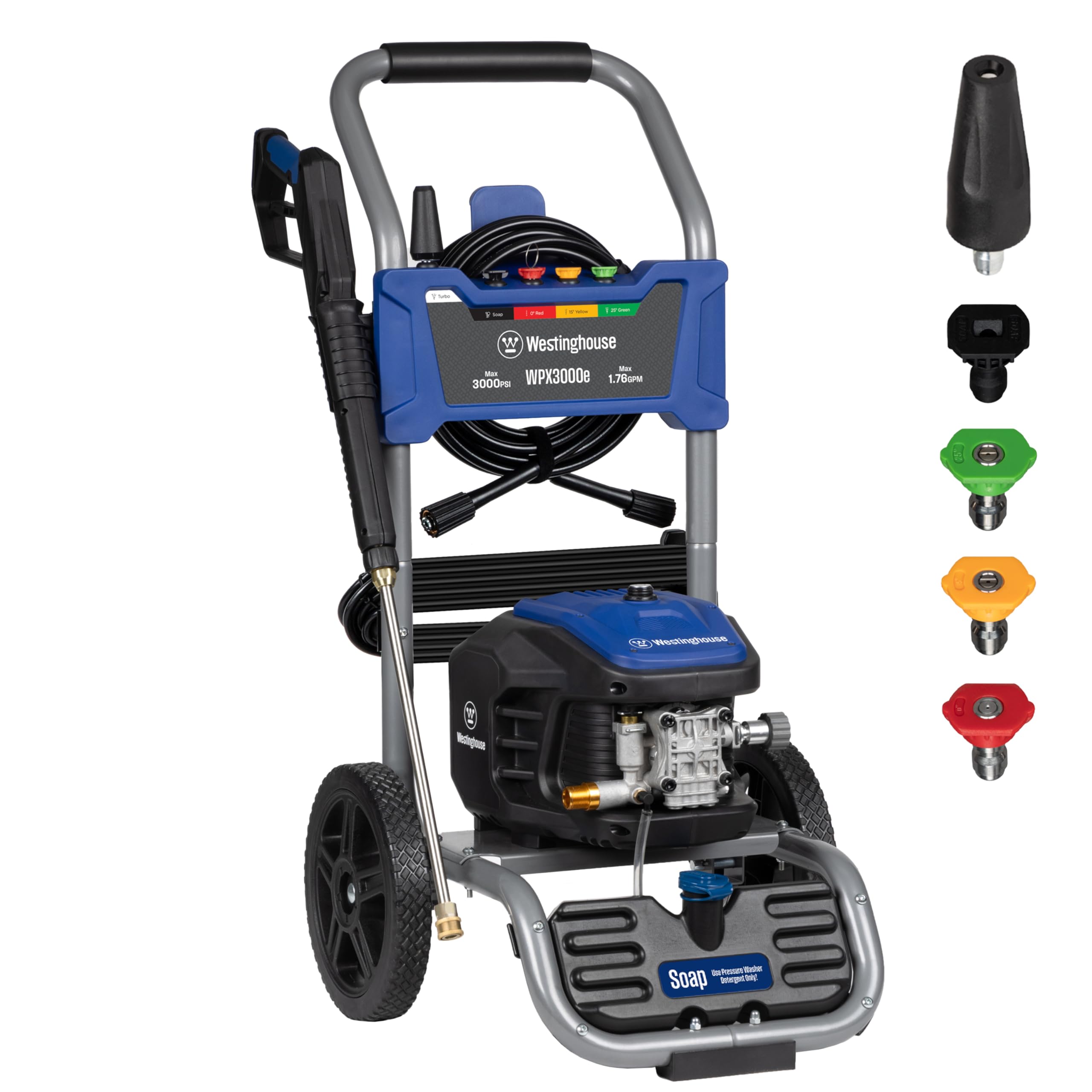
This Westinghouse is my go-to when electric convenience must meet stubborn grime: high PSI for an electric, on-board soap, and heavy-duty wheels for maneuvering.
Why I picked it: Highest-performing electric in the group with a solid build and useful features.
Best for: Driveways, deck restoration, garage floors, and larger home cleaning projects.
A mid-range electric that targets users who want near-commercial power without gas maintenance.
Pros
- High PSI for an electric
- Built-in .45 gal soap tank
- Never-flat 10" wheels
- Five quick-connect nozzles
- Maintenance-free axial pump
Cons
- Heavier than compact electrics
- Power cord can get in the way
- Still not equal to gas peak pressure
My take
I chose this model when I needed more grunt than small electrics deliver. The 3000 max PSI and a powerful induction motor let me tackle tasks I normally reserved for gas units, like heavy deck cleaning and paint prep on metal furniture.
Assembly was painless and the wheeled steel frame makes it easy to move around despite the added weight. The onboard soap tank is small but extremely handy for pre-soak work, and switching between the five nozzles was effortless.
If you want commercial-grade cleaning without gas, this is the electric I kept going back to. It’s quieter and cleaner to operate than gas, but expect the cord to get in your workspace during long runs and recognize it won’t match the very highest gas peak pressures.
4. 4200PSI Gas Pressure Washer — 4.0 GPM, 212cc Engine, Commercial Output – Best Commercial-Style Gas
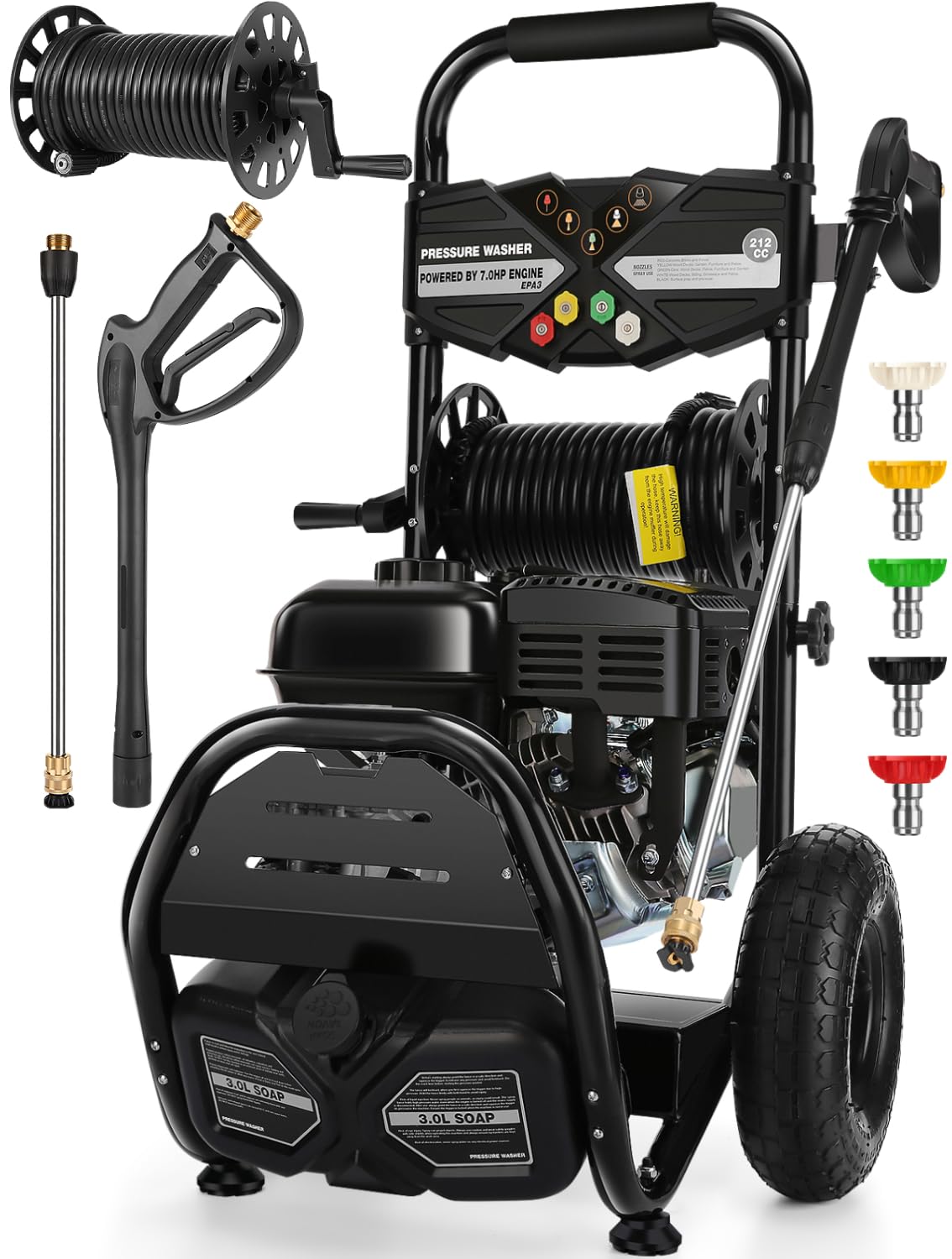
I bring this gas unit out when nothing but full power will do: thick grime, paint prep, and large concrete surfaces bow to its flow and pressure.
Why I picked it: Maximum pressure and flow for heavy-duty cleaning and surface prep.
Best for: Large driveways, siding paint prep, commercial-style heavy cleaning jobs.
A higher-power gas option—expect more capability and routine engine maintenance.
Pros
- Up to 4200 PSI with high flow
- 4.0 GPM for fast cleaning
- Long steel-braided pressure hose
- Multiple quick-connect nozzles
- Rugged steel frame and wheels
Cons
- Requires gas and routine maintenance
- Heavier to move for one person
- Overkill for light household tasks
My take
When I needed to remove old coatings and handle large concrete areas, this gas washer delivered the force and flow I wanted. The 4200 PSI paired with 4.0 GPM cut through tenacious grime much faster than any electric I tested.
Setup was straightforward—everything you need comes in the box, and the long, braided hose gave me reach without constantly moving the machine. The included nozzle assortment handled everything from focused stripping to wide rinsing.
This is the tool I reach for when speed and power trump convenience. Be ready for the usual gas trade-offs: fueling, oil checks, and heavier lifting compared with electric or cordless options.
5. Cordless Pressure Washer — 21V Battery, 4.0Ah, Portable Power Washer – Best Cordless Portable
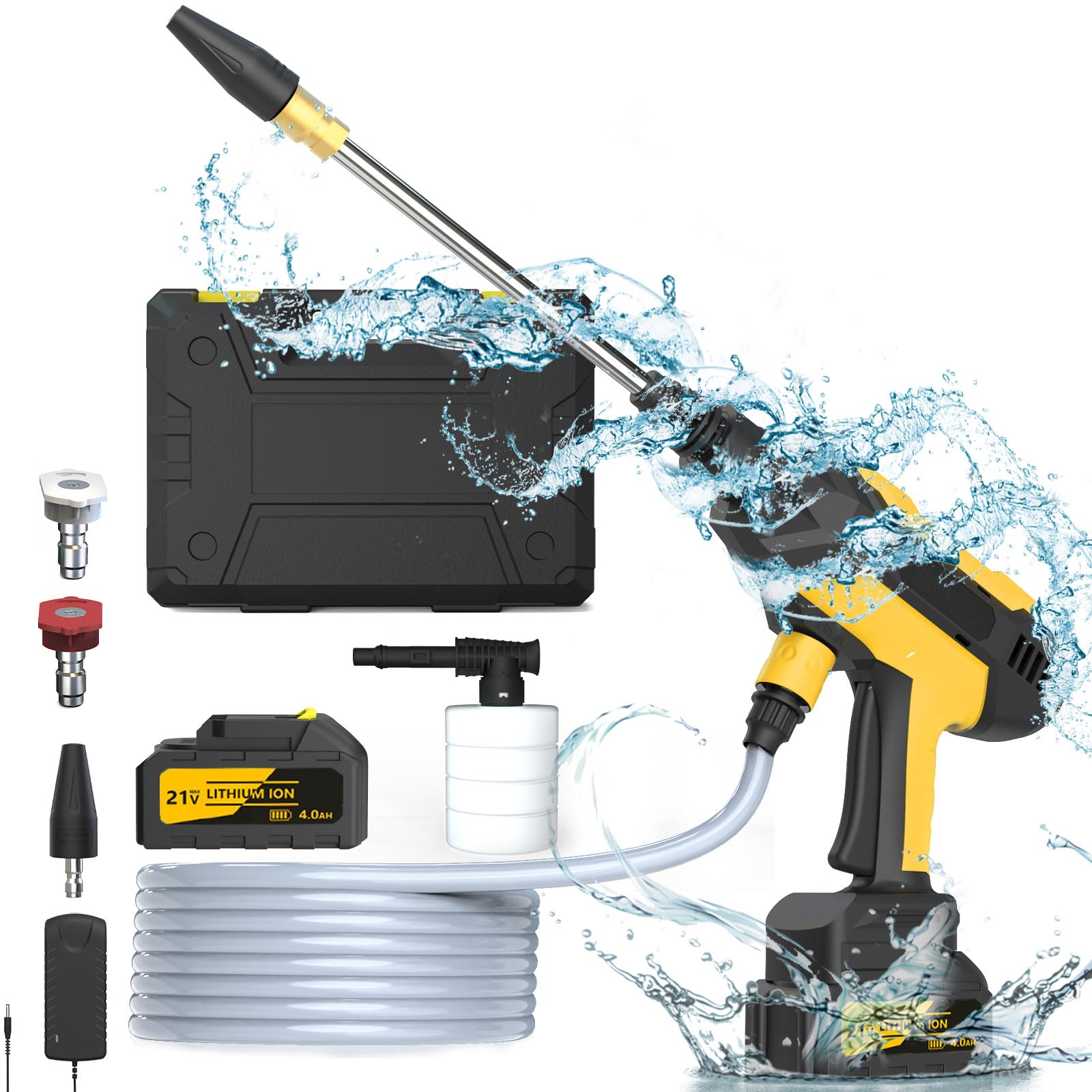
I keep this cordless washer in my shed for quick, outlet-free jobs—it’s the most convenient option when portability and simplicity matter more than raw force.
Why I picked it: True cordless freedom with a practical runtime for small-to-medium tasks.
Best for: Remote jobs, cars, fences, quick patio touch-ups, and places without power outlets.
A budget-friendly cordless option focused on portability and convenience.
Pros
- Cordless portability
- 4.0Ah battery with long runtime
- Pumps from buckets or pools
- Includes foam cannon and nozzles
- Lightweight and easy setup
Cons
- Lower pressure than gas models
- Runtime limits long jobs
- Not for heavy-duty surface prep
My take
I pulled this unit for several weekend jobs where dragging an extension cord was a hassle. The battery lasted long enough for thorough car washing and several small patio tasks, and the included foam cannon made car prep quick and even.
The ability to suction water from a bucket or pool extended where I could work, which I appreciated on jobs far from a garden tap. Attachments felt solid and logically organized in the box.
This is the convenience pick: if you want to clean without cables or a gas engine, it delivers consistent results for light-to-moderate cleaning, but it won’t replace a high-flow gas washer for heavy surface prep.
6. 4200PSI Gas Pressure Washer — 4.0 GPM, 212cc Engine (Alternate Model) – Best Gas (Alternate)
I tested this alternate gas model in the same class as the other 4200 PSI machines and found it to be another solid choice when high pressure and flow are priorities.
Why I picked it: A similar high-output gas option that trades convenience for serious power.
Best for: Contractors or homeowners needing fast cleaning on large surfaces.
Comparable to other high-power gas units—expect similar running costs and upkeep.
Pros
- High pressure and flow
- Durable steel frame
- Long, abrasion-resistant hose
- Comes with multiple nozzles
- Quick-connect compatibility
Cons
- Requires regular maintenance
- Heavy for single-person transport
- Too aggressive for delicate surfaces
My take
I used this unit on driveways and patios; it matched expectations for a commercial-style gas washer. The pressure cleaned deeply and the hose length let me reach corners without constantly moving the machine.
Assembly and first runs were straightforward. The foam cannon included was handy for vehicle washing and the quick-connect nozzles sped up switching spray patterns.
If you need repeated high-intensity cleaning, this model is a capable alternative to other gas units. Just plan for maintenance and sensible care when using concentrated nozzles on softer materials.
How I Choose Pressure Washers
Pick the power type that fits how you work
I break options into three camps: electric for regular home use, gas for high-demand jobs, and cordless for mobility. Each has clear trade-offs in power, upkeep, and convenience.
- Electric: quieter, less upkeep, great for routine home tasks.
- Gas: highest PSI and GPM for large or commercial jobs.
- Cordless: best for portability and quick remote jobs.
Match PSI and GPM to the job
I always consider both pressure (PSI) and flow (GPM). Higher PSI blasts away stubborn deposits; higher GPM rinses them away faster.
- Cars and furniture: lower PSI, moderate GPM.
- Driveways and paint prep: high PSI and high GPM.
- General home use: a balance of pressure and flow.
Look for features that save time
I value onboard soap tanks, long hoses, quick-connect nozzles, and wheels. Those features cut setup time and make multi-hour jobs easier.
- Onboard soap tank for pre-soak convenience.
- Never-flat wheels for easy transport.
- Quick-connect nozzles to change patterns fast.
Think about long-term ownership
I account for maintenance: gas engines need oil and fuel management, while electrics avoid that but depend on cord length and available outlets.
- Gas: plan for fuel, oil changes, and storage.
- Electric: check cord length and circuit capacity.
- Cordless: consider spare batteries for longer sessions.
Accessories I almost always recommend
I keep a foam cannon and a compact gun like the Snubby on hand for detailing jobs. Surface cleaners and extension wands are time-savers for large flat areas.
- Foam cannon for paint-safe pre-soak.
- Snubby/short gun for tight areas.
- Surface cleaner for patios and driveways.
Frequently Asked Questions
Do I need a gas pressure washer or will an electric do?
I choose gas when I need the most PSI and GPM for large surfaces or paint prep. For routine home cleaning—cars, decks, patios—an electric usually hits the sweet spot of power and convenience.
How do I maintain a gas pressure washer?
I follow a simple routine: check oil and fuel before use, run fresh gas, drain fluids before winter storage, and clean the inlet filter. Regular checks of hoses and connections keep me from facing avoidable downtime.
Is a foam cannon worth it?
I find a foam cannon very useful for paint-safe car washing and letting cleaners dwell on vertical surfaces. It won’t replace a good nozzle set, but it speeds up cleaning and improves coverage.
Can I use these washers on my car?
I use lower-pressure nozzles and keep a safe distance when washing vehicles. High-pressure, narrow-angle tips can damage paint, so I opt for foam plus wider spray patterns for cars.
Final Take
I picked these items to cover every type of cleaning scenario I encounter—from fast cordless touch-ups to heavy-duty gas surface prep.
If you want my short guidance: choose electric for most homeowners, cordless for portability, and gas when you need maximum speed and power.
Whichever you pick, match PSI/GPM and accessories to your tasks, and you’ll save time and get better results.
