
I tested a range of grow lights from compact seed-starting panels to commercial-grade bars. Here are the options I trust for different spaces and goals, with honest notes on performance, coverage, and features.
I spend a lot of time setting up tent runs, shelving racks, and windowless plant corners, so I rely on grow lights every season. Over months of hands-on use I focused on coverage, spectrum quality, heat management, and real-world controls.
This roundup groups lights by role — compact seed starters, budget desk lamps, multi-head stands, and heavy-duty bar fixtures — so you can match the fixture to your space and goals.
Below I explain why each light made the list and how I used it, plus the trade-offs I ran into so you can pick the best fit for your setup.
If you want quiet, efficient performance for a 2×2 tent, I lean toward the Spider Farmer SF1000. For tight budgets or seed racks the VIPARSPECTRA P700 is the sensible pick. If you need commercial-level output and controls, the AC Infinity IonFrame sits at the premium end.
1. Spider Farmer SF1000 100W LED Grow Light – Best Overall
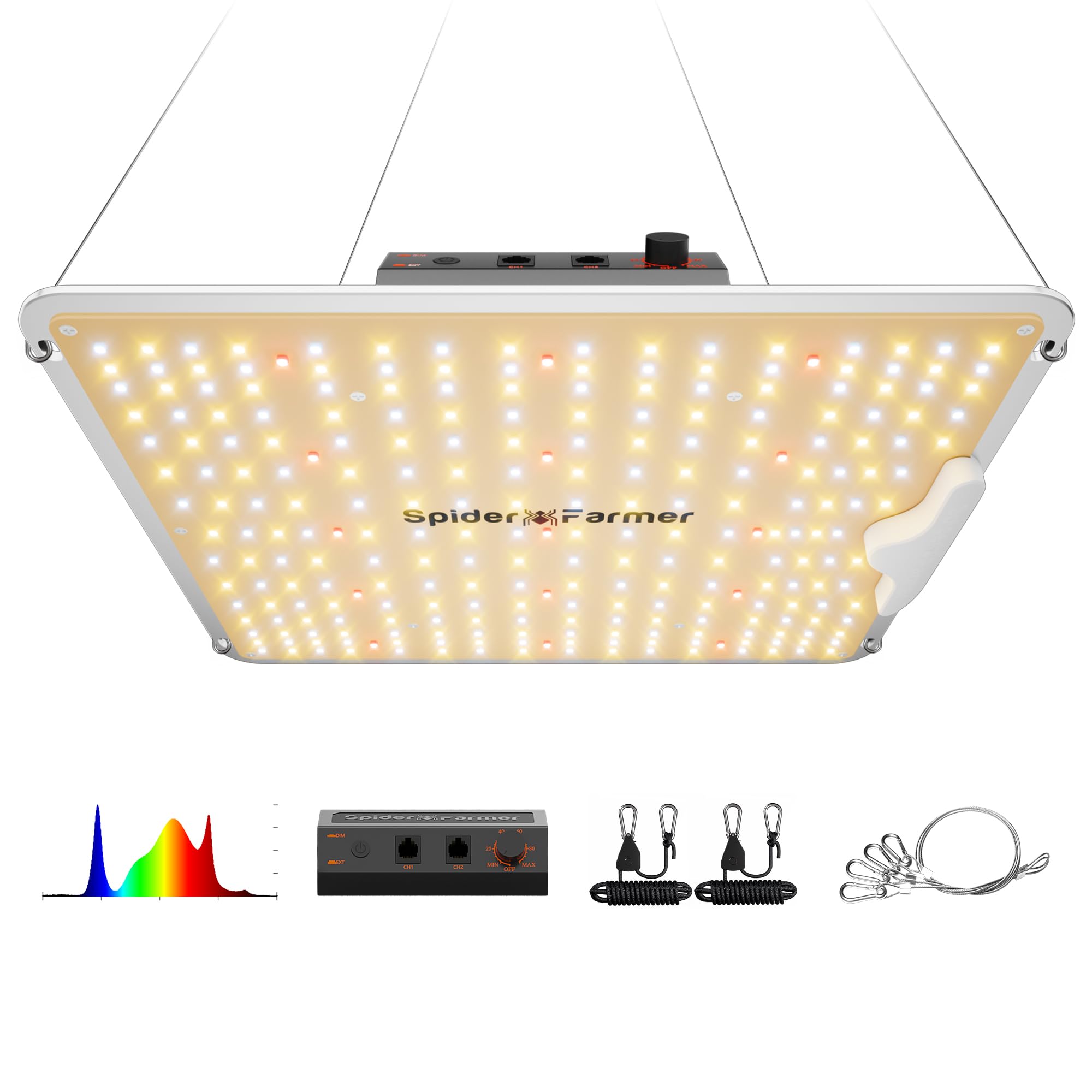
A fanless, dimmable full-spectrum panel built for uniform PPFD and deep canopy penetration — solid for 2×2–3×3 tents and multi-stage grows.
Why I picked it: High PPE, silent operation, uniform light and a long warranty.
Best for: Small tents and growers who want one reliable, quiet fixture.
Affordable performance among dedicated LED panels.
Pros
- Fanless, silent operation
- High-efficiency diodes (good PPE)
- External dimmer knob
- Uniform light spread
- 5-year warranty
Cons
- Not intended for large rooms
- IR diodes are faint to the eye
My take
I put the SF1000 over a 2×2 veg area and appreciated how quiet it runs; there’s no fan noise to mask tent fans or room activity. The upgraded diodes deliver a punchy blue spectrum for vegetative growth while still offering the red and IR needed for bloom.
Dimming is easy with the external knob, which I used to seed down intensity for seedlings and dial it up for mature plants. The diode layout helps the PPFD remain even across the canopy, so plants at the edges got nearly as much usable light as the center.
Build quality felt sturdy — thick aluminum heatsink, covered cables, and those small touches made setup painless. I also liked that the company backs it with an extended warranty, which gave me confidence to run it full cycles indoors.
2. VIPARSPECTRA P700 Grow Light, 70W Dimmable Full Spectrum – Best Budget
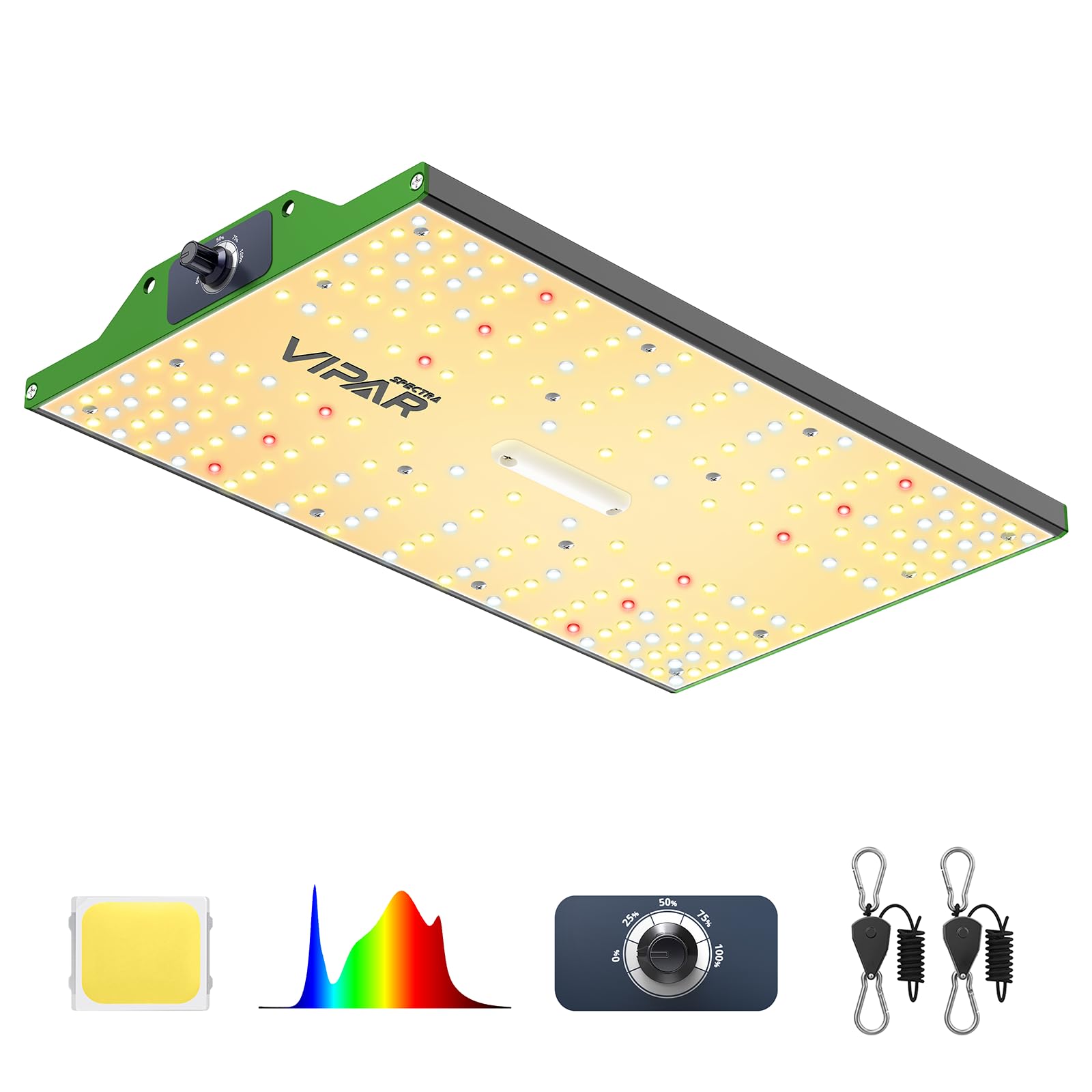
A compact, energy-efficient panel tuned for seedlings and veg; I used it on racks and small tent spaces with good results.
Why I picked it: Low power draw with bright output and a usable dimmer.
Best for: Seed starting, single-shelf racks, and 2×2 veg setups.
Excellent value for energy-conscious growers.
Pros
- Very energy efficient
- Fanless heat sinks
- Four-level dimmer
- Compact footprint
Cons
- Coverage limited to small areas
- Less ideal for full flowering
My take
I used the P700 on a wire-rack seed-starting shelf and it fit the space perfectly. The balanced 3000K/5000K/660nm mix gave seedlings the blue/red blend they need and I appreciated not having to run a noisy fan — the aluminum sinks kept temperatures stable.
Measured by feel and light meter, it behaves like a higher-watt equivalent while only drawing a fraction of the power. I leaned on the dimmer to step plants up through stages; the four positions are simple but effective for most small setups.
If you want to flower a full 4×4 tent, this isn’t the tool for that job. For seedlings and veg on limited space, it’s a great budget performer.
3. VIPARSPECTRA XS1500 Pro LED Grow Light 150W – Best for Versatility
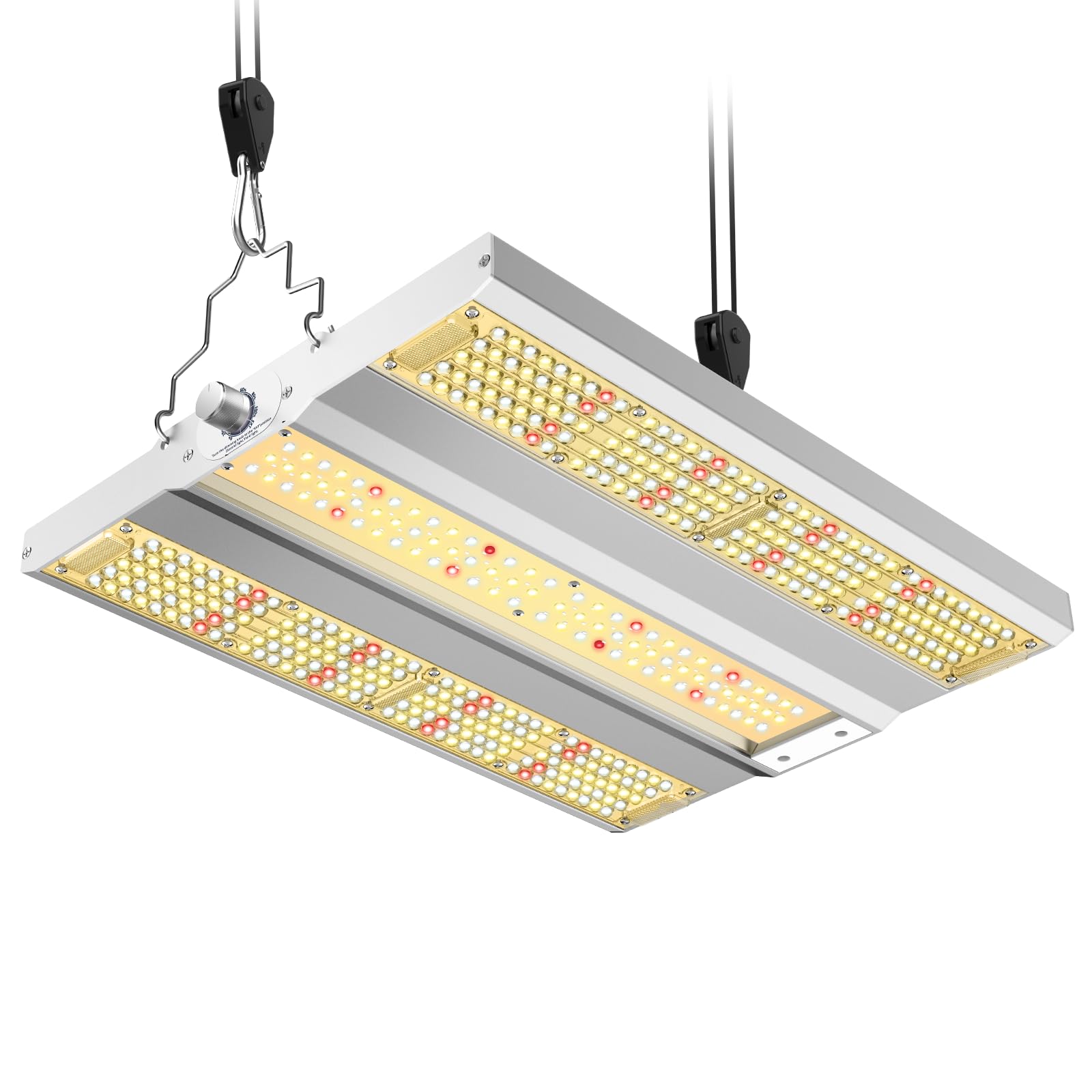
A lens-equipped 150W panel that concentrates light for uniform PPFD, with daisy-chain dimming for larger arrays or multi-layer setups.
Why I picked it: Optical lenses for uniform PPFD and daisy-chain dimming.
Best for: 3×3 veg spaces, small flowering tents, and modular setups.
Mid-range cost with pro-level features.
Pros
- Lens-focused uniformity
- Daisy-chain unified dimming
- Full-spectrum including IR
- Good PAR for 3×3 tents
Cons
- Very bright for small shelves
- Power cord could be longer
My take
The XS1500 Pro impressed me with how evenly it distributes light; the lens array concentrates photons where plants use them, which translated to balanced leaf growth across my 3×3 bench. I ran it at half power for vegetative plants and cranked it closer to full for dense flowering trials.
I also appreciated the daisy-chain dimming. When I added a second unit the unified control made scheduling and intensity changes painless across the canopy — a real help when I needed consistent light across multiple fixtures.
Heat production stayed reasonable thanks to the aluminum heatsink, and the overall build felt like it could handle long runs. For growers who want a single panel that can adapt to veg and flower stages, this one covers a lot of ground.
4. Kullsinss Faux Wood Grain Full Spectrum Plant Lamp (Height Adjustable) – Best for Home Decor
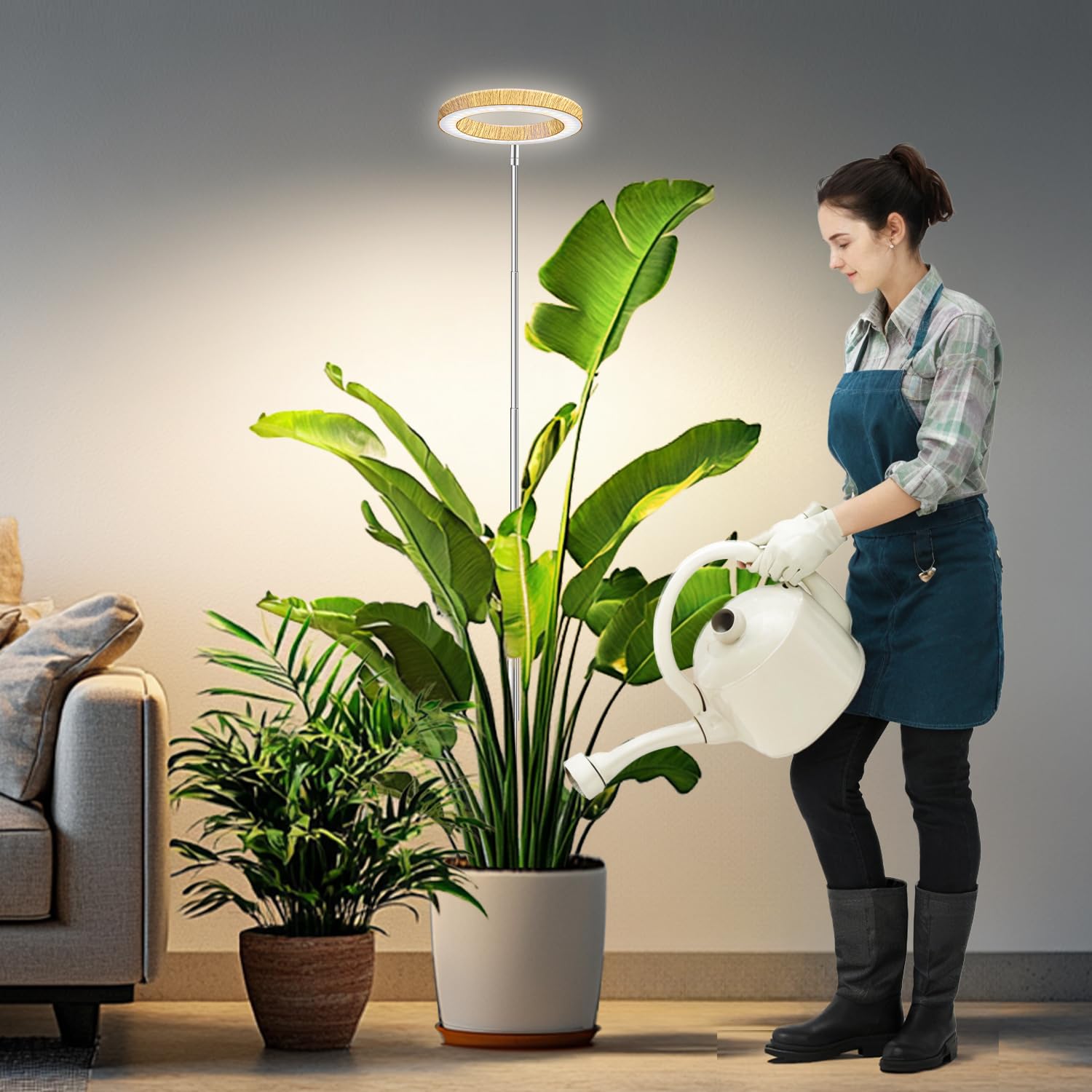
A stylish faux woodgrain lamp with long height range, multiple color modes, and a built-in timer — ideal for tall houseplants and living rooms.
Why I picked it: Combines attractive design with adjustable spectrum and timer.
Best for: Tall indoor plants, living areas, and decorative plant lighting.
Budget-friendly and decorative.
Pros
- Attractive faux wood finish
- Extremely height adjustable
- Multiple spectra modes
- Built-in timer
Cons
- Timer options are basic
- Timer resets after power loss
My take
I used this lamp with my taller houseplants and liked that it blends with living room decor rather than looking industrial. The 10–65 inch height adjustment let me position the halo exactly where I needed on tall specimens without extra rigging.
Spectrum modes and five dim levels are handy for tailoring light to foliage or bloom stages, and the integrated timer made daily scheduling effortless. Be aware the timer choices are limited to preset on-times, and if the power cuts the sequence I had to reprogram it.
For anyone who wants a grow light that doubles as interior lighting, this is one of the more attractive and practical options I’ve used.
5. AC Infinity IONFRAME EVO3 Samsung LM301H EVO Bar LED Grow Light 280W – Best Commercial-Grade
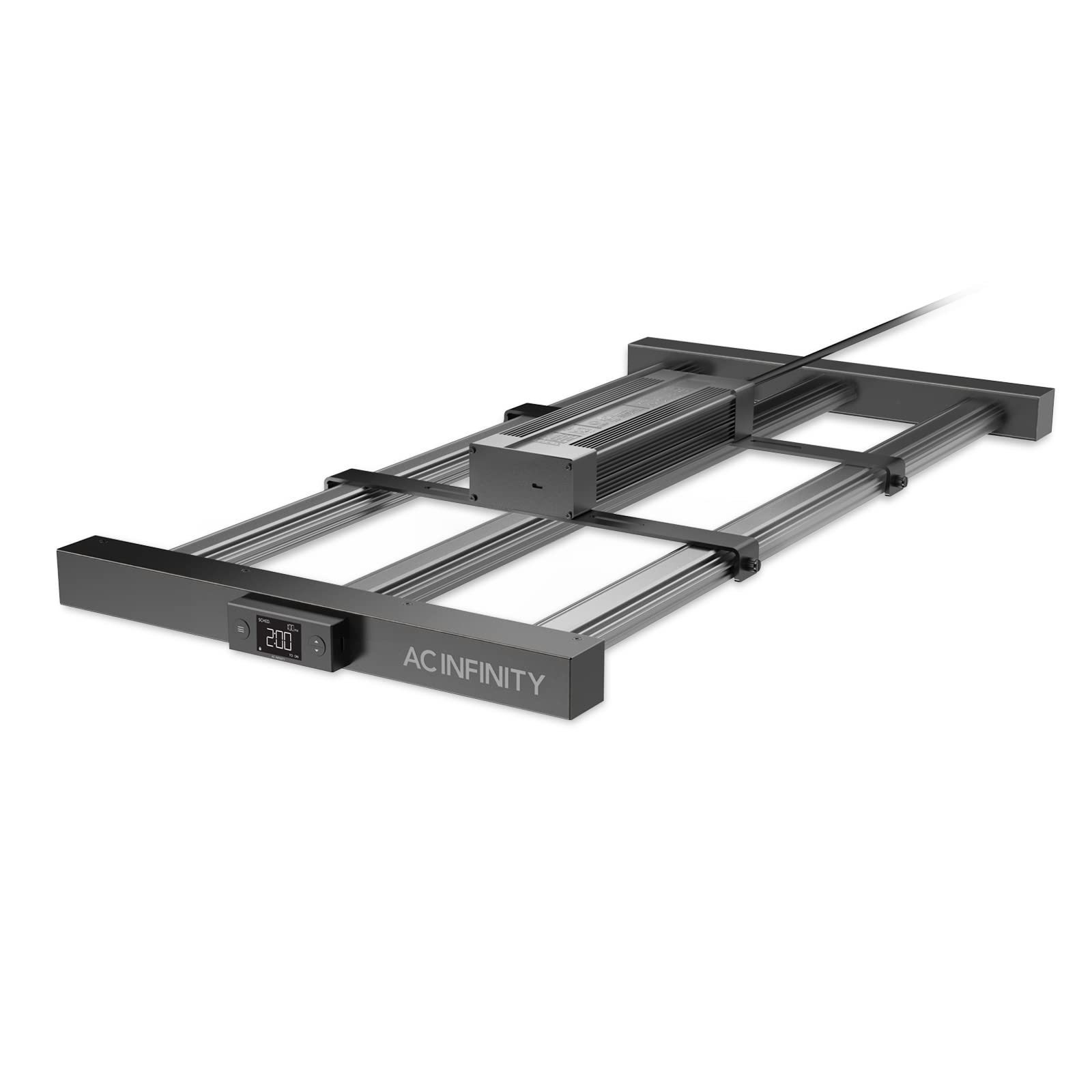
A high-output bar fixture using Samsung LM301H EVO diodes, with schedule controller, app compatibility, and features aimed at commercial or serious hobby growers.
Why I picked it: Top-tier Samsung diodes, app scheduling, and large coverage.
Best for: Large tents, grow rooms, and growers who want professional controls.
Premium investment for serious indoor growing.
Pros
- Samsung LM301H EVO diodes
- Advanced schedule controls
- Even bar-style coverage
- Daisy-chainable at scale
Cons
- Premium-priced hardware
- Runs hot — needs ventilation
My take
I installed the IonFrame in a 5×5 tent and found the coverage and penetration exceptional; the algorithmic diode spacing reduces hotspots and the spectrum produced noticeably vigorous growth through the canopy.
The schedule controller and UIS app are where this light stands apart — I programmed sunrise/sunset ramps and 10 brightness levels to mimic natural cycles, which made automation trivial. For multi-fixture setups, the daisy-chain support and removable driver simplify scaling.
A word of caution: this is a powerful fixture that produces measurable heat, so plan intake/exhaust accordingly. I ran multiple fans and kept ambient room cooling active during intense cycles to keep canopy temps optimal.
6. 3Head Grow Light with Stand — 27W, Adjustable Height, 5-Mode Timer – Best for Corners & Small Rooms
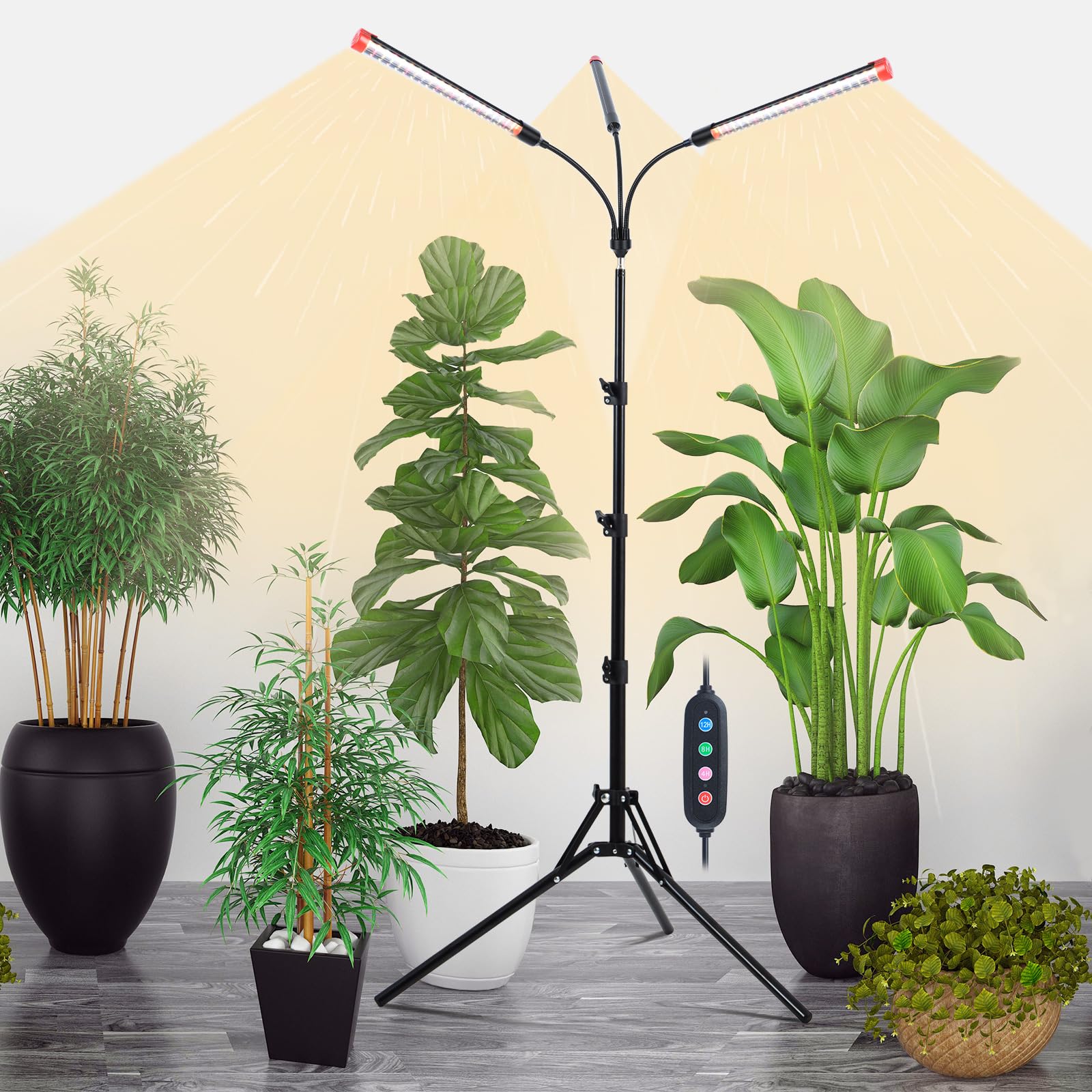
A flexible three-head lamp with adjustable goosenecks and multiple timer modes — ideal for filling a corner or supporting several tall houseplants.
Why I picked it: Flexible heads, multiple timers, and an adjustable stand.
Best for: Corner setups, tall houseplants, and compact multi-plant displays.
Very affordable, stand-included solution.
Pros
- Three adjustable heads
- Multiple timer options
- Tall adjustable stand
- Easy setup
Cons
- No brightness adjustment
- Top height can slip
My take
This three-head lamp is exactly what I reach for when I need to light a corner of my living room or keep a large peace lily healthy through winter. The goosenecks let me aim individual heads and the stand extends high, which keeps light off leaves while still delivering enough intensity.
Timer functions are reliable and simple to set; I put it on 12-hour cycles and left it unattended for weeks. The light is bright enough for most indoor plants, though it lacks fine brightness control — for delicate seedlings I preferred a dimmable panel.
The only mechanical gripe I had was that the highest height setting sometimes slips under load, so I usually keep it a notch lower for stability. Overall it’s a compact, budget-friendly workhorse for household plant care.
How I Picked These Grow Lights
Key factors I test in grow lights
I evaluate spectrum balance, real-world PPFD/coverage, heat management, and control options. Those elements determine whether a fixture suits seedlings, veg, or flowering stages.
I also factor in mounting flexibility, warranty/support, and how easy it is to scale with daisy-chaining or additional fixtures.
- Spectrum: Look for full spectrum with red (660nm) and some IR for bloom.
- Efficiency: Higher µmol/J or lower power draw gives better electricity-to-light value.
- Coverage vs. Power: Match fixture output to the footprint you need.
- Heat: Fanless can be quiet but plan room ventilation if fixtures run hot.
- Controls: Dimming, timers, and scheduling simplify multi-stage grows.
Choosing for your space
For a seed-starting shelf or single-shelf rack I favor compact, efficient panels that can be dimmed. For a 3×3–4×4 tent I choose higher-watt panels or multiple daisy-chained bars.
If you want something that doubles as decor, prioritize adjustable-height lamps with multiple spectra and a reliable timer.
- Small shelf / seedlings: low-watt, dimmable panels.
- 2×2–3×3 tent: 100–150W class panels or two smaller units.
- 4×4 and up: bar-style fixtures or multiple panels with daisy-chaining.
- Living room plants: adjustable lamp with timer and softer spectra.
Frequently Asked Questions
How far should I hang a grow light from plants?
I typically start with seedlings at 12–18 inches for panels rated for small tents, lowering to 8–12 inches for higher-output fixtures during veg, and raising slightly during intense bloom to avoid light stress. Always adjust based on plant response and measured PPFD if you have a meter.
Do I need ventilation if the light is fanless?
Yes. Fanless fixtures are quiet but still emit heat. I keep ambient airflow and tent exhaust running to control canopy temperature and prolong driver life.
Can I run multiple lights together on one controller?
When a fixture supports daisy-chain dimming or unified control I hook multiple units together to sync schedules and intensity. For app or UIS-compatible units, I prefer the manufacturer’s controller for consistent ramps and timers.
Which light should I pick for seed starting only?
For seed starting I reach for compact, energy-efficient panels with good blue spectrum and dimming. The P700 and the XS1500 at low power covered my racks and trays without overheating.
Final Take
I matched each light here to a specific role: compact seeders, decorative living-room lamps, versatile mid-size panels, and heavy-duty bar fixtures for larger rooms. Think about footprint, stage of growth, and how much automation you want.
If you want a single dependable option for a 2×2/3×3 tent, I’d choose the Spider Farmer SF1000. For a value seed-starting setup the VIPARSPECTRA P700 held up well in my racks. And if you need pro-level control and coverage, the AC Infinity IonFrame is the premium pick.
Whichever fixture you choose, plan for ventilation and the right height above your canopy — that’s where you’ll get the most consistent results.
