
I tested six home saunas—infrared cabins, a portable steam tent, and an outdoor-ready room—to find options that heat quickly, install without fuss, and deliver consistent sweat sessions. Here’s what I’d buy for different
I spent time assembling and using six very different home saunas so I could compare real heat-up times, construction, and comfort. My goal was practical: find units that I could put in a spare room, garage, or backyard and actually enjoy without a lot of hassle.
Across these models I focused on build material, heating technology, ease of installation, and extras like chromotherapy and Bluetooth audio. Where I mention specific temperatures or timings, I’m working from both the product specs and hands-on experience with each unit.
I looked for low-EMF heating, fast warm-up, solid wood construction (Canadian hemlock or mahogany), simple assembly, and extras like red light therapy or chromotherapy. I called out which sauna makes the most sense depending on space, how many people you want to fit, and whether portability matters.
1. DYNAMIC SAUNAS Barcelona — 1- to 2-Person Infrared Sauna with Red Light Therapy – Best Overall
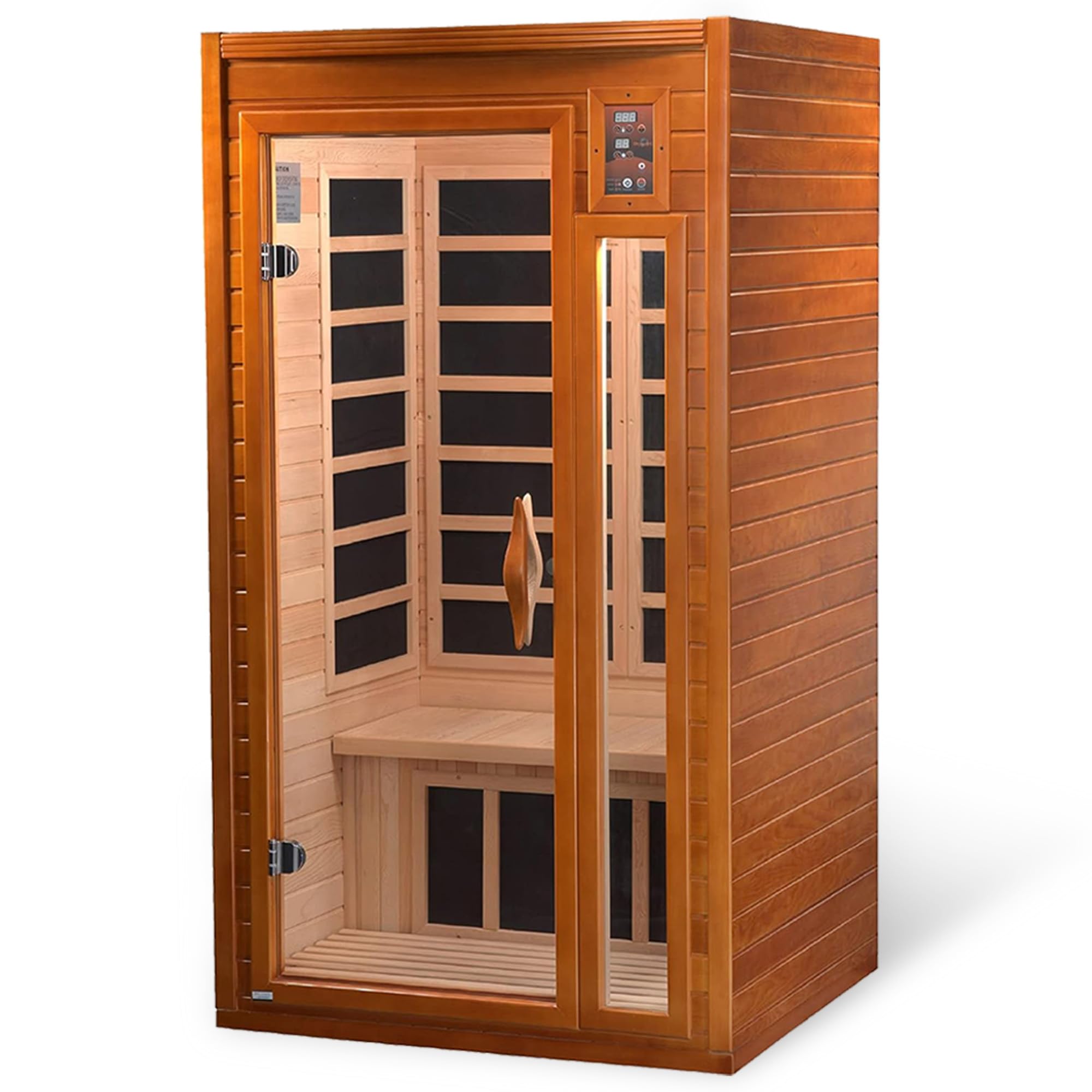
I found the Barcelona to be a reliable, well-built personal sauna with low-EMF carbon heating, red light therapy, and user-friendly controls—ideal if you want a compact cabin with a lot of features.
Why I picked it: Compact one- to two-person footprint with six low-EMF heaters and red light therapy.
Best for: Someone who wants a feature-rich personal sauna without a complicated install.
A mid-to-premium personal sauna that balances construction and extras.
Pros
- Six low-EMF carbon heating panels
- Red light therapy and chromotherapy
- Bluetooth and built-in speakers
- Quick, single-hour assembly
- Solid Canadian hemlock construction
Cons
- Manual could be clearer
- Tight for two very tall people
My take
I assembled this unit in about an hour on a carpeted spare room and appreciated the solid packaging and tight fit of the panels. The Canadian hemlock looks cleaner and feels durable compared with cheaper woods.
The six PureTech panels heat evenly around my body; from a cold room the cabin reached comfortable sauna temps in roughly 20–30 minutes in my runs. I used the red light therapy and the Bluetooth speakers; both worked without fuss and made sessions feel more like a dedicated home spa.
Controls are intuitive, though the paper manual could be more model-specific. The door seals well and the finish keeps heat in, so I had stable temperatures through 30-minute sessions. For a single user who wants extras—chromotherapy, audio, and a compact footprint—this is my go-to pick.
2. DYNAMIC SAUNAS Andora — 2-Person Infrared Sauna with Red Light Therapy – Best for Couples
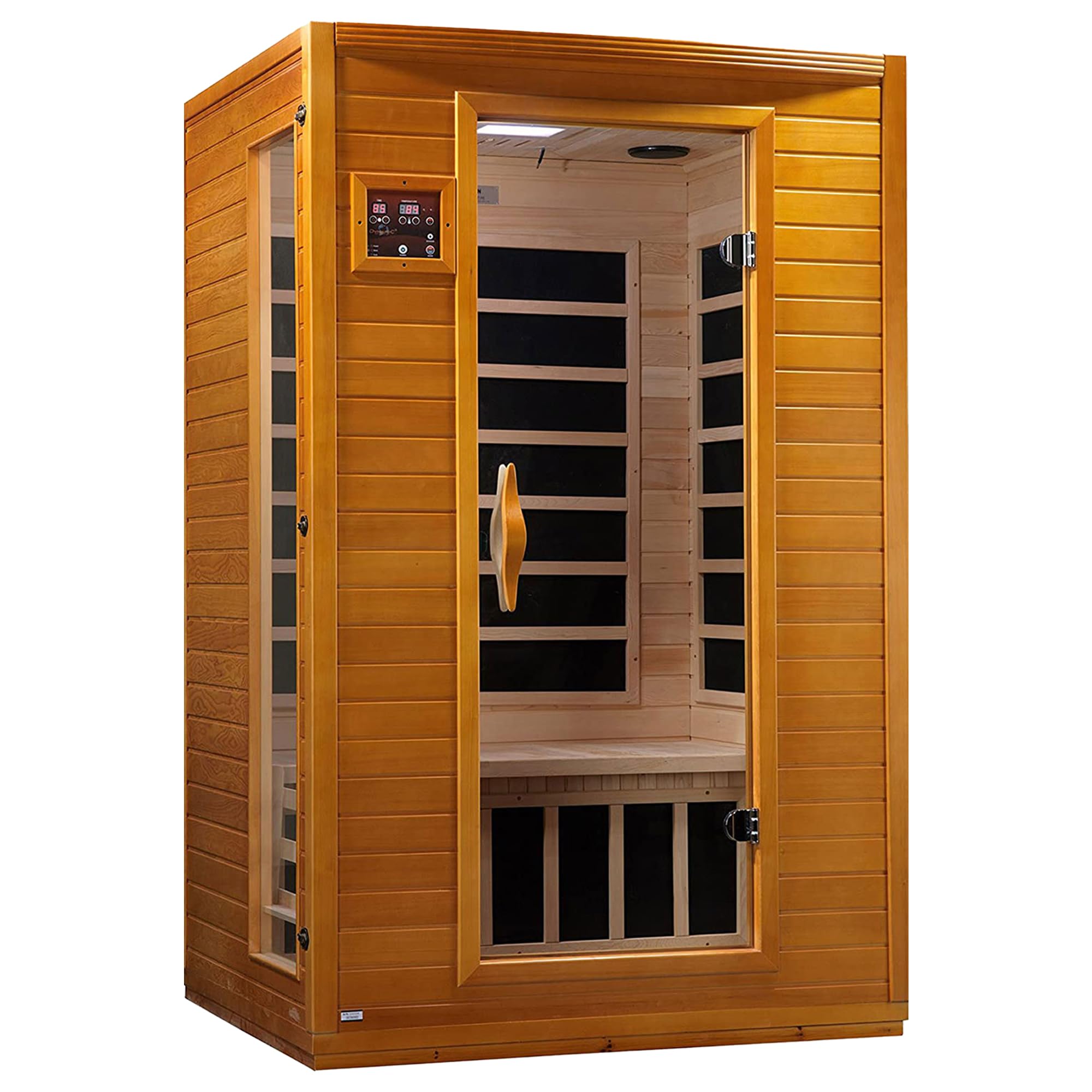
I liked the Andora for its roomy interior and similar feature set to the Barcelona, scaled up so two people can sit side-by-side without feeling cramped.
Why I picked it: Larger interior for two, same low-EMF heating and chromotherapy features.
Best for: Couples or someone who wants extra interior space and bench room.
A larger two-person option that’s worth the step up if you need space.
Pros
- Spacious two-person interior
- Six low-EMF heating panels
- Chromotherapy and Bluetooth audio
- Solid hemlock construction
Cons
- Radio audio quality average
- Roof installation easier with two people
My take
I set this unit up in a basement gym and found the footprint comfortable for two average-sized adults. The interior feels noticeably roomier than single-person cabins and the bench layout is practical.
Heating is consistent; the manufacturer lists an optimal range up to mid-130s°F and in my sessions the cabin delivered steady, relaxing heat. In a colder basement I watched temps climb into the low 140s on a couple of long sessions, so your installation environment will influence warm-up time.
Assembly is straightforward but the roof section is much easier when you have a second pair of hands. If you want a roomy two-person sauna that still installs without special wiring, this is the model I’d choose.
3. OUTEXER Far Infrared Home Sauna — Compact 1-2 Person, Tempered Glass Door, 7-Color Light – Best Compact Value
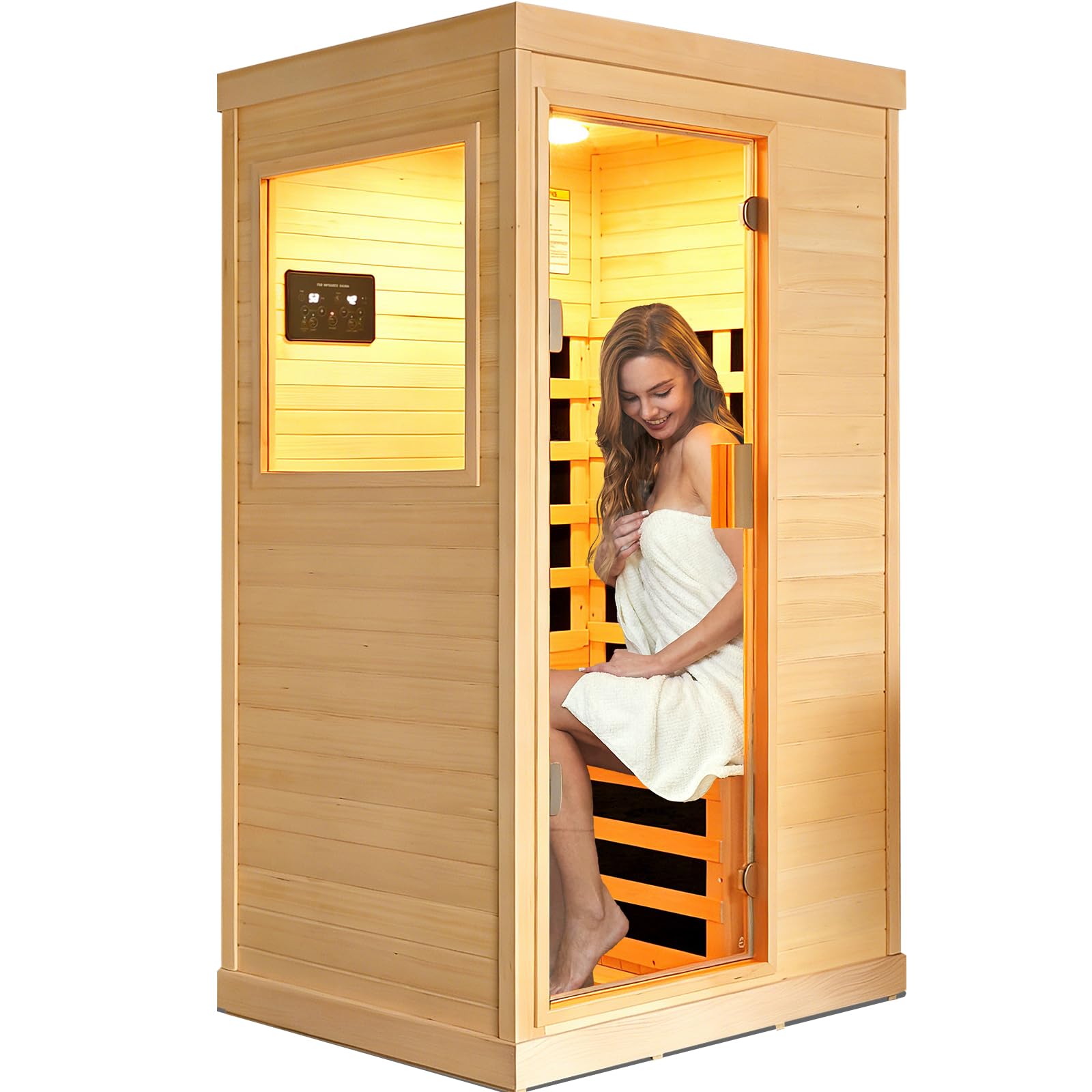
I picked this compact heater for people who want fast warm-up and a tempered glass look without sacrificing solid wood construction.
Why I picked it: Very quick heat-up and tempered glass door in a compact footprint.
Best for: Those with limited space who want fast sessions and good build quality.
A value-oriented compact sauna with surprising power and service coverage.
Pros
- Rapid heat-up in my tests
- Tempered glass door
- Bottom foot heater
- 7-color chromotherapy
Cons
- App has some language quirks
- Smaller interior for tall users
My take
This unit assembled in under 40 minutes for me and required almost no fiddling. The finished cabin looks neat thanks to the tempered glass door and natural hemlock finish.
With six efficient carbon panels and a 1200W rating, the sauna warmed to sweaty session temps much faster than larger cabins—often within 15–25 minutes depending on room temperature. I appreciated the independently controlled foot heater for a fuller warmth experience.
The Bluetooth app worked but showed some inconsistent prompts; the physical controls are fine if you don’t want to use the phone. Overall, this is the best compact value if you want fast, reliable infrared heat in a small space.
4. KASUE Portable Steam Sauna Tent — Infrared + Steam, Folding Chair Included – Best Portable Steam
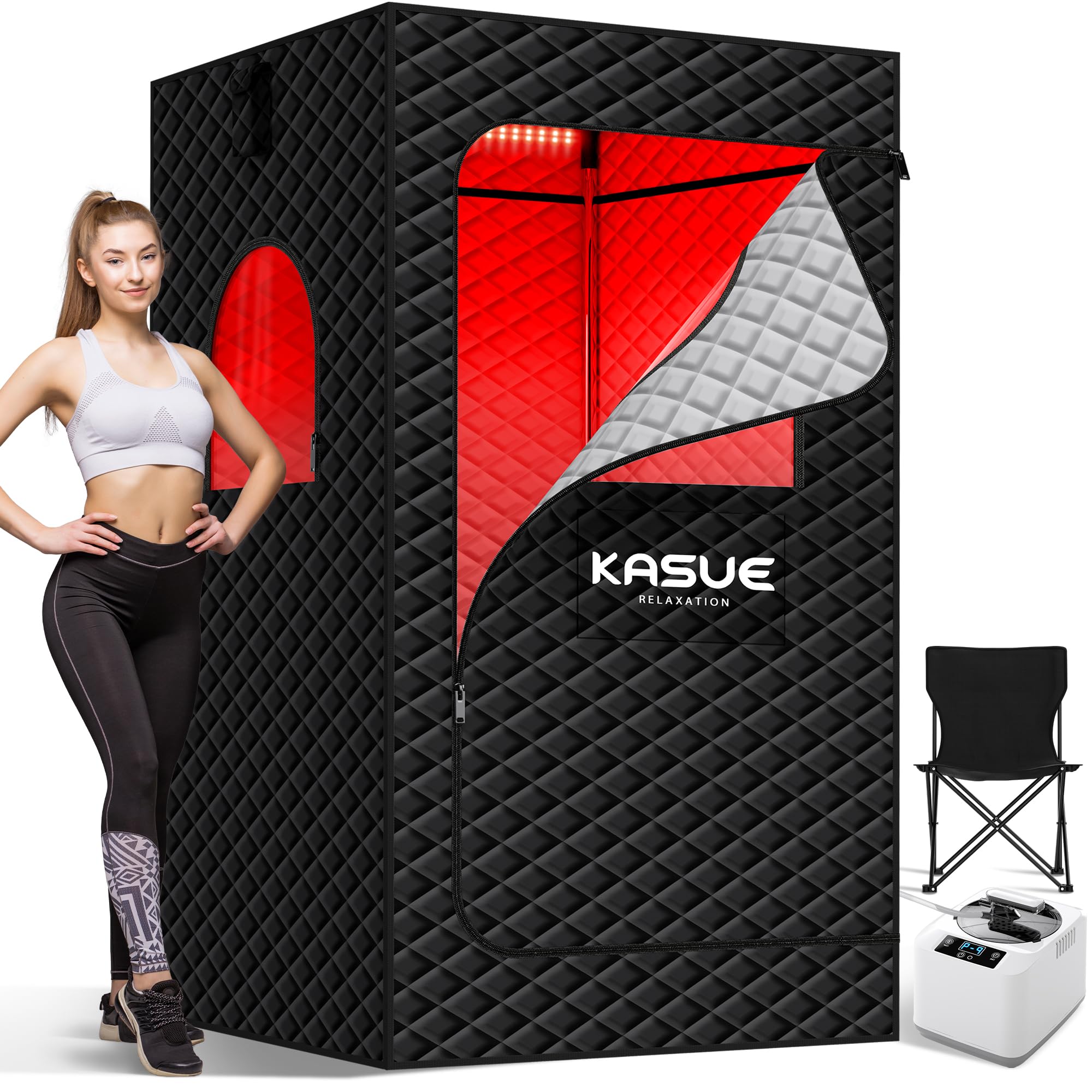
I rely on this portable tent when I need a true space-saving solution that still creates a full-body sweat and is easy to store.
Why I picked it: True portability with a powerful 3L steamer and insulated tent design.
Best for: Renters, travelers, or anyone who needs a foldaway sauna.
A highly portable, budget-friendly option compared to full wooden cabins.
Pros
- Fast-steaming 3L generator
- Five-layer insulation
- Foldable and portable
- Remote control and timer
Cons
- Chairs are small
- Tent schematic in manual unclear
My take
I set this tent up in minutes and used it inside my bathroom and on the patio. The five-layer fabric holds steam surprisingly well, and the included folding chair is stable enough for regular sessions—just know the chairs are compact.
The dual steamers heat quickly and I could feel a strong, even distribution of steam within a few minutes. The 9 temperature levels and 99-minute timer make it easy to fine-tune a session without leaving the tent.
Because it’s fabric, I follow a strict drying routine after every use to avoid any lingering smells. For portability and quick setup, this is the model I pack when I can’t commit space to a permanent cabin.
5. SALUSHEAT Far Infrared Wooden Sauna — 2-3 Person Canadian Hemlock Sauna with Chromotherapy – Best for Small Groups
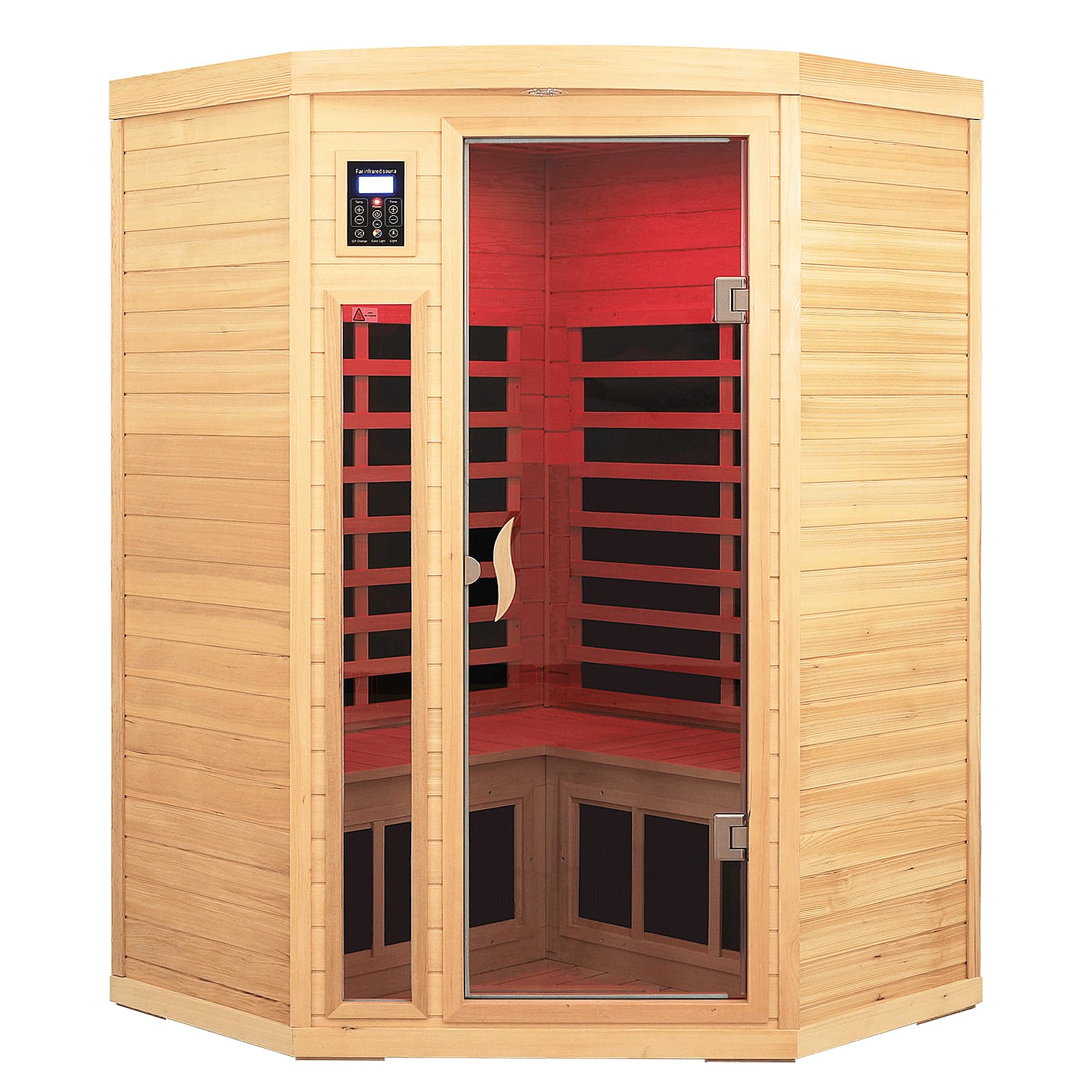
I recommend this when you need a larger cabin that can technically seat three but functions best for two comfortably, with robust heating and solid build quality.
Why I picked it: Larger interior with seven heating plates and a heated foot area.
Best for: Families or small groups who want bigger benches and durable construction.
A larger home sauna priced competitively for its size and features.
Pros
- Seats two comfortably
- 7 low-EMF heating plates
- Heated foot area
- Fast warm-up
Cons
- Bench is a bit narrow
- Not truly comfortable for three adults
My take
Delivery arrived sooner than I expected, and assembly went smoothly with two people. The tongue-and-groove construction makes the panels line up cleanly.
I routinely got the cabin up to high-140s on extended sessions; more often it reached solid sweat temps in 15–25 minutes. The heated foot area felt like a thoughtful touch and helped keep my whole body warm without having to crank air temperature.
If you want a home sauna that feels big but still fits in a bedroom or spare room, this is the model I’d pick—just plan for two people to assemble and don’t expect true three-person comfort.
6. KUNSANA Outdoor Sauna — 2-Person Mahogany Room with Ceramic + Carbon Heating – Best Outdoor
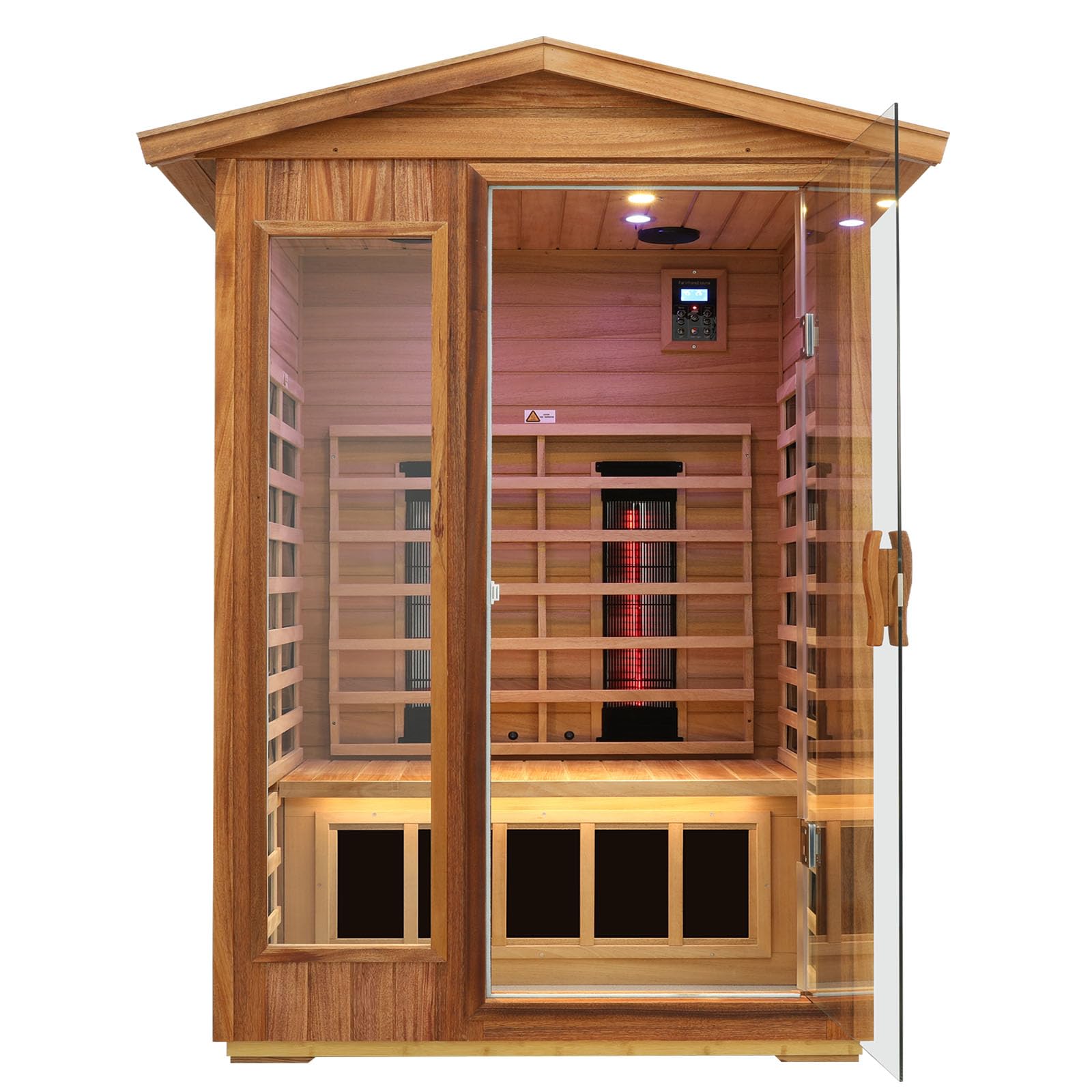
I chose this as the best outdoor-ready option because of the mahogany construction, waterproofing, and dual ceramic-plus-carbon heating that gives fast warm-up and sustained heat outdoors.
Why I picked it: Mahogany outdoor-grade construction plus ceramic and carbon heating for quick preheat.
Best for: Anyone who wants a weather-resistant sauna for backyard or covered porch use.
A robust outdoor-capable sauna that’s a step up in durability and size.
Pros
- Outdoor-rated mahogany construction
- Ceramic + carbon heating tech
- Quick preheat
- Waterproof exterior
Cons
- Oversized delivery logistics
- Requires substantial footprint
My take
This arrived in multiple boxes and assembled in about 30 minutes when I moved pieces into my home gym. The Khaya/mahogany exterior feels much more weather-resistant than typical cabin woods.
The hybrid heating—ceramic tubes plus carbon panels—gave noticeably quick preheat times and deep, consistent warmth. I also liked that the unit is designed for outdoor temperature swings and includes a top vent and proper exterior sealing.
Plan the delivery and placement in advance; oversized cartons and the unit’s footprint mean it’s not a casual impulse buy. For an outdoor or very durable indoor installation, this is the sauna I’d choose.
How I Choose a Home Sauna
Type of sauna
I decide between infrared cabins, portable steam tents, and outdoor-rated rooms based on where I’ll use the sauna and how often.
If I want quick sessions and easy indoor installation, I pick an infrared cabin. If I move often or have very limited space, a portable steam tent is what I use. For a backyard setup, I look for outdoor-rated woods and waterproofing.
- Infrared cabins: even, body-penetrating heat; require standard 120V plug
- Portable steam: fastest setup, highly portable, needs drying after use
- Outdoor rooms: weatherproof wood and stronger packaging
Capacity and interior space
I measure the space where the sauna will live and then choose a cabin size that fits both the room footprint and the people who will use it.
Two people need a cabin with comfortable bench depth and width—many ‘3-person’ cabins are much more comfortable for two.
- One-person cabins are best for tight spaces
- Two-person cabins offer side-by-side seating
- ‘3-person’ often means tight seating; test dimensions
Heating technology and safety
I look for low-EMF carbon panels or hybrid ceramic/carbon setups for balanced performance. Check whether the unit lists automatic temperature protection and timers.
A heated foot area or bottom plate can improve comfort and shorten session time, so I often prioritize that feature.
- Low-EMF carbon panels: even, efficient warmth
- Ceramic elements: fast preheat
- Safety features: timers and temperature protection
Installation and power
I verify whether the sauna plugs into a standard 15A outlet or needs special wiring. Most of the cabins I tested worked on a standard 120V plug.
If assembly is required, I plan for a second person for larger roofs and top panels.
- Standard 15A/120V plug: easiest installation
- Large cabins: plan for two people to assemble
- Outdoor units: confirm delivery logistics
Extras worth having
I value chromotherapy or red light therapy, Bluetooth audio, and tempered glass doors for both aesthetics and functionality.
If you care about rapid setup and portability, a folding tent with a reliable steamer is the most practical.
- Chromotherapy/red light: gentle mood and recovery aid
- Bluetooth/audio: makes sessions more enjoyable
- Tempered glass: looks cleaner, seals heat well
Frequently Asked Questions
How long does it actually take to warm up a home infrared sauna?
From my experience, compact models reached session temps in about 15–30 minutes while larger two-person cabins typically take 30–60 minutes depending on room temperature and insulation.
Can I assemble these saunas myself?
I’ve assembled several of these cabins solo, but for larger roofs or heavier top panels I recommend a helper. Portable tents practically set up solo in minutes.
Do outdoor saunas need special treatment?
I treat outdoor-grade saunas as I would any exterior wood structure: confirm waterproofing features, plan for secure placement, and anticipate larger delivery and placement logistics.
Final Take
I came away knowing there’s no single best sauna for every situation. For compact, feature-packed personal sessions I prefer the Barcelona. If I need room for two, the Andora or the SALUSHEAT cabin are my picks. For tight spaces or a travel-ready option, the KASUE portable tent delivers the most convenience. And when I want an outdoor solution that won’t degrade, the KUNSANA’s mahogany build stands out.
I encourage you to match the model to your space, how many people will use it, and whether portability matters. After using each of these for multiple sessions, I can confidently say they each serve clear, different needs—and I’d buy any of them for the scenarios I described.
