
I tested six wire strippers—from pocket pliers to a drill-powered machine—and recommend the right tool for common electrical, data, and recycling tasks.
I field-tested a selection of hand and machine wire strippers so you don't have to guess which one fits your work. My picks cover quick automatic stripping, compact plier-style tools, speciality coax/data strippers, and a heavy-duty drill-powered machine for volume.
Below I explain which tool I reach for depending on wire type, workspace, and how much stripping I need to do.
I grouped these tools by how I use them: simple plier-style strippers for general tasks, automatic strippers for speed and repeatability, specialty tools for round and coax cables, and a machine for high-volume or recycling work.
1. IRWIN VISE-GRIP Wire Stripper, 8 inch (2078309) – Best Budget Multi-Tool
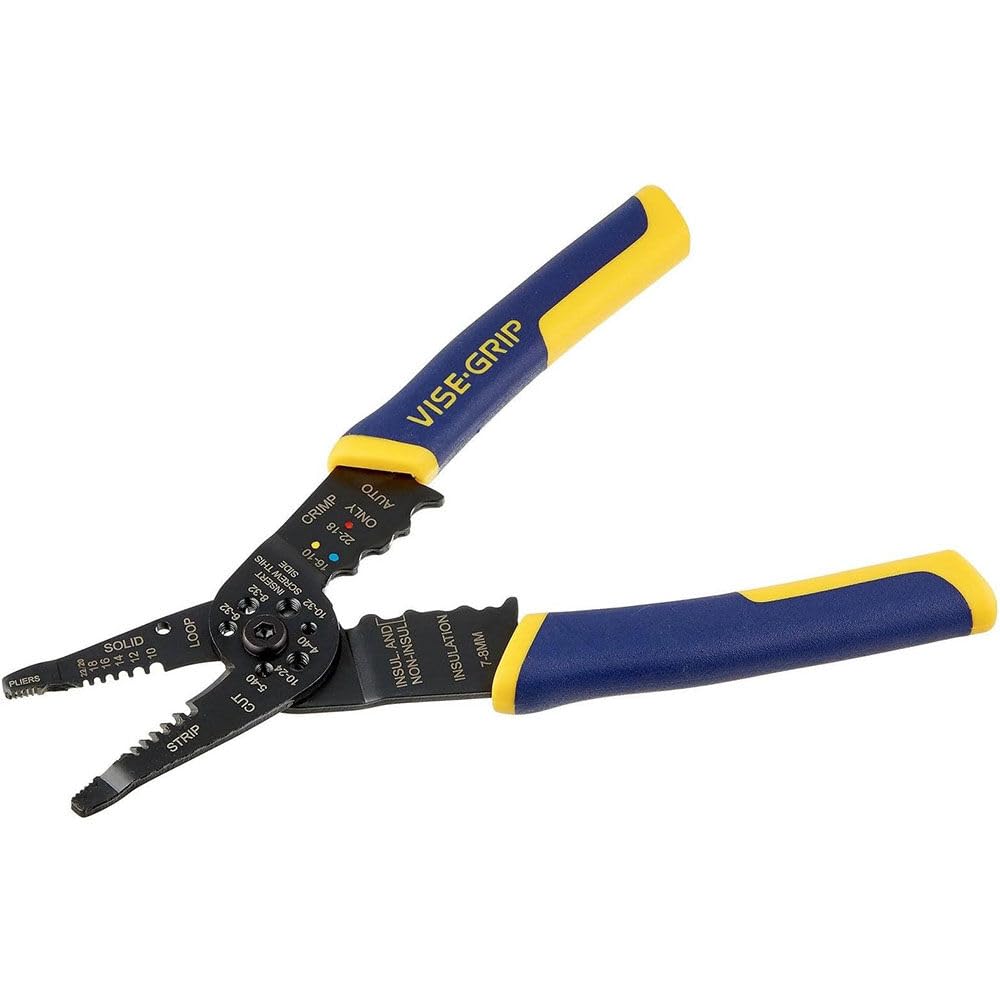
A compact plier-style multitool that strips 10–22 AWG, cuts bolts, and crimps insulated and non-insulated terminals.
Why I picked it: Versatile plier-style tool with induction-hardened cutter and crimp capability.
Best for: General electrical work, quick repairs, and anyone wanting one tool that does many jobs.
Very affordable option for a multi-function hand tool.
Pros
- Strips 10–22 AWG accurately
- Induction-hardened cutting edge
- Pliers nose for pulling and looping
- Built-in bolt cutter
- Comfortable ProTouch grips
Cons
- Crimping takes a light touch
- Not ideal for high-volume stripping
My take
This Irwin is the first tool I grab for everyday electrical tasks because it combines a precise stripper, cutter, and crimper in one compact package.
The gauge holes line up reliably; when I seat the wire in the right slot the insulation shears cleanly without nicking conductors. The induction-hardened blade keeps its edge through repeated use.
I appreciate the plier-style nose for pulling and looping wire and the bolt cutter when I need to trim screws or bolts to length. Crimping works fine for common insulated and non-insulated terminals, though I found I occasionally over-crimp until I dialed in my technique.
If you want straightforward performance and versatility at a low cost, this is the practical choice I keep in my toolkit.
2. Klein Tools 11063W Wire Cutter/Stripper – Best Automatic Stripper
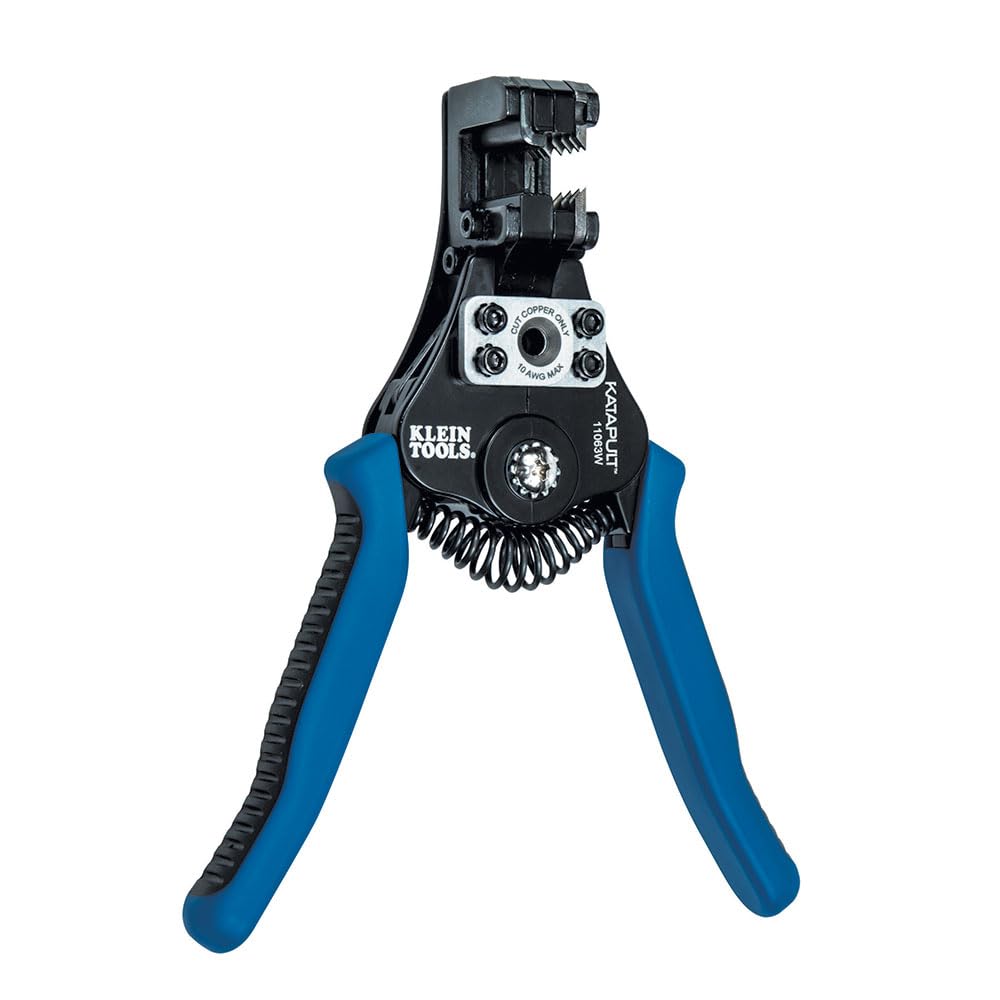
An automatic, compound-action stripper that handles 8–20 AWG solid and 10–22 AWG stranded wire with one squeeze.
Why I picked it: Fast, reliable automatic action and rugged alloy chassis for professional use.
Best for: Electricians and anyone who strips frequently and wants speed with repeatable results.
Mid-range professional-grade tool.
Pros
- Single-squeeze automatic stripping
- Handles 8–20 AWG solid, 10–22 AWG stranded
- Precision-machined stripping holes
- Removes up to 1" of insulation
- Tension-loaded wire grip
Cons
- Heavier than plier-style strippers
- Not adjustable for odd jacket types
My take
Klein's automatic action is a real time-saver when I'm running lengths of wire or doing repetitive terminations.
I can strip a consistent length in one motion and the built-in cutter is sharp enough to cleanly sever solid and stranded conductors. The tension-loaded grip keeps cable geometry intact while stripping.
The cast-alloy body feels indestructible and the Ecoat finish resists corrosion on job sites. For projects where speed and consistency matter, this is the tool I reach for.
3. KNIPEX Ergostrip Universal Stripping Tool, 135 mm (Right-Handed) – Best for Round & Coax
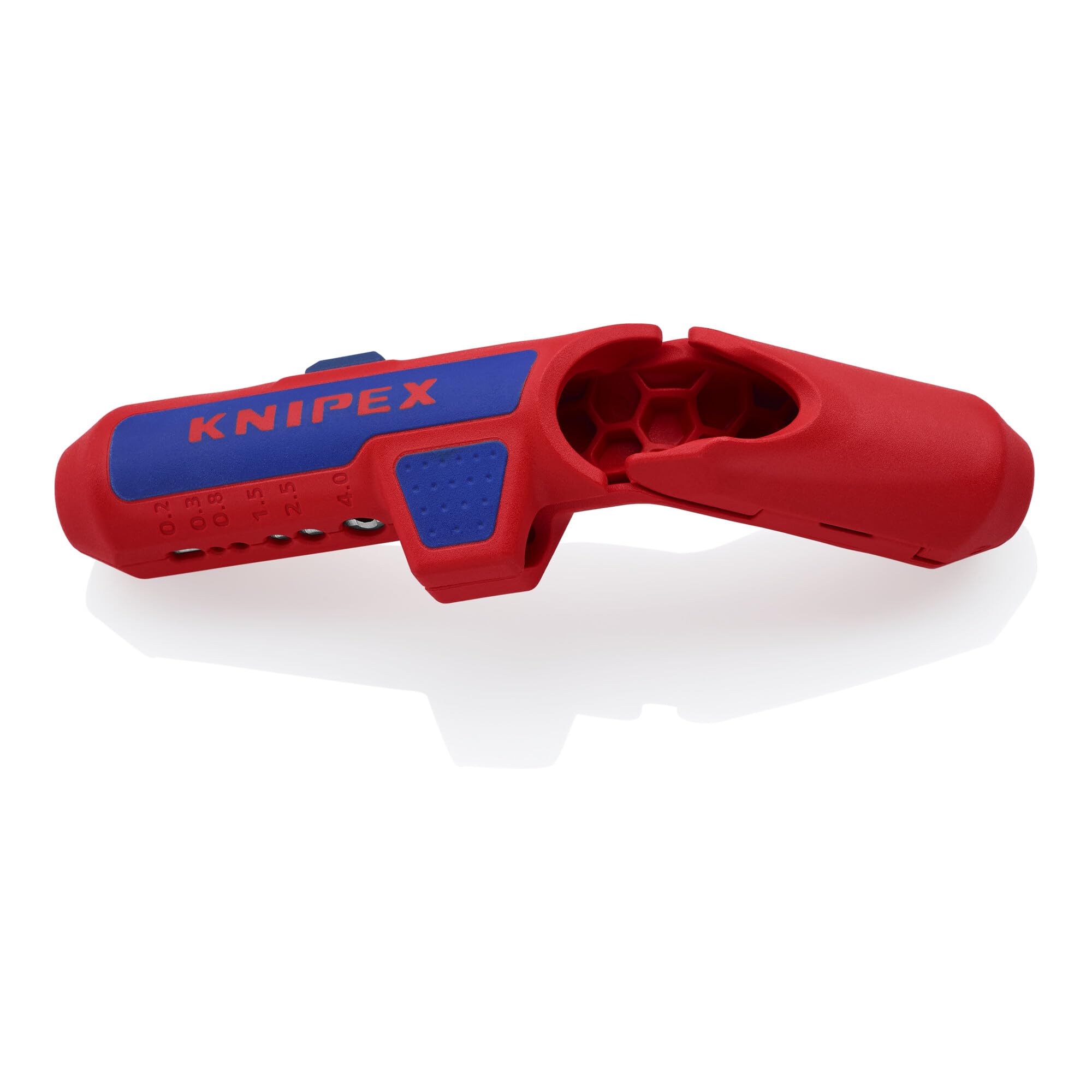
A pistol-grip specialist for round installation cables, coax, and data cables with multiple stripping sizes and a slim head for tight access.
Why I picked it: Designed specifically for round cables and coax with fast, precise sheath and jacket cuts.
Best for: Network techs, installers, and anyone terminating round or coaxial cables in tight spaces.
Specialty tool; sensible investment for cable work.
Pros
- Pistol-grip ergonomic design
- Multiple stripping cross-sections
- Slim ends for confined areas
- Fast sheath and longitudinal cuts
- Good for coax and data cables
Cons
- Right-handed model specific
- Not for very large cable diameters
My take
The Knipex Ergostrip changes how I approach round and coax cable prep: the pistol grip gives me control and makes longitudinal cuts effortless.
I used it on installation NYM cable and multiple data pairs; the preset cross-sections and location ridges make insertion fast and the sheaths come off cleanly every time.
The slim, conical nose is a meaningful advantage when access is tight. For terminating data or coax runs, this is the tool I trust to save time and avoid damaged conductors.
4. Klein Tools 11055GLW Wire Stripper / Cutter, Glow-in-the-Dark Grips – Best for Low-Light Work
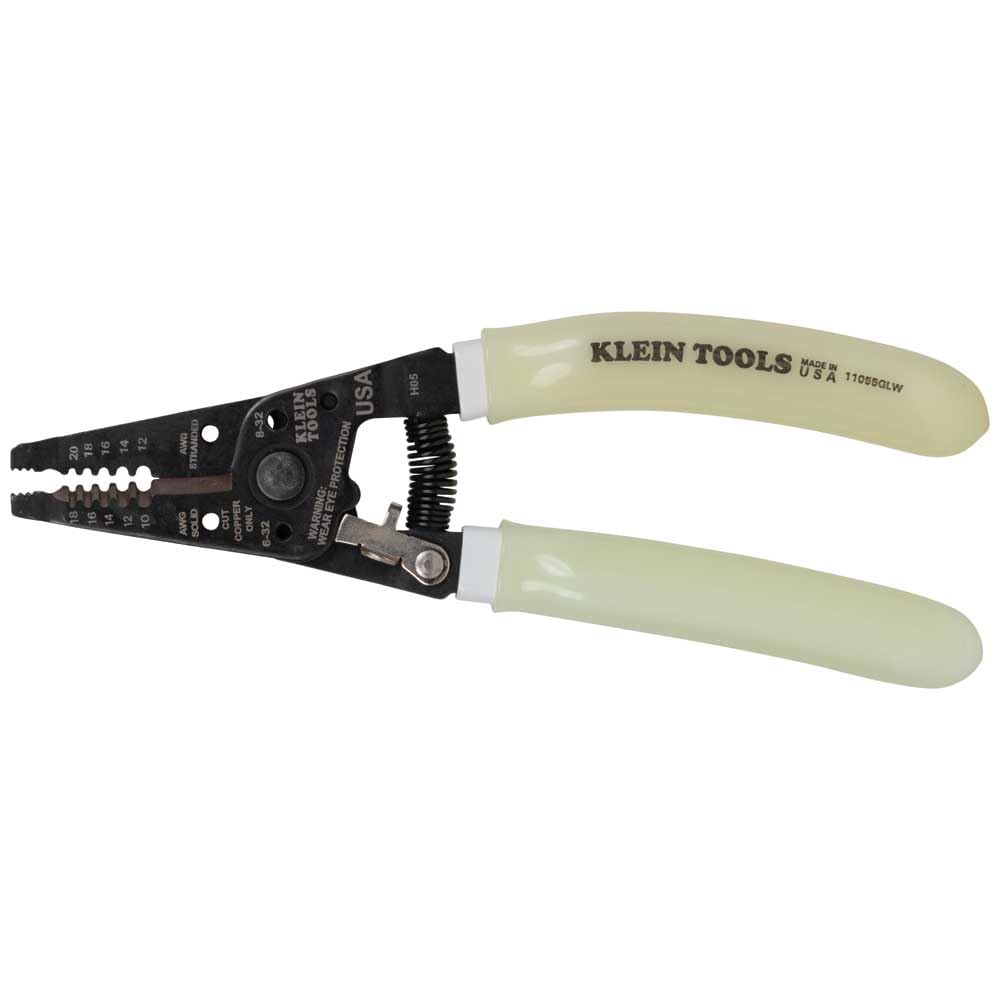
A straightforward, made-in-USA Klein stripper that handles 10–18 AWG solid and 12–20 AWG stranded wire and glows for visibility in low light.
Why I picked it: Reliable Klein build with glow grips that charge under light—handy on dim job sites.
Best for: Home electricians, occasional pros, and anyone working in basements or poorly lit spaces.
Mid-range, quality-built American-made tool.
Pros
- Glow-in-the-dark grips
- Made in USA
- Strips and loops 10–18 AWG solid
- Serrated nose for bending and pulling
- Sturdy, well-finished construction
Cons
- Stripping range narrower than some tools
- Glow lasts limited time after charge
My take
I like this Klein when I need a no-frills, durable stripper that I can find in a dark crawlspace—those Hi-Viz grips actually make a difference.
It strips the common 12 and 14 AWG NM I work with cleanly and the serrated nose is useful for shaping and pulling wire without switching tools.
If you want American-made quality and a practical feature set for occasional to regular electrical work, this is the dependable option I keep nearby.
5. Channellock Wire Stripping Tool 957, 7-Inch – Best Durable Economy Tool
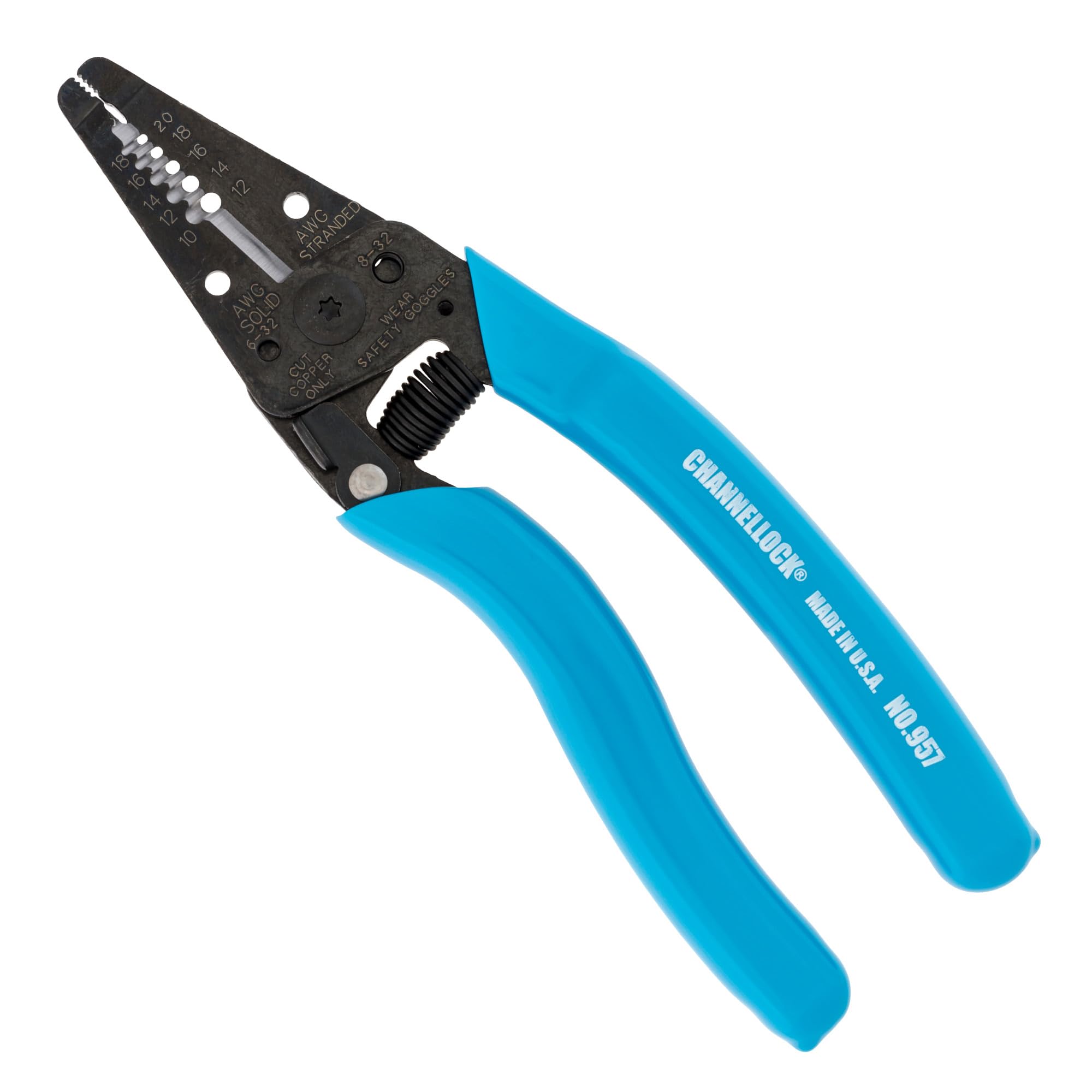
A tough, precision-ground plier-style stripper made in the USA with clear gauge markings and a lean nose for pulling and looping wire.
Why I picked it: Durable construction and laser-etched gauges make it a long-term go-to.
Best for: Tradespeople who want a sturdy, USA-made stripper without bells and whistles.
Reasonably priced for a durable USA-built tool.
Pros
- Precision ground cutting blades
- Strips 10–20 AWG cleanly
- Laser-etched gauge markings
- Ergonomic lean plier nose
- Made in the USA
Cons
- Can be fatiguing during long sessions
- Grip material is thin for some hands
My take
Channellock's 957 is a durable workhorse: the blades stay sharp and the gauge markings remain visible after heavy use.
I used it for repetitive terminal work and crimping on battery leads; the tool produced secure cold crimps and consistent stripping results.
If you want a straightforward, long-lasting stripper and don’t need automatic action, this is the hard-working option I rely on.
6. StripMeister Original Drill-Powered Wire Stripper – Best for Heavy-Duty Stripping
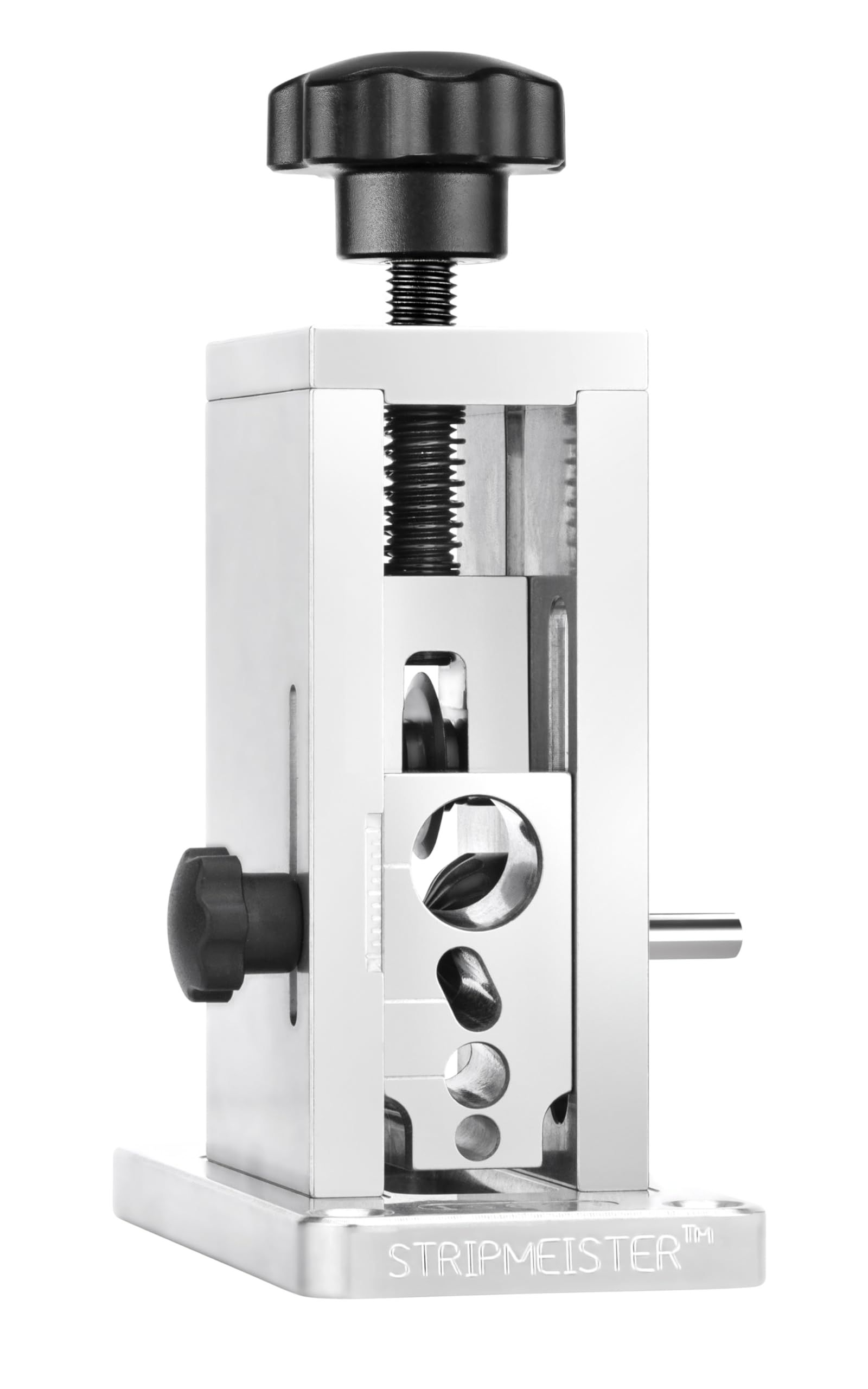
A precision CNC-machined, drill-driven machine that strips wire from Ø1/8" up to Ø3/4"—built for speed, safety, and high-volume work.
Why I picked it: Massive time-saver for bulk stripping; precise, jam-free performance once set up.
Best for: Recyclers, electricians stripping large cable bundles, and anyone needing high throughput.
Higher-cost, professional-grade machine but pays off for volume work.
Pros
- Strips Ø1/8" to Ø3/4" wire
- Drill-powered for speed
- Precision CNC build
- Jam-free operation reported
- Industrial-grade materials
Cons
- Requires setup for each wire size
- Larger, not handheld
My take
The StripMeister is in a different category: once I set the blades and feed for a given diameter, the machine chews through cable at a speed no hand tool can match.
I mounted it, attached a variable-speed drill, and processed large coils of 6 AWG and heavier without jams. The precision machining and hardened blades felt noticeably robust compared with cheaper alternatives.
If you strip dozens or hundreds of feet regularly—or need to salvage wire for recycling—this tool paid for itself quickly in saved time. For occasional, small jobs it’s overkill, but for volume work it’s the one I recommend.
How I Choose Wire Strippers
Match the tool to the job
I pick plier-style strippers for occasional electrical work and cramped spaces, automatic strippers for repetitive tasks, speciality tools for coax/data, and a machine for bulk stripping.
- Light repairs or mixed tasks: plier-style multi-tools
- Frequent stripping: automatic compound-action tools
- Coax/data/round cable: purpose-built pistol-grip strippers
- High-volume/recycling: drill-powered or bench machines
Key features I always check
I look at stripping range, build material, blade hardness, and whether the tool protects conductor integrity while removing insulation.
- Stripping range should cover your common gauges
- Hardened or precision-machined blades hold edge longer
- Ergonomic grips reduce fatigue during repetitive work
- Automatic or tensioned grips preserve cable geometry
Practical tips from my bench
I keep both a hand stripper and an automatic in my bag. For high-volume jobs I invest in a dedicated machine—the setup time pays off in throughput.
- Test on scrap before final terminations
- Adjust blade depth or tension to avoid nicking conductors
- Keep a small file or stone for blade maintenance
Frequently Asked Questions
Which stripper should I use for stranded versus solid wire?
I use automatic or compound-action strippers for both, but pay attention to the tool’s listed range—some are optimized for solid, others for stranded. The Klein 11063W handles both solid and stranded cleanly.
Can I use a plier-style stripper for high-volume work?
I don’t recommend it. Plier-style strippers are great for versatility and tight spaces, but for high-volume stripping a drill-powered machine like the StripMeister saves significant time and effort.
How do I avoid nicking conductors when stripping?
I always test the gauge hole on scrap, make small adjustments to blade pressure, and rely on tools with precision-machined holes or hardened blades to reduce cutting into conductors.
Final Take
I chose these six tools because each has a clear role: affordable multitools for general jobs, automatic strippers for speed, specialty tools for coax and data, and a machine for heavy throughput.
If you strip occasionally, keep a plier-style and a simple automatic on hand; if you do volume work, invest in a drill-powered stripper—the time savings are real.
Pick the one that matches the wire types and workflow you face most often, and you’ll notice faster, cleaner terminations immediately.
