
I tested six popular Manuka honeys side-by-side so you can pick the right potency, packaging, and value for daily use or stronger, medical-grade needs.
I’ve spent weeks using these jars in my kitchen, in tea, and on skin to see how Manuka actually performs in real life.
My aim was simple: find options that cover everyday use, travel-friendly convenience, traceable sourcing, and the higher-potency jars I reach for when I want stronger support.
Below I break down what I used each jar for, why I kept one in regular rotation, and which bottles I’d reserve for specific needs.
I compared potency labels (UMF, MGO, proprietary scores), packaging (squeeze bottle vs jar), and provenance (traceability, New Zealand testing) so you can weigh convenience versus potency and certification.
1. Manuka Health UMF 13+/MGO 400+ Manuka Honey (250g) – Best Overall
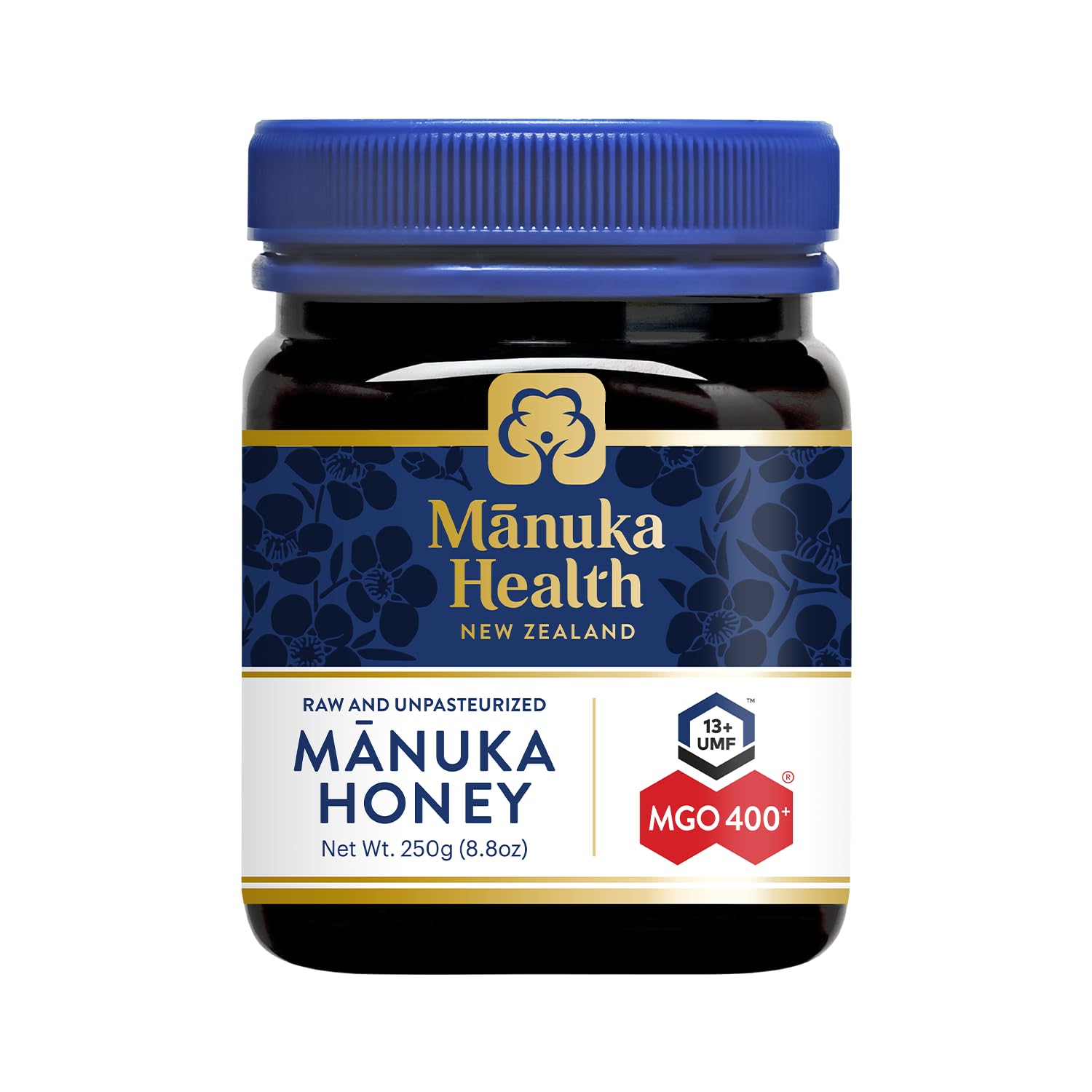
A balanced, potent Manuka that pairs strong antibacterial MGO with UMF certification and full traceability from New Zealand.
Why I picked it: High MGO with UMF certification and QR-code traceability.
Best for: People who want a reliable, multipurpose Manuka for both daily use and occasional topical needs.
Premium-tier product for those who want tested, UMF-certified honey.
Pros
- High MGO (400+) potency
- UMF-certified and triple tested
- Rich, creamy texture
- Full traceability via QR code
Cons
- Smaller jar relative to cost
- Thicker consistency can be slow to pour
My take
I kept this jar on my counter because it strikes the best balance between potency and versatility. The MGO 400+ gives a noticeably thicker mouthfeel and an earthy, complex flavor that I prefer in tea or straight off the spoon.
The UMF certification and the QR-code traceability gave me confidence about origin and testing; I scanned a batch trace and liked seeing the beekeeper details. That transparency matters when you’re paying a premium.
Texture is luxuriously creamy and unpasteurized, which makes it great for topical applications when I need something that stays put. I used a small smear on irritated skin and found the thickness helpful for coverage.
This is the jar I reach for when I want a reliable, true Manuka experience for both wellness and skincare.
2. Wedderspoon Raw Mānuka Honey 150+ MGO, 8.8 Oz – Best for Raw Everyday Use
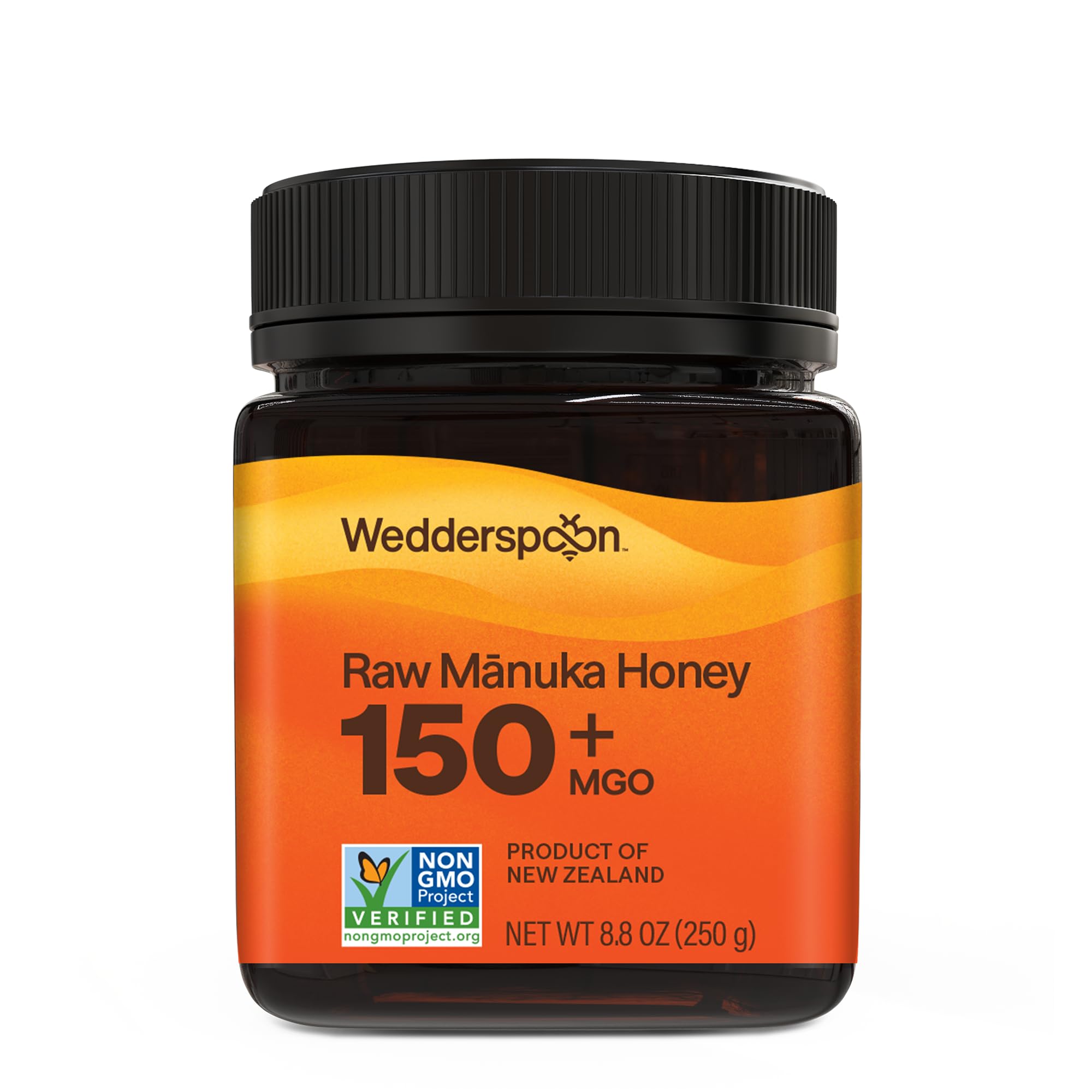
Unpasteurized, traceable Manuka creamed for a smooth, spreadable texture that I used daily in tea and yogurt.
Why I picked it: Raw creamed texture and KFactor traceability for everyday enjoyment.
Best for: Daily spoonfuls, mixing into beverages, and anyone who prefers raw, spreadable Manuka.
Midrange option that favors volume and raw processing.
Pros
- Creamy, spreadable consistency
- Raw and unpasteurized
- Non-GMO and traceable
- Good jar volume for daily use
Cons
- Lower activity than high-MGO jars
- Flavor milder than premium UMF honeys
My take
I appreciated how easy this Wedderspoon jar is to use—the creamed texture makes it effortless to stir into tea or spread on toast without drips.
Because it’s unpasteurized and retains living enzymes, I added a teaspoon to morning yogurt and noticed a pleasant coating in my throat when I had mild scratchiness.
The MGO 150+ places it solidly as a daily wellness honey rather than a high-potency medical option, which is exactly how I used it: regular, enjoyable, and practical.
If you want raw Manuka that’s convenient and versatile for everyday rituals, this is the one I keep in rotation.
3. Manukora Raw Manuka Honey MGO 50+, 250g – Best Ethical / Traceable Pick
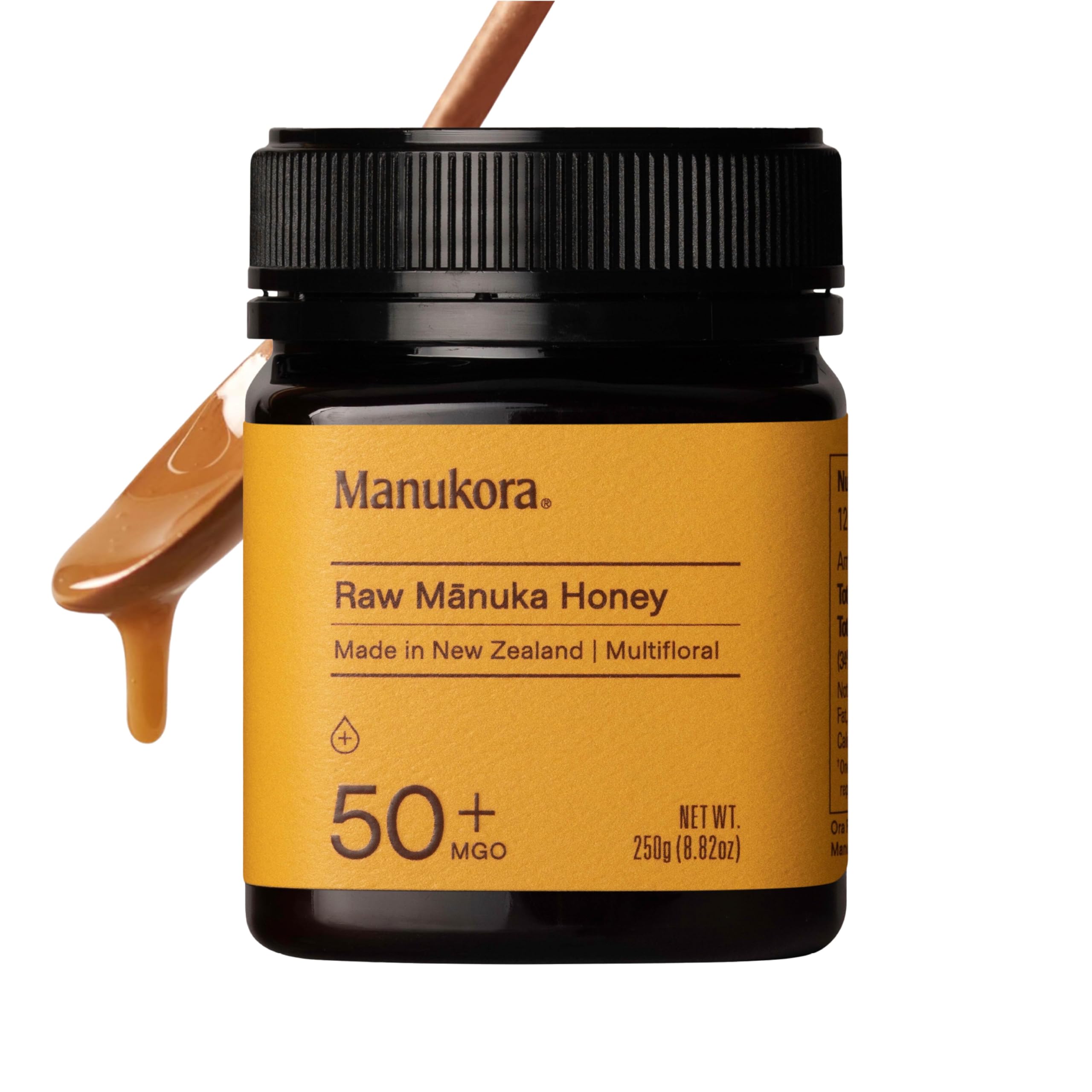
Ethically sourced, B-Corp certified Manuka with full QR traceability—ideal as an intro honey with strong provenance.
Why I picked it: Strong ethical credentials and end-to-end traceability.
Best for: People who prioritize sustainable sourcing and want traceable, certified Manuka.
Everyday-friendly price with verified sourcing credentials.
Pros
- B-Corp certified sourcing
- Full QR traceability
- Glyphosate-residue free
- Smooth, mellow flavor
Cons
- Lower MGO for daily-only support
- Not as complex as higher-grade Manuka
My take
I reached for the Manukora jar when provenance mattered most. Scanning the QR code and seeing hive-to-hand traceability made me comfortable using it every morning.
The flavor is mild, velvety, and easy to mix into oatmeal or tea—I didn’t need high potency for routine day-to-day use, so the MGO 50+ suited my needs perfectly.
Ethical sourcing and third-party testing are central to this brand’s appeal; I appreciated the transparency and the B-Corp certification when comparing options.
This is my go-to when I want a responsibly made Manuka that I can use liberally without feeling wasteful.
4. New Zealand Honey Co. Raw Manuka Honey UMF 15+ / MGO 514+, 8.8oz – Best for Higher Potency
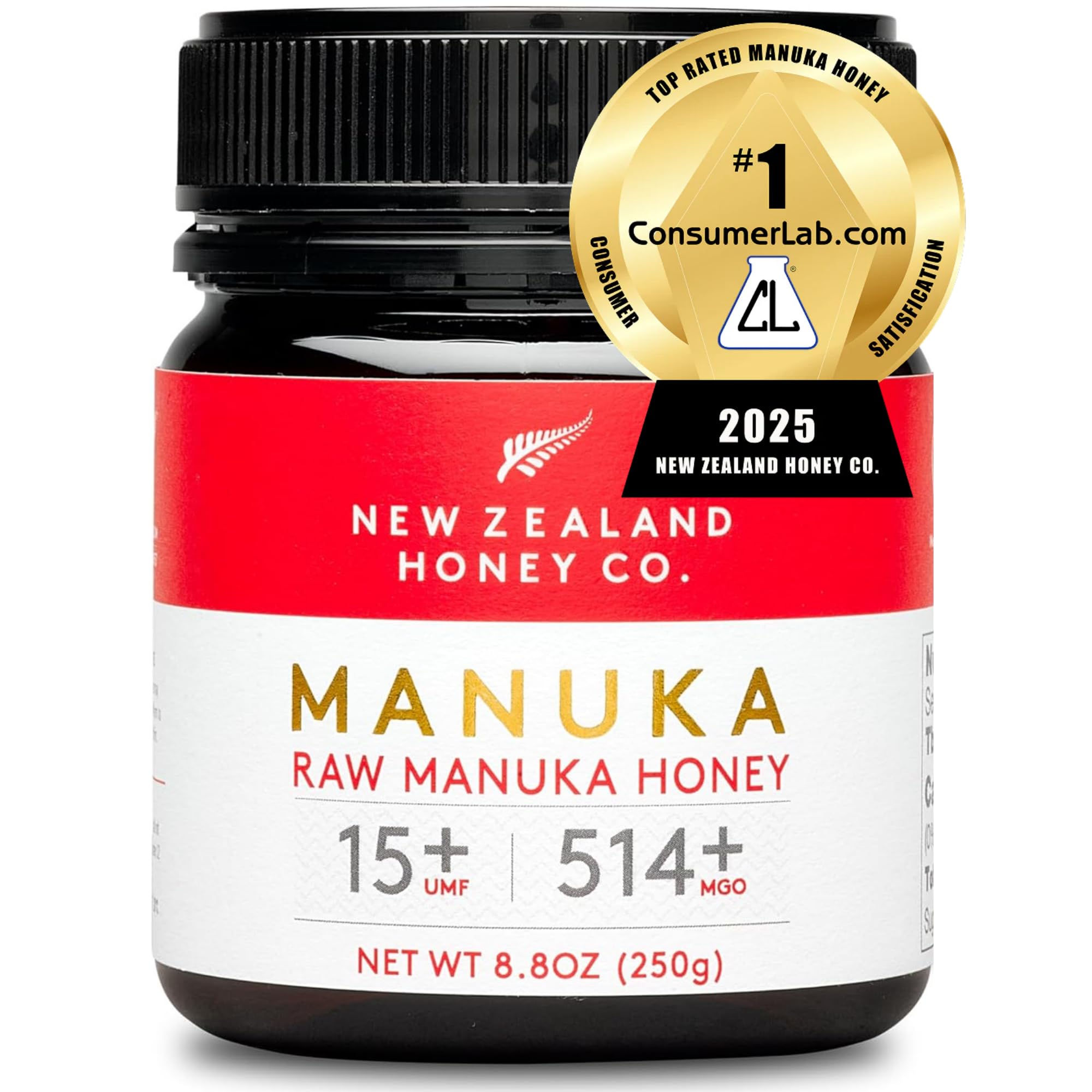
A step up in activity with UMF 15+ and independent testing—I used this jar when I wanted stronger support and a richer flavor profile.
Why I picked it: UMF 15+ gives elevated activity for more robust uses.
Best for: People who want stronger active properties without moving to tiny medical jars.
Premium potency that’s worth it if you use Manuka for more than sweetness.
Pros
- UMF 15+ / MGO 514+ potency
- Independent batch testing
- Rich, robust flavor
- Good for topical use
Cons
- More expensive per ounce
- Intense flavor not for all palates
My take
I reserve this UMF 15+ jar for moments when I want real active potency—it has a noticeably earthier, more medicinal profile than lower-MGO jars.
When I use it in warm lemon water or on sore areas, the thicker consistency and higher MGO felt like they offered more coverage and presence.
The independent testing and New Zealand packing are reassuring, and the flavor stands up in recipes where lesser honeys would be washed out.
If you want a single jar that’s effective both internally and topically, this one strikes a useful balance between strength and usability.
5. Manuka Doctor – MGO 30+ Squeezy Manuka Honey Multifloral, 10.58 oz – Best for Convenience
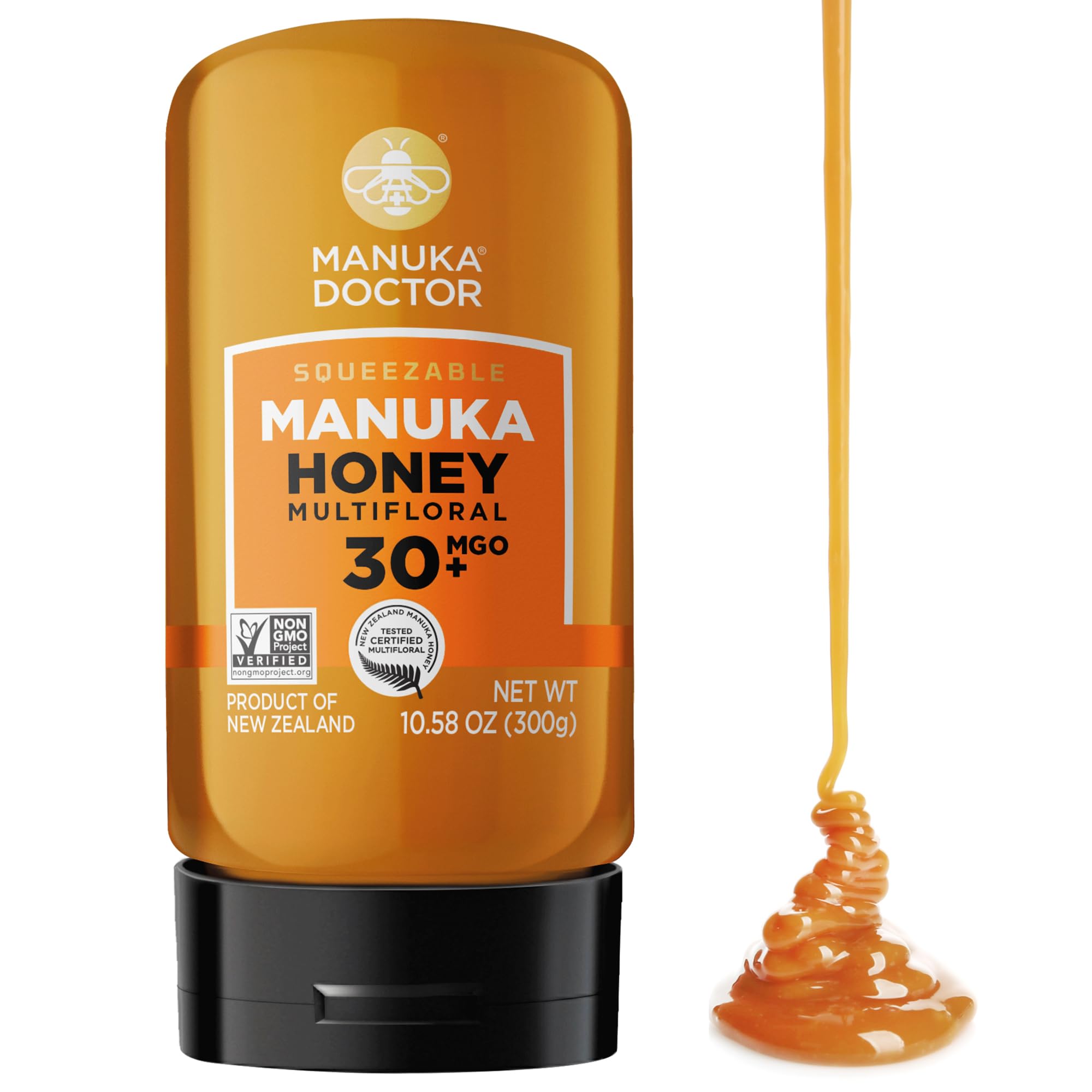
A practical squeezy bottle of multifloral Manuka that eliminates sticky mess while delivering everyday Manuka benefits.
Why I picked it: No-drip squeeze bottle makes daily use neat and easy.
Best for: Families, kitchen use, and anyone who dislikes sticky jars.
Affordable, practical option for routine use.
Pros
- No-drip squeeze bottle
- Smooth, easy-pour texture
- Good for tea and toast
- Larger, family-friendly size
Cons
- Lower MGO activity
- Milder, less complex flavor
My take
I kept this in the pantry for quick access; the squeeze bottle design is genuinely better at avoiding mess than traditional jars.
The honey itself is mild and sweet—perfect for drizzling on waffles, stirring into smoothies, or giving kids a spoonful without fuss.
Because the MGO 30+ is modest, I don’t reach for this when I want strong topical effects, but it’s my everyday convenience pick.
If you want practical, no-drip packaging and an easy-to-use Manuka, this bottle delivers exactly that.
6. New Zealand Honey Co. Raw Manuka Honey UMF 20+ / MGO 829+, 4.4oz – Best Medical-Grade Option
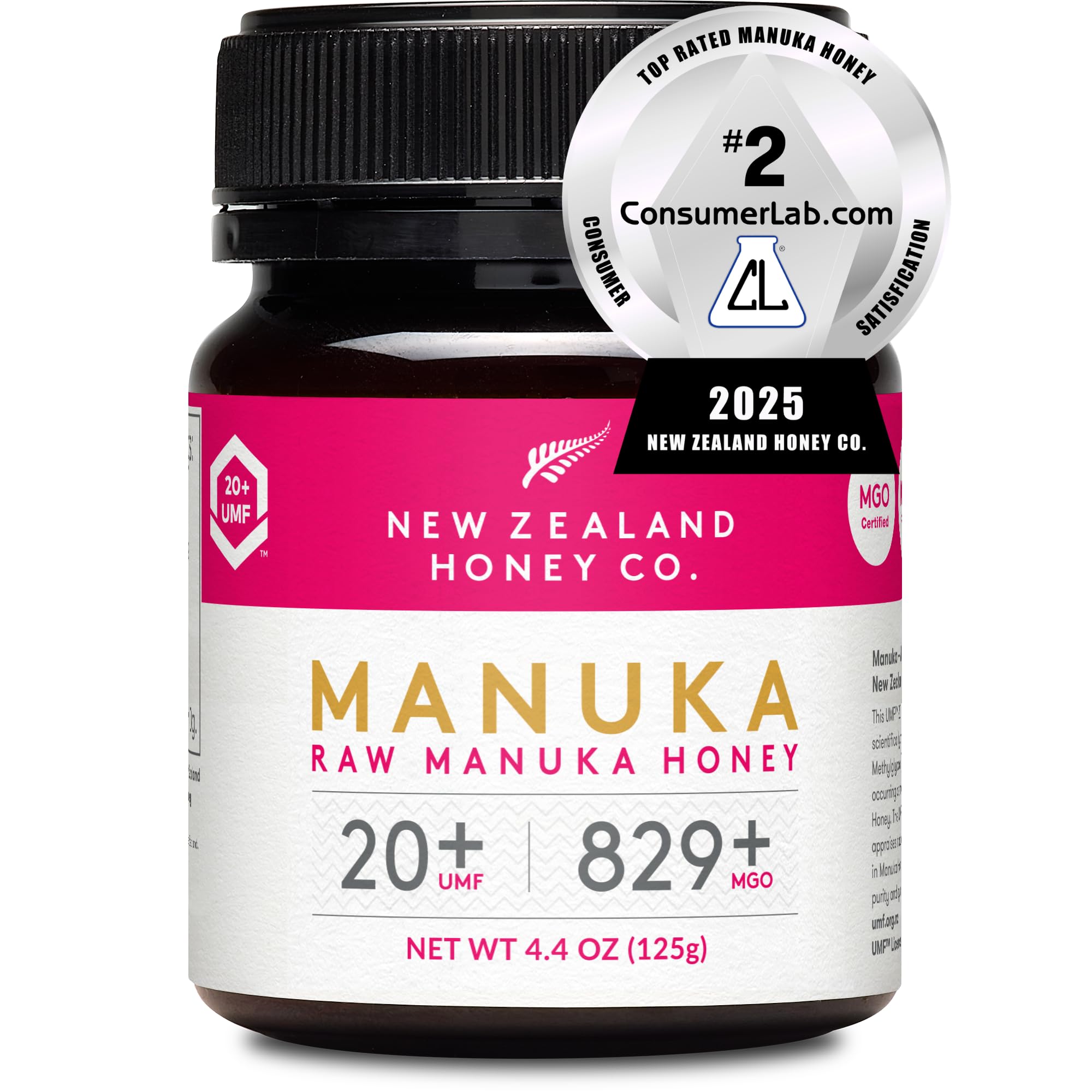
High-activity, medical-grade Manuka in a small jar—what I choose when I want the maximum therapeutic effect.
Why I picked it: Very high MGO/UMF for targeted therapeutic uses.
Best for: Targeted topical treatments and when I want the strongest internal support.
Top-tier potency and smaller jar size reflect medical-grade positioning.
Pros
- UMF 20+ / MGO 829+ potency
- Thick, medical-grade texture
- Excellent for topical coating
- Packed and tested in New Zealand
Cons
- Small jar, high cost per ounce
- Flavor described as medicinal by some
My take
I reach for this UMF 20+ jar when I need maximum activity—its thickness coats the throat and skin in a way lower-potency jars don’t.
The taste leans toward a medical profile; I wouldn’t use it as a daily sweetener, but it’s ideal for short-term, focused use.
Because the jar is small, I treat it as a toolkit item: a powerful option I bring out when I want stronger antibacterial action.
If you want the highest-grade Manuka for targeted therapeutic use, this is the bottle I recommend keeping in your medicine cabinet.
How I Choose Manuka Honey
Understand potency labels (MGO vs UMF)
I look for the right potency for my purpose: low MGO (30–150) for everyday use, mid-range (400–514) when I want noticeable activity, and 800+ for medical-grade needs.
UMF is a strict, trademarked grading system tied to New Zealand testing; MGO is a chemical measure of methylglyoxal. I prefer products that show one or both and back it up with batch testing.
- Everyday use: MGO 30–150 or mild UMF
- Enhanced activity: MGO 400+ or UMF 13–15
- Medical-grade: MGO 800+ or UMF 20+
Check provenance and testing
I always check whether the jar is packed and tested in New Zealand and whether the brand offers batch traceability or QR codes.
Third-party testing or UMF association membership gives me trust that the honey matches the label.
- Prefer jars with QR-code traceability
- Look for independent or UMF testing certificates
- B-Corp or ethical sourcing is a bonus
Choose packaging for how you use it
I keep a squeezy bottle in the pantry for kids and cooking, and a small, higher-potency jar in the medicine cabinet for topical or targeted use.
Creamed jars are easiest for spreading; thicker, raw jars are better for topical coating.
- Squeezy bottle for mess-free kitchen use
- Creamed honey for toast and spreads
- Thick raw jars for topical applications
Storage and usage tips I follow
I store my jars in a cool, dry place and use a clean spoon to avoid contamination.
A daily teaspoon is how I use Manuka for routine wellness; for topical uses I apply a thin layer and cover if needed.
- Keep lids tightly closed
- Use clean utensils
- Avoid heat to preserve enzymes
Frequently Asked Questions
How much Manuka honey do I take daily?
I take a teaspoon to a tablespoon daily depending on potency; for high-MGO jars a teaspoon is usually enough.
Is UMF the same as MGO?
UMF and MGO measure related but different things—UMF is a broader trademarked grading that includes multiple markers, while MGO is a single chemical measure. I prefer products that disclose both or provide batch testing.
Can I use Manuka honey on my skin?
Yes. I use thicker, higher-MGO jars topically for short periods; they adhere well and provide a protective coating. Always patch-test first.
How should I store Manuka honey?
I store mine in a cool, dry place away from direct heat. No refrigeration is needed—just a sealed lid and a clean spoon.
Final Take
After testing these jars side-by-side, I keep one high-potency UMF jar for targeted use, a midrange UMF/MGO jar for occasional extra support, and a raw or squeezy jar for everyday rituals.
Decide whether you want convenience, ethical traceability, or maximum potency—and pick the jar that matches your routine.
I rotate based on need: daily spoonfuls from a spreadable jar, and the small, high-MGO jars for focused topical or therapeutic use.
