
I tested turntables and stabilizers across budget and audiophile ranges to find dependable, musical setups that actually made my records sound better. Here are my top picks and why each one earned a spot in my listening/
I spent weeks listening, setting up, and tweaking turntables and record weights so I could tell you which ones make vinyl sound its best. This roundup covers beginner-friendly plug-and-play tables, upgrade-level components, and stabilizers that noticeably improve tracking and stability.
My goal was practical: machines that are easy to live with and that reward a little attention. Below I explain why each model stood out in my own system and how I used them.
If you want a simple, ready-to-play experience, a fully automatic belt-drive table with a built-in preamp is the fastest route. If musical detail and upgradeability matter more, look for higher-mass plinths, premium cartridges, and acrylic platters. Record weights and stabilizers are inexpensive ways I used to tame warps and reduce surface resonance across tables.
1. Audio-Technica AT-LP60X-GM Fully Automatic Belt-Drive Stereo Turntable – Best Beginner Turntable
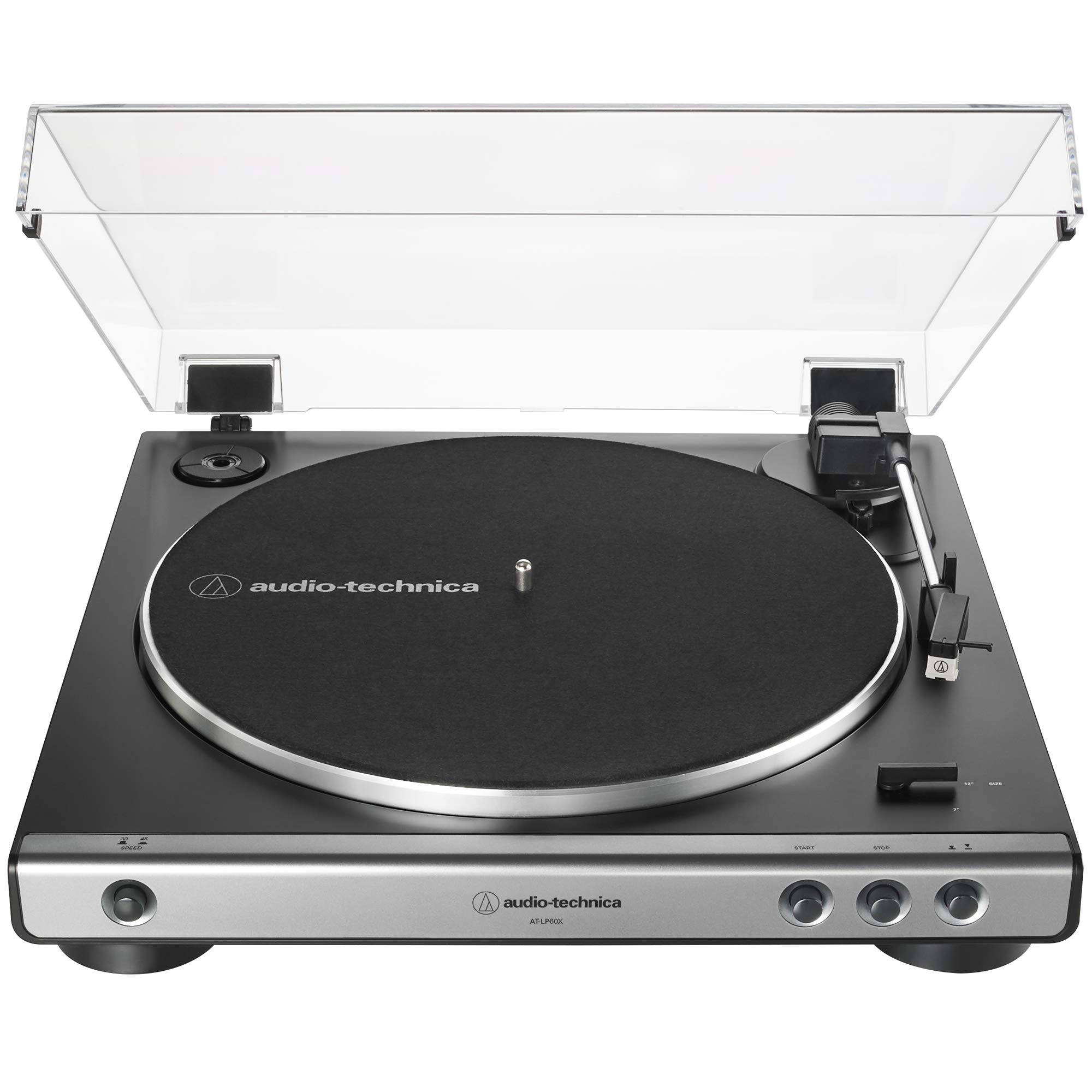
A fully automatic belt-drive turntable with a switchable phono preamp, anti-resonance die-cast platter, redesigned tonearm base, and an external AC adapter to reduce noise.
Why I picked it: I picked it for its effortless setup, automatic operation, and solid sound without extra gear.
Best for: Newcomers and casual listeners who want plug-and-play vinyl playback.
An affordable entry-level turntable that punches above its weight.
Pros
- Truly plug-and-play setup
- Built-in switchable phono preamp
- Anti-resonance die-cast aluminum platter
- Replaceable Dual Magnet cartridge
Cons
- Limited upgrade path
- Not targeted at high-end audiophile tweaking
My take
I unboxed and set this up in minutes: plug the external AC adapter, connect the detachable RCA cable, drop in a record and use the automatic arm. That workflow is exactly why I recommend this model to people who want music fast.
Sonically it delivers a warm, clear presentation that makes everyday listening enjoyable. The redesigned tonearm base and head shell noticeably reduce resonance compared with earlier budget models I've used, and the die-cast platter helps keep low-end cleaner.
The built-in switchable phono preamp saved me from buying extra hardware; I fed it directly into powered speakers and my stereo with no fuss. The cartridge uses a replaceable stylus, so the table can be kept sounding fresh without changing the whole head shell.
I appreciated the external AC adapter—moving AC/DC conversion outside the chassis lowered the background noise in my quieter passages. For people who want simple, reliable vinyl playback without diving into calibration, this table is a smart, low-friction choice.
2. Fluance RT81 Elite High Fidelity Vinyl Turntable Record Player with Audio Technica AT95E Cartridge – Best Value Upgrade
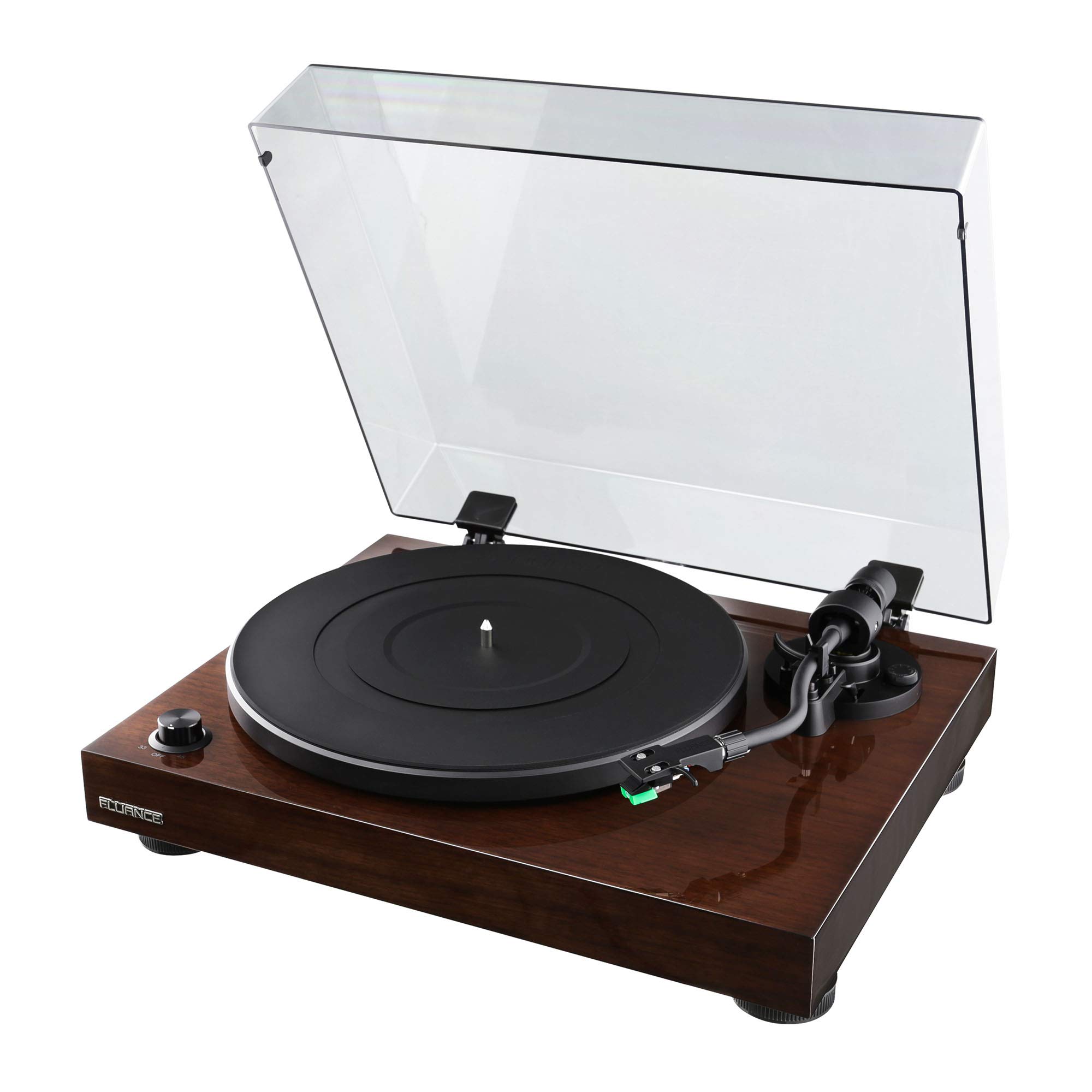
A high‑mass MDF plinth turntable fitted with an Audio‑Technica AT95E cartridge, balanced S‑type tonearm, and a built-in Texas Instruments preamp for warm, detailed playback.
Why I picked it: I chose it for its superior components and strong out-of-the-box musicality at a reasonable step-up level.
Best for: Listeners who want a clear, analog presentation without jumping to high-end prices.
A mid-range option that feels built and finished beyond its bracket.
Pros
- High-performance AT95E cartridge
- Stable balanced S‑type tonearm
- High-mass MDF plinth for isolation
- Built-in TI preamp and gold RCA outputs
Cons
- Counterweight calibration needs patience
- Larger footprint in smaller rooms
My take
I put the RT81 on my primary rack and was struck immediately by the build quality: the walnut plinth looks substantial and isolates the platter well. It feels like a piece of furniture as much as audio gear.
The AT95E cartridge makes a big difference in tracking and detail. I heard tighter bass and greater clarity through an AVR compared with budget tables, and vocal presence improved across a variety of pressings.
The built-in Texas Instruments preamp and gold-plated outputs made hooking into my system simple while retaining a warm, analog tone. If you want an expressive sound with components that matter, this table strikes an excellent balance.
Setup takes a bit more attention—especially zeroing the counterweight—but the payoff is a more refined presentation that competes with pricier turntables in everyday listening.
3. Record Weight Stabilizer by FEMELI, Low Profile Turntable Weight Clamp – Best Low-Profile Stabilizer
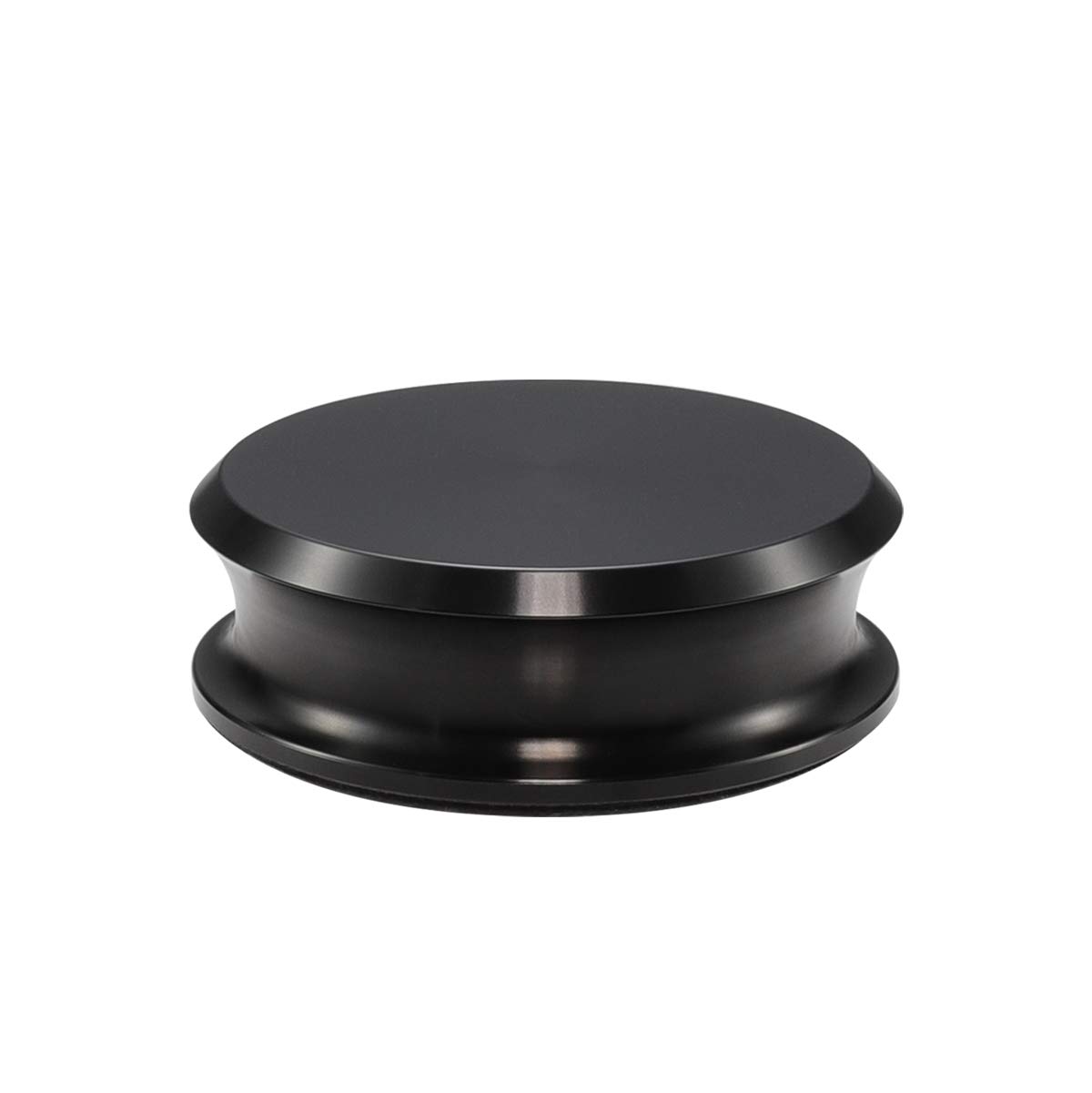
A low‑profile record weight that fits under a dust cover, centers well on the spindle, and uses roughly 304g to dampen vibration without overloading bearings.
Why I picked it: I picked it because it fits under a closed lid and tames warps without being heavy-handed.
Best for: Owners of lighter pressings or older warped records who want stability with the cover down.
A budget-friendly accessory for measurable improvement.
Pros
- Low profile fits under dust cover
- Damps vibrations and small warps
- Centered spindle hole for stability
- Lightweight yet effective at 304g
Cons
- Unnecessary for 180g heavy pressings
- Subtle improvement, not dramatic
My take
I tested the FEMELI weight on several warped and light‑weight pressings and could see the record flatten out immediately after placing it. That visual change translated into slightly tighter bass and improved instrument separation.
It’s just heavy enough to act as a flywheel and smooth minor speed irregularities on belt‑drive tables I used it with, yet light enough not to strain bearings. Being low-profile allowed me to close the dust cover—handy for everyday listening.
If your collection includes older or thin pressings, this stabilizer is one of the quickest and most economical upgrades you can add to improve tracking and reduce surface-induced muddiness.
4. Fluance RT85 Turntable with Ortofon Cartridge, Acrylic Platter, and Vibration Isolation – Best for Serious Listeners
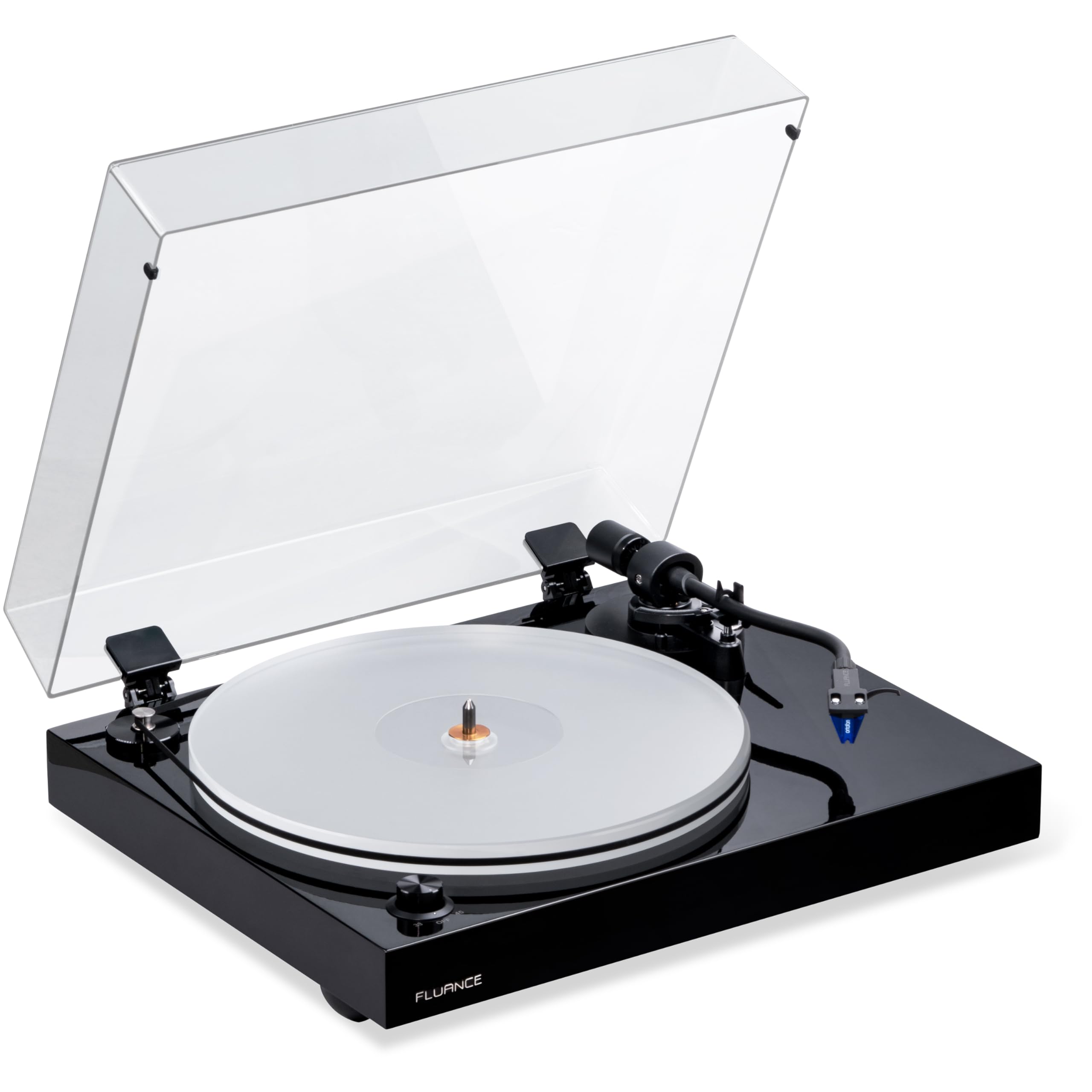
A reference-style turntable with an Ortofon 2M Blue cartridge, high-density acrylic platter, isolated motor, precise speed control, and high-mass MDF plinth for detailed, three-dimensional sound.
Why I picked it: I picked it for its exceptional cartridge, acrylic platter mass, and the clear, spacious sound it delivered.
Best for: Enthusiasts upgrading toward true reference sound and willing to dial in setup.
A higher-end investment for substantial sonic returns.
Pros
- Ortofon 2M Blue installed
- High-density acrylic platter for damping
- Excellent speed stability
- Strong isolation and build quality
Cons
- No built-in phono preamp
- Counterweight setup can be fiddly
My take
Right away the RT85 felt like a different class: the Ortofon 2M Blue brought improved linearity and separation, and the acrylic platter added weight that damped unwanted resonance.
I heard noticeably tighter bass and a fuller midrange that made complex arrangements more intelligible. The isolated motor and speed control kept wow and flutter negligible even on demanding passages.
Setup required more attention—especially balancing the counterweight—but once dialed in the table rewarded careful calibration with a realism in the midband and a three‑dimensional soundstage that I really enjoyed.
Because this unit ships without a phono preamp, I paired it with an outboard preamp to get the best performance. For serious listeners who want an upgrade path and cartridge quality from day one, this is where I’d start.
5. Hudson Hi-Fi SmallBen Record Weight Stabilizer with Protective Leather Pad – Best Stylish Stabilizer
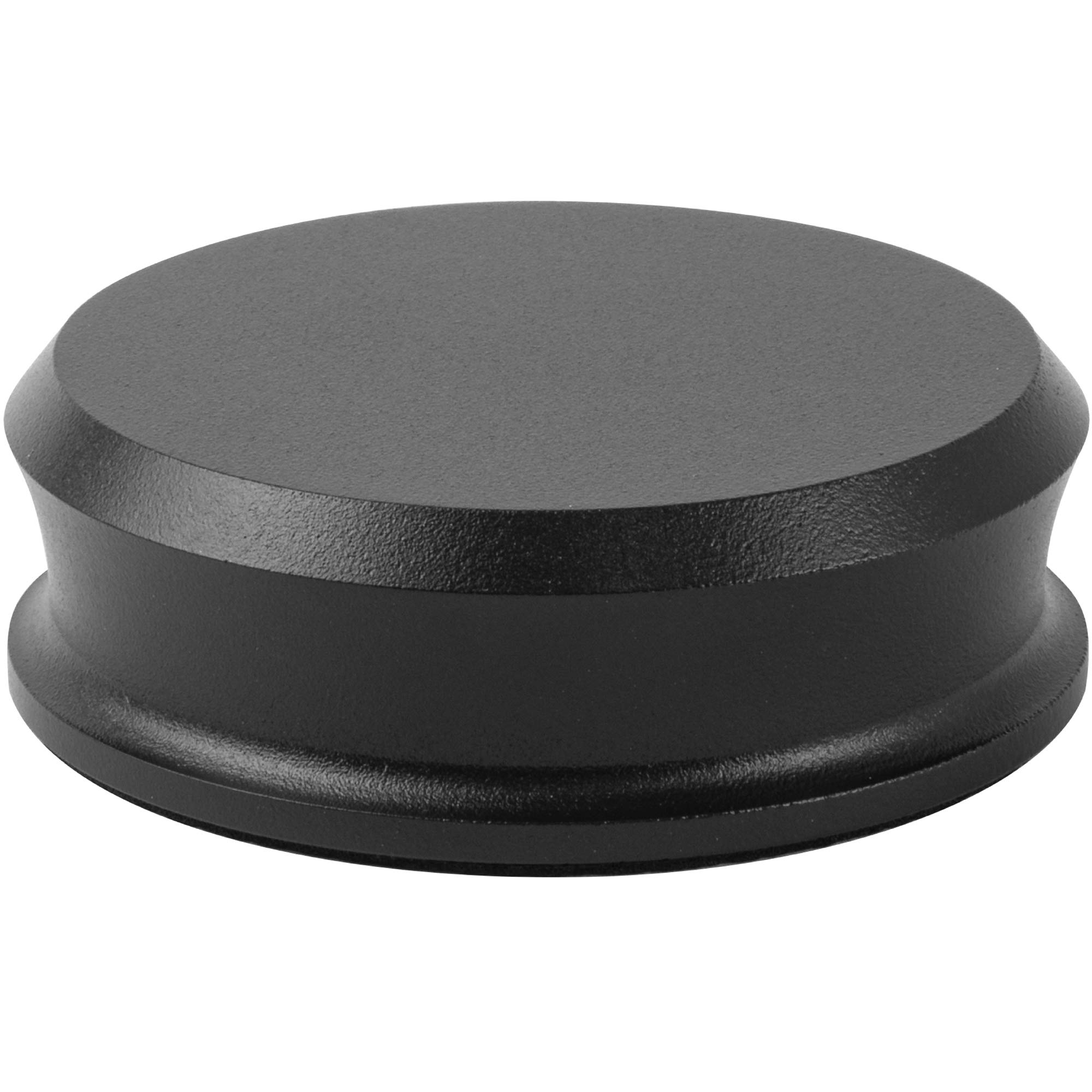
A compact metal record weight with a protective leather pad that increases record contact, reduces resonance, and adds a refined aesthetic to your turntable setup.
Why I picked it: I chose it for its aesthetics and leather pad that protects labels while stabilizing records.
Best for: Listeners who want both style and small sonic improvements.
An affordable, visually pleasing upgrade.
Pros
- Elegant metal finish
- Leather pad protects record labels
- Fits most turntables and covers
- Adds perceived bass depth
Cons
- Center hole slightly oversized
- Not precision-machined to audiophile tolerances
My take
The SmallBen immediately upgraded the look of my setup while adding meaningful stability. I heard a fuller, slightly deeper low end and records sat flatter on the platter.
The leather pad is a welcome touch; it prevents direct metal-to-label contact and feels protective when moving the weight on and off. I ran it on a couple of decks including an SL‑1200 and saw no adverse effect on spin-up or speed.
It isn’t a precision instrument—there’s a small slack in the center hole—but for the price and finish it’s a tidy, functional accessory that made my listening sessions feel more controlled and refined.
6. Viborg LP628B Record Weight Stabilizer with Level and Strobe Scale – Best All-in-One Tool
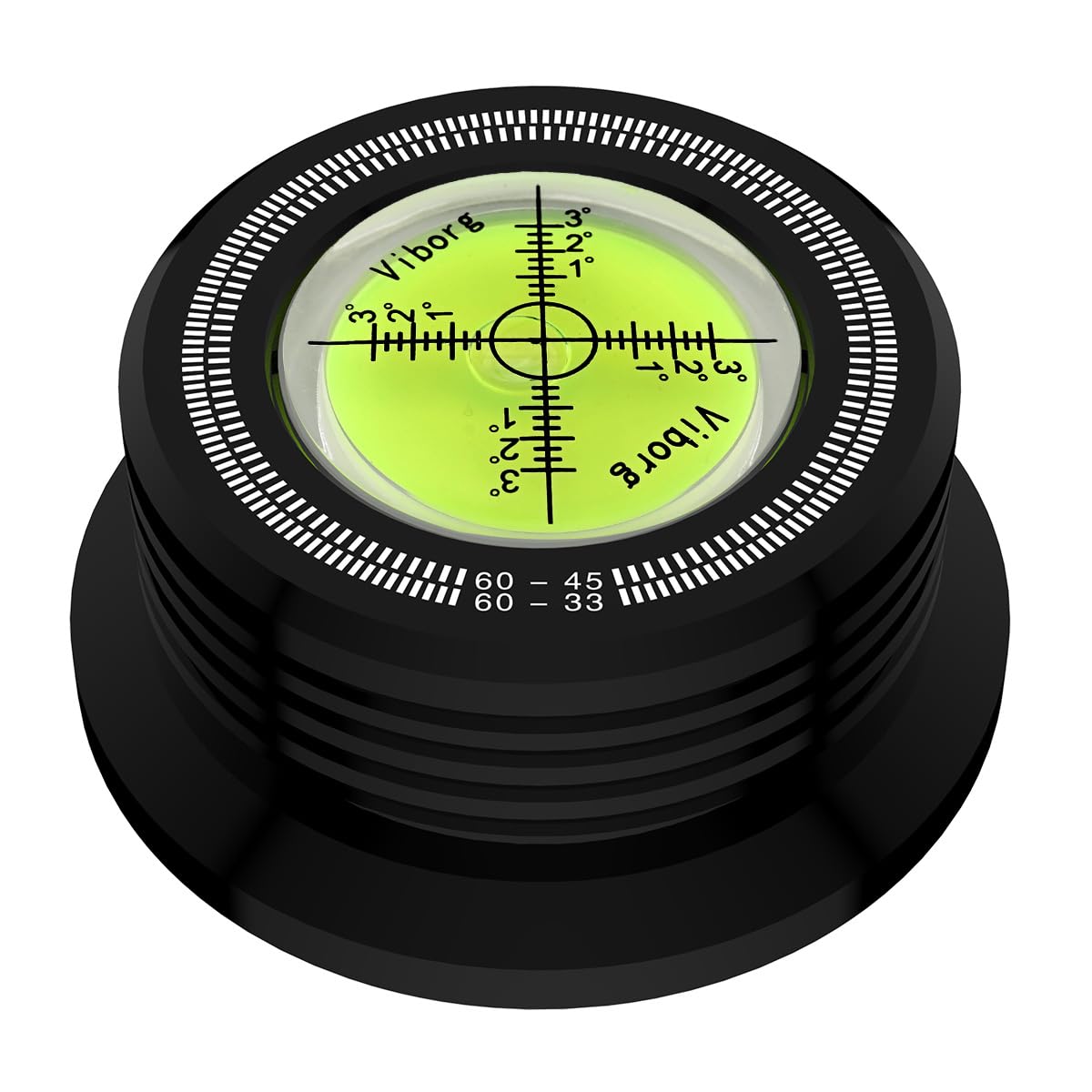
A multifunction record weight that combines a 280g stabilizer with a bubble level and strobe markings to help with leveling and speed checking.
Why I picked it: I picked it because it combines leveling, speed checking, and stabilization in a single, well-machined tool.
Best for: Owners who value precise setup and want an all-in-one center weight.
A modestly priced tool with multiple uses.
Pros
- Integrated bubble level for precision
- Strobe scale for speed checks
- Machined aluminum finish
- Smooths speed and resonance
Cons
- Strobe markings can misalign for some mains frequencies
- Doesn't clamp like dedicated clamps
My take
I used the Viborg to level multiple turntables and the bubble level made a real difference—when my plinth was off by a hair the results were audible after leveling and re-listening.
The added mass behaves like a small flywheel, helping sustained notes ring cleaner and smoothing micro speed variations on some of my belt-drive tables.
The strobe markings were a useful idea, though I found the printed markings didn’t perfectly match every mains frequency I tested. Still, for routine setup work and improved playback stability it’s an efficient single tool to keep on the shelf.
How I Pick Turntables and Accessories
Turntable type and workflow
I start by deciding how hands-on I want to be. Fully automatic belt-drive tables get me listening fast; higher-mass, manual tables reward careful setup with better transparency.
Think about whether you need a built-in phono preamp. I avoid extra boxes when convenience wins, but I choose external preamps for the best sonic flexibility.
- Automatic vs manual: automatic for ease, manual for tweakability.
- Belt‑drive: quieter and more musical for most home setups.
- Direct‑drive: better for DJs and quick start/stop tasks.
Cartridge and tonearm basics
Cartridges define a large part of the sound. Elliptical styli like the AT95E and Ortofon 2M Blue track better and reveal more detail than basic dual‑magnet or conical styli.
A well‑balanced S‑type tonearm reduces tracking errors; once I set effective mass and tracking force correctly, the sonic gains were obvious.
- Replaceable stylus gives longer lifecycle than disposable cartridges.
- Match cartridge compliance to tonearm effective mass where possible.
- Spend time on anti-skate and counterweight—small changes matter.
Why record weights and stabilizers help
Weights can flatten warped records, reduce resonance, and act as a flywheel to smooth speed on some tables. I use them selectively depending on pressing weight and tonearm design.
Not every record needs a weight; heavy 180g pressings often benefit less. For older or thin pressings I found weights to be one of the most efficient upgrades.
- Low‑profile weights let you close the dust cover.
- Choose weights that won't overload bearings—around 200–400g suits many setups.
- Look for a protective pad to avoid label damage.
What I test for
I listen for clarity in the midrange, control in the bass, speed stability, and how a table handles surface noise and resonance.
I also consider ergonomics: how easy is setup, can you close the dust cover with a weight installed, and how much fiddling does the table demand?
- Check cartridge compatibility and upgrade options.
- Confirm whether a phono preamp is built in or required.
- Test with heavy and light pressings to evaluate tracking.
Frequently Asked Questions
Do I need a phono preamp?
I choose a phono preamp based on my system. If your amp or powered speakers lack a PHONO input, a built-in or external preamp is necessary to bring the signal to line level. For my critical listening I prefer an external preamp for better flexibility and sonic control.
Will a record weight damage my turntable?
I’ve used weights across belt‑drive and direct‑drive decks without issues when matched sensibly. The key is not to overload the platter bearings—most of the weights I used were in the 200–400g range and behaved well. Avoid extremely heavy clamps on lightweight or poorly supported platters.
What's the difference between belt‑drive and direct‑drive?
In my experience belt‑drive tables isolate motor noise better and generally sound more musical in home setups. Direct‑drive offers faster start/stop and consistent torque for DJ use. Choose belt‑drive for living‑room listening, direct‑drive for performance needs.
How much improvement should I expect from a record weight?
Expect incremental but audible improvements: reduced wobble, slightly tighter bass, and marginally better instrument separation. I didn’t hear night‑and‑day changes on every record, but the weight often made thin or warped pressings sound more controlled and enjoyable.
Final Take
I recommended these turntables and accessories because each one solved a specific problem I faced: fast, reliable playback; clear, upgradeable sound; and simple, effective stabilization.
If you want to start with something easy, the Audio‑Technica AT‑LP60X is the quickest route to listening. If you want a meaningful sonic upgrade without breaking the bank, the Fluance RT81 is where I’d invest. For reference-level detail and cartridge quality, the RT85 rewarded my careful setup with greater resolution.
Finally, adding a record weight or a multifunction tool like the Viborg can tighten up playback on many machines. Pick the item that matches how hands-on you want to be and you’ll be rewarded every time you press play.
