
I tested a range of non-electric dehumidifiers — from large rechargeable silica packs to tiny 2 g sachets — and I share which ones worked best for cars, closets, basements and storage.
I’ve been managing moisture problems around my house, garage and vehicles for years, so I pulled together the dehumidifier options that actually made a difference. I tested large rechargeable silica packs, hanging calcium chloride bags, refillable DampRid systems, high-capacity buckets, fast-acting tablets and a 100-pack of tiny desiccant sachets.
Across these products I looked for real moisture removal, ease of use, reusability and where each solution fits best. Below I explain which one I reach for depending on space, frequency of use and how hands-on I want to be.
I break the choices down by space and workflow: choose large, rechargeable silica packs if you want a reusable, high-capacity option for cars and garages; pick calcium-chloride hanging bags when you want visible, disposable water collection in closets; use DampRid refills or tablets for easy refillable protection in small rooms; and grab the 2 g packets when you need dozens of tiny dry pockets for tins, electronics, or spice jars.
1. wisedry 500g Rechargeable Silica Gel Dehumidifier Packs (2-Pack) – Best for Cars & Large Tight Spaces
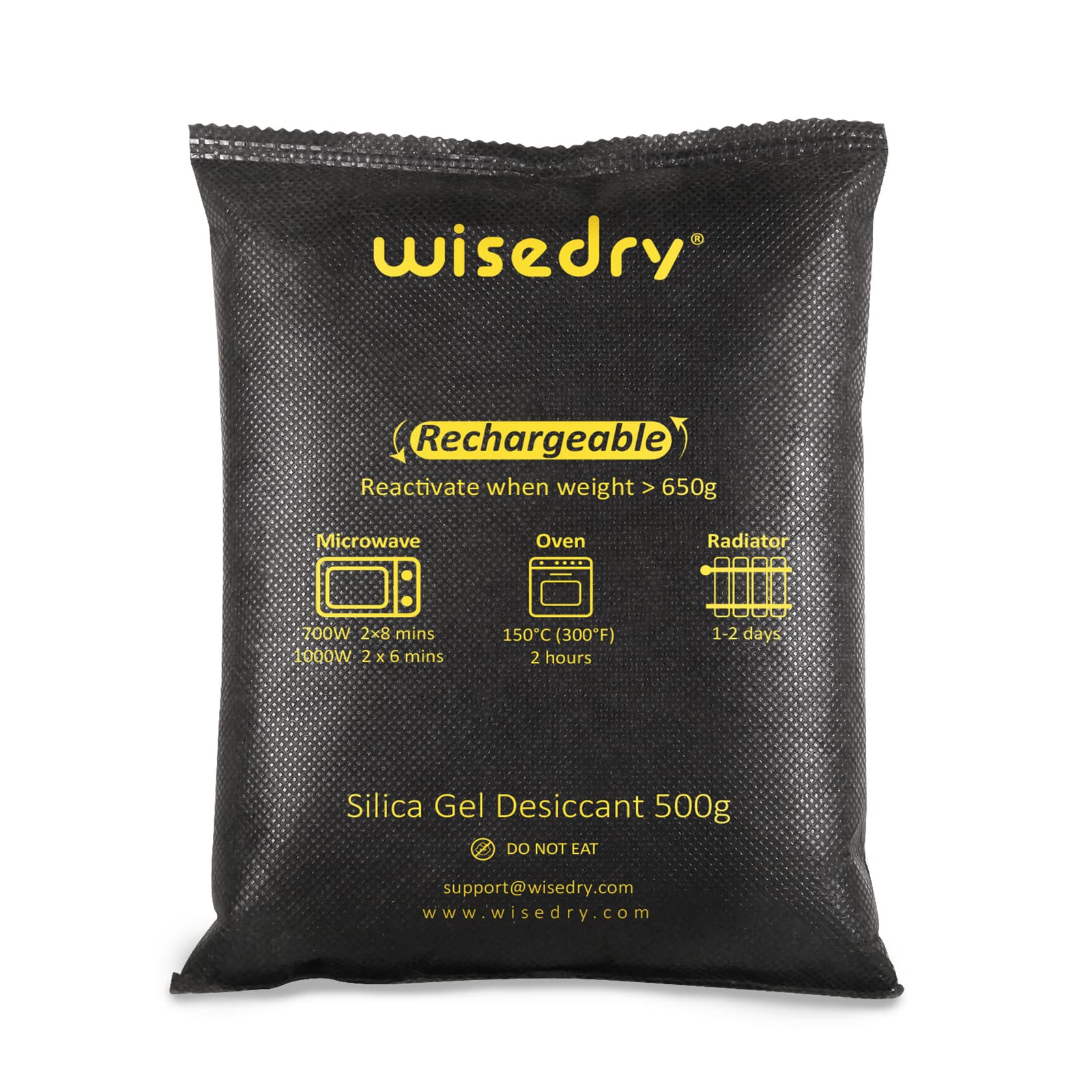
Large 500 g silica gel packs that absorb heavy moisture, change color to indicate saturation, and reactivate in a microwave or oven for repeated use.
Why I picked it: Big capacity and fast reactivation make them my go-to for vehicles and garages.
Best for: Full-size SUVs, garages, gun safes, basements and other high-moisture, confined areas.
Higher capacity up front but cost-effective long term because they’re rechargeable.
Pros
- Large 500 g capacity
- Fast 10–16 minute recharge
- Reusable more than 10 times
- Cuts windshield fogging
- Double-packed for storage
Cons
- Heavy to hang
- Color indicator can be muted
- Needs periodic recharging
My take
I put four of these in my full-size SUV and the interior fogging dropped dramatically within 24 hours. They truly pulled moisture out of the air — the packs absorbed surprisingly large amounts before changing color.
Recharging is the standout: 10–16 minutes in a microwave or a session in the oven brings them back to life. I now rotate a charged set in the vehicle and keep a second set waiting to avoid downtime.
For tool shops, garages or any tight space that collects condensation, these give me a reusable, heavy-duty option that beats single-use bags when you want longevity and repeat performance.
2. Vacplus Hanging Moisture Absorber Bags with Activated Charcoal (10 Pack) – Best for Closets & Hanging Spaces
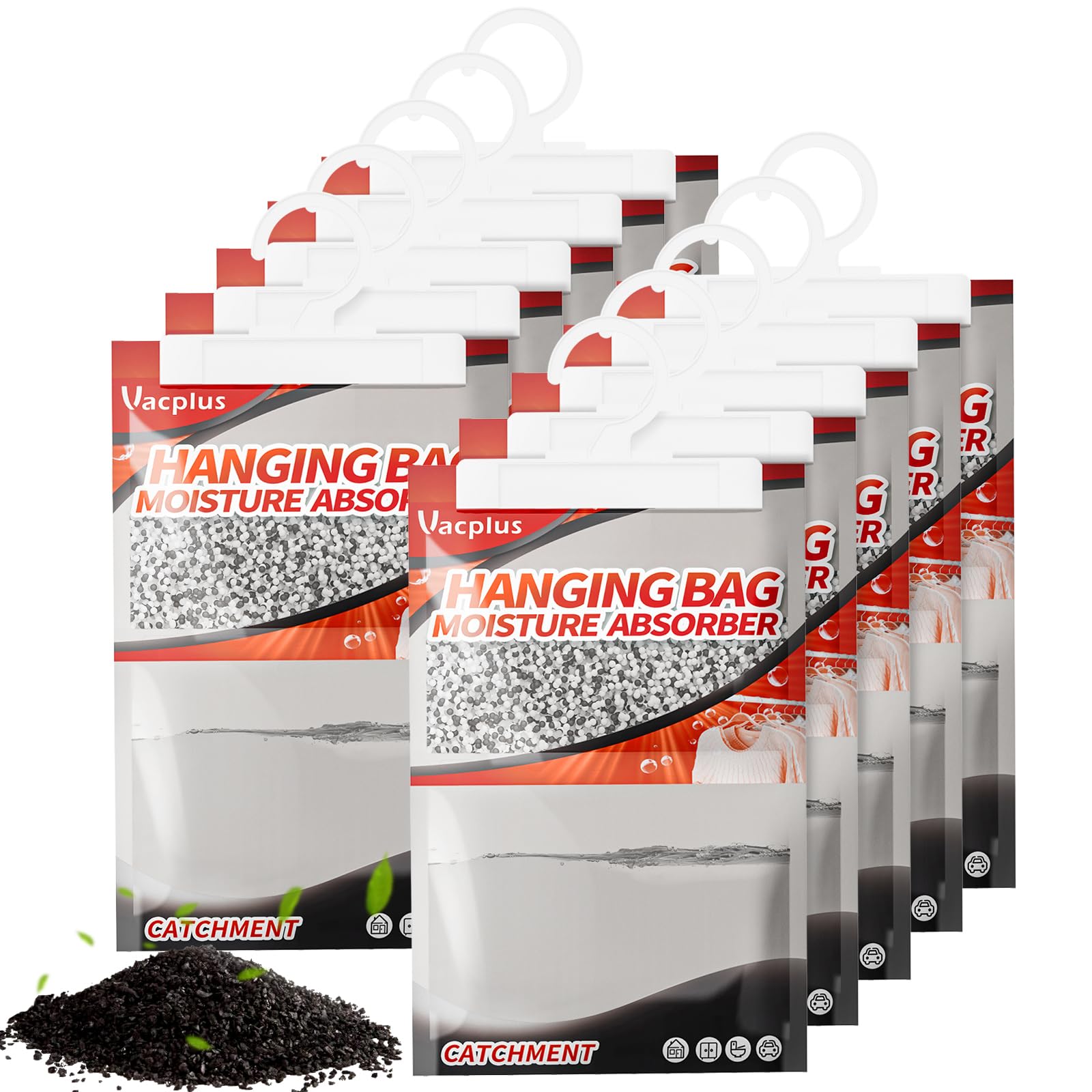
Hanging calcium chloride bags that turn captured moisture into visible liquid in a bottom reservoir; compact design for closets, bathrooms and RVs.
Why I picked it: I like the visible water collection and compact, hangable design for closets and small rooms.
Best for: Closets, bathrooms, laundry rooms, shoe cabinets, RVs and small storage areas.
Low-effort, disposable solution that works quickly in enclosed areas.
Pros
- Visible water reservoir
- Hangs easily in small spaces
- Large 500 ml capacity per pack
- Mess-free setup
Cons
- Single-use consumable
- Turns to liquid when full
- May have a scent
My take
I hung a few of these in my musty closet and started seeing water in the reservoir within days. The ability to actually watch the liquid collect is reassuring — you know it’s working without guesswork.
The bags are compact and ideal for places where a bucket would be overkill. Because the calcium chloride dissolves into liquid, I treat these as consumables and place them where they can sit undisturbed.
If you want a quick, low-fuss fix for damp closets or an RV, these are the easiest plug-and-play option I reach for.
3. DampRid Pure Linen Refillable Absorber 10.5 oz Refills (4 Pack) – Best Refillable Option for Small Rooms
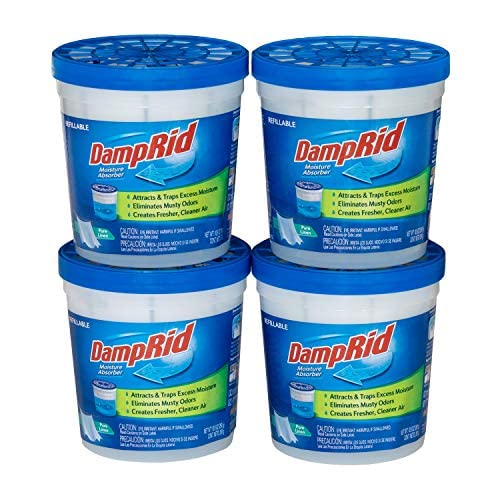
10.5 oz refill packets designed to drop into a DampRid canister; non-electric moisture removal and odor control that lasts up to 60 days depending on humidity.
Why I picked it: Refillable convenience with predictable life per packet makes these great for ongoing small-room maintenance.
Best for: Bathrooms, laundry rooms, closets, pantries, boats and RV interiors.
Refill system reduces waste and is convenient for regular maintenance.
Pros
- Easy drop-in refills
- Up to 60 days per refill
- Eliminates musty odors
- No electricity required
Cons
- Needs regular replacement
- Not for large areas
My take
I swapped these refills into my DampRid canisters around the house and immediately noticed musty odors disappear from my laundry room. The crystals pull moisture out of the air and you can watch the collected liquid accumulate in the base.
Their portability is great — I move a canister from the bathroom to the closet as needed. For RV and boat use they kept small spaces noticeably drier during storage.
If you prefer a low-maintenance, refillable approach, these deliver predictable performance without electricity.
4. DampRid Hi-Capacity Moisture Absorber Bucket, 4 lb. (2 Pack) – Best for Basements & Large Areas
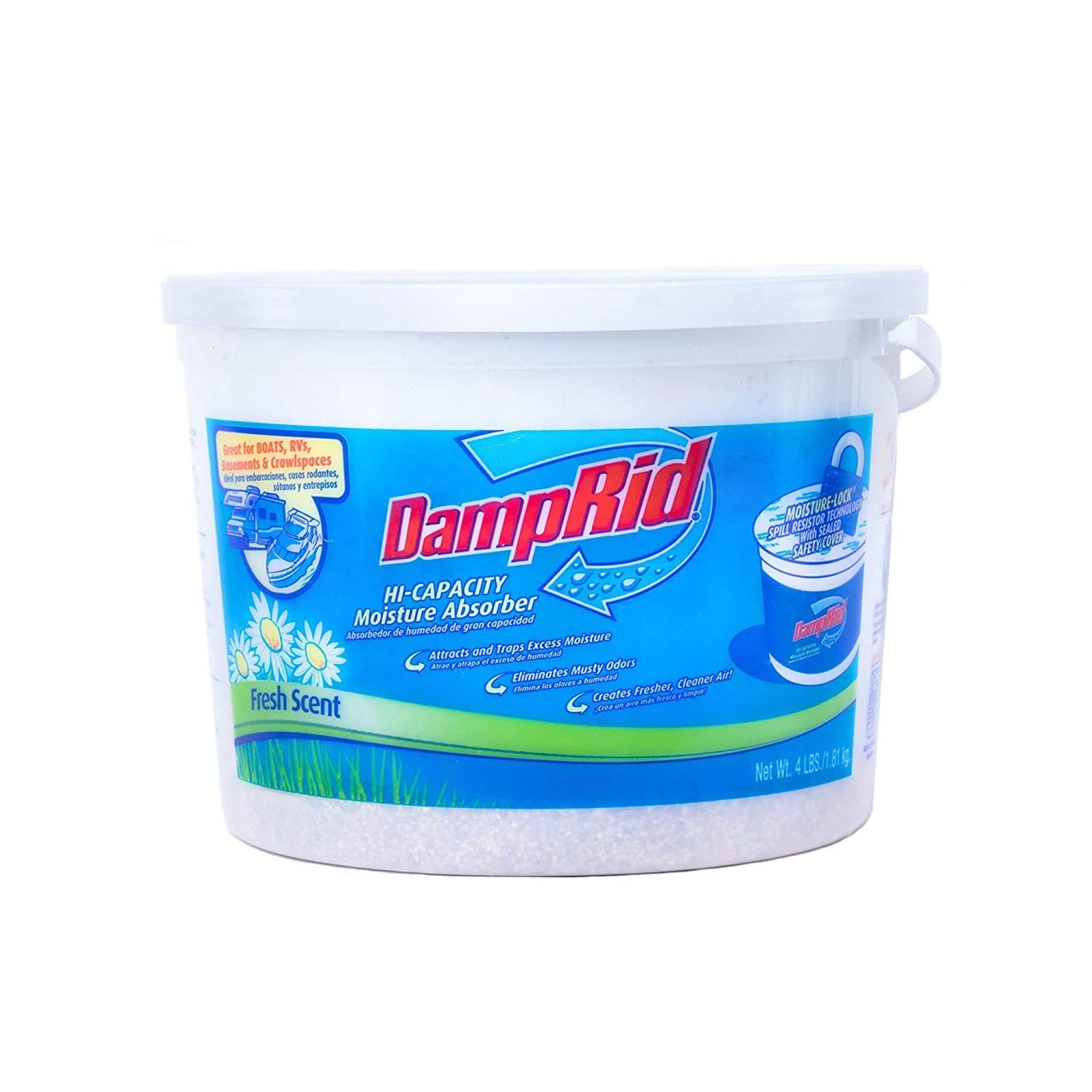
4 lb. hi-capacity buckets with Moisture Lock spill-resistor technology designed to last months in large, damp spaces like basements, laundry rooms and boats.
Why I picked it: High capacity and a spill-resistant cover make this my choice for big problem areas.
Best for: Basements, laundry rooms, garages, boats in winter storage and other large damp spaces.
Higher upfront volume but cost-effective over months of coverage.
Pros
- High-capacity crystals
- Spill-resistant Moisture Lock
- Lasts up to 6 months
- Good for large areas
Cons
- Bulky footprint
- No clear fill-level indicator
- Not discreet
My take
I put these large tubs in my basement and in a boat I winterize. They absorbed a lot of moisture over weeks and helped keep mildew at bay, which made spring cleanup far easier.
The sealed safety cover prevents spills, so I’m comfortable leaving them in utility spaces and under benches. For very large rooms I position multiple buckets for wider coverage.
If you need a set-and-forget approach for big spaces, these buckets strike the right balance between capacity and reliability.
5. DampRid Drop-In Tablet Refill Pack, Fragrance Free (4 Pack) – Best for Rapid Action
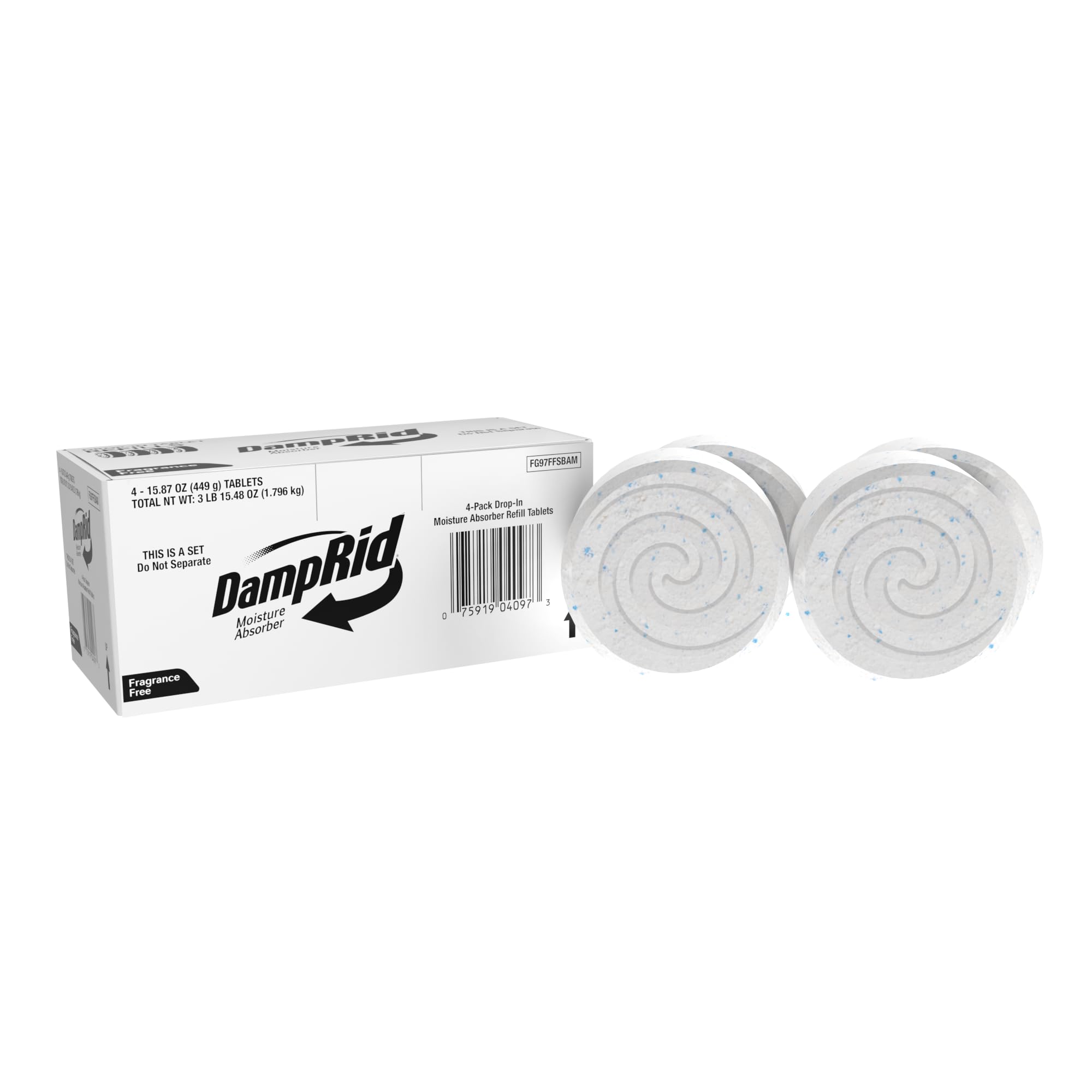
Drop-in tablets engineered to start working immediately; designed for the DampRid starter kit and built to accelerate moisture removal with a 360-degree ventilation fit.
Why I picked it: These tablets act quickly and slot into a holder for fast, visible moisture capture.
Best for: Bathrooms, closets, pantries, and anywhere you need fast odor and moisture control.
Convenient refill option for owners of the DampRid dispenser.
Pros
- Fast-acting tablets
- Easy drop-in use
- Spill-resistant design
- Fragrance-free option
Cons
- Requires separate holder
- Frequent replacement in damp areas
My take
When I needed immediate control in a damp bathroom I used these tablets in a dispenser and watched moisture collect the first day. The aerodynamic tablet shape seems to speed up absorption compared with standard crystals.
Because they’re designed for a specific container, they’re very tidy to use — unwrap, drop in, and you’re done. They’re my first choice for a quick-response fix in small rooms.
If you already own the Reusable Moisture Absorber starter kit, these make topping up effortless and fast.
6. Desiccant Packs 100 Packets, 2 g Silica Gel Sachets – Best for Small Containers & Long-Term Storage
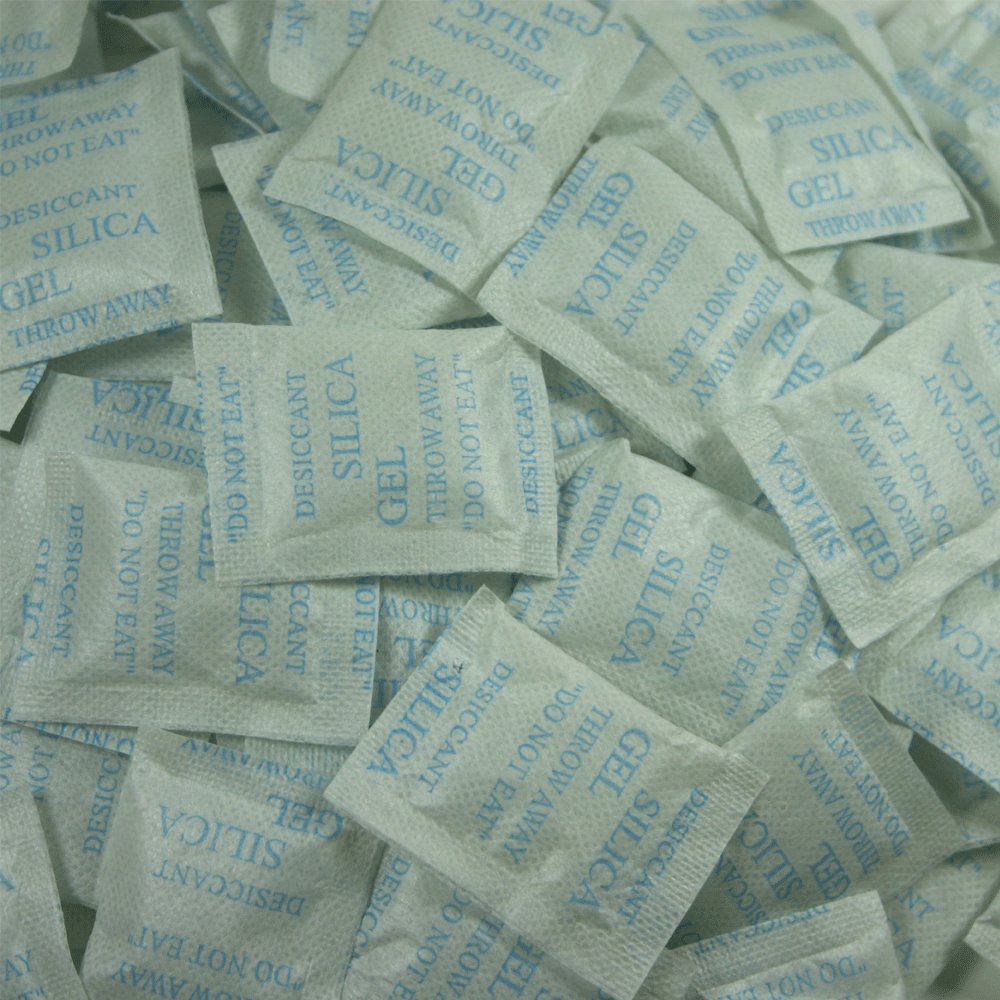
One hundred 2 g silica gel packets in breathable nonwoven fabric; reusable with oven or microwave reactivation and suited for small containers and storage boxes.
Why I picked it: I keep a box of these for everything from spice jars to electronics and ammo storage — they’re versatile and plentiful.
Best for: Spice jars, storage containers, electronics, camera gear, documents, shoes and small enclosed spaces.
Extremely economical per packet for protecting many small items.
Pros
- 100 small packets
- Fits tight spaces
- Reusable via heat reactivation
- Nonwoven breathable fabric
Cons
- Too small for rooms
- You need many for large areas
My take
I tuck these tiny packets into spice jars, camera cases and small storage bins. They prevent clumping in spices and stop rust on small metal parts in my shop.
Reactivation is simple: a short microwave or an oven session brings them back to usable condition. For small-item preservation they’re inexpensive and effective.
If your goal is to protect lots of small, moisture-sensitive items, having a hundred on hand is a practical move.
How I Choose a Non-Electric Dehumidifier
Match the solution to the space
I always pick a product based on the size of the problem. For a car or garage I reach for large reusable silica packs; for a closet or shoe cabinet a hanging calcium-chloride bag is usually enough.
Basements and other large, perpetually damp spaces demand high-capacity buckets. Small containers and valuables do best with tiny silica gel sachets.
- Tiny sachets — spice jars, camera bags, electronics
- Hanging bags — closets, small pantries, RV nooks
- Refillable canisters or tablets — bathrooms, laundry rooms
- Hi-capacity buckets — basements, boats, garages
Desiccant chemistry and what it means
I consider the active material: silica gel pulls moisture and is reusable by heating; calcium chloride forms a liquid and is typically single-use but draws moisture quickly.
Activated charcoal in some bags helps with odors, while silica tends to be odorless and safer around stored food containers.
- Silica gel = reusable, dry crystals
- Calcium chloride = fast, becomes liquid
- Activated charcoal = odor control
Reusability and maintenance
If I want a long-term, lower-waste fix I choose rechargeable silica or small reusable sachets and plan a reactivation schedule. For quick, disposable fixes I prefer calcium-chloride bags or single-use tablets.
Follow the manufacturer guidance: many silica packs reactivate in a microwave or oven but avoid overheating and follow weight or color-change instructions when provided.
- Recharge silica in microwave or oven per instructions
- Replace calcium-chloride bags once reservoir fills
- Label sets so you can rotate charged units
Placement and safety
I place buckets and canisters on level surfaces away from children and pets, and I keep hanging bags well secured so they don’t drip onto fabrics when they liquefy.
For any product that converts solids to liquid, plan where you will empty or dispose of collected moisture safely.
- Keep out of reach of children
- Avoid placing near fabrics that would stain if spilled
- Check and replace or recharge regularly
Frequently Asked Questions
Can I reactivate silica gel packs in the microwave or oven?
Yes — I’ve successfully recharged both large silica packs and small sachets using a microwave or oven following the maker’s time and temperature guidance. I weigh packs if recommended and avoid overheating. When heated correctly the desiccant returns to its dry state and color indicator.
Are calcium chloride hanging bags messy to use?
They convert moisture into liquid, so I place them where the small reservoir can collect without risk of spillage. I treat them as disposable items and position them on a stable hook or shelf when used in closets or small rooms.
Which option lasts the longest before needing replacement?
Hi-capacity crystal buckets typically last the longest — up to several months in moderately humid areas — while small refills and tablets need replacement every few weeks depending on conditions.
Final Take
I keep at least two different types on hand: a rechargeable silica solution for cars and garages, and a stash of small sachets and DampRid refills for everyday closets and rooms.
Match the product to the space, plan for recharging or replacement, and you’ll see moisture and musty odors drop fast. These non-electric solutions have become my go-to toolkit for common household humidity problems.
