
I tested water-soluble, slow-release, liquid, and organic options to find fertilizers that quickly green up grass, improve soil, and fit different lawn routines.
I spend seasons testing different fertilizer formats on lawns and mixed planting beds so I know what actually moves the needle. My goal with this roundup was simple: find products that deliver greener turf, stronger roots, and predictable results across common lawn care styles.
I tested quick-acting soluble formulas, multi-month slow-release granules, liquid seaweed-and-fish feed, and worm-casting soil builders. Below I explain where each fits in a lawn program and when I reach for one over another.
I compared fast-acting soluble feed for instant green-up, timed-release granules for low-maintenance lawns, liquid organics for soil health and foliar feeding, and worm castings for long-term soil improvement to recommend the right match for your grass and routine.
1. Miracle-Gro Water Soluble All Purpose Plant Food (3 lb.) – Best Overall
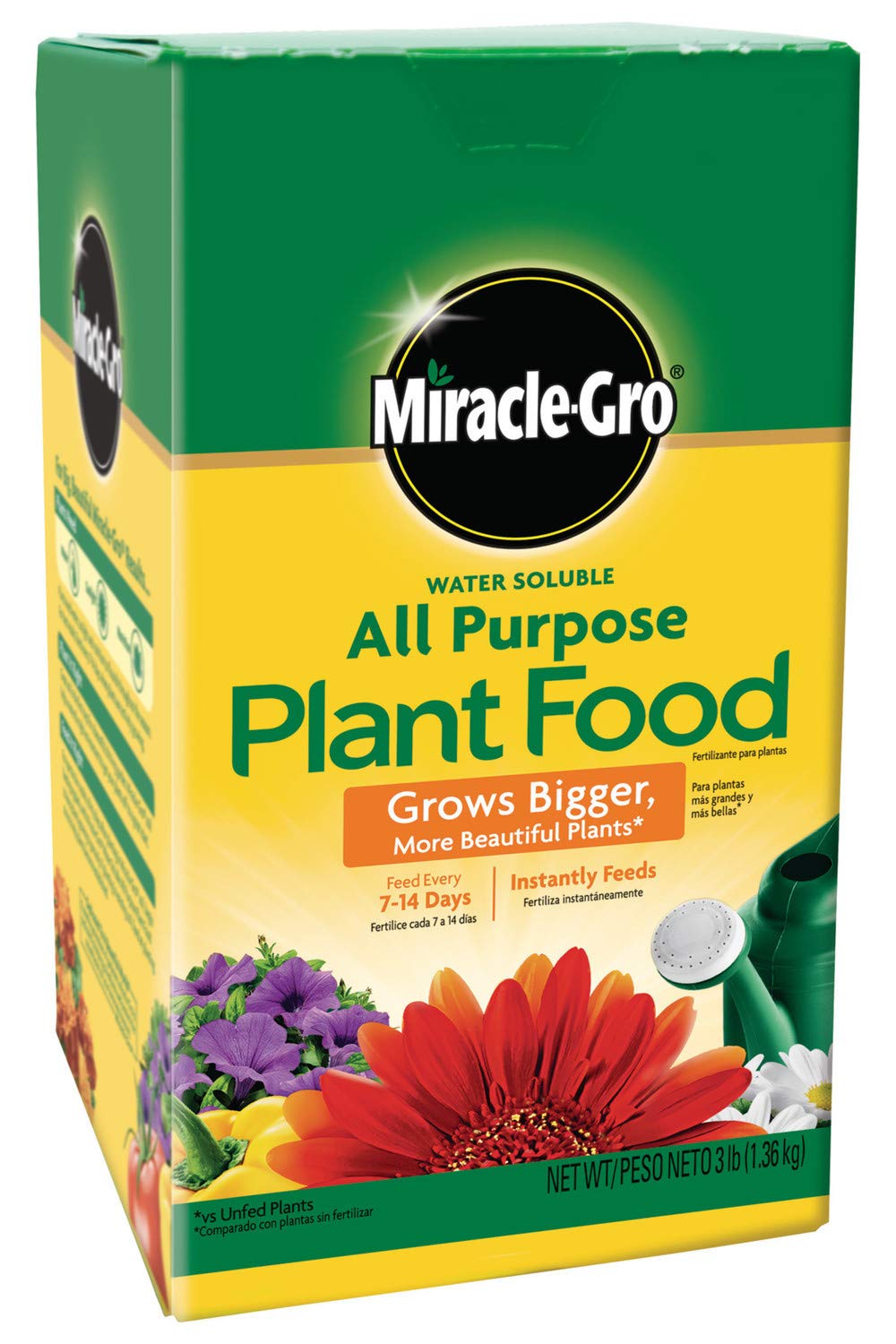
A concentrated, water-soluble 24-8-16 formula I use for quick green-up and spot-feeding on lawns and plants.
Why I picked it: Fast-acting nitrogen punch that’s easy to mix and apply for immediate results.
Best for: Instant green-up, starter applications, spot treatments on thin turf.
Concentrated and economical by coverage.
Pros
- Rapid results on green-up
- Easy to dissolve in water
- Versatile for plants and turf
Cons
- Requires frequent reapplication
- Not an organic option
My take
I reach for this water-soluble Miracle-Gro when I want immediate green and growth. The 24-8-16 NPK leans heavy on nitrogen, which makes it excellent for a visible lawn response within days when applied correctly.
Application is straightforward: mix the measured scoop in a watering can or feed through a garden feeder and wet the base of the grass to target roots. I use it for quick corrections, seedlings, and when I want faster results than slow-release products provide.
Because it’s soluble, I reapply more often than timed-release formulas, so I reserve it for targeted boosts rather than season-long feeding. I also appreciate that it’s safe when used as directed and won’t scorch turf under normal application.
2. Miracle-Gro Water Soluble All Purpose Plant Food (5 lb.) – Best Value
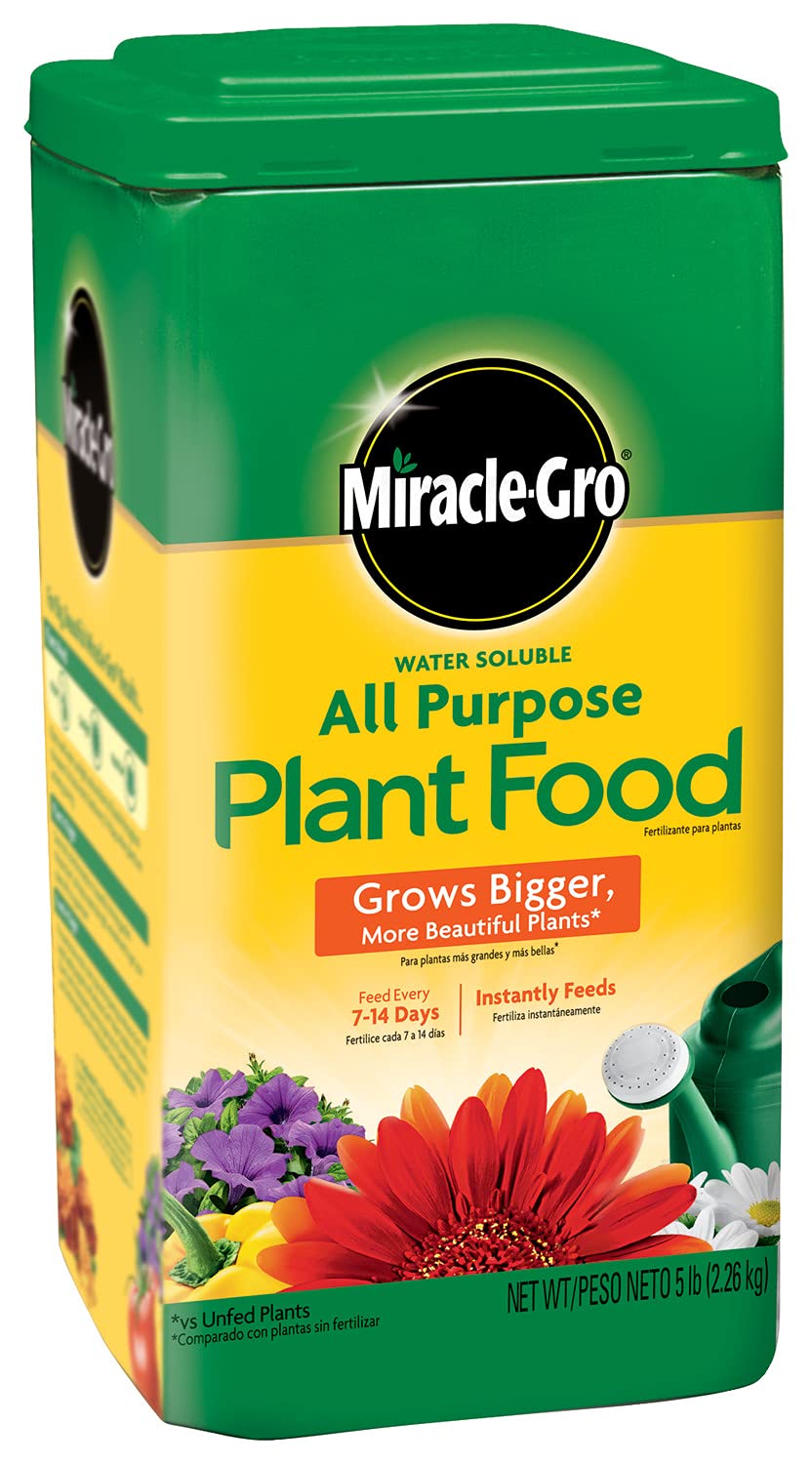
The same 24-8-16 soluble formula in a larger package that stretches across more lawn area.
Why I picked it: Bigger container gives more coverage for regular soluble feeding routines.
Best for: Lawns needing regular soluble applications and larger yards.
Better value per coverage than smaller packs.
Pros
- Greater coverage per container
- Same fast-acting formula
- Good for recurring applications
Cons
- Must store carefully after opening
- Needs frequent recharging
My take
When I need the quick effects of a water-soluble formula but want more coverage between purchases, the larger Miracle-Gro pack makes sense. It feeds a lot more square footage, so my reorders are less frequent.
I keep some in a dry, sealed container after opening to maintain potency. For lawn care I use the larger pack for whole-yard spring or summer touch-ups and reserve the smaller jar for indoor plants or one-off spots.
The results mirror the smaller size: fast greening, stronger top growth, and reliable root feeding when applied to the soil base rather than the blades alone.
3. Miracle-Gro Shake 'N Feed All Purpose Plant Food (4.5 lb.) – Best for Low-Maintenance
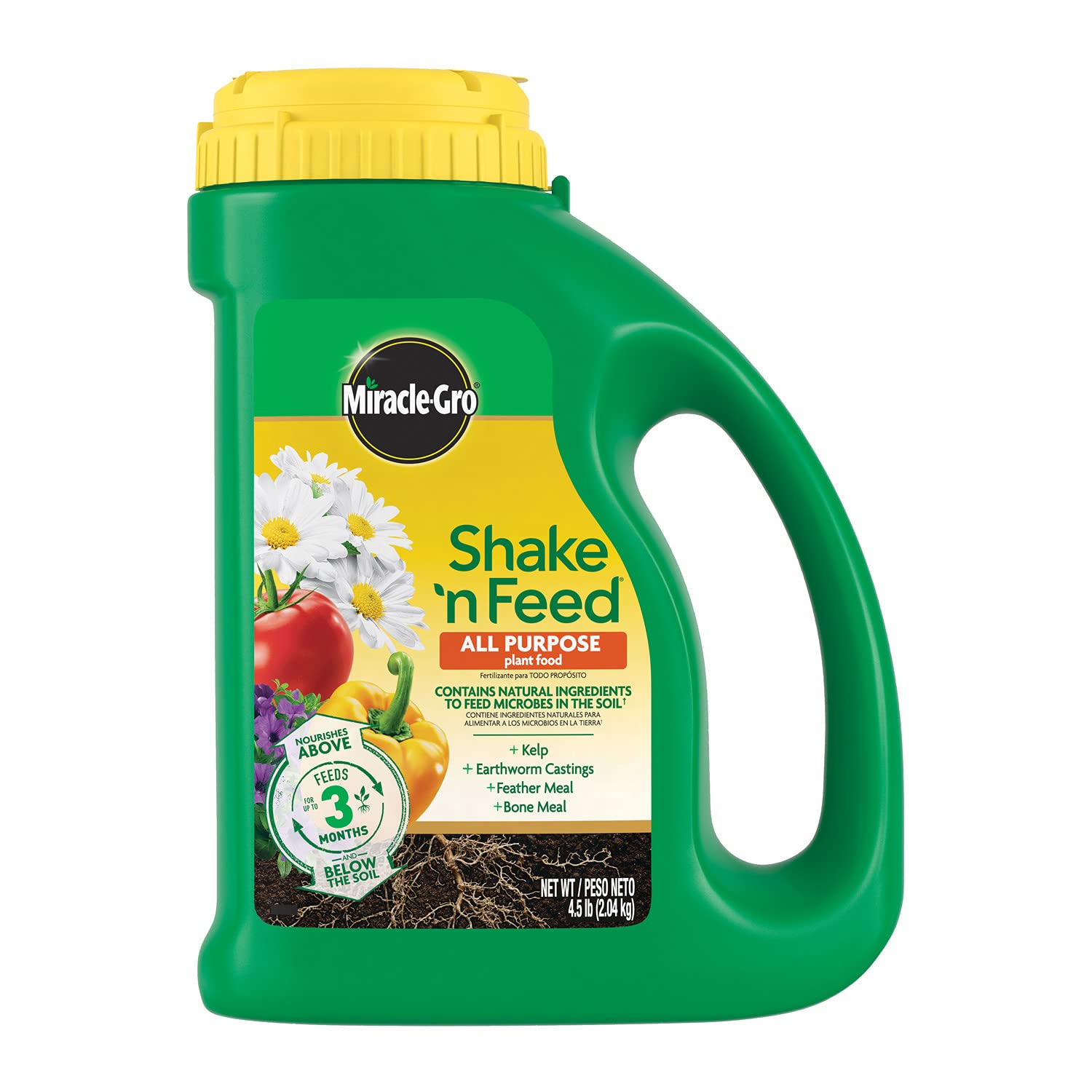
A slow-release granule that feeds up to three months—handy when I want steady nutrition without frequent feeding.
Why I picked it: Timed-release convenience that reduces how often I fertilize.
Best for: Homeowners who prefer quarterly feeding and less fuss.
Pay more for multi-month convenience.
Pros
- Feeds up to three months
- No mixing, minimal effort
- Feeds soil microbes too
Cons
- Smaller coverage per container
- Slower initial green-up
My take
I use Shake 'N Feed when I want a hands-off lawn schedule. It’s granular, feeds for up to three months, and I don’t need to babysit applications every few weeks.
Because it nourishes soil microbes, I find my turf holds moisture better and becomes more resilient between watering cycles. For small lawns or targeted beds it’s perfect; for large lawns I treat it as part of a mixed program.
Expect a steadier, less dramatic green-up than liquid or soluble feeds, but the trade-off is consistent nutrients and fewer application days on the calendar.
4. Wiggle Worm 100% Pure Organic Worm Castings (4.5 lb.) – Best Organic Soil Builder
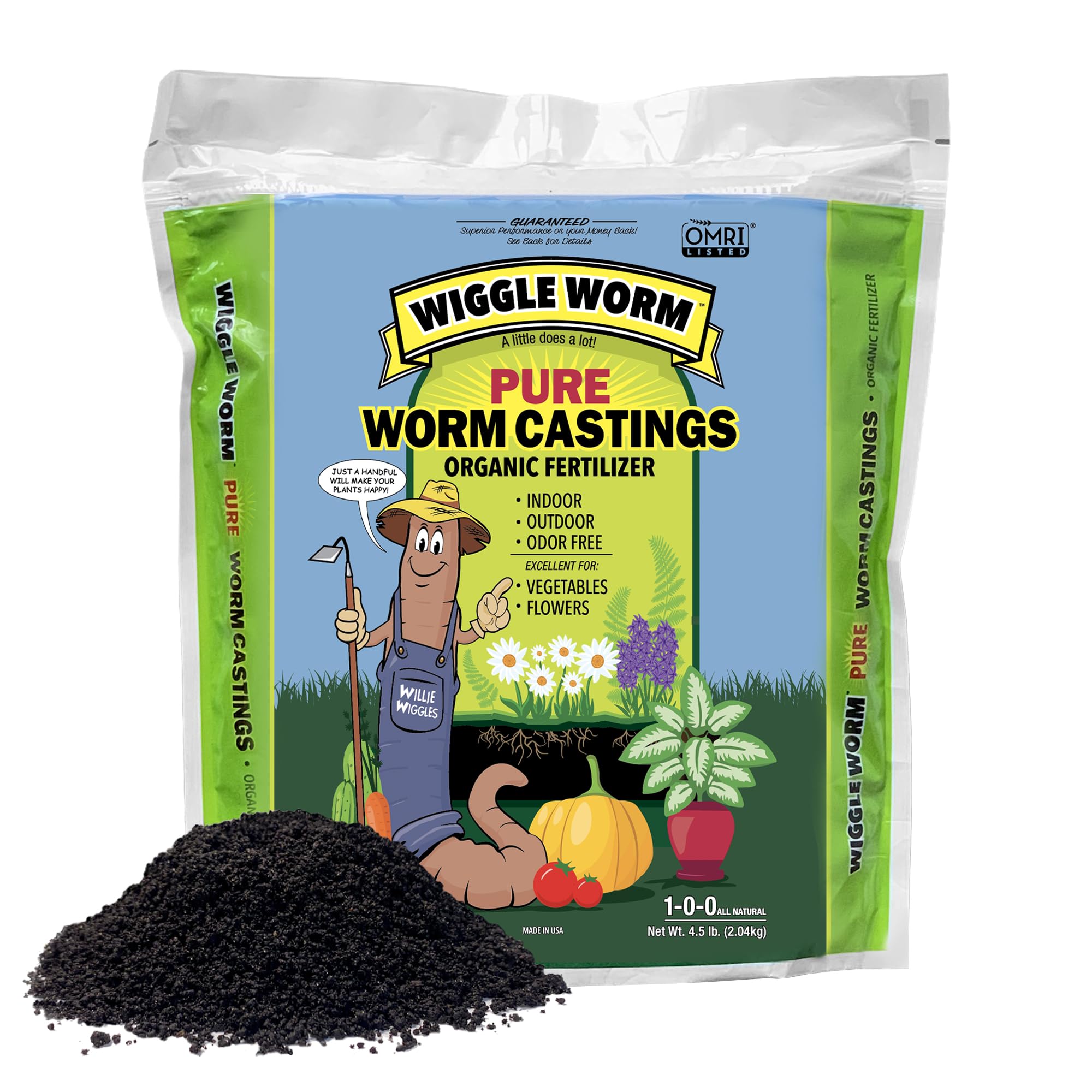
OMRI-listed pure worm castings I use as a topdress or transplant amendment to improve soil structure and root health.
Why I picked it: Mineral-dense, organic way to boost soil life and root development.
Best for: Topdressing lawns, seeding, and improving compacted soil.
Small amounts deliver long-term soil benefits.
Pros
- OMRI-listed organic
- Improves soil aeration
- Very nutrient-dense
Cons
- Works slowly over time
- Not a quick green-up solution
My take
I consider worm castings a foundational product for soil health. I sprinkle a handful or half a cup into holes during transplanting and use light topdressing on lawn patches to encourage better root systems.
The product doesn’t act like a fast-acting fertilizer—you won’t see an instant green flash—but over weeks my turf and plants show steadier growth, improved drainage, and deeper rooting.
Because it’s concentrated, a little goes a long way. I rely on it where I want to improve soil structure or when I’m overseeding and want the young roots to establish in richer, livelier soil.
5. Neptune's Harvest Fish & Seaweed Liquid Fertilizer (36 oz.) – Best Organic Liquid
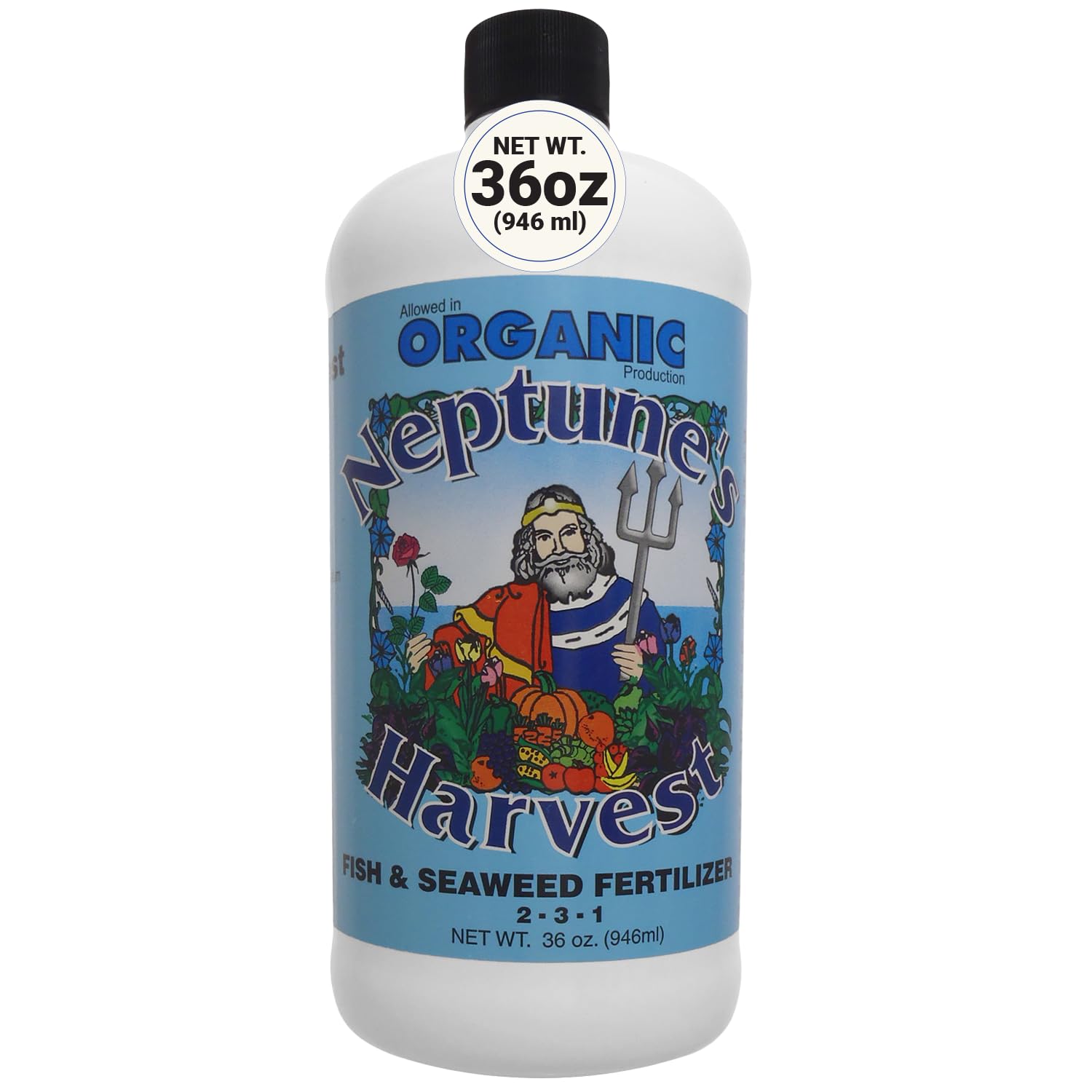
A fermented fish-and-seaweed liquid I use for foliar feeding and soil drenches to boost soil biology and plant vigor.
Why I picked it: Plant-ready organic nutrients plus seaweed biostimulants for improved soil and plant health.
Best for: Foliar sprays, transplants, and improving plant flavor and vigor.
Premium organic liquid with concentrated benefits.
Pros
- Plant-ready organic nutrients
- Good as foliar or soil drench
- Supports soil microbes
Cons
- Has a fishy smell initially
- Requires regular applications
My take
I use Neptune’s Harvest when I want an organic liquid feed that both feeds plants and rebuilds soil life. The blend of hydrolyzed fish and seaweed is easy to dilute and apply as a drench or foliar spray.
For lawns I add it as a periodic soil drench during active growth to support root health and microbial activity. It’s especially useful after aeration or when transplanting sod and plugs.
Because it’s organic, I apply it more frequently at lighter rates. My vegetables and turf respond with stronger color and improved vigor, and it’s safe around children and pets once applied and watered in.
6. Wiggle Worm 100% Pure Organic Worm Castings (15 lb.) – Best Bulk Organic
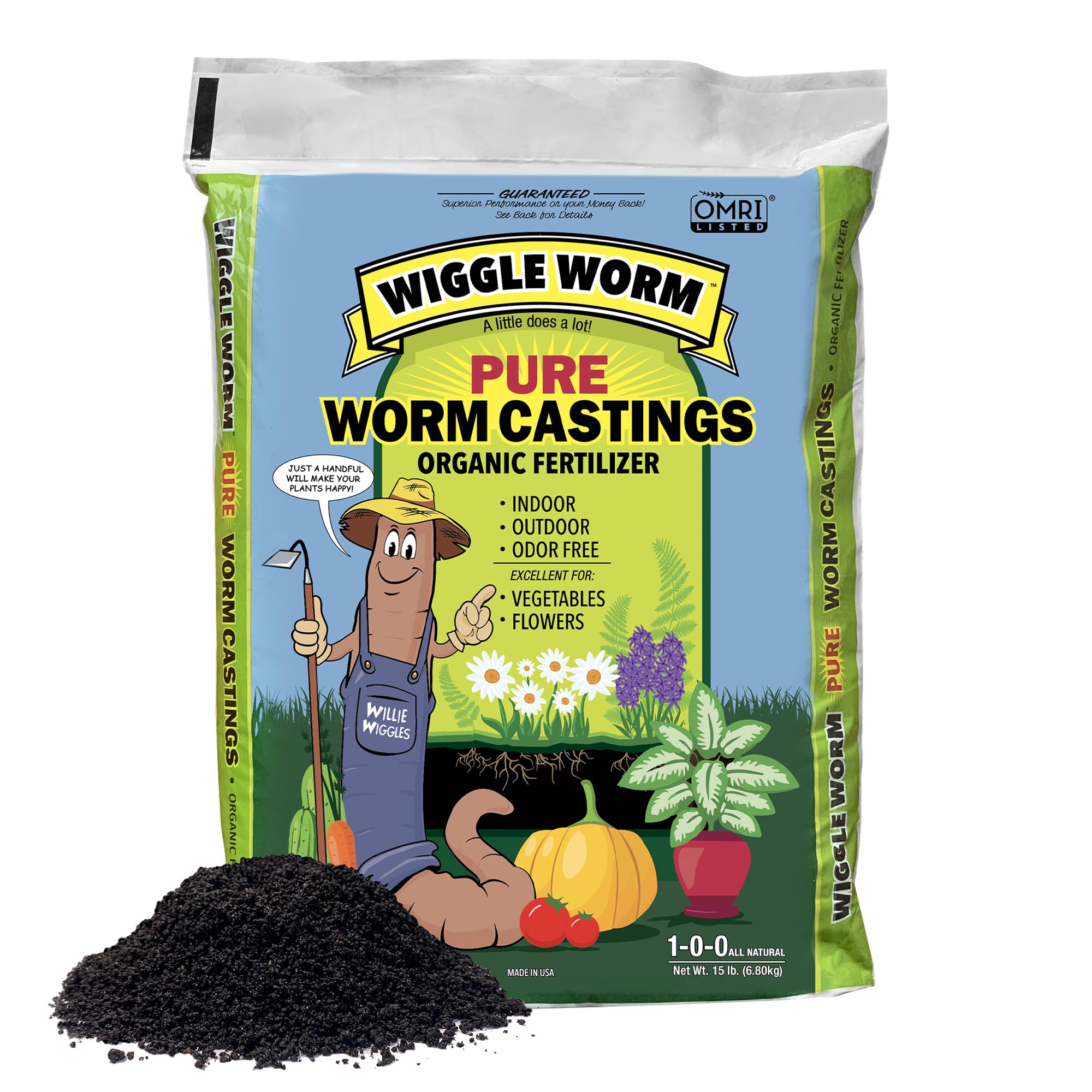
All the benefits of worm castings in a bulk bag I use for larger lawns and extensive topdressing.
Why I picked it: Bulk quantity for seasonal topdressing and large-area soil improvement.
Best for: Large yards, repeated topdressings, and long-term soil building.
Bulk format reduces per-application cost for large areas.
Pros
- Large quantity for big jobs
- Boosts long-term soil health
- OMRI-listed organic
Cons
- Heavier to handle
- Slow to show results
My take
When I’m working on larger areas or doing seasonal topdressing, the 15-pound bag is the practical choice. I blend it into topsoil, use it when overseeding, and scatter it thinly over tired lawn patches.
Plants respond well over time: richer color, less compaction, and better moisture management. The bulk size makes repeated applications economical and keeps me stocked for the season.
I still pair it with targeted fertilizers when I need immediate greening, but for long-term improvement of lawn soil, it’s one of my go-to organic tools.
How I Choose Lawn Fertilizer
NPK and What It Means for Grass
I always check the NPK numbers: nitrogen (N) for leaf growth and green color, phosphorus (P) for roots and establishment, and potassium (K) for stress tolerance. For an established lawn I lean toward higher nitrogen formulations for visible greening.
If I’m seeding or establishing turf, I prioritize some phosphorus to help root development, then switch to higher nitrogen once the grass is established.
- Higher N = quicker green-up and top growth
- Moderate P helps seedling root establishment
- K improves drought and disease resilience
Format: Soluble, Slow-Release, Liquid, or Organic
I match product format to my schedule. Water-soluble fertilizers give fast results but require frequent reapplication. Slow-release granules deliver a steadier feed for low-maintenance lawns. Liquid organics and foliar feeds are my choice for boosting soil biology. Worm castings are my long-game soil improver.
For most homeowners who want less frequent work, a slow-release granular is convenient. For quick fixes before an event or to green up stress spots, I use soluble feed.
- Soluble: immediate impact, repeat often
- Slow-release: fewer applications, steadier feed
- Liquid organics: soil biology and foliar benefits
- Worm castings: long-term soil health
Timing and Application Tips I Follow
I apply fertilizer when the lawn is actively growing and soil temperatures are appropriate—usually spring and early fall for cool-season grasses, late spring through summer for warm-season lawns. Avoid feeding before prolonged drought or extreme heat.
I focus application at the root zone, water lightly after granular applications as instructed, and never exceed label rates. For soluble feeds, I measure carefully to avoid overfeeding.
- Feed during active growth periods
- Water in granular feeds per label
- Don’t over-apply; follow mixing instructions
Choosing Organic vs Synthetic
I use organics like fish and seaweed or worm castings when I want to build soil biology and reduce chemical inputs. Organics often work slower but improve structure and microbial life.
Synthetic or high-nitrogen soluble products give fast cosmetic results. I combine approaches: organics for soil health and targeted synthetics for quick corrections when needed.
- Organics = soil-building, slower acting
- Synthetics = fast results, precise nutrient delivery
- Combining formats often delivers the best balance
Frequently Asked Questions
Which product do I use for an immediate green-up?
I choose the water-soluble Miracle-Gro formulas for immediate green-up because the high nitrogen content shows results within days when applied correctly.
Can I use worm castings on a lawn?
Yes—I topdress thinly or mix into soil when overseeding. Worm castings improve structure and microbial life, helping roots establish more quickly over time.
How often should I apply a slow-release granule?
I reapply the Shake 'N Feed-style slow-release every three months or according to label directions for steady nutrition without frequent feeding.
Is the fish-and-seaweed liquid safe around kids and pets?
I treat Neptune’s Harvest as a safe organic input; once applied and watered in, it’s suitable for family and pets, and I follow dilution rates for the intended use.
Final Take
I approach lawn feeding as a toolkit: fast-acting soluble feed for emergency green-up, slow-release granules for low-maintenance care, liquid organics for soil biology, and worm castings for long-term structure. Each product here has a role depending on how quickly I want results and how much I prioritize soil health.
Pick the format that matches your schedule and objectives, and combine products when needed. I alternate organics and targeted synthetics to keep turf healthy, green, and resilient all season.
