
I tested six compact brush sets and a watercolor brush-pen kit to find tools that deliver precision, durability, and travel-friendly convenience. Here are the ones I reach for depending on the job.
I lean on compact brush sets for most of my watercolor and mixed-medium work because they cover detail without crowding my kit. Over several months I tested each option for tip retention, paint loading, comfort, and portability.
In this roundup I concentrated on what actually matters in the studio: how a brush feels in my hand, how reliably the tip returns after cleaning, and whether the set contains the sizes I need for specific tasks.
I weighed variety, tip precision, and portability. If I need dozens of tiny liners I pick micro-detail sets; for travel or plein air I opt for compact kits with cases or pens that don’t require water jars.
1. BOSOBO Paint Brushes Set, 2 Pack 20 Pcs Round-Pointed Tip Nylon Hair Artist – Best Value Set
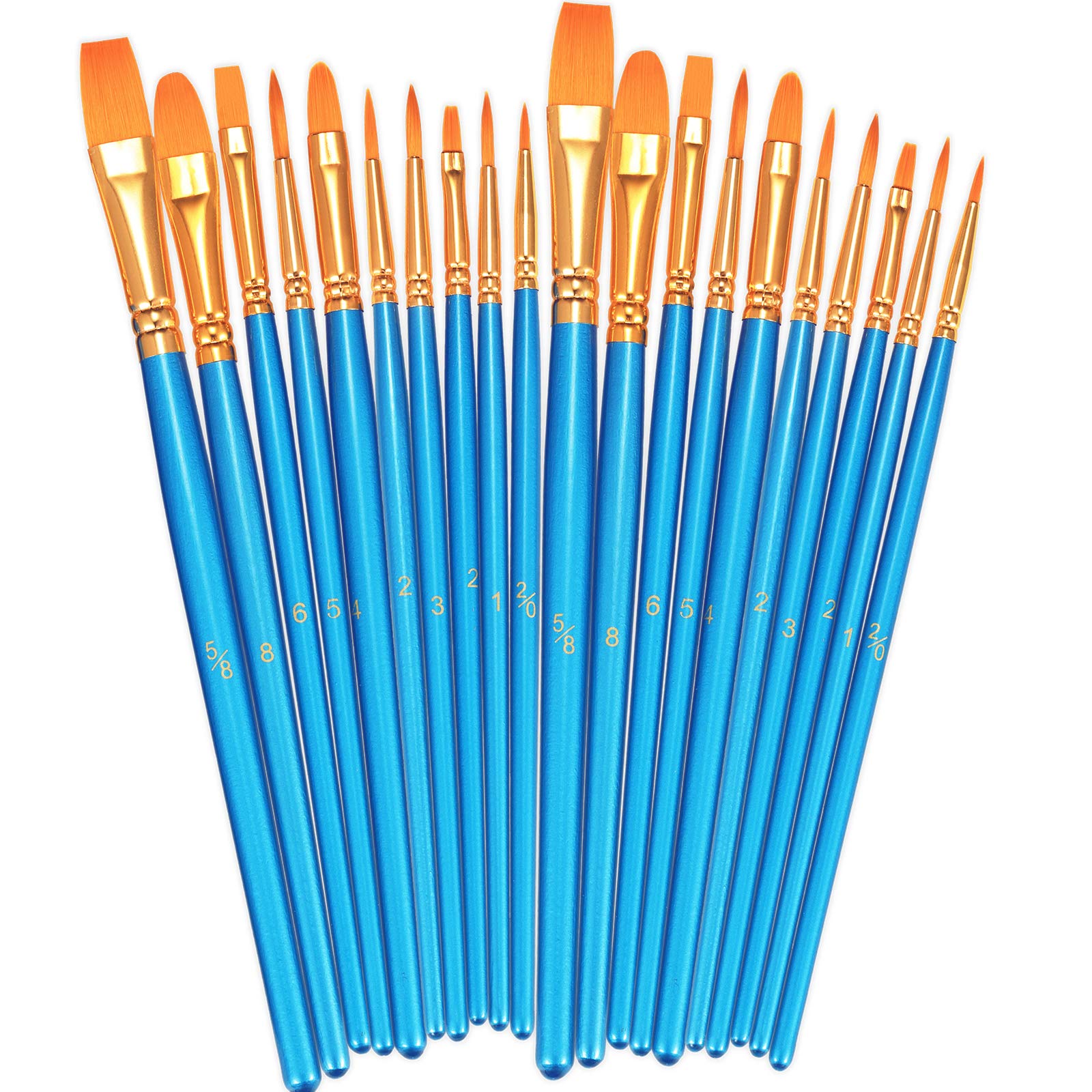
A generous 20-piece combo of round-pointed nylon brushes that works for acrylics, oils, and watercolors.
Why I picked it: I picked it for its breadth of sizes and reliable synthetic tips.
Best for: Everyday practice, classroom use, and beginners needing a full size range.
Extremely affordable for the number of brushes included.
Pros
- Wide range of sizes
- Synthetic bristles spring back well
- Comes as two matching packs
- Comfortable wooden handles
Cons
- Basic hobby-grade finish
- Not ideal for professional watercolors
My take
I like this set when I want a lot of usable brushes without fuss. The 20-piece selection covers everything from micro details to small washes, and the round-pointed nylon tips hold their shape after repeated washes.
The ferrules are rust-proof and the handles sit comfortably in my hand for long sessions. I’ve used them with acrylics, watercolors, and even on small canvases for mixed-media pieces.
These aren’t high-end kolinsky brushes, but for sketching, practice, and crafts they punch well above what the price suggests. I also appreciate the variety—there’s always a brush that fits the precise mark I need.
2. Golden Maple Detail Paint Brushes Set 10pcs Miniature Brushes for Fine Detailing – Best for Miniatures
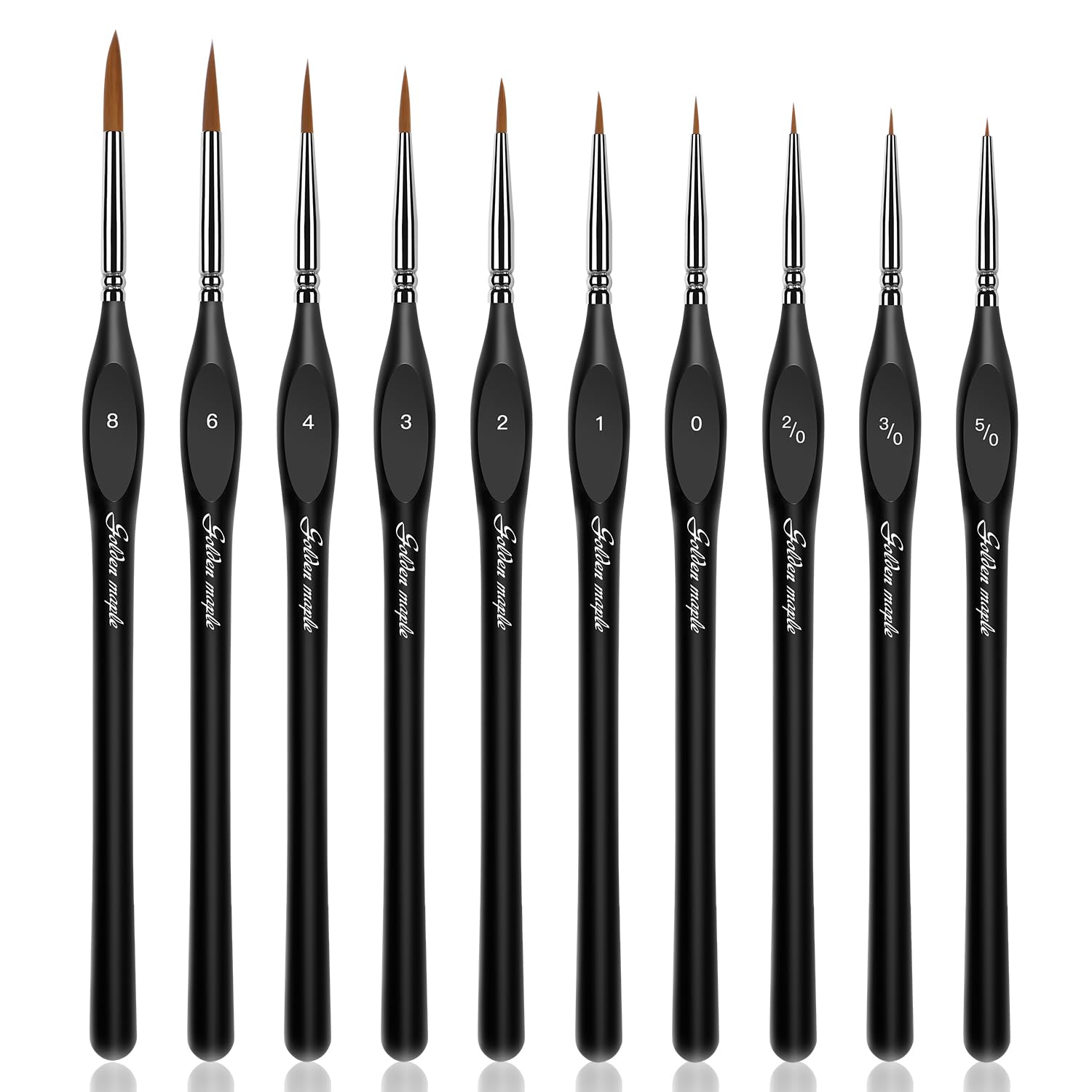
A focused 10-piece miniature set with triangular easy-grip handles and protective tubes.
Why I picked it: I chose it for miniature work thanks to the tiny sizes and protective sleeves.
Best for: Miniatures, models, nail art, and any fine-detail painting.
Reasonably priced for a specialty detail set.
Pros
- Very fine tip sizes
- Comfortable triangular handles
- Protective storage tubes included
Cons
- Limited to very small sizes
- Not for broad washes
My take
When I work on tiny faces or armor plates, these brushes are my go-to. The size range—down to 5/0—lets me pull hair-by-hair strokes and crisp edges on models.
The triangular handles reduce slipping and give me better control during lengthy detailing sessions. I also like that each brush comes with a protective sleeve; it keeps the tips intact between uses.
Because the set focuses on micro sizes, I pair it with a larger round or wash brush when I need backgrounds or larger coverage, but for precision it’s hard to beat this kit.
3. Nicpro 15 PCS Micro Fine Detail Paint Brush Set, Small Miniature Fine Tip Detail Brushes Kit – Best for Micro Detail
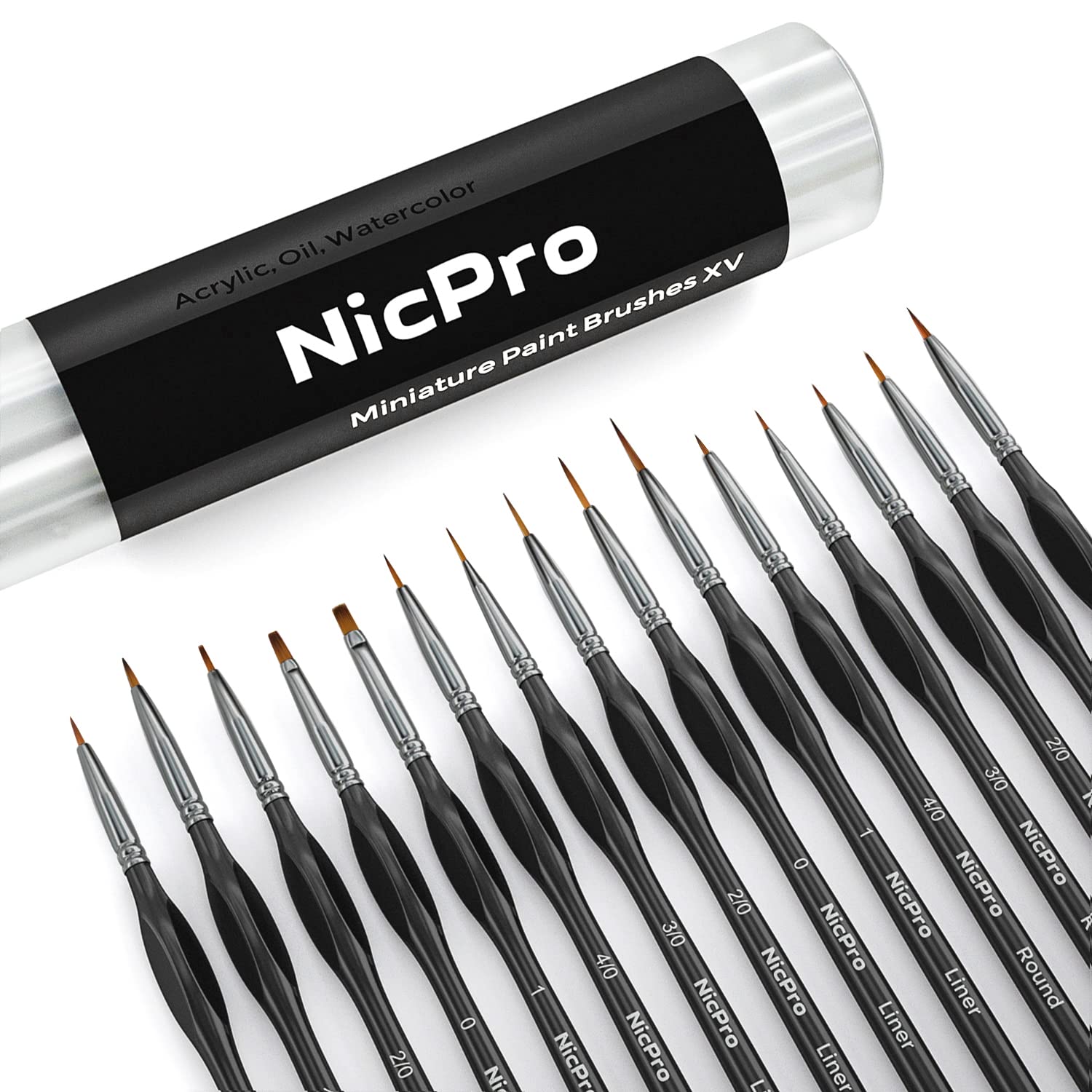
A comprehensive 15-piece micro set with ergonomic triangular handles and protective storage.
Why I picked it: I needed an all-in-one detail kit with reliable tips and ergonomic grips.
Best for: Intricate liners, hair strokes, and paint-by-number projects.
A solid mid-range option for detail work.
Pros
- Extensive micro-size selection
- Ergonomic triangular handles
- Protective plastic holder and velvet bag
Cons
- Some flat shapes less useful
- Not natural-hair performance
My take
I reached for the Nicpro set whenever a project demanded micro-control. The liners and rounds load paint consistently and let me lay thin, even lines without dragging.
Packaging impressed me—every brush is protected during shipping and the felt drawstring bag is handy for storage. The triangular grip keeps my hand from cramping during long detailing sessions.
These feel like the most complete starter-to-advanced detail set I’ve used: durable, easy to clean, and reliable for complex miniature and model work.
4. Artist Paint Brush Set of 18 – Includes Spatula Palette Knife, Sponge & Organizing Case – Best All-in-One Kit
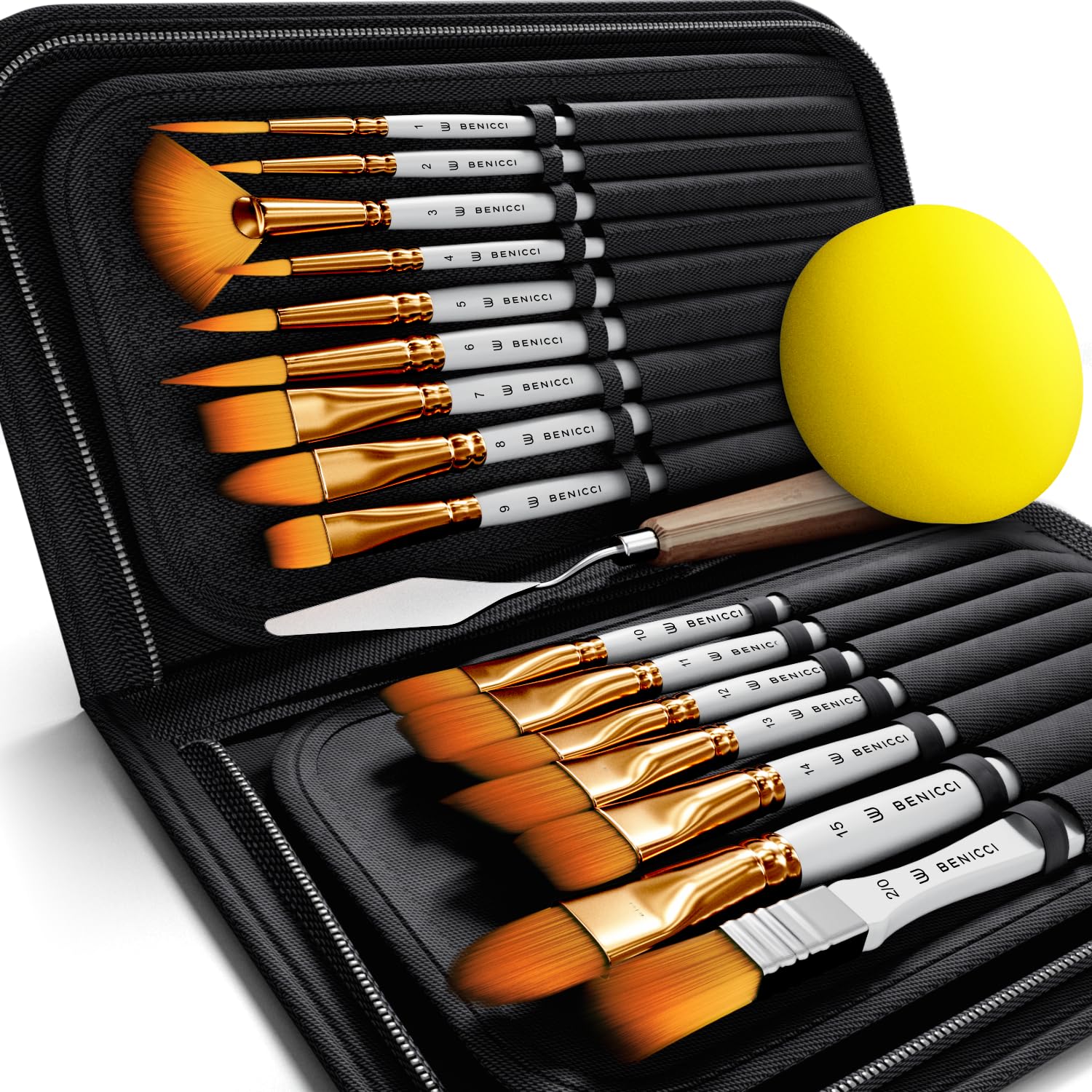
A versatile 18-piece kit with multiple brush shapes, a palette knife, sponge, and a pop-up case.
Why I picked it: I wanted a single kit that covers most studio tasks and travels well.
Best for: Beginners, mixed-media work, and portable studio setups.
Good value for a comprehensive starter kit.
Pros
- Wide variety of brush shapes
- Includes palette knife and sponge
- Handy pop-up organizing case
Cons
- Occasional loose handle reported
- A few brushes feel student-grade
My take
This is my go-to when I want a single kit to handle everything from glazing to texture work. The mix of flats, filberts, fans, and liners covers most techniques I use during a session.
The zip case doubles as a pop-up stand which I find useful when swapping brushes quickly outdoors or in small studios. The palette knife and sponge are welcome extras that extend the set’s versatility.
A couple of brushes felt a bit loose out of the box in my experience, so I recommend checking each ferrule before heavy use. For hobbyists and beginners the set offers a very complete workflow.
5. 18 Piece Paint Brush Set, ARTIFY 15 Acrylic Paint Brushes, Palette Knife, and 2 Sponges – Best for Travel
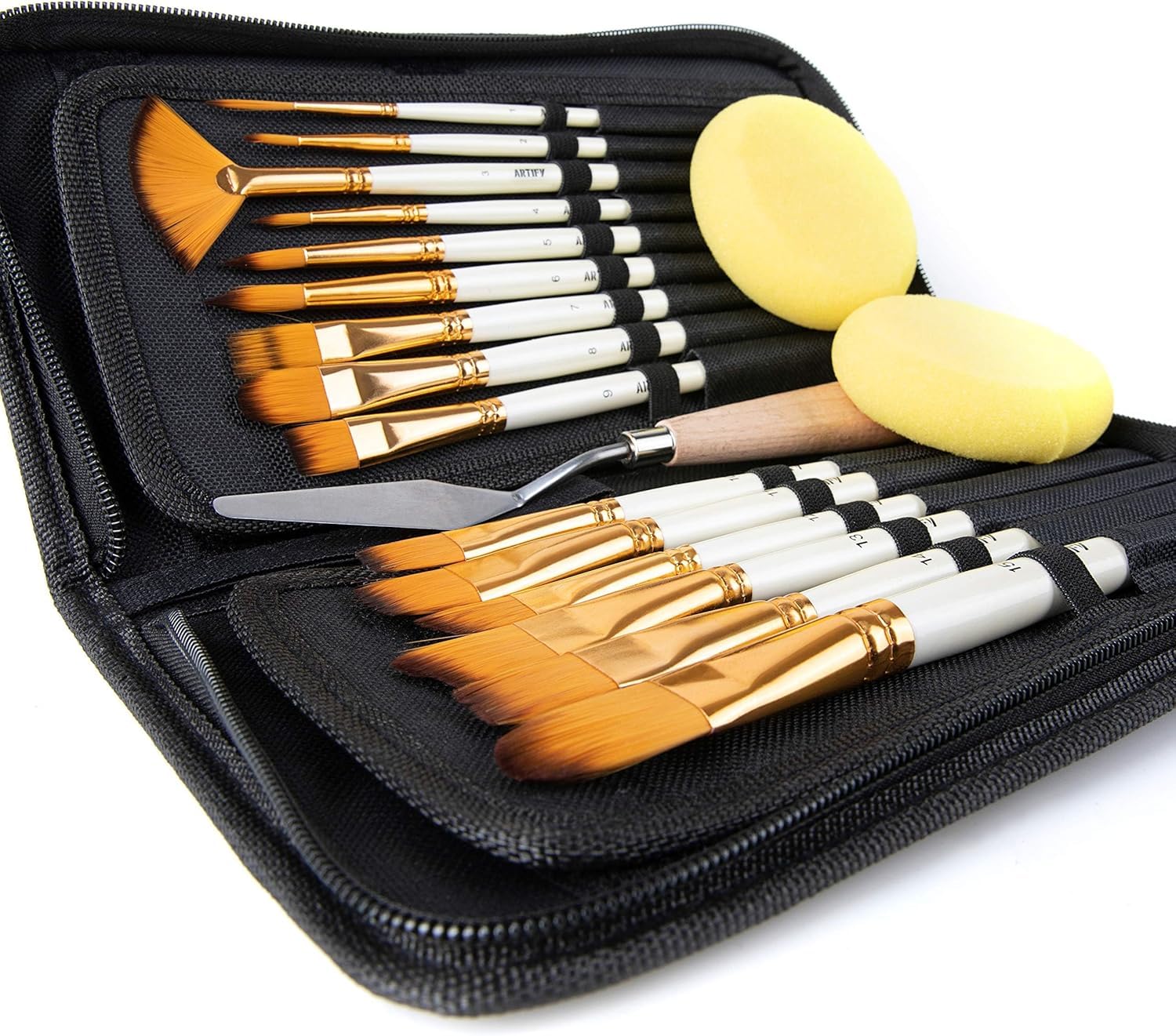
A travel-friendly 18-piece set with reinforced ferrules, a pop-up carrying case, and extras for on-the-go painting.
Why I picked it: I picked it for durability and the thoughtful carrying case when I travel.
Best for: Plein air, travel kits, and artists who need portable organization.
Mid-range value focusing on portability and durability.
Pros
- Reinforced ferrules resist loosening
- Carrying case doubles as a stand
- Includes palette knife and sponges
Cons
- Bristles feel stiff at first
- One brush may need replacement
My take
I carry this set in my travel bag because the case protects the brushes and converts into a handy stand while I paint outdoors. The construction feels sturdy and the handles are comfortable for quick sessions.
Initially some brushes were a touch stiff; a few washes softened them to a more usable feel. In one instance a fan brush arrived unusable, but I received a replacement which resolved the issue.
Overall I appreciate the water-resistant coating on the handles and the adhesive reinforcement at the ferrules—things that matter when brushes get frequent cleaning on the road.
6. CHROMATEK 54 Watercolor Pens Set | 4 Aquapens & 50 Unique Colors – Best Brush-Pens Alternative
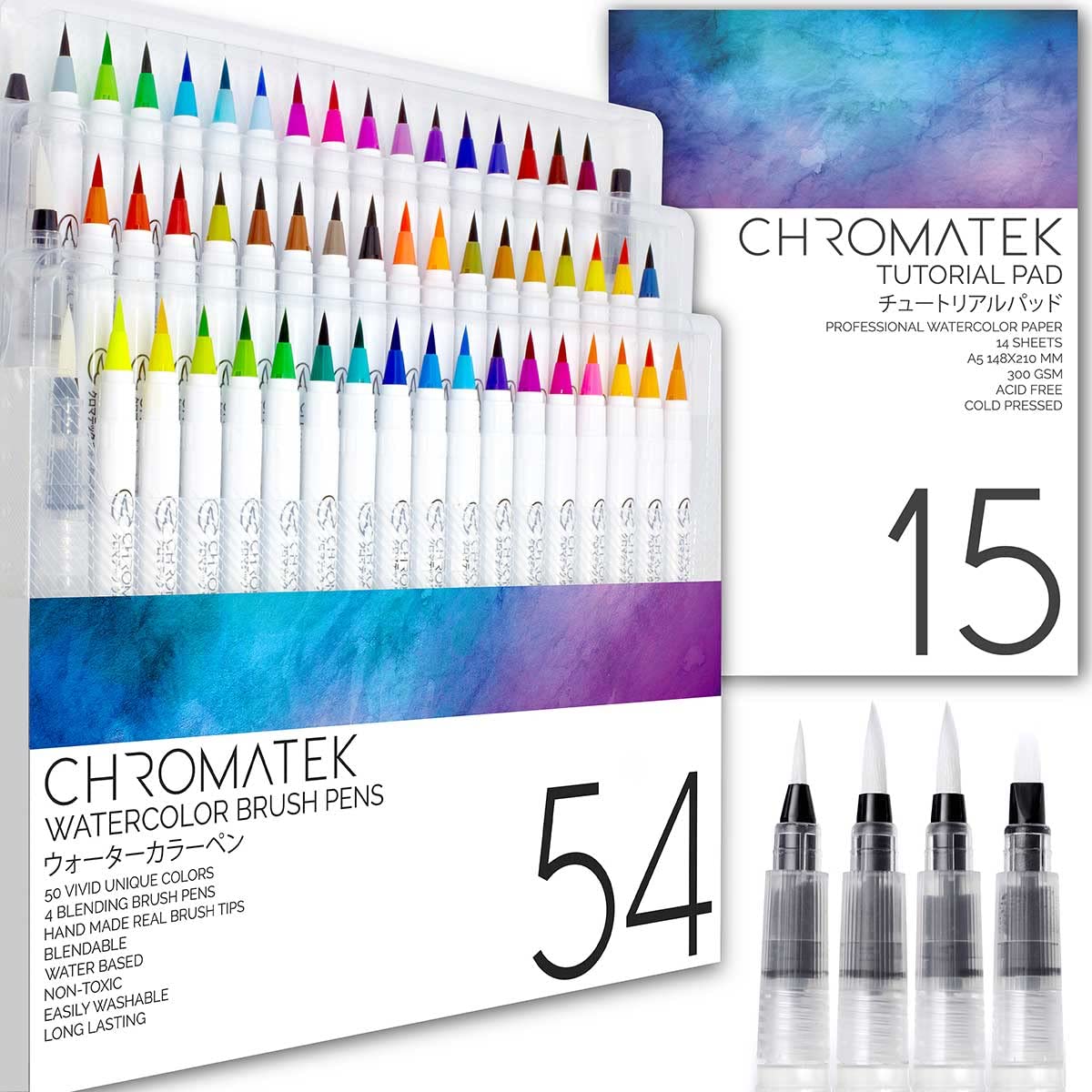
A brush-pen system with 50 vibrant colors, four refillable aqua brushes, a watercolor pad, and an extensive tutorial series.
Why I picked it: I wanted a portable, no-jar setup that blends like real watercolors.
Best for: Travel sketching, quick color studies, and learners following guided tutorials.
Higher-priced but packed with colors and learning resources.
Pros
- Vivid, blendable pigments
- Includes four refillable aqua brushes
- Comes with tutorial pad and lessons
Cons
- Not pigment-based lightfastness
- Occasional dried-out pen possible
My take
I use these pens when I need the freedom of watercolor without hauling a palette and jars. The colors blend effortlessly on good watercolor paper and the aqua brushes let me add water for glazing and gradients.
The tutorial pad and online lessons turned out to be genuinely useful; I progressed faster after following the structured exercises. The 50-color range gives me great flexibility for studies and finished pieces.
These pens aren’t pigment-based so I don’t treat them like archival materials, but for sketching, studies, and teaching exercises they’re a brilliant, portable alternative to traditional tubes and pans.
How I Choose Brushes and Pens
Brush Hair and Tip Performance
I prioritize synthetic versus natural hair based on the work I do. For detailed, repeatable strokes and easy cleaning, high-quality synthetic nylon is my default; it springs back well and tolerates heavy cleaning. For wet-on-wet watercolor washes where hair memory matters, I’ll upgrade to natural-hair or blended options.
Tip shape determines the marks I can make. Rounds and liners are essential for hair, lashes, and fine lines; flats and filberts handle washes and edges.
- Pick synthetic for durability and easy maintenance
- Choose rounds/liners for detail, flats/filberts for washes
- Check that tips return to a fine point after cleaning
Handle Comfort and Control
I look for handles that feel natural in my grip. Triangular or ergonomic shapes reduce hand fatigue during long detail sessions. Short handles are great for close tabletop work; longer handles suit easel and plein-air painting.
Balance matters: a well-balanced brush makes delicate strokes easier and reduces wrist strain.
- Short handles for tabletop detail
- Long handles for easel and outdoor work
- Ergonomic grips help reduce hand cramping
Set Composition and Portability
I choose sets that include the sizes I actually use. A dedicated miniature or micro-detail set is better than a general kit if you do fine work. For travel, I prefer cases that protect tips and double as stands.
Watercolor brush pens are invaluable for sketch travel—just watch for lightfastness and occasional dried tips in transit.
- Match set sizes to your typical projects
- Favor protective cases for travel
- Consider pen sets for portable watercoloring
Care and Longevity
I clean brushes immediately after use, reshape tips, and store brushes head-up or flat with protective sleeves. Avoid leaving brushes soaking on their heads; that’s the fastest way to ruin ferrules and handles.
If a brush feels stiff at first, multiple gentle washes often soften the bristles without damage.
- Rinse promptly and reshape tips
- Store brushes head-up or in sleeves
- Avoid prolonged soaking of ferrules
Frequently Asked Questions
Are synthetic brushes okay for watercolor?
Absolutely. I use high-quality synthetic brushes for most watercolor work because they hold paint well, clean easily, and return to a fine point after reshaping.
How do I keep fine brush tips from splaying?
I rinse with warm soapy water right after painting, reshape the tip with my fingers, and store brushes vertically or in protective tubes to maintain point and prevent splaying.
When should I use brush pens instead of traditional brushes?
I reach for brush pens for fast studies, travel, or when I want portable blending without jars. For archival, pigment-based work I prefer traditional tubes and good watercolor paper.
Final Take
I keep multiple sets on hand because no single kit covers every task. For detailed miniature work I grab the Golden Maple or Nicpro sets; for value and everyday practice I rely on the BOSOBO two-pack.
When I travel, the ARTIFY set and the Chromatek pens earn a spot in my bag. Choose based on the marks you need to make, the places you paint, and how much gear you want to carry.
