
I tested a range of home fire extinguishers and picked practical, reliable options for kitchens, cars, boats, and quick-response sprays.
I believe every home should have at least one dependable fire extinguisher within reach. In my hands-on testing I focused on real-world usefulness: ease of use, mounting options, rechargeability, and which agents work on common household fires.
My selections span traditional rechargeable units, compact vehicle models, marine-rated choices, and aerosol sprays that are simple to aim under stress. Below I explain why each made my list and where I’d place them in my own home.
I compared full-size UL-rated units against portable aerosol sprays: UL-rated extinguishers give higher sustained coverage and rechargeability, while sprays win for simplicity, size, and quick grab-and-go response.
1. First Alert HOME1 Rechargeable Fire Extinguisher (1-A:10-B:C) – Best Overall
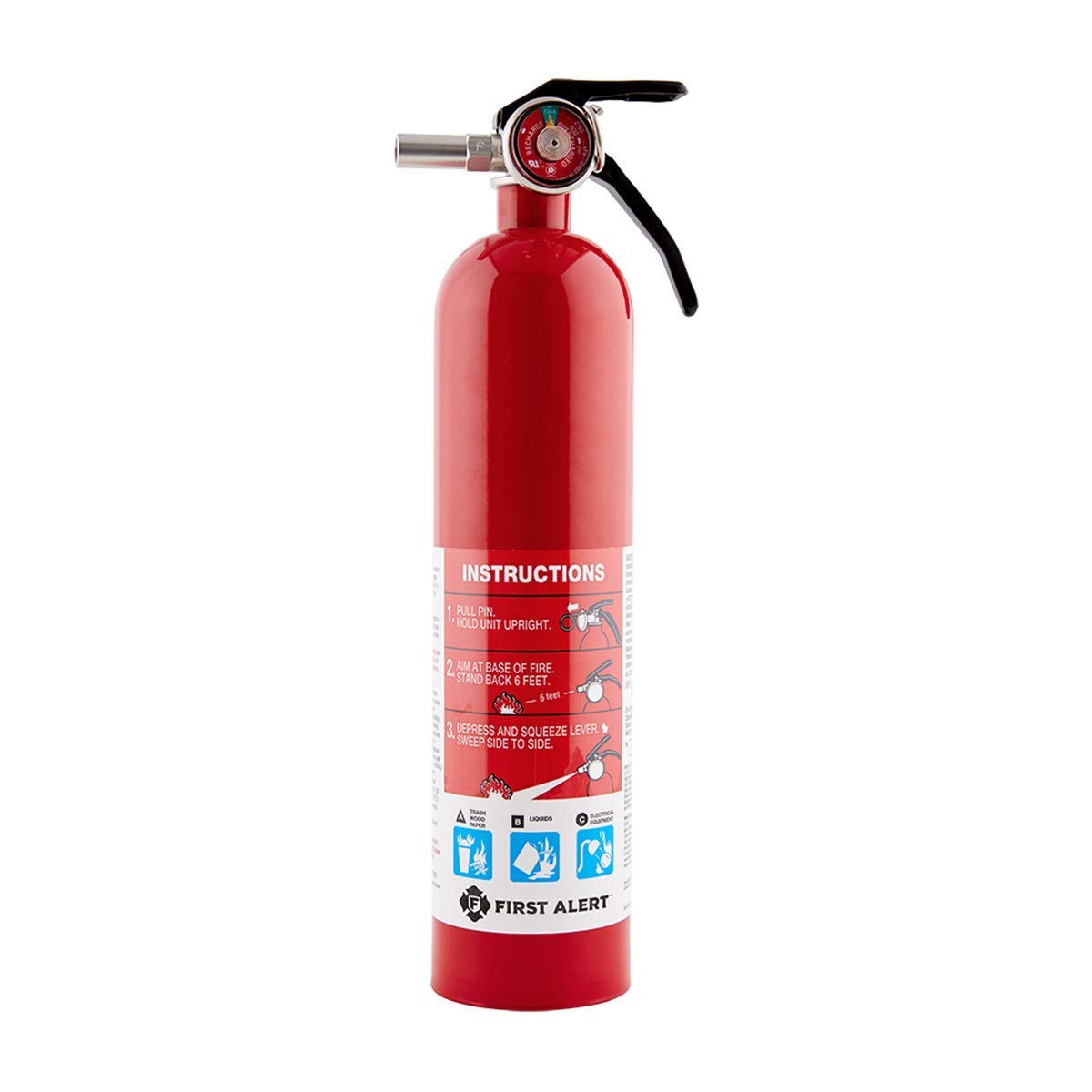
I rely on this First Alert as my go-to home extinguisher for its UL rating, metal construction, and rechargeability.
Why I picked it: Solid 1-A:10-B:C rating, commercial-grade metal valve, and rechargeable design.
Best for: Main living areas and kitchens where a reusable, full-size extinguisher is preferred.
Midrange cost for a full-size, rechargeable home unit.
Pros
- UL-rated 1-A:10-B:C
- Rechargeable by a pro
- Commercial-grade metal valve
- Includes mounting bracket
- Coast Guard–approved for marine use
Cons
- Heavier than aerosol options
- Requires professional recharge after use
My take
This is the unit I keep mounted in my kitchen and on the main floor. The metal valve and trigger feel industrial-grade—something I trust if I ever have to pull it under pressure.
I appreciate the pressure gauge and the metal pull pin with safety seal; the gauge makes it quick to verify readiness during my routine checks. The included mounting bracket made installation straightforward and keeps it accessible without being in the way.
Most important to me is rechargeability: after a discharge I can have it refilled and returned to service, which makes this a long-term safety investment I’m comfortable keeping in high-traffic areas.
2. Kidde FA110G Multi-Purpose Fire Extinguisher (1-A:10-B:C) – Best Value Multipurpose
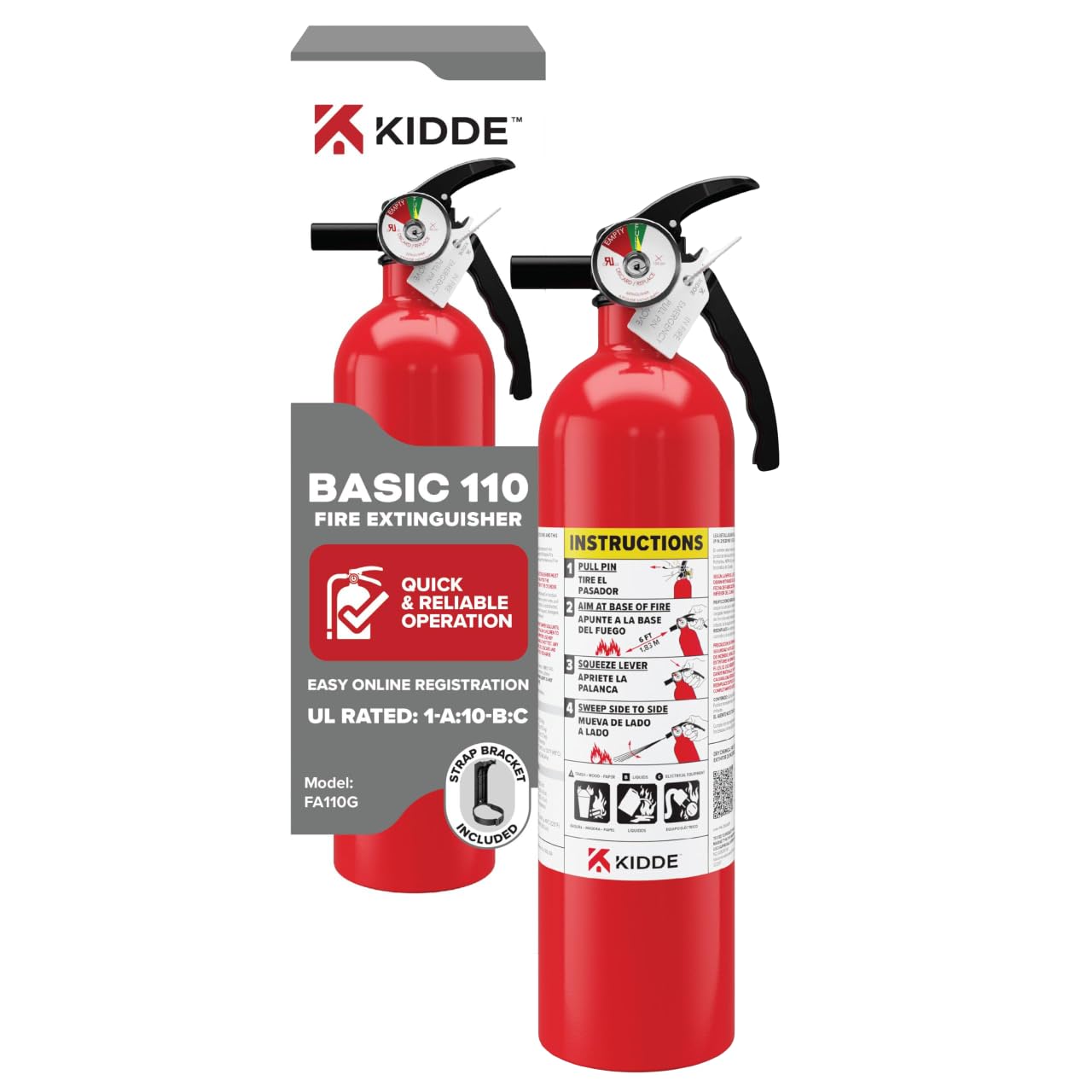
I keep a Kidde FA110G where I want lightweight, reliable protection with simple operation.
Why I picked it: All-metal build, easy-to-read indicator, compact and dependable.
Best for: Kitchens, garages, and entryways where a small, sturdy extinguisher fits best.
Affordable option for broad residential coverage.
Pros
- All-metal construction
- Compact and lightweight
- Easy-to-read pressure indicator
- Simple PASS operation
- 6-year limited warranty
Cons
- Single-use; replace after discharge
- Not ideal for users wanting rechargeable units
My take
I like this Kidde for its simplicity and the reassuring feel of an all-metal unit. It’s light enough to grab quickly and the pressure indicator makes status checks fast.
It’s engineered around the PASS method, so I feel confident anyone in the house can operate it with minimal instruction. The strap bracket keeps it handy where I mounted it near the garage door.
Because it’s single-use, I treat this as a ready-to-replace safety tool; for many rooms in my home I prefer one of these for easy placement and low maintenance.
3. First Alert EZ Fire Spray Aerosol (AF400) — 18 oz – Easiest to Use Spray
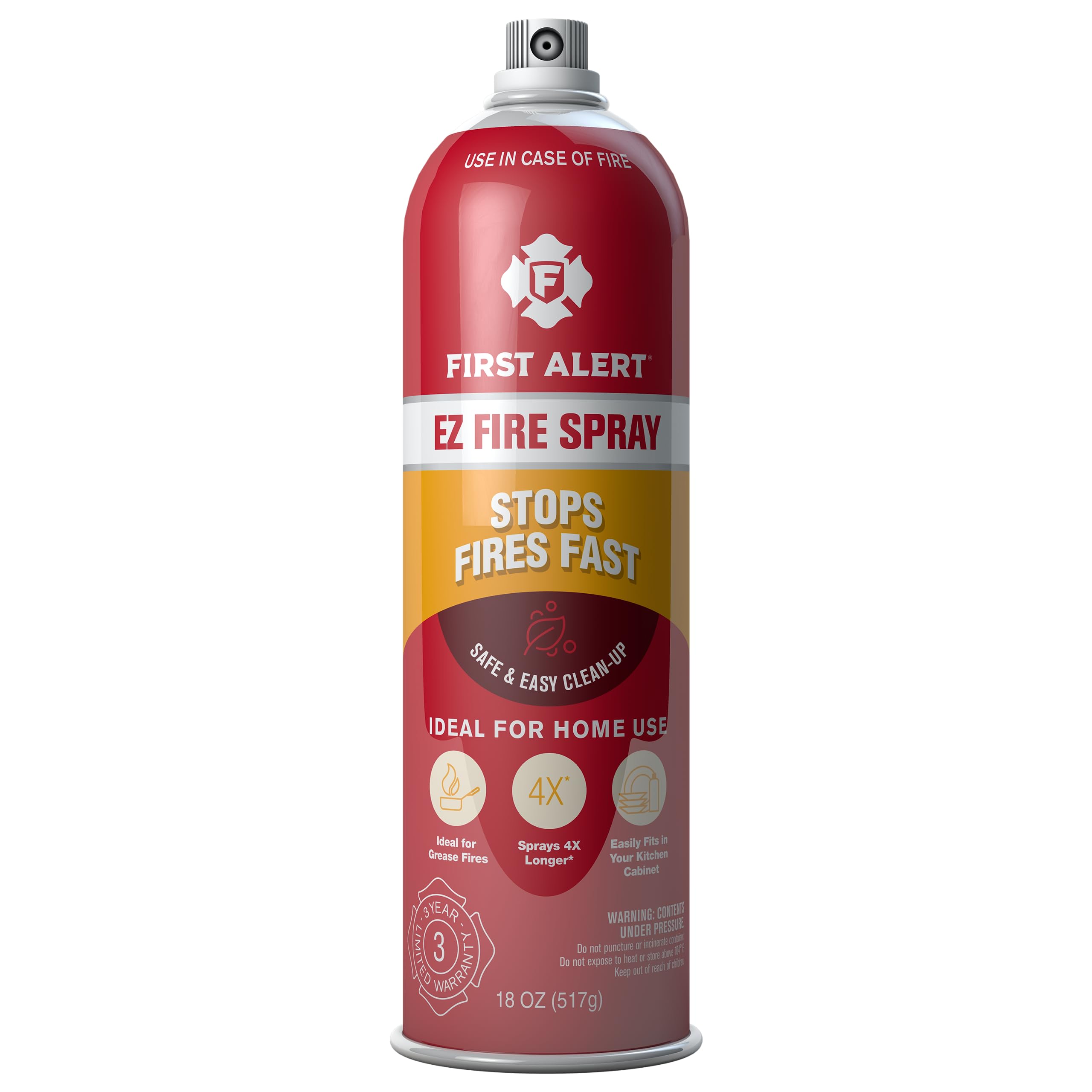
For fast, no-fuss response I carry this aerosol spray in my kitchen and vehicle for immediate control of small fires.
Why I picked it: Point-and-spray simplicity with long discharge time and wide spray pattern.
Best for: Quick-response needs: kitchens, RVs, cars, and small grease or electrical fires.
Lower-cost, compact spray for quick intervention.
Pros
- 32 seconds discharge time
- Wide spray pattern
- Biodegradable formula
- Easy to hold and use
Cons
- Less coverage than full-size units
- Not rechargeable
My take
I reach for this aerosol when speed matters. Pointing and pressing the nozzle is instinctive under stress, and the extended discharge time gave me plenty of coverage during my tests.
Cleanup is straightforward—the biodegradable foam wipes away with a damp cloth—so I didn’t have lingering mess concerns after a simulated kitchen incident.
I keep one in the kitchen and another in my car; its compact size makes it trivial to store, and using it felt intuitive even without prior practice.
4. First Alert Marine1 Fire Extinguisher (1-A:10-B:C) — White – Best for Marine Use
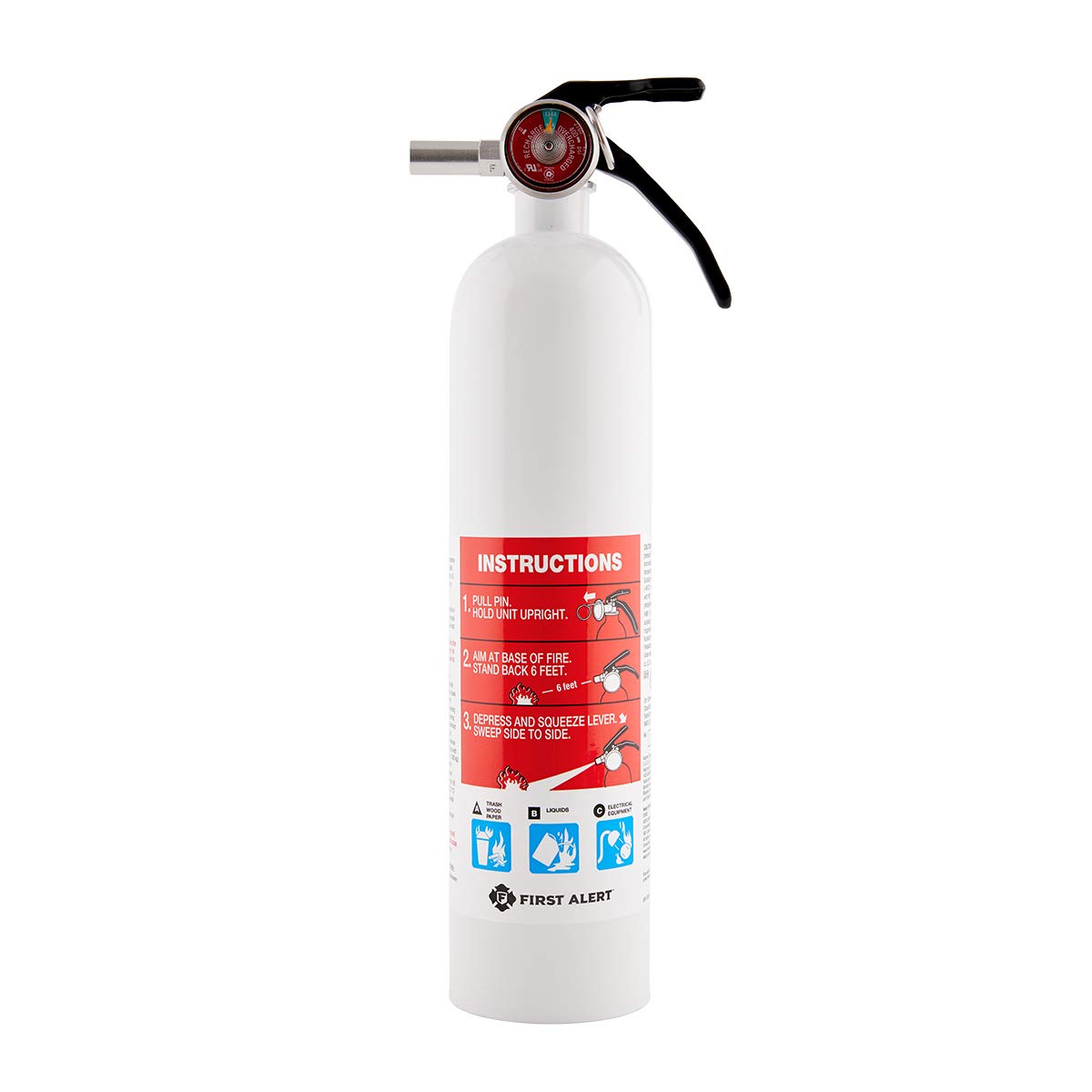
I put this white First Alert on my boat for its Coast Guard approval, compact footprint, and corrosion-resistant components.
Why I picked it: Coast Guard–approved when bracket-mounted and corrosion-resistant gauge.
Best for: Boats, marinas, and damp environments where corrosion resistance matters.
Comparable to other marine-rated, compact fire extinguishers.
Pros
- U.S. Coast Guard–approved
- Corrosion-resistant gauge
- Includes strap and mount
- Compact 14-inch size
Cons
- White finish may show grime
- A-rated effectiveness limited compared to water
My take
I installed this on my boat and the white finish blends in nicely with the cabin. The included strap bracket made mounting fast and secure without extra parts.
The metal head and safety pin feel durable even in a marine environment, and the pressure gauge is easy to read at a glance. That clarity matters when I’m doing pre-departure checks.
I respect its limitations—this is a balanced marine extinguisher for flammable liquids and electrical fires rather than a straight swap for water-based solutions—but for on‑board safety it’s exactly what I want.
5. FIRST ALERT AUTO5 Compact Car Fire Extinguisher (5-B:C) – Best for Vehicles
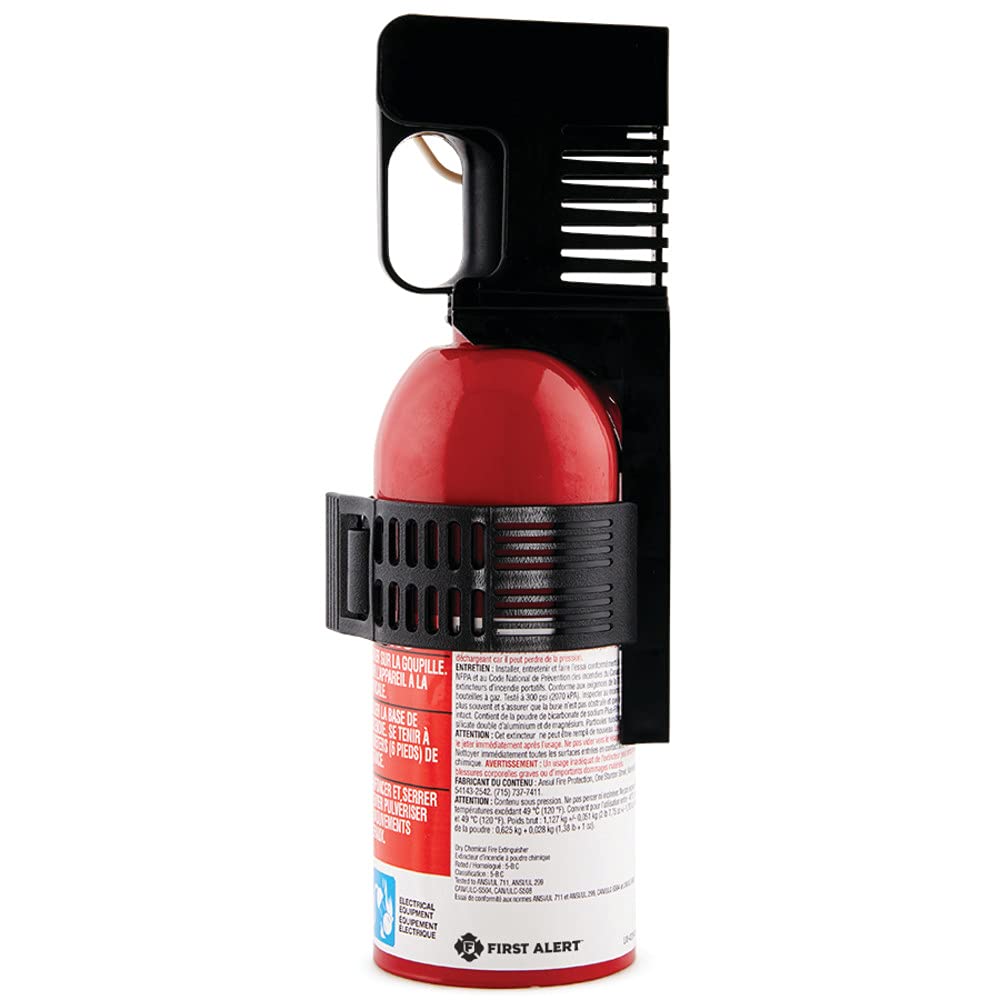
I store this compact First Alert in my vehicles because it fits small spaces while delivering effective liquid and electrical fire suppression.
Why I picked it: Small form factor tailored to vehicle fires, with a sturdy mounting bracket.
Best for: Trunks, under seats, campers, and tight vehicle storage spots.
Budget-friendly compact unit for automotive safety.
Pros
- Compact for vehicle storage
- Designed for flammable liquids and electrical fires
- Includes mounting bracket
- Durable metal head
Cons
- Limited agent volume
- Bracket lacks strap-friendly mounting slots
My take
I keep one of these in every vehicle I own. It tucks easily into trunk corners or under seats and the bracket holds it secure during travel.
The design feels solid—metal head and clear instructions—so I’m comfortable grabbing it in an emergency. It’s specifically tuned for oil, grease, and electrical fires which are the scenarios I’m most concerned about on the road.
My only gripe is the bracket design; I’d prefer molded slots for strap mounting to secure it to roll cages or odd surfaces without drilling.
6. First Alert EZ Fire Spray — 2-Pack (AF400-2) – Best Small-Can Pack
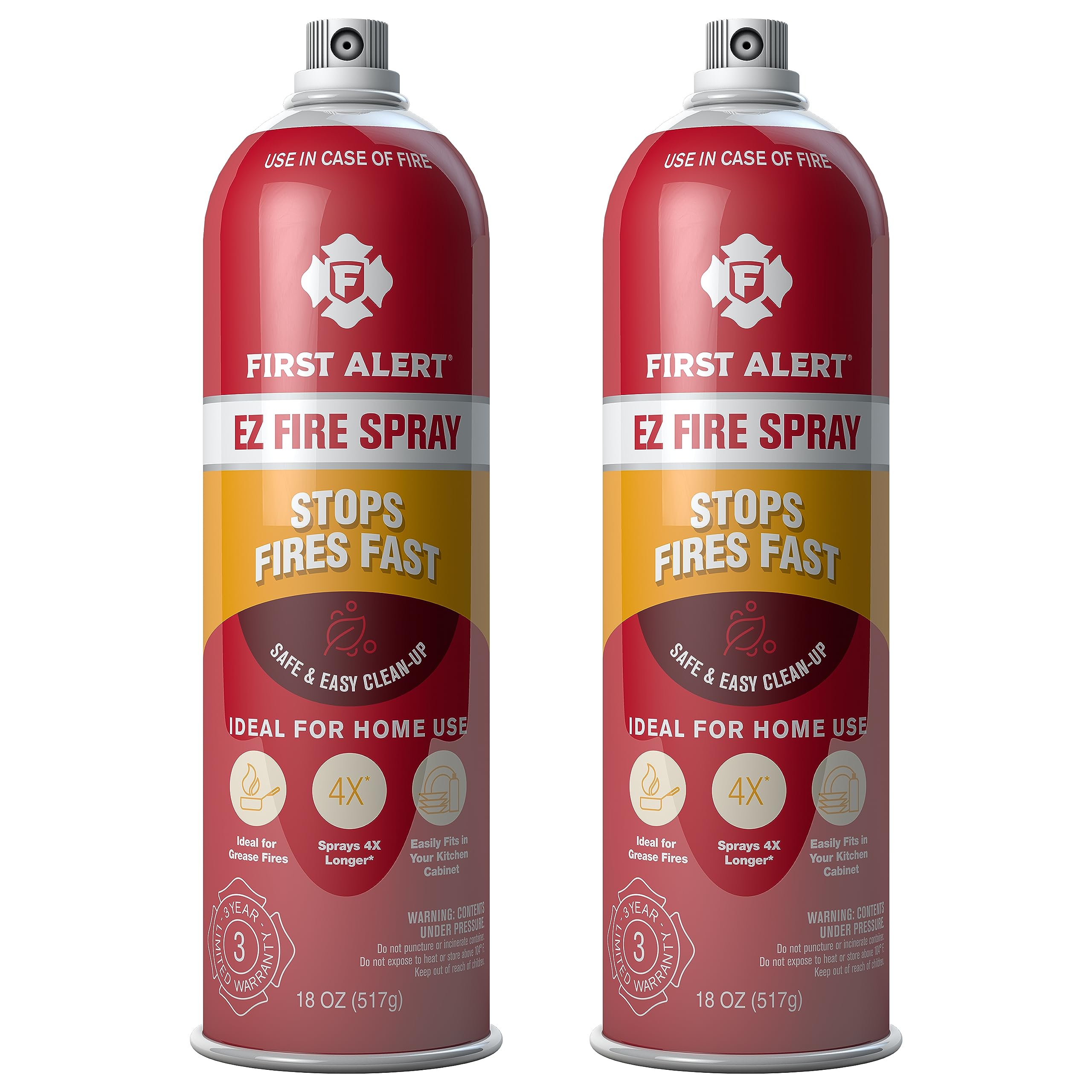
I bought the 2-pack to place small, easy-to-use sprays in multiple rooms and vehicles for immediate first response.
Why I picked it: Two compact sprays extend quick-response coverage across the home and car.
Best for: Multiple locations where grab-and-go convenience matters.
Cost-effective way to place multiple quick-response units.
Pros
- Two cans for multiple locations
- 32 seconds discharge each
- Wide spray coverage
- Biodegradable, nontoxic formula
Cons
- Can blend in with other products
- Not a substitute for full-size extinguisher
My take
I put one can by the stove and another in my hall closet so I have immediate access from different parts of the house. The small size and ergonomic top make deployment instinctive.
During a test I liked how the spray pattern covered a wider surface area than typical aerosol actuators; that felt useful for quickly knocking down a small pan fire.
My only real issue is color: these cans can visually blend in with household cleaners, so I recommend storing them somewhere clearly visible or applying a bright tag for rapid identification.
How I Choose a Home Fire Extinguisher
Key ratings and labels
I look for UL ratings like 1-A:10-B:C for balanced Class A, B, and C protection. Those numbers tell me how well the extinguisher handles common household materials, flammable liquids, and electrical fires.
Coast Guard approval matters for marine use; corrosion-resistant parts and secure mounting are non-negotiable on a boat.
- 1-A:10-B:C — good all-purpose home protection
- 5-B:C or higher — useful for vehicle fire risks
- UL or ETL marks indicate lab testing
Rechargeable vs single-use
I prefer rechargeable units in primary living areas because they can be refilled after use, giving long-term value.
Single-use and aerosol options are great as secondary units for cars, RVs, or quick access but plan to replace them after discharge.
- Rechargeable: refillable by certified pros
- Single-use: replace after any discharge
- Aerosol: ideal for grab-and-go quick response
Placement and mounting
I keep at least one full-size extinguisher on every floor and shorter, portable units near kitchens and vehicles.
Mounting brackets make accessibility immediate and keep units from becoming hidden behind gear.
- Kitchen: within reach but away from the stove flame path
- Garage: near exits for quick grab-and-go
- Car/boat: secure mounting to prevent movement
Practical features I value
A clear pressure gauge, sturdy metal valve, and a simple pull-pin system reduce hesitation during an emergency.
For sprays I prioritize long discharge time, wide spray patterns, and a formula that wipes clean.
- Pressure gauge for status checks
- Sturdy metal valve and pull pin
- Wide spray pattern and long discharge time for aerosols
Frequently Asked Questions
Where should I mount a home fire extinguisher?
I mount a full-size extinguisher near the kitchen and another on every level of my home, keeping them visible and within easy reach of exit paths.
How often should I check or service extinguishers?
I check the pressure gauge monthly, inspect for damage, and follow manufacturer guidance—recharging rechargeable units after use and replacing single-use or expired units.
Are aerosol extinguishers effective for grease fires?
I use aerosol sprays for small grease fires because they’re easy to aim and provide a sustained spray; for larger or out-of-control grease fires I always evacuate and call emergency services.
Final Take
I balance rechargeable, full-size extinguishers with compact sprays to cover different risks and locations in my home. A single solution doesn’t fit every scenario.
Keep units mounted and visible, check them regularly, and place a fast, easy spray in spots where speed matters most. That combination is what I rely on for practical home fire safety.
