
I tested six pedestal fans across bedrooms, garages, and home offices to find blades, motors, and features that actually move air and stay quiet. This roundup captures what worked for me in real rooms and real use.
Summer heat pushed me to test a half dozen pedestal fans in bedrooms, garages, and living rooms. I prioritized airflow, noise, build quality, and real-world controls like remotes and timers.
My goal was simple: recommend fans that do specific jobs well — from blasting out a hot garage to keeping a bedroom cool and whisper-quiet. Below I explain which fan I used where and why it earned a spot on this list.
I compared airflow reach, noise at low and high speeds, motor type (AC vs DC), oscillation options, and real-world conveniences like remote range, timer functions, and stability. Expect fans here that prioritize either raw power or whisper-quiet efficiency — I call out which each is best at.
1. Lasko High Velocity Pivoting Utility Blower Fan and Oscillating Pedestal Fan Bundle, 1827 – Best Bundle for Versatility
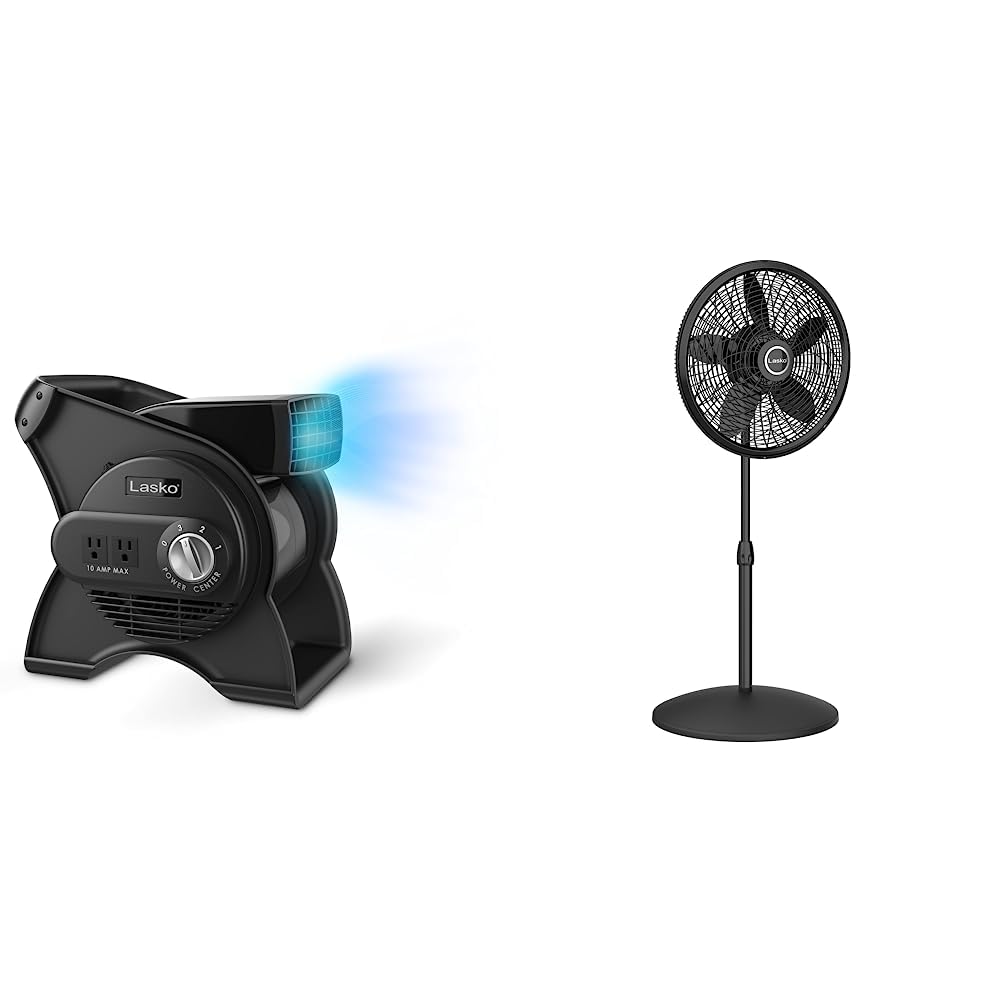
I keep this Lasko bundle around when I want brute-force air movement plus a household pedestal fan. The pivoting blower handles drying and targeted ventilation while the 18" pedestal covers living spaces.
Why I picked it: Two complementary fans in one purchase — one for focused high-velocity work, one for wide-room circulation.
Best for: Worksites, garages, drying carpet, and moving conditioned air around large rooms.
A midrange option that replaces multiple single-purpose fans.
Pros
- Powerful targeted airflow
- Pedestal covers large rooms
- No-tool pedestal assembly
- ETL-listed safety features
Cons
- Blower cord is only ten feet
- Blower is louder at top speed
My take
I used the pivoting blower to dry a water-damaged carpet and to push air across a hot garage — it’s focused and surprisingly sturdy. The blower’s pivoting head and three high-velocity speeds let me aim a concentrated stream exactly where I needed it.
The included 18" oscillating pedestal fan is a reliable companion for bedrooms and living areas. Height adjusts easily from about 38" to 54.5", and widespread oscillation plus tilt mean I can set it to cool an entire sleeping area without fuss.
Together the pair covers tasks a single fan can’t: the blower for tough, directional jobs and the pedestal for everyday room circulation. If you want flexibility and raw airflow in one package, this bundle earned my recommendation.
2. Rowenta Pedestal Fan, 53 Inches, Ultra Quiet Oscillating Fan, VU5670 – Best for Quiet Sleep
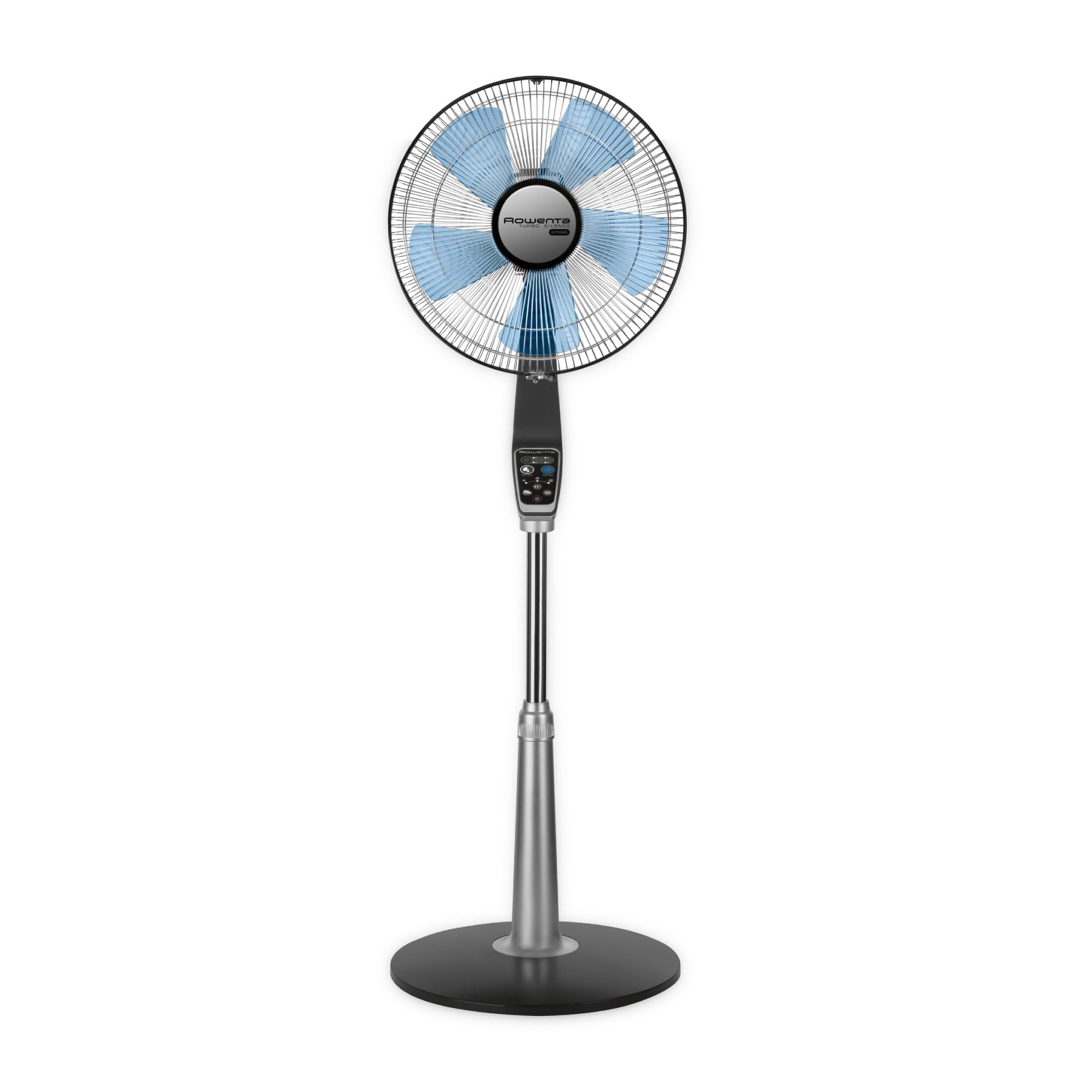
When I needed near-silent bedroom cooling, this Rowenta was my go-to. It blends genuinely low noise with a range of speeds and useful automation.
Why I picked it: Exceptional low-noise engineering with versatile speed and timer controls.
Best for: Bedrooms and home offices where quiet operation matters most.
A premium quiet fan worth the investment for light sleepers.
Pros
- Very low noise on sleep mode
- Broad coverage from 16" head
- Remote with onboard storage
- Energy-efficient timer and mode
Cons
- Turbo mode gets noticeably louder
- Remote batteries not always included
My take
I ran this Rowenta beside my bed and finally slept through the hottest night of the week. Silent Night mode really lowers acoustics to a near-whisper while still circulating air across a large area.
The five-speed range gives me everything from a gentle breeze to a powerful Turbo Boost. The 16" head and efficient blades deliver reach I could feel 15–20 feet away, which is great for open-plan spaces.
After years of using multiple Rowenta units in my house, I’ve found them durable. Pro tip: I keep a spare CR2032 for the remote since my units didn’t always come with the battery.
3. PELONIS 16" Oscillating Pedestal Fan — 12-Speed DC Motor, Remote, 12-Hour Timer – Best for Speed Customization
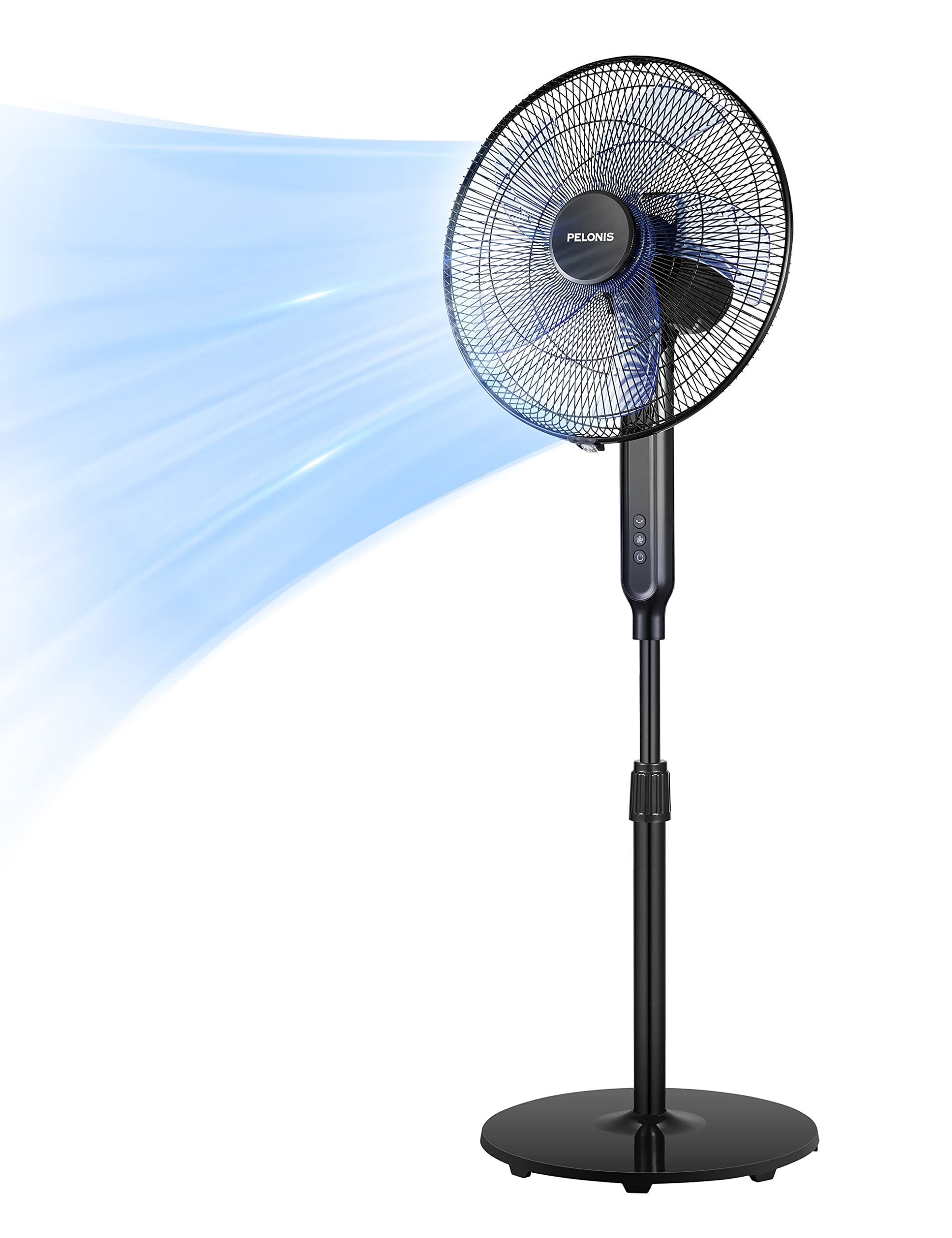
I appreciated the Pelonis 16" for its DC motor and extremely fine-grain speed control. It can be inaudible at low settings or very forceful at top speed.
Why I picked it: DC motor with many speed steps for precise control and quiet low settings.
Best for: Bedroom sleepers who want ultra-quiet low speeds or a strong wind tunnel effect.
A slightly higher-tier option focused on flexibility and quiet operation.
Pros
- Very quiet at low speeds
- 12 distinct speed settings
- Heavy, stable base
- Easy assembly and clipped guard
Cons
- Oscillation rate independent of speed
- Higher speeds are louder
My take
This Pelonis shines when I want nuanced airflow. Lower speeds are almost inaudible and perfect for sleeping; higher settings provide real punch when I want direct cooling.
The base feels substantial so it doesn’t wobble, and the remote removes the need to get up in the night. Oscillation is controlled remotely and feels smooth, though the oscillation rate doesn’t change with speed.
Overall I recommend it for anyone who values a wide range of quiet-to-powerful options in one compact, well-built fan.
4. Dreo TurboPoly 512 Pedestal Fan — 120° Oscillating, DC Motor, 9 Speeds – Best for Whole-Room Circulation
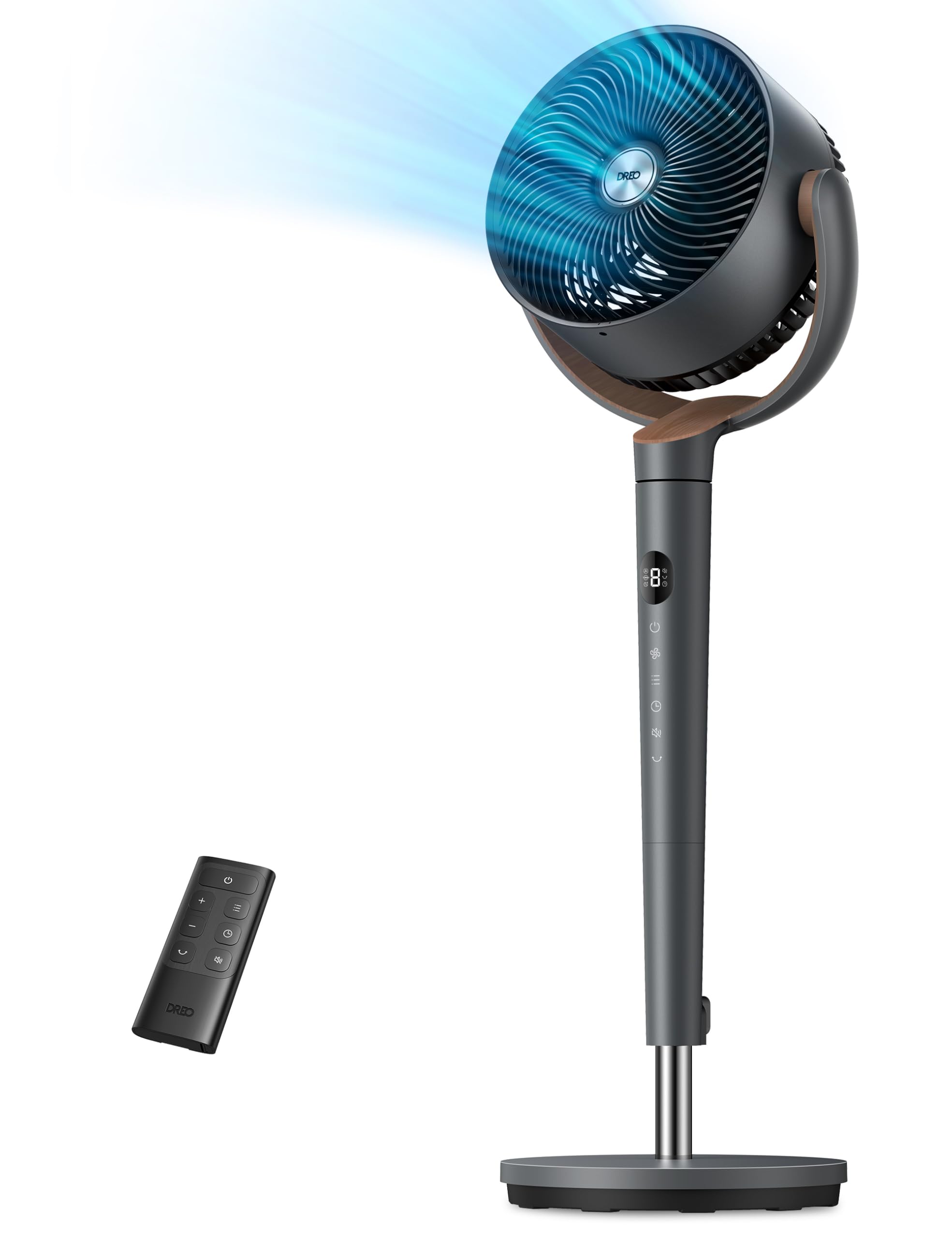
I picked the Dreo when I wanted a compact pedestal fan that still covers a whole room. The 120° stepless tilt and wide horizontal sweep make it effective for corner-to-corner circulation.
Why I picked it: Steep oscillation angles and efficient DC airflow for whole-room coverage.
Best for: Open-plan rooms and people who want strong circulation with low noise.
A strong midpriced circulator that competes with higher-end models.
Pros
- Very wide oscillation coverage
- Extremely quiet on low settings
- Efficient DC motor
- Compact footprint with heavy base
Cons
- Manual vertical tilt
- Remote range can be limited
My take
I placed the Dreo in a corner and watched it move air across the living room effortlessly. The combination of the bionic blade design and DC motor gave me high reach without a noisy motor signature.
The 120° horizontal sweep plus the stepless 120° vertical tilt (manual) let me tailor airflow better than most pedestal fans. It’s also surprisingly compact, which helped in my smaller bedroom where floor space is tight.
My only gripe is the remote’s range — I occasionally had to stand closer to the unit to trigger certain commands. Otherwise, its quiet efficiency and circulation impressed me.
5. PELONIS PFS45A5BBB 18" 5-Blade Oscillating Pedestal Fan — LED, Remote, 7-Hour Timer – Best Value Large Fan
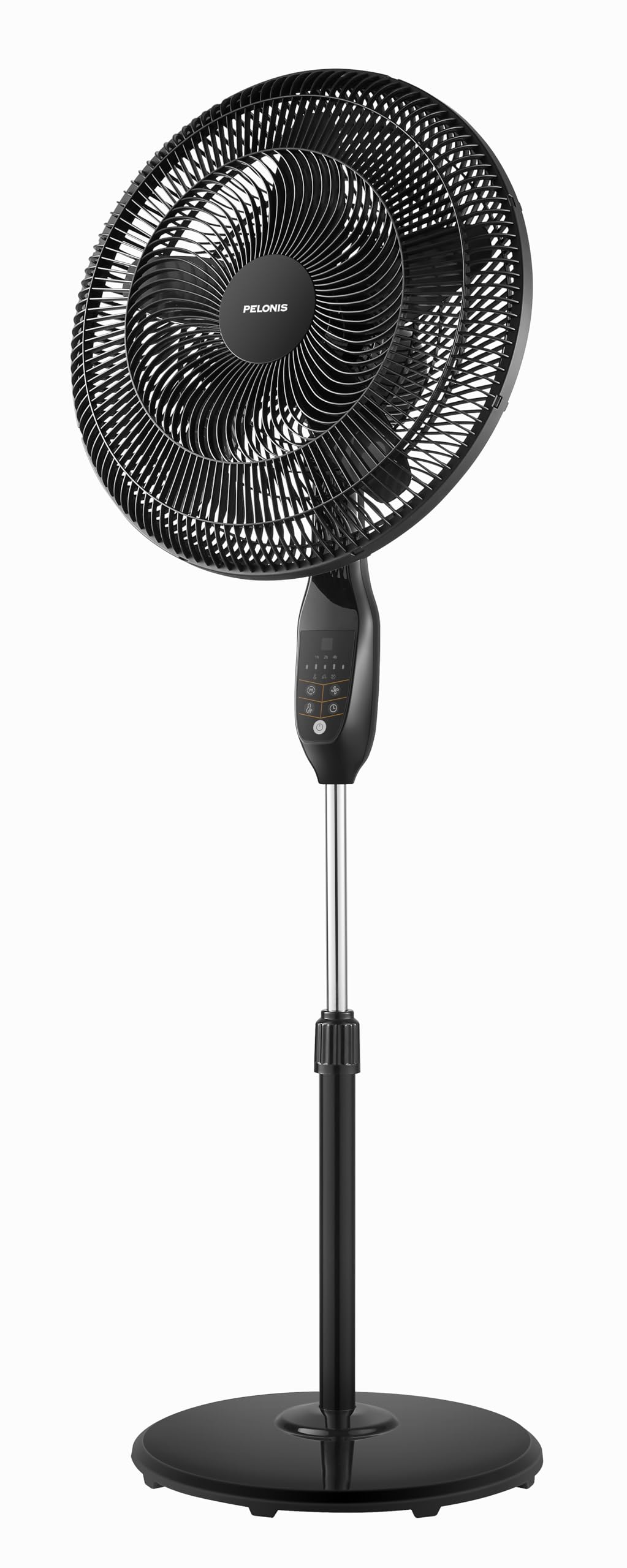
When I wanted large-diameter airflow without paying top-tier prices, this 18" Pelonis hit the sweet spot: strong throw, simple controls, and solid build.
Why I picked it: Big 18" head that moves a lot of air for the money.
Best for: Living rooms, garages, and anyone who wants strong airflow from a tall pedestal fan.
A value-focused choice that brings more wind for the budget-minded buyer.
Pros
- Large blade diameter moves a lot of air
- Quiet at low speeds
- Remote and timer included
- Sturdy, tall pedestal
Cons
- Louder on maximum speed
- Not as whisper-quiet as DC fans
My take
I swapped in the 18" Pelonis for a smaller fan and immediately noticed the difference — even on medium it pushes a generous breeze that cools a whole room.
It’s quiet where it matters: speeds 1–3 are unobtrusive for sleeping. If you need a full gale, top speed gets loud but still usable for short bursts.
Assembling and using the remote and timer felt straightforward. For me, this was the best compromise between diameter-driven airflow and price.
6. Meaco MeacoFan 1056P Pedestal — Super-Quiet, Energy-Efficient Air Circulator – Best for Quiet Efficiency
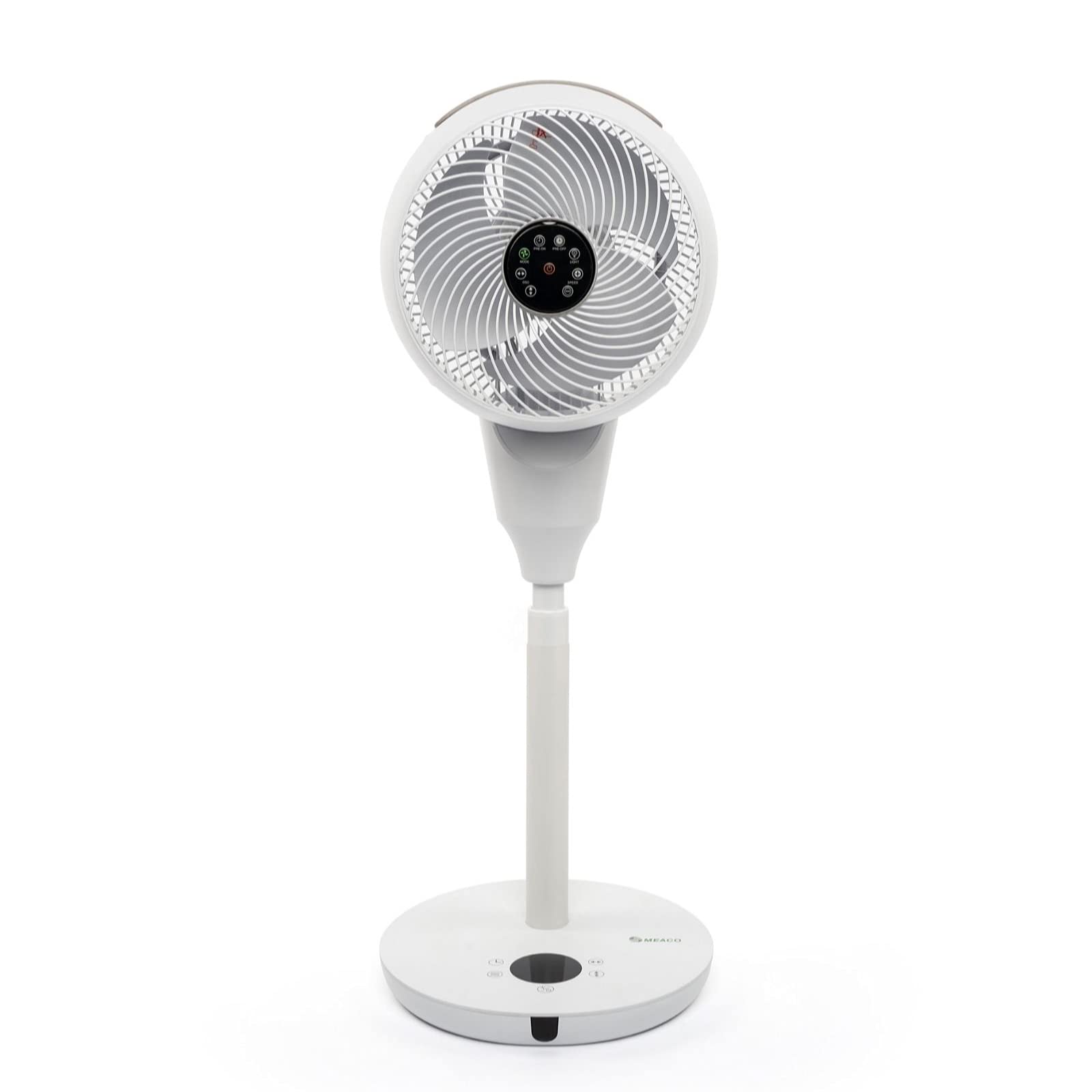
I recommend the Meaco when quiet, energy-efficient circulation is the priority. It feels like a premium desktop design scaled up to a stable pedestal.
Why I picked it: Exceptionally quiet operation with efficient air movement and multiple fine settings.
Best for: Energy-conscious users and quiet bedrooms where subtle circulation matters.
A slightly higher-cost option for long-term energy savings and quiet performance.
Pros
- Ultra-quiet even at higher settings
- Excellent air circulation for rooms
- Multiple speed levels for fine control
- Magnetic remote holder included
Cons
- Cord length feels short
- Higher initial cost than budget fans
My take
This Meaco unit felt like the right choice when I wanted whisper-quiet operation without sacrificing flow. It moves air efficiently and remained discreet during evening use.
I appreciated the many speed levels — I could dial in a barely-there breeze or ramp up to efficient room circulation. The magnetic remote holder kept controls handy and out of the way.
My one practical complaint: the power cord was shorter than I prefer, so I sometimes repositioned furniture to reach an outlet. Otherwise, this fan delivered quiet, effective cooling.
How I Picked and What to Look For
Key features that guided my picks
I focused on motor type, noise, airflow reach, and practical controls like remotes and timers. Those factors determined how each fan performed in a real room.
Build quality and stability mattered a lot — a heavy base and solid guard reduce wobble and make a fan safer around kids and pets.
- Motor: DC for quiet and efficiency; AC for raw power at lower cost.
- Blade size: 16–18" balances reach and compact footprint.
- Noise: Check low-speed noise if you sleep near the fan.
- Controls: A remote and timer add night-time convenience.
- Oscillation: Wider sweep and vertical tilt cover more room area.
Match a fan to the room
For bedrooms I prioritize low noise and a timer. For garages and workshops I pick raw airflow and a rugged design.
Think about where you’ll plug it in — cord length and base footprint influence placement.
- Bedrooms: quiet DC motor, low-speed settings, sleep mode.
- Living rooms: wide oscillation and larger head diameter.
- Garages: high-velocity blower or heavy-duty AC motor.
- Small rooms: compact pedestal with focused airflow.
Frequently Asked Questions
Should I choose a DC motor or AC motor fan?
I prefer DC motors for bedrooms because they run quieter and use less energy; I pick AC motors when I need maximum raw airflow for a workshop or drying jobs.
How much noise is acceptable in a bedroom fan?
I aim for fans that are nearly silent at the speeds I actually use to sleep. If low-speed noise is under discussion, prioritize models with dedicated sleep modes or very low dB claims and test them at night.
Do remote controls usually include batteries?
From my experience I always keep a spare CR2032 or AA nearby — sometimes a remote arrives without an installed battery, so having a spare gets you running immediately.
Final Take
Every fan here earned a spot because it solved a real problem for me: whisper-quiet sleep, whole-room circulation, or heavy-duty targeted airflow.
If you want a single recommendation: pick the fan that matches your main use — quiet sleep, broad circulation, or workshop power — and you’ll be satisfied.
I hope these hands-on notes help you pick the right pedestal fan for your room and routine.
