
I tested a range of pole saws and pole-saw attachments so you can pick the right reach, power, and setup for your yard. From cordless 2-in-1 pruners to full-size battery chainsaws, I explain what I used each tool for and
I spent time using six different pole saws and pole-saw attachments across real pruning jobs — trimming dead limbs, limbing fallen trees, and clearing overgrown branches near roofs and driveways. My goal was to compare reach, cutting power, ease of use, and everyday reliability.
In the selections below I focus on what I actually experienced: how far each tool reaches, how it handles thicker or dry wood, whether the bar oiler and chain tensioning behaved, and how straightforward each unit made pruning from the ground.
I grouped tools by what they do best: standalone pole saws for yard trimming, 2‑in‑1 mini chainsaws for light cutting and portability, and attachment heads if you already own a compatible power pack. I recommend based on reach, cutting feel, and practical details like oiling and tensioning.
1. DEWALT 20V MAX XR® Brushless Cordless Pole Saw (Tool Only-Battery & Charger not included) (DCPS620B) Pole Saw Bare Tool Only – Best Overall
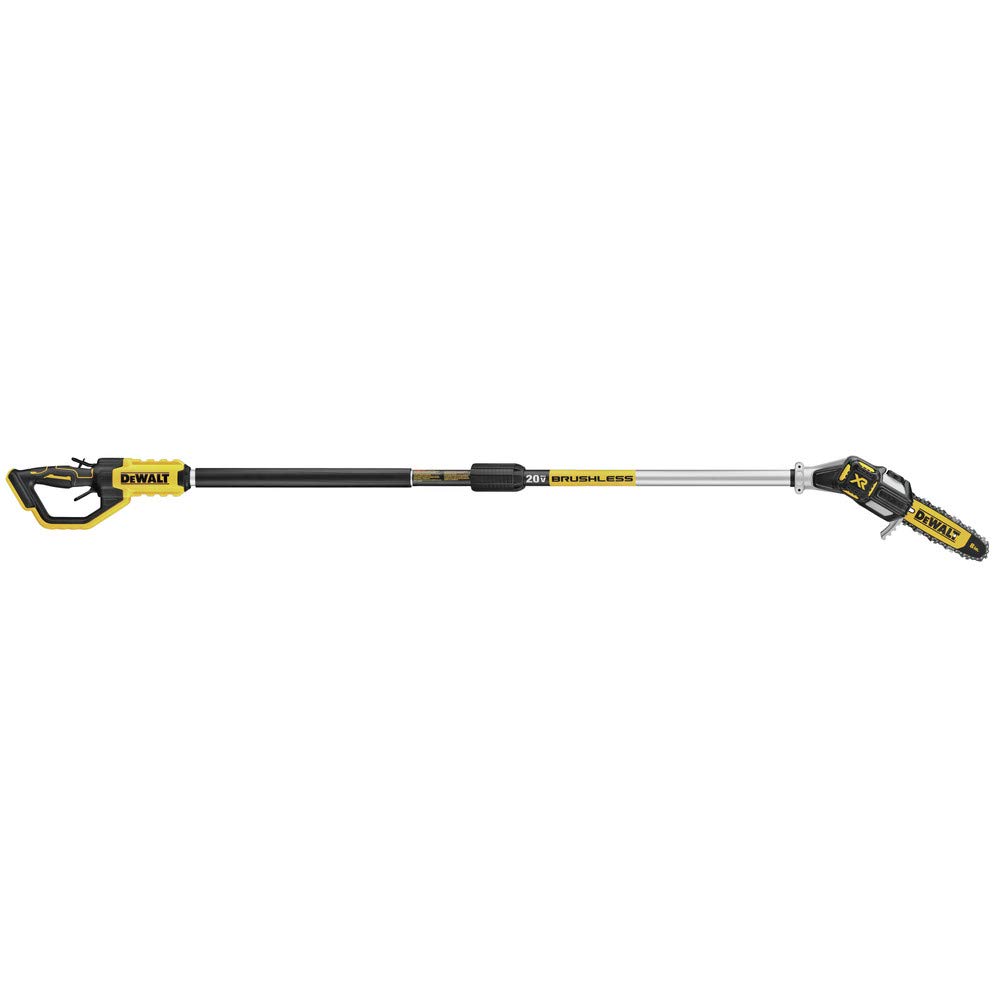
A well-balanced cordless pole saw with a brushless motor, 15 ft reach, and auto-oiling that handled dead and dry wood confidently when I used it.
Why I picked it: Consistent cutting power, long reach, and low maintenance auto-oiler.
Best for: Homeowners who need long reach and dependable cordless power.
Bare tool is ideal if you already own compatible batteries.
Pros
- Up to 15 ft total reach
- Brushless motor with solid torque
- Auto oiling for low maintenance
- Comfort grip handle
Cons
- Pole can feel slightly wobbly fully extended
- Bar oil cap seals can leak if tipped
My take
I already had several DeWalt 20V batteries, so testing this bare tool made sense. Assembly was quick and the balance with the center pole attachment felt good while I pruned overhead branches.
Power surprised me for an 8 in. bar: I took down most of a dead hawthorn and trimmed branches that were rubbing on a roof with no hesitation. With a 5Ah battery the saw cut through a lot more than I expected and still showed charge afterward.
The auto-oiling kept the chain happy through long cutting sessions, though I did take care not to lay the saw on its side because the oil cap can drip. If you value reach and a familiar battery platform, this is the most capable do-it-all pole saw I tested.
2. SEESII 2-in-1 Electric Pole Saws: Brushless Mini Chainsaw Cordless 6 Inch, 2 x 4000mAh Batteries, Pole Saw for Tree Trimming,Hand held Chain Saw with Extension Pole for Tree Limb Branch Cutter,P6 Ace Deep Blue – Best 2‑in‑1 Value
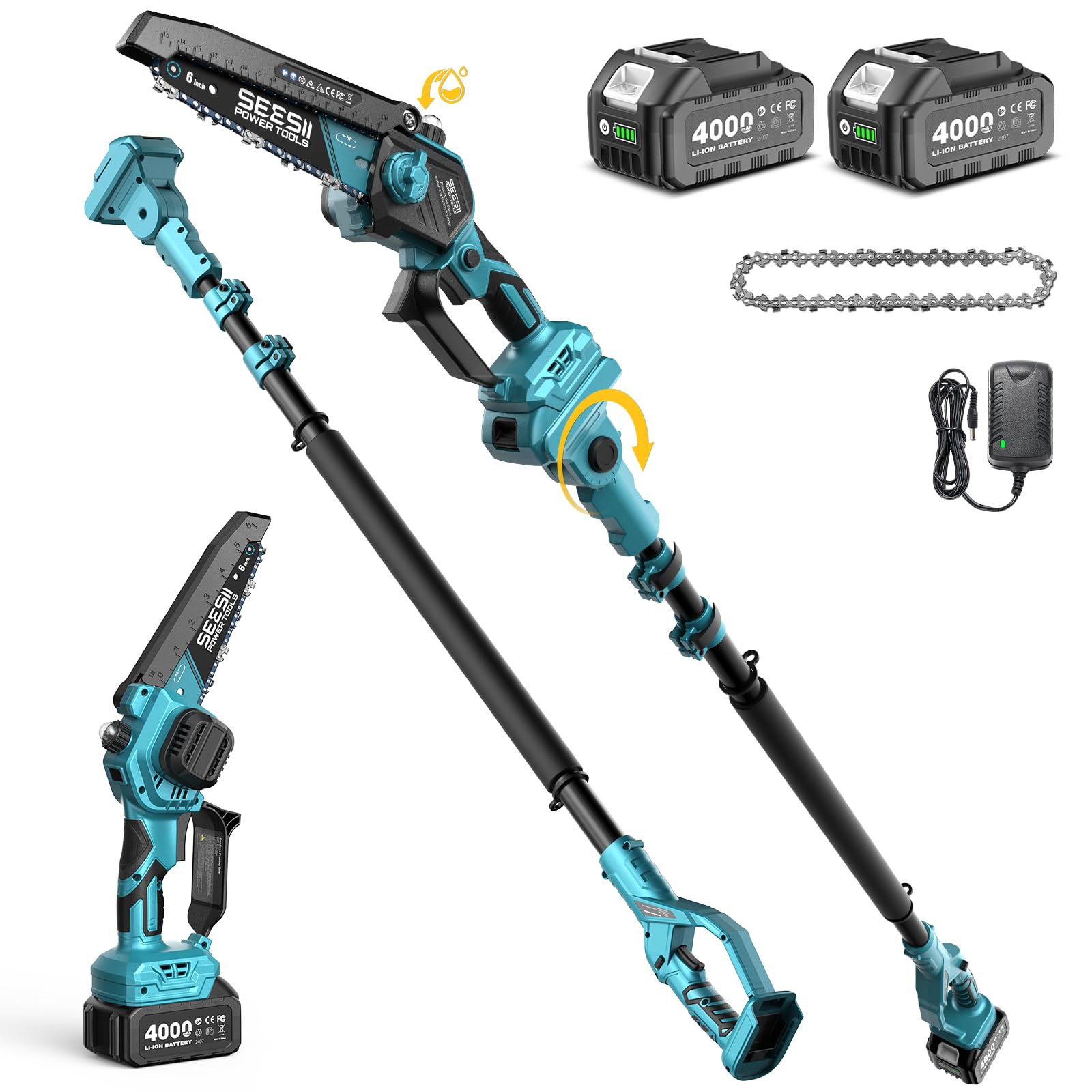
A versatile 2‑in‑1 that converts to a handheld mini chainsaw, includes two batteries, and extends to roughly 16 ft of reach with my height added in.
Why I picked it: Dual batteries and 2‑in‑1 flexibility for extended sessions.
Best for: Homeowners wanting a compact handheld plus tall reach without buying two tools.
Competitive kit with two batteries for longer runtime.
Pros
- Converts to handheld quickly
- Extends to about 15.5 ft
- Two batteries for extended work
- Brushless motor runs cool
Cons
- Smaller bar limits very thick cuts
- Some components feel budget-grade
My take
I liked that the SEESII transforms from a pole trimmer to a mini handheld in seconds — that saved me from switching tools while cleaning up piles on the ground.
The dual 4000mAh batteries meant I could keep working longer without hunting for a charger; in my testing I got consistent cutting and the saw stayed quiet and smooth thanks to the brushless motor.
For everyday trimming and thinning of medium branches this is a very practical, affordable package. I would only flag that the 6 in. bar isn’t intended for heavy felling — it’s optimized for speed, agility, and reach.
3. Electric Tree Saw for Pruning High Branches, 2-in-1 6" Brushless Mini Chainsaw Cordless with Extension Pole 2 Batteries, Battery Powered Hand held Chain Saw & Pole Pruner for Trimming Tree Limbs Blue Csp06-b2 – Best Lightweight 2‑in‑1
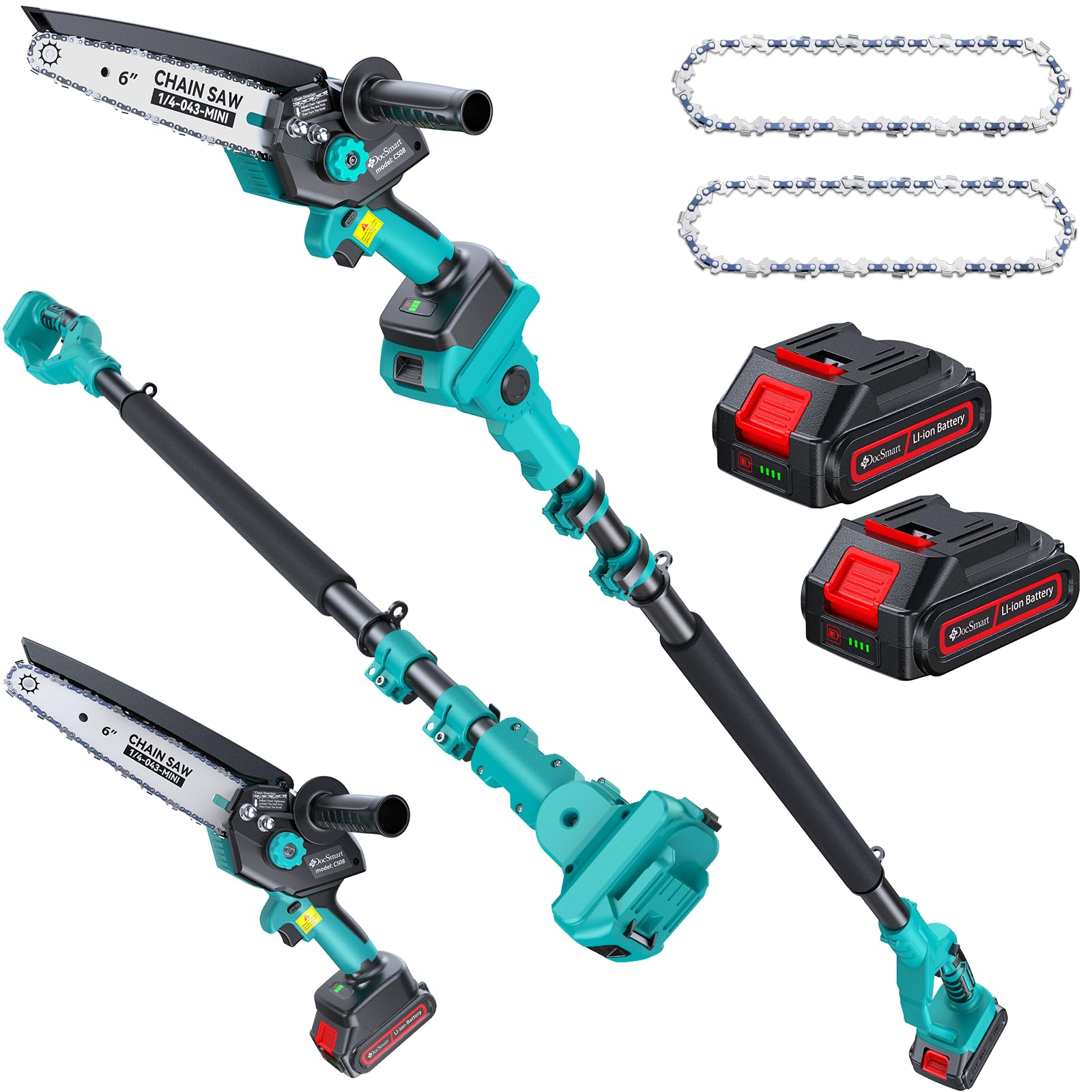
A very light, ready-to-use 2‑in‑1 saw with strong brushless motor performance and two batteries — I found it easy to handle for extended pruning but I had to manage the bar oiler differently.
Why I picked it: Impressive power for weight and included spare battery.
Best for: Seniors, gardeners, and DIYers who need a light, easy-to-handle trimmer.
Good-value kit with two batteries for continuous work.
Pros
- Lightweight and easy to control
- Dual batteries for longer runtime
- Adjustable cutting head angle
- Includes safety accessories
Cons
- Bar oiler unreliable on my unit
- Batteries slow to recharge
My take
Out of the box it was ready to use and felt noticeably light compared with larger pole saws; I appreciated the shoulder strap for longer sessions.
The 1000W brushless motor cut cleanly through limbs up to about 4 inches in my tests, and the 112° adjustable head made approach angles much easier on overhead cuts.
My only practical gripe was the bar oiler — it clogged on my unit and I resorted to topping the chain manually with an oil can. Overall, though, the kit delivered great portability and solid cutting performance for the weight.
4. Husqvarna Power Axe 350i Cordless Electric Chainsaw, 18 Inch Chainsaw with Brushless Motor and Quiet Superior Cutting Power, 40V Lithium-Ion 7.5 Ah Battery and Charger Included. 970601202 Battery + Charger Power Axe 350i – Best for Heavy Cutting
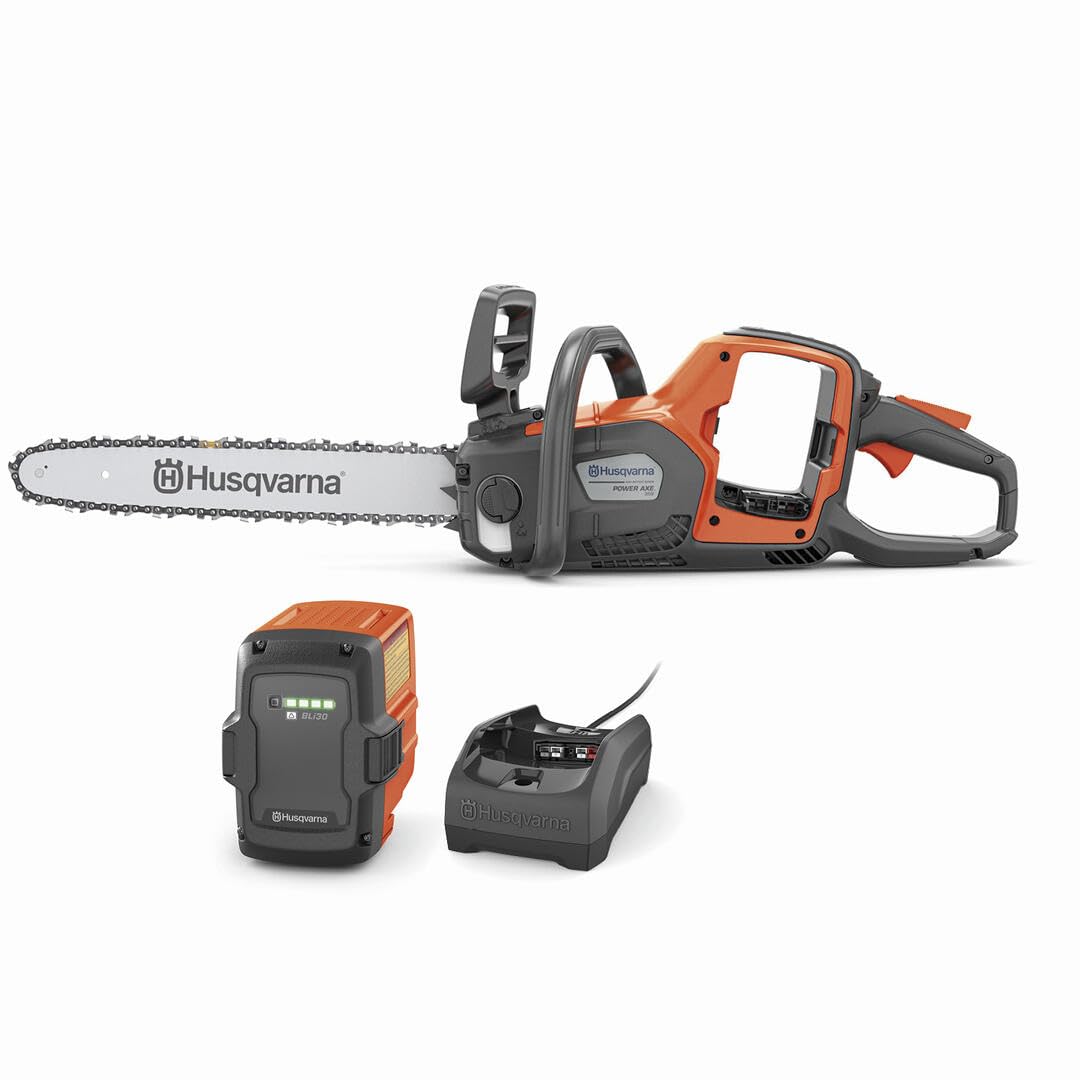
A full-size cordless chainsaw kit with an 18 in. bar and strong brushless motor — I depended on it for limbing and cutting larger rounds where lighter pole saws struggled.
Why I picked it: Battery kit with genuine chainsaw power and boost mode.
Best for: People who need cordless chainsaw power for larger trees and heavier limbing.
Complete kit includes battery and charger for immediate use.
Pros
- 18 in. bar with serious cutting power
- Includes battery and charger
- Tool-less chain tensioning
- Boost mode for extra torque
Cons
- Battery weight adds to overall heft
- Not ideal for continuous professional felling
My take
I brought this Husqvarna along to clear downed trees and process rounds; it felt lighter than my gas saw and cut through large logs with surprising authority when the chain was sharp.
In boost mode the saw handled two-foot round Douglas fir in batches; my real-world cutting time per battery tended to run 30–45 minutes depending on log size, so I recommended having a spare battery for full-day work.
For anyone aiming to replace some gas saw tasks but stay cordless, this is the most capable full-size battery chainsaw I tested — quieter, easier to start, and plenty powerful for most homeowners and many pros.
5. Milwaukee 49-16-2720 M18 FUEL QUIK-LOK 10 in. Pole Saw Attachment – Best Attachment
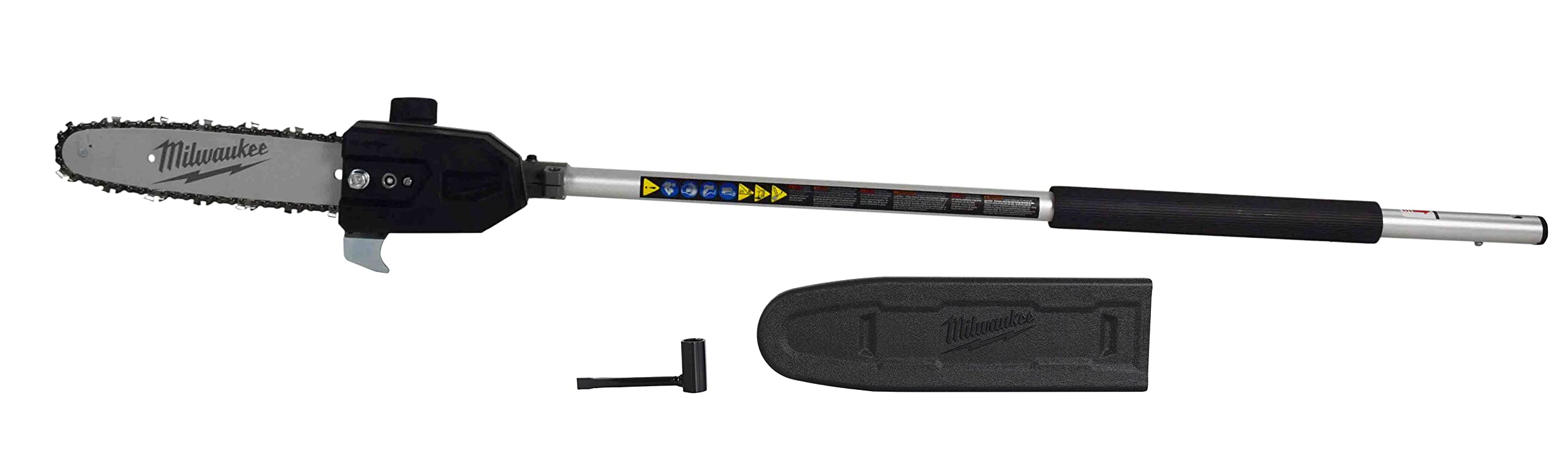
A robust pole-saw head that pairs with Milwaukee M18 power heads; I found it easy to swap on and great for trimming when I already owned the M18 power system.
Why I picked it: Durable attachment with good gearing and convenient maintenance features.
Best for: Users who already own an M18 power head and want a reliable pole saw head.
Attachment-only option saves cost if you own the M18 system.
Pros
- Automatic oiler for chain lubrication
- Easy-access tensioner
- Branch hook adds leverage
- Padded grip for comfort
Cons
- Oil tank can leak if stored improperly
- Requires compatible Milwaukee power head
My take
I tested this head on my M18 power unit and appreciated how quickly it swapped in using the Quik-Lok system — that made the whole combo feel like a modular shop solution.
Cutting performance was strong for a 10 in. attachment thanks to optimized gearing, and the translucent oil reservoir made it easy to see oil levels during long trimming sessions.
Be mindful of storage orientation: I noticed the oil tank can leak if left upright in tight spaces. Otherwise, this is an excellent choice if you already invested in Milwaukee's M18 ecosystem.
6. Makita 191T38-7 Pole Saw Attachment EY403MP – Best Pro-Grade Attachment
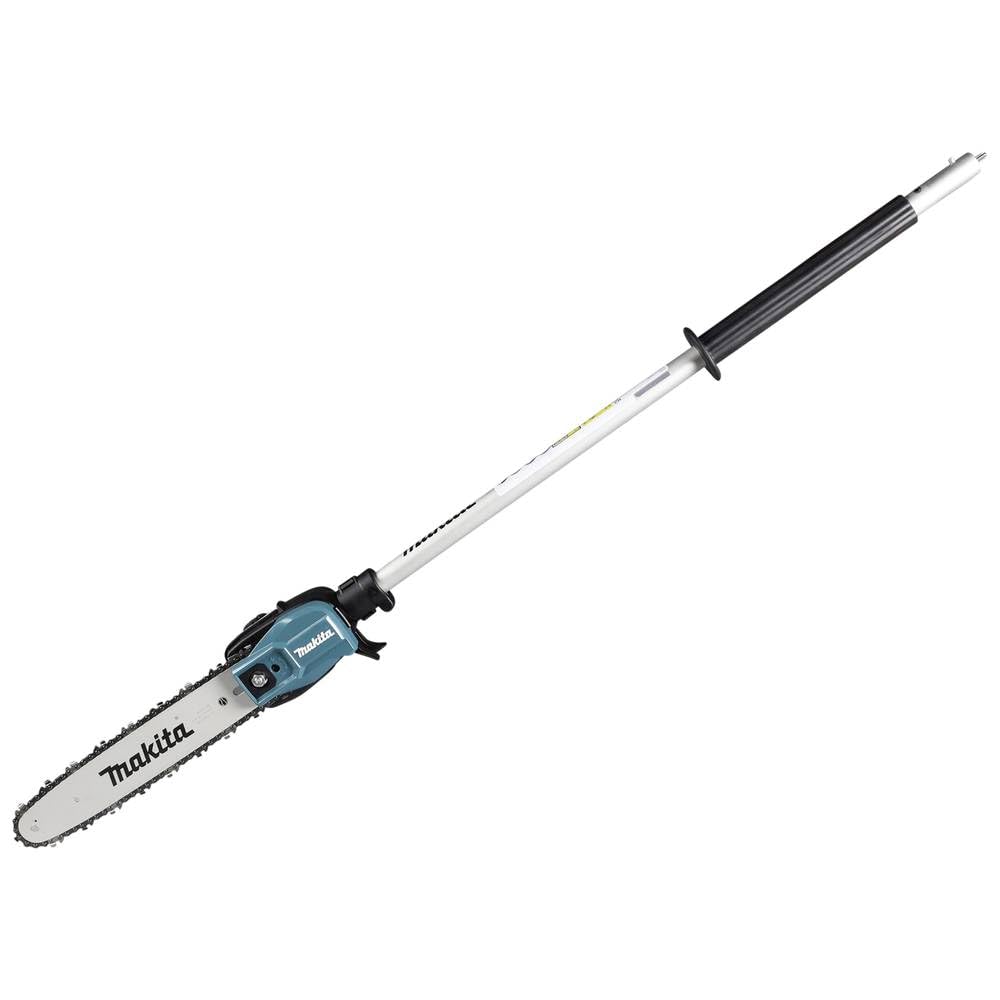
A compact, well-built pole saw head with a 300 mm guide bar that felt light and precise in my hands — especially suited to those using compatible Makita power units.
Why I picked it: Solid European-spec build and balanced cutting feel.
Best for: Users with Makita attachment-compatible power packs wanting a lighter professional head.
Pro-grade attachment for existing Makita systems.
Pros
- 300 mm guide bar, lightweight 2.0 kg
- Transparent oil tank
- Integrated branch hook
- Well-made Euro model
Cons
- Requires compatible Makita power unit
- Not a standalone solution
My take
This Makita head felt like a precision tool in the trees — well balanced and easy to maneuver for limbing and pruning, and I could push it to cut 6–8" branches when needed.
The clear oil tank and integrated branch hook made on-tree work straightforward, and the overall build quality felt a step above lighter consumer heads.
If you have a compatible Makita power source this is a compact, durable attachment that behaves like a professional tool rather than a disposable trimmer head.
How I Choose Pole Saws
Reach and Pole Length
I always start by deciding how high I need to cut from the ground. Telescoping poles that extend to 9–10 ft give 14–16 ft of total reach for most people, which handles most pruning without ladders.
If you routinely need to trim high limbs or reach over gutters, prioritize a longer pole and a head that stays stable when fully extended.
- Short poles: easier control, best for low branches
- Long poles: more reach, can feel wobbly fully extended
Power Source and Runtime
I compare brushless motors and battery capacity when judging runtime and cutting consistency. Brushless motors run cooler and last longer under load.
Dual-battery kits or included spare batteries are a huge advantage for longer jobs; otherwise bring a spare or plan to charge between sessions.
- Brushless motor = cooler, more efficient cutting
- Two batteries or a larger battery for extended work
Bar Size and Intended Use
Smaller bars (5–8 in.) are faster for pruning and safe for novices. Larger bars (10–18 in.) handle thicker limbs and small trees.
I match bar length to the largest diameter I plan to cut — don’t expect a 6 in. bar to fell medium trees.
- 6–8 in: pruning and light limbing
- 10 in+: heavy limbing and small tree felling
Oiling and Tensioning
Automatic oilers keep the chain lubricated during long sessions; I still check flow after the first few cuts. Manual oiling with a can is a simple workaround if the built-in oiler clogs.
Tool-less tensioners save time on the ladder and reduce downtime; I prioritize those on larger saws.
- Automatic oiler: convenience, but check for clogs
- Tool-less tensioner: quick adjustments on the fly
Attachments vs Standalone Tools
If I already own a compatible power head or battery platform, an attachment is a money- and storage-saving option.
Standalone kits that include batteries are better if you don’t want to manage multiple battery systems.
- Attachments: cheaper if you have the power source
- Complete kits: better for first-time buyers
Frequently Asked Questions
Do pole saw kits include batteries and chargers?
It depends. Some kits like the Husqvarna Power Axe 350i include battery and charger so you can start immediately; others are sold as bare tools to pair with an existing battery system. I check the product title and description before assuming batteries are included.
How high can I reach with a pole saw?
Pole reach varies by model. I typically estimate total reach by adding the pole length to my own height — many telescoping units reach roughly 14–16 ft total for an average person. Longer poles trade off stability for height.
What maintenance does a pole saw need?
I keep the chain sharp, top up bar oil, and check tension frequently. If an automatic oiler clogs like it did on one of my test units, a quick manual oil top-up gets you back to work without fuss.
Final Take
After using these tools across a variety of jobs, I found no single pole saw is perfect for everyone. If you already own a battery ecosystem, an attachment head gives great value and reduces waste.
For standalone cordless convenience and dependable cutting on a range of tasks, I relied on the DeWalt for reach and the Husqvarna when I needed full-size chainsaw power.
For light, frequent pruning, the 2‑in‑1 compact kits delivered the most convenience and portability. Decide on reach, bar size, and whether you want batteries included, and you'll end up with a tool that makes pruning safer and faster.
