
I tested a range of home backup options — from heavy-duty gasoline/propane generators to portable battery stations and inlet boxes — and I explain which setup works best for different needs.
I’ve spent time setting up and running multiple backup power systems in real-world outage scenarios and controlled tests. In this roundup I focus on reliability, fuel flexibility, transfer-switch compatibility, runtime, and how easy each unit is to live with when you need power.
My picks cover heavy-duty dual- and tri-fuel generators for whole-house backup, a weatherproof inlet box for safe hardwiring, and a modern battery station for quiet, clean power. I’ll explain practical pros and cons and when I’d choose each option.
When I compare gas/propane generators to battery stations, I look at sustained power and runtime versus silence and instant availability. Generators dominate for long runtimes and heavy loads, while battery stations win for quiet operation, clean power for electronics, and fast charging when paired with solar or AC.
1. Westinghouse 12500 Watt Dual Fuel Home Backup Portable Generator (WGen9500DF) – Best Heavy-Duty Dual-Fuel
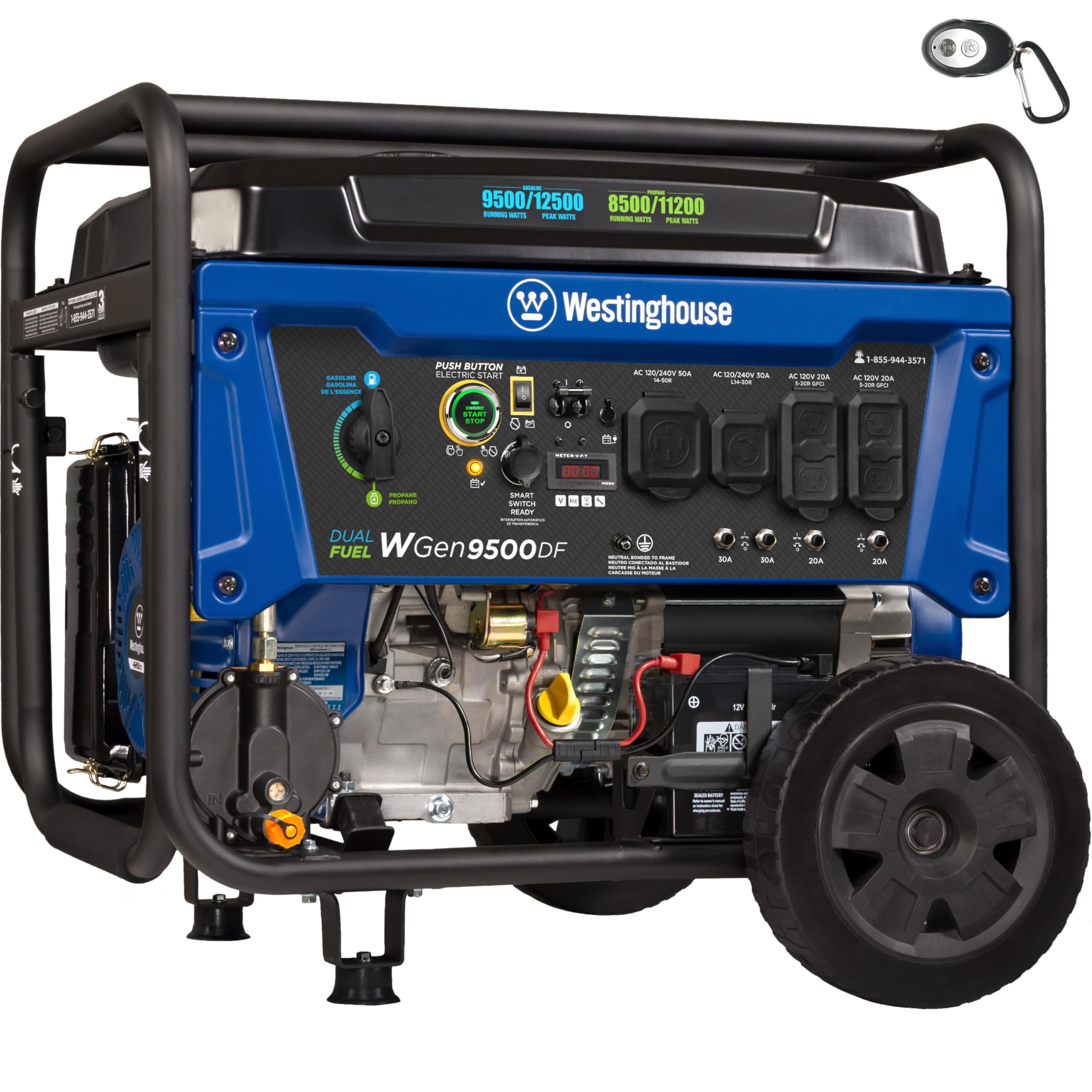
I relied on this Westinghouse when I needed high starting watts and flexible fuel options — gasoline or propane — with a transfer-switch-ready panel and remote start convenience.
Why I picked it: Strong running and peak output, remote start, transfer-switch ready.
Best for: Whole-house backup and running large appliances like AC and well pumps.
Solid value for a heavy-duty workhorse.
Pros
- High starting and running watts
- Remote key fob electric start
- Transfer-switch and RV-ready outlets
- Up to 12 hours on a full gas tank
- Never-flat wheels for portability
Cons
- Heavy to move without help
- Lower propane output than gasoline
- Noticeable noise under load
- May need high-altitude kit in some locations
My take
I put this unit through set up and actual run cycles. It arrived well packaged, came with oil and tools, and the battery was charged. Push-button start and the included remote fob made getting it running effortless from a short distance.
The VFT data display is genuinely useful — I used it to watch voltage and frequency while switching between gasoline and propane. Swap-over to propane is straightforward, and the 14-50R 50A outlet makes it simple to power an interlock or RV hookup.
I ran typical household loads — refrigerator, lights, sump pump, and a small window AC — and the generator held steady. Noise is what you’d expect from this size of unit, so plan placement away from sleeping areas. The never-flat wheels and folding handle make moving it manageable despite the weight.
A quirk for me: I needed a high-altitude kit and ordered it before first use. Once installed the unit performed reliably. Overall, this is a workhorse that I’d choose when I want dependable, long-running backup and the flexibility of two fuel choices.
2. Westinghouse 12500 Peak Watt Tri-Fuel Home Backup Portable Generator (WGen9500TFc) – Best Tri-Fuel Versatility
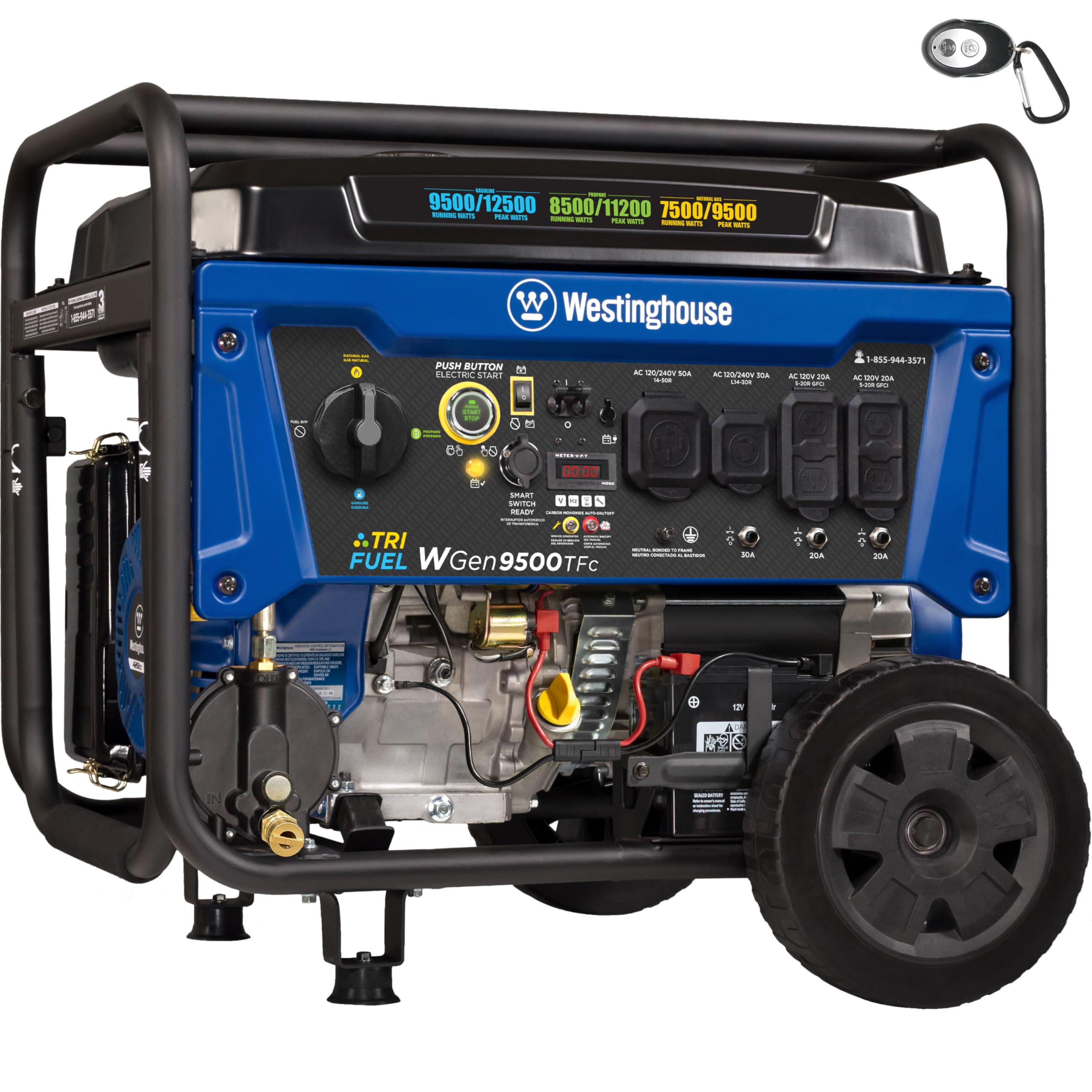
I value the tri-fuel capability here — gasoline, propane, or natural gas — plus a CO sensor for safer operation when I run it near occupied spaces.
Why I picked it: Tri-fuel flexibility, CO safety feature, transfer-switch ready.
Best for: Homes wanting fuel-choice redundancy and easy whole-house hookup.
Great practical value given built-in tri-fuel capability.
Pros
- Runs on gas, propane, or natural gas
- Remote electric start with key fob
- Transfer-switch and 50A outlet ready
- Includes gas and propane lines
Cons
- Heavy—needs two people to lift
- Occasionally delayed delivery logistics
- May require extra NG line depending on installation
My take
I used this unit to backfeed a breaker panel through an interlock and it handled the job with ease. The inclusion of both propane and natural gas connectors saved me from buying extra conversion kits.
Start-up was quick and consistent on gasoline, and the remote start worked reliably after initial pairing. A CO shutdown and digital hour meter add practical safety and maintenance tracking that I appreciated.
The tri-fuel option proved useful in a test where I simulated limited fuel availability. Natural gas and propane gave me the ability to keep essential circuits running without constant refueling.
It’s a heavy machine, but the folding handle and durable wheels make positioning it manageable. If you want maximum fuel flexibility for emergency planning, this is the model I reach for.
3. 30 Amp Generator Power Inlet Box, NEMA L14-30P Weatherproof Outdoor Inlet – Best Generator Inlet Box
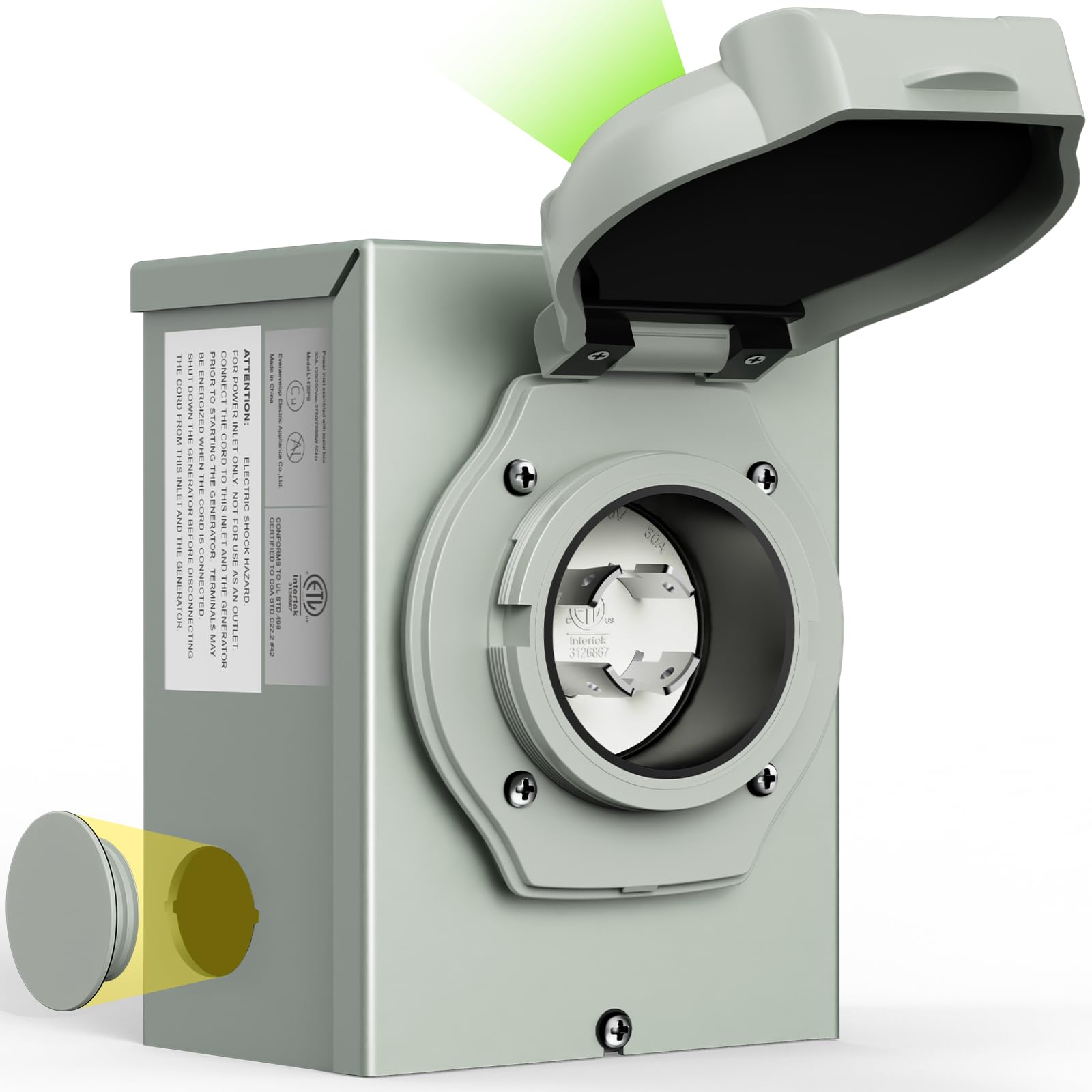
I rely on a weatherproof inlet box to hardwire a portable generator safely to a transfer switch or panel without running cords through windows.
Why I picked it: Weatherproof, roomy wiring space, ETL listed, green power indicator.
Best for: Safe outdoor hardwiring to a transfer switch or panel.
Affordable, essential accessory for a proper installation.
Pros
- Weatherproof cover protects inlet
- Green LED indicates power
- Extra wiring space inside
- ETL listed for safety
Cons
- Knockouts can be difficult to remove
- May require a knockout punch for some installs
My take
I installed this inlet box on an exterior wall and liked the extra wiring room; it made routing and terminating wires much less cramped than typical boxes.
The front-facing inlet and weatherproof spring cover are smart details. The green indicator light gives an immediate visual confirmation the box is energized, which I found useful during hookups.
Be prepared for tough knockouts — I ended up using a knockout punch to make a clean opening. After that small hurdle the box performed exactly as needed and is a much safer solution than running generator cords through a door or window.
4. Westinghouse 14500 Peak Watt Tri-Fuel Home Backup Portable Generator (WGen11500TFc) – Best for Large Homes
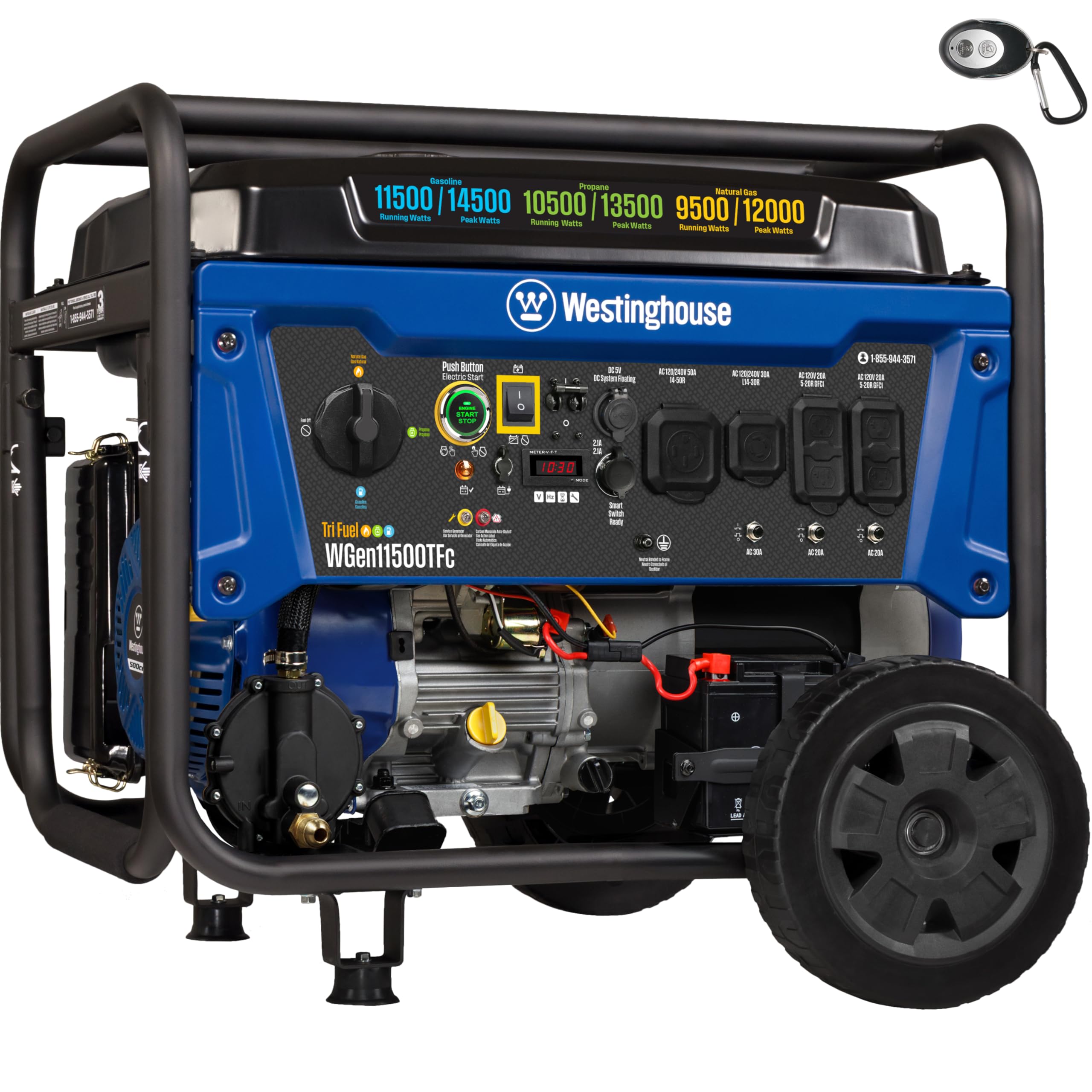
When I needed the extra capacity for a large home, this unit delivered high running watts, long runtime, and low THD for sensitive electronics.
Why I picked it: Highest output and low THD for sensitive devices.
Best for: Large homes and anyone wanting to run AC and electronics safely.
Higher-end option built for extended, heavy-duty use.
Pros
- Very high running and peak watts
- Low THD safe for electronics
- Long runtime on a big fuel tank
- Copper windings for durability
Cons
- Very heavy to move
- Louder than smaller units
- Overkill for small households
My take
This is the most powerful unit I tested and it’s built like it. Out of the box it came with oil, funnel, and a small tool kit — I had it assembled and started quickly.
I tested sensitive electronics while running larger loads and saw stable voltage with THD under 5%, which gave me confidence powering computers and TVs during outages.
Run time is impressive: the larger fuel tank extended continuous operation far beyond smaller models. Remote start is reliable, but be mindful of the unit’s size — it’s portable in name only and benefits from two people to position it.
If you have a bigger house and want one generator to handle nearly everything, this is the model I’d recommend for that use case.
5. Westinghouse 13500 Peak Watt Tri-Fuel Home Backup Portable Generator (WGen10500TFc) – Best Balanced Power & Runtime
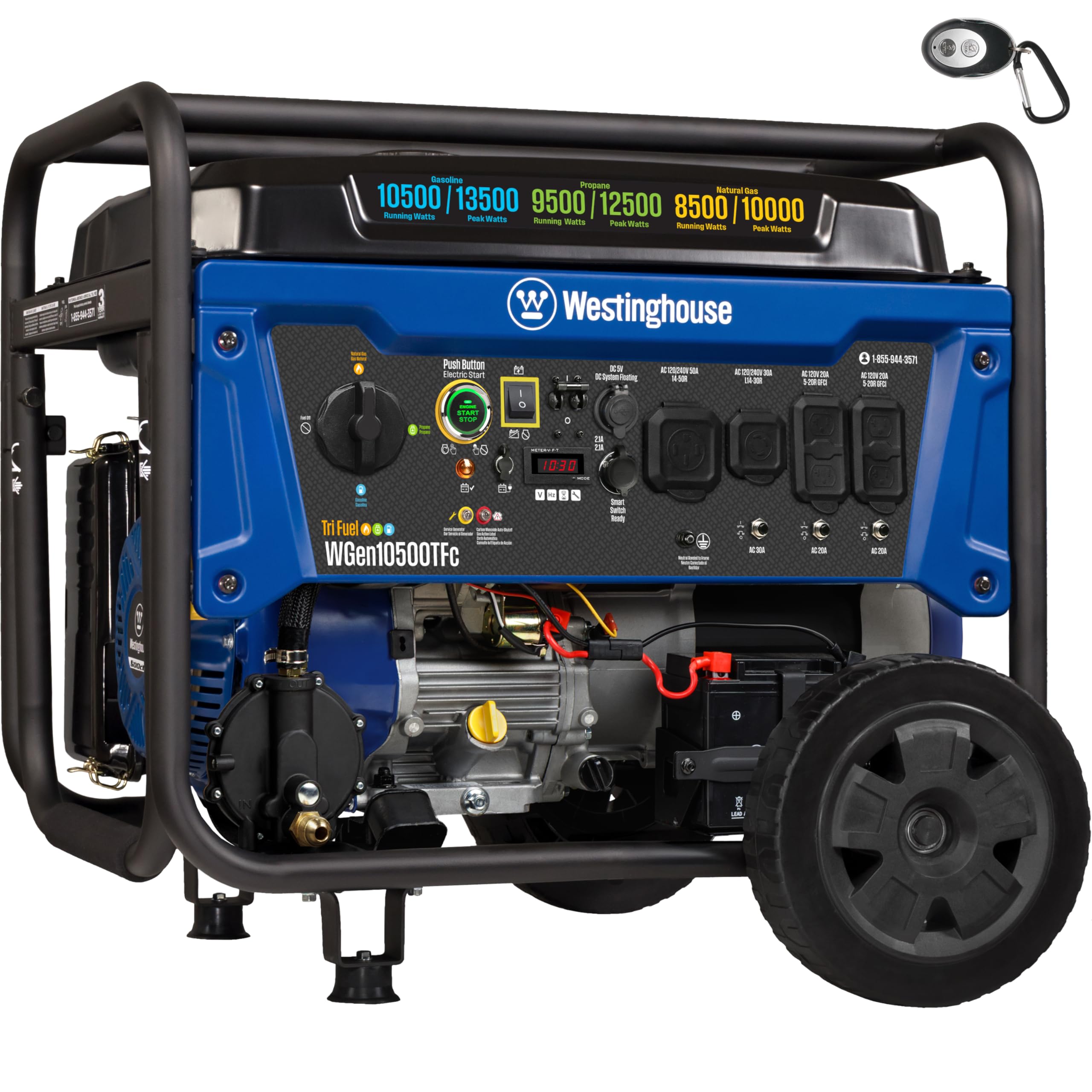
I found this model to hit a practical balance of power, runtime, and tri-fuel flexibility — a reliable middle ground for many whole-house setups.
Why I picked it: Strong running watts plus long runtime and tri-fuel convenience.
Best for: Homes needing long runtime with flexible fuel options.
Balanced choice for performance and endurance.
Pros
- Long 19-hour runtime on gas
- Tri-fuel flexibility included
- Remote start and VFT display
- Simplifies whole-house backup
Cons
- Heavy—needs two people to mount
- Delivery timing can vary
- Large footprint for storage
My take
I unboxed and set this generator up quickly; it included oil, a funnel, and hoses for propane and natural gas which made initial setup easier.
Startup was immediate and it ran smoothly powering well pumps, refrigerator, lights, and other essentials. The large tank translates to long unattended run periods, which matters during extended outages.
Packaging and included accessories are thoughtful, and the fold-away handle plus durable wheels make moving it less painful even though it’s heavy. For long outages where refueling is inconvenient, this model gave me peace of mind.
6. EF ECOFLOW DELTA 3 Portable Power Station, 1024Wh LiFePO4 Battery – Best Battery Backup / Quiet Option
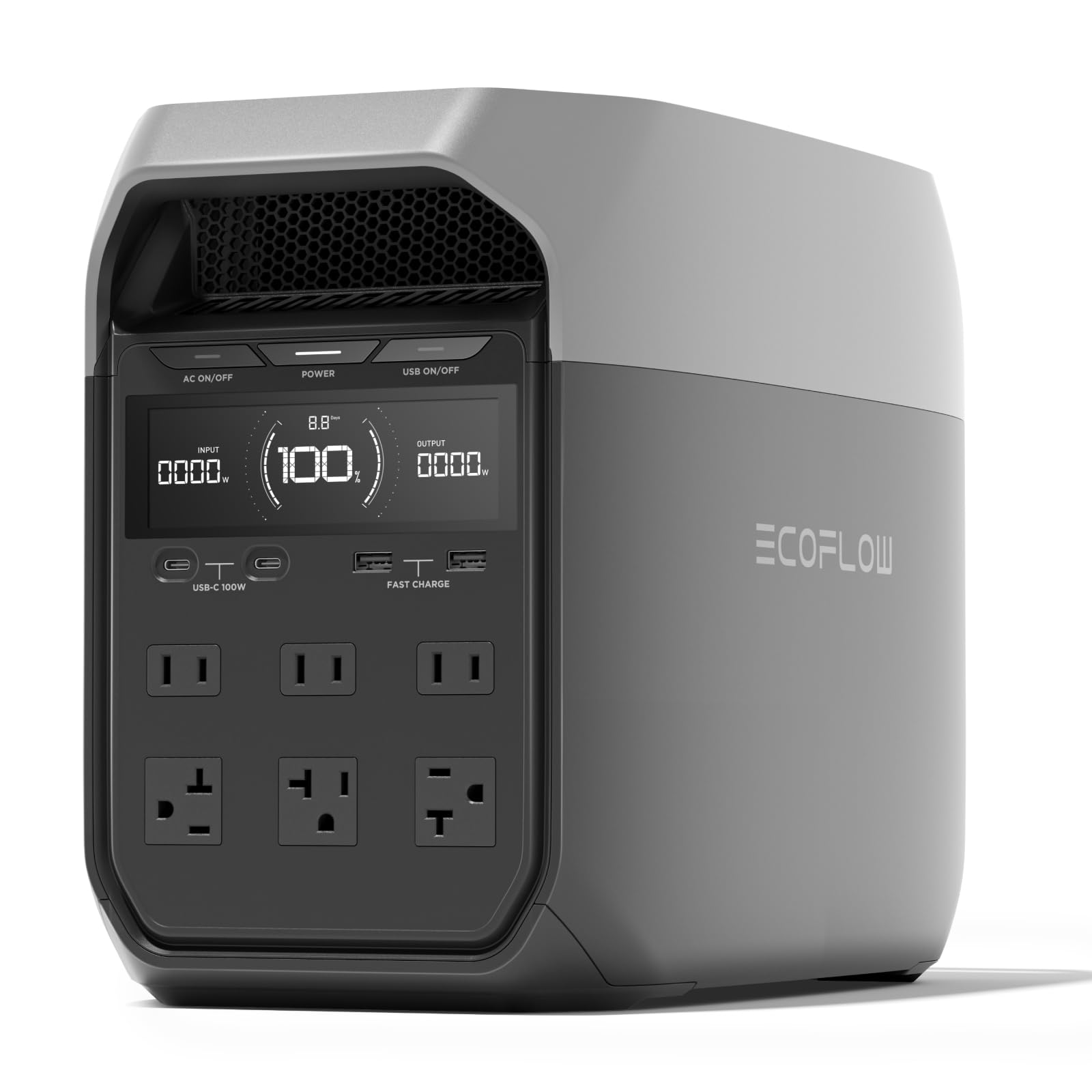
I used the DELTA 3 when silence, instant on power, and clean output for electronics mattered most — it charges fast and is ideal for short outages or camping.
Why I picked it: Very fast charging, LiFePO4 longevity, quiet operation.
Best for: Silent backups, camping, sensitive electronics, and quick charge needs.
Higher upfront cost but low maintenance and silent operation.
Pros
- Full charge in under an hour
- LiFePO4 cells for long life
- Very quiet operation
- Multiple AC and USB-C outputs
Cons
- Limited energy compared to fuel generators
- Needs extra batteries for extended outages
- Not ideal for heavy AC loads without management
My take
I added the DELTA 3 to my kit and was impressed with how fast it charges from AC and solar. An 80% charge in roughly half an hour made it practical for quick turnarounds.
The LiFePO4 chemistry gives me confidence in longevity and cycle life; EcoFlow’s app integration also made monitoring and remote shutoff convenient during tests.
I used it to run laptops, lights, a small refrigerator, and charge phones — everything stayed stable and quiet. For heavy-duty whole-house needs it won’t replace a large generator unless you expand capacity with additional batteries, but for silent, clean power it’s the unit I reach for first.
How I Choose Backup Power for a Home
Determine your essential load
I start by listing what must stay on during an outage: refrigerator, well pump, furnace, lights, and medical equipment if applicable. Add up starting and running watt requirements for those items before choosing a generator.
For heavy-draw appliances like central AC or electric water heaters, plain running watts won’t tell the whole story — look for high peak/starting watt capability.
- Make a basic load list: fridge, sump pump, lights, router.
- Include starting watts for motors and compressors.
- If unsure, prioritize circuits rather than total household.
Fuel type matters to your plan
I prefer tri-fuel or dual-fuel units when access to a steady fuel supply is uncertain. Natural gas or propane can reduce the frequency of refueling during long outages.
Battery stations are ideal when you want silent, instant power and clean output for electronics, but plan for limited energy capacity unless you expand with extra batteries.
- Gasoline: highest power density, needs refueling.
- Propane/Natural gas: convenient, less messy, longer-term supply.
- Battery: silent, clean, fast charging, limited runtime.
Transfer switch and inlet box safety
I always hardwire backup power through an inlet box and transfer switch or interlock. That keeps generator exhaust and cords outdoors and prevents dangerous backfeed into the grid.
An ETL-listed inlet box with weatherproof cover and an indicator light makes hookups safer and more foolproof.
- Use a licensed electrician for transfer switch installation.
- Install a weatherproof inlet box on an exterior wall.
- Prefer front-facing connectors and a clear power indicator.
Noise, placement, and ventilation
I never place a generator near windows, vents, or occupied spaces because of CO and noise. Always follow clearance requirements and use a CO monitor when running a generator near structures.
Battery stations change this equation — I use them indoors or inside RVs when ventilation and quiet are priorities.
- Keep generators downwind and several feet from buildings.
- Use CO detectors anytime a generator runs nearby.
- Consider a battery station for indoor, quiet backups.
Maintenance and warranty
I look for units that include basic accessories (oil, funnel, battery charger) and a clear maintenance schedule. A multi-year warranty and accessible technical support matter to me when I’m investing in a backup system.
For battery systems, check cycle life ratings and warranty terms on the battery chemistry.
- Stock spare oil, filters, and spark plugs for gas units.
- Keep batteries topped up and follow storage guidelines.
- Register the product for warranty and technical support.
Frequently Asked Questions
Can one of these portable generators run my whole house?
It depends on your home’s load. I size generators by the specific circuits I want to run — many of the larger Westinghouse models here can handle a majority of appliances including AC if you manage loads or have an appropriate transfer switch and wiring. For full confidence, add up running and starting watts for your essential equipment before deciding.
Is tri-fuel capability worth the extra investment?
I find tri-fuel valuable if you want flexibility during long outages. Being able to switch between gasoline, propane, and natural gas reduces refueling stress. If you always have reliable fuel access and shorter outages, dual-fuel or a battery station may be enough.
When should I choose a battery station over a gas generator?
I choose battery stations when I need silent, clean power for electronics, instant-on capability, or portability for camping. For short outages or to power sensitive gear, they excel. For multi-day outages or heavy loads like central AC, a fuel-powered generator or expanded battery bank is more practical.
Do I need an inlet box and transfer switch?
Yes — I always hardwire through an inlet box and transfer switch or interlock to prevent dangerous backfeed and keep cords outside. The inlet box is a small investment that makes generator hookup safer and cleaner.
Final Take
After testing these options, I recommend choosing based on the loads you need to run and how you plan to fuel the unit. For large homes and extended outages I lean toward the higher-capacity tri-fuel Westinghouse models. For quiet, clean, and instant backup I prefer the EcoFlow DELTA 3 when capacity needs are modest.
Whichever path you take, plan the installation with a transfer switch and inlet box, follow ventilation and safety guidance, and keep routine maintenance current — that’s how I ensure my backup power is ready when I need it most.
