
I tested a range of wood adhesives so you can pick the right glue for woodworking, outdoor builds, quick repairs, and mixed-material fixes. Here are the glues I reach for most often and why.
I spend a lot of time building, repairing, and finishing wood projects, so I keep several adhesives on my bench. Each glue below earned a spot because it solved a specific problem during real projects—whether that was fast setting miters, weather resistance for outdoor furniture, or a natural-looking bond on an antique table.
This roundup focuses on practical performance: clamp time, water resistance, finish behavior, cleanup, and the everyday tricks that make one adhesive better than another for a particular task.
If I need a dependable all-around wood adhesive I reach for Gorilla or Titebond; when I want speed I use FastCap; for mixed materials I use E6000; Elmer's covers crafts and classrooms.
1. Gorilla Wood Glue, Natural Wood Color, 1 Gallon Bottle (Pack of 1) – Water Resistant – Best Overall
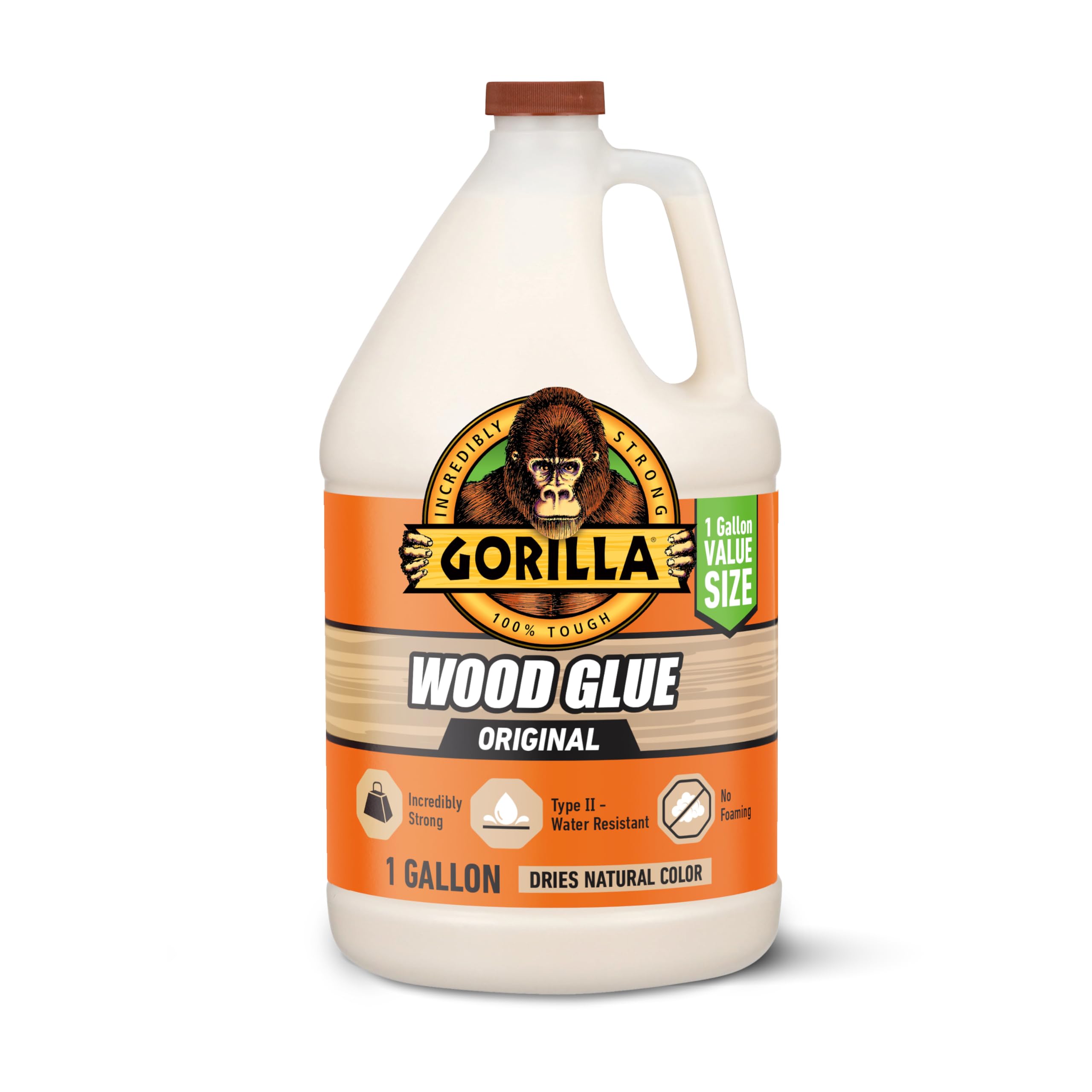
A hardworking PVA that dries to a natural tan, clamps quickly, and is water-resistant for indoor or outdoor projects.
Why I picked it: Reliable fast clamp time with a natural-looking dry line and Type II water resistance.
Best for: Furniture repairs, general woodworking, projects where the bond should blend in.
Great value when you need a lot of glue for multiple projects.
Pros
- Strong, wood-like dry bond
- Short 20–30 minute clamp time
- Water resistant (Type II)
- Sands and paints cleanly
- Easy water cleanup
Cons
- Not fully waterproof for constant immersion
- Tan color may show on light woods
My take
When I need a dependable, everyday wood glue I reach for this Gorilla formula. It grabs quickly—my clamp times are routinely in that 20–30 minute window—so I can move on to the next step the same day while still getting a full cure by 24 hours.
The bond finishes to a translucent tan that actually blends into many hardwoods; on an antique table I worked on, the glue line nearly disappeared after sanding. I also appreciate that I can thin a little with water for panels or use it as a wood filler in a pinch.
Cleanup is easy with warm, soapy water and the glue sands and paints without soft spots. I treat it as my go-to for general joinery and repairs where I want a strong joint and a neat finish.
2. Titebond III Ultimate Wood Glue, 16-Ounces #1414 16 Ounce – Best for Exterior & Food-Safe Use
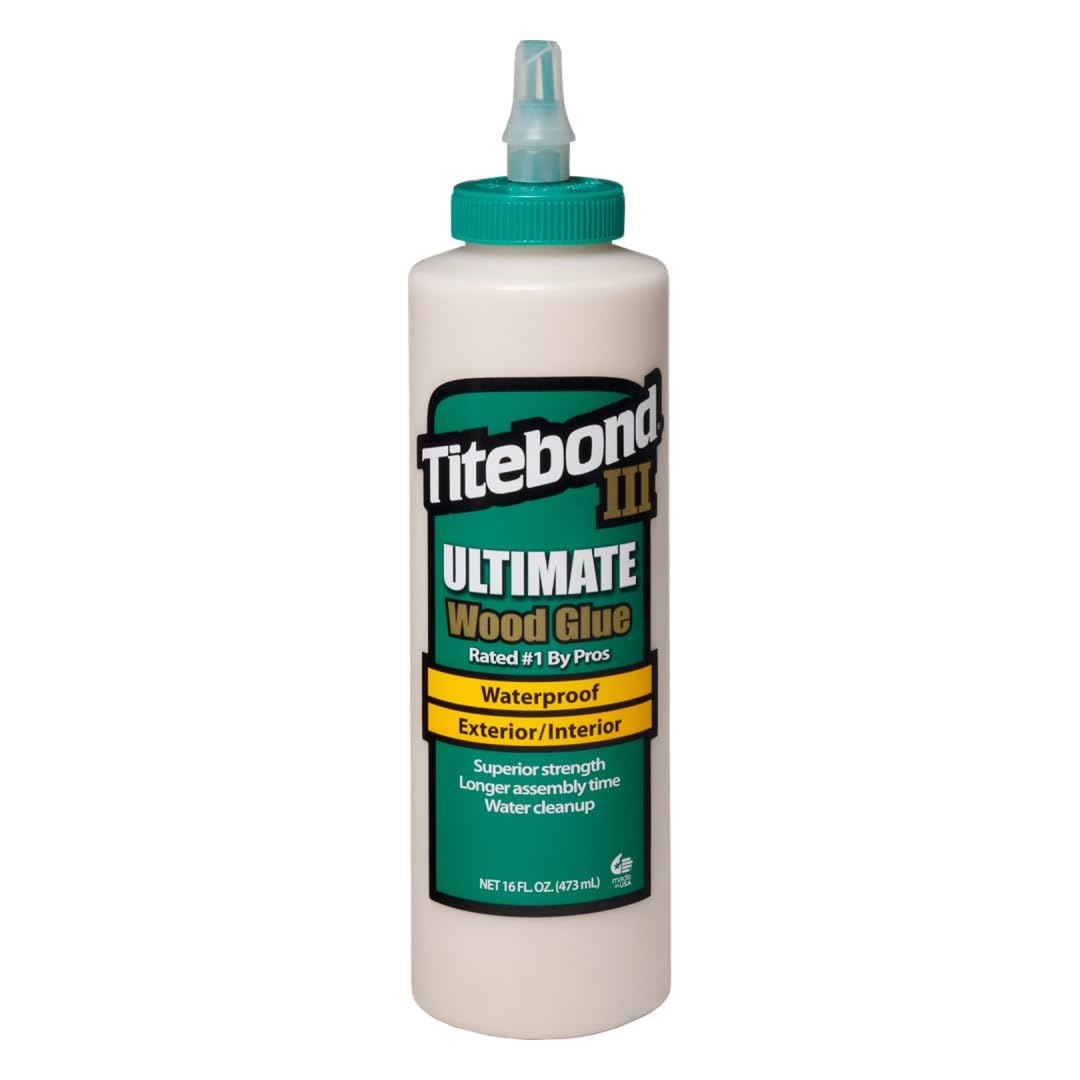
A waterproof PVA with extended open time, great for outdoor builds and items that require indirect food contact.
Why I picked it: Waterproof Type I rating and a longer open time for tricky glue-ups.
Best for: Outdoor furniture, planters, birdhouses, and kitchen projects with indirect food contact.
A premium choice worth it for exterior durability and extra working time.
Pros
- Waterproof (ANSI/HPVA Type I)
- Long open time for adjustments
- Strong final bond
- Water cleanup
- Non-toxic, low VOC
Cons
- Thinner viscosity can allow slippage
- Cap can be fiddly with limited grip
My take
Titebond III is the glue I reach for when a project must stand up to weather or occasional moisture. The Type I waterproof rating gives me confidence for outdoor furniture and planters.
I like the longer open time because it lets me make alignment tweaks on wide glue-ups without panic. It spreads easily, sands well, and wipes clean with water while wet—exactly what I want when I need a durable, workmanlike bond.
A note of caution: its lower viscosity means I watch for slippage on joints under sustained load, but in my experience it forms bonds at least as strong as the wood when clamped and cured properly.
3. Titebond 5003 II Premium Wood Glue, 8-Ounces 8 fl oz – Best Fast-Setting Wood PVA
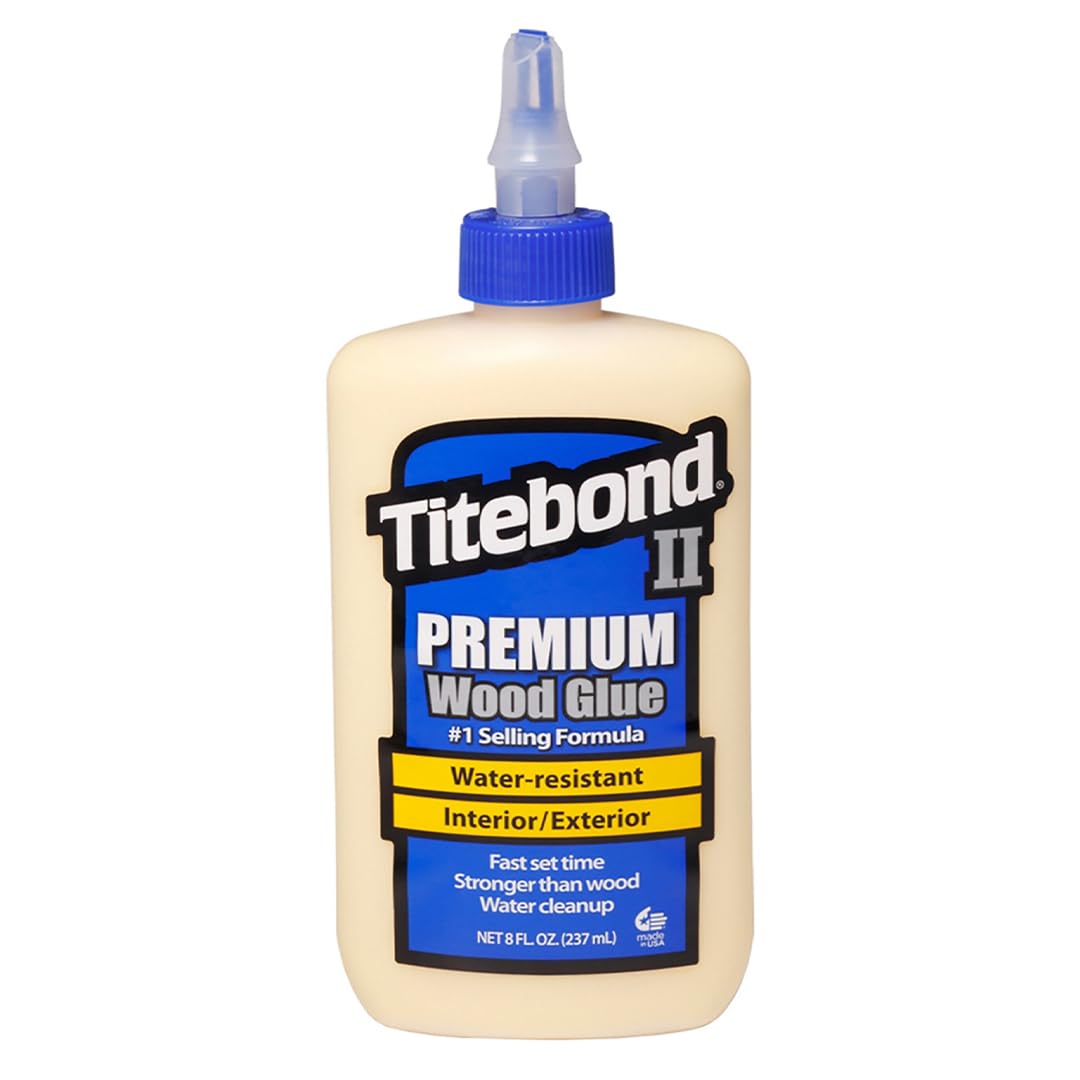
A fast-setting PVA that passed Type II water-resistance testing—good tack and quick set for many exterior and indoor tasks.
Why I picked it: Very fast set and strong initial tack with Type II water resistance.
Best for: Quick assembly, outdoor projects with occasional moisture exposure.
Solid value for everyday woodworking jobs and smaller quantities.
Pros
- Fast set, strong initial tack
- Type II water resistance
- Easy to sand
- Non-toxic and solvent-free
Cons
- Not fully waterproof for submerged use
- Thicker than some other PVAs
My take
I keep Titebond II handy for jobs where I want a fast set and dependable bond. It grabs quickly, so I often need less clamping pressure and shorter clamp times on smaller assemblies.
It’s also freeze/thaw stable and sands cleanly, which makes it convenient for outdoor trim, signs, and picnic-table style projects that see occasional moisture.
While it’s not rated for continuous immersion, in my builds it has held up well and saved time when I needed a fast, strong glue line.
4. 2 oz Eclectic Products 800432 E6000 Craft Adhesive 1 Count (Pack of 1) Clear – Best for Mixed Materials
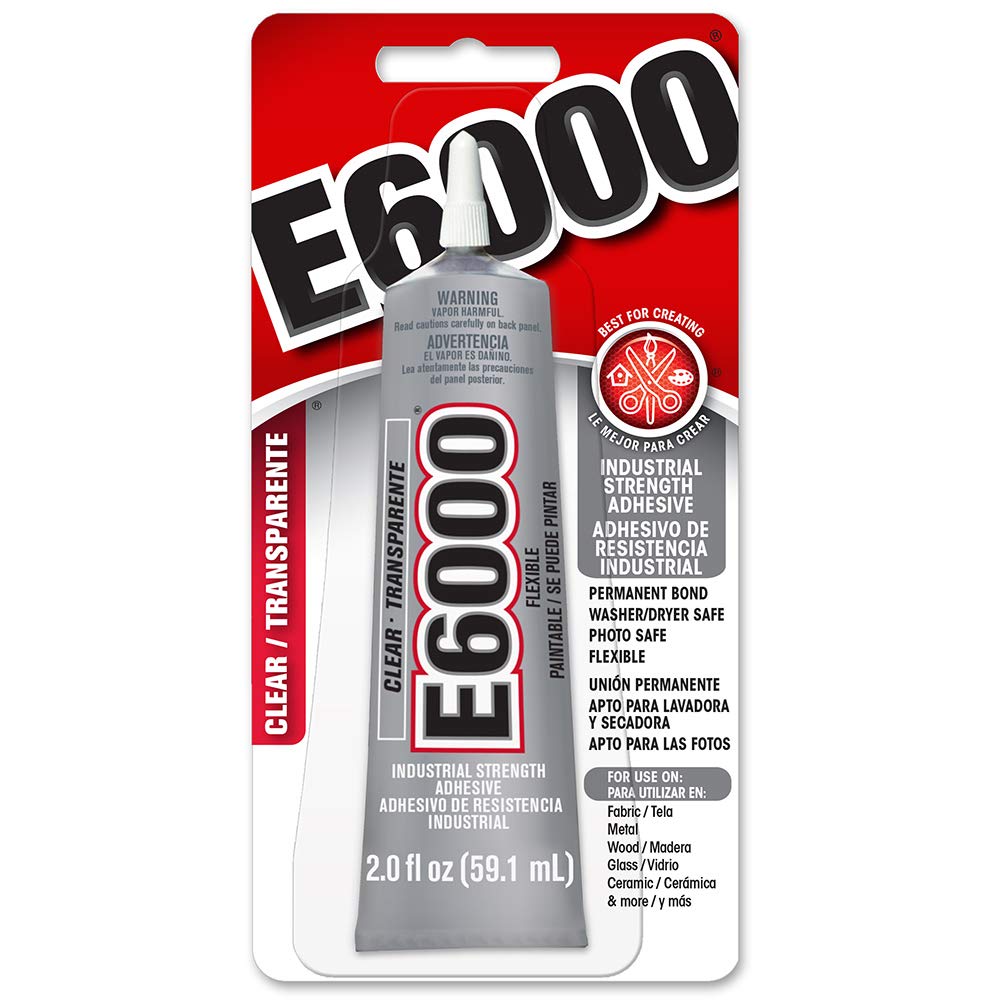
An industrial-strength, flexible adhesive that bonds wood to metal, glass, fabric, and many other materials.
Why I picked it: Unmatched versatility for non-wood or mixed-material repairs requiring flexibility.
Best for: Jewelry, fabric-to-wood repairs, glass, plastics, and projects needing a flexible bond.
A specialty adhesive I use when standard wood glue won’t stick both surfaces.
Pros
- Bonds many different materials
- Flexible after cure
- Waterproof and permanent
- Good for small, detailed repairs
Cons
- Strong odor during cure
- Can be messy and hard to remove
- Slow to fully set
My take
E6000 is not a traditional wood glue, but I pull it out whenever wood meets metal, glass, or fabric and I need a strong, flexible joint. It bonds where PVAs won’t and stays a bit forgiving instead of becoming brittle.
I’ve used it on everything from reattaching hardware to jewelry fixes; the flexibility is a real asset on items that flex or take impact. Be prepared for fumes and to tape off surrounding areas—this stuff can soak into fabric and is tough to remove once cured.
Dispensing takes practice; the bead is thin and runny, so I keep the tube upright and work slowly. For mixed-material work where I need a permanent, flexible bond, it has earned a regular spot in my toolbox.
5. Elmer's E3860 Multi-Purpose Glue-All, 1 Gallon, White – Best for Crafts & Classroom
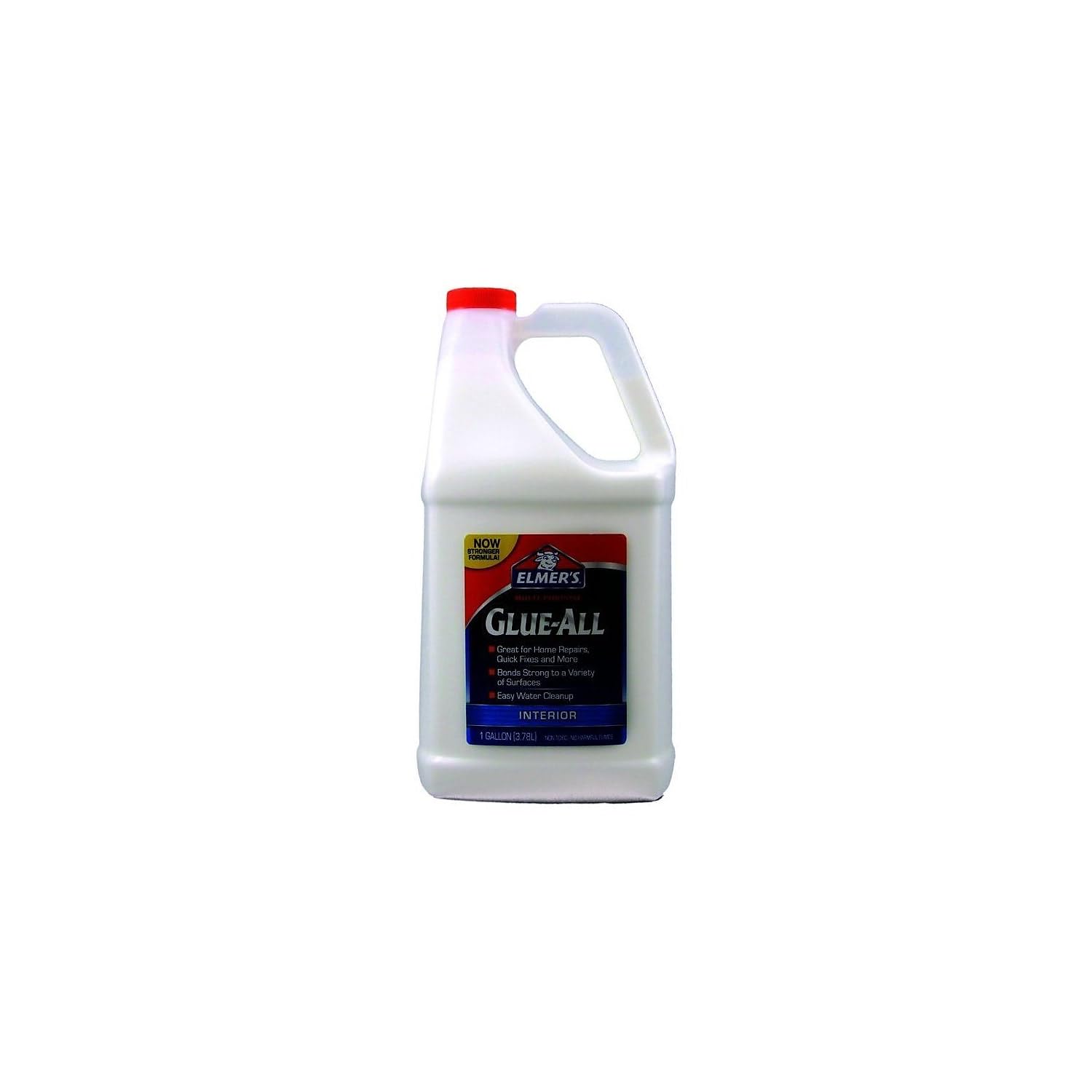
A non-toxic, multi-purpose white glue that dries clear and handles a wide range of household and craft tasks.
Why I picked it: Non-toxic, easy cleanup, and dries clear—perfect for crafts and light repairs.
Best for: Paper, fabric, trim, molding, classroom projects, and household quick fixes.
Very economical for classrooms, craft groups, and frequent small projects.
Pros
- Non-toxic and low odor
- Dries clear
- Easy water cleanup
- Versatile on many surfaces
Cons
- Not for heavy structural joints
- White while wet, may need tidy-up
My take
Elmer’s Glue-All is my go-to for crafts, school projects, and quick household fixes. It’s easy to squeeze out, washable from skin and clothes, and dries clear—ideal for trim and paper work.
I’ve used it for journal-making, fabric-to-paper assemblies, and even slime-class demonstrations. It doesn’t have the structural strength of carpenter PVAs, but for non-structural bonding where safety and cleanup matter, it’s hard to beat.
If I need a finish that looks clean and I don’t want fumes or specialized handling, this is the glue I reach for.
6. FastCap 2P-10 Super Glue Adhesive 2.25 oz Thick + 12 oz Activator Combo Pack – Best for Speed & No-Clamp Joints
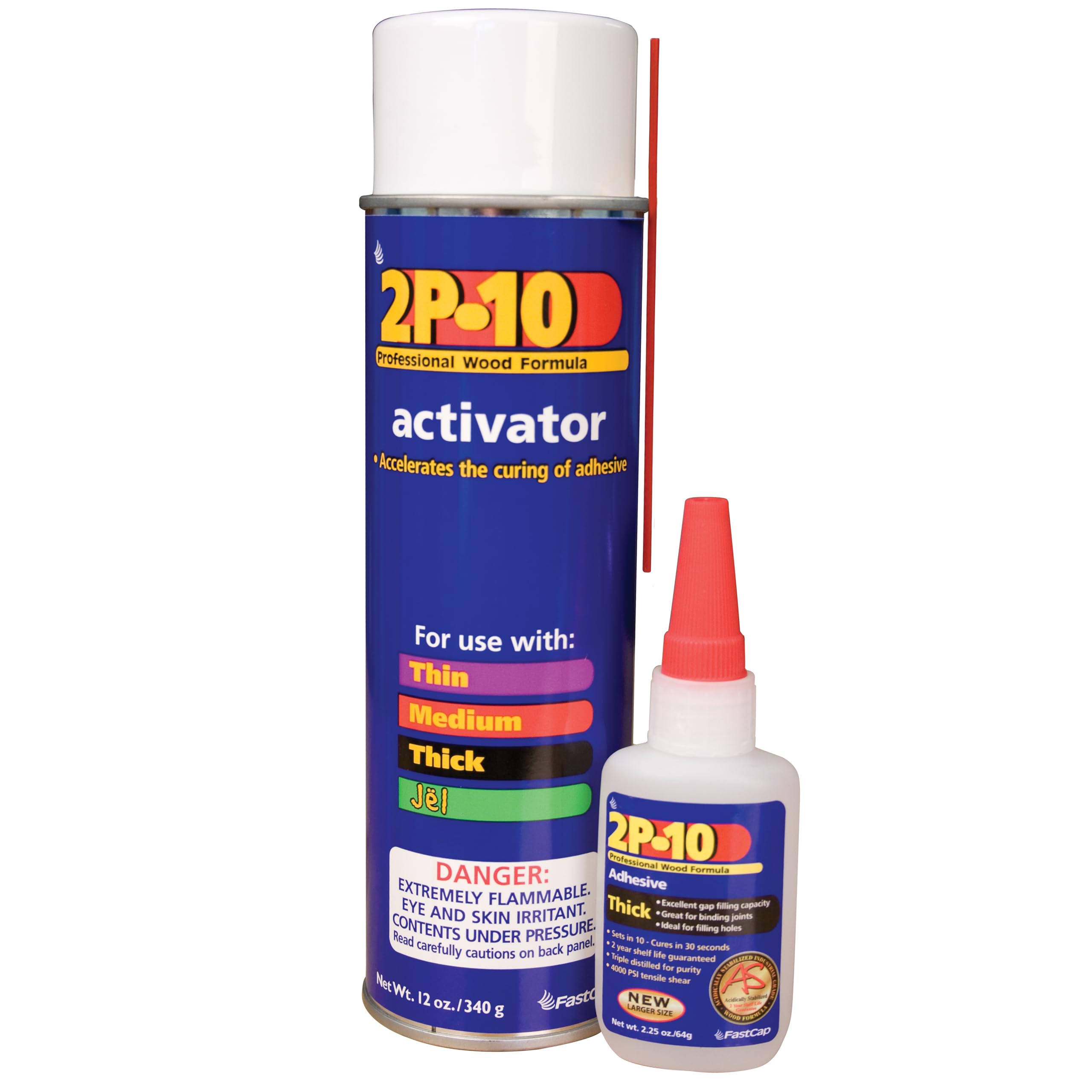
A two-part cyanoacrylate system that bonds in seconds with an activator—ideal for miters, trim, and fast repairs where clamping isn’t practical.
Why I picked it: Near-instant bonding with no clamps required for tight joints and trim work.
Best for: Miters, molding, quick repairs, and assemblies where you want immediate handling strength.
A specialty tool that pays off when speed and a clean joint matter.
Pros
- Bonds in about 10 seconds
- No clamping required
- Very strong, clean joints
- Precise application tip
Cons
- Very little working time
- Requires activator and prep
- Can be unforgiving on alignment
My take
When I need an instant bond—like for miters on trim or a quick furniture repair—FastCap’s 2P-10 system is a game changer. Apply the gel, spray the activator, and you have a firm bond in seconds with no clamps.
I use it for door casings and mitered corners because it delivers tight, clean joints and cuts a bunch of installation time. The downside is you must be precise: there’s only a couple of seconds to adjust once the parts meet.
It’s become my go-to when speed and a near-instant handling strength are the priority, but I still use traditional wood glue when I want a longer open time for alignment.
How I Choose the Right Wood Glue
Match water resistance to the job
I always start by asking whether the piece will see weather or constant moisture. For full waterproofing (boats, continuous outdoor exposure) I choose Type I-rated glues. For occasional moisture or outdoor furniture I accept Type II or water-resistant PVAs.
If the project is interior and finish appearance matters, I’ll pick a PVA that sands and paints cleanly.
- Type I = waterproof for heavy exposure
- Type II = water resistant for occasional moisture
- Interior projects can use standard PVA
Consider open time and clamp time
I decide between a fast-setting glue when speed matters (FastCap, Titebond II for quick tack) and a longer open time when I need to align wide surfaces (Titebond III).
Short clamp times speed projects but leave less room for error. Longer open time reduces stress on fit-up.
- Short clamp time = faster workflow, less adjustment
- Long open time = easier alignment on panel glue-ups
Think about finish behavior
If the glue line will be visible, I select a product that dries to a neutral color and sands smoothly. For antiques or furniture where the bond should be invisible, a wood-colored PVA is helpful.
For trim and paint-ready surfaces, ease of sanding and paintability matters to me.
- Natural/tan dries blend with wood
- Clear-dries preferred for mixed-material edges
- Sands and paints without soft spots
Use specialty adhesives when needed
I reserve E6000 and two-part CA systems for mixed materials, flexible bonds, and instant fixes. They’re not replacements for PVAs when you need long-grain wood glue strength, but they solve problems PVAs can’t.
Epoxy is my choice for gap-filling structural repairs and for bonding dissimilar materials under load.
- E6000 = multi-material, flexible bonds
- 2P-10 CA + activator = instant, clamp-free joints
- Epoxy = gap filling and heavy structural repair
Buying bulk and safety
I buy gallon sizes for shops that use glue regularly and smaller bottles for occasional use. Store PVAs upright, cap them tightly, and keep specialty adhesives ventilated during cure.
Always read safety instructions—non-toxic doesn’t mean you shouldn’t avoid prolonged skin contact or fumes during cure.
- Buy gallons for frequent use, small bottles for occasional projects
- Store upright, capped, and away from freezing temperatures
- Ventilate when using strong-smelling adhesives
Frequently Asked Questions
Can I use wood glue outdoors?
I pick the glue based on exposure: for constant wet conditions I choose a Type I/waterproof formula; for occasional moisture Type II or water-resistant glues work well. Titebond III is my choice when durability in weather is critical.
How long should I clamp glued wood?
I typically clamp for the recommended window—20–30 minutes for faster PVAs, up to 30 minutes for some formulas—and then let the joint cure 24 hours before putting it under stress for a fully cured bond.
What do I use for mixed materials like wood to metal?
I reach for specialty adhesives like E6000 or a two-part epoxy. E6000 gives a flexible, waterproof bond for many materials, while epoxy is my go-to for structural metal-to-wood connections.
Can I sand and paint over glued joints?
Yes—most PVAs sand and paint cleanly once fully cured. I always let the glue fully cure, sand lightly, and then apply primer or paint for the smoothest finish.
Is it safe to use these glues around food prep surfaces?
I use Titebond III or II when I need indirect food-contact safety; both are commonly used for cutting boards and utensils when labeled accordingly. Always confirm the product notes if food-contact is a requirement.
Final Take
I choose glue based on the job: Gorilla for versatile, fast work that looks great; Titebond III when I need true waterproof performance; Titebond II for quick tack and solid outdoor work; FastCap 2P-10 for instant, clamp-free joints; E6000 for mixed-material fixes; and Elmer’s for crafts and classroom needs.
Keep a small selection on hand and match the adhesive to exposure, open time, and finish needs—and your projects will come together cleaner and stronger.
