
I tested six popular jumper cable kits across cars, trucks, and cold-weather use. Here are the ones I keep handy for everyday emergencies, heavy-duty work, and stylish roadside kits.
I’ve kept jumper cables in my vehicles for years, and I’ve learned which features actually matter when a battery dies. In this roundup I compared gauge, length, clamp quality, and safety features across six sets I’ve used in real roadside situations.
Whether I’m helping a neighbor in a parking garage or jump-starting a big diesel on the farm, I explain which cable works best for each scenario and why I’d reach for that set first.
I focused on three practical differences when testing: conductor size (gauge) for power delivery, cable length for reach, and safety electronics (reverse-polarity or smart protectors) for ease-of-use. Those factors determined which cable I brought to each job.
1. GOODYEAR Heavy Duty Jumper Cables — 4 Gauge, 16 ft – Best Overall
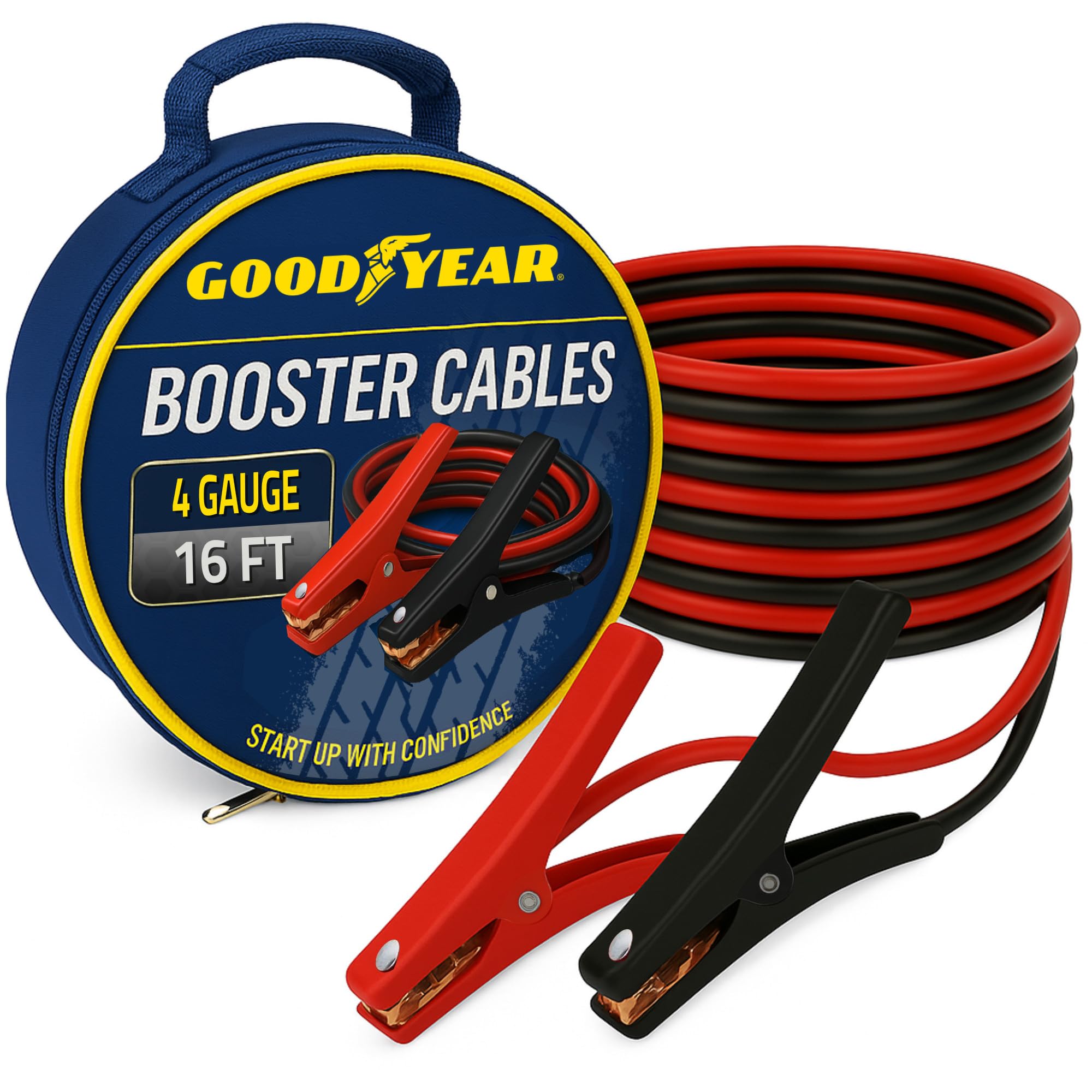
A dependable all-around set with thick 4-gauge conductors, long reach, and a tidy carrying case.
Why I picked it: Reliable power transfer, 16-foot reach, and a durable carry case for everyday readiness.
Best for: Daily drivers and light trucks that need a solid, no-fuss jumper cable set.
Affordable, everyday hardware I’m happy to keep in the trunk.
Pros
- 4-gauge for strong power transfer
- 16-foot length for flexible positioning
- Durable PVC insulation
- Tidy carrying case included
Cons
- Not intended for very large diesel engines
- Clamps are sturdy but basic
My take
I keep these Goodyear cables in my daily driver and they’ve been the set I reach for most often. The 4-gauge wire moves current quickly enough to start sedans and most light trucks without the cables getting hot.
The 16-foot length saved me more than once when vehicles couldn’t park bumper to bumper. The PVC insulation stayed flexible during a cold morning jump and the clamps gripped terminals confidently.
I appreciate the carrying case — it prevents tangles and makes it simple to stow the set in the trunk or under a seat. For routine emergencies, this is the reliable, low-fuss option I recommend keeping in every car.
2. NOONE 0 Gauge 25FT Heavy Duty Jumper Cables — 1000A with S6 Smart Safety System – Best for Biggest Engines
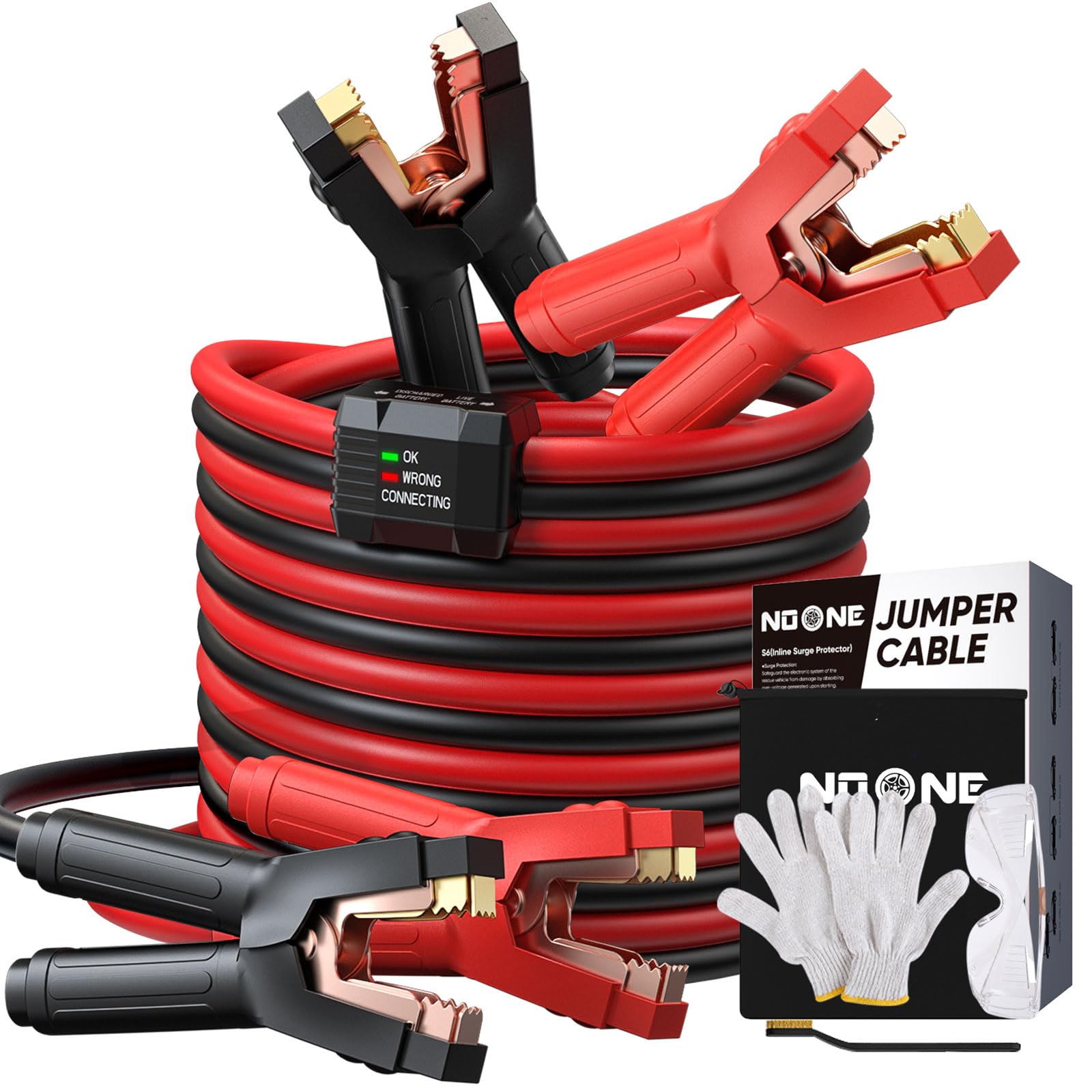
A near-professional kit with 0-gauge conductors, 25-foot reach, and a built-in smart protector for safer hookups.
Why I picked it: Massive 0-gauge capacity and smart reverse-polarity protection make it ideal for heavy diesel work.
Best for: Large trucks, commercial vehicles, and anyone who needs maximum current and long reach.
A more premium, heavy-duty choice for demanding use.
Pros
- 0-gauge delivers huge current
- 25-foot length for awkward situations
- Reverse-polarity smart protector
- Comes with gloves and accessories
Cons
- Hefty to carry
- Overkill for small cars
My take
When I needed cables for a Mitsubishi Fuso and other big rigs, these were the only ones I trusted. The 0-gauge conductors move a tremendous amount of current, and I jump-started large diesels without hesitation.
The S6 Smart Protector added real confidence—if I clipped something wrong the unit cut the current and prevented sparks. I also liked the accessories: gloves, goggles, and a terminal brush made on-the-road work cleaner and safer.
The 25-foot length is generous; I’ve made connections in tight parking areas and garages where shorter sets wouldn’t reach. These are a tool for heavy-duty situations rather than a lightweight trunk set.
3. Pretty Pink Roadside Kit — 12 ft Jumper Cables plus First Aid and Emergency Tools – Best for Style & Essentials
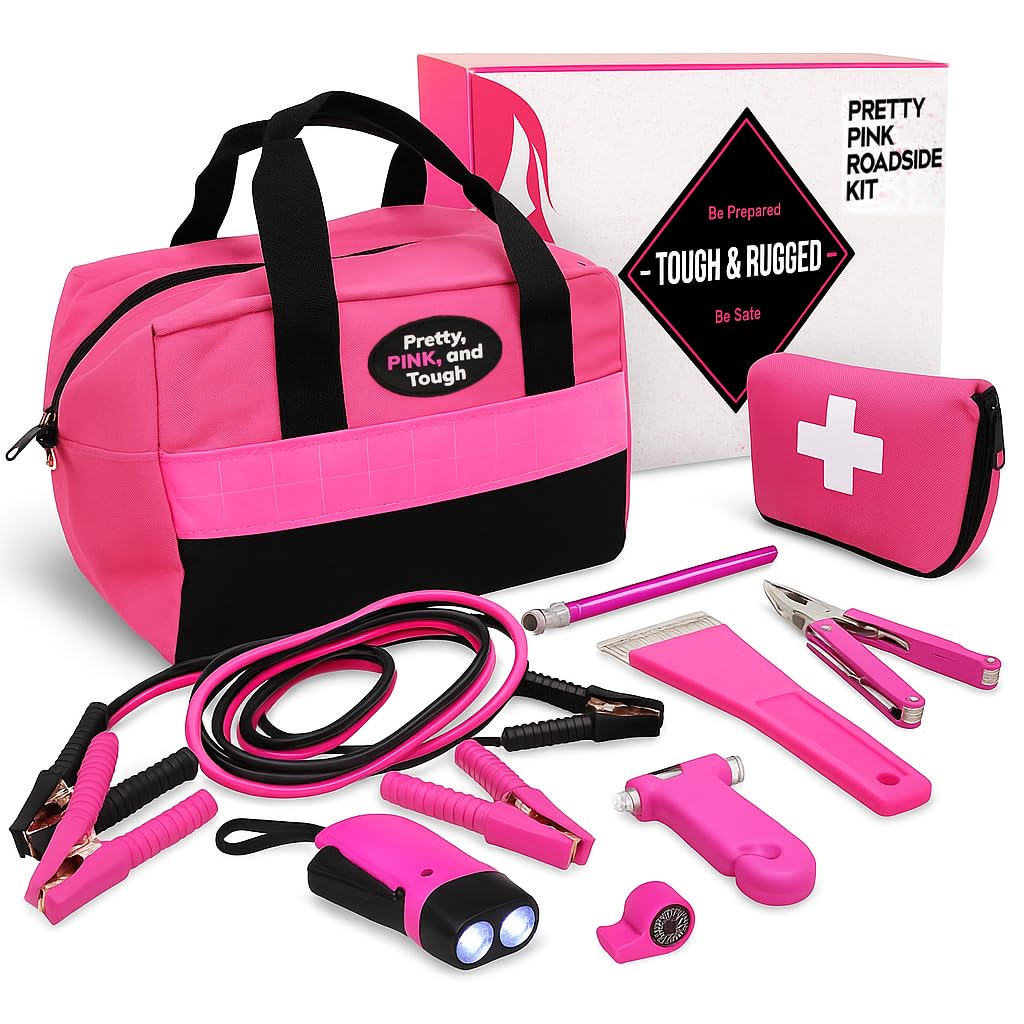
A complete roadside kit in a sturdy pink carry bag that blends practicality with style.
Why I picked it: Compact, thoughtfully organized kit that combines jumper cables with first-aid and emergency tools.
Best for: Teen drivers, gift-giving, and anyone wanting a compact, well-rounded emergency kit.
A midrange kit that adds convenience and style.
Pros
- Attractive, durable carry bag
- Includes first-aid and tools
- Reflective strip for visibility
- 5-year warranty
Cons
- 12-foot cables are shorter
- Not for heavy-duty engines
My take
I bought this kit because I wanted something practical that my daughter would actually keep in her car. The bag is tough, the reflective strip helped when I was roadside at dusk, and the 12-foot cables were perfectly adequate for most passenger cars.
Beyond the cables, the included first-aid kit, crank flashlight, multi-tool, and simple instructions made the kit genuinely useful. I liked having everything in one compact package — it removed the need to hunt for separate items.
If you want both function and a look your passenger won’t complain about, this kit hits that sweet spot. For larger trucks or repeated heavy use, I’d pair it with a heavier cable set, but for everyday driving it’s my go-to giftable kit.
4. A ABIGAIL Heavy Duty Jumper Cables — 1 Gauge, 25 ft, 800A – Best for Versatility
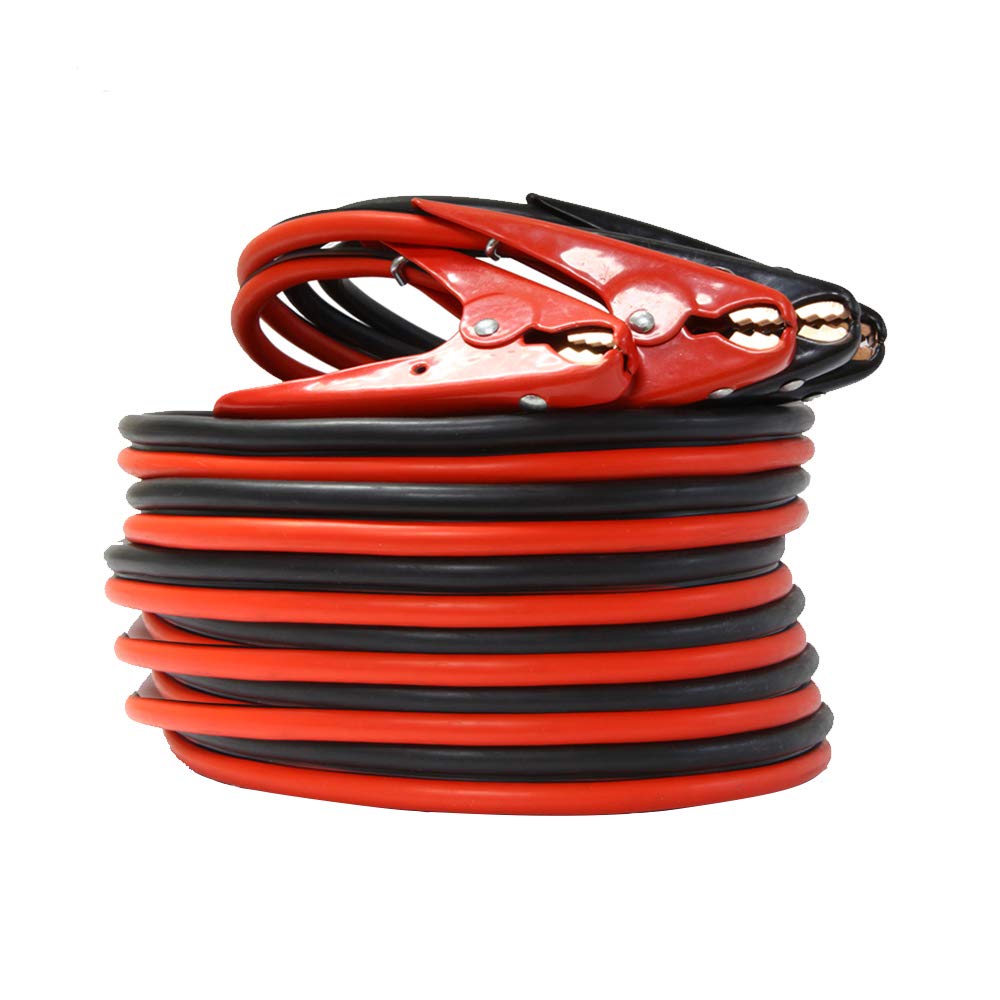
A useful middle-ground: beefy 1-gauge conductors, long reach, and tough clamps for varied jobs.
Why I picked it: Balanced power and length make it useful for farm, truck, and ATV work.
Best for: Owners of mixed fleets — trucks, tractors, and passenger vehicles.
A solid value for heavier-duty capability.
Pros
- 1-gauge for strong starts
- 25-foot reach
- Copper-coated clamps
- Good value for capacity
Cons
- Clamps bulkier than compact sets
- Wire is stiff compared to thinner cables
My take
I bought this set when I started hauling equipment and needed a cable that handled tractors and trucks. The 1-gauge conductors offered enough power to jump larger engines without the bulk of 0-gauge.
The 25-foot length meant I could reach batteries in trailers and awkward positions, and the color-coded cables made correct hookup quick. The heavy clamps grabbed terminals securely and didn’t slip during use.
For farm work or a mixed garage, these are the practical, economical heavy-duty cables I rely on when I need more than a standard roadside set but less than industrial gear.
5. HORUSDY 25FT Jumper Cables — 1-Gauge, ETL Certified with Smart Protector – Best for Safety Features
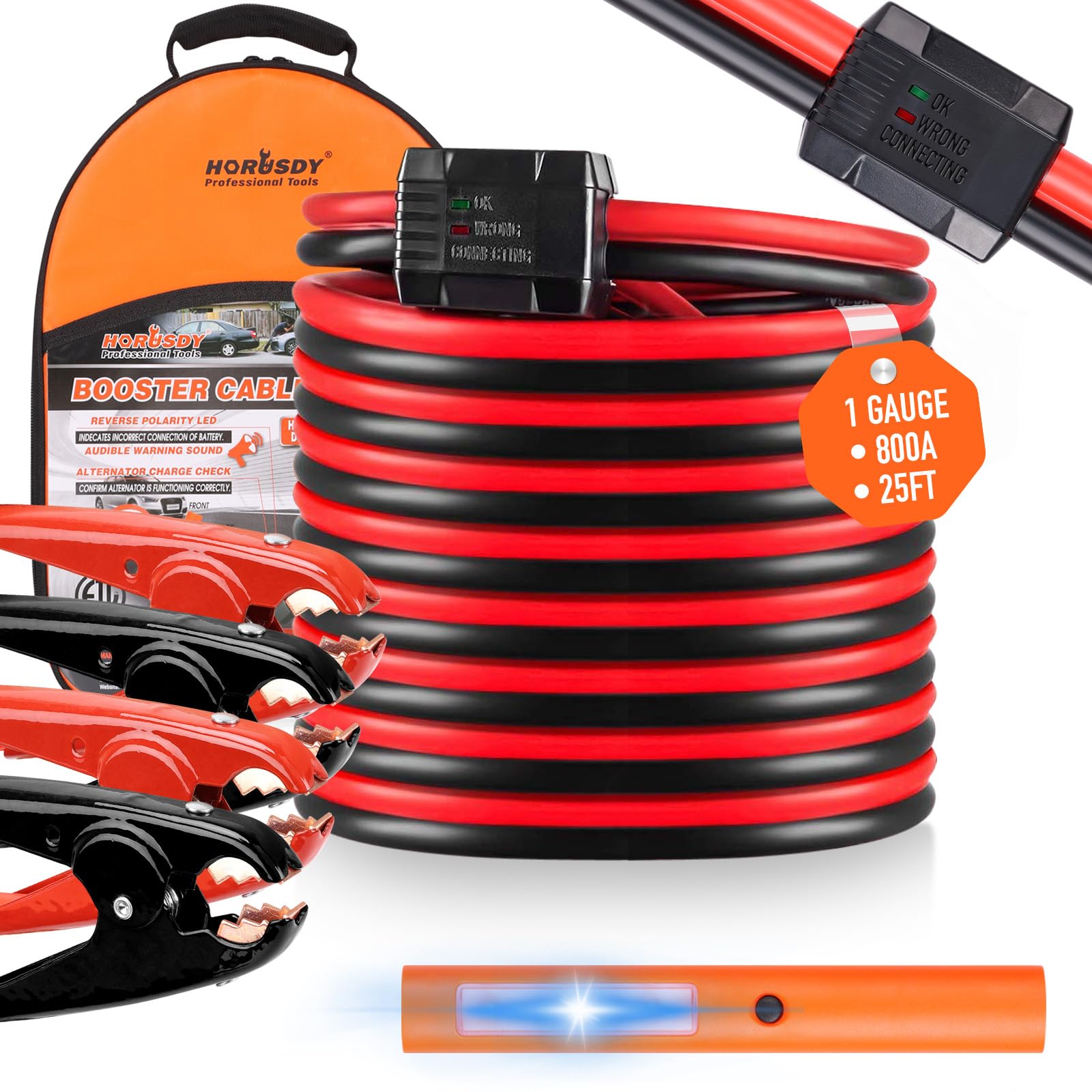
ETL-certified 1-gauge cables that combine long reach with a smart protector and LED indicators.
Why I picked it: ETL safety stamp plus an LED smart protector that signals correct hookup.
Best for: Drivers who want a reliable 1-gauge set with built-in hookup verification.
A trustworthy mid-to-upper range choice focused on safety.
Pros
- ETL certified construction
- Smart protector with LED indicators
- 25-foot reach
- Good clamp grip
Cons
- Slightly heavier than basic sets
- Smart electronics add complexity
My take
I liked these for their ETL certification and the smart protector that shows green when the connection is correct. That feedback removed second-guessing on dim roads or for new users assisting me.
The 1-gauge core and thick PVC kept the cables pliable and effective even in colder mornings. The clamps had aggressive teeth and a secure bite, which is what you want when working on modern battery terminals.
These stood out to me when I wanted both power and an extra layer of safety without stepping up to 0-gauge bulk. They’re a dependable choice for larger passenger vehicles and small trucks.
6. NOONE 2 Gauge Jumper Cable — 20 Feet with Smart-7 Protector and LCD – Best Midweight Value
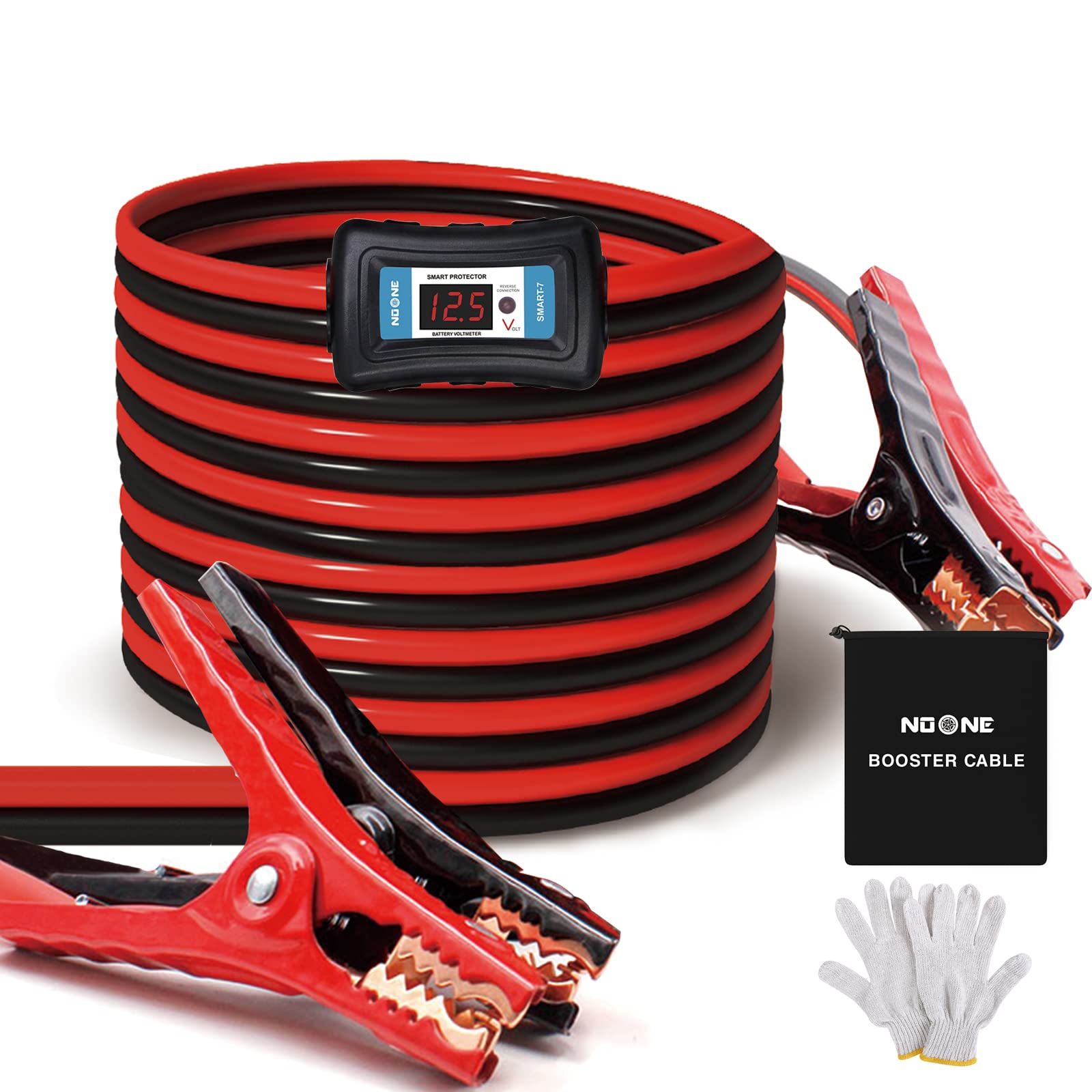
Balanced 2-gauge cables with a digital display, reverse-polarity protection, and solid clamps.
Why I picked it: Good power-to-portability ratio plus a digital voltmeter for on-the-spot diagnostics.
Best for: Owners who want heavier-than-standard cables with smart monitoring.
A practical midweight option that blends features and portability.
Pros
- 2-gauge for reliable starts
- Smart-7 protector with LCD
- UL-listed clamps
- 20-foot length
Cons
- Audible beep can surprise first-time users
- Not as heavy as 1/0-gauge sets
My take
I bought these for their balance of heft and usability. The 2-gauge core handled SUVs and pickups in my fleet without fuss, and the 20-foot length fit most parking scenarios I encountered.
The Smart-7 protector’s LCD and audible indicators were useful when I wanted to monitor battery voltage during a boost. Expect a loud beep the first time you connect them—easy to get used to, and it serves as a helpful confirmation.
The UL-listed clamps felt robust and the insulation stayed flexible in chilly weather. For anyone who wants a little tech in their jumper cables without lugging a 0-gauge monster, these are my recommended compromise.
How I Choose Jumper Cables
Gauge (thickness) and what it means
I treat cable gauge as the most important specification. Lower gauge numbers mean thicker conductors and higher current capacity.
For everyday passenger cars I’m comfortable with 4 or 2 gauge. For diesel trucks and heavy equipment I go to 1 or 0 gauge.
- 4 gauge — Good for most compact and midsize cars.
- 2 gauge — A versatile choice for SUVs and light trucks.
- 1 gauge — Strong for larger trucks, trailers, and farm equipment.
- 0 gauge — Best for commercial diesels and the highest-demand situations.
Cable length
I prioritize at least 16 feet if vehicles might not park close together. Longer cables (25 ft) solve awkward positions and garage scenarios.
Bear in mind longer cables weigh more and are bulkier to store.
- 12–16 ft — Good for tight urban parking and easy storage.
- 20–25 ft — Better for trailers, trucks, and obstructed access.
Clamps, insulation, and durability
I inspect clamp teeth, spring tension, and insulation thickness. Serrated, copper-coated jaws and solid springs reduce slipping and improve conductivity.
PVC or multi-layer insulation that stays flexible in cold weather prevents cracking when you need the cables most.
- Look for copper or copper-clad clamps for better conductivity.
- Non-slip rubber handles make setup safer at night.
Safety electronics and indicators
I value smart protectors that prevent reverse polarity and give visual or audible feedback. They make hookups safer, especially if you don’t use cables often.
Digital displays that show battery voltage are a bonus when diagnosing borderline starts.
- Reverse-polarity protection reduces the risk of sparks.
- LED indicators or LCDs help confirm correct connection.
What I keep where
I keep a lightweight 4-gauge set in daily drivers for convenience and a heavier 1- or 0-gauge set in trucks or in the shop.
I also recommend a compact roadside kit if you want first-aid and basic tools bundled with cables.
- Daily driver — 4 or 2 gauge, compact carry case.
- Truck/farm — 1 or 0 gauge, 25-foot length if needed.
- Family car — roadside kit with first-aid + 12–16 ft cables.
Frequently Asked Questions
Can jumper cables damage my car’s electronics?
I avoid that risk by using cables with proper polarity and, when possible, a smart protector. Reverse-polarity protection and good clamps reduce the chance of spikes that could affect sensitive electronics.
Which gauge should I choose for my pickup truck?
For most pickups I prefer 1-gauge for a balance of power and manageability. If you run heavy-duty diesels, I take 0-gauge to ensure a strong, reliable start.
How do I store jumper cables to keep them ready?
I coil them loosely, secure with the included ties, and keep them in the supplied carrying case. Store them in the trunk or cargo area away from extreme heat sources.
Are smart protectors worth it?
Yes. I find LED indicators, audible alerts, or automatic cutoff useful—especially when helping someone else or working in low light. They remove guesswork and increase safety.
Final Take
I keep multiple sets around: a lightweight 4-gauge for daily convenience, a 1-gauge or 2-gauge for heavier personal vehicles, and a 0-gauge when I know I’ll be working with commercial diesels.
If you want one recommendation for most people, the Goodyear 4-gauge set is the everyday workhorse I reach for first. For serious truck or farm work, the NOONE 0-gauge set is the tool I rely on when a regular jumper cable simply won’t do.
Whichever you choose, focus on correct gauge, adequate length, and clamps you trust — those are the differences that actually matter when your battery dies.
