
I tested a range of tree stands — from one-person ratchet systems to heavy welded steel bases — and kept the ones that made setup easier, kept trees straight, and stayed stable for the whole season.
I spent time setting up real and artificial trees with several popular stands so I could tell you which ones make the holiday routine easier.
In this roundup I focus on stability, ease of use, water capacity (for live trees), and how each stand handles crooked trunks or heavy ornament loads.
If you want a quick single-person install, a rotating display, or a heavy-duty base that will last years, I’ll point you directly to the right choice.
I picked these stands to cover the main needs I encounter every year: effortless one-person installation for live trees, rotating bases for artificial trees, compact plastic options for smaller trees, and heavy welded steel stands for very large or heavily decorated trees.
1. Krinner Christmas Tree Genie Large — Original Single Cable Operation – Best Overall
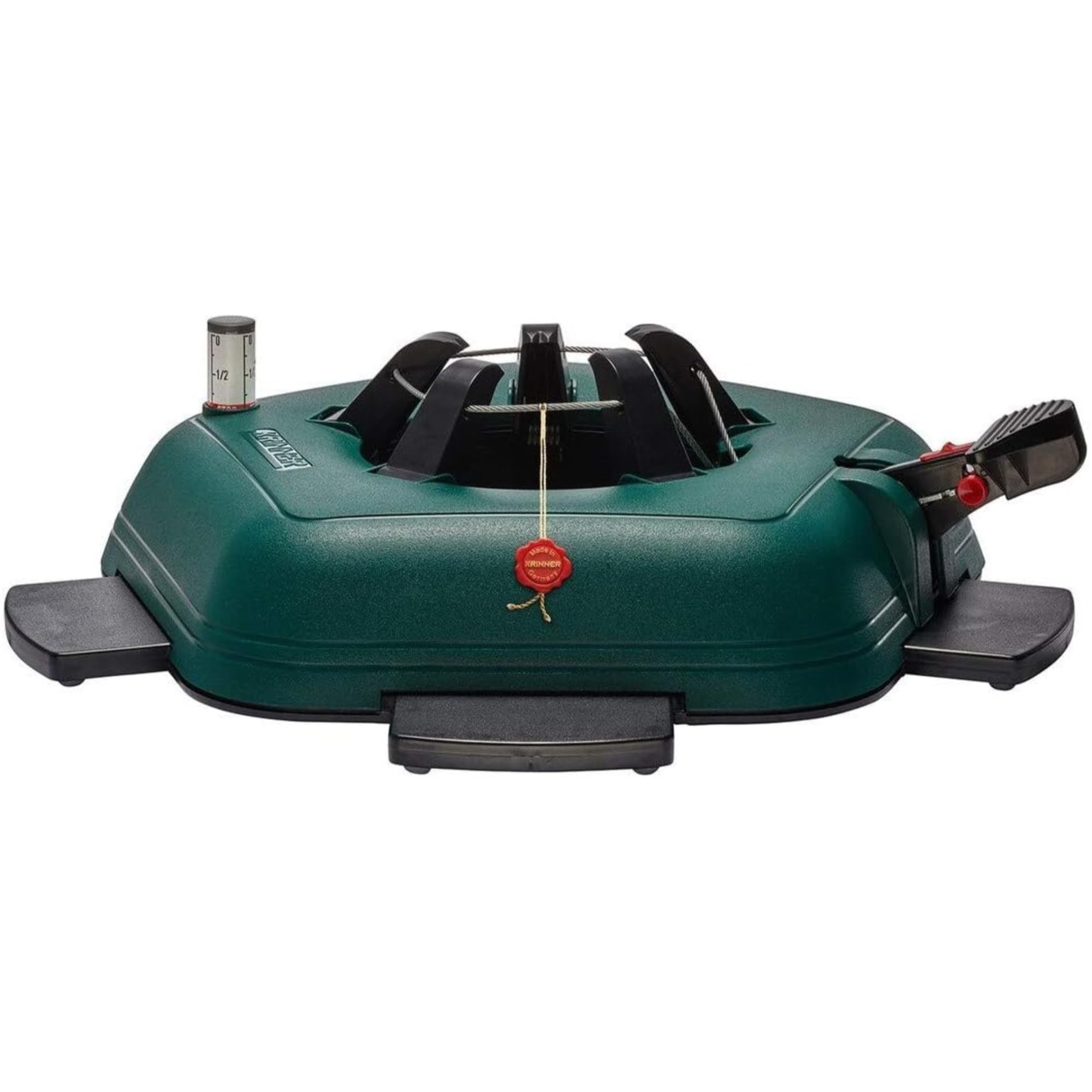
My go-to for live trees when I want a fast, rock-solid setup and a built-in water reservoir.
Why I picked it: Effortless one-person clamping, reliable ratchet hold, and a clear water indicator.
Best for: People who buy real trees up to 8 feet and want single-person setup.
A long-term investment that replaces fiddly screw stands.
Pros
- One-person foot-pedal setup
- Even ratchet pressure for crooked trunks
- 1-gallon water reservoir with indicator
- Compact, durable metal construction
Cons
- Heavier than basic plastic stands
- Takes storage space
My take
I used the Krinner Genie on an 8-foot live tree and the single-cable ratchet made the whole job painless. I put the trunk in, stepped the pedal a few times, slid it into lock, and the tree sat perfectly upright without fussing with screws.
The built-in floater-style water gauge removed the guesswork — I could see when the reservoir needed topping off and the 1-gallon capacity kept our tree hydrated for days between refills.
Because the mechanism clamps evenly around the trunk, I had no issues with slightly crooked or irregular trunks. The stand feels solid and heavy; I didn’t worry about tipping even with a fully decorated tree.
If you want something that speeds setup and will last multiple seasons, this is the practical, no-nonsense option I reached for.
2. Home Heritage 360° Rotating Christmas Tree Stand – Best for Rotating Displays
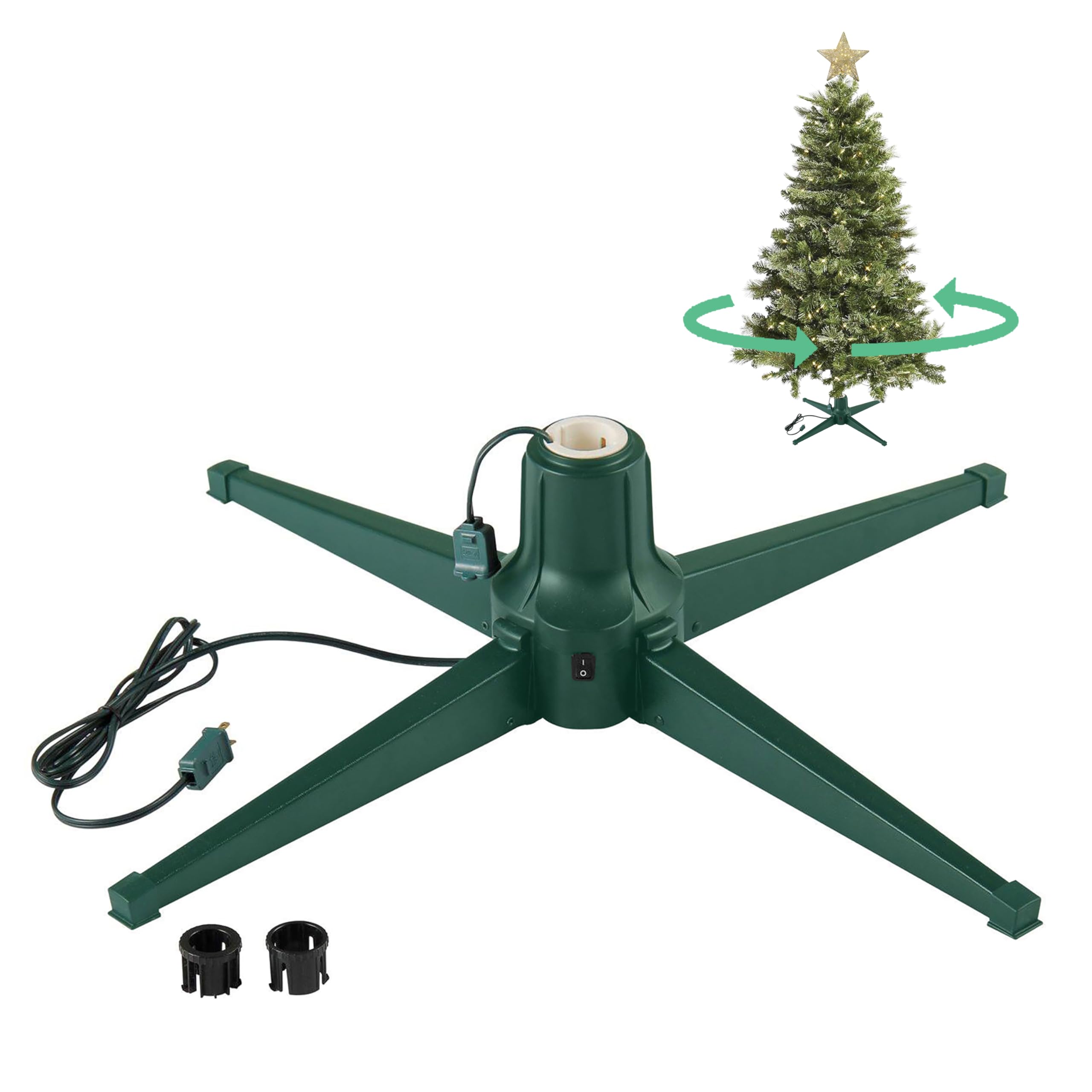
I recommend this when you want a motorized swivel for artificial trees and full 360-degree viewing.
Why I picked it: Full rotation, metal build, and multiple adapters for common pole sizes.
Best for: People with artificial trees up to about 7.5 feet who want the whole tree visible.
A budget-friendly way to add motion and show all your ornaments.
Pros
- Smooth 360-degree rotation
- Metal construction, includes adapters
- Quiet operation
- Gives full viewing access to ornaments
Cons
- Can introduce slight lean with some trees
- Plastic feet may be less durable
My take
I used this rotator with a 7.5-foot artificial tree and enjoyed being able to walk around the tree without moving it. The adapters fit 1–1.5 inch poles and the motor runs quietly.
Assembly is straightforward: plug the adapter in, seat the tree, and let it spin. The metal plate is sturdy and the unit gave the tree a gentle, even rotation that showed off ornaments on all sides.
A caveat from my testing: if the tree pole sits too shallow or the adapter doesn’t fully center the trunk, the tree can lean slightly. I double-checked adapter choice and seating to minimize that.
Overall, this stand is a simple, effective way to add motion and presence to an artificial tree without complicated setup.
3. Star-Max F-H-S Start 1 — Single Rope Technology with Foot Lever – Best Compact Live-Tree Stand
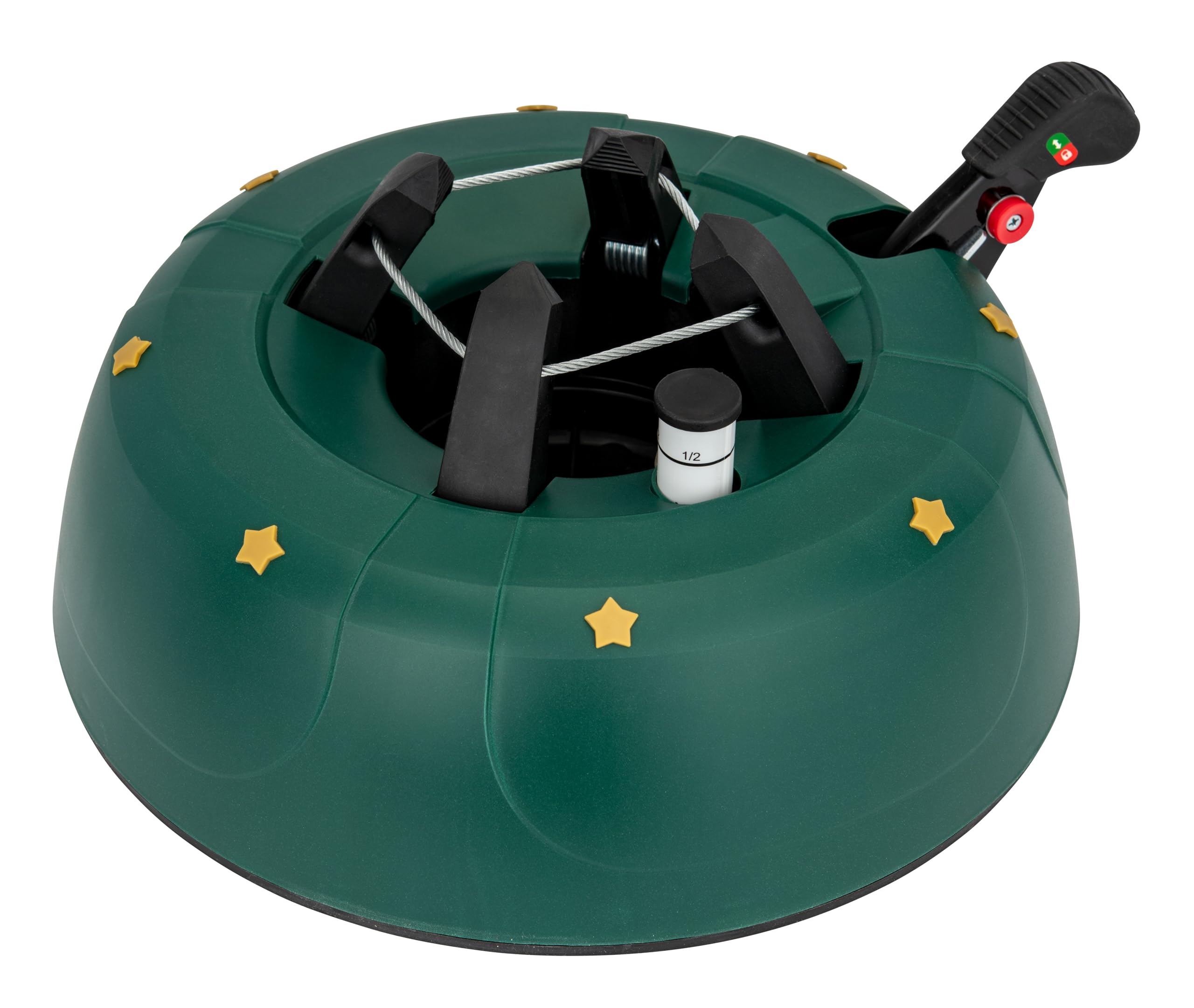
A compact, easy-to-use live-tree stand that uses rope/lever clamping and a visibility-focused water gauge.
Why I picked it: Small footprint, mechanical water indicator, and simple lever operation.
Best for: Smaller live trees up to about 2 meters (roughly 6.5 feet) with narrow trunks.
A practical choice for apartment or small-space trees.
Pros
- Compact footprint
- Foot lever for faster clamping
- Visible mechanical water indicator
- Child safety lock
Cons
- Relies on water weight for best stability
- Limited trunk diameter range
My take
I tested the Star-Max with a smaller live tree and appreciated the simple single-rope clamp and foot lever — it cut the fidgeting down significantly.
The 2.0-liter reservoir and mechanical water indicator let me keep track of water level without peeking under branches, and the child safety lock added peace of mind in a busy household.
Because the base is relatively light, the stand depends on being filled to achieve its best stability. Once topped with water it held my tree straight and secure.
For anyone with a smaller live tree who needs a neat, compact solution, this is a handy option.
4. Goliath Welded Steel Artificial Tree Stand — Heavy-Duty Powder Coated Base – Best for Heavy Artificial Trees
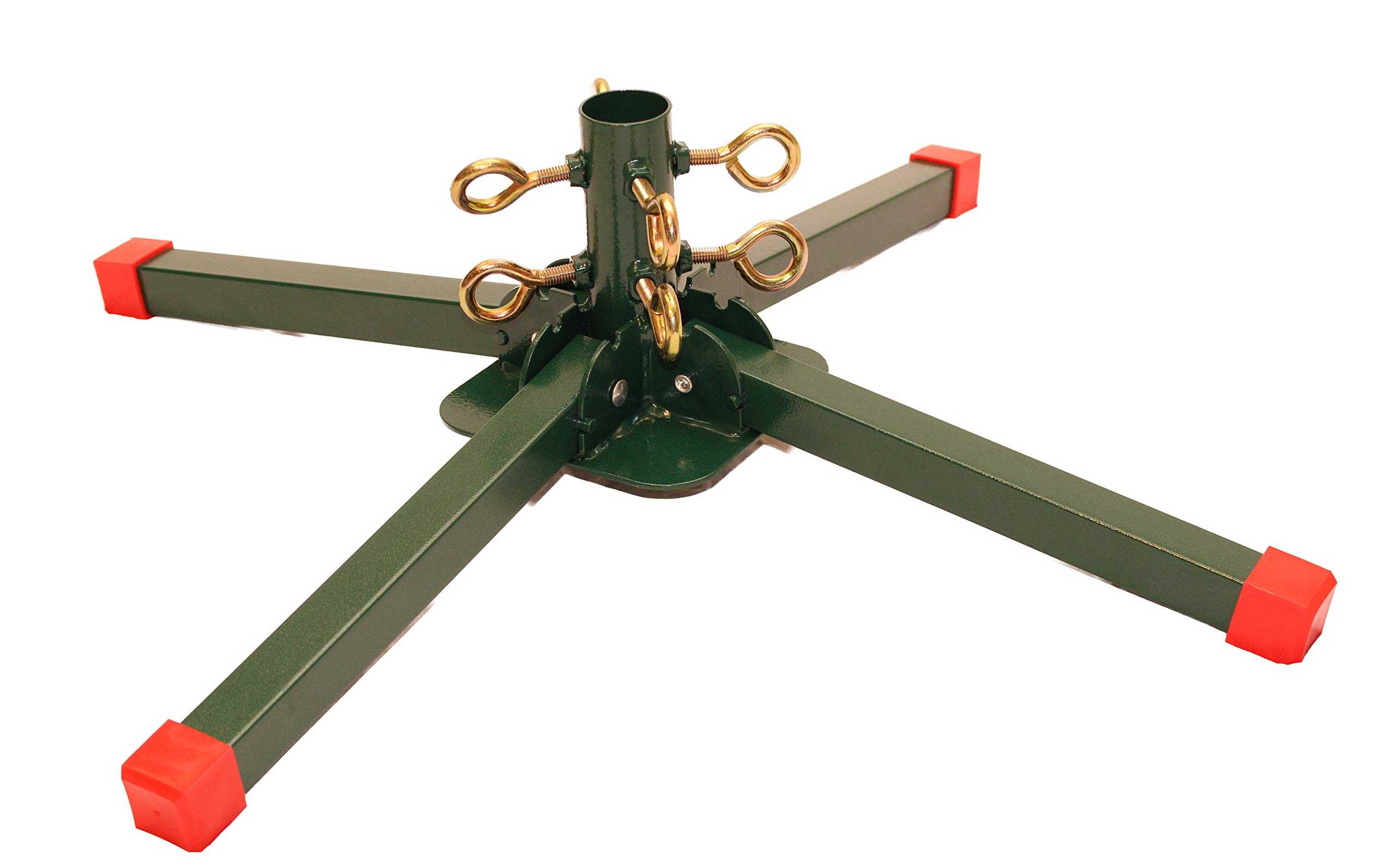
My pick for very large or heavily decorated artificial trees that need a rock-solid metal base.
Why I picked it: Welded steel construction, broad leg span, and high load capacity.
Best for: Very large artificial trees or homes with kids and pets.
A durable, lifetime-backed option built to last decades.
Pros
- Heavy powder-coated welded steel
- 24-inch leg span for stability
- Supports very heavy trees
- Folds for storage
Cons
- Bulky to store
- Requires measuring pole diameter
My take
I used the Goliath welded-steel stand under a densely decorated large artificial tree and it never wobbled. The welded construction and wide legs give a confidence you don’t get from thin metal or plastic bases.
Setup is simple: unfold the legs, fit the pole, and tighten the eyebolts. The multiple eyebolts make it straightforward to correct small tilts by adjusting opposing fasteners.
One set I received had a slightly bent bolt out of the box; I contacted the company and they sent a replacement quickly, which reinforced my confidence in the product and the support behind it.
If you want a stand that won’t be the weak link under a heavy tree, this is the rugged choice I reached for.
5. Goliath Welded Steel Christmas Tree Stand for Live Trees — Heavy-Duty Live-Tree Base – Best for Big Live Trees
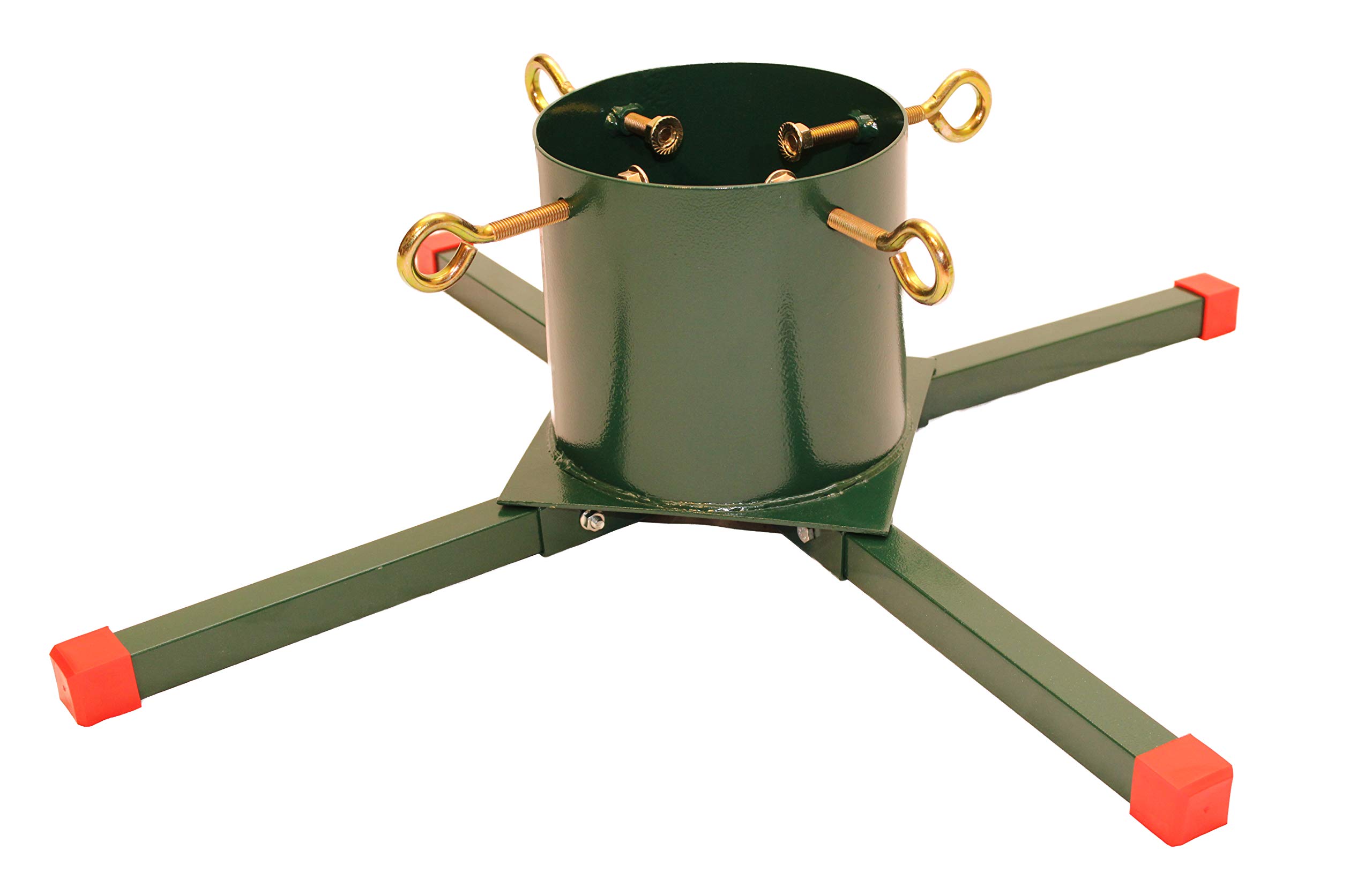
A heavy-duty steel stand sized for very tall live trees that need a secure, high-capacity base.
Why I picked it: Large trunk capacity, sturdy powder-coated construction, and good water capacity for live trees.
Best for: Homes with tall live trees that need a dependable, long-term stand.
Built to be the last stand you buy for live trees.
Pros
- Fits trunks up to ~5.75 inches
- Robust steel construction
- Legs remove for storage
- Lifetime warranty
Cons
- Heavy to handle alone
- Large footprint
My take
When our nine-foot live tree kept leaning, switching to this Goliath stand solved the problem. The stand’s weight and multiple securing screws made it easy to straighten and keep straight.
The steel construction feels like a permanent solution — no fragile plastics — and the removable legs make storage easier than one-piece metal frames.
I appreciated the nearly maintenance-free setup and the capacity to hold enough water to keep the tree fresh for longer stretches between refills.
For anyone who’s tired of makeshift stabilizers, this stand delivers the solid base I depend on for big live trees.
6. Bosmere Christmas Tree Stand — Plastic Base with 5 Eye Bolts – Best Budget Plastic Stand
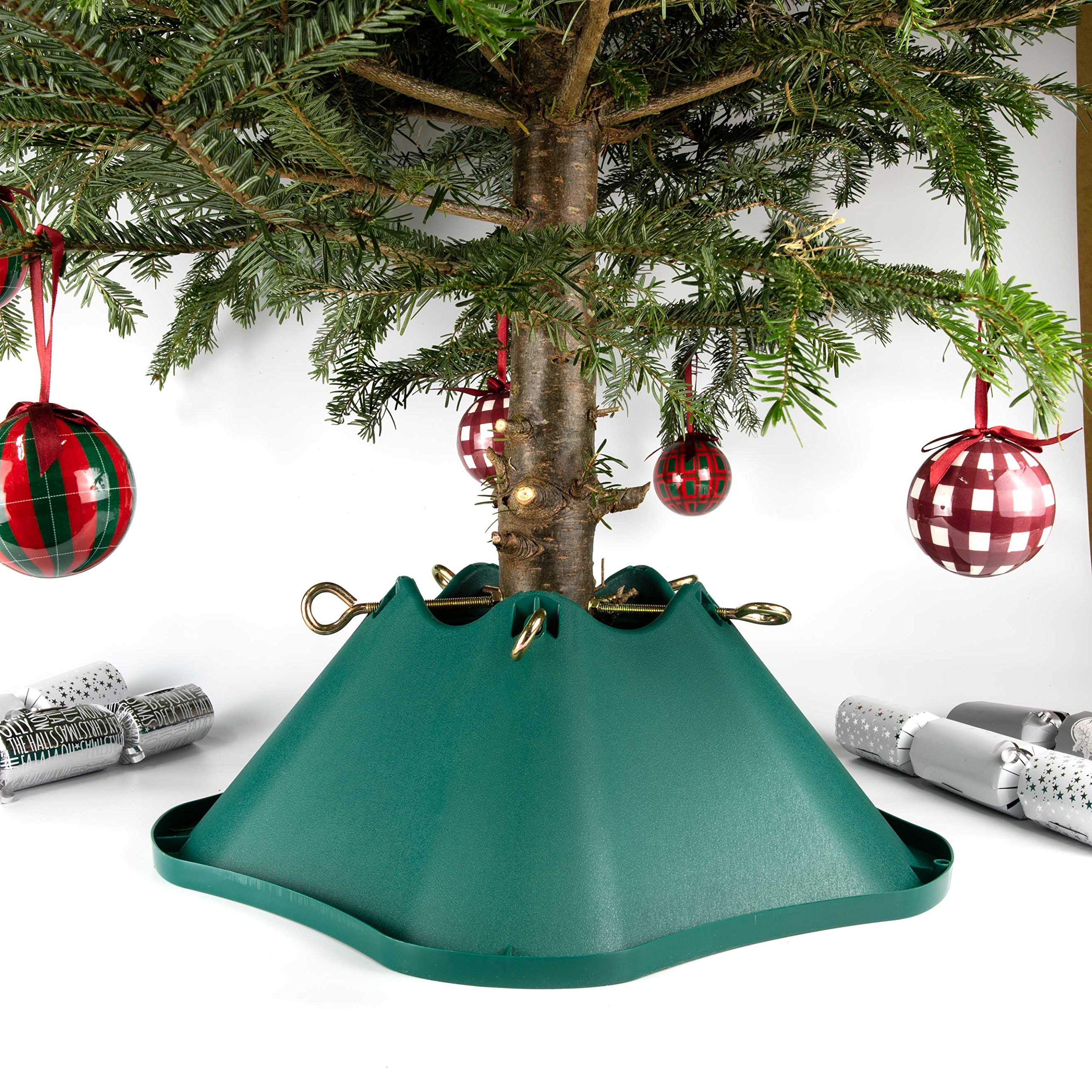
A lightweight, economical plastic stand that works well for medium and small live trees.
Why I picked it: Simple five-eye-bolt securing system and compact water tray for smaller trunks.
Best for: Medium to small live trees and seasonal setups where compact storage matters.
An affordable, practical choice for occasional live-tree use.
Pros
- Lightweight and easy to handle
- Five eye bolts for secure hold
- Compact storage footprint
- Holds a modest water amount
Cons
- Plastic construction less durable
- Check included screws on arrival
My take
I used the Bosmere stand with a medium live tree and found it straightforward: seat the trunk, tighten the five eye bolts, and fill the reservoir.
The half-gallon capacity is modest but sufficient for shorter stints between watering. The stand’s lightweight nature makes it easy to carry and store.
A practical tip from my experience: check the box for all hardware right away. I encountered an instance where screws were missing, so a quick inventory saves frustration.
This is the sensible budget option when you want a no-frills plastic stand that holds a smaller live tree securely.
How I Chose These Christmas Tree Stands
Key factors I check when picking a stand
Stability and construction are my top priorities — welded steel or well-designed ratchet systems beat thin plastic for heavy or tall trees.
Ease of setup matters. I favor designs that let one person secure the tree without awkward angling or multiple tools.
For live trees I consider water capacity and a clear level indicator so the tree stays hydrated and drops fewer needles.
- Live vs artificial: pick a water-friendly stand for real trees.
- Trunk diameter: measure before buying to ensure a snug fit.
- Foot pedals/ratchets beat screw clamps for fast single-person installs.
- Rotating bases fit only certain pole diameters — use the correct adapter.
Practical tips from setup
Center the trunk in the base before locking clamps or tightening bolts; small differences early can create a big lean once decorated.
For plastic or lighter bases, fill the water reservoir to add stability.
Keep any spare hardware and instructions together for future seasons — that quick replacement bolt or adapter can save time.
- Trim knots or offending branches that block clamps.
- Tighten opposing fasteners incrementally to correct tilt.
- Inspect for missing hardware right out of the box.
Frequently Asked Questions
Can I use a rotating stand with a real tree?
In my experience rotating stands are designed for artificial trees with straight poles and consistent diameters. Real trunks are uneven and heavier; I avoid rotating live trees to protect the trunk and watering setup.
How do I know which stand fits my tree trunk?
I always measure trunk diameter before buying. Many stands list supported trunk or pole diameters — match that number or use an adapter where provided.
Do I need to fill the reservoir on plastic stands?
Yes. For lighter plastic stands I found that filling the reservoir improves stability because the water adds weight and keeps the tree upright.
Are welded-steel stands worth it?
For big or heavily decorated trees I choose welded-steel every time. The extra weight and broad leg span deliver the stability I want and reduce the chance of a tumble.
Final Take
I picked options here to cover every common setup: effortless ratchet systems for live trees, rotators for artificial displays, compact plastic for smaller trees, and welded-steel for heavy-duty needs.
If you want a single recommendation to simplify holiday setup: choose the Krinner for live trees and a Goliath welded base for large artificial or heavily decorated trees.
Whatever you pick, measure your trunk or pole, check the included hardware, and follow the simple setup tips I shared to keep your tree safe and upright all season.
