
I tested six fertilizers—from instant water-solubles to slow-release pellets—to find what works best for fruit trees at different stages. Here’s what I use and when.
I grow a small collection of apple, peach, and citrus trees, so I rely on fertilizers that match each tree’s needs at different times of the year. Over several seasons I tried water-soluble formulas, pre-measured packets, and slow‑release pellets to see which gave predictable growth without burning roots.
This roundup reflects hands-on results: quick green-up and flushes after soluble feeds, and steady health from smart-release granules. I explain which product I reach for in spring, during bloom, and for long-term maintenance.
If I need fast results I pick an instant, water‑soluble feed. If I want low-maintenance, long-term nutrition I use a smart‑release formula. Pre‑measured packets are my go-to when I want convenience without measuring.
1. Miracle-Gro Water Soluble All Purpose Plant Food (24-8-16) – Best Overall
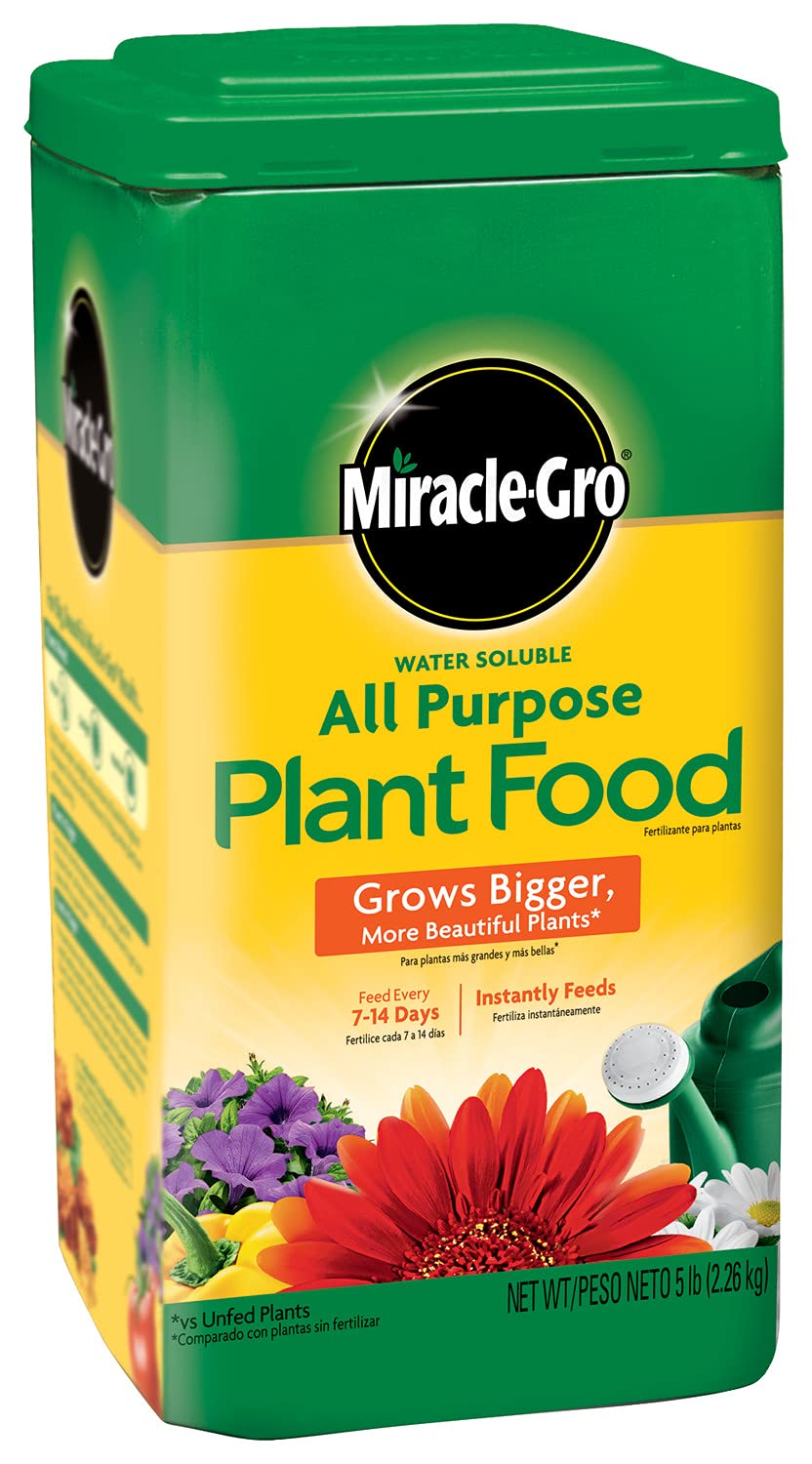
I use this when I want a reliable, high-nitrogen, instant feed that’s safe on trees when applied as directed.
Why I picked it: Versatile 24-8-16 formula that feeds instantly and covers large areas.
Best for: Spring green-up, quick leaf growth, and regular feeding routines.
Excellent value for a large, multipurpose container.
Pros
- Fast-acting, instant feeding
- Covers a lot of ground
- Safe when used per directions
- Works on many plant types
Cons
- Needs frequent reapplication
- Synthetic formula (not organic)
My take
I keep this 24-8-16 soluble in my shed for seasonal feeds because it produces quick, noticeable green‑up on my fruit trees. When I mix the recommended scoop with water and soak the root zone, buds push and leaves expand within a week.
The container feeds a large area, so it’s the most practical option when I’m treating several trees or a big orchard corner. I appreciate that it won’t burn foliage when I follow the package directions—I've used it on roses, vegetables, and trees with similarly steady results.
For my established fruit trees I feed every couple of weeks during active growth; for younger transplants I use a lighter application. If you want dependable, all-purpose nutrition that acts fast, this is the product I reach for first.
2. Miracle-Gro Watering Can Singles All Purpose Plant Food (pre-measured packets) – Best Convenience
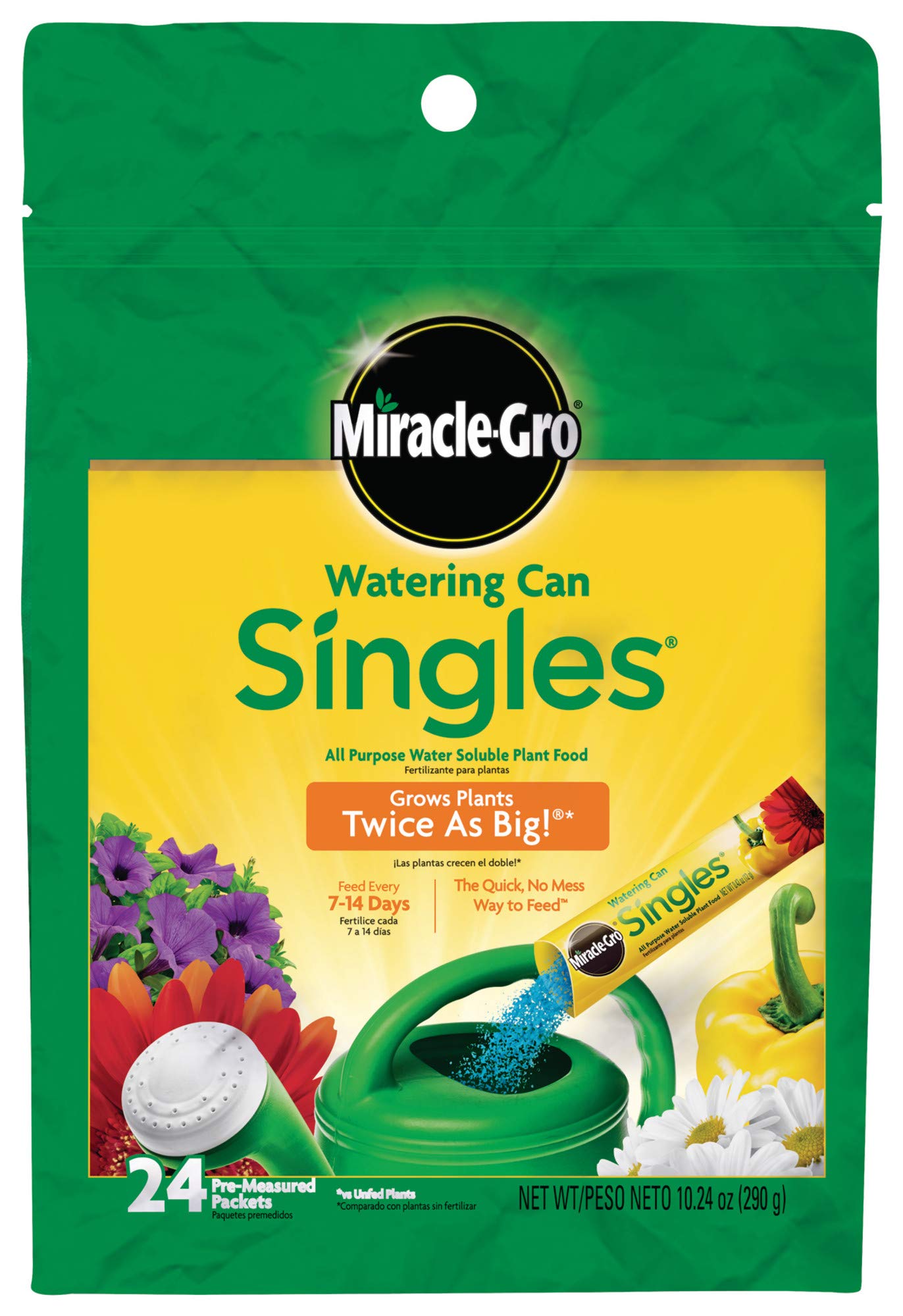
I rely on these single‑use packets when I want no-mess, pre-measured feeding while I water trees and container fruit plants.
Why I picked it: Pre-measured convenience that eliminates measuring and mess.
Best for: Busy gardeners, container fruit trees, and quick top-ups while watering.
Great for occasional or small-scale feeding without waste.
Pros
- No measuring or mess
- Easy to mix on the go
- Good for containers
- Portable and tidy
Cons
- Limited packet count per box
- More packaging waste
My take
When I need to feed a pot of lemon or a few young trees quickly, I grab a packet and mix it in my watering can—no scales, no spills. The packets dissolve cleanly and I can feed while I water, which saves me time.
I’ve used these at home and at a community garden where I don’t want to carry bulk containers. The formula is the same trusted Miracle‑Gro strength, so I still get quick results: fuller foliage and better vigor after a couple of applications.
For routine orchard maintenance I prefer larger containers, but for small citrus, patio trees, or when I’m traveling these packets are my go-to for convenience.
3. Jack's Classic 20-20-20 All Purpose Water-Soluble Fertilizer – Best Balance
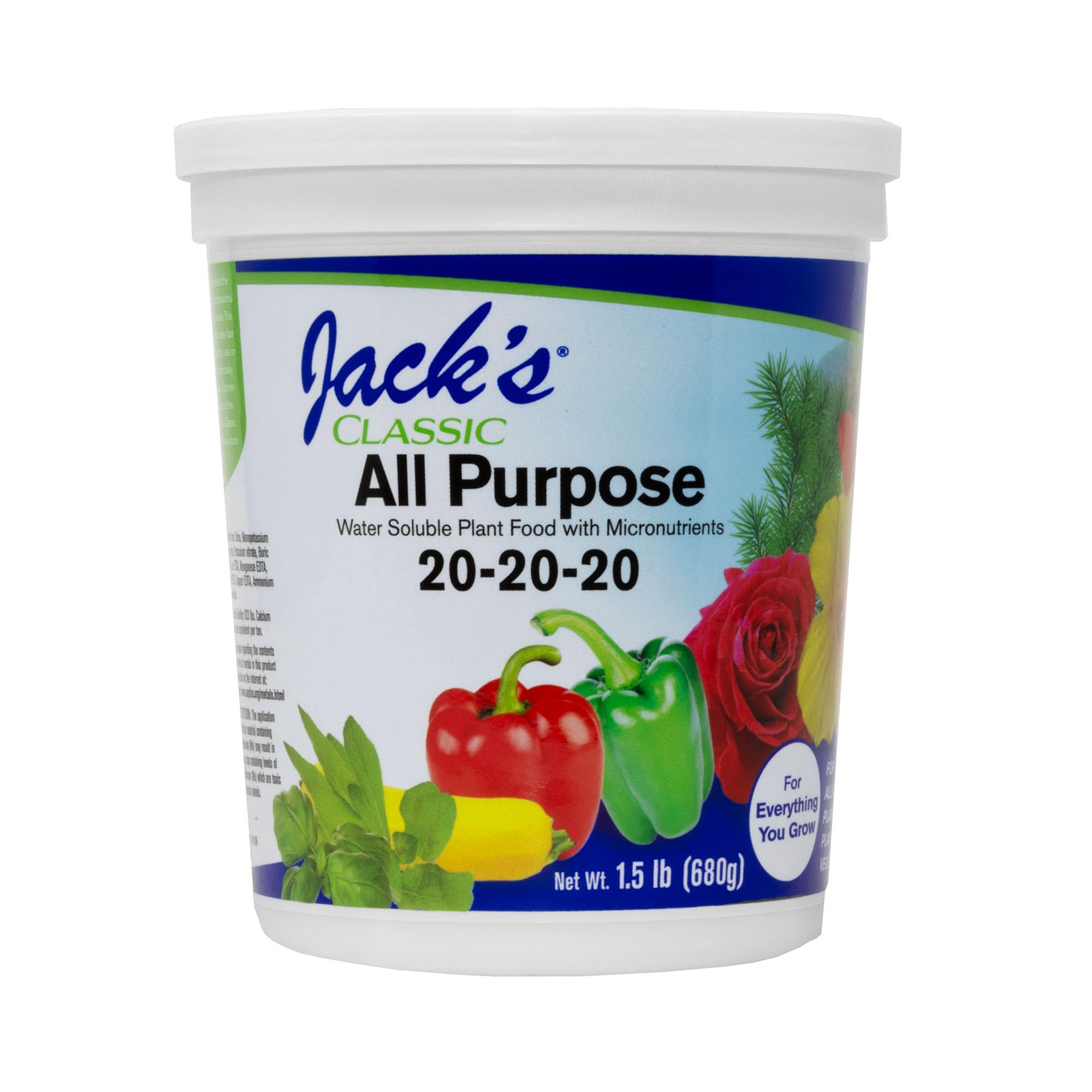
I turn to this balanced 20-20-20 formula when I want equal N‑P‑K with added micronutrients for steady overall growth.
Why I picked it: Even 20-20-20 ratio with chelated micronutrients for complete feeding.
Best for: Foliar sprays, transplant feedings, and balanced growth needs.
Mid-range option that stretches because it mixes concentrated.
Pros
- Balanced NPK for overall growth
- Includes micronutrients
- Good for foliar feeding
- Dissolves quickly
Cons
- Not targeted for blooming
- Requires measuring
My take
I used Jack’s Classic on young transplants and as a foliar feed on my citrus and stone fruits; its 20-20-20 balance quickly greened foliage and supported steady expansion without pushing excessive top growth alone.
The chelated micronutrients matter to me—iron and manganese showed up as healthier leaf color compared with plain NPK mixes. The powder dissolves fast and the included spoon makes precise mixing easy.
When I want a professional, all‑purpose liquid I can apply through a sprayer or a watering can, this is the fertilizer I reach for because it gives me predictable, balanced nutrition.
4. Miracle-Gro Water Soluble Bloom Booster Flower Food (10-52-10) – Best for Blooms
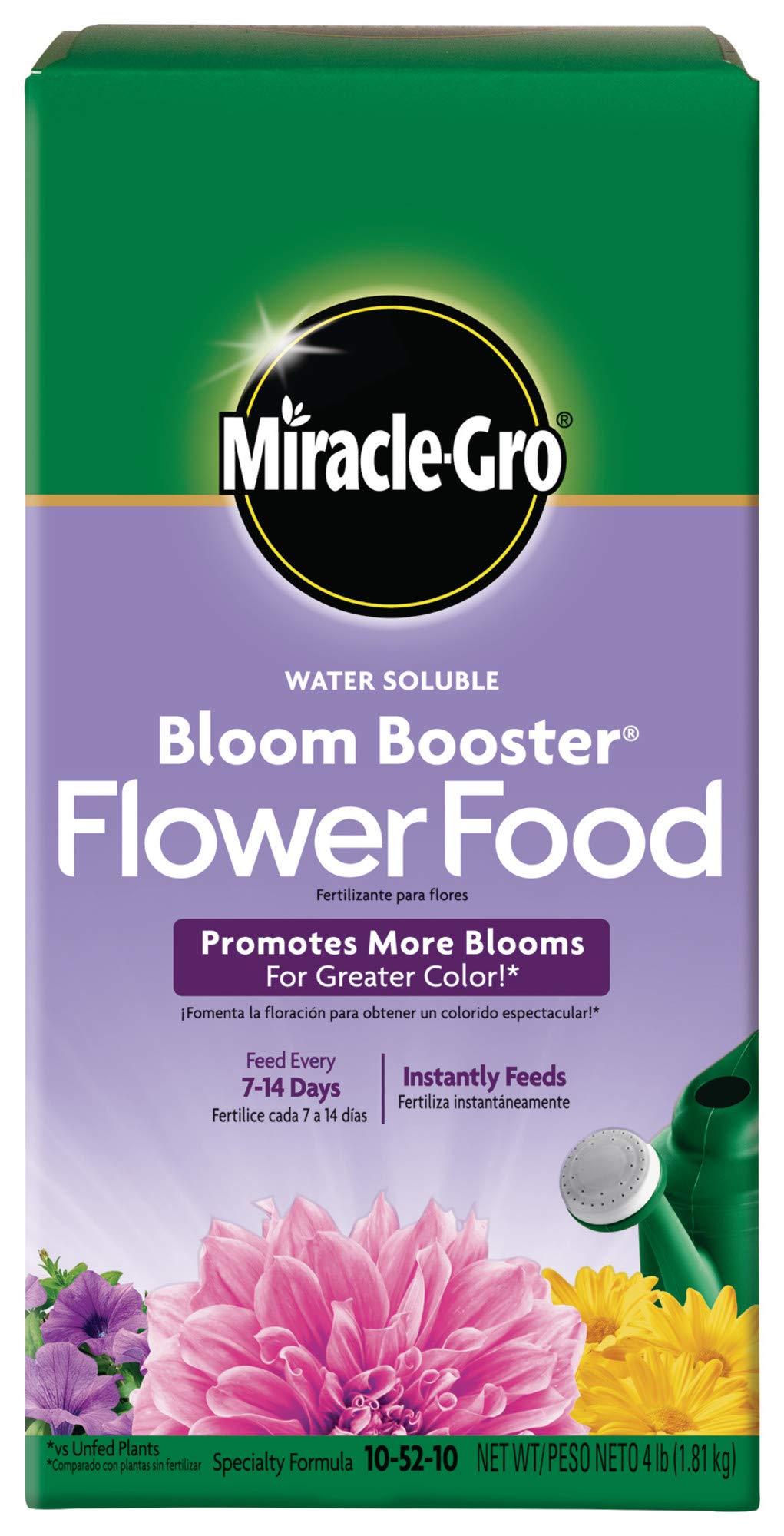
I use this high‑phosphorus formula when I want trees to bloom more strongly or to help flowering ornamentals nearby.
Why I picked it: High phosphorus boosts flowering and fruit set potential.
Best for: Encouraging heavy bloom and improving flower color.
Good value if you want targeted bloom support.
Pros
- High phosphorus to promote blooms
- Dissolves instantly
- Works well in containers
- Fast, visible bloom response
Cons
- Too bloom‑focused for regular feeding
- Can imbalance N if overused
My take
When I want to encourage a heavy bloom on a blossoming tree or to bulk up flower production near my orchard, I use this bloom booster sparingly. The 10-52-10 mix sends a clear signal to plants to make flowers, and I’ve seen fuller bloom displays within a couple of weeks.
Because it’s phosphate‑heavy, I don’t use it as my primary fertilizer for fruit trees—I reserve it for the pre‑bloom to bloom window or on ornamentals that border my fruit beds.
Applied at the recommended rate and targeted at the base, it’s safe and effective. I just alternate it with a balanced feed so the trees get adequate nitrogen and potassium the rest of the season.
5. Osmocote Smart-Release Plant Food Plus (15-9-12) – Best Long-Lasting
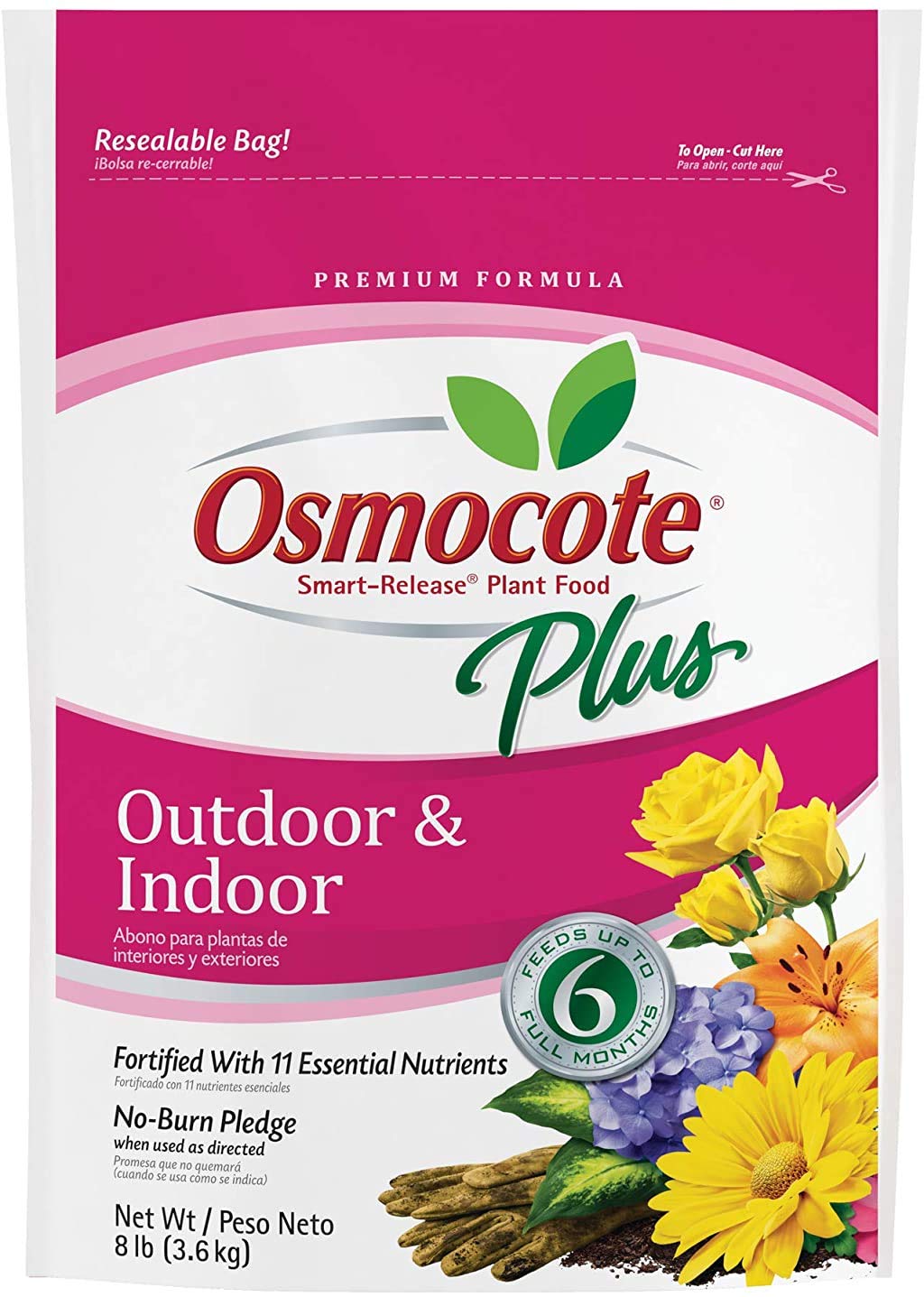
I choose Osmocote when I want a low-maintenance, extended-release feeding that feeds for months with minimal fuss.
Why I picked it: Six-month smart-release nutrition with multiple essential nutrients.
Best for: Low-maintenance care, containers, and long-term orchard maintenance.
Higher upfront cost but saves time over a season.
Pros
- Feeds up to six months
- 11 essential nutrients
- Low burn risk
- Easy to apply
Cons
- Less immediate green-up
- Higher per-bag cost
My take
For my potted fruit trees and the foundation area around in-ground trees, I rely on Osmocote’s smart-release beads. I apply the recommended scoop into the soil and water in, and the plants receive steady nutrition for months without my intervention.
That slow, even release is why I use it before a busy season—trees don’t get sudden flushes that need repeated feeding, but they maintain steady health and flowering. I also like that it contains multiple nutrients beyond NPK.
If you want predictable performance with minimal repeat feeding, this is the product I schedule every six months.
6. Osmocote Smart-Release Plant Food Flower & Vegetable (14-14-14) – Best for Vegetables & Flowers
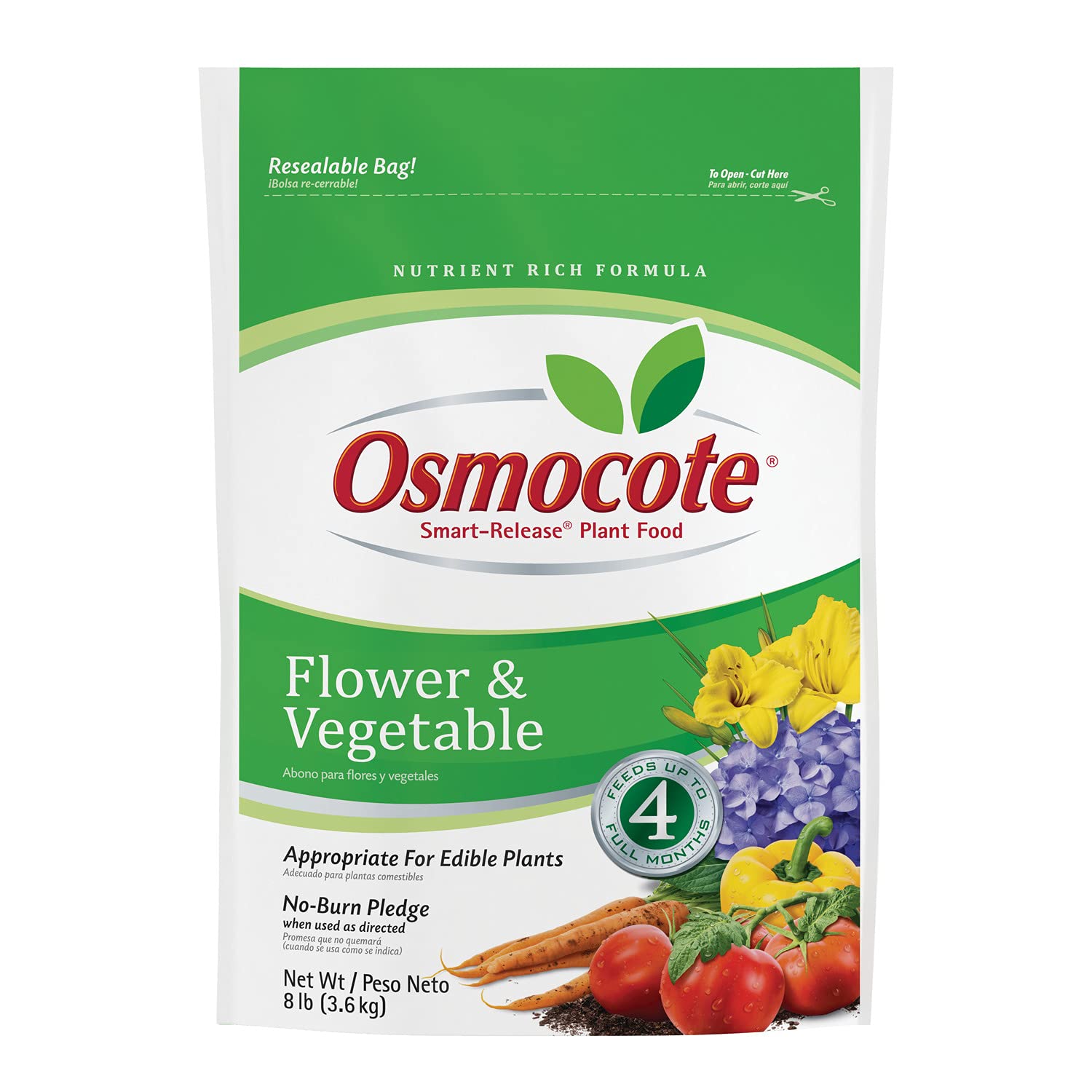
I reach for this balanced Osmocote when I want steady seasonal feeding for vegetables, perennials, and trees that benefit from a consistent mid-range formula.
Why I picked it: Balanced slow-release formula favored for veggies and perennials.
Best for: Seasonal vegetable beds, perennials, and mixed gardens with fruit trees.
A reliable seasonal option that’s easy to apply.
Pros
- Balanced 14-14-14 release
- Feeds for months
- Mistake-proof application
- Good for mixed beds
Cons
- Has odor for indoor use
- Less instant action
My take
I use this Osmocote when my fruit trees sit beside vegetable beds or perennial borders—one application feeds both types of plants throughout the season and keeps the whole area performing.
The release rate is temperature‑dependent, which I appreciate because it generally matches plant uptake across warm months. Even if I accidentally overapply a bit, the product is forgiving and won’t burn roots.
For outdoor seasonal care where I want consistent nutrition without weekly mixing, this is the dependable choice I recommend turning to.
How I Choose Fertilizer for Fruit Trees
Match fertilizer type to your goal
I decide between fast‑acting water‑solubles and slow‑release granules based on whether I want immediate leaf growth or low‑maintenance feeding.
Water‑soluble products give quick green‑up and stronger vegetative growth; smart‑release pellets give steady nutrition over months and reduce how often I have to feed.
- Use water‑solubles for spring green‑up and recovery.
- Use slow‑release for maintenance and containers.
- Use bloom boosters briefly for flowering/fruit set.
Consider N‑P‑K and timing
I look at N‑P‑K ratios to decide when to use a product. Higher nitrogen supports leaf growth; higher phosphorus encourages blooms and potential fruit set.
I don’t rely on a bloom booster as my only feed—rotation with a balanced fertilizer keeps trees healthy.
- Spring: balanced or higher N for leafing and canopy growth.
- Pre‑bloom: a targeted phosphorus boost can help flowering.
- Post‑harvest: light balanced feeding to recover reserves.
Application method matters
I apply soluble feeds to the soil at the root zone or as a foliar spray when recommended. For pellets I mix into the top soil or broadcast around drip lines.
I always follow package directions on rates; overapplication is the most common mistake I see and can be avoided easily.
- Soak the root zone rather than wetting leaves.
- Use measuring tools with concentrated powders.
- Water in slow‑release granules after applying.
Think seasonally and practically
If I’m going to be busy, I choose smart‑release formulas before the growing season. If I want quick results for fruiting or transplant recovery, water‑soluble feeds are my go‑to.
Pre‑measured packets are the easiest solution for small containers or occasional feedings.
- Schedule slow‑release feeding every 4–6 months.
- Apply soluble feeds every 1–2 weeks during active growth.
- Keep a supply of packets for hassle‑free top‑ups.
Frequently Asked Questions
How often should I fertilize fruit trees?
I typically feed with water‑soluble fertilizer every 7–14 days during the active growing season if I want fast results. For low‑maintenance care, I apply a smart‑release product once every 4–6 months.
What N‑P‑K ratio do I use on fruit trees?
I use balanced formulas like 20‑20‑20 or 14‑14‑14 for general care. Early season I favor slightly higher nitrogen for canopy growth, and I add a phosphorus‑heavy feed briefly if I want to encourage bloom and fruit set.
Can I use a bloom booster on fruit trees?
I use bloom boosters sparingly and only around the pre‑bloom to bloom window. They’re great for flower production, but I alternate them with balanced feeds so trees don’t miss other essential nutrients.
Are slow‑release pellets better than water‑soluble fertilizers?
They serve different needs. I prefer slow‑release for steady, low‑maintenance nutrition and water‑soluble for quick corrective feeding. I often use both across a season.
Final Take
Across my fruit trees I keep at least two fertilizers on hand: a reliable water‑soluble for quick action and a smart‑release for long stretches without work. That combination gives me the responsiveness I need in spring and the steady support I want during the rest of the season.
If you want a single recommendation: reach for an all‑purpose soluble for immediate results and add a smart‑release product when you want less hands‑on maintenance.
Whichever product you choose, follow the package rates and target the root zone—consistent, appropriate feeding is what produces healthy trees and better yields.