
I tested a range of filaments and a multi-roll filament dryer to see what actually improves print reliability. These picks cover flexible TPU, heat-resistant PC, outdoor ASA, and a spacious dryer for multi-roll workflows
Moisture wrecks prints faster than most people realize. I spent weeks running prints, drying spools, and swapping materials to figure out which filaments behave well and which dryers actually make a difference.
In this roundup I focused on real-world reliability: consistent diameter, ease of feeding, and how filament prints after drying. I also tested a multi-roll filament dryer that I used daily for a month to see how it handles mixed workflows.
Below are the items I kept reaching for — each pick represents a clear tradeoff I would choose for specific printing needs.
I compared these products by how they handled moisture (drying temperature and capacity), how consistently they fed and printed, and how straightforward they were to use in daily printing. For filaments I also prioritized material-specific strengths like flexibility for TPU, thermal stability for PC, and UV/weather resistance for ASA.
1. OVERTURE TPU Filament 1.75mm 95A (Neon Red) — 1kg – Best Flexible TPU
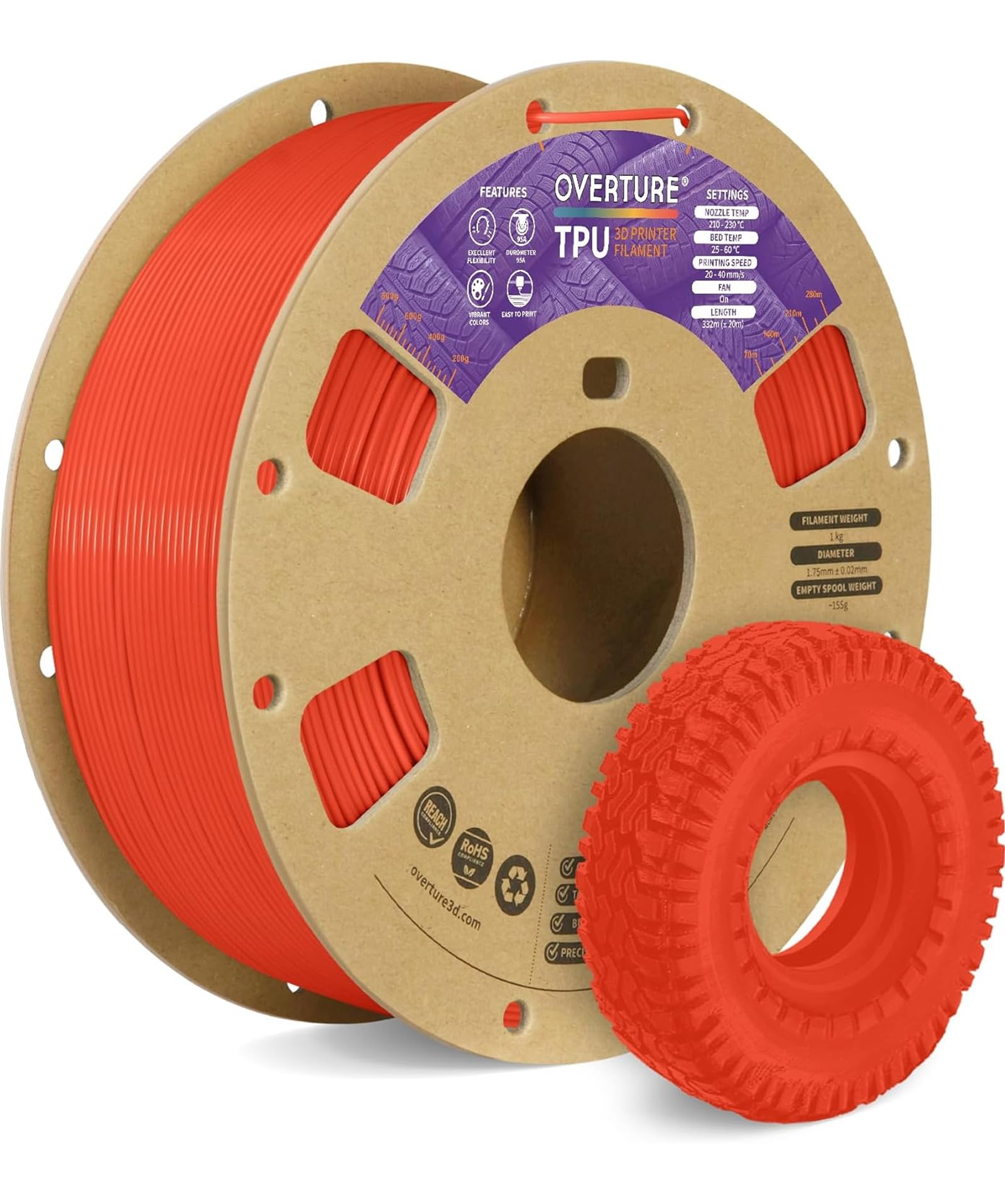
A 95A TPU that hits the sweet spot between soft and durable, printing at relatively low nozzle temperatures for a flexible filament.
Why I picked it: I chose it for its balance of rebound elasticity and printability at modest temps.
Best for: Flexible parts like tires, gaskets, wearables, and functional hinges.
Affordable full-kilo TPU that punches above its price.
Pros
- Balanced 95A flexibility
- Prints at lower temps (210–230°C)
- Consistent diameter and feed
- Good layer adhesion
- Neatly wound 1kg spool
Cons
- Cardboard spool can show dents
- Softer than rigid filaments—needs tuned settings
My take
I printed scale model tires and protective parts with this TPU and I was impressed by how realistic the rubber-like feel turned out. The 95A hardness gave me enough rebound for functional use while still holding fine detail.
Feeding was smooth on my Bambu A1 and I experienced minimal stringing once the basic TPU settings were dialed in. The filament’s consistent diameter and tidy winding meant fewer feed problems during long prints.
I also appreciated that it prints at lower nozzle temperatures compared to many TPUs, which reduced heat-related issues during extended runs. For flexible parts that need both strength and bounce, this spool became my go-to.
2. ELEGOO PC Filament 1.75mm (Black) — 1kg – Best for Heat-Resistant Parts
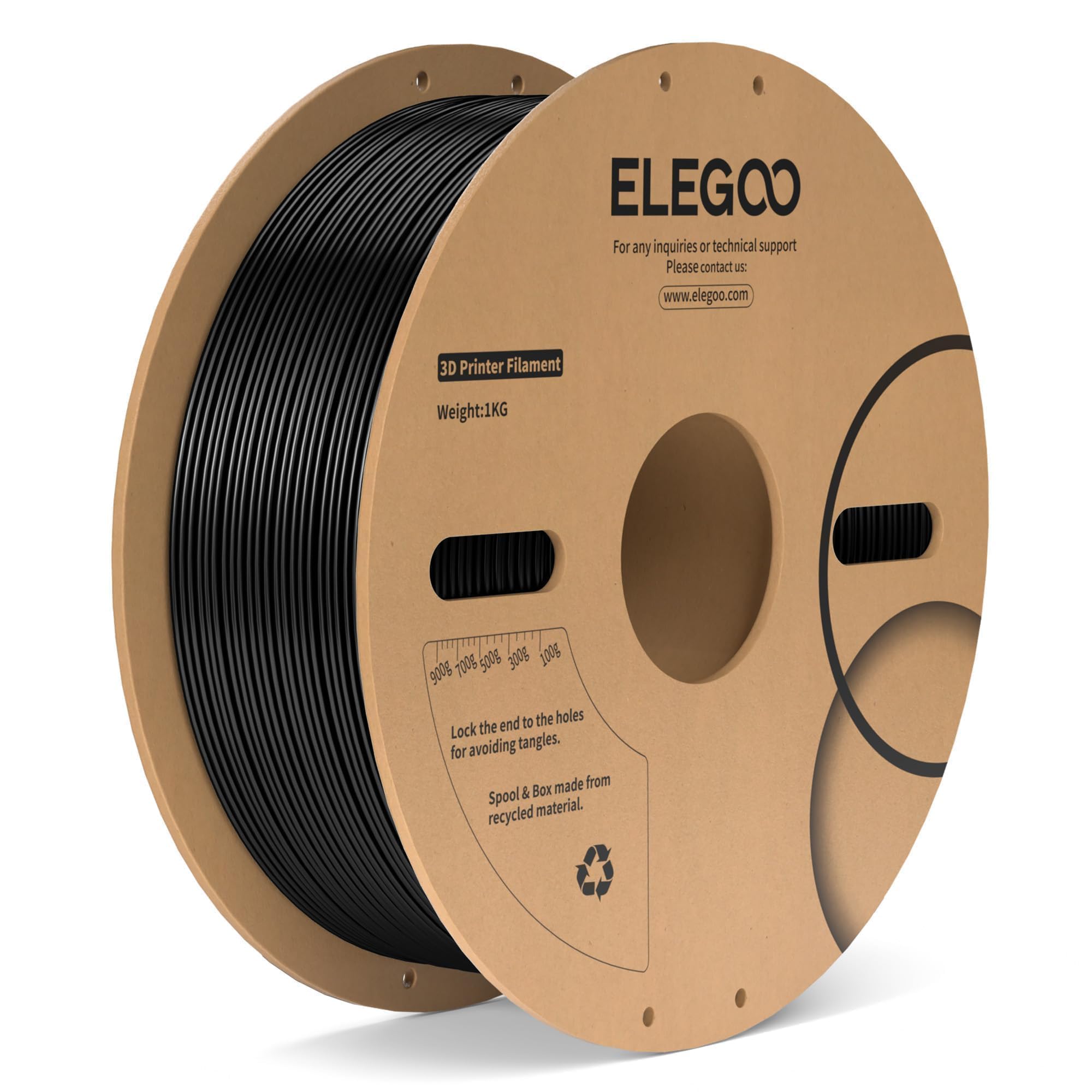
A polycarbonate designed for high impact resistance and thermal stability, with tight dimensional control and vacuum-sealed packaging.
Why I picked it: I picked it for demanding functional prints that need heat resistance and low warping.
Best for: Automotive fixtures, electrical components, and high-temp functional prototypes.
A professional-grade option at a reasonable mid-range cost.
Pros
- Excellent heat resistance
- High impact strength
- Low warping on large parts
- Vacuum-sealed to stay dry
Cons
- Requires an enclosed printer
- Needs oven drying before use
My take
I used this PC filament on an Ender 3 V2 with a Sprite extruder for a functional enclosure and was struck by its dimensional stability. Parts came out true to size and handled thermal stress without deforming.
The spool arrives vacuum-sealed, which matters for PC. I followed the recommended dry-out routine (high-temp drying) and that step eliminated bubbling and feeding problems I sometimes see with wet PC.
Because PC runs hot and benefits from an enclosure, I treated this as a specialist material. When I gave it proper drying and an enclosed print volume, the results were strong, precise, and repeatable.
3. SainSmart TPU 1.75mm 250g (White) – Best Small-Spool TPU
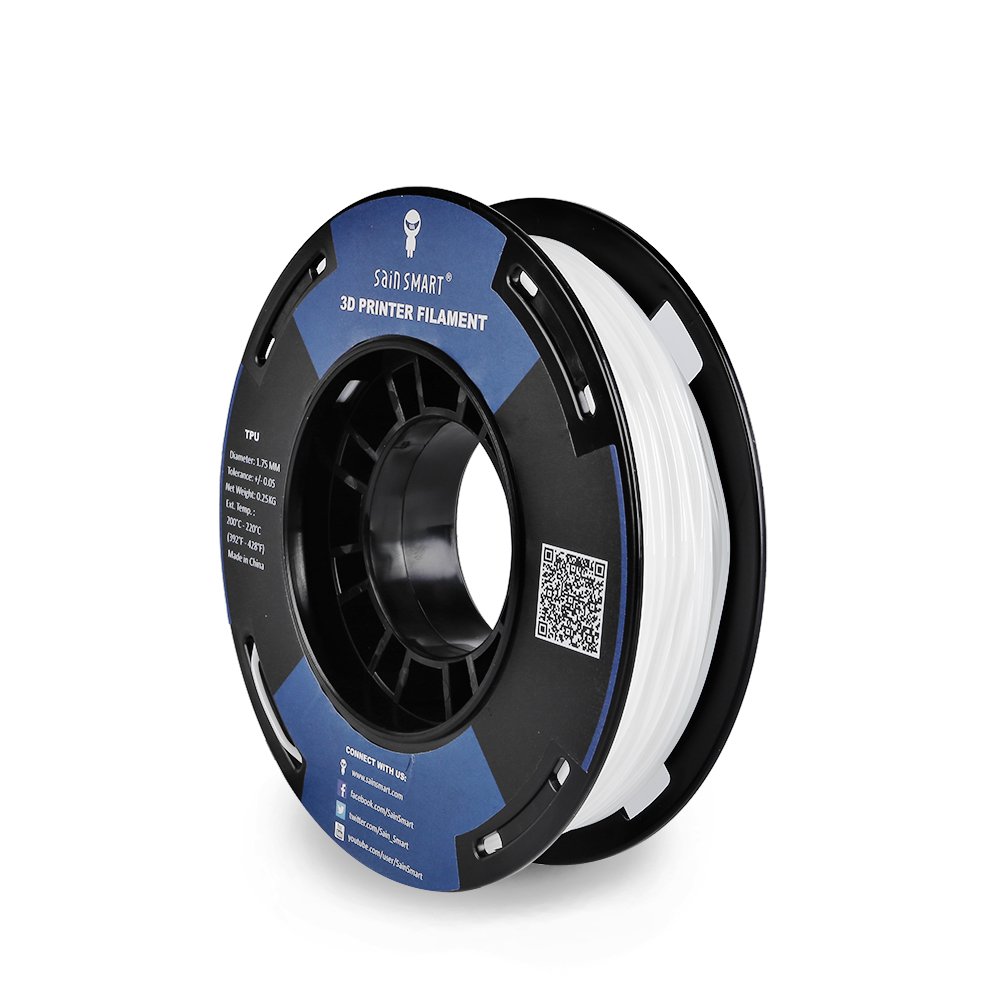
A 250 g TPU spool that’s great for testing colors or small flexible parts, formulated for strong abrasion resistance.
Why I picked it: I kept a few of these small spools around for quick prototyping and color tests.
Best for: Hobby projects, prototypes, and small flexible components.
Budget-friendly small spool for testing and short runs.
Pros
- Tire-like rubber feel
- Easy storage on small spools
- Good abrasion resistance
Cons
- Needs drying and quick use
- Best on direct-drive extruders
My take
These 250 g spools are perfect when I want to try a new color or print a short run of flexible parts. The filament prints like a tough rubber and produces durable pieces when handled correctly.
I found that printing slowly (15–30 mm/s), disabling or minimizing retraction, and running the filament straight from a dryer improved adhesion and reduced extreme stringing. For Bowden setups I had to be extra careful with feeding.
If you keep the spool dry and print directly after drying, the finish and flexibility are excellent. For longer production runs I prefer the 1kg spools, but these are great for experiments.
4. OVERTURE ASA Filament 1.75mm (Diamond Green) — 1kg – Best for Outdoor Parts
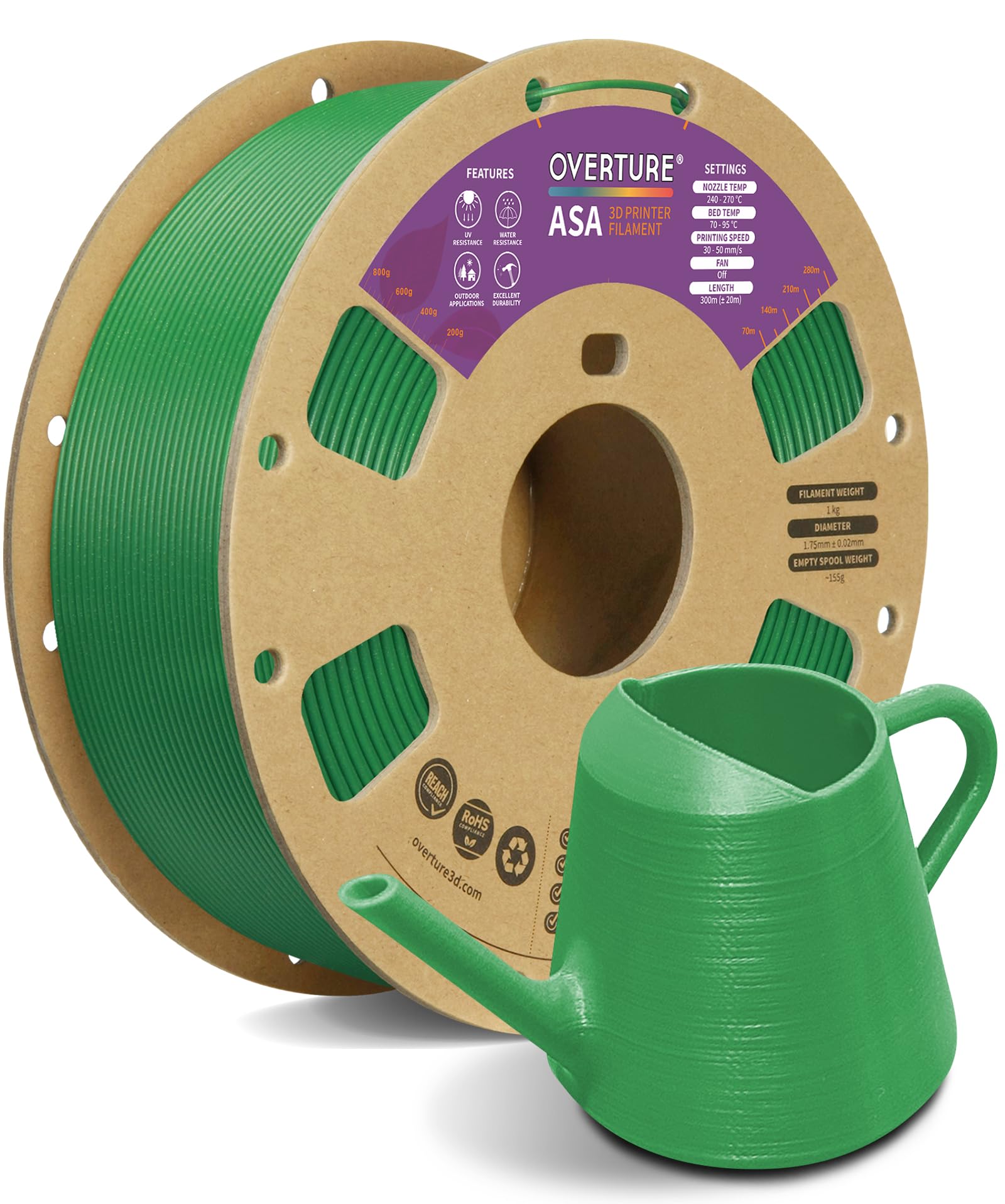
An ASA formulation optimized for UV and weather resistance, with tight diameter tolerance and pre-dried packaging.
Why I picked it: I relied on it when durability and UV stability mattered for exterior parts.
Best for: Outdoor enclosures, garden fixtures, and parts exposed to sunlight.
Competitively priced engineering filament for outdoor use.
Pros
- Strong UV/weather resistance
- Clog-free manufacturing
- Tight dimensional tolerance
Cons
- Printing fumes require ventilation
- Cardboard spools can be imperfect
My take
I used this ASA for an outdoor enclosure and it held up to sun and heat without noticeable warping. The prints came out rigid and the surface finish was cleaner than I expected compared with PLA.
OVERTURE pre-dried the spools and vacuum-sealed them, which reduced nozzle issues right out of the package. On my enclosed printer the material printed with minimal dialing, and overhangs stayed sharp.
One caveat: ASA can produce a noticeable odor, so I printed with a filtration system and good ventilation. Overall, when I needed outdoor durability, this filament delivered.
5. Creality Space Pi X4 Filament Dryer — 4-Roll Dry Box with LCD Touchscreen – Best Filament Dryer
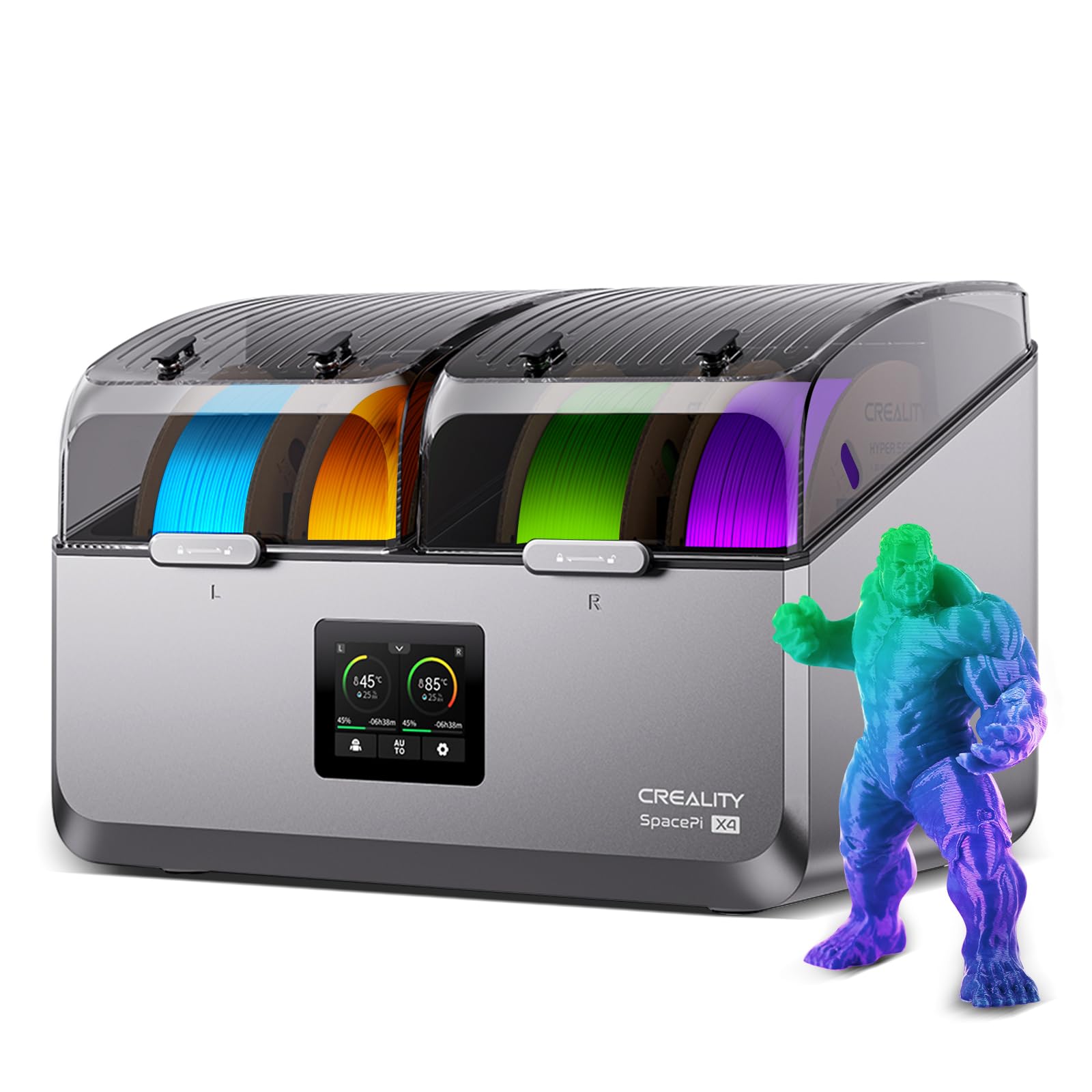
A 4-roll dryer that reaches up to 80°C, offers dual independent compartments, and uses 360° airflow plus dehumidification for rapid moisture removal.
Why I picked it: I picked it for multi-roll drying and independent temperature control across different materials.
Best for: Makers running multiple printers, mixed-material workflows, or storing rolls ready-to-print.
A more expensive, feature-rich dryer suitable for frequent use.
Pros
- Dries four spools at once
- Reaches 80°C quickly
- Dual independent compartments
- Quiet dehumidification mode
Cons
- Takes up substantial desk space
- Power cord could be longer
My take
This dryer became essential in my shop when I moved to multi-roll workflows. I can dry four 1 kg spools simultaneously and set different temperatures in the two chambers—handy when I’m running PLA and nylon at the same time.
In a test I lowered relative humidity inside a PLA spool from about 31% down to roughly 17% after several hours. The touchscreen is intuitive, the PTFE feed tubes make it easy to run filament straight to the printer, and the unit maintains a steady temperature with 360° airflow.
It’s not perfect—its footprint is large and I wished the cord were longer—but for people who need reliable, repeatable drying across multiple spools, this dryer saved me time and prevented many moisture-related print failures.
6. Creality PETG Filament 1.75mm White — 4 × 1kg Spools – Best Value PETG
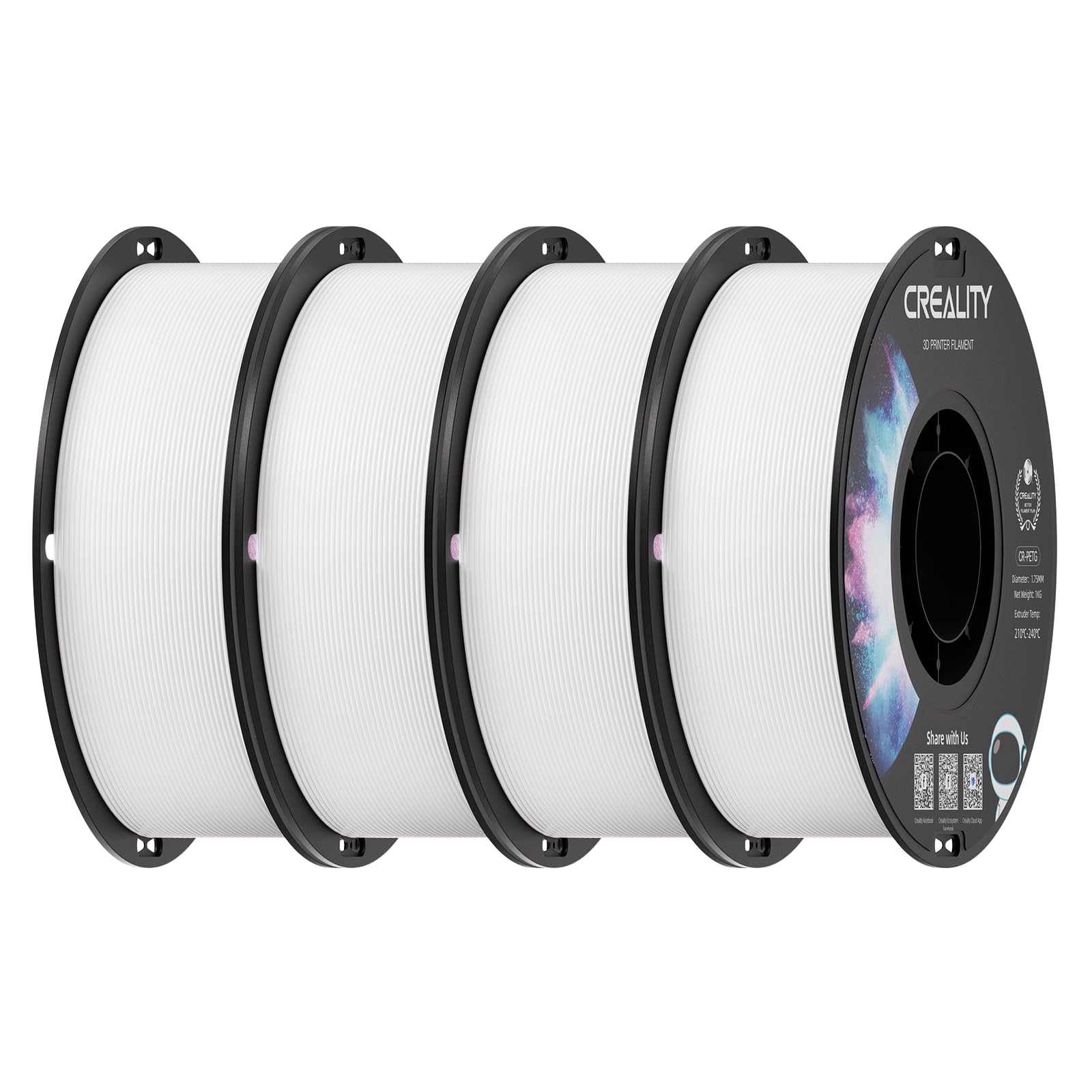
A 4-pack of PETG that combines good strength, low shrinkage, and glossy finish for functional parts and display pieces.
Why I picked it: I picked it for value without sacrificing consistent diameter and reliable feed.
Best for: Durable parts, transparent pieces, and high-strength functional prints.
Great multi-spool value for regular PETG use.
Pros
- High impact resistance
- Consistent diameter
- Good bed adhesion
- Glossy finish
Cons
- Initial bed adhesion may need tweaking
- Can show strings if overheated
My take
This PETG pack is what I turn to for production-style prints where I need durability and consistent results. Diameter tolerances kept extrusion smooth across long runs and I ran several functional parts with no clogs.
I initially dialed in bed adhesion—using a light glue stick and moderate bed temps—and after that it stuck reliably. Prints came out strong with a nice glossy surface suitable for light-diffusing parts like lampshades.
Overall the 4×1 kg format saved me downtime and kept my spool cabinet stocked for weeks of uninterrupted printing.
How I Choose a Filament Dryer and Moisture-Sensitive Filament
Why drying filament matters
I won’t skip drying when working with hygroscopic materials like PETG, nylon, and TPU — moisture causes popping, stringing, and weak layer bonds. Drying removes that variable so my prints behave predictably.
Even filaments sold vacuum-sealed can absorb humidity once opened, so having a drying routine keeps prints consistent.
- Moist filament → bubbles, popping, poor adhesion
- Dry filament → consistent extrusion, stronger layers
Temperature guidelines I follow
Different materials need different drying temps. I use lower temps for PLA/TPU and higher temps for PC and nylon.
A dryer that reaches up to 80°C handles almost everything I print, while gentler settings keep TPU and PLA from deforming on the spool.
- PLA/TPU: lower temps to avoid softening
- PETG: medium temps to remove moisture
- PC/Nylon: higher temps (and longer cycles)
Capacity and workflow considerations
If I’m printing multiple materials or running several printers, multi-roll dryers save me time. If I only print occasionally, a single-roll dryer or desiccant box works fine.
I also value passthrough tubes so I can dry and print without opening the chamber.
- Single-roll dryers are compact and cheap
- Multi-roll units speed up busy workflows
- Passthrough tubes let you print directly from the dryer
Other features I look for
Digital controls and accurate sensors make a big difference — I want consistent set-and-forget performance. Quiet fans, dehumidification modes, and obvious status indicators are bonuses.
Build quality matters: solid seals and tidy spool holders reduce tangles and feeding problems.
- Reliable temperature sensors (NTC or better)
- Dehumidification modes for quiet operation
- Clear lid for monitoring without opening
Frequently Asked Questions
How long should I dry filament before printing?
I generally dry PETG and TPU for 4–6 hours, nylon and PC for 6–12 hours at their recommended temperatures. If a spool feels noticeably damp or you see popping during a test print, I extend the cycle until prints stabilize.
Can I print directly from the dryer?
Yes — I often feed filament through PTFE passthroughs so it stays dry while printing. That workflow cuts down on handling and prevents reabsorption of humidity.
Is it safe to leave a filament dryer running overnight?
I leave my unit running unattended when it’s well-ventilated and the dryer has temperature and fan controls. I avoid placing it on flammable surfaces and check the manufacturer’s safety recommendations, but long dry cycles are normal for materials like nylon.
Final Take
Drying filament and choosing the right material transformed the consistency of my prints. For flexible work I keep a 95A TPU spool on hand, and for outdoor or high-heat parts I rely on ASA and PC respectively.
If you print regularly, a multi-roll dryer like the Space Pi X4 paid for itself in time saved and fewer failed prints. For occasional projects, small spools and a compact dryer work just as well.
Pick the combination that fits how you print: material needs, frequency, and space. I use the items above daily because they simplify my workflow and raise the baseline quality of my prints.
