
I tested blades for zero-turns, walk-behinds, robotic mowers, and commercial decks. This roundup highlights the fits, cut quality, and when each blade makes sense for my mower.
I keep a small stock of replacement blades because a sharp blade is the single biggest factor in getting a clean cut. In this guide I focus on fit, blade profile, and the real-world cutting results I got from each option.
If you care about scalp-free stripes, fewer clumps, and blades that hold an edge through a season, I walked each product through those checks so you don’t have to.
I compared each blade by fitment notes, thickness and lift specs, and the cut performance I observed on different grass types. I prioritized exact fit first, then material/thickness and finally how the blade left the finish on the lawn.
1. 942-04308 Blades with 6 Star Hole for Troy Bilt & Cub Cadet 42" Decks – Best for 42" Cub Cadet & Troy-Bilt Decks
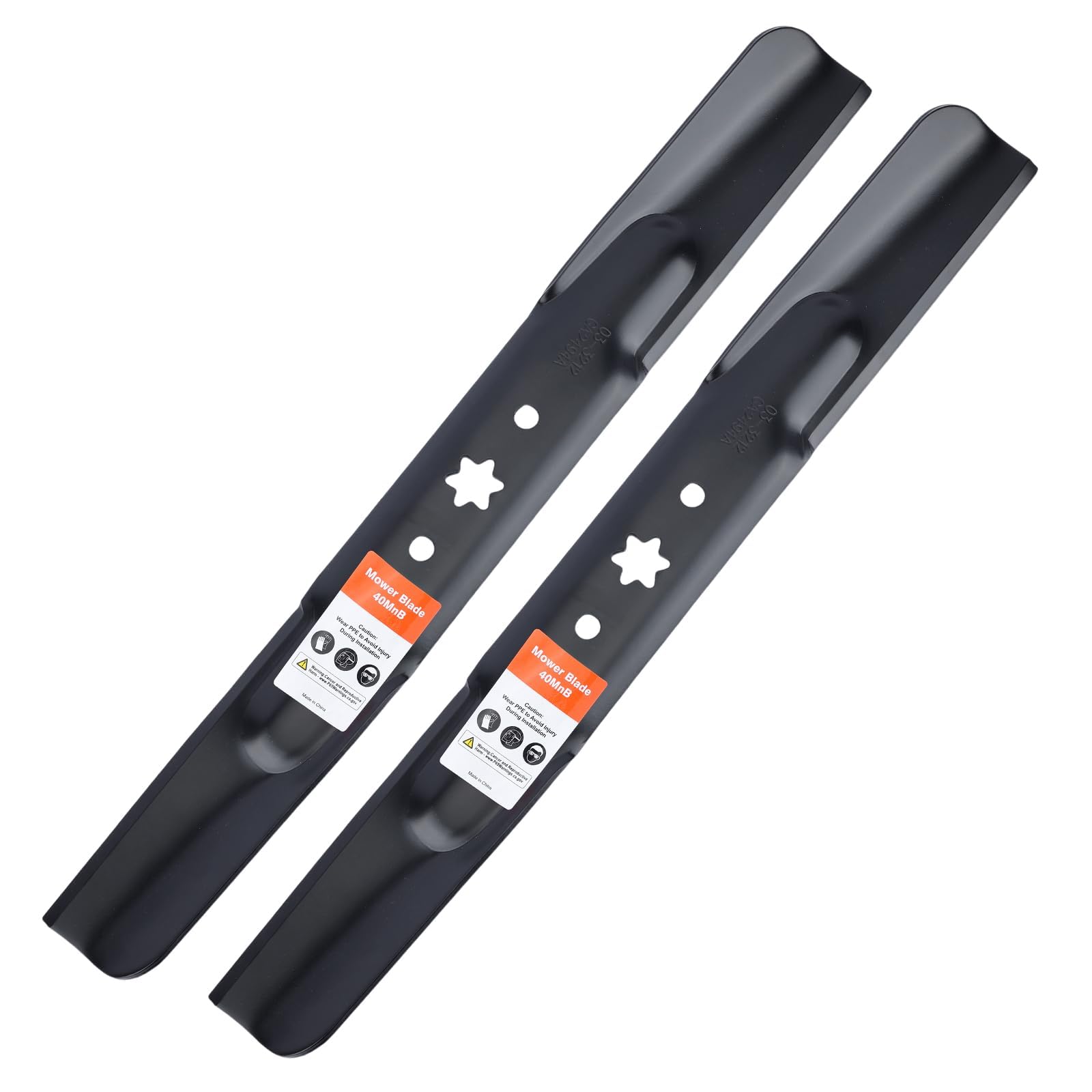
A direct-fit high-lift replacement for a wide range of 42" Troy-Bilt and Cub Cadet decks that uses a 6-point star center hole.
Why I picked it: Precise 6-star center fit for many 42" models; strong cut and reliable packaging.
Best for: Owners of 42" Troy-Bilt, Cub Cadet, and compatible Craftsman decks.
Affordable aftermarket option compared with dealer parts.
Pros
- Exact 6-point star hole fit
- High-lift profile for better bagging
- Good packaging and fit out of the box
- Cuts clean on my 42" deck
Cons
- Requires verifying center-hole shape
- Only fits 42" decks listed
My take
These blades solved a fit puzzle I ran into: the center hole is a 6-point star, not the S-shape some models use. Once I confirmed my deck used the 6-star pattern they slid on and tightened without modification.
On my Bronco and Mustang-compatible decks the high-lift profile moved clippings into the chute and improved bagging. I found the blades stayed true through a full season of mixed grass.
Packaging and delivery were trouble-free, and installation was straightforward. My only caveat is to double-check the center hole shape before ordering, because the wrong pattern will not fit.
2. Oregon 6PK 92-208 Blades for 54" Hustler Decks – Best Value Pack for Hustler 54"
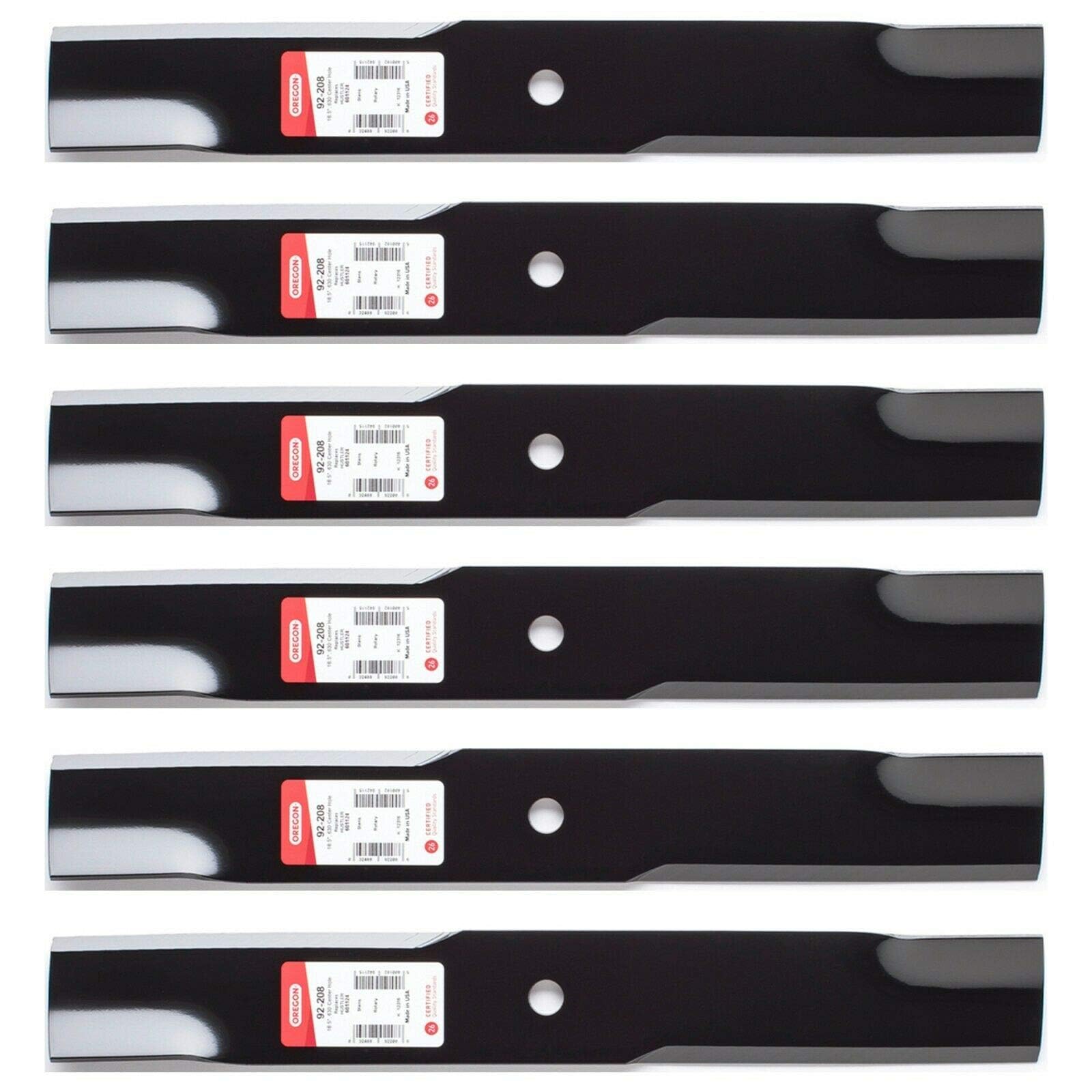
A 6-pack of 18-1/2" Oregon blades built to Hustler specifications — sturdy, value-oriented blades for seasonal replacement.
Why I picked it: Spec-matched dimensions and a multi-pack that keeps me stocked for regular maintenance.
Best for: Owners of 54" Hustler decks who want a reliable multi-pack.
Good value for a multi-blade pack versus buying individually.
Pros
- Spec dimensions for Hustler decks
- Thicker .203" steel
- Multi-pack keeps me stocked
- Solid value compared to local shops
Cons
- You may need two sets per heavy season
- Larger blades need proper balance
My take
I appreciate that these list the exact dimensions: 18-1/2" length, 2.5" width, .203" thickness, and a 5/8" center hole. That made fit verification immediate for my Hustler Flip Up.
Cut quality was consistent; I found one set lasted a full season on my tougher turf. Buying the 6-pack saved me a trip to the mower shop and gave me spares for mid-season swaps.
When I installed them I checked balance and sharpened to my preferred angle. They sharpen easily and perform well once tuned.
3. OEM Ferris 5101755S Blades — 3 Pack for 61" Ferris Mowers – Best OEM for 61" Ferris Decks
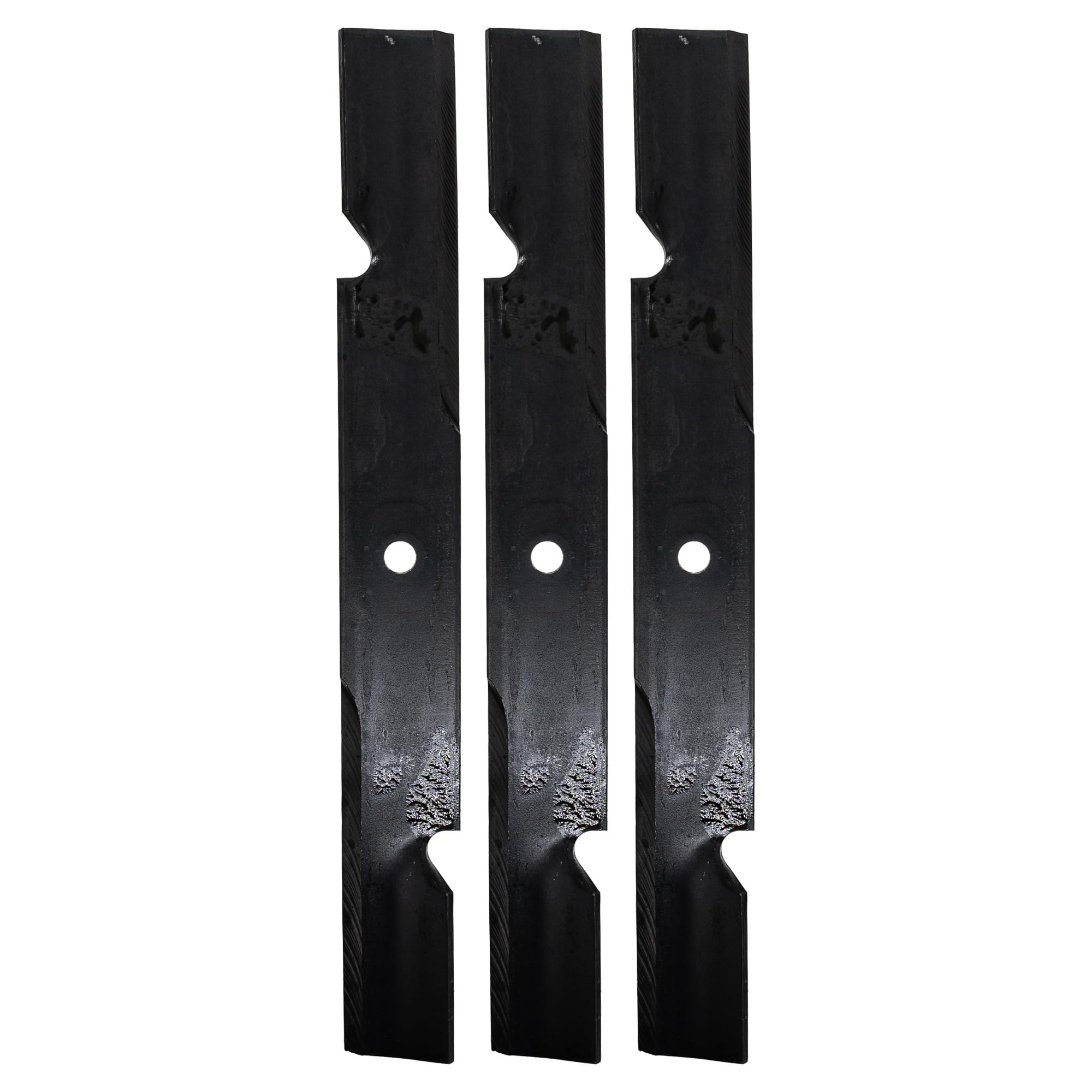
A genuine OEM three-pack made to Ferris specs; heavier construction and long-wearing edges for demanding conditions.
Why I picked it: OEM build quality and heavier steel that lasted longer under rough conditions.
Best for: Ferris 61" deck owners who want OEM durability and fit.
Premium OEM option; pricier than some aftermarket blades.
Pros
- OEM fit and finish
- Heavier, durable construction
- Holds edge well under tough conditions
Cons
- Higher cost versus aftermarket
- Requires three blades for full deck
My take
These Ferris OEM blades are noticeably heavier than the aftermarket sets I’ve used. That weight shows up in how they resist dings and hold an edge when I mow country conditions—rocks, small branches, and rough turf.
I installed the three-pack on a 61" deck and noticed the cut quality improved compared with lighter blades. They sharpen easily and stayed consistent through multiple properties I maintain.
After an isolated packing error where one blade was missing, the seller promptly replaced the set for me. That follow-up reinforced why I’ll stick with OEM when I want fewer surprises during the season.
4. Einhell Original Robotic Mower Replacement Blades — Pack of 12 – Best for Robotic Mowers
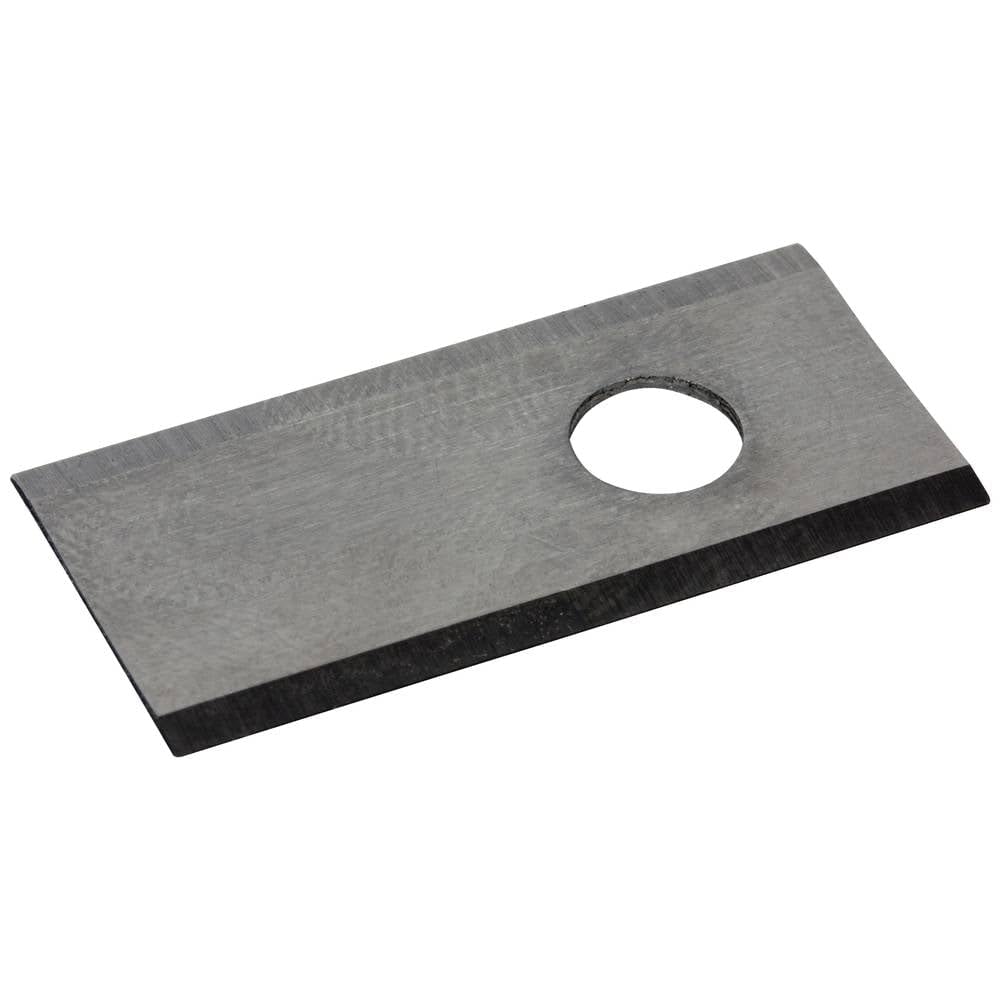
A 12-piece OEM replacement kit for Einhell FREELEXO and GC-RM 500 robotic mowers, sold with screws and easy installation.
Why I picked it: I like keeping a large supply of identical robot blades for fast swaps.
Best for: Owners of Einhell robotic mowers who prefer OEM replacement kits.
Mid-range for OEM robotic spare packs.
Pros
- Pack of 12 for frequent replacements
- Includes mounting screws
- Easy to install on Einhell robots
Cons
- Some arrive needing a touch-up edge
- International packaging differences possible
My take
Because robotic mowers chew through blades faster than full-size mowers, I favor bulk packs. These Einhell originals include the screws and fit the FREELEXO and GC-RM 500 without fuss.
Out of the box I found most blades were usable, though I sharpened a few to get the bite I prefer on dense patches. After that they restored the mower’s clean, even pass.
Installation is quick: a few minutes per blade and the robot is back on duty. For me the convenience of a 12-pack outweighs any minor edge work required.
5. John Deere GX22250 OEM 21" Walk-Behind Mower Blade – Best for 21" John Deere Walk-Behinds
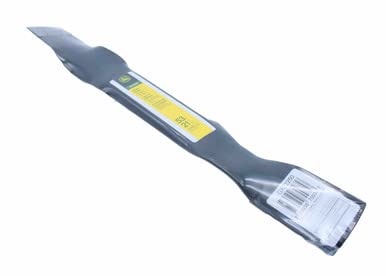
An authentic John Deere OEM blade for 21" decks that combines carbon and boron for durability and a sharp edge.
Why I picked it: OEM metallurgy and exact fit give me a like-new cut on walk-behinds.
Best for: Owners of John Deere 21" push or self-propelled mowers.
Competitive OEM option versus aftermarket equivalents.
Pros
- Genuine John Deere OEM part
- Carbon+boron hardness
- Cleans weeds and tall grass easily
- Easy installation
Cons
- Specific to John Deere 21" decks
- Not a universal fit
My take
This GX22250 blade felt like a factory replacement when I installed it on my John Deere walk-behind. The carbon-plus-boron construction gives a firmer edge that cut weeds and thick patches like they weren’t there.
Installation was straightforward and the mower returned to a near-new finish. For routine maintenance I keep a spare OEM blade on hand because the fit and metallurgy are consistently reliable.
If you run a 21" John Deere deck, buying the OEM saves time and tuning compared with guessing an aftermarket profile.
6. Scag 3PK Genuine OEM 21" Cutter Blades — 61" Deck Kit – Best for 61" Commercial Decks
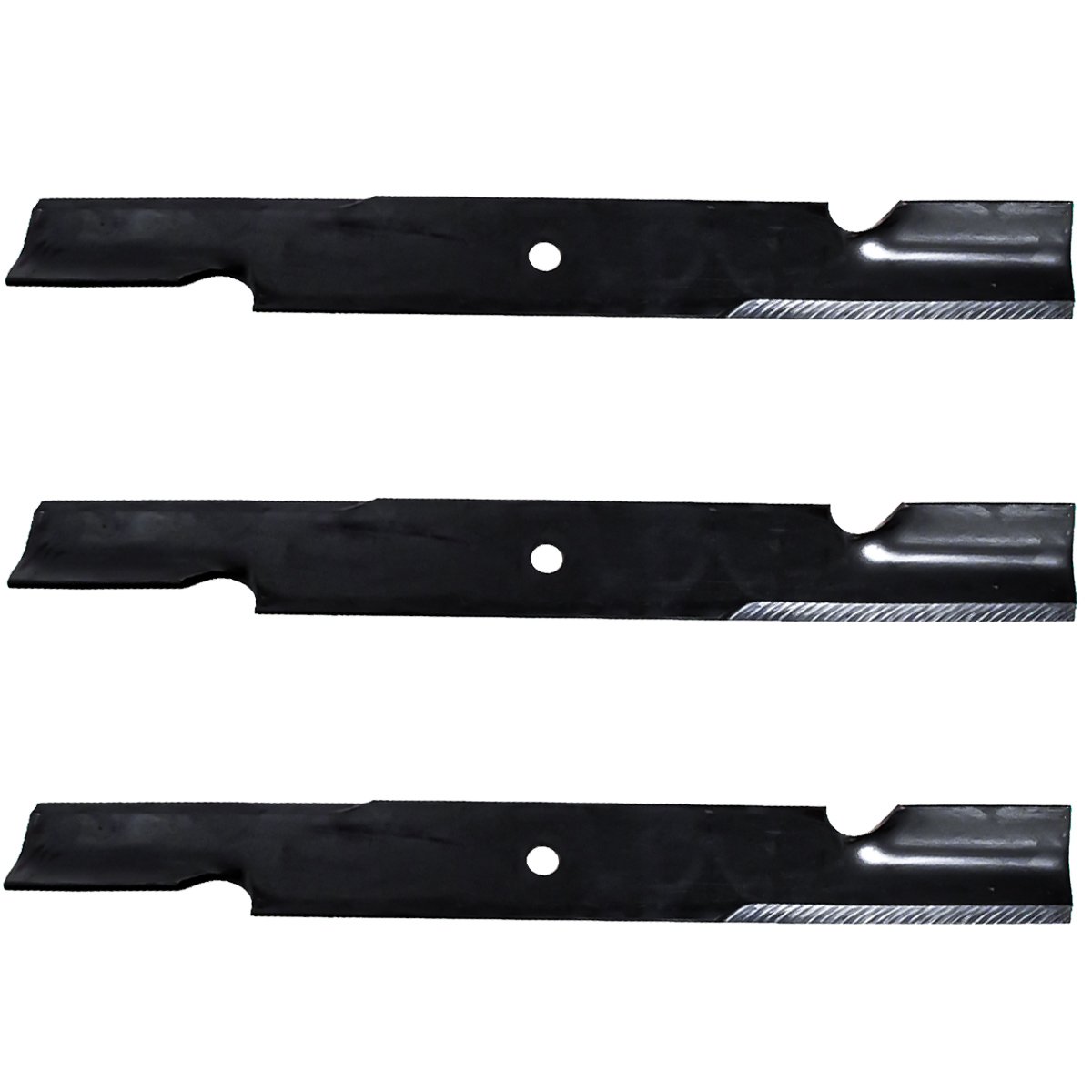
A three-pack of Scag OEM 21" blades made to the brand’s specs; built for heavy cutting and easy sharpening.
Why I picked it: Consistent OEM geometry and durable steel that handled thick grass in my tests.
Best for: 61" deck owners who want OEM performance for heavy or tall turf.
Higher-end OEM blades but worth it for durability.
Pros
- OEM quality and fit
- Sharp cut on thick grass
- Holds edge and sharpens well
Cons
- Pricier than generic blades
- Requires all three blades for full coverage
My take
I’ve used these Scag blades repeatedly and they’re my go-to for 61" decks. The .203" thickness and 5/8" center hole match Scag specs, and the blades cut dense turf cleanly without ragged tears.
They sharpen predictably and, after a few maintenance cycles, still outperformed several aftermarket blades I tried. On a Ferris deck they even made the grass stand up for better striping.
For heavy-duty mowing and longer-lasting edges I prefer OEM Scag blade sets despite the higher cost.
How I Choose Replacement Mower Blades
Confirm exact fit first
I always start by matching the blade’s center hole, length, and lift profile to my mower’s manual. An incorrect center hole or length means the blade won’t install or will throw the balance off.
If a listing mentions multiple hole patterns, I physically inspect the old blade before ordering—a 6-point star and a 5/8" round hole are not interchangeable.
- Match center hole shape (star vs round) and diameter
- Confirm blade length equals deck requirements
- Check lift type: high-lift, low-lift, or standard
Consider material, thickness, and lift
Thicker steel (.203" and up) holds an edge longer in rough conditions. OEM metallurgy sometimes blends carbon and boron for extra toughness.
High-lift blades move more air and help bagging; standard lift is fine for everyday cutting and mulching.
- Thicker blades for heavy turf and debris
- High-lift for bagging, standard for mulching
- OEM metallurgy may cost more but lasts longer
Think about maintenance and pack size
I buy multi-packs for commercial or robot applications where blades wear quickly. For homeowner use a two- or three-blade stock is usually enough.
Sharpening and balancing are quick; I re-sharpen before storing blades to keep them ready.
- Buy multi-packs for robot and commercial decks
- Sharpen and balance after each resharpen
- Keep spare mounting hardware when possible
Frequently Asked Questions
How do I know which center hole my mower needs?
I remove the old blade and inspect the center hole. If it’s a star-shaped pattern or a specific diameter like 5/8", I match that exactly to the replacement listing.
How often should I replace mower blades?
In my experience, a residential blade lasts a season or more with regular sharpening. Robotic mowers and commercial decks need replacements much more often, so I keep bulk spares on hand.
Can I sharpen replacement blades myself?
Yes—I sharpen most blades myself. I check balance after sharpening and touch up the edge to my preferred angle so the blade returns to clean-cut performance.
Final Take
If you want the fastest path to a better cut, match fit first and material second. OEM blades give me reliability; aftermarket options often deliver great value if the specs match.
I keep one OEM set for each deck size I own and a multi-pack of robot blades for quick swaps. That routine has kept my lawns looking cleaner with less effort.
