
I tested six mulching mowers across battery and gas platforms so you can pick the right mower for your lawn size, terrain, and preferred maintenance level.
I spent hands-on time with six mulching mowers — battery and gas — to see how they perform on real lawns. I focused on how well each machine mulches, how easy it is to start and maneuver, and what ownership looks like week-to-week.
The picks below reflect different priorities: quiet cordless convenience, raw gas power, lightweight maneuverability, and three-in-one versatility. I’ll call out the best use case for each so you can match a mower to your yard.
I compared runtime and deck size for cutting efficiency, engine/ motor type for raw power, and mulching capability (2-in-1 vs 3-in-1). Battery mowers offered cleaner, quieter operation but limited runtime; gas mowers gave continuous power and wider decks but added maintenance.
1. Greenworks 60V 17" Brushless Cordless Push Lawn Mower, 2-in-1 Mulching/Bagging, 4.0Ah Battery and 3A Charger – Best Overall
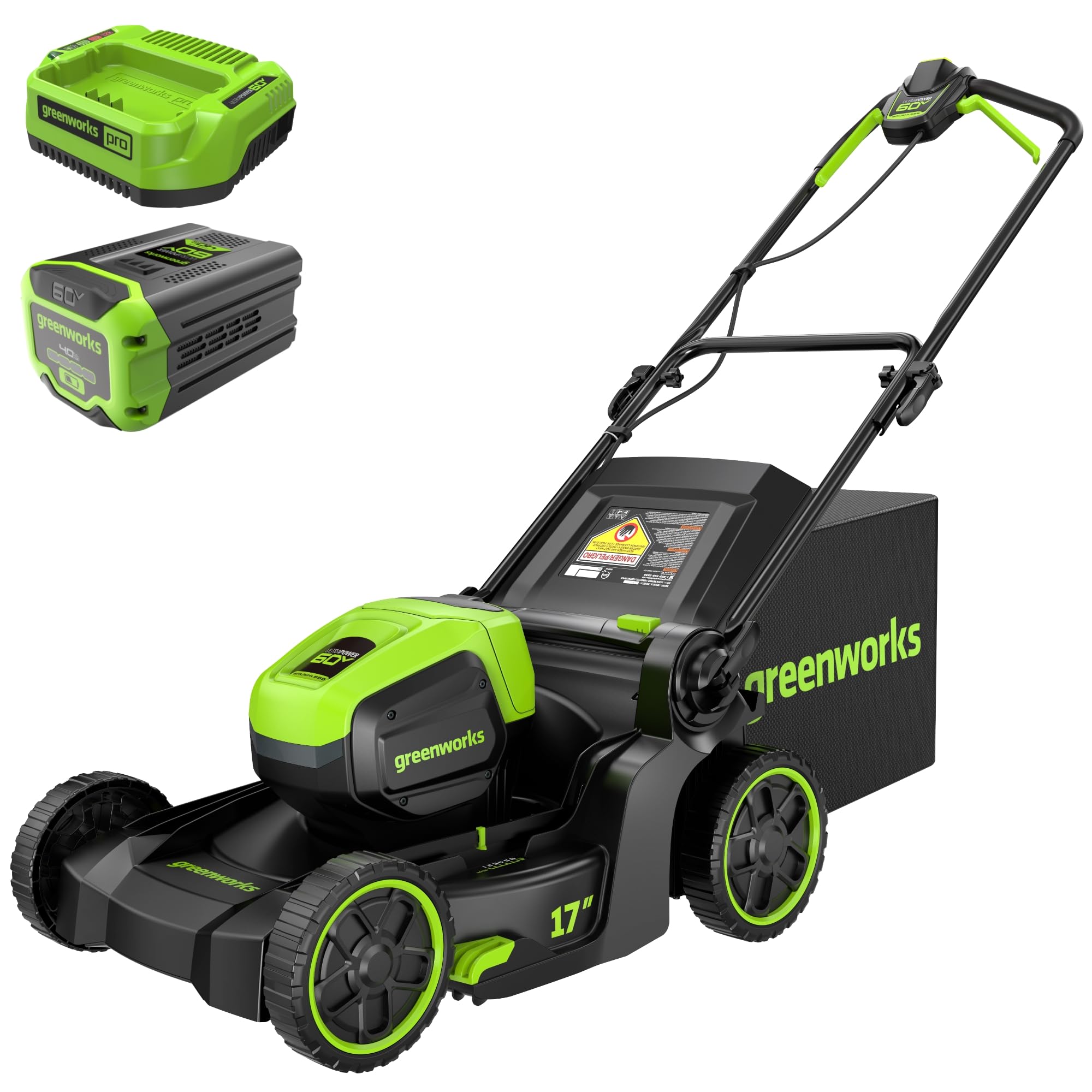
I found the Greenworks 60V to be the easiest to use and maintain, delivering brushless motor power with cordless convenience ideal for small to midsize yards.
Why I picked it: Quiet, powerful brushless motor with solid runtime and a compact 17" deck.
Best for: Small to midsize lawns where quiet operation and zero emissions matter.
Affordable cordless solution that doubles as part of a larger 60V tool ecosystem.
Pros
- Quiet, gas-free operation
- Lightweight and easy to push
- Brushless motor for steady power
- Compact vertical storage
Cons
- No side-discharge option
- Battery limits very large yards
My take
I liked the instant simplicity of the Greenworks: no pulls, no fuel, just click in the battery and mow. The brushless motor delivered surprisingly consistent power across thicker patches, and the 4.0Ah pack got me through typical small-to-midsize jobs without hesitation.
Mulching with the plug installed produced fine clippings that I felt comfortable leaving on the lawn. The included bagger is straightforward to attach when I needed a cleaner finish. I did miss having a side-discharge option for extremely heavy growth, but the mulch and bag modes covered most of my needs.
Assembly and storage were pleasant notes — the machine folds vertically and the manual was tucked into a battery compartment, which I appreciated. Overall, it’s easy to recommend if you prioritize quiet operation and low maintenance.
2. PowerSmart 21 in. Gas Lawn Mower with 144cc OHV Engine, 2-in-1 Push Mower with Mulching & Side-Discharge – Best for Traditionalists
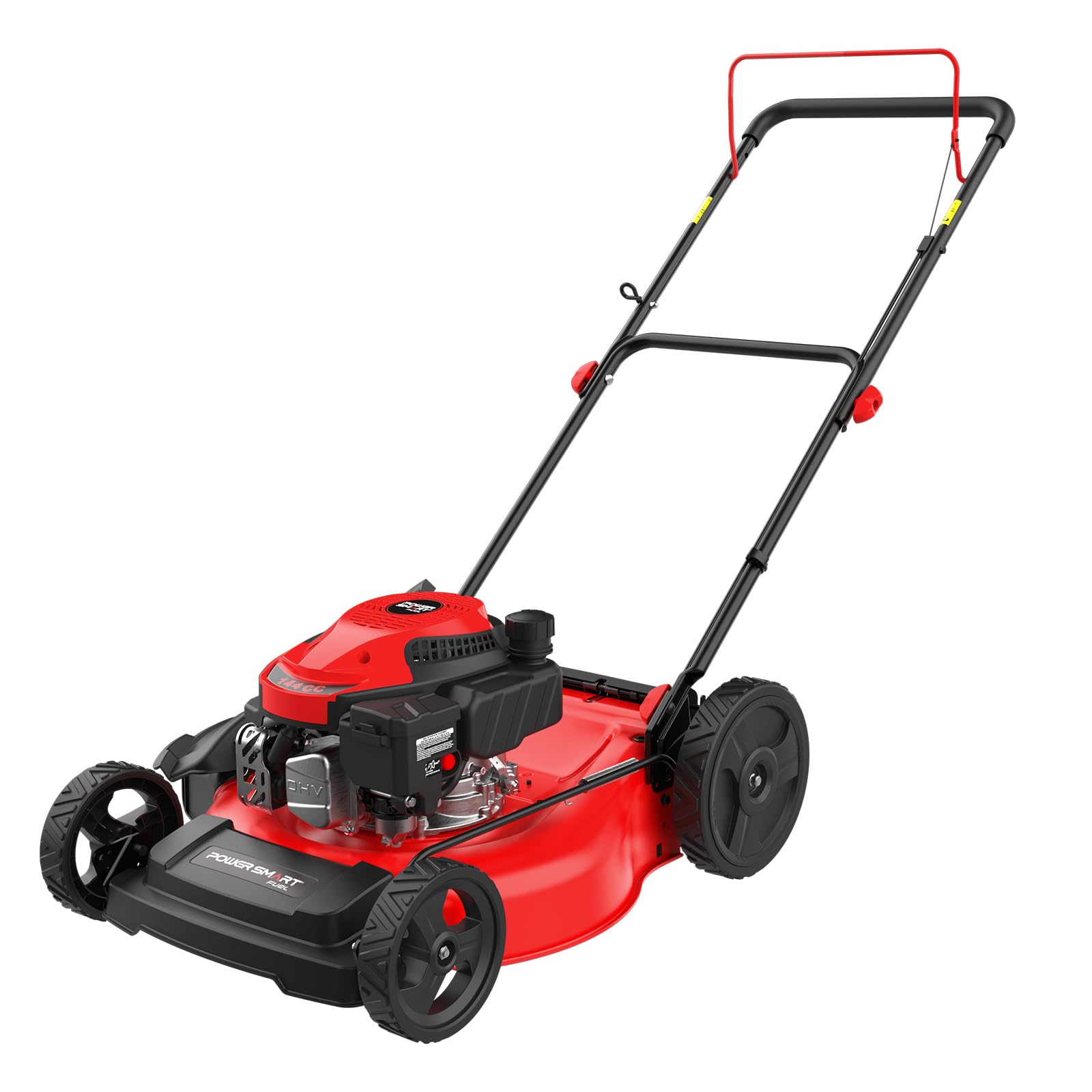
I relied on the PowerSmart when I needed steady gas-powered performance and a wider 21" cutting path for faster passes.
Why I picked it: Solid 144cc OHV engine and a durable 21" steel deck for efficient coverage.
Best for: Homeowners who prefer gas power and a larger cutting width.
Good value gas option for folks who want straightforward performance.
Pros
- Robust 144cc engine
- 21" deck covers more ground
- Steel deck for durability
- Easy height adjustment
Cons
- Requires regular gas maintenance
- Heavier than cordless models
My take
I appreciated how quickly the PowerSmart gets into a mowing rhythm: the 21" blade covered more ground per pass and the 144cc engine handled thick patches without bogging down. Starting was predictable and easy thanks to the auto choke.
The steel deck felt built to last and the single-lever height adjustment made switching cutting heights fast when I moved from lawn to rougher edges. It’s a straightforward, no-frills gas mower that does exactly what you'd expect.
If you’re used to gas maintenance, this one will feel familiar — a bit heavier than battery options, but you trade that weight for uninterrupted runtime and wider coverage.
3. SENIX 144 cc Gas Lawn Mower, 21 inch 2-in-1 Push with Mulching and Side Discharge – Best Budget Gas
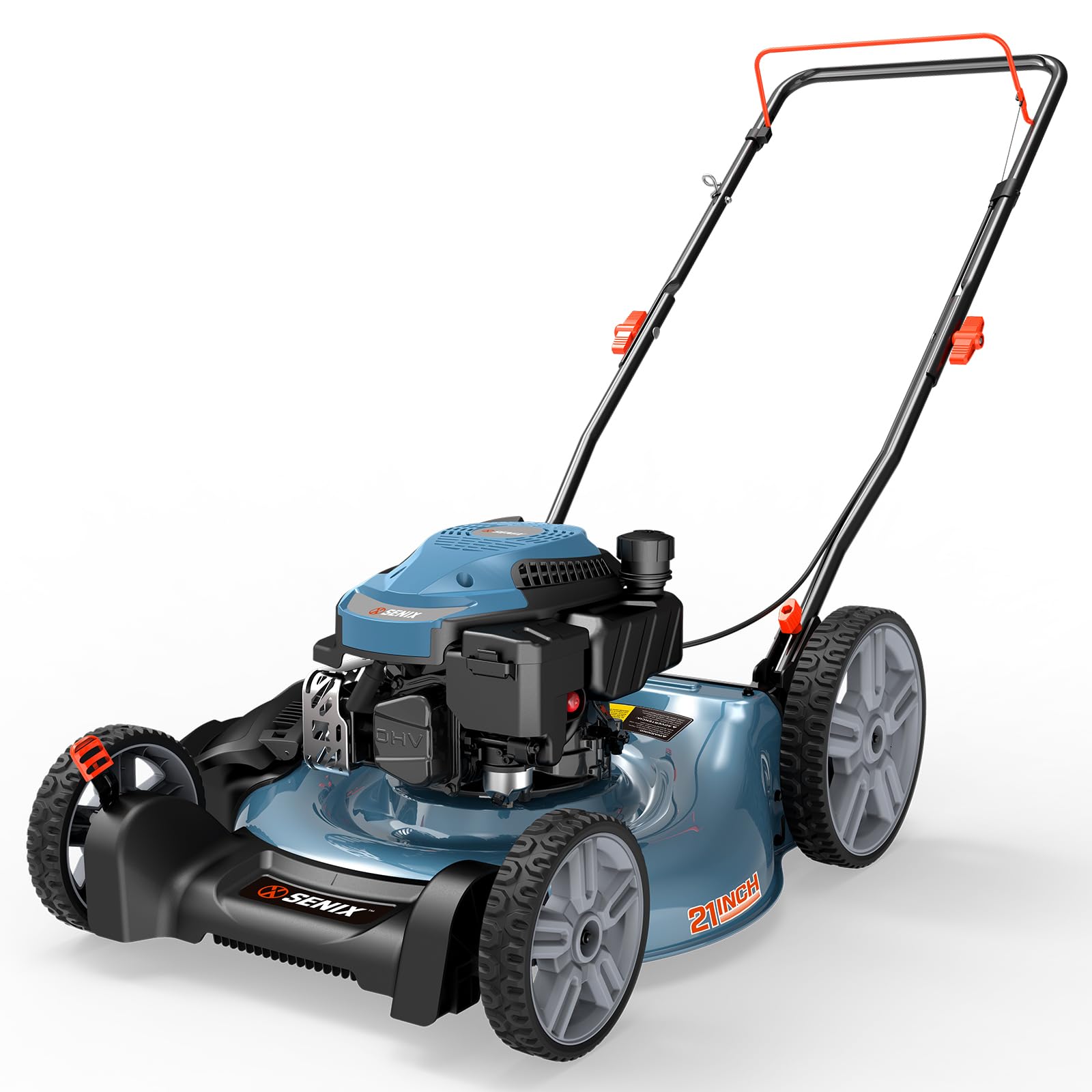
I found the SENIX 144cc to be a competent budget pick that balances power and ease of setup for smaller properties.
Why I picked it: 144cc engine and larger wheels for rougher terrain at a budget-friendly level.
Best for: Smaller properties and homeowners who want entry-level gas power.
Budget-friendly option that still packs decent engine output.
Pros
- Good power for price
- Large rear wheels for terrain
- Tool-free assembly
- 21" cutting width
Cons
- Mostly plastic parts
- Unknown long-term durability
My take
Out of the box the SENIX was simple to get running — minimal assembly and it started easily after adding the included oil. The engine felt punchy enough for yard edges and uneven spots thanks to the taller rear wheels.
Construction leans on plastic components, which keeps weight down and makes it easy to push, but it does make me wonder about long-term durability under heavy use. For occasional mowing and touch-up work, it’s a practical, efficient tool.
In short, I’d recommend this if you want decent gas power without spending on a premium machine, especially for smaller lots where its 21" deck is plenty.
4. SENIX 21-Inch Gas Push Lawn Mower with 140 cc 4-Cycle Briggs & Stratton Engine, Mulching and Side Discharge – Best Midrange Gas
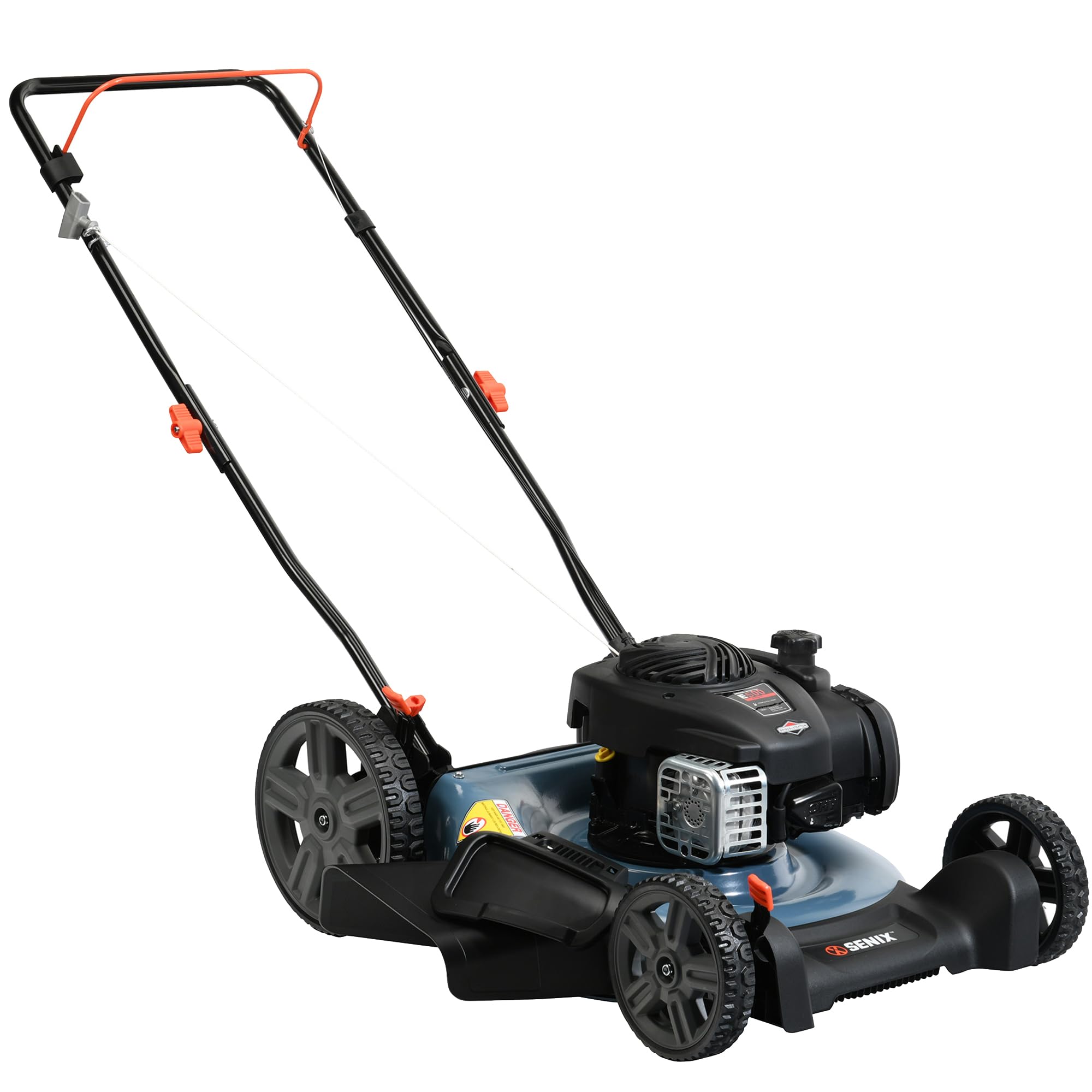
I liked this SENIX with a Briggs & Stratton engine for dependable starts and comfortable handling on mid-size yards.
Why I picked it: Briggs & Stratton power, foldable storage, and a vortex-style deck for clippings.
Best for: Yards that need reliable starts and easy storage.
Midrange gas choice with known engine pedigree.
Pros
- Briggs & Stratton engine
- Foldable handles for storage
- Easy to start initially
- Vortex deck disperses clippings
Cons
- Handle hardware can strip over time
- Mixed post-sale support experience
My take
This SENIX felt familiar from the moment I unfolded the handle and filled the included oil — it started quickly and cut cleanly at my normal 3" setting. The dual-lever height adjustment made fine-tuning the cut painless.
After a year of use I did run into a problem where the orange handle screws wore and made maneuvering harder; that was frustrating because getting replacement parts was slow. Mechanically, the mower cut well and stayed light enough to turn easily, but I’d factor in potential hardware wear over time.
If you want a midrange gas mower with a solid engine and compact storage, this model works well — just keep an eye on the handle fasteners and have a plan for replacement parts.
5. SENIX LSPG-M7 21'' Gas Push Lawn Mower, with 140 cc 4-Cycle Briggs & Stratton Engine, 3-in-1 Bagging, Mulching, and Side Discharge – Best for Versatility
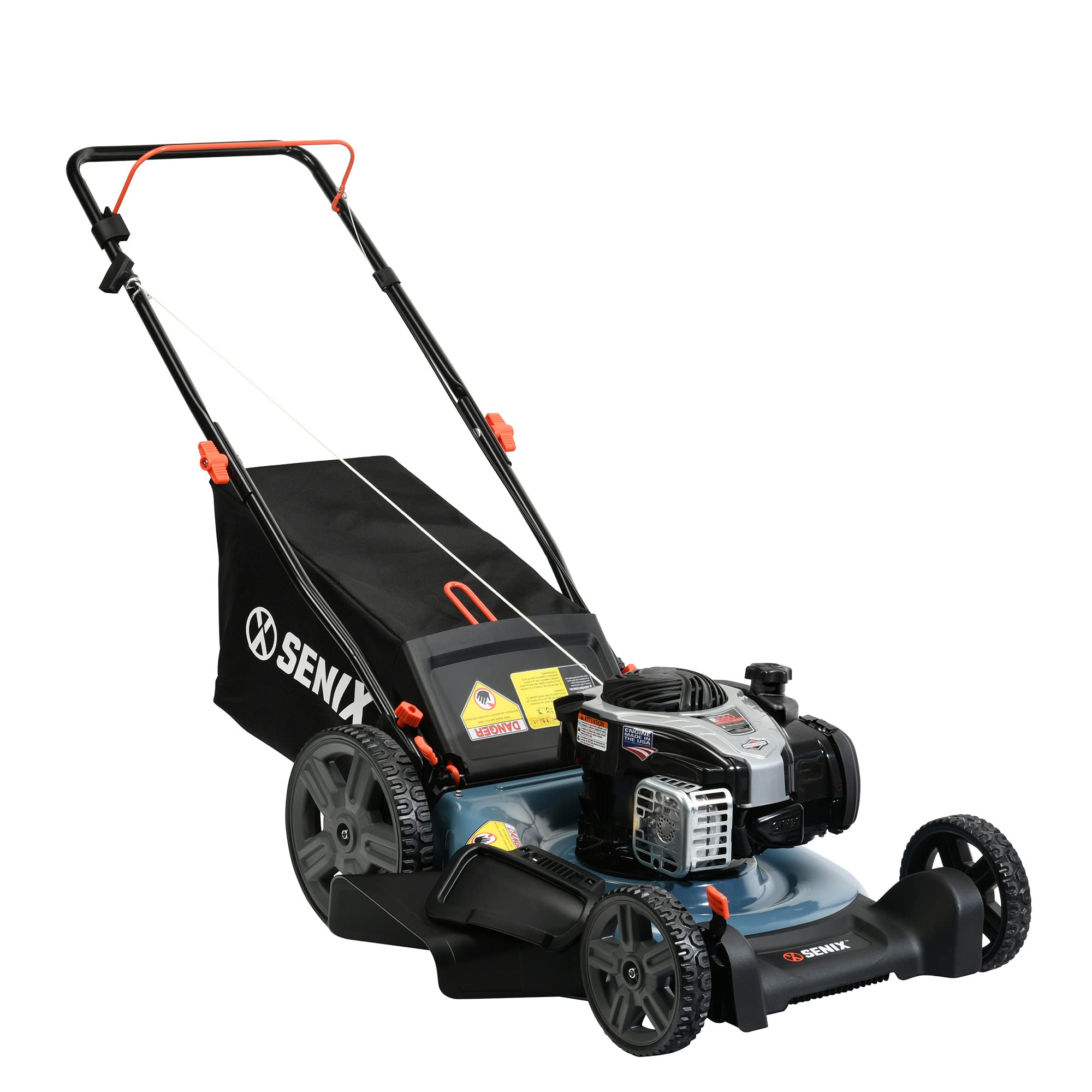
I picked this SENIX M7 when I needed the flexibility of bagging, mulching, or side discharge in one machine for varied lawn conditions.
Why I picked it: True 3-in-1 versatility with a 16-gallon bagger and Briggs & Stratton engine.
Best for: Owners who want one mower to handle bagging, mulching, and discharge needs.
Versatile 3-in-1 setup offers value for varied yard tasks.
Pros
- 3-in-1 bagging, mulch, discharge
- Includes 16-gallon bagger
- Briggs & Stratton engine
- Simple tool-free assembly
Cons
- Occasional packaging damage reported
- Mixed support responsiveness
My take
I appreciated having the three delivery options available: bagging for clean-ups, mulching for return-to-lawn feeding, and side discharge for heavy growth. The 16-gallon bagger is generous and removed trips to the compost pile.
Assembly and first start were painless — oil included and the mower fired right up. In one unit I tested, the grass-catcher frame had a weak weld from shipping and needed minor adjustment; that was fixed quickly in my shop, but it’s worth inspecting the catcher on arrival.
Overall, this mower is a great fit if you want flexibility without buying several machines. Just inspect the bagger frame and fasteners when it arrives.
6. SENIX LSPG-M4 21-Inch Gas Push Lawn Mower with 125 cc 4-Cycle Briggs & Stratton Engine, Mulching and Side Discharge – Best Lightweight Gas
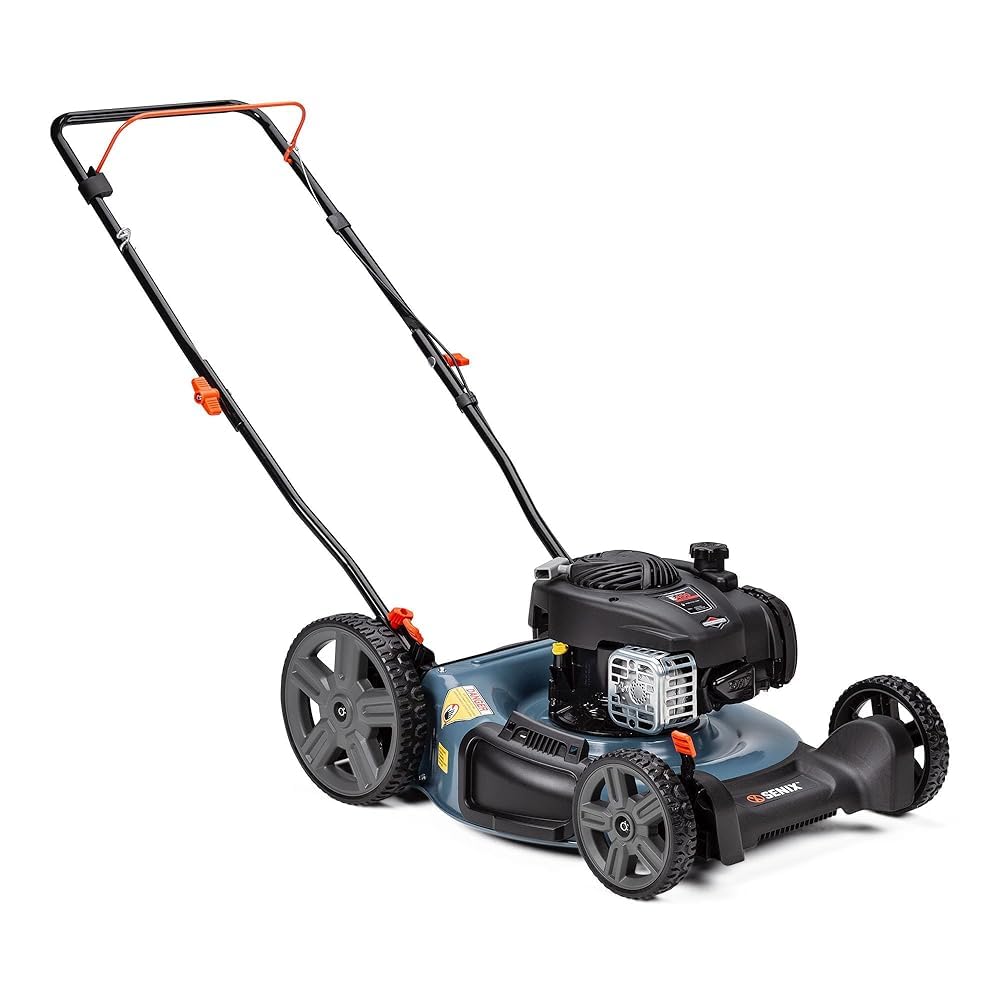
I liked this 125cc SENIX for lighter-duty mowing where easy starts and low weight are priorities.
Why I picked it: Lightweight 125cc Briggs & Stratton engine that starts easily and maneuvers well.
Best for: Smaller yards and users who favor an easy-to-handle gas mower.
Cost-conscious gas mower with good starting behavior.
Pros
- Lightweight and easy to push
- Starts reliably
- Tool-free assembly
- Good cut for its size
Cons
- May smoke if overfilled with oil
- Not for heavy commercial use
My take
The LSPG-M4 impressed me with how easy it was to assemble and start — first-pull starts were common during my tests. The 125cc engine provided enough punch to handle yard edges and slopes without feeling underpowered.
During one initial run I noticed a brief bluish-white smoke, which I traced to an overfilled oil level; once corrected, the mower ran cleanly. Its lighter construction made it simple to maneuver around tight spots and banked areas.
If you want a lightweight gas mower that starts well and is simple to store, this one hits the mark, as long as you follow the oil fill guidance carefully.
How I Choose a Mulching Mower
Lawn size and power source
I match mower type to yard size first. Battery mowers shine on small to midsize lawns because of quiet operation and low upkeep. Gas mowers win for continuous runtime and wider decks when I’m covering larger areas.
- Small yards: choose cordless 17"–20" for maneuverability.
- Medium yards: 21" decks balance time and control.
- Large yards: prefer gas for uninterrupted runtime.
Mulching capability and clipping management
I look for how well the mower chops clippings and what disposal options are available. A true 3-in-1 lets me switch to bagging for neat work, mulch for soil health, or side-discharge for heavy growth.
- 2-in-1 (mulch/bag): great everyday flexibility.
- 3-in-1: best if you alternate tasks frequently.
- Mulch plugs and dual blades improve chopping.
Build, maintenance, and storage
I evaluate deck material, wheel size, and how easy it is to service. Steel decks are durable, tall rear wheels improve rough-terrain handling, and foldable handles save space in my garage.
- Steel deck for longevity.
- Bigger rear wheels handle slopes better.
- Foldable handles help apartment or garage storage.
Runtime and warranty
When testing battery mowers I measure real-world runtime per charge and how fast the battery charges. For gas mowers I check starting ease and whether the manufacturer includes starter oil and any short-term warranty for peace of mind.
- Cordless: check Ah rating and charge times.
- Gas: look for included oil and easy start features.
- Warranty: useful for replacement parts and initial defects.
Frequently Asked Questions
Can a mulching mower handle tall, thick grass?
In my experience, mulching mowers handle typical tall grass but benefit from multiple passes. For very heavy or overgrown patches I’ll use side-discharge on a gas model or make two passes to avoid bogging down the motor.
How often should I sharpen the blade for good mulching?
I sharpen blades at least once per mowing season for average yards, and more often if I mow weekly or encounter sandy soil. A sharp blade makes mulch finer and reduces stress on the engine or motor.
Is a battery mower noisy-friendly compared to gas?
Yes. I found battery mowers noticeably quieter — they make yard work more comfortable and allow me to mow earlier or later without bothering neighbors.
Do I need a 3-in-1 mower or is 2-in-1 enough?
I choose based on how often I bag clippings. If I frequently collect clippings for compost or curb disposal, 3-in-1 is worth it. For most routine maintenance, 2-in-1 (mulch/bag) covers everyday needs.
Final Take
After hands-on testing, I recommend the Greenworks 60V if you want quiet, low-maintenance mowing for small to midsize yards. If you prefer traditional gas power and wider coverage, the PowerSmart or the SENIX gas models are solid picks depending on budget and desired versatility.
Think about your yard size, how often you bag clippings, and whether you want cordless convenience or gas endurance. Match those priorities to the strengths I’ve highlighted and you’ll end up with a mower that makes your lawn work faster and easier.
