
I tested six decanters and aerator-decanting combos to find the easiest, most effective ways to open wine fast and make it taste better. These picks cover elegant crystal, fast aeration, and complete accessory sets.
I spend a lot of evenings opening bottles and experimenting with how to get the most aroma and flavor quickly. Over months of use I compared full-size carafes, built-in aerators, and multi-piece sets so I could recommend decanters that actually change how wine drinks—not just how it looks.
Below I break down which decanters worked for quick aeration, which are best for dinner presentation, and which sets include useful extras like cleaning beads and stoppers.
I focused on three things: how effectively a decanter or aerator oxygenates wine, how easy it is to pour and clean, and whether the design suits everyday use or entertaining.
1. Le Chateau Crystal Wine Decanter with Built-in Aerator – Best Overall
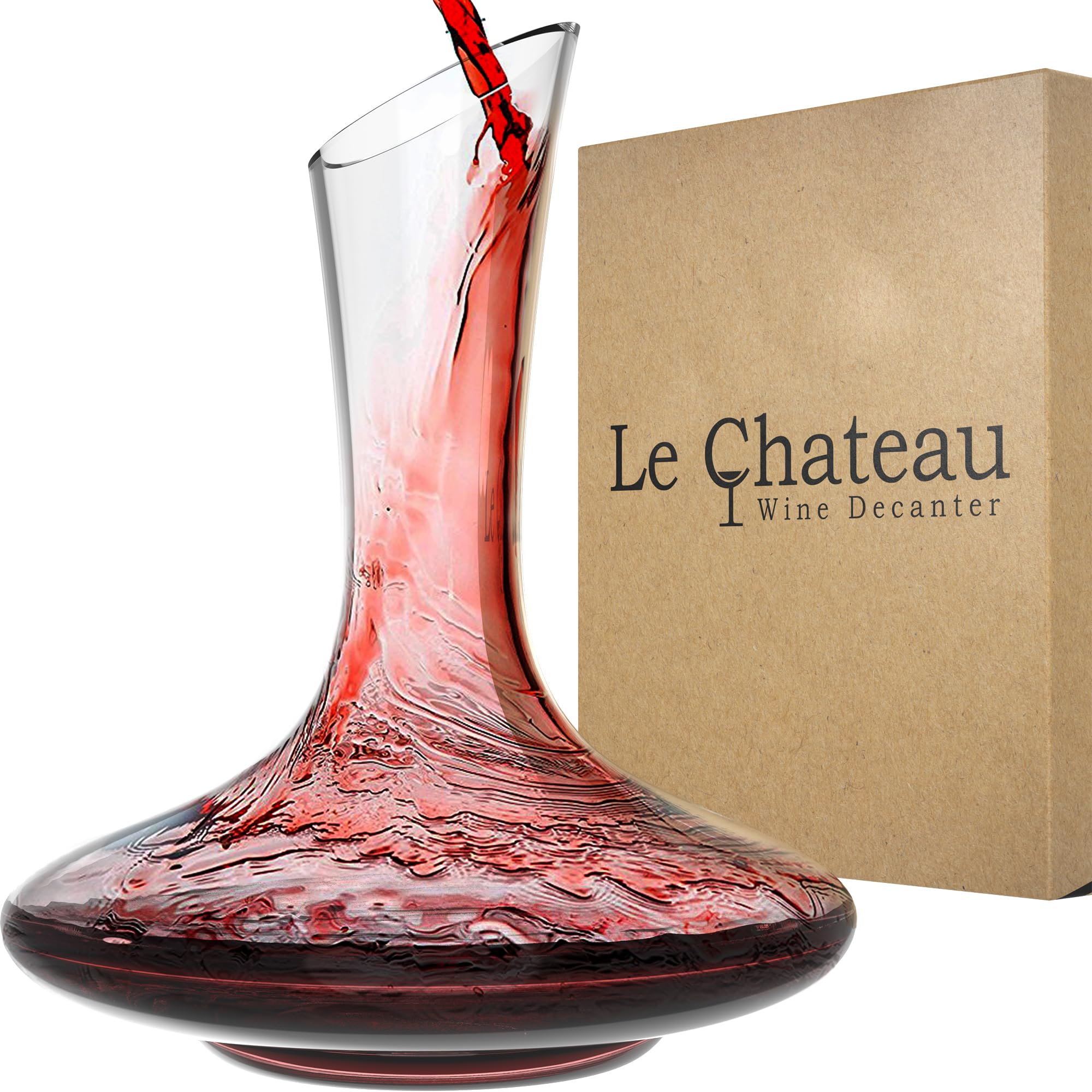
Hand-blown crystal decanter with a built-in aerator that opens aromas quickly and looks elegant on the table.
Why I picked it: Built-in aerator plus hand-blown crystal clarity.
Best for: Formal entertaining and giving as a gift.
Mid-range option that balances performance and presentation.
Pros
- Integrated aerator for immediate oxygenation
- Hand-blown lead-free crystal
- Wide mouth for easy cleaning
- Elegant presentation for the table
Cons
- Heavier to pour single-handed
- A bit bulky for small kitchens
My take
This is my go-to when I want a no-fuss way to open a bottle and serve at the same time. The built-in aerator disperses wine as I pour so I get more aroma without waiting an hour.
I noticed reds softened and released fruit notes after about 20 minutes sitting in the carafe. The crystal has great clarity and the wide mouth makes handwashing straightforward.
It is heavier than some thin-glass decanters, so I steady the base with one hand when pouring. For presentation and reliability, though, this one earns its place on my table.
2. Godinger Wine Decanter Carafe, Hand Blown Wine Decanter Aerator – Best Budget Decanter
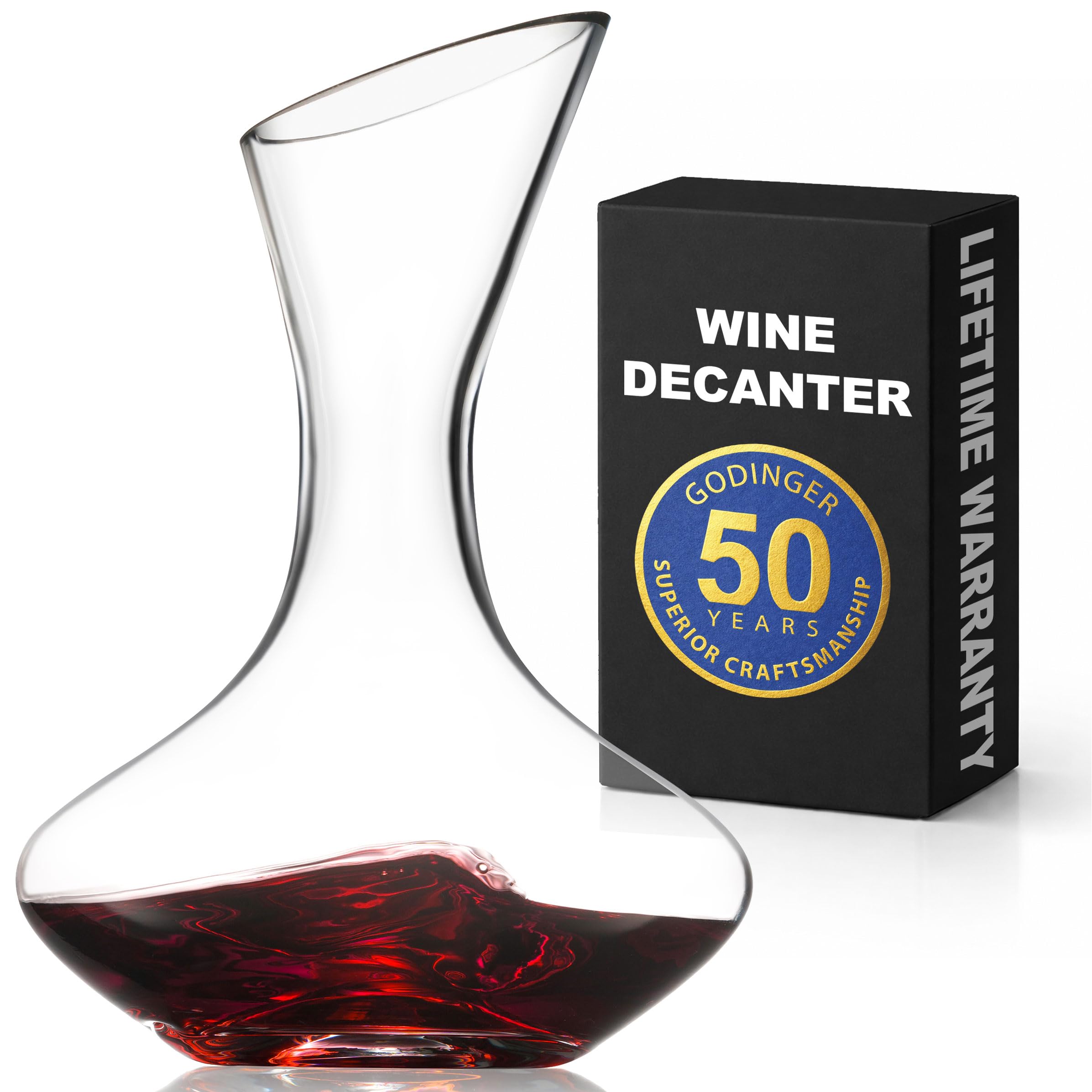
A classic open-carafe shape with solid, thick glass—simple, attractive, and very affordable.
Why I picked it: Classic silhouette and sturdy build at a low cost.
Best for: Everyday dinners and smaller pours.
Budget-friendly choice for everyday use.
Pros
- Sturdy, thick glass
- Classic, elegant profile
- Compact footprint
Cons
- Limited aeration when full
- Hard to swirl a full bottle
My take
I bring this to the table when I want something that looks good without being precious. The weight feels reassuring in hand and it holds a full bottle comfortably.
If you plan to aggressively swirl for aeration, note that you can’t do that well when the carafe is full. I use it for half bottles or pours where presentation matters more than maximum oxygen exposure.
Cleaning is easy and the simple form is surprisingly versatile across reds and whites.
3. Wine Decanter & Accessories (Cork Stopper + Cleaning Beads) – Best Accessory Set
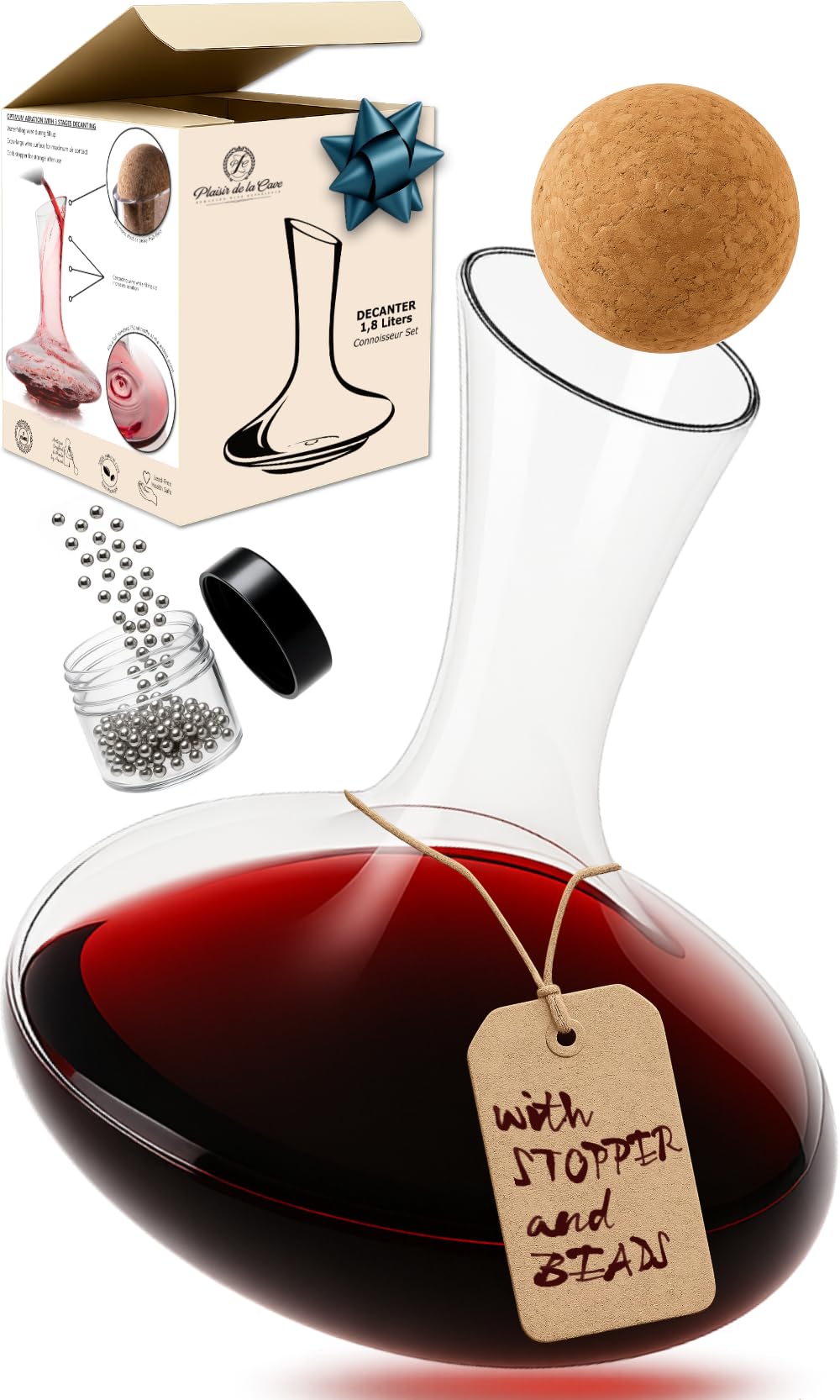
Large-capacity decanter packaged with a cork stopper and stainless cleaning beads—handy when I’m serving more than one bottle.
Why I picked it: Everything I need for big pours and easy cleanup.
Best for: Entertaining and extended tasting sessions.
Good value when you want accessories included.
Pros
- Huge 1800ml capacity
- Includes stopper and cleaning beads
- Extra-wide base for aeration
Cons
- Sharp lip can chip if bumped
- Large size can be awkward to store
My take
When I’m pouring multiple bottles or hosting a tasting, the extra capacity is a real advantage. I can decant a bottle and still have room for a second, which speeds service.
The cleaning beads are a useful addition—I’ve used them to remove stubborn marks after a few heavy reds. I still handwash most of the time, but the beads give me peace of mind.
Be careful around the lip: one accidental bump is all it takes to chip thin edges. Aside from that, it’s a beautiful and functional centerpiece for larger gatherings.
4. Zazzol Wine Aerator Decanter – Multi Stage Design – Best Fast Aerator
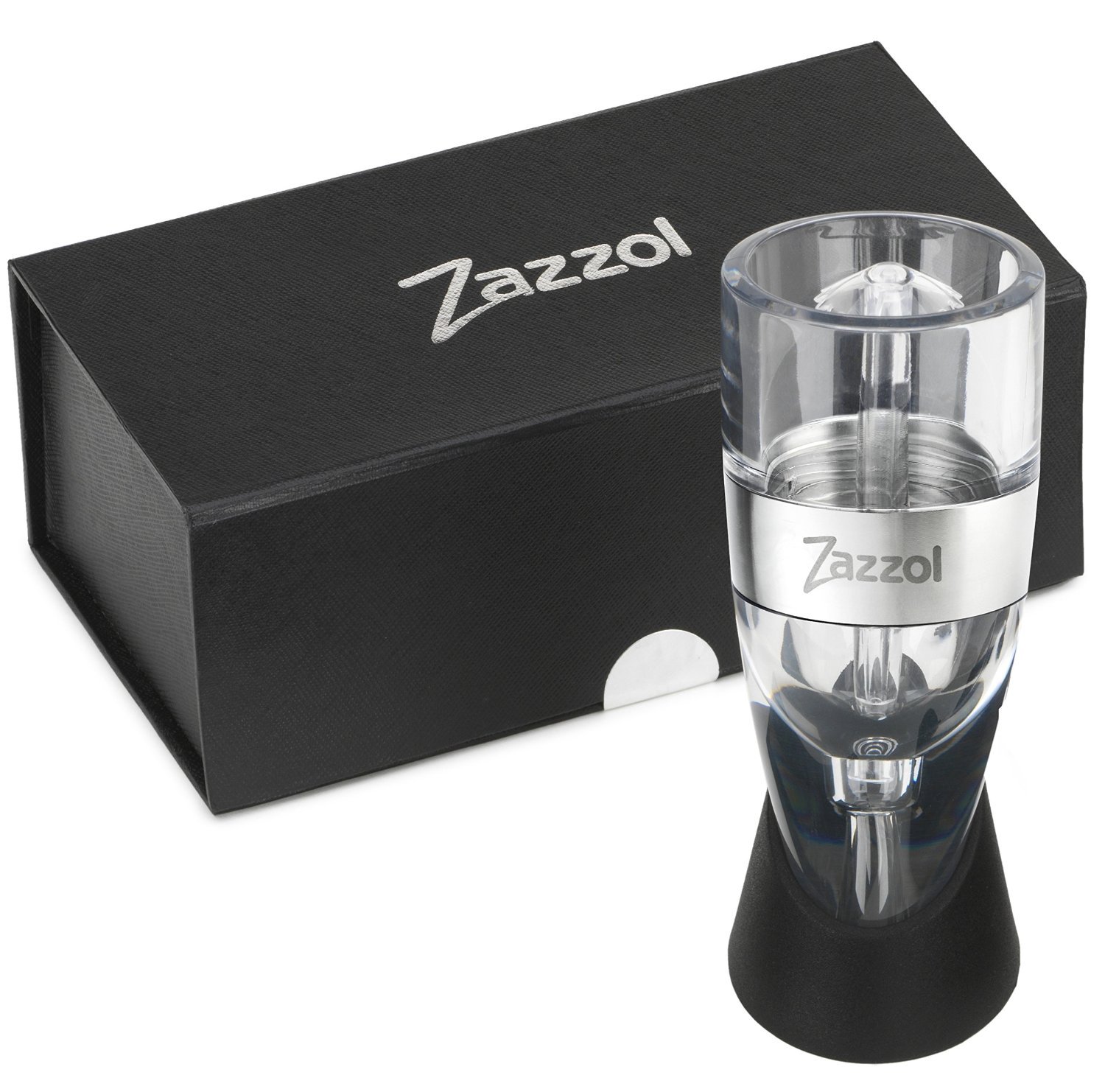
A purpose-built aerator with a multi-stage flow that opens wine instantly as you pour—great when I don’t want to wait.
Why I picked it: Multistage aeration gives immediate, noticeable results.
Best for: Instant aeration at the table or on the go.
Focused aerator option with included accessories.
Pros
- Multistage aeration on pour
- Comes with stand and pouch
- Instantly improves many wines
Cons
- Some materials feel less premium
- Not dishwasher safe
My take
I reach for this when I want a glass that tastes more open right away. The multi-stage design disperses wine, mixes air, and calms tannins while I pour.
It’s perfect for older bottles that need a quick wake-up and for cheaper wines that benefit from extra exposure to oxygen. The included stand and pouch make it easy to store and gift.
Pay attention to the build: some parts are plastic or glued metal, so I handwash and dry carefully to extend its life.
5. YouYah Iceberg Wine Decanter Set with Aerator Filter – Best Design
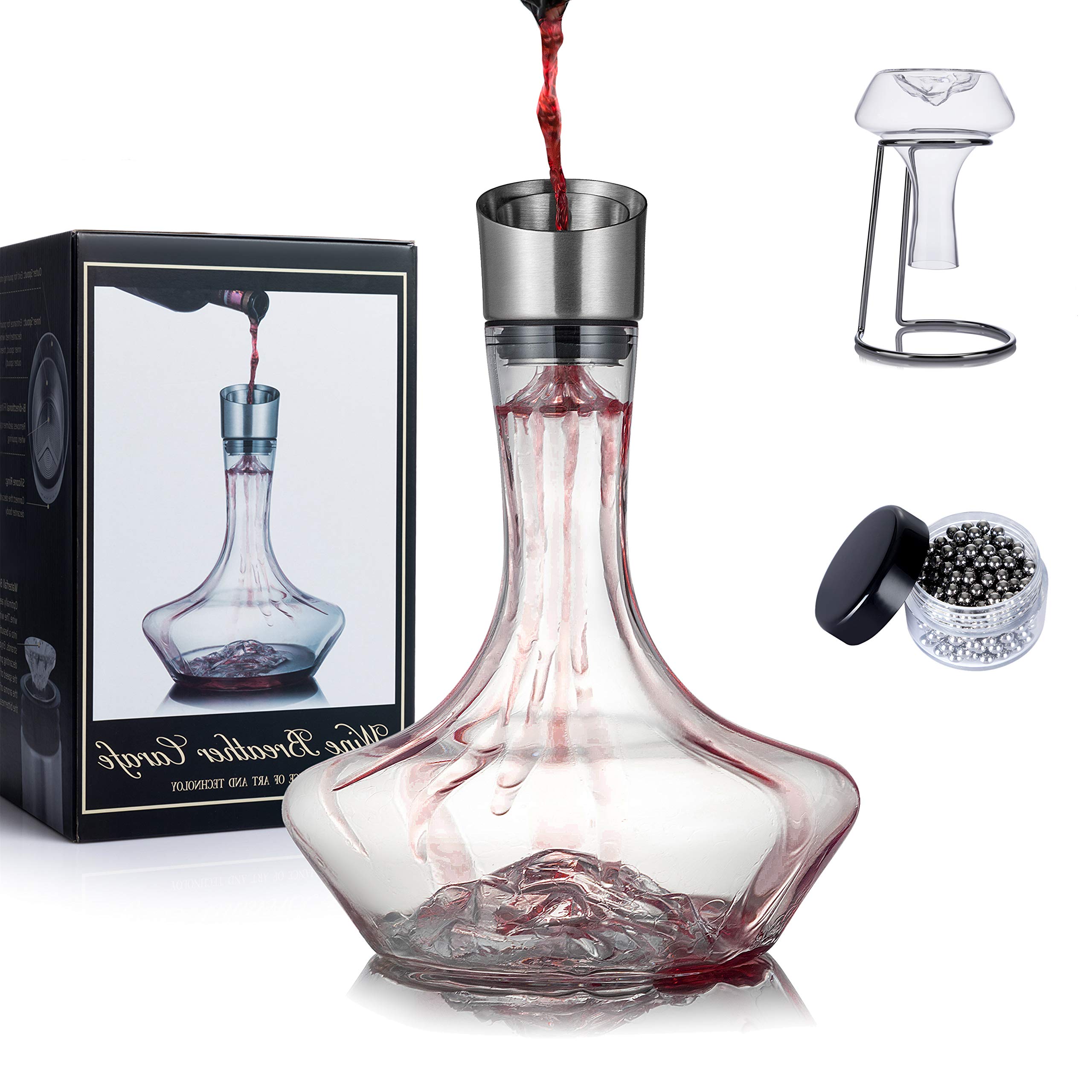
An eye-catching decanter that uses a waterfall pouring design plus a filter to speed aeration and keep out sediment.
Why I picked it: Distinctive waterfall aeration and built-in filtration.
Best for: Making a visual statement while aerating quickly.
Stylish mid-range option with functional extras.
Pros
- Waterfall pour for fast aeration
- Built-in filter catches sediment
- Includes drying stand
Cons
- Neck can chip if mishandled
- Takes up table space
My take
I enjoy how theatrical this one is—the wine fans out down the walls of the decanter and gets a lot of air contact in just minutes.
The filter in the spout keeps sediment out of glasses, and the drying stand is a nice practical bonus for storage and care.
It's a showpiece that also performs. I did receive one with a minor chip once, so I handle the neck gently when I wash and store it.
6. Wine Decanter Built-in Aerator Pourer – Lead-free Crystal – Best Everyday Decanter
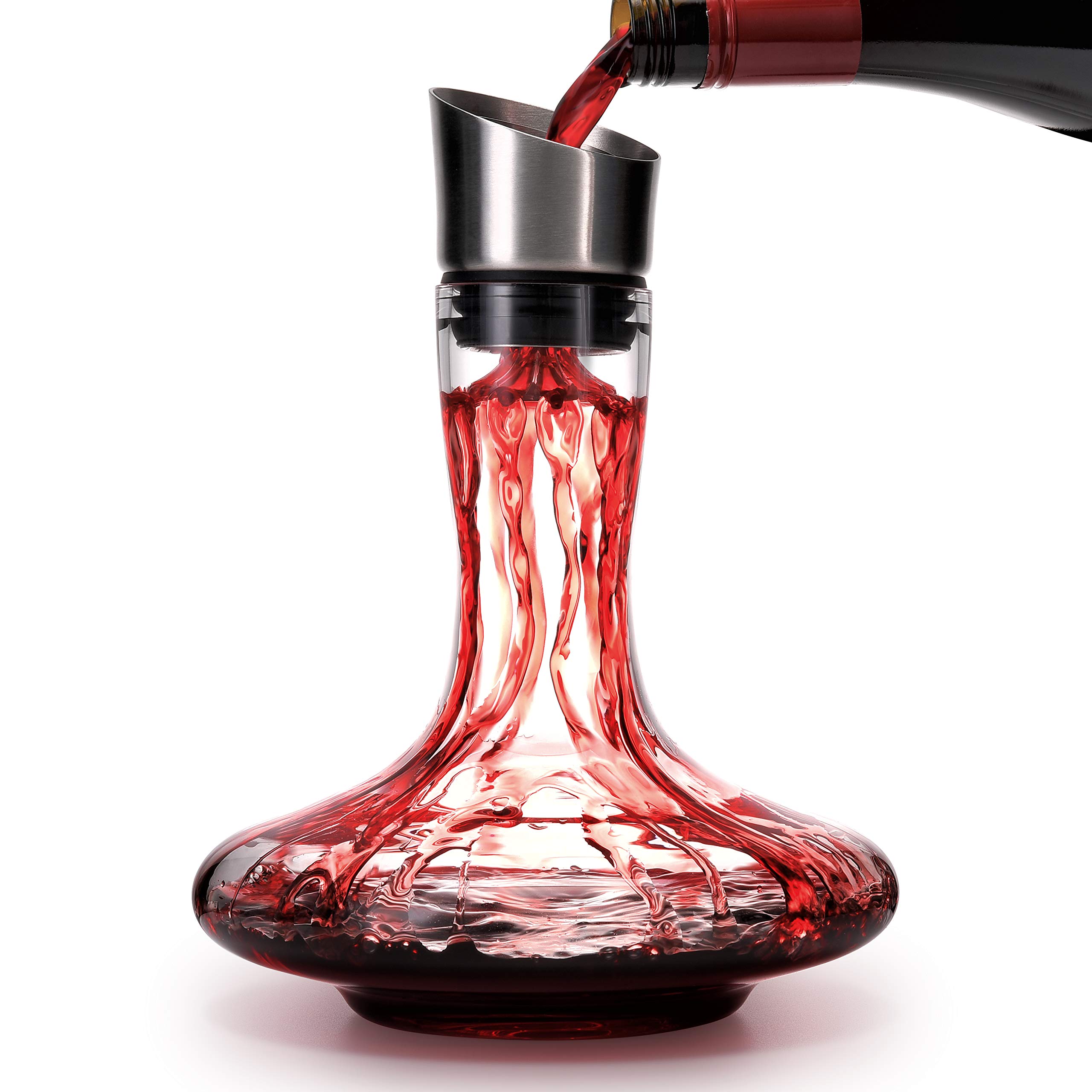
Classic carafe with an integrated double-layer filter and anti-drip pour—reliable for daily use and casual entertaining.
Why I picked it: Built-in screen and drip-free pouring for routine use.
Best for: Daily decanting and easy serving.
Good value for an everyday decanter.
Pros
- Built-in filter catches cork bits
- Anti-drip, slanted top
- Holds a full 750ml bottle
Cons
- Aerator element can be fragile
- Replacement parts hard to find
My take
This is the decanter I grab on weeknights: simple to use, easy to pour, and the screen keeps sediment out of the glass.
The slanted top prevents drips and makes pouring less fussy. I've let wine sit in it for about 30 minutes and noticed a smoother finish compared with bottle-poured glasses.
Durability is the only downside—I've had an aerator insert fail after heavy use, so I treat that component gently and handwash it.
How I Choose a Decanter
Why I decant wine
I decant to let wine oxygenate, soften tannins, and release aromas. Decanting can transform a tight young wine or wake up an older bottle that’s been sealed for years.
- Quick aeration: built-in aerators or waterfall designs open wine in minutes.
- Slow breathing: wide-base decanters expose wine gradually for nuanced older bottles.
- Sediment control: use decanters with filters for older, unfiltered wines.
Shape, capacity, and material
I look at how the shape affects surface area and handling. Wide bases expose more wine to air; narrow necks make pouring easier and reduce spills.
Lead-free crystal gives me clarity and weight without health concerns.
- Capacity: full-bottle (750ml) fits standard needs; larger carafes suit multiple bottles.
- Base size: wider bases = more aeration; smaller bases save space.
- Weight and grip: heavier crystal looks premium but can be awkward single-handed.
Aerator vs. decanter
I use aerators when I want results instantly. I prefer decanters when presentation and gradual breathing matter.
If I want both, I choose decanters with built-in aerators or use a separate aerator to fill a carafe.
- Aerators: great for quick improvement.
- Decanters: better for older wines and showier presentation.
- Combo: best of both worlds for service and speed.
Care and longevity
I always handwash delicate rims and aerator inserts. Cleaning beads are helpful for stain removal, but gentle soap and an appropriate brush usually do the job.
Storage and careful handling prevents chips—especially around narrow lips and thin edges.
- Handwash delicate pieces; air-dry upside down on a stand.
- Use cleaning beads for stubborn red-wine stains.
- Avoid dishwashers for aerator mechanisms and glued parts.
Frequently Asked Questions
Do I need to decant every wine?
No. I decant young, tannic reds or older bottles with sediment. Lighter whites and already-opened bottles usually don’t benefit as much.
How long should I decant a wine?
I usually decant young reds for 20–60 minutes and older wines for shorter windows—sometimes 10–20 minutes—so they don’t lose delicate aromas.
Are aerators better than traditional decanting?
Aerators give immediate results and are great for quick improvement. Traditional decanting exposes more surface area over time and is better for older bottles and presentation.
What’s the easiest way to clean a decanter?
I rinse immediately after use, handwash with mild soap and a soft brush, and use stainless cleaning beads for stubborn stains. Always air-dry on a stand to avoid water spots.
Final Take
If I want the complete package—performance and presentation—I reach for the Le Chateau crystal decanter. For tight budgets the Godinger carafe gives an excellent, dependable option.
When I need speed, the Zazzol or waterfall-style YouYah decanter delivers fast, noticeable aeration. If I’m hosting larger groups or want low-effort cleanup, the large accessory set with cleaning beads is the most practical.
Pick the shape and features that match how you serve wine: instant aeration, dramatic presentation, or everyday reliability. I’ve included my favorite picks above so you can choose the tool that fits your pouring style.
