
I tested a range of sprinklers for large lawns—from oscillating and traveling units to pop-up rotors and metal spot heads. This roundup lays out which tool I reach for depending on yard size, pressure, and how much hands
I spent time putting each of these sprinklers through real-world use so I could recommend the right type for different large-lawn needs.
Across my tests I focused on coverage, durability, ease of setup, and how straightforward each product made maintaining a healthy lawn.
Read on to see which sprinkler I choose for very large open areas, which I use for targeted spots, and which work best inside an installed irrigation system.
When I compare options I look first at coverage method: oscillating heads for rectangular lawns, traveling units for big open fields, pop-up rotors for installed systems, and metal spot sprinklers for targeted trouble spots. I describe the trade-offs I experienced—coverage vs. convenience, durability vs. portability—so you can match a sprinkler to your yard and water pressure.
1. Eden Turbo Oscillating Sprinkler – Best Overall
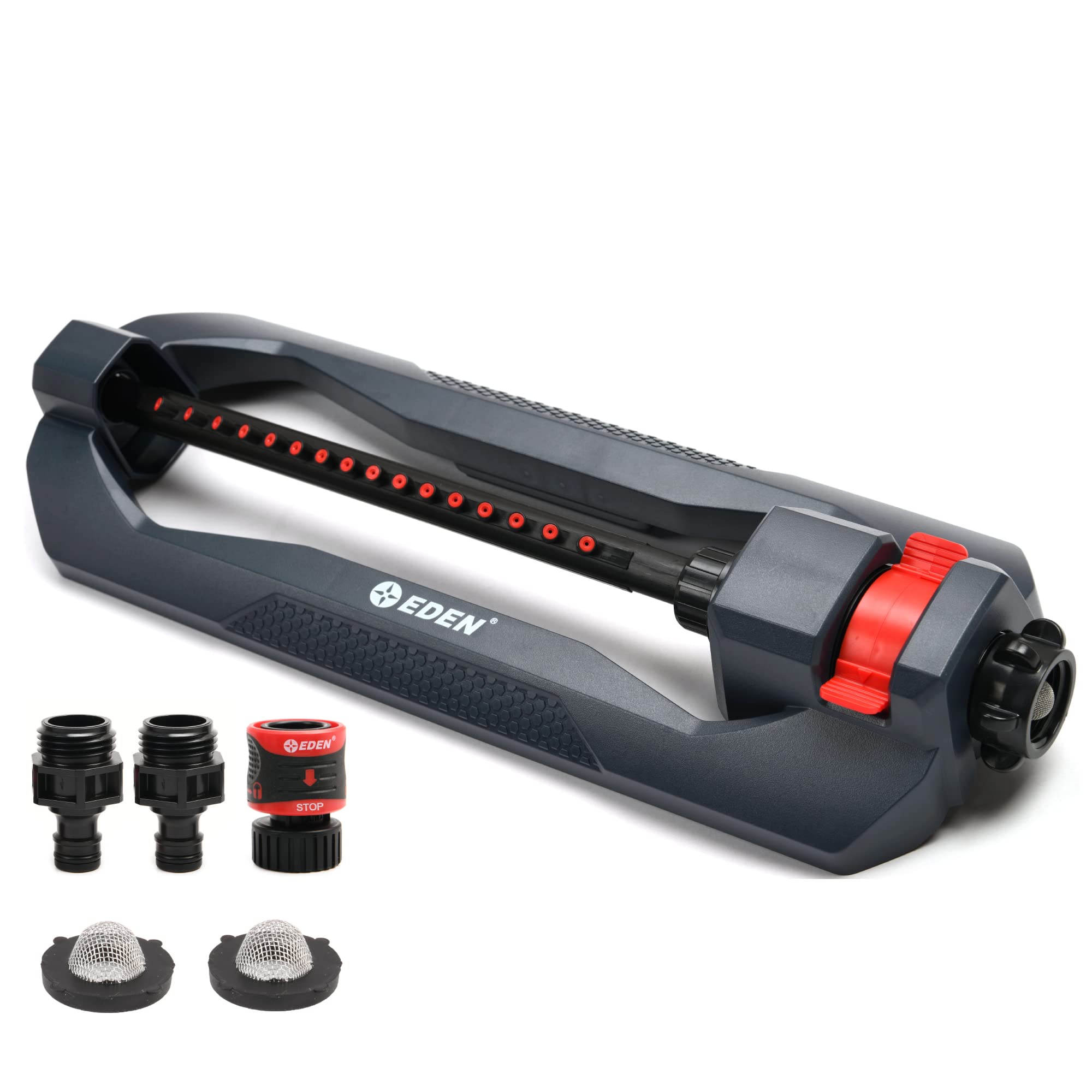
I used this oscillating unit as my go-to for medium-to-large rectangular lawns that need even coverage and easy adjustments.
Why I picked it: I wanted an affordable oscillating sprinkler with many precision nozzles and a sturdy base.
Best for: Medium to large rectangular lawns and mixed garden beds that need even, adjustable coverage.
Very affordable for the performance it delivers.
Pros
- I get wide coverage up to its advertised range
- I can fine-tune spray length with sliding tabs
- I appreciate the stable weighted base
- I like the built-in nozzle cleaning tool
Cons
- I worry the mostly-plastic build may crack over years
- I wish I could better control the sideways spread
My take
I put the Eden Turbo Oscillating Sprinkler into service across my front and side lawns and it delivered impressively even watering. The 16 precision nozzles produced a consistent rectangular spray pattern and the water distribution looked uniform across the test area.
Adjusting the length of coverage was simple with the sliding tab controls, and the sealed turbo drive motor ran smoothly whether pressure was high or modest. The extra-large base kept the unit from tipping, even when I nudged the hose during setup.
I also liked the included Quick Connect components; swapping between hoses and watering tools became painless and I avoided hose kinks because the connection swivels. The built-in cleaning tool and stainless steel filter washers made short upkeep tasks quick.
My main nitpick is that the plastic construction feels like it will eventually crack if left out in harsh sun, and I sometimes wanted a narrower sideways spread—range control changes length but not the lateral width. For an inexpensive, adjustable oscillating sprinkler that covers a lot of ground, this has been my dependable, easy-to-use pick.
2. Nelson Rain Train Traveling Sprinkler – Best for Very Large Lawns
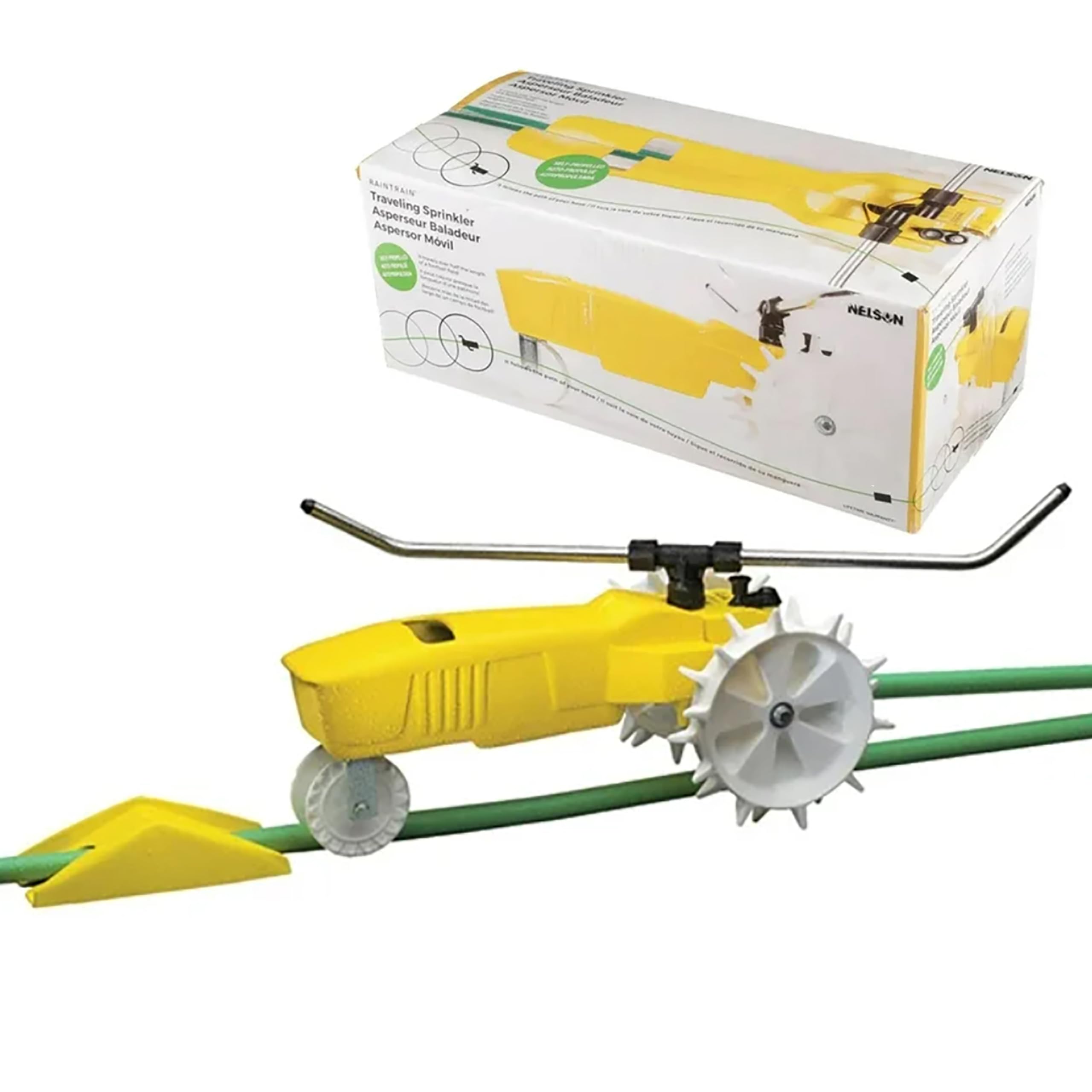
I rely on this traveling sprinkler when I need automated coverage for very large, open lawns with minimal fuss.
Why I picked it: I wanted a set-and-forget traveling sprinkler that covers huge areas and shuts off automatically.
Best for: Very large open lawns and fields where manual moving would be impractical.
A firmer investment but built from cast iron for longevity.
Pros
- I can cover very large areas without moving a head
- I trust the cast iron body for long-term durability
- I use the three speeds to control saturation
- I appreciate the automatic shutoff on the ramp
Cons
- I find it heavy to carry around
- I've needed gearbox maintenance after heavy use
My take
When I set the Rain Train on a long hose it simply traveled along and watered a huge swath of my yard—exactly what I wanted for open areas. The unit moves up to long hose lengths and covers a very large square footage as it travels.
I dialed the adjustable spray arms so the diameter matched my needs and experimented with the three speed settings; slower speeds gave a deeper soak while higher speeds covered more ground faster. The ramp that trips the shutoff is useful when I want to end a run without walking to the valve.
This thing is built like a tractor; the cast iron body feels substantial and weather-resistant, but that means it’s awkward to lug. I also experienced a gearbox replacement after heavy seasons of use. For anyone with several thousand square feet to water and who wants minimal hands-on movement, the Rain Train has been the quickest, most hands-off option I used.
3. Gilmour Circle Spot Sprinkler – Best Spot Sprinkler
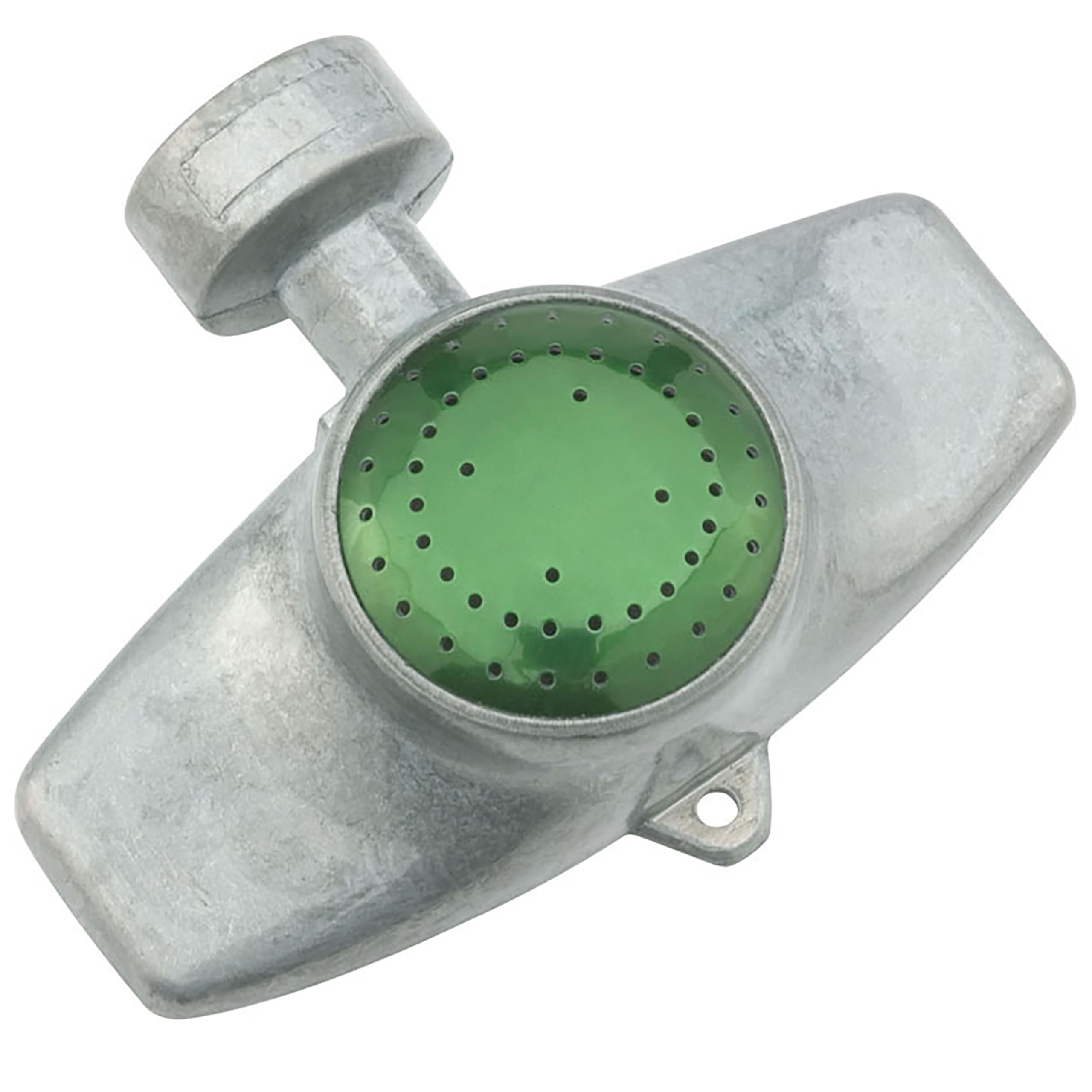
I turn to this metal spot sprinkler for small trouble patches, new seed, and low-pressure locations where precision matters.
Why I picked it: I needed a simple, metal spot sprinkler that works on low pressure and stays put.
Best for: Targeting small areas, seedlings, and low-water-pressure zones.
Budget-friendly and reliable for spot work.
Pros
- I get a gentle 30-ft circular spray
- I like the metal construction for durability
- I can use it where water pressure is low
Cons
- I must move it often for larger areas
- It's small—best only for spot tasks
My take
I used the Gilmour Circle Spot Sprinkler to nurse a few drought-stressed patches and to water a newly seeded strip. The gentle, fountain-like spray is ideal for avoiding seed washout and for evenly soaking a small area.
The metal build gives the head weight so it stays put on the turf once placed, and it handled my lower-pressure zone better than several plastic heads I’ve tried. Setup is as simple as screwing it onto the hose and adjusting the flow at the faucet.
If you need to water a large lawn you’ll be moving this a lot, but for trouble spots, narrow strips, and places where pressure is limited, this has been a dependable, no-frills tool in my kit.
4. Rain Bird 5000 Series Rotor Sprinkler – Best Pop-Up Rotor
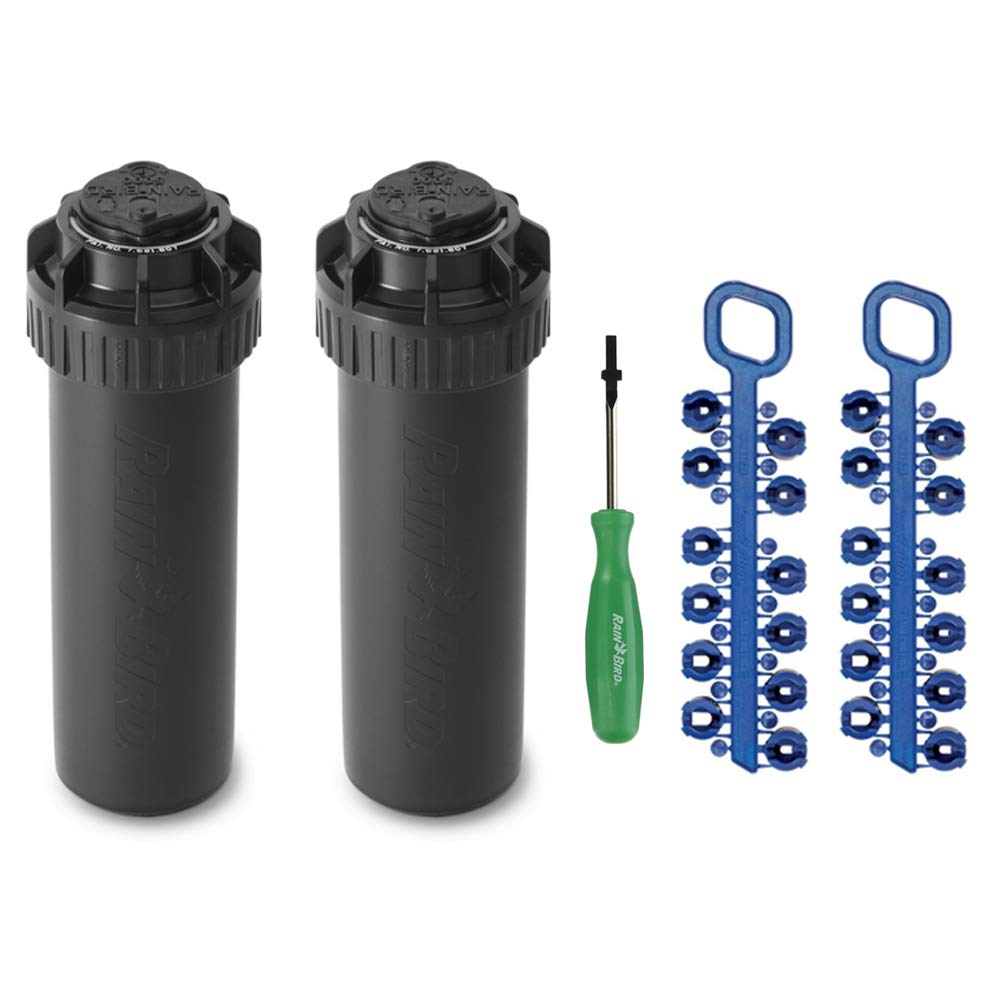
I install these rotor heads when I want uniform, low-evaporation coverage for medium to large lawns within an in-ground system.
Why I picked it: I wanted a reliable pop-up rotor with Rain Curtain nozzle tech and easy top-adjustments.
Best for: Replacing or upgrading pop-up rotors in medium-to-large in-ground irrigation zones.
Good value for in-ground system components.
Pros
- I get uniform distribution from Rain Curtain nozzles
- I can adjust arc from the top easily
- I value the heavy-duty construction and seals
Cons
- I found the nozzles and screws loosely packed in the box
- You must pick the right nozzle for spacing
My take
I've been swapping these Rain Bird 5000 Series rotors into several zones and appreciate how evenly they distribute water. The Rain Curtain nozzle design reduced misting and performed well in breezy conditions, delivering larger droplets that get to the turf.
Top-adjust arc control is a real time-saver during installation; I could fine-tune part-circle arcs with only a flat-blade screwdriver and the slip-clutch made setup straightforward. The radius reduction screw also let me dial back reach without changing nozzles on a few tight spots.
These heads feel solid—pressure-activated seals and reinforced flow paths give me confidence for long-term use. The only gripe was that the small parts came loose in the box, but once installed they behaved exactly as I'd hoped for in a replacement rotor head.
5. Hunter PGP-ADJ Rotor Sprinkler – Best for Professionals
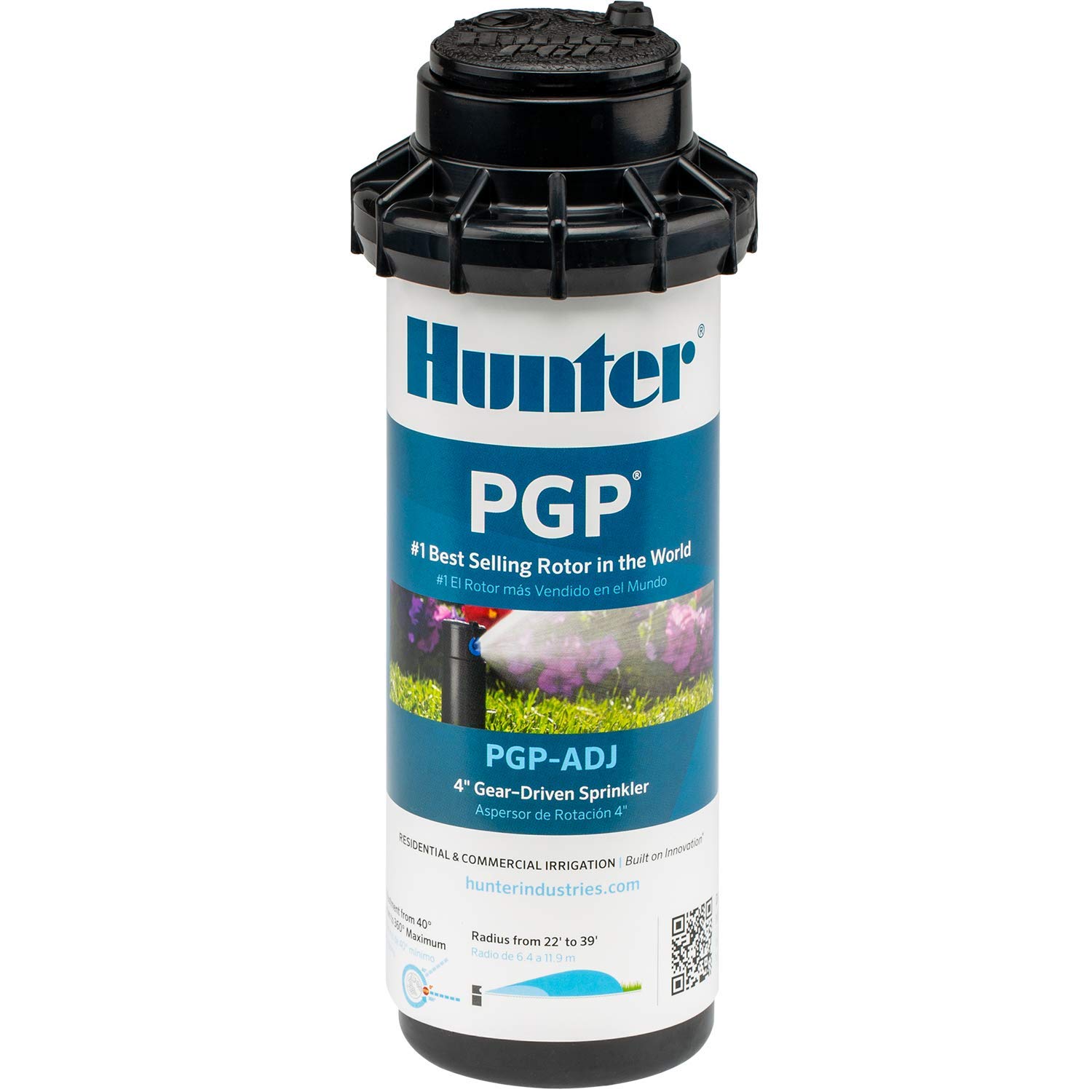
I choose the Hunter PGP-ADJ when I need a pro-grade rotor with long radius and proven durability for demanding landscapes.
Why I picked it: I needed a gear-driven rotor known for smooth operation and long service life.
Best for: Professional installs and homeowners wanting fewer heads per zone with long throw.
Mid-range to premium for long-term reliability.
Pros
- I get a long 22–52 ft radius from one head
- I value the smooth, quiet gear-driven operation
- I rely on water-lubricated gears to resist clogging
Cons
- I find replacement requires more digging than pop-ups
- The head's larger diameter needs a bigger access hole
My take
The Hunter PGP-ADJ is the rotor I turn to for larger zones where I want bigger spacing between heads. Its gear drive delivered steady, quiet rotation and handled a wide pressure range without stuttering.
Installation was straightforward where I had room to work: the 3/4" inlet and 4" pop-up height made it compatible with my standard irrigation lines. Once in the ground the head’s construction felt robust and adjustments to arc and radius were precise.
If you’re swapping an old head be ready to clear enough soil; the PGP body is larger so I had to enlarge a couple of trenches during replacement. For longevity and performance in bigger residential or light-commercial setups, this is the rotor I trusted.
6. Hourleey 360 Metal Spot Sprinkler (2-Pack) – Best Value 2-Pack
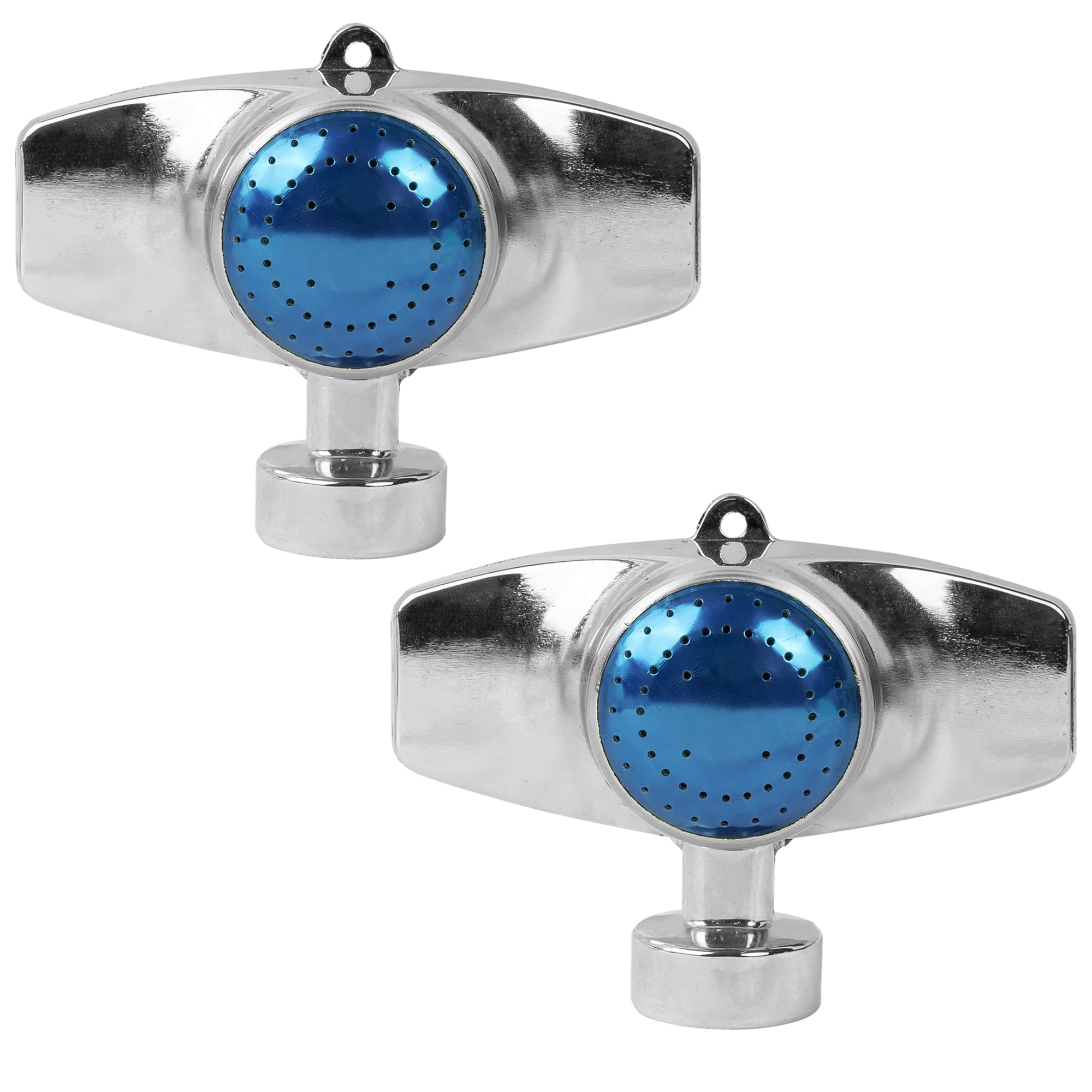
I like this two-pack when I want durable metal 360-degree coverage for small lawns or multiple garden beds at once.
Why I picked it: I wanted an affordable metal 360 sprinkler pair for broad spot coverage and durability.
Best for: Small lawns, patios, flower beds, and low-pressure watering tasks.
Inexpensive two-pack that delivers solid value.
Pros
- I get 360° coverage up to about 30 ft
- I appreciate the heavy alloy metal construction
- I can attach them to standard 3/4" hoses
Cons
- I see coverage vary with water pressure
- They can move if the hose pulls them
My take
I deployed the Hourleey pair across two planting beds and was impressed by how the metal construction held up compared with cheap plastic heads. The spray is gentle and spreads into a circular pattern that soaks the soil without eroding it.
Pressure determines reach—at lower pressure the circle tightened, and at higher pressure the spread approached the claimed diameter. I often ran them in series on longer runs and they performed consistently.
For small areas where I don’t need complex pattern control, these are simple, dependable heads. They’re light enough to move but heavy enough to sit in place when I secure the hose stake.
7. SYOOY 360 Metal Spot Sprinkler – Best Budget
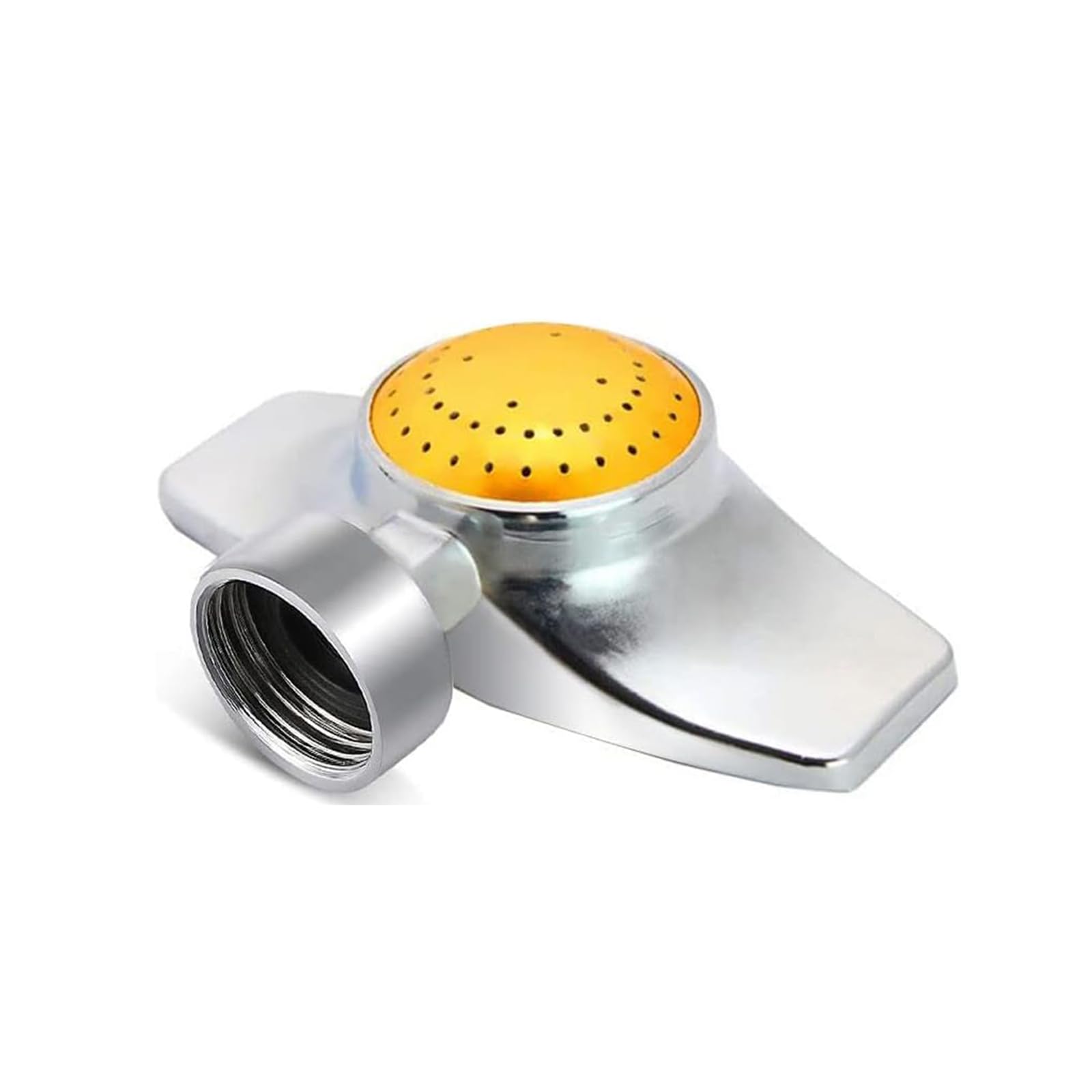
I keep this simple metal circular sprinkler on hand for quick watering jobs in small gardens and side yards.
Why I picked it: I wanted a no-frills, metal circular sprinkler that screws on and works every time.
Best for: Small gardens, side yards, and anyone needing an inexpensive metal sprinkler.
Very budget-friendly and straightforward.
Pros
- I get easy screw-on installation to a standard hose
- I like the even circular spray for small areas
- I appreciate the metal build over plastic
Cons
- I wish it were heavier to stay put
- Not suitable for large yard coverage
My take
I used the SYOOY 360 Metal Spot Sprinkler in a small backyard garden where I needed precise, even watering. The unit screwed on easily and the circular spray delivered exactly where I placed it.
The metal construction felt durable for the price, though I’d prefer a bit more weight so it won’t shift if the hose tugs. I adjusted water flow at the spigot to change reach and found that method intuitive.
For quick jobs and small plots this is a hardworking, no-nonsense sprinkler. It isn’t designed to replace larger systems, but it’s a reliable budget option for targeted watering.
How I Choose a Sprinkler for a Large Lawn
Coverage style and yard shape
I always match the sprinkler type to the shape of my lawn. Oscillating units work best on rectangular areas, traveling sprinklers handle long open fields, pop-up rotors integrate into in-ground systems for large residential lawns, and circular spot heads are my choice for trouble spots or small beds.
- Choose oscillating for rectangular or narrow lawns.
- Choose a traveling sprinkler when you want automated runs over very large, open areas.
- Pick pop-up rotors for permanent in-ground irrigation and consistent zone coverage.
- Use metal spot sprinklers for seed beds, low-pressure zones, or targeted watering.
Water pressure and flow considerations
I measure or estimate available pressure before buying; many rotors and traveling sprinklers require steady pressure and benefit from larger hose diameters on long runs.
- Run a 5/8" hose for long distances to limit pressure loss with traveling units.
- If pressure is low, select spot sprinklers and low-pressure oscillators.
- For pop-up rotors, match nozzles and pressure to maintain even precipitation rates across a zone.
Durability and maintenance
I evaluate construction—metal or heavy-duty materials matter for longevity if the sprinkler will sit outside all season. I also look for features that simplify upkeep, like sealed drives, built-in cleaning tools, and easy-access arc adjustments.
- Cast iron or heavy alloy bodies last longer but weigh more.
- Sealed motors and water-lubricated gears reduce maintenance.
- Quick-connect fittings save time and prevent hose kinks.
Practical extras I value
I prefer units with adjustable ranges, easy arc controls, and components I can swap or clean without hassle. These small conveniences save time over a full season.
- Top-adjust screws and slip-clutch mechanisms speed installation.
- Multiple spray speeds or nozzle options let me tune saturation.
- Auto-shutoff ramps on traveling sprinklers prevent waste when runs finish.
Frequently Asked Questions
Which sprinkler type did I find best for a multi-acre open lawn?
I go straight to a traveling sprinkler for multi-acre, open turf because it automates long runs and covers a lot of ground without constant moving.
Can I use a traveling sprinkler on uneven ground or slopes?
I use traveling sprinklers on gentle slopes, but steep or very uneven ground causes them to leap the hose or stall; I test a short run first to confirm performance.
How do I manage low water pressure across a large lawn?
I prioritize low-pressure spot or oscillating heads and use larger-diameter hoses on long runs; for installed rotors I select nozzles that suit my pressure to keep precipitation even.
How often do these sprinklers need maintenance?
I check moving parts and nozzles seasonally, clear debris from filters, and store or protect plastic units from prolonged sun when not in use; cast-iron and metal heads typically need less frequent attention but still benefit from inspection.
Final Take
After testing these options I pick the Eden oscillating sprinkler for everyday medium-to-large lawns, the Nelson Rain Train when I want hands-off coverage for very large open areas, and pop-up rotors like the Rain Bird or Hunter when I’m working inside an in-ground system.
I keep metal spot sprinklers like the Gilmour, Hourleey, and SYOOY on hand for targeted watering and low-pressure zones.
Match the sprinkler type to your yard shape, pressure, and how much hands-on work you want to do, and you’ll get the best results.
