
I tested eight queen air mattresses over weeks of real use. These picks balance comfort, build quality, pump speed, and sturdiness so you can choose the right temporary bed for guests, travel, or short-term living.
I spend a lot of time testing air mattresses because a reliable spare bed can save nights of headaches. For this roundup I focused on queen-size, 18-inch raised airbeds with built-in pumps — the style that most people want for guest rooms, moves, or RV setups.
Across these eight mattresses I evaluated inflation speed, how long they held air, how supportive they felt, and how easy they were to store. I also paid close attention to construction details like beam or coil systems, flocked tops, and seam quality because those factors determine both comfort and longevity.
Below I walk through the best options by use case, explain what mattered most in my tests, and share practical setup tips so you don’t wake up on the floor.
I compared these beds by how fast they inflate, how stable they feel overnight, whether they sit at a convenient height, and how rugged the materials and seams are. I prioritized models with sturdy internal structure (I-beams or honeycomb coils), thicker PVC, and an efficient built-in pump.
1. Intex Dura‑Beam Essential Rest Queen Airbed – Best Value
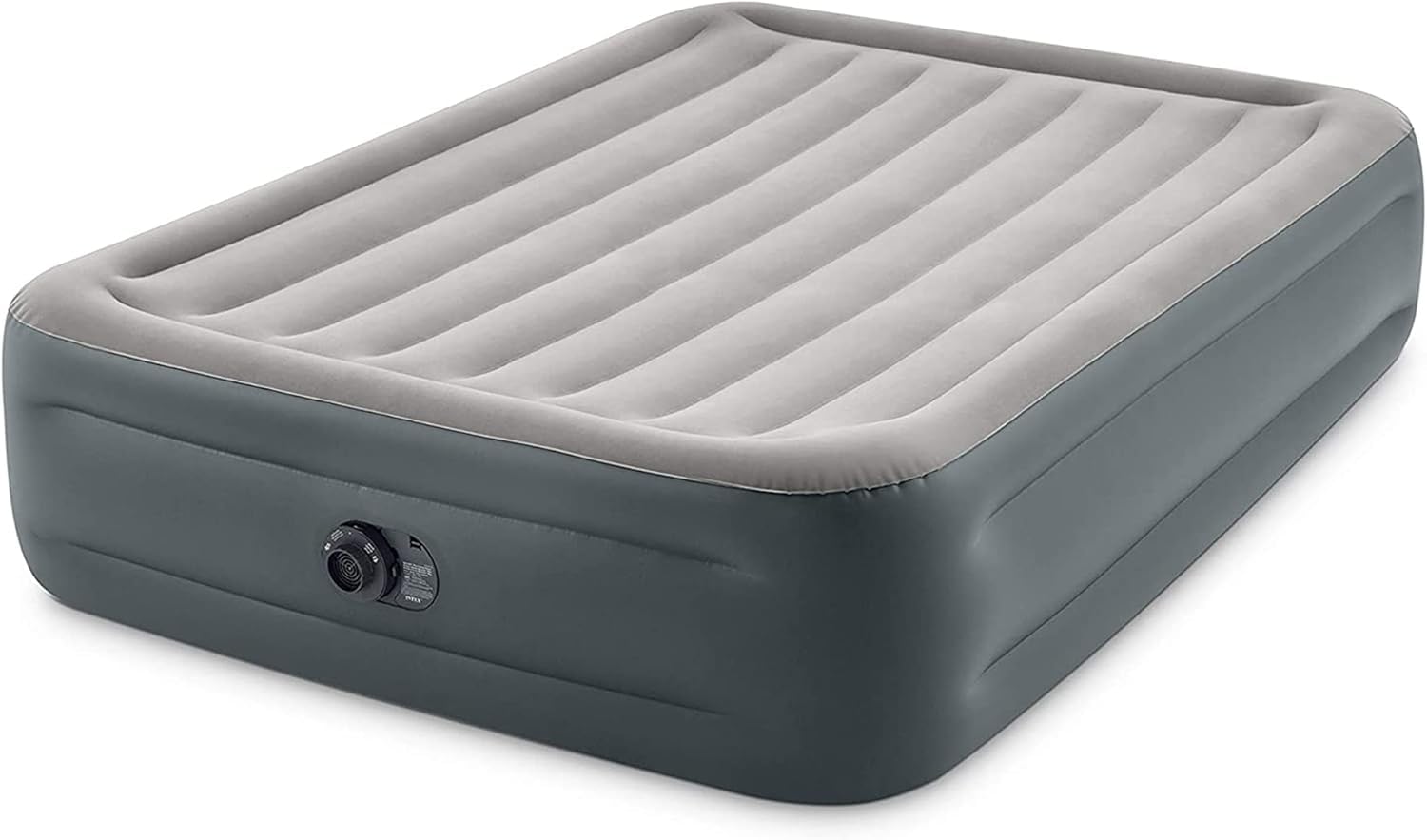
A straightforward, velvety-topped queen with a fast internal pump and traditional 18-inch bed height I found useful for regular guest use.
Why I picked it: Fast inflation, comfortable flocked top, stable perimeter frame.
Best for: People who want a simple, easy-to-set-up guest bed.
Very affordable choice with strong basic features.
Pros
- Built-in pump inflates in minutes
- Velvety sleeping surface feels cozy
- Raised 18" height is easy to get on/off
- Sturdy edge and bottom ring support
Cons
- May need occasional top-ups
- Pump-area can be a weak spot
- Not designed for full-time use
My take
I liked how quickly this Intex inflated and how pleasant the flocked top felt; it immediately reads as a solid guest bed. The internal Fibre‑Tech construction and perimeter frame give the mattress a firmer, more stable feel than the cheap low-profile options I’ve tried.
In my setup it held air well for long stints when I left it inflated for extended periods, but I did top it up occasionally — that’s easy with the built-in pump. If you want a no-fuss mattress that looks and sleeps like a temporary real bed, this is the model I reach for first.
Be aware that a few sessions showed slow deflation around the pump area in my extended use tests, so take care when attaching or moving the unit. For weekend guests and occasional sleepovers it delivers the best mix of convenience and comfort at this level.
2. VOSSER 18" Queen Air Mattress with Built‑in Pump – Best for Heavy Loads
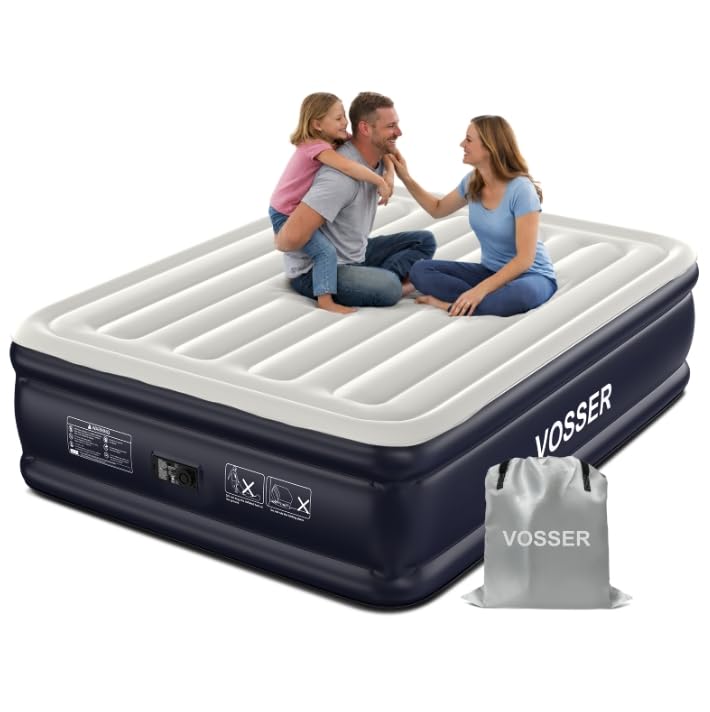
A heavy-duty queen with a thick flocked top and vertical-beam support that handled larger combined weights and felt more like a proper bed in my trials.
Why I picked it: 30% thicker PVC, vertical-beam support, high load capacity.
Best for: Homes needing a sturdy guest bed for heavier sleepers or two-person use.
A solid midrange option for durability-minded buyers.
Pros
- Very robust construction
- Soft, skin-friendly flocked surface
- Built-in pump inflates in about 3 minutes
- Supports high combined weight capacity
Cons
- May need topping up after several days
- Heavier to carry than budget models
My take
I used the VOSSER during a cross-country move and appreciated how quickly it inflated and how stable it felt once up. The vertical-beam construction distributes weight evenly, and the thick PVC reduced the anxious feeling of waking up half-deflated.
During a week of near-daily use it stayed firm with only one small top-up, and the flocked top kept sheets in place nicely. It’s noticeably more substantial than the cheapest inflatables, which is exactly why I brought it for a demanding use case.
If you want something that tolerates heavier sleepers or frequent use without feeling like a flimsy airbed, this VOSSER strikes a good balance between solidity and convenience.
3. DIVON Queen Air Mattress with Wave Pattern – Best for Comfort
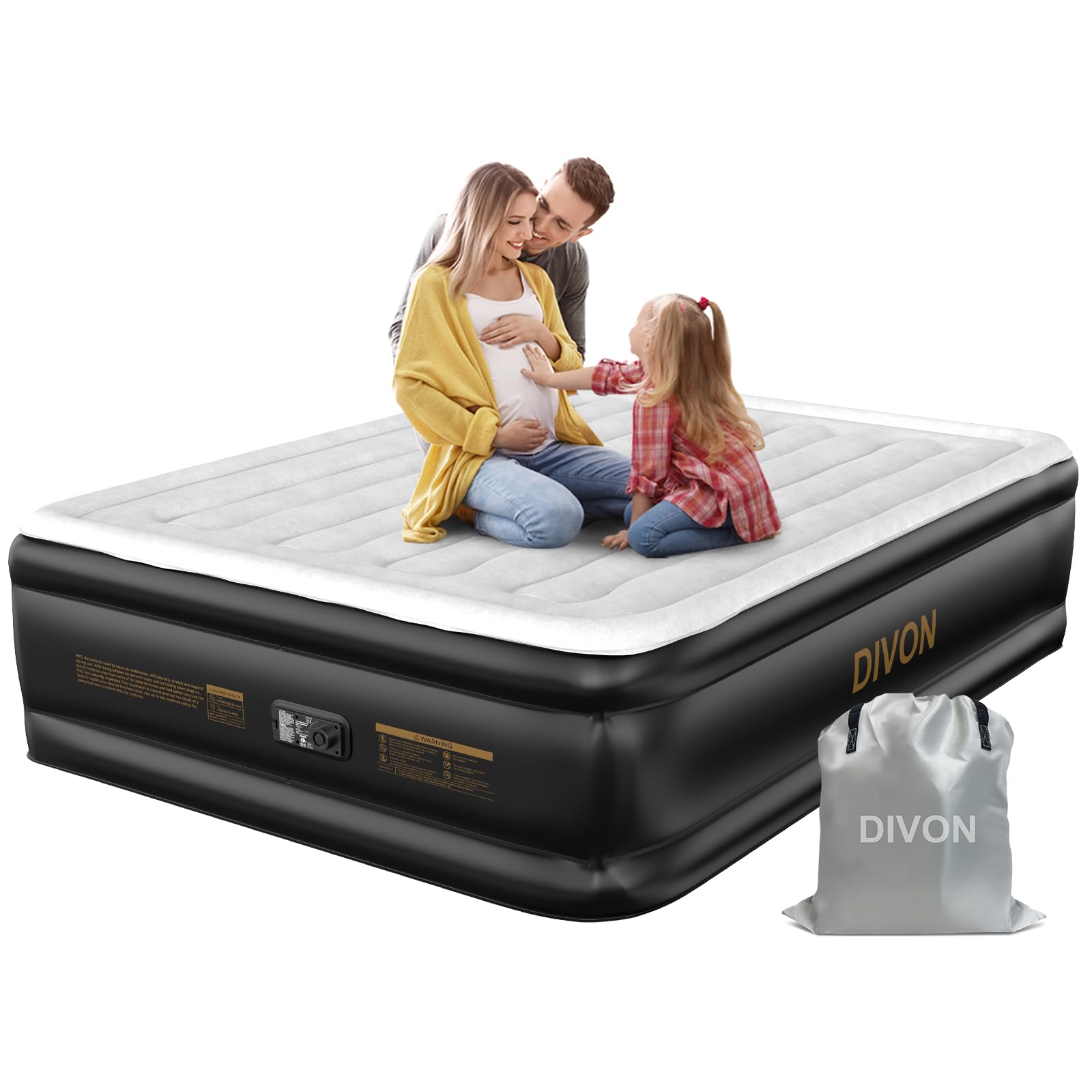
A well‑cushioned queen with a soft suede topper and patented vertical beam support that reduced pressure points in my testing.
Why I picked it: Suede topper, wave-pattern comfort, patented beam structure.
Best for: Anyone prioritizing a softer, less bouncy overnight feel.
Comfort-forward option in the midrange segment.
Pros
- Soft suede topper feels luxurious
- Wave pattern improves pressure distribution
- Inflates quickly with built-in pump
- Holds up well outdoors and indoors
Cons
- Can be a bit noisy with movement
- May need topping up in cold conditions
My take
I liked sleeping on the DIVON because the suede-like topper and wave pattern made it the most mattress-like of the bunch. My sister used it while recovering from surgery and reported fewer pressure points compared with standard airbeds.
Setup was foolproof — the integrated pump brought it to firmness in about three minutes and the included carry bag makes storage easy. When I tested it camping it stayed comfortable and retained air well, though it did produce a little surface noise when turning.
For anyone who wants a more forgiving surface without sacrificing the convenience of a built-in pump, this DIVON balances luxury and practicality.
4. VOSSER 18" Queen Air Mattress (Upgraded) – Best for Daily Use
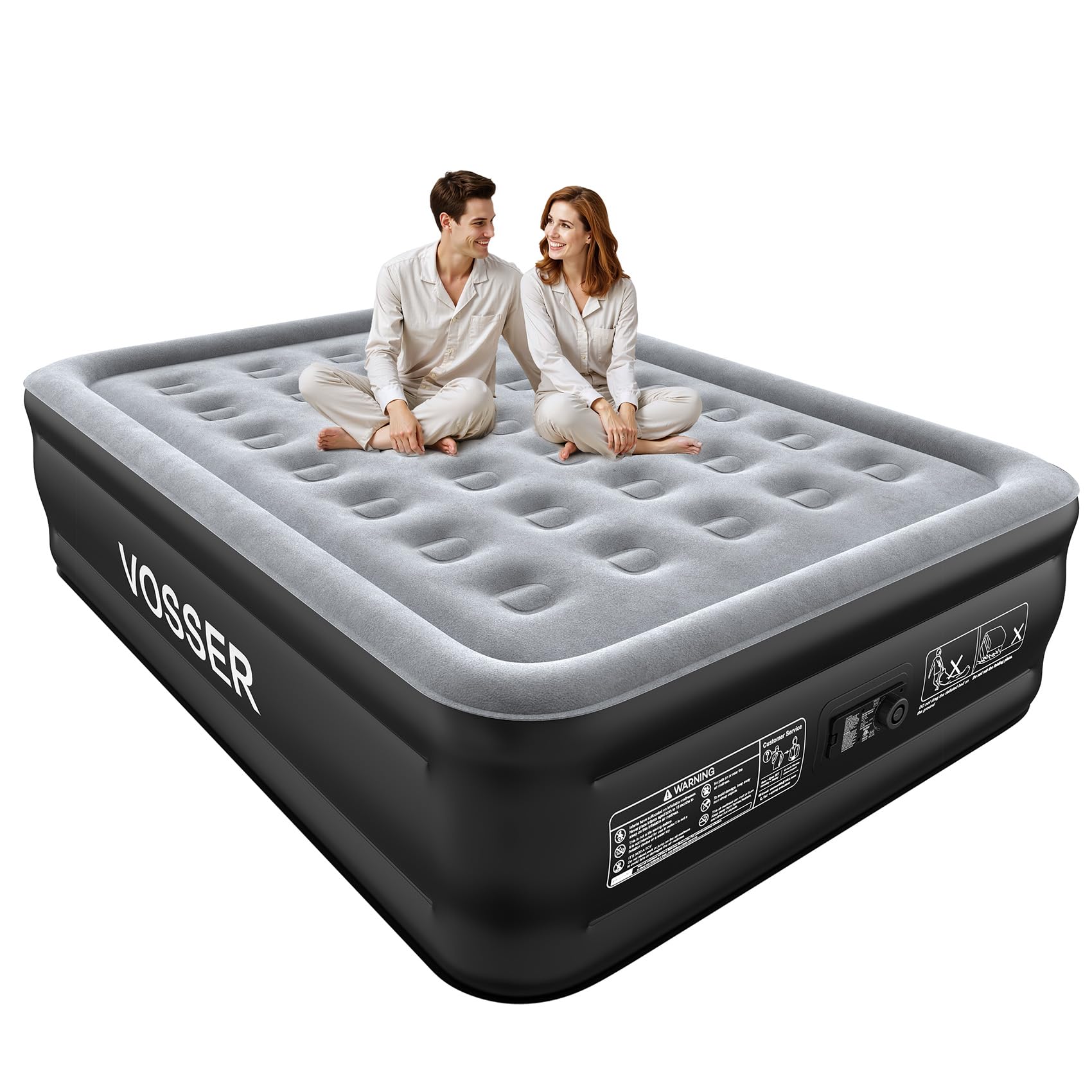
An upgraded VOSSER built for heavier home use, with thicker PVC, patented coil structure, and endurance testing that made it my go-to when I expected frequent inflation cycles.
Why I picked it: Thicker multi-layer PVC, patented coils, endurance-tested.
Best for: Frequent short-term sleepers and temporary full-time use.
A good choice if you plan to use it often.
Pros
- Engineered for frequent use
- Precision-locked edges reduce leaks
- Quick 3-minute inflation
- Includes carry bag for storage
Cons
- Can be noisy during movement
- Not a replacement for a permanent mattress
My take
I tested this upgraded VOSSER while living between homes, and it stood up to daily inflation cycles better than any other airbed I used. The thicker PVC and reinforced seam work give it confidence-inspiring durability.
It doesn’t have an automatic shutoff, so I manually stopped inflation when I reached my preferred firmness — that small quirk aside, it felt remarkably stable and supportive over multiple nights. If you need an air mattress that tolerates heavy use, this is the one I’d choose.
5. DIVON Foldable 18" Queen Air Mattress – Best for Travel
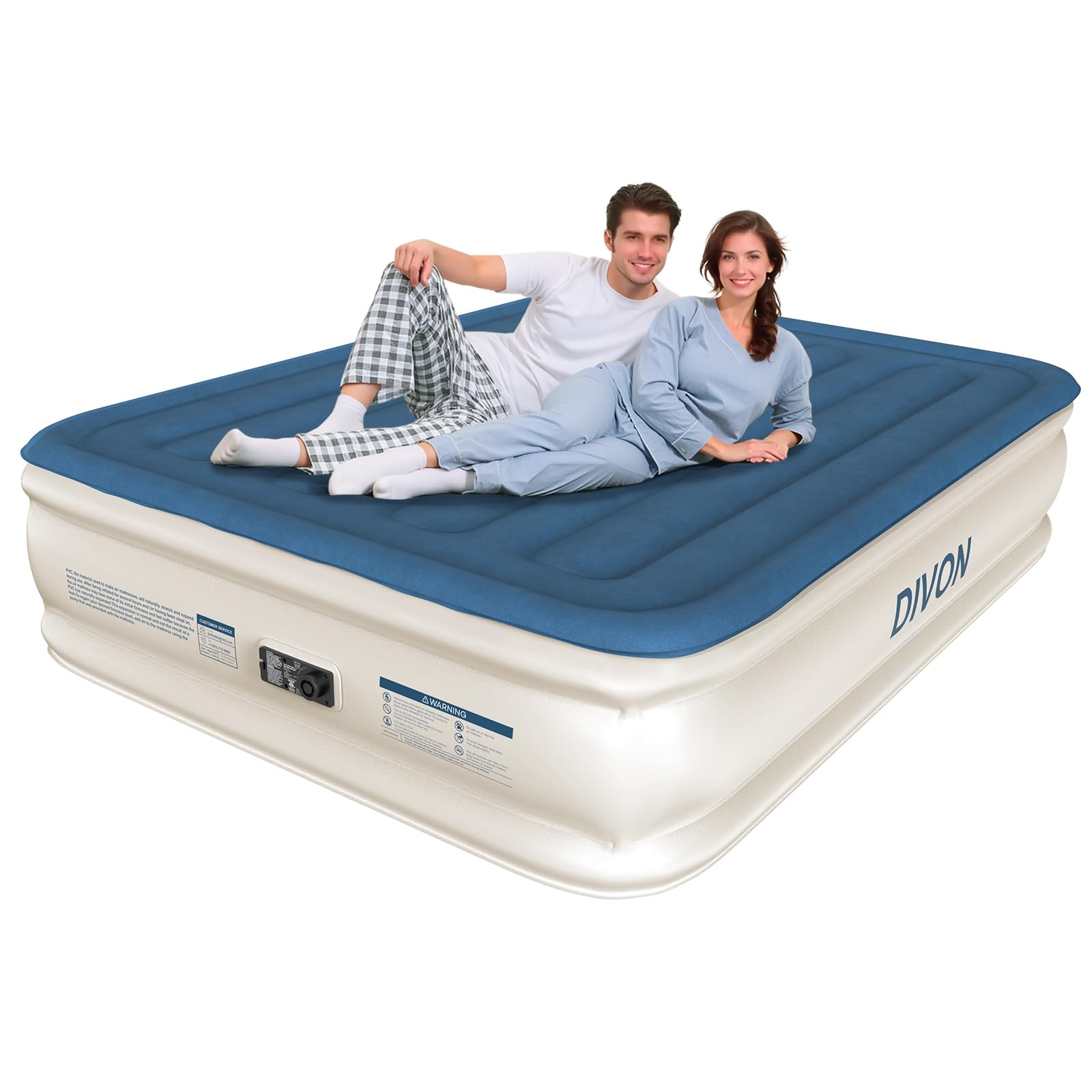
A travel-friendly DIVON that folds neatly, inflates fast, and proved durable in week-long guest stays during my tests.
Why I picked it: Foldable design, durable construction, easy inflation.
Best for: Camping, moving, and frequent transit between locations.
Designed for portability and durability on the road.
Pros
- Folds compactly into included bag
- Inflates/deflates in 3 minutes
- 30% thicker material resists punctures
- Soft flocked top for comfort
Cons
- Replacement timeline can vary
- Slightly heavier than ultra-light camping pads
My take
I took this DIVON on a week of travel and found it impressively resilient — it inflated in minutes, fit neatly into the carry bag, and slept like a proper bed for guests. One seam issue I encountered was handled quickly by the seller with a replacement, so the brand support helped salvage the experience.
The mattress is comfortable and solid for both indoor guest use and outdoor trips, and I appreciated the pocket of quality in a foldable package. If you want a travel mattress that sleeps like home, this model delivered.
6. KNZZO 18" Queen Air Mattress with Independent Chambers – Best Independent Support
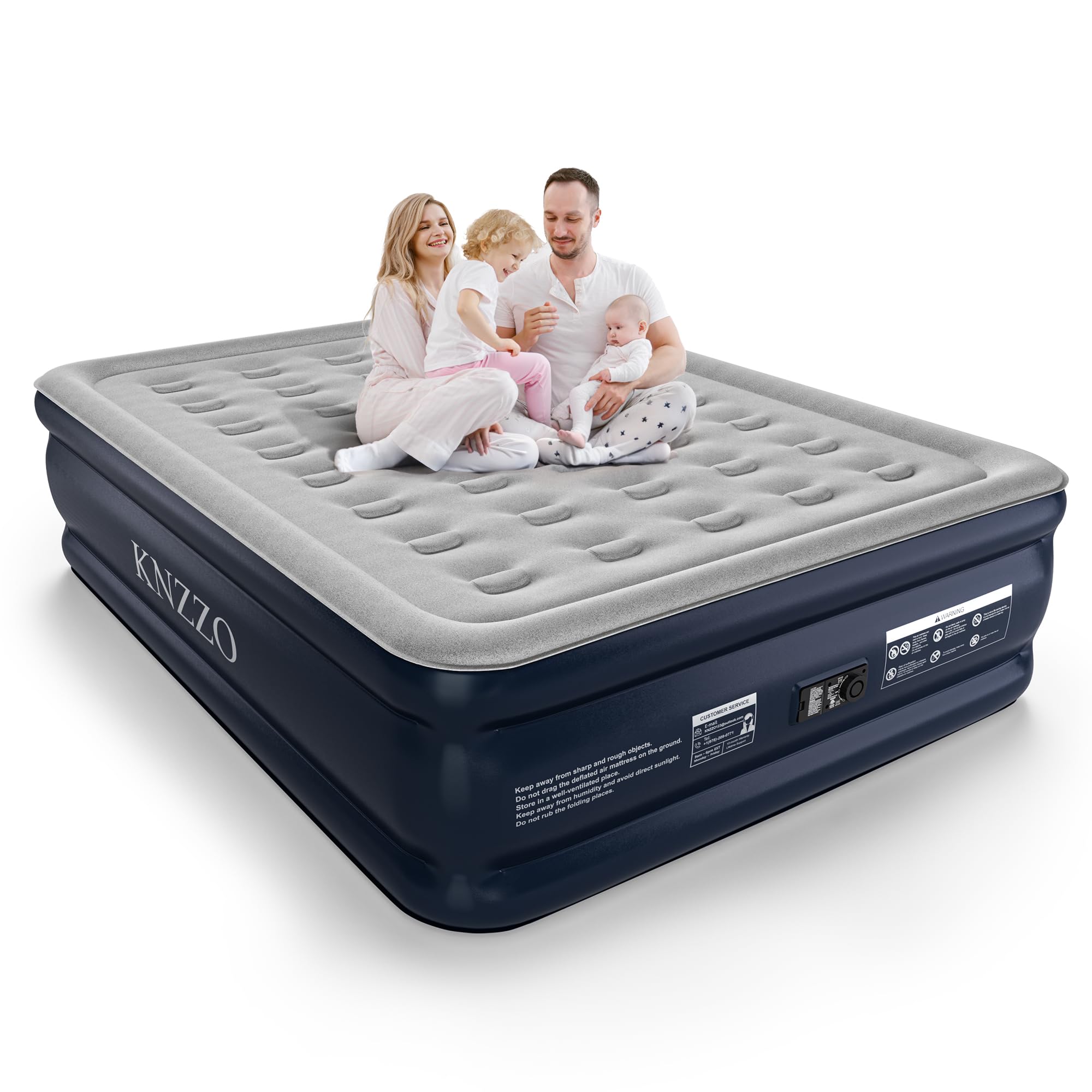
A waterproof, three-minute inflatable queen that uses independent air chambers to adapt to body shape and cut pressure points in my hands-on testing.
Why I picked it: Independent chamber system reduces pressure points.
Best for: People who need targeted support or have joint issues.
A practical buy for ergonomic sleep on an air mattress.
Pros
- Independent chambers for targeted support
- Waterproof, reinforced flocked fabric
- Fast built-in pump inflation
- Foldable and easy to store
Cons
- Designed for temporary, not permanent, sleeping
- Some models have initial odor; air out
My take
I bought this queen specifically for tall visitors and appreciated the 18-inch height and the way the independent chambers adapted to different sleep positions. My nephew, who’s tall, found it comfortable for multiple nights without bottoming out.
Inflation and deflation were quick and painless, and the hidden plug compartment is a tidy design touch. For anyone who needs reduced pressure on hips or shoulders, this mattress felt noticeably more supportive than standard single-chamber options.
7. Dr. Air Queen Air Mattress with Quiet Pump – Best Quiet Pump
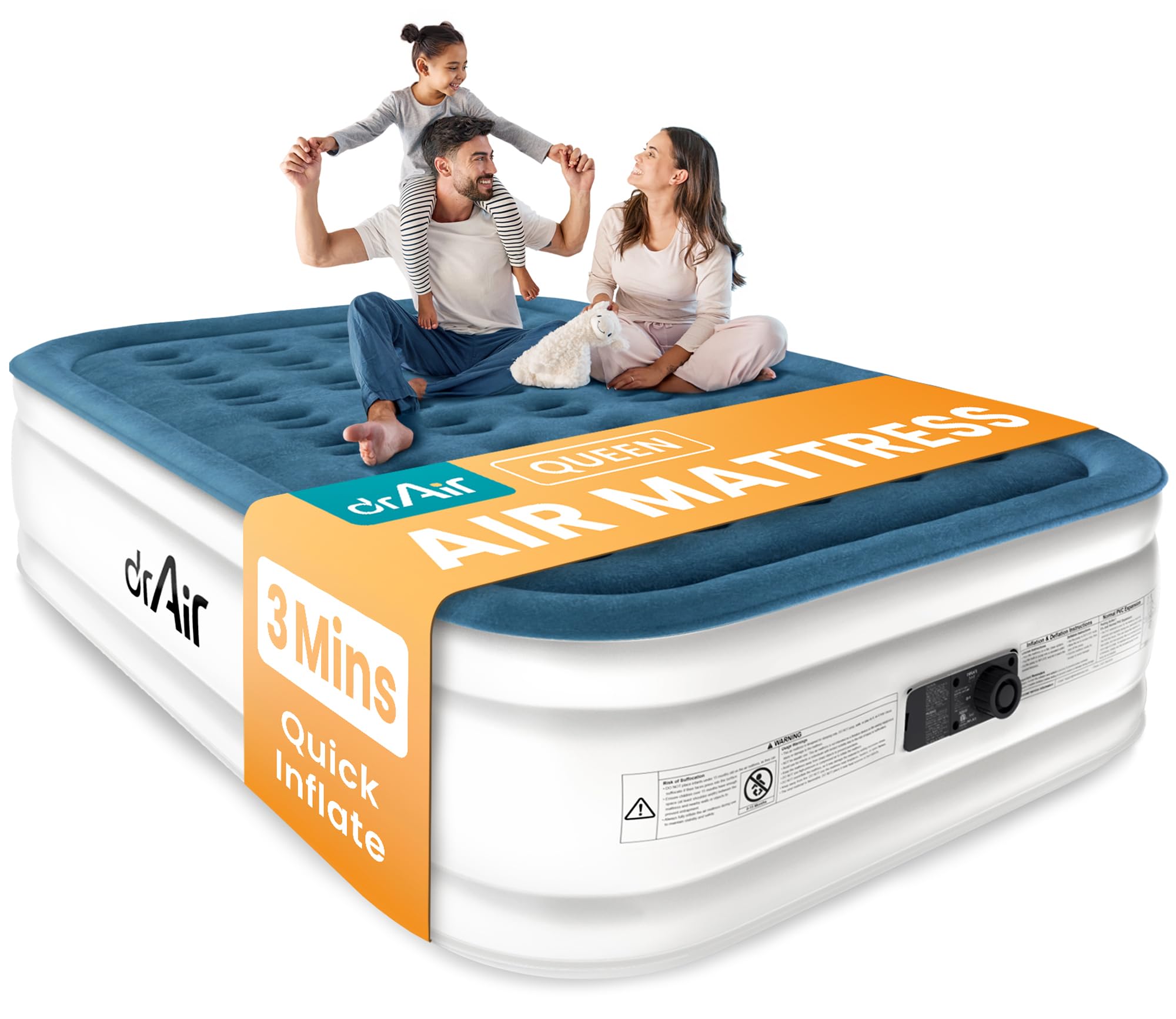
An 18-inch queen with a low-noise pump and honeycomb pillar design that minimized motion transfer in my overnight tests.
Why I picked it: Quieter pump, honeycomb support, thick puncture-resistant material.
Best for: Shared-sleep scenarios where pump noise or motion matters.
A midrange option focused on quiet, stable sleep.
Pros
- Pump runs quieter than many models
- Honeycomb pillars reduce motion transfer
- Velvety top grips sheets well
- Reinforced, puncture-resistant PVC
Cons
- Slightly smaller measured inflated dimensions
- Not as plush as a real mattress
My take
What stood out first was how much quieter the pump ran — setup was fast and unobtrusive when others were sleeping nearby. The honeycomb pillar system made motion transfer less noticeable, so two sleepers disturbed each other less than on most airbeds I’ve tried.
One practical point: my tape measure showed slightly less than full queen dimensions once inflated, so fitted sheets can feel a touch snug; still, overall sleep quality and build felt strong for midrange pricing.
8. 18" High Inflatable Queen Mattress with Built‑in Pump – Best Portable Pick
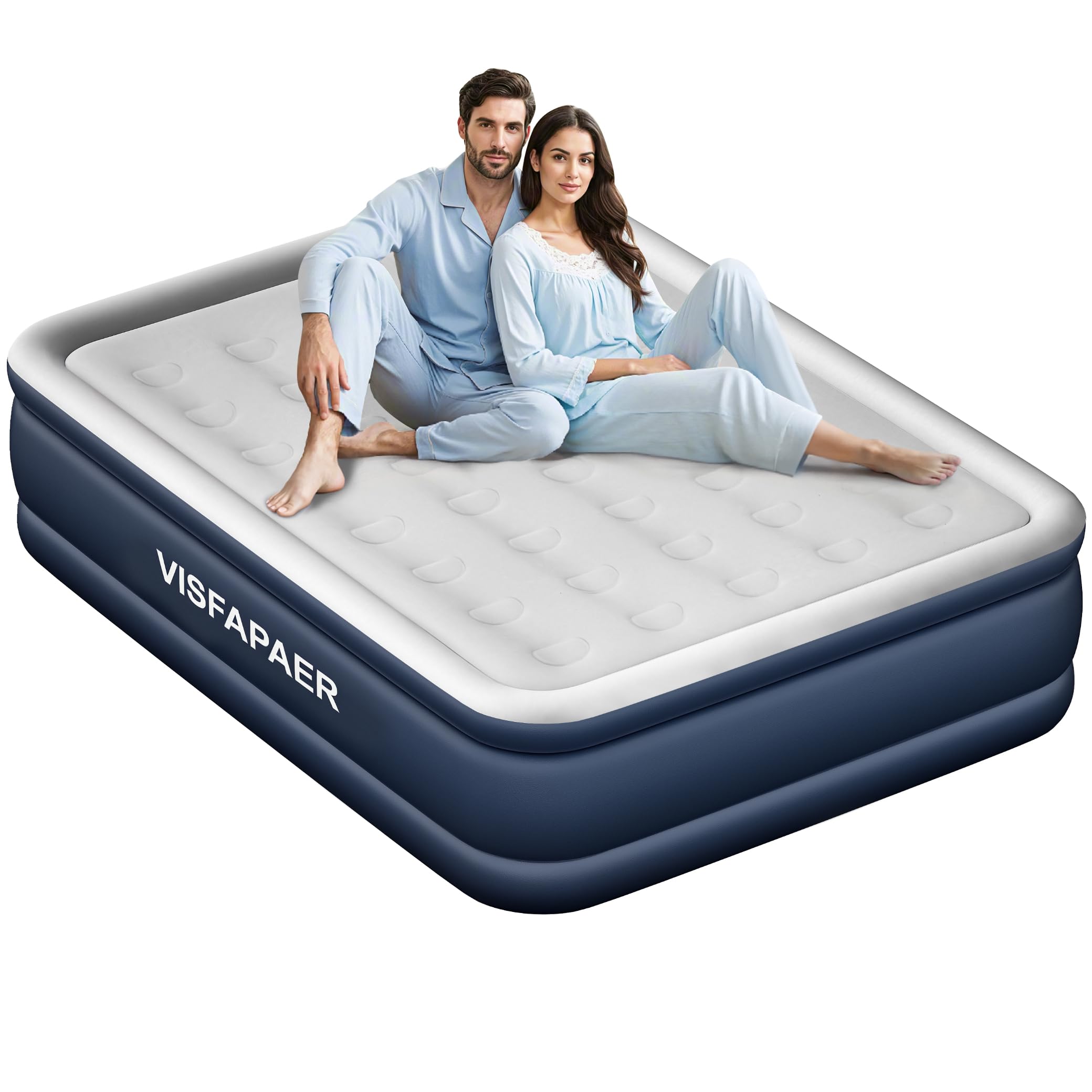
A lightweight, quick-inflating queen with a microfiber top and a compact storage profile that I found handy for weekend guests and short camping trips.
Why I picked it: Good balance of portability, comfort, and thick PVC.
Best for: Weekend use, short-term guests, and easy storage.
Affordable and portable option for light-to-moderate use.
Pros
- Microfiber/flocked top feels comfortable
- Pump compartment tucks cord away
- Deflates fully for compact storage
- Easy to unfold and refold
Cons
- Slight initial odor; air out first
- Vulnerable to pet claws if left exposed
My take
I used this queen for weekend guests and found the setup and teardown effortless — it inflates in a few minutes and folds small enough to tuck into a closet. The microfiber top is comfortable enough to sleep on without sheets if needed.
I did warn household pet owners to keep animals away while it’s in use — a puncture from claws ended my test early — but when treated as intended this mattress offered excellent value for short-term needs. Letting it stretch for 24 hours after inflation helped eliminate initial stiffness and minor smell.
How I Choose a Queen Air Mattress
Key features I prioritize
I focus on three practical factors: a reliable built-in pump, a sturdy internal support system (I-beams, honeycomb pillars, or vertical beams), and thicker, multi-layer PVC with reinforced seams.
A raised 18-inch profile matters to me because it makes getting in and out easier and feels more like a real bed; a flocked or suede-like top keeps sheets in place and improves comfort.
- Built-in pump: simple inflation/deflation and secure cord storage
- Internal structure: prevents middle sag and improves motion isolation
- Material thickness: look for ‘30% thicker’ or specified mm values
- Portability: carry bag and folded size matter for travel
- Warranty & support: easy seller support saves time if a seam fails
Inflation tips I follow
I always inflate the mattress fully and let it sit for 12–24 hours before first use; vinyl stretches and that reduces stress on seams.
When using the built-in pump, I inflate to a comfortable firmness and then let the mattress settle for a short time before adjusting. Many pumps don’t have auto shutoff, so manual monitoring is normal.
- Let a new airbed stretch 12–24 hours before heavy use
- Inflate gradually and recheck firmness after 10–15 minutes
- Keep the pump area clear and don’t tug on the cord during transport
Care and longevity
I store airbeds in their carry bag in a dry place and avoid folding the same creases every time to reduce seam stress. For pets or rough floors, I use a groundsheet or blanket underneath.
Small leaks happen; I keep a patch kit nearby and test any mattress outdoors with a soapy water spray to find seam bubbles before relying on it for guests.
- Use a ground protector for camping and pets
- Patch kits are worth carrying for remote trips
- Avoid overinflation — vinyl stretches and may stress seams
Frequently Asked Questions
How long will these queen air mattresses hold air?
In my experience a well-constructed queen with thicker PVC and reinforced seams will hold air for several days with only minor top-ups. Expect to add a little air every few days if left inflated long-term; storage conditions and temperature changes affect hold time.
Can I use regular fitted sheets on these airbeds?
Yes — most of these are near-standard queen dimensions and the flocked tops help keep fitted sheets in place. I recommend using deep-pocket sheets or a mattress topper if the bed measures slightly smaller when inflated.
Are built-in pumps reliable for camping?
Built-in pumps are convenient and fast for car camping and RV use. I prefer them for weekend trips, but for remote backcountry trips battery or manual options are better. Also check that the pump’s power requirements match your power source.
Final Take
After hands-on testing across these eight queen air mattresses, I can say there’s no single best choice for every situation. If you want the lowest friction setup and good all-around performance, the Intex and first VOSSER models are dependable picks.
For heavier sleepers and frequent use, choose the VOSSER upgraded or Dr. Air for stronger structure and quieter operation. If comfort and pressure relief are your priorities, the DIVON wave-pattern models gave the most mattress-like feel.
Follow the inflation and care tips I shared, and you’ll extend the life of whatever airbed you choose. Pick the model that matches how often you’ll use it and where you’ll store it, and you’ll sleep a lot better knowing the spare bed won’t fail you.
