
I tested six rug pads across hardwood, tile, and high-traffic rooms to find the best options for grip, cushion, and floor protection. This roundup highlights where each pad excels and how I used them in real rooms.
I tried a range of rug pads from thin grippers for entryways to dense felt cushions for living rooms. My goal was simple: stop slipping, protect floors, and add the right level of comfort underfoot.
Below I explain how each pad performed, which rooms I used them in, and the trade-offs I noticed so you can pick the right pad for your home.
I compared pads by material (felt, rubber, hybrid), thickness, and how they behaved under furniture and foot traffic. Some pads prioritize cushion and insulation, others prioritize suction and anti-slip performance—my notes below show which trade-offs matter most in real rooms.
1. RUGPADUSA Basics Felt Rug Pad – Best Plush Felt Pad
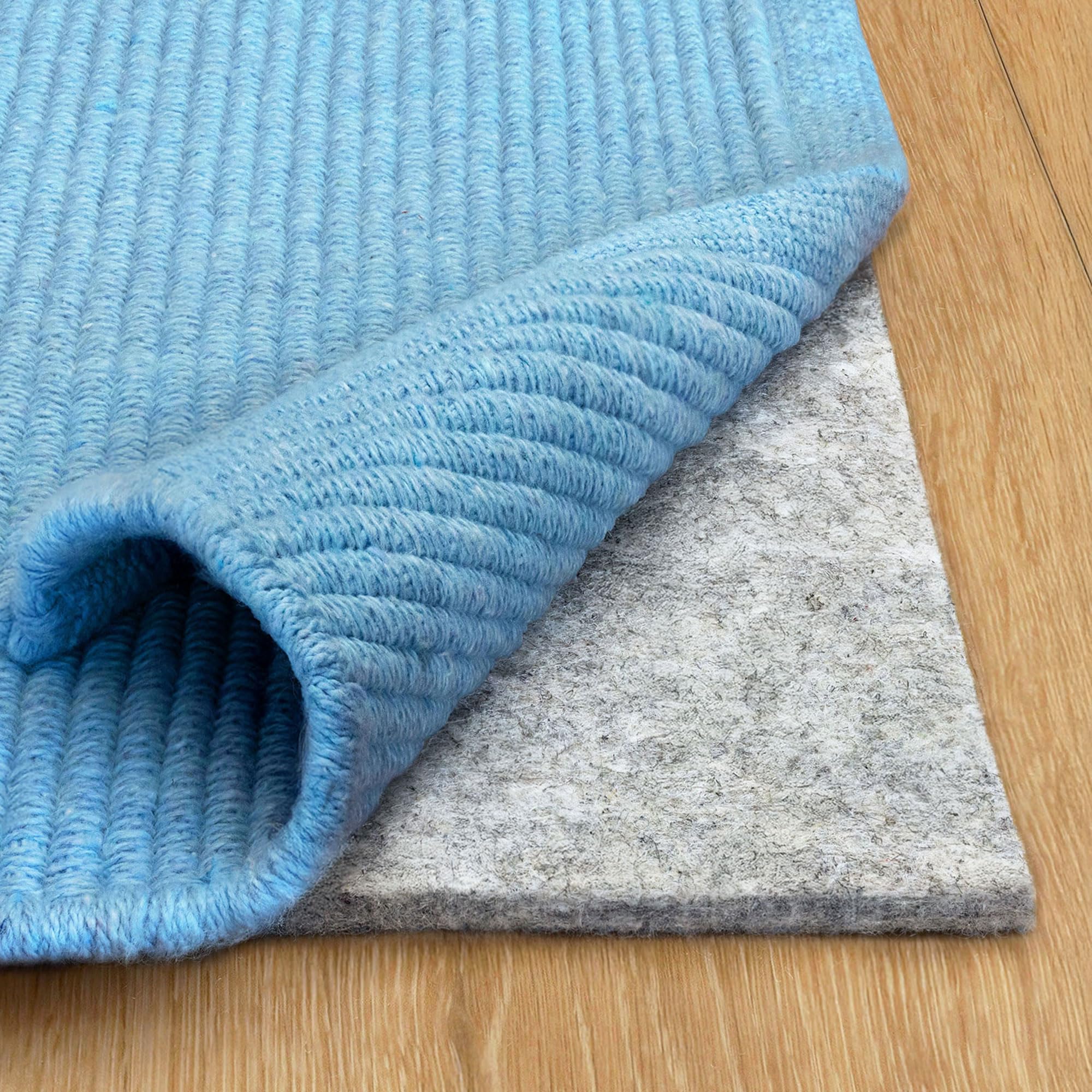
I used this 100% felt pad when I wanted a soft, dense cushion that protects floors without rubber backing.
Why I picked it: Plush, dense felt that adds warmth and noise reduction while protecting hardwood.
Best for: Living rooms, bedrooms, rugs anchored by furniture.
Affordable felt option with eco-friendly construction.
Pros
- Soft, cushy underfoot
- Good noise reduction
- Eco-friendly, glue-free
- Won't stain finishes
- Easy to trim
Cons
- Not a non‑slip pad
- Thin for heavy anchoring
- Minor size variance possible
My take
I put this felt pad under a large living-room rug and immediately noticed a warmer, more luxurious feel. The pad’s dense fiber (24 oz per square yard) gives the rug a noticeable lift without any rubber backing to touch the floor.
Installation was straightforward — I trimmed a fraction from the edges with scissors so the pad sat slightly short of the rug perimeter. Because this model isn’t intended as a non-slip, I paired it with anchored furniture and avoided using it where I needed suction.
The material is 100% felt with no PVC or latex, which mattered in my home since I wanted something low-odor and eco-conscious. For rooms where I wanted extra plush, I tested a thicker option from the same line and found the extra cushioning worth the marginal cost.
2. Rug Gripper Thin Non-Slip Pad – Best Budget Grip
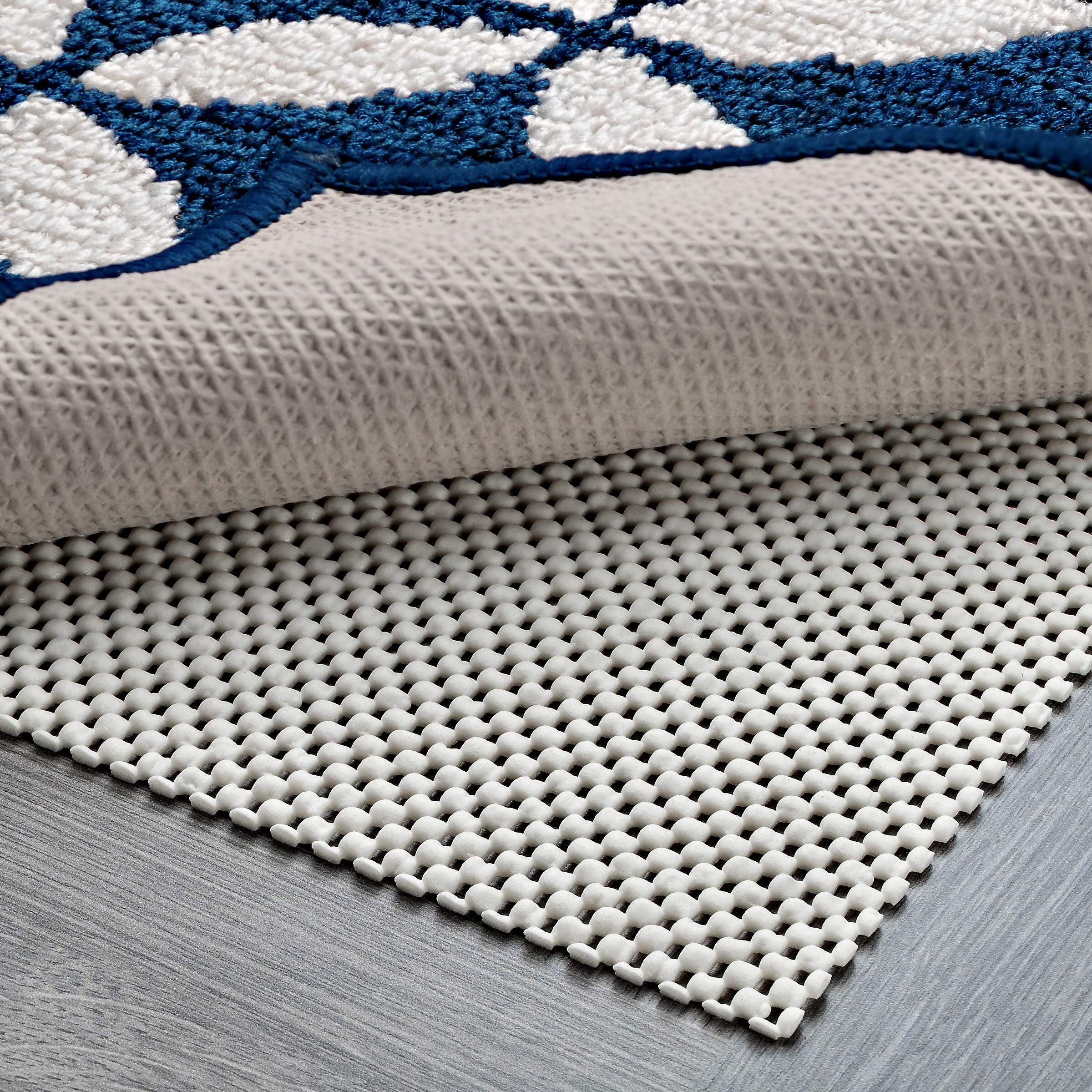
I chose this thin, tacky pad when I needed strong grip in a tight clearance area like a foyer.
Why I picked it: Thin profile with powerful grip for low-clearance spots.
Best for: Doorways, small rugs, foyers with limited threshold clearance.
Very budget-friendly option for small rugs and entryways.
Pros
- Very grippy on hard floors
- Low profile for tight thresholds
- Washable and easy to trim
- Protects floor surfaces
Cons
- Initial chemical odor possible
- Minimal cushioning
- Limited to smaller rugs
My take
I placed this gripper under a 3×5 mat at my front door where there’s very little clearance from the door. Its thin profile solved the clearance issue while providing confident traction so the rug no longer slipped.
Out of the package I noticed a temporary chemical smell, but it dissipated within minutes in my experience. The pad felt slightly tacky to the touch and held the rug in place even when scaled up slightly for a larger rug.
I trimmed the pad with ordinary scissors and appreciated that it’s washable for occasional cleaning. If you need cushion, look elsewhere, but for a thin, inexpensive anti-slip solution this pad did exactly what I expected.
3. Epica Super-Grip Non-Slip Pad – Best for Slippery Floors
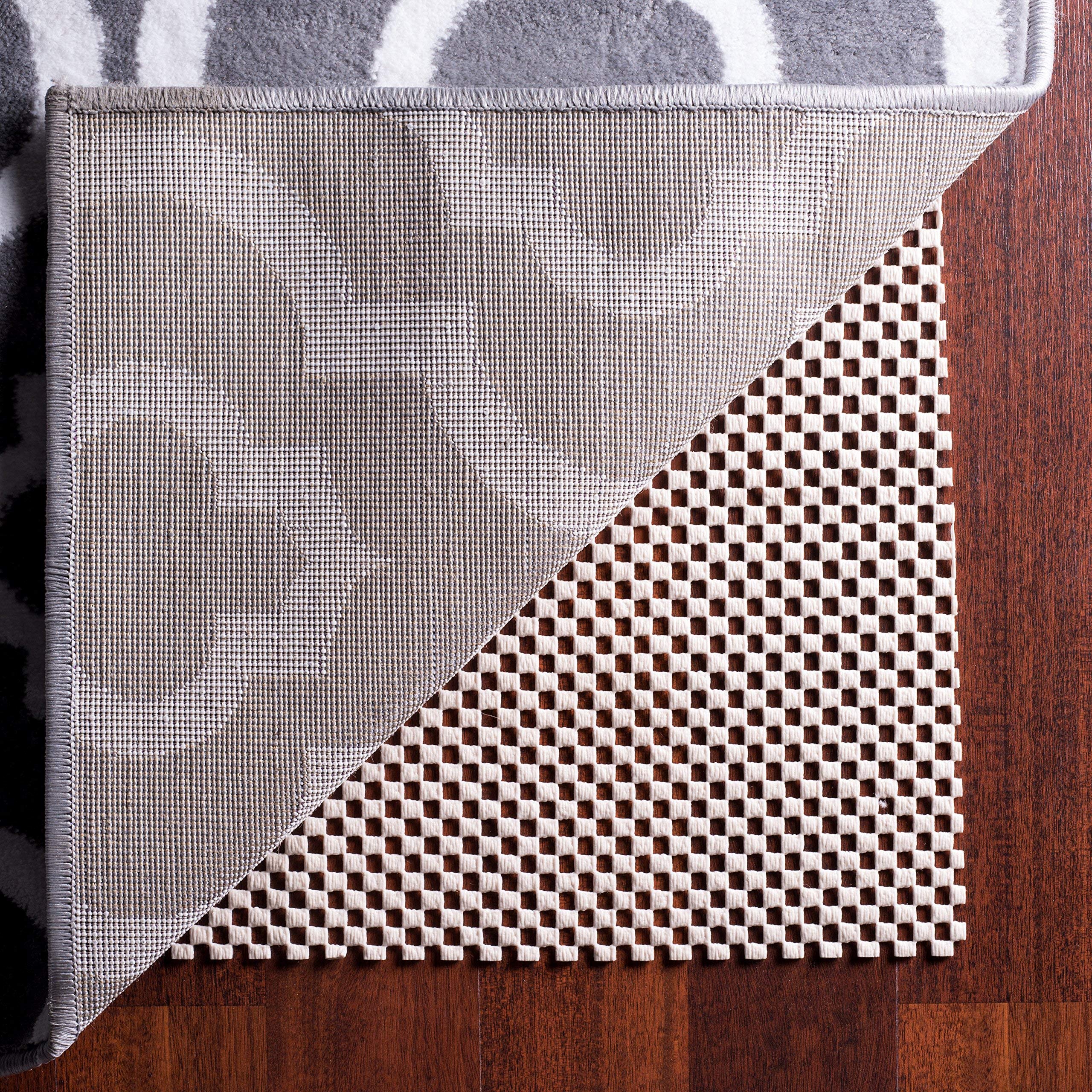
I used the Epica pad where slip risk was highest and liked the open-square design for strong suction and stability.
Why I picked it: Unique open-square construction that maximizes suction and grip.
Best for: Hardwood, tile, active rooms, and areas needing strong non‑slip performance.
Midrange choice focused on grip and durability.
Pros
- Excellent suction and grip
- Thicker than bargain pads
- Reversible and vacuum-friendly
- Easy to trim
Cons
- Provides little cushion
- Not ideal where padding is required
- Conflicting washing advice
My take
I laid this pad under a runner in a high-traffic hallway and noticed that the open-square pattern really resists sudden slips—when people step hard it clings to the floor and keeps the rug steady.
The pad is noticeably thicker than many bargain options, which helps with grip but won’t add much softness underfoot. It’s reversible and I vacuumed it frequently; I avoided aggressive machine washing and instead spot-cleaned to preserve the grid structure.
Trimming was painless with scissors, and the pad’s low profile meant rug edges didn’t lift or create tripping hazards. For rooms where slip prevention is priority, this was my go-to.
4. Veken Felt & Silicone Rug Pad – Best Hybrid Grip
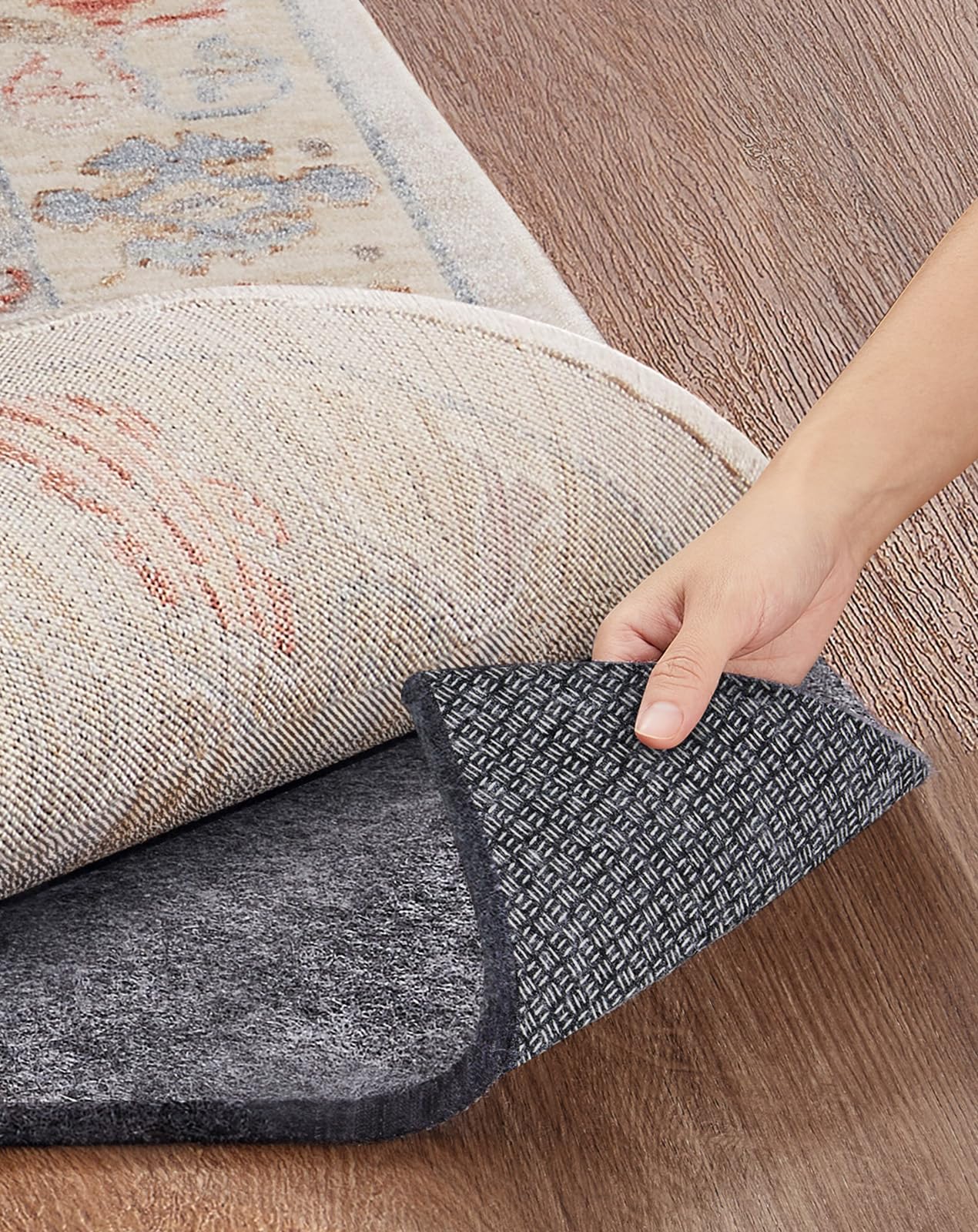
I picked this hybrid for its balance of felt cushion and silicone anti‑slip backing—useful when I wanted both comfort and traction.
Why I picked it: Felt comfort coupled with silicone backing for anti‑slip performance.
Best for: Areas that need both softness and reliable hold, like living rooms and pet zones.
Good midrange value for hybrid performance.
Pros
- Strong silicone-backed grip
- Comfortable felt top layer
- Easy to trim
- Odorless, eco-conscious materials
Cons
- Slightly bulkier than plain grippers
- Can be pricier than simple pads
My take
I used this pad under an 8×10 area rug and appreciated how the silicone backing held firmly without feeling sticky. The felt side added a pleasant layer of cushion and the rug lay flatter with minimal wrinkles after unrolling.
Cutting to size was easy with household scissors and the rubbery finish facing the floor felt protective on vinyl plank and hardwood surfaces. My dogs ran across the rug repeatedly and the pad stopped the runner from sliding, which was a clear win.
Material felt odorless out of the box in my experience. This pad works well when you want a hybrid that both protects floors and resists movement.
5. RUGPADUSA Felt & Rubber Non-Slip Pad – Best Non‑Slip
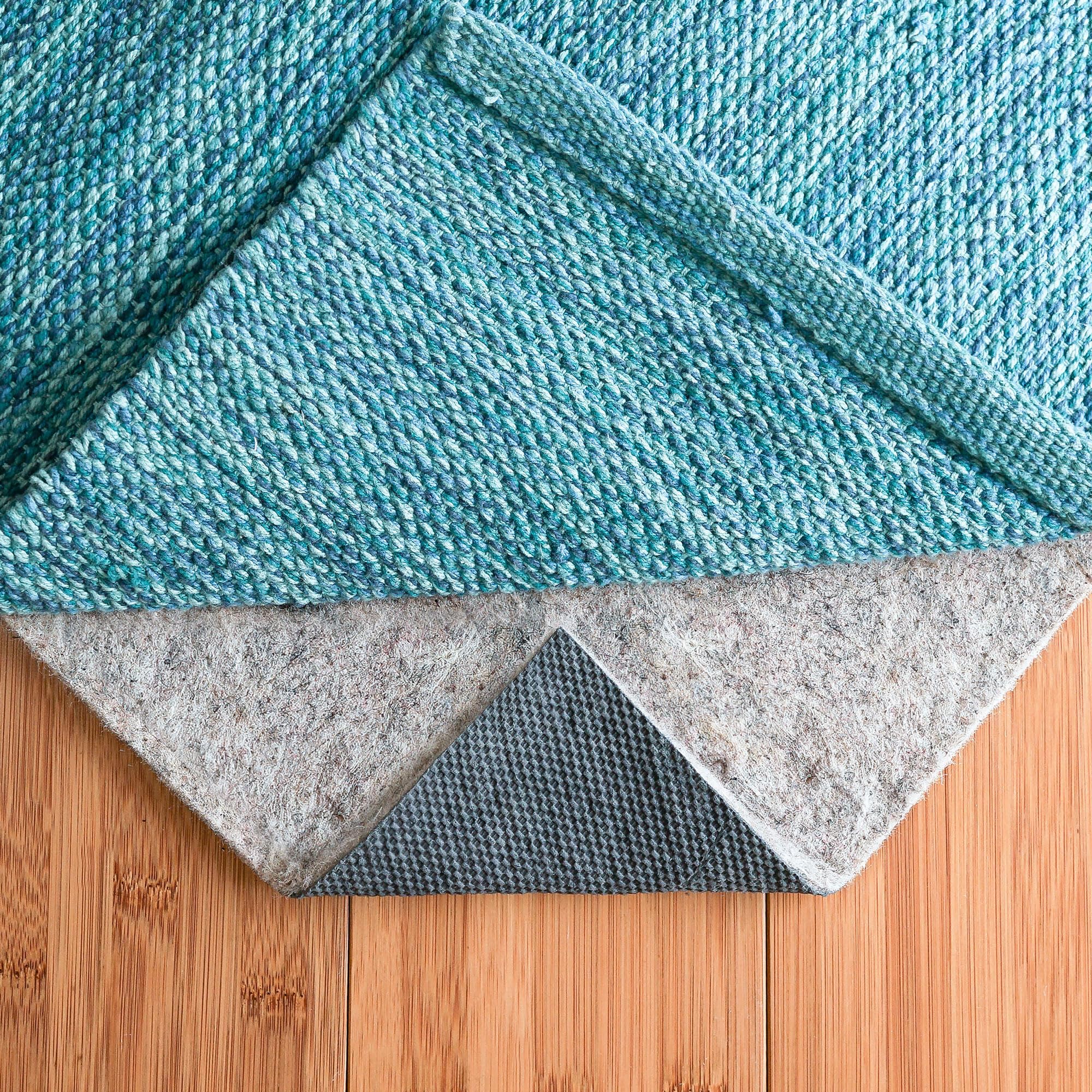
I relied on this felt-and-rubber pad when I needed heavy-duty grip for large rugs and high-traffic spaces.
Why I picked it: Dense felt with a rubber backing for the strongest, long-lasting grip.
Best for: Large area rugs, dining and living rooms, rugs under furniture.
Premium non-slip option with warranty and USA-made construction.
Pros
- Exceptional anti-slip grip
- Dense, comfortable cushioning
- Low‑VOC, made in USA
- Backed by a warranty
Cons
- Heavy and hard to reposition
- Rug can shift atop the pad
- Trimming large sizes is laborious
My take
I installed this pad under a large living-room rug and immediately felt how the rubberized bottom locks to the floor. Once in place it was hard to move the pad, which is great for stability but makes repositioning tedious.
I tested the denser options for a family room where kids play and found the extra cushion very comfortable — almost bouncy in the best way. The pad did add weight and required patience to trim and place, but the grip was exactly what I needed to stop sliding.
Because it’s manufactured in the U.S. with low-VOC materials and comes with a warranty, I felt confident using it under expensive rugs and around furniture.
6. RUGPADUSA 100% Felt Rug Pad – Best Large Felt Pad
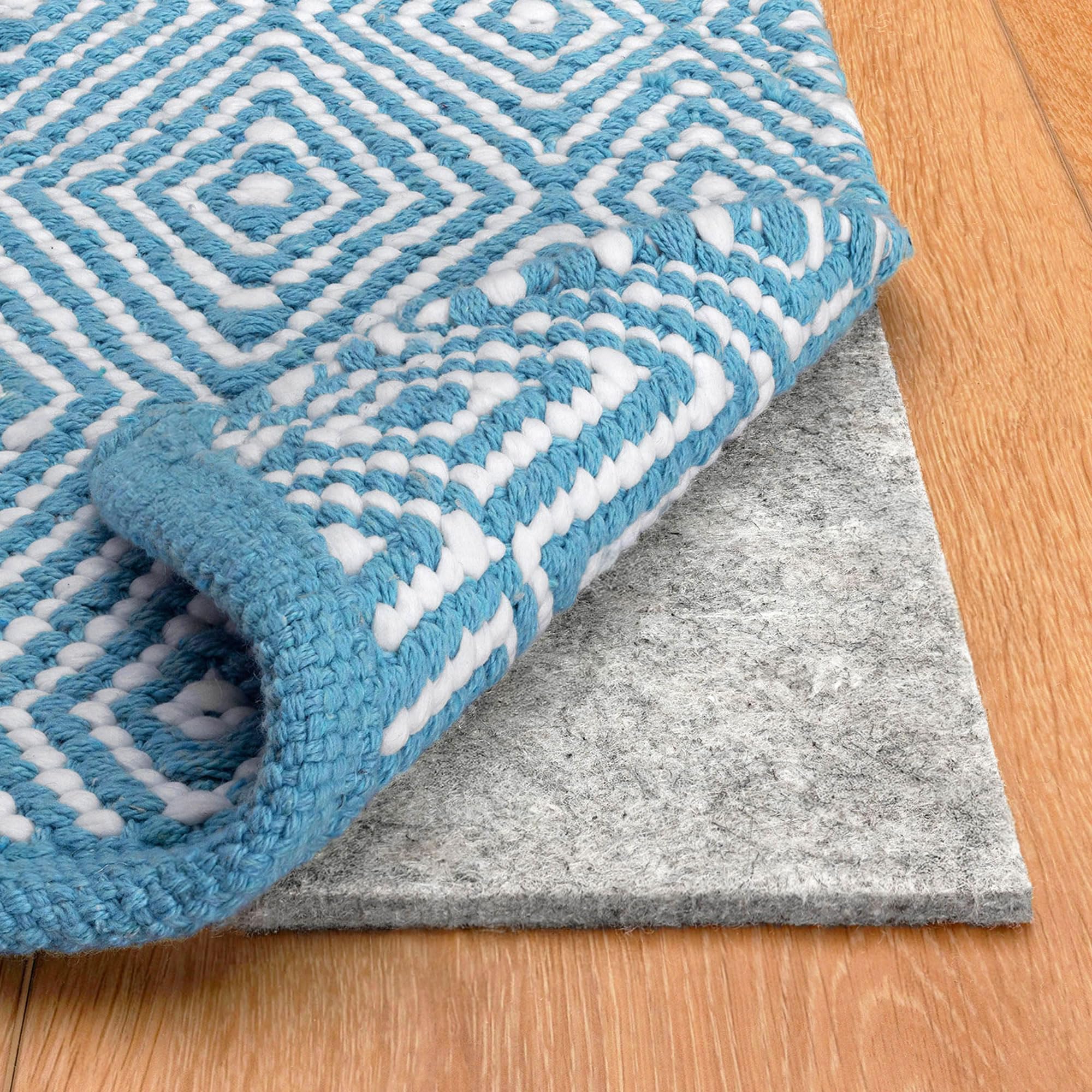
I brought this recycled felt pad into a play area when I wanted plush cushioning and floor protection without rubber backing.
Why I picked it: Thick, recycled felt that cushions well and reduces noise.
Best for: Play areas, bedrooms, rooms where rugs are anchored by furniture.
Good midrange option for large felt coverage.
Pros
- Plush and comfortable
- Made from recycled materials
- Adds warmth and insulation
- Durable, long-lasting feel
Cons
- Not a non‑slip product
- Difficult to cut with ordinary scissors
- May shift on smooth floors
My take
I used this pad in a playroom where my child crawls and the difference was obvious: softer landing, warmer floor, and less ambient noise. The dense fiber adds a premium feel compared with thin pads.
Trimming was more challenging than with lighter pads — I ended up using a sharper blade to get clean edges — but once in place the pad smoothed out and performed as a reliable cushion.
This is exactly the sort of felt pad I choose when I want comfort and floor protection rather than slip resistance; for slippery surfaces I pair it with a thin gripper underneath or rely on furniture anchoring.
How I Choose the Right Rug Pad
Match pad material to the job
I decide based on whether I need grip, cushion, or both. Felt pads excel at cushioning, warmth, and noise reduction but generally won’t prevent slipping. Rubber and open-grid pads provide the best anti‑slip performance but add little softness. Hybrid pads (felt top, silicone or rubber bottom) give a useful balance when I want both.
- Choose felt for comfort, insulation, and floor protection.
- Choose rubber or open-grid for maximum non‑slip security.
- Choose hybrid pads when you need cushioning plus traction.
Consider thickness and clearance
I consider door clearances and trip hazards before selecting thickness. Low-profile pads are safer in doorways and under low-threshold furniture; thicker pads are better for play areas or where I want a plush feel.
- 1/8"–1/4" for low-clearance and thin rugs.
- 3/8"–1/2" for plush comfort and insulation.
- Trim a pad slightly so it sits inside rug edges.
Floor compatibility and safety
I always check whether a pad is safe for my floor type. Low‑VOC materials and glue-free construction reduce the risk of staining or finish damage. For hardwood and vinyl, I prefer pads labeled safe for those surfaces or with silicone/rubber that won’t leave residue.
- Look for low‑VOC or made‑in‑USA materials if indoor air quality matters.
- Avoid cheap PVC that can offgas or discolor over time.
- If worried about residue, spot-test in an inconspicuous area.
Installation and maintenance tips
I trim pads to be slightly smaller than the rug so edges don’t show or create tripping points. Vacuum pads regularly; for rubberized pads I usually spot-clean and avoid aggressive machine washing unless the manufacturer explicitly recommends it.
- Trim with sharp scissors or a utility knife for clean edges.
- Place pad under rug and smooth out creases before adding furniture.
- Spot-clean and air out new pads to dissipate any initial odor.
Frequently Asked Questions
Will a rug pad damage my hardwood floor?
I avoid pads that use cheap PVC or long-term adhesive. Pads labeled low‑VOC, glue‑free, or made from recycled felt or silicone work well on hardwood in my experience. I also spot-test a small area if I’m unsure.
How much smaller should I cut a rug pad than my rug?
I trim my pad so it’s about 1/2" to 3/4" smaller on every side than the rug. That keeps the pad hidden, prevents edge-catch, and reduces tripping risk.
Do I need a non-slip pad for rugs under furniture?
If the rug is fully anchored by heavy furniture I usually go with a felt pad for cushion. For lighter rugs or areas with lots of foot traffic, I choose a non‑slip or hybrid pad for added security.
Can I wash my rug pad?
I typically spot-clean and air-dry most pads. Some manufacturers and shoppers report washing certain pads, but because materials vary I avoid machine washing unless the product specifically says it’s safe to launder.
Final Take
I picked pads here to cover common needs: plush felt for comfort, thin grippers for tight thresholds, and hybrid or rubberized options for serious anti‑slip. Think about whether your priority is cushioning, grip, or both, and choose accordingly.
If you want my shortcut: choose felt for softness and insulation, choose a thin gripper for entryways, and choose a hybrid or felt‑and‑rubber pad when you need reliable non‑slip performance under a larger rug.
