
I tested a range of compact purifiers for noise, coverage, filtration, and real-world performance. These seven models cover everything from budget bedside units to smart, whole-room machines.
I spent time living with and using several small air purifiers to judge how they perform where most of us need them most: on a nightstand, at a desk, or in a modest bedroom. I focused on how quickly they clear air, how loud they are in daily use, and whether features like auto sensors or carbon filters actually make a practical difference.
My testing compared coverage claims with real placement, judged how filters handled pet hair, dust, light smoke, and odors, and considered running cost and maintenance. Below are the seven small purifiers I ended up recommending for specific uses and budgets.
I prioritized real-world performance over specs alone — room fit, noise, and ease of use were my top deciding factors.
1. Holmes Desktop HEPA‑Type Air Purifier – Best Budget Desktop
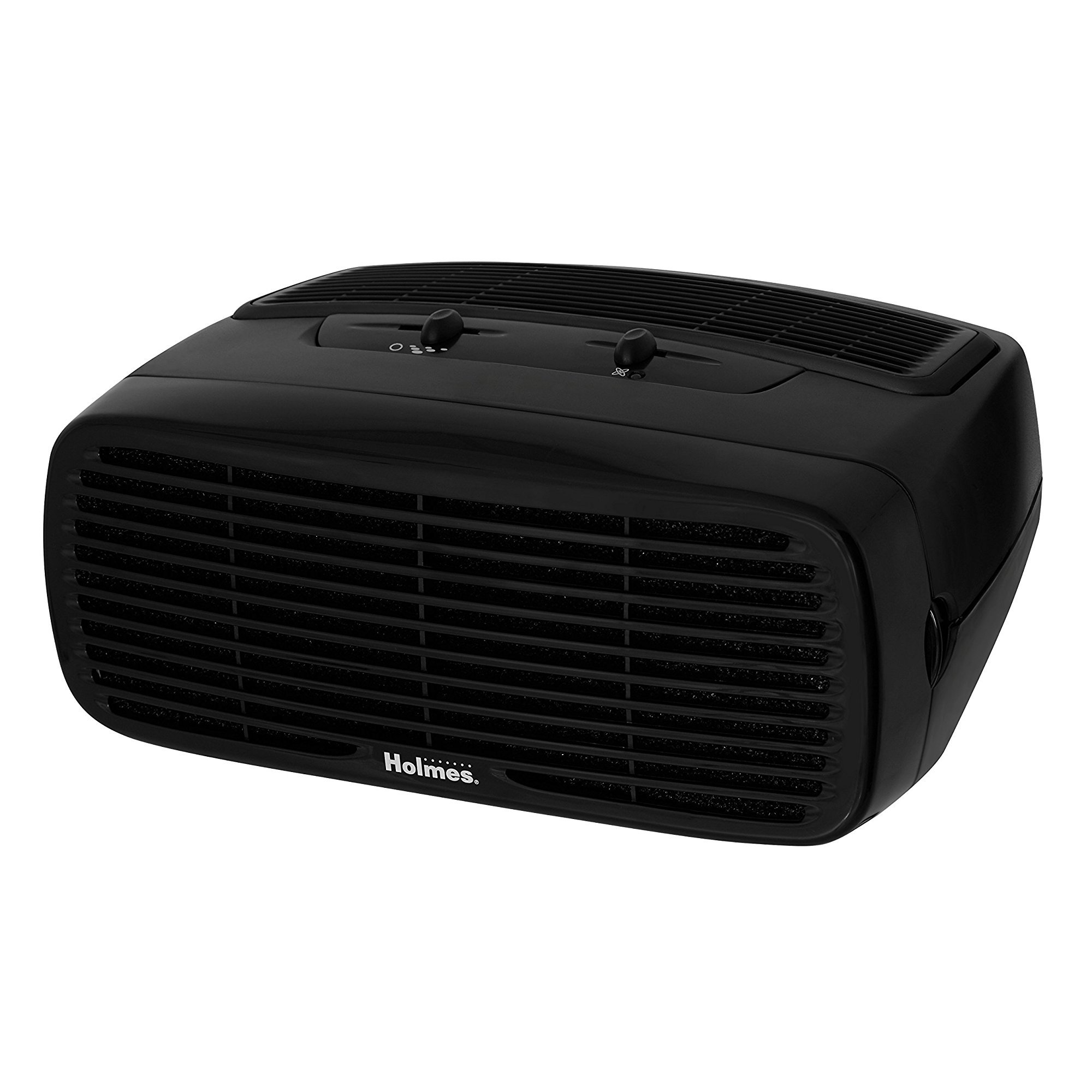
A compact desktop unit with a HEPA‑type filter and optional ionizer that handles dust, pollen, and light smoke in small rooms and workspaces.
Why I picked it: I picked this as the best low-cost desktop option because it’s quiet, flexible to place vertically or horizontally, and the ionizer adds a little extra bite for odors and smoke.
Best for: Desks, bedside tables, small offices, and hobby stations where space is tight.
Very affordable desktop option with basic but effective filtration.
Pros
- Slim, space-saving footprint
- Optional ionizer for odor help
- Three fan speeds for control
- Durable build with warranty
Cons
- HEPA‑type—not a medical grade HEPA
- Limited odor removal on its own
- Filters need regular replacement
My take
I’ve used this Holmes unit at a small workbench and on a nightstand; in both positions it moves enough air to noticeably cut airborne dust and reduce sneezing in a compact space.
The ionizer is useful when I’m doing soldering or small reflow tasks — it helps the unit capture the visible smoke stream on higher fan speeds. I did not expect it to fully eliminate strong odors or sterilize air, and it doesn’t; it simply does what a small purifier should do very reliably.
Setup is effortless and the option to stand it vertically or lay it flat makes it one of the most versatile little units I own. If you want simple, effective filtration for a small area without bells and whistles, this is the practical pick.
2. Blueair Pure 511 Air Purifier – Best Compact & Quiet
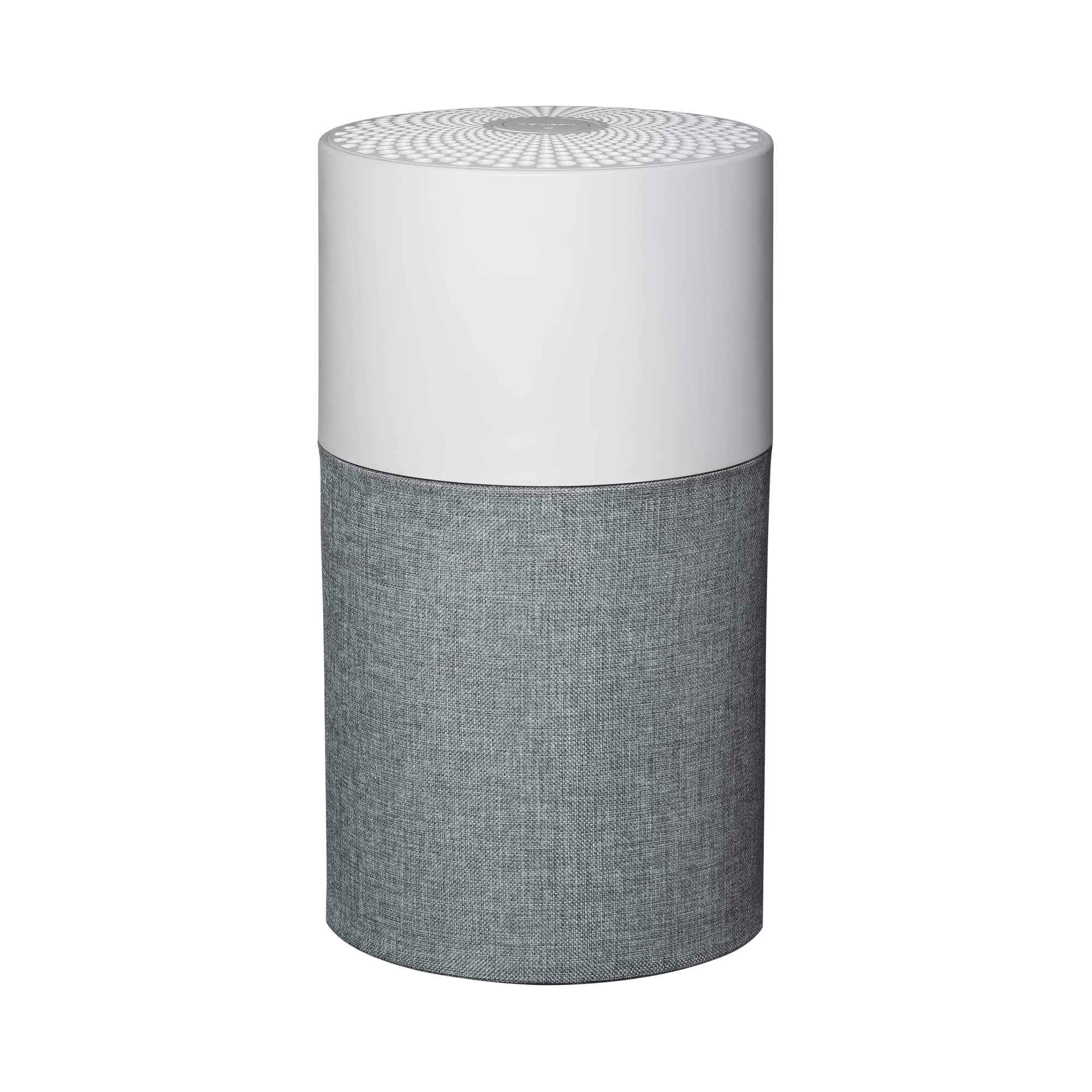
A whisper‑quiet, energy‑efficient compact purifier that uses HEPASilent dual filtration to handle fine particles in bedrooms and small living spaces.
Why I picked it: I picked the Blueair for places where silence matters — it’s exceptionally quiet on low while still delivering impressive airflow for its size.
Best for: Bedrooms, nurseries, and small living rooms where low noise and efficient filtration are priorities.
Mid‑range performer that runs efficiently and cheaply to operate.
Pros
- Very quiet on low
- Effective at capturing fine particles
- Compact, attractive design
- Washable/colorful pre‑filter
Cons
- Touch controls can feel fiddly
- Limited manual control options
My take
I swapped this Blueair for a same‑price competitor and immediately noticed the difference: much lower noise and stronger airflow that left the room feeling crisper.
On low it’s whisper‑quiet and I can sleep beside it without interruption; on higher settings it still moves a surprising amount of air for the unit’s footprint.
The washable pre‑filter is a nice practical touch for pet owners, and I found filter changes to be straightforward. If you want a compact purifier that stays out of the way during sleep, this is my go‑to pick.
3. Shark HP102 Air Purifier – Best for Pets & Allergies
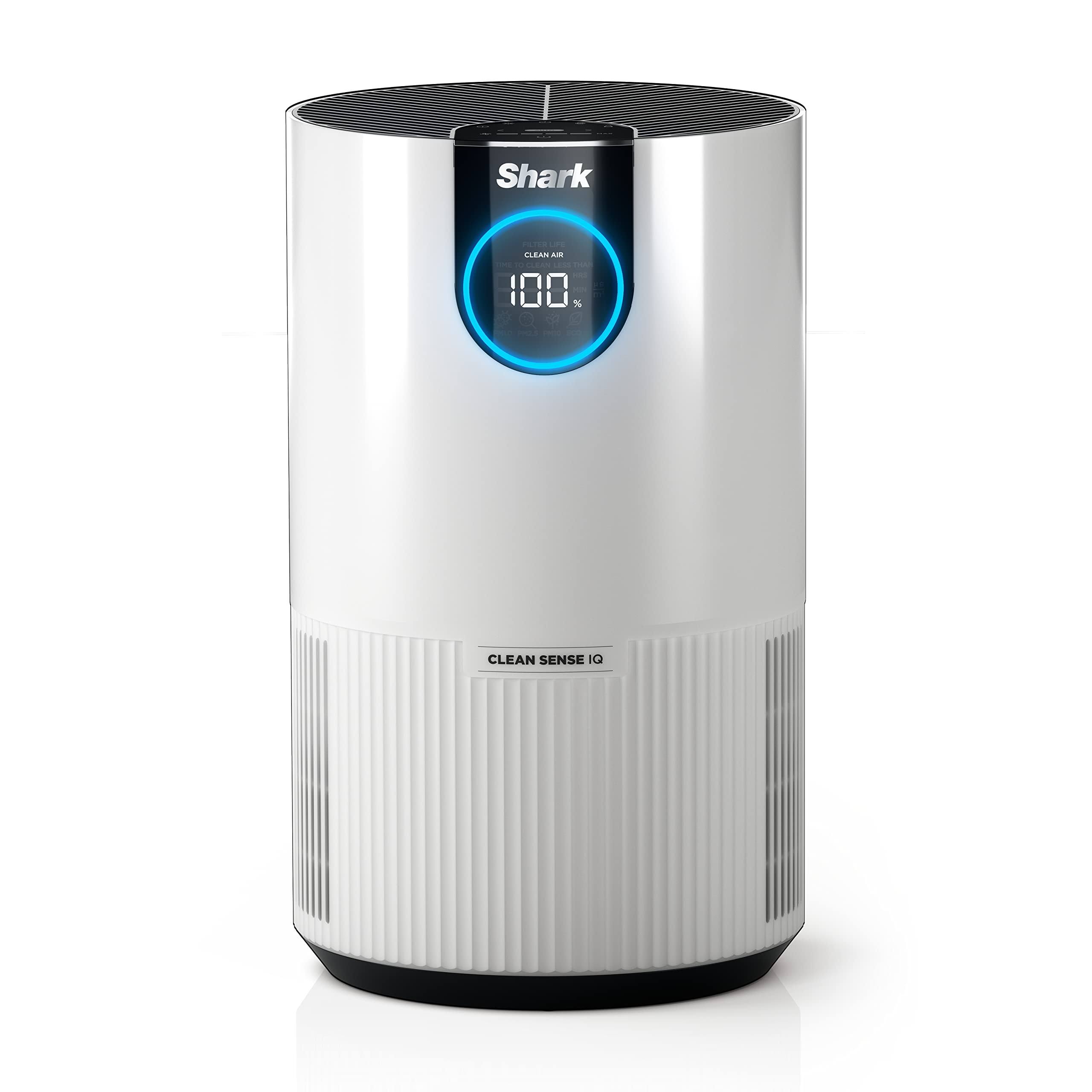
A compact but powerful purifier with automatic air‑quality sensing and high filtration performance designed to tackle pet dander, dust, and smoke in medium rooms.
Why I picked it: I picked the Shark because its auto mode responds quickly to cooking, pets, or dust and it keeps air feeling fresh without constant fiddling.
Best for: Homes with pets, allergy triggers, or anyone who wants effective automatic cleaning in a medium room.
Strong mid‑price performer with reliable auto functionality.
Pros
- Smart auto mode adjusts power
- Strong filtration for particle sizes
- Portable and compact design
- Easy-to-read air quality indicator
Cons
- Higher speeds are noticeably louder
- May run more frequently in busy spaces
My take
I set this Shark unit to Auto and largely forgot about it — it ramps up during cooking or when guests arrive, then drops back to a whisper when things are clean.
The digital air‑quality readout is genuinely useful; I could see the purifier respond when I lit a candle or cooked on the stovetop. It’s been especially effective at cutting down pet smells and visible dust in living areas.
If you want automatic performance that actually reacts in real time, this is one of the most responsive small units I’ve used.
4. Winix A230 True HEPA Air Purifier – Best Auto‑Sensor
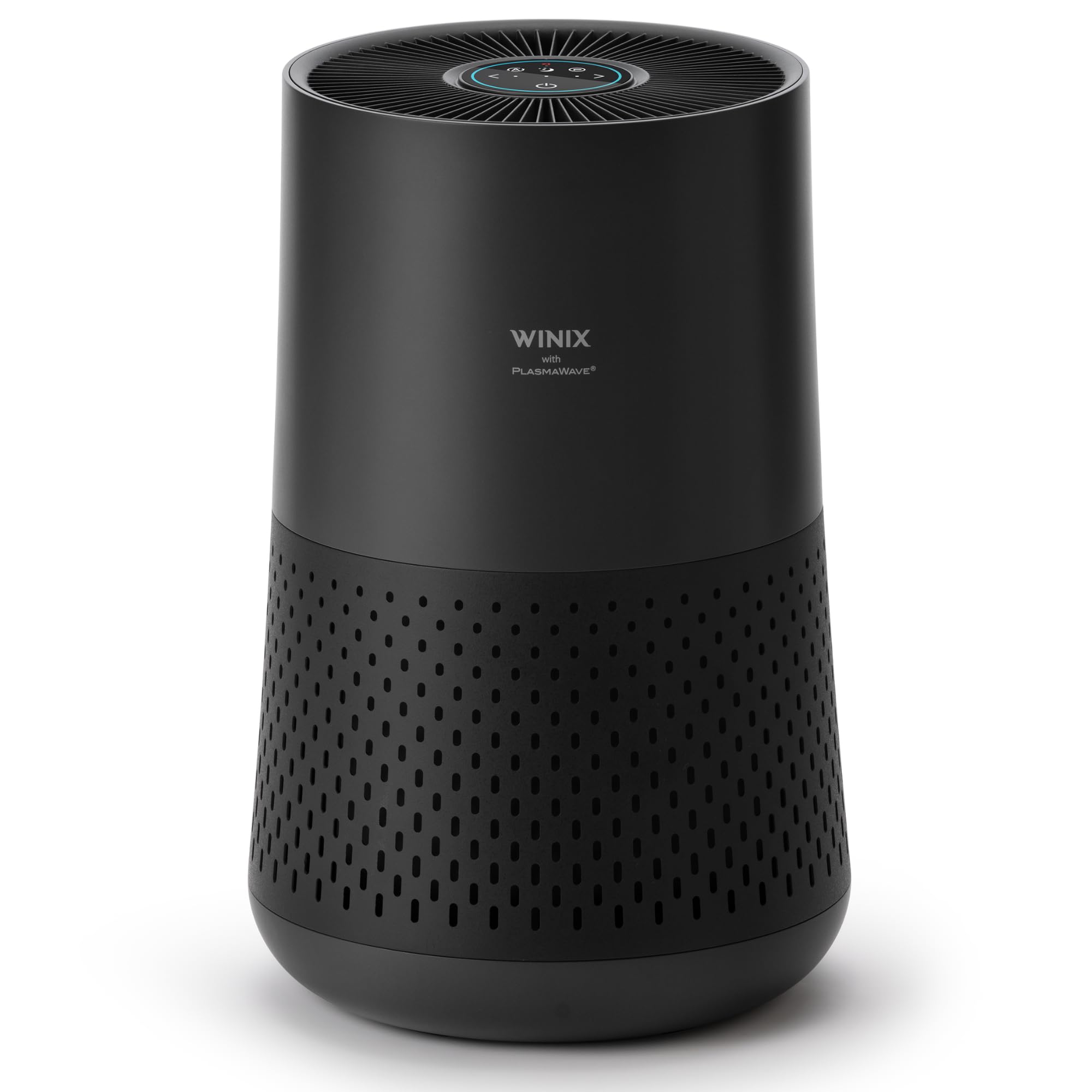
A 4‑stage purifier with True HEPA, carbon filter, PlasmaWave option, and built‑in sensors that adjust fan speed automatically based on room air quality.
Why I picked it: I picked the Winix for its full‑feature approach — real True HEPA + carbon filtration and dependable auto and sleep modes make it flexible for bedrooms and larger small rooms.
Best for: People who want automatic air quality control and odor reduction in bedrooms and small open areas.
Good value given the multi‑stage filtration and automation.
Pros
- True HEPA filtration
- Carbon filter for odors
- Auto mode with air quality sensor
- Quiet sleep mode
Cons
- Sensor can be inconsistent at times
- PlasmaWave feature not for everyone
My take
I’ve used the Winix daily on auto for months and it consistently reduces dust and odors without me changing settings constantly.
Sleep mode is genuinely quiet enough for light sleepers, and the carbon layer made a real difference when cooking left lingering smells.
I did notice the air‑quality sensor isn’t perfect — it sometimes misses very local events — but overall auto adjustments keep the room comfortable without manual intervention.
5. AirDoctor 3500i Smart Air Purifier – Best for Large Small Rooms / Smart Control
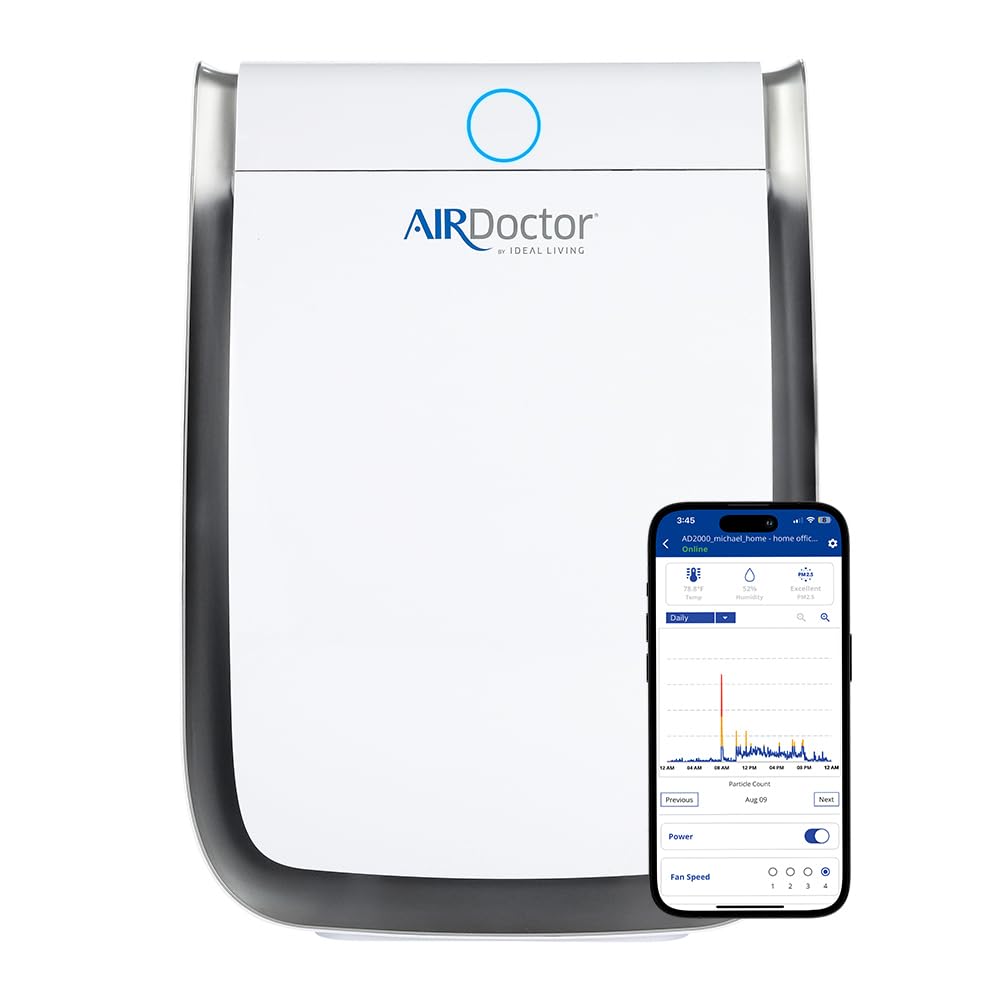
A higher‑end smart purifier with UltraHEPA filtration that targets ultrafine particles, app control, and wide coverage suitable for living rooms and larger bedrooms.
Why I picked it: I picked the AirDoctor when I needed top‑tier particle capture and remote monitoring — the UltraHEPA filter and app alerts give me confidence about what I’m breathing.
Best for: Large bedrooms, living rooms, or anyone who wants app control and top‑end particle filtration.
Premium option with high filtration performance and smart features.
Pros
- UltraHEPA captures ultrafine particles
- App control and air quality alerts
- Large coverage and multiple speeds
- Quieter than similar high‑power units
Cons
- Higher upfront cost
- Replacement filters are pricier
My take
I put an AirDoctor in my main bedroom and immediately noticed reduced dryness and fewer morning throat irritations.
The app gives useful real‑time info and alerts about filter life, which makes maintenance simpler when you’re running the unit a lot.
When I turned it up during high‑dust activities it cleared visible dust quickly — this one is the choice when you want the best particle capture available for a larger small space.
6. JINPUS Small Portable HEPA Air Purifier – Best Budget Bedside
A tiny, ultra‑affordable bedside purifier that’s quiet, portable, and practical when you need something compact at a nightstand or for travel.
Why I picked it: I picked this for tight bedside spots and travel because it’s quiet, unobtrusive, and very inexpensive to run.
Best for: Nightstands, travel, and small bedrooms where space and budget matter most.
Extremely budget‑friendly entry unit.
Pros
- Very compact and portable
- Quiet sleeper mode
- Low cost and simple operation
- Easy replacement filters
Cons
- Limited coverage area
- Effectiveness hard to quantify
My take
I keep one of these on my bedside table — it’s whisper‑quiet, the small light is unobtrusive, and it definitely improves perceived air freshness overnight.
You shouldn’t expect whole‑room performance from a unit this size, but for localized relief and a cleaner sleeping environment it’s an excellent, inexpensive choice.
The adapter hiding in the base is a clever detail for packing or when outlets are scarce.
7. CleanForce Rainbow Cube Multi‑Function Purifier – Best Multi‑Function Gadget
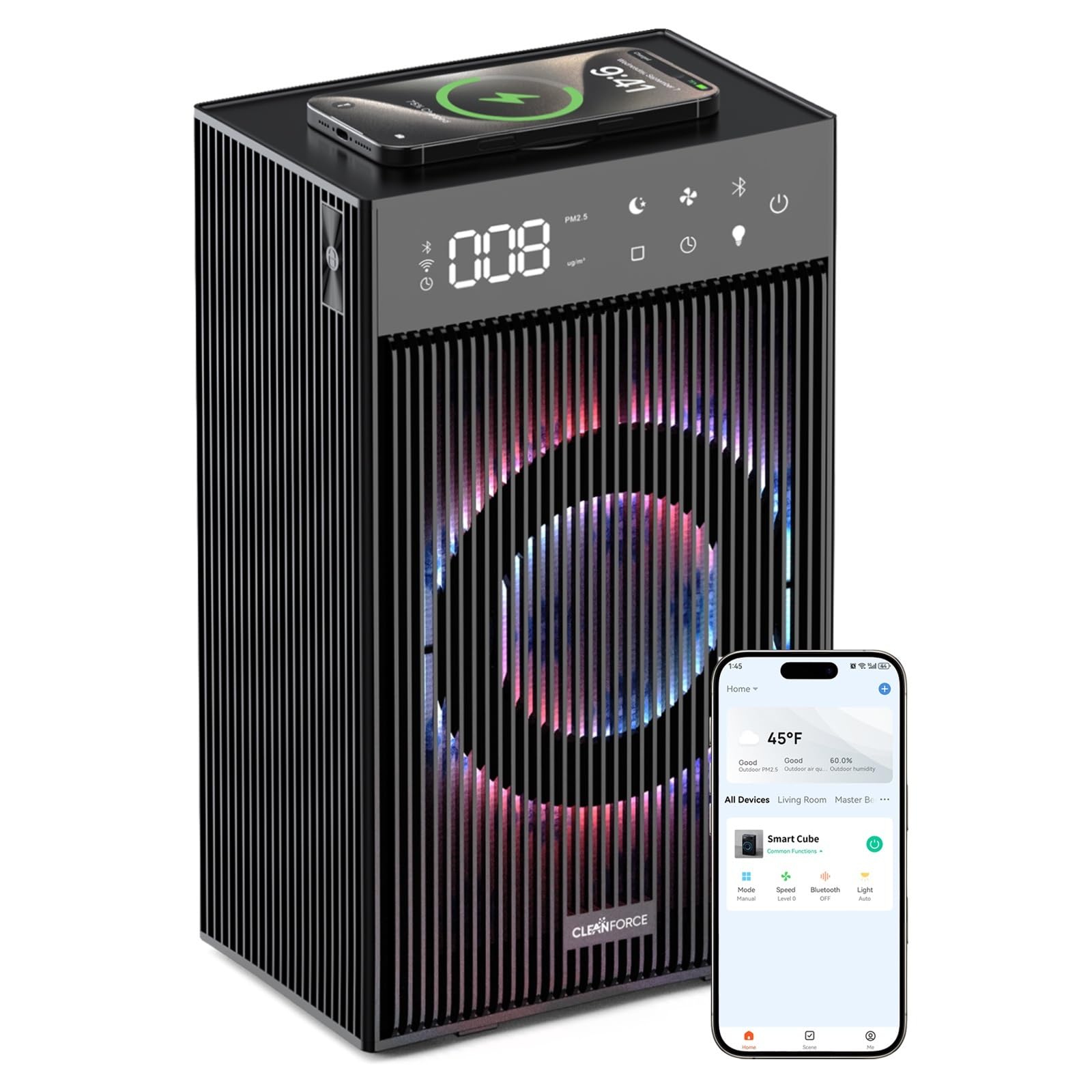
A feature‑packed unit that combines H13 HEPA purification with a Bluetooth speaker, wireless charging, aroma diffusion, and app control for large small spaces.
Why I picked it: I picked the CleanForce when I wanted to consolidate several bedside gadgets into one — it’s a loudspeaker, charger, diffuser, and an effective purifier in one footprint.
Best for: Tech‑minded users who want an all‑in‑one nightstand device and coverage for open small rooms.
Feature‑rich and on the pricier side compared with single‑purpose purifiers.
Pros
- 4‑in‑1: purifier, speaker, charger, diffuser
- H13 HEPA with antimicrobial tech
- App control and PM2.5 display
- Large coverage for a single unit
Cons
- High fan speeds are loud
- Large footprint compared to simple bedside units
- More expensive than basic purifiers
My take
I set the Cube in a living area where I needed purifier performance plus a speaker and wireless charger — it replaced four separate devices and simplified my setup.
Low speeds are whisper‑quiet and the PM2.5 readout is handy; just be prepared for louder operation when you push the top speeds — they move a lot of air, but sound like a vacuum.
If you want a single stylish device that does many jobs and you have the space, this is the most feature‑dense purifier I tested.
How I Choose a Small Air Purifier
Match unit size to your room
I always start by matching a purifier’s coverage to the room where I’ll run it. Small bedside purifiers are great for a sleeping zone, but won’t clear the air in an open living area.
Look for the manufacturer’s stated coverage or CADR and think about how often you want the air fully exchanged each hour.
- Bedroom/desk: compact units intended for ~100–200 sq ft
- Living room or open plan: choose units rated for larger coverage or multiple changes per hour
Filter type matters
I prefer True HEPA or equivalent for capturing fine particles like dust, pollen, and pet dander. UltraHEPA targets ultrafine particles if you need maximum capture.
If odors and VOCs matter, prioritize a unit with a dedicated carbon filter.
- HEPA/UltraHEPA for particles
- Carbon layer for smells and VOCs
- Ionizers and proprietary tech can help, but know they’re supplemental
Noise and sleep
I judge noise by whether I can sleep beside a unit on its low setting. Many compact models are whisper‑quiet on low but loud on boost.
If you need night‑quiet, prioritize sleep mode or units advertised as whisper‑quiet.
- Test low and high speeds in real life if possible
- Sleep mode should be barely audible
Smart features and sensors
Smart sensors and auto modes are helpful — I use them to avoid constant manual adjustments. App control is valuable if you want remote monitoring and alerts.
Remember that sensors read local air; placement near a vent or window can skew readings.
- Auto mode is convenient for day‑to‑day use
- App alerts help with maintenance and filter life
Running and maintenance costs
I factor in replacement filter prices and how often the manufacturer recommends swaps. A cheap unit with frequent filter changes can be more expensive over time.
Energy efficiency matters if you plan to run a unit 24/7; some compact models use as little power as a small light bulb.
- Budget for replacement filters every 6–12 months
- Check energy certifications if you’re cost-conscious
Frequently Asked Questions
Do small purifiers actually make a difference?
Yes — I find a correctly sized small purifier greatly improves air in a local area like a bedroom or office. Placement matters: put it where you spend time and avoid blocking the intake or outlet.
How often should I change filters?
In my experience most true HEPA and pre‑filters need attention every 6–12 months depending on use and pollution levels; pre‑filters may need cleaning more frequently.
Are ionizers and PlasmaWave safe?
I use ionizers occasionally for added capture of particles, but I disable PlasmaWave or similar tech around people with severe asthma just to be cautious. Check the manual and your comfort level before continuous use.
Can a small purifier remove smoke and odors?
A carbon filter helps with light odors and kitchen smoke. For heavy smoke or strong smells you’ll need a larger unit with dedicated carbon or run the purifier on high for longer periods.
Final Take
I’ve kept multiple purifiers from this list running around my home because different rooms and needs call for different tools. For a simple bedside solution I lean on the JINPUS or Holmes; for quiet bedrooms the Blueair is my favorite; and when I want full coverage and smart control the AirDoctor covers the most ground.
Pick the unit that matches the space you want to clean, factor in filter maintenance, and focus on noise and convenience — the right small purifier makes life noticeably more comfortable.
