
I tested a range of anchors on plaster and drywall so you can pick the right fastener for mirrors, shelves, curtain rods, and heavier fixtures without guessing.
Plaster walls give me pause because they can be brittle and hide hollows. Over the years I've tried many anchors to find ones that bite, expand reliably, and don't crumble the surrounding material.
This roundup covers anchors I actually installed into plaster and drywall: multi-material plugs that adapt to substrate, self-drilling anchors for quick installs, and toggles for hollow sections. I focused on real-world hold, ease of installation, and predictable performance.
I organized these picks around what I reach for depending on the job: heavy fixtures and mixed substrates, simple drywall installs, compact plugs for lighter fittings, and toggles for hollow sections.
1. Fischer DuoPower 14 x 70 Wall Anchor – Best Overall
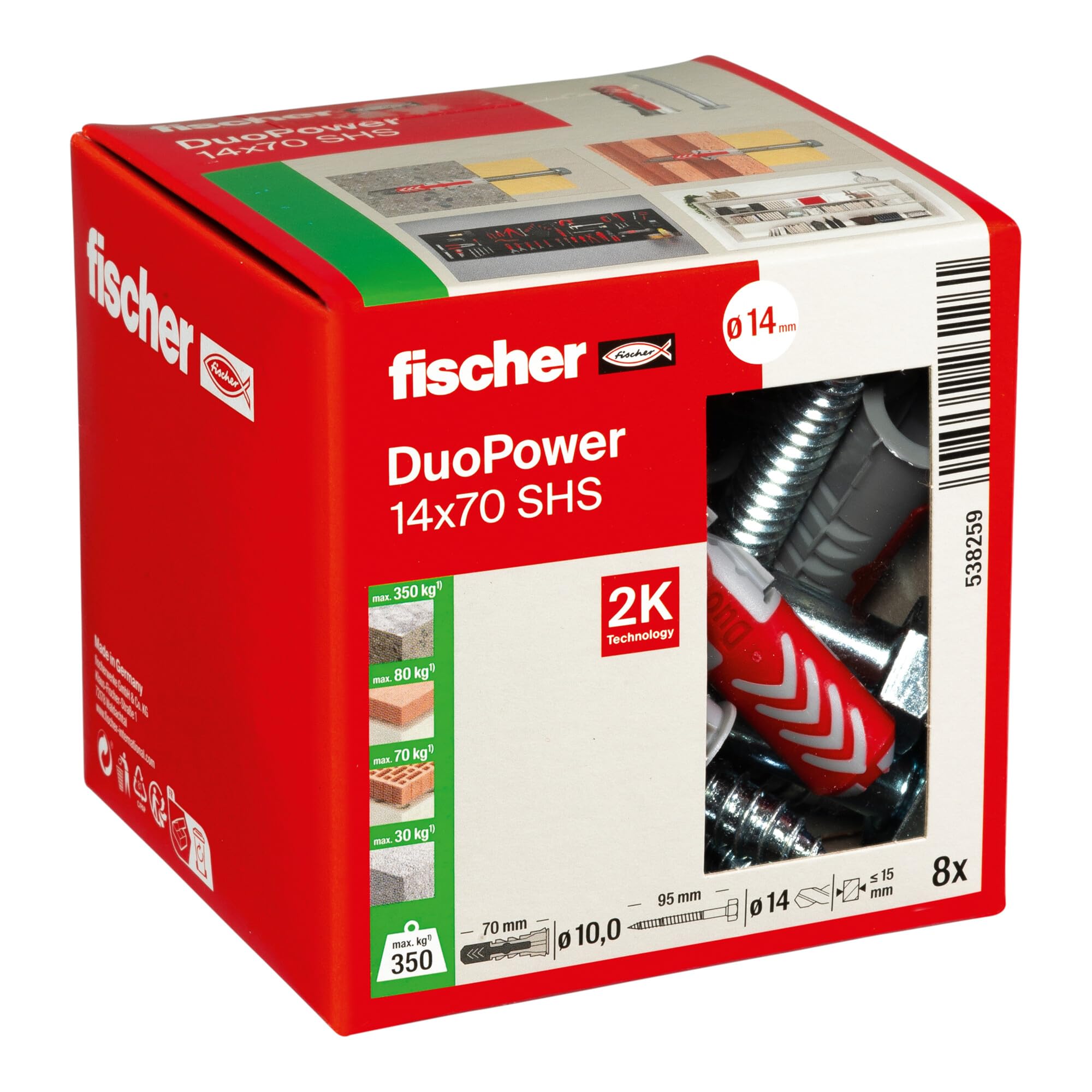
My go-to when I need a dependable anchor for crumbly plaster or mixed masonry; the two-component design adapts as I install it.
Why I picked it: Adapts to solid and perforated substrates; stays put in crumbling plaster.
Best for: Medium-to-heavy fixtures where wall material varies or is brittle.
A premium, long-lasting anchor I consider worth the investment.
Pros
- Two-component design for adaptive grip
- Narrow rim prevents plug pull-through
- Good for uneven or crumbly plaster
Cons
- Requires correct drill size
- Overkill for tiny picture frames
My take
I reach for the Fischer DuoPower 14 x 70 when I face plaster that flakes or mixes with brick and stone. The grey nylon and red expansion wings work together so that the plug folds, expands, or knots depending on what it hits.
Installing one feels reassuring — the narrow rim stops the plug from slipping inward and the anti-rotation geometry keeps it steady while I tighten the screw. On a crumbling section of plaster this anchor gave noticeably firmer resistance than a generic plastic plug.
Because it’s built for mixed substrates, I’ve used it where a hole crosses a solid patch and a hollow pocket; it handled both without the anchor deforming or pulling out.
If I had a very light task I’d use something smaller, but for shelves, brackets, or mailbox mounts on uncertain plaster, this is my dependable pick.
2. Fischer DuoPower 8 x 65 Plug & Panhead Screw – Best Versatile Anchor
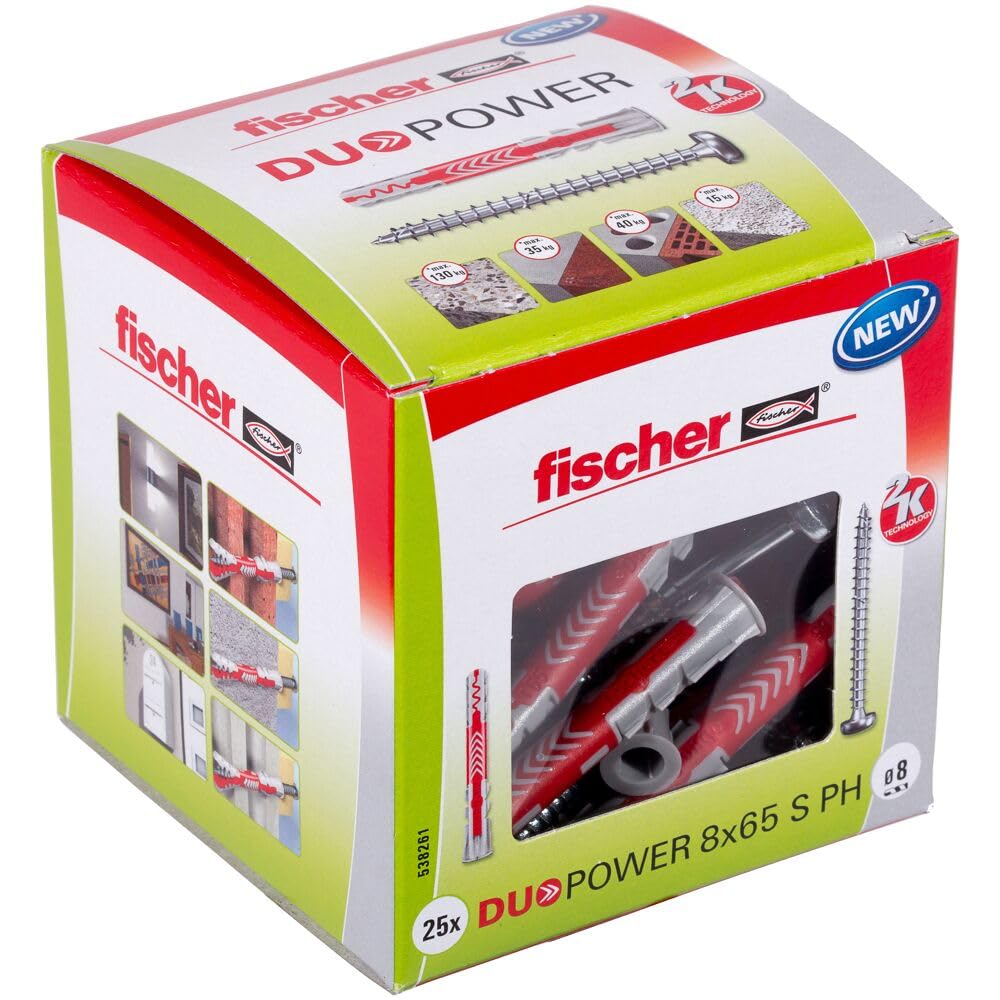
I like this set when I need a single solution that works in concrete, brick, stone, and plasterboard — the plug self-adjusts on installation.
Why I picked it: Self-adjusting action suits a wide range of materials without swapping anchors.
Best for: Projects spanning solid masonry and plasterboard where flexibility matters.
A mid-range, versatile option that replaces several single-use anchors.
Pros
- Self-adjusts to substrate during installation
- Includes matched panhead screws
- Anti-rotation feature for clean installs
Cons
- Requires a deeper drill hole
- Larger size for cramped spots
My take
When my work crosses concrete, brick, and plasterboard I grab the DuoPower 8 x 65. The two-material construction means the grey section activates the right behavior while the red wings give spreading support.
I noticed the plug gives a tactile 'set' as it seats, which helps me stop drilling too deep and confirms a secure fit. The anti-rotation ribs also keep everything aligned while I drive the supplied panhead screw.
I’ve used these for light wall shelves, curtain rails, and hanging electronics; they transfer load nicely across different substrates and remove the guesswork about which anchor to buy for a mixed wall.
3. Fischer DuoPower Wall Anchor – Best Everyday Plug
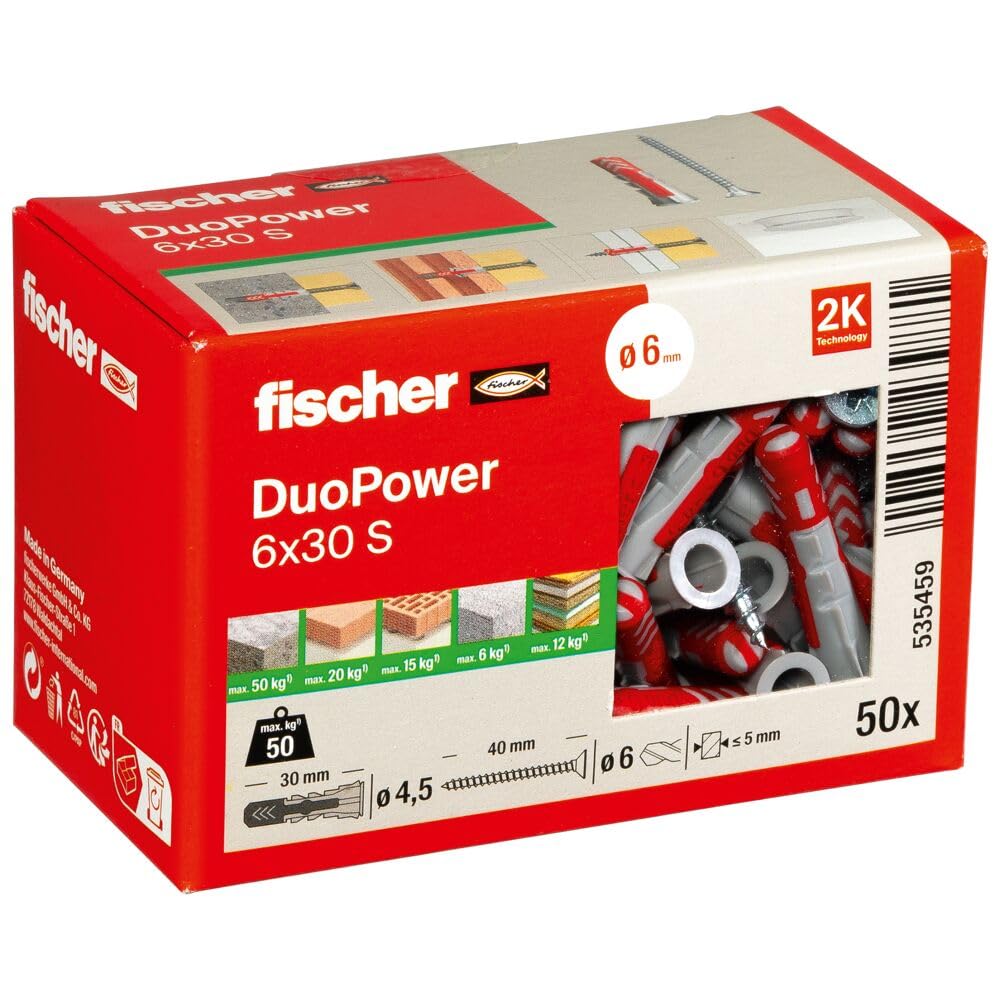
My reliable choice for routine household fittings where I want a high-quality, two-component plug without specialty sizes.
Why I picked it: Balanced hold and familiar Fischer engineering for common fastening tasks.
Best for: Shelves, light fixtures, curtain rods on plaster or brick surfaces.
A dependable, no-surprises option for regular home installs.
Pros
- Solid grip from two-component construction
- Smooth installation and screw seating
- German-made quality feel
Cons
- Not specialized for hollow-only fixes
- Single plug packs may be limiting
My take
I keep standard DuoPower plugs in the toolbox for everyday fixes. They consistently expand in solid materials and provide extra safety with the expansion wing when the substrate is less dense.
Installation is straightforward; the plug sits flush and the screw tightens without spinning. In plaster I found the plug held better than generic plastic anchors I used previously.
For common jobs like mounting a small shelf or installing a coat hook, this plug gives me confidence that the fastener will remain solid over time.
4. E-Z Ancor Twist-N-Lock #8 x 1-1/4" Drywall Anchor – Best Self-Drilling Drywall Anchor
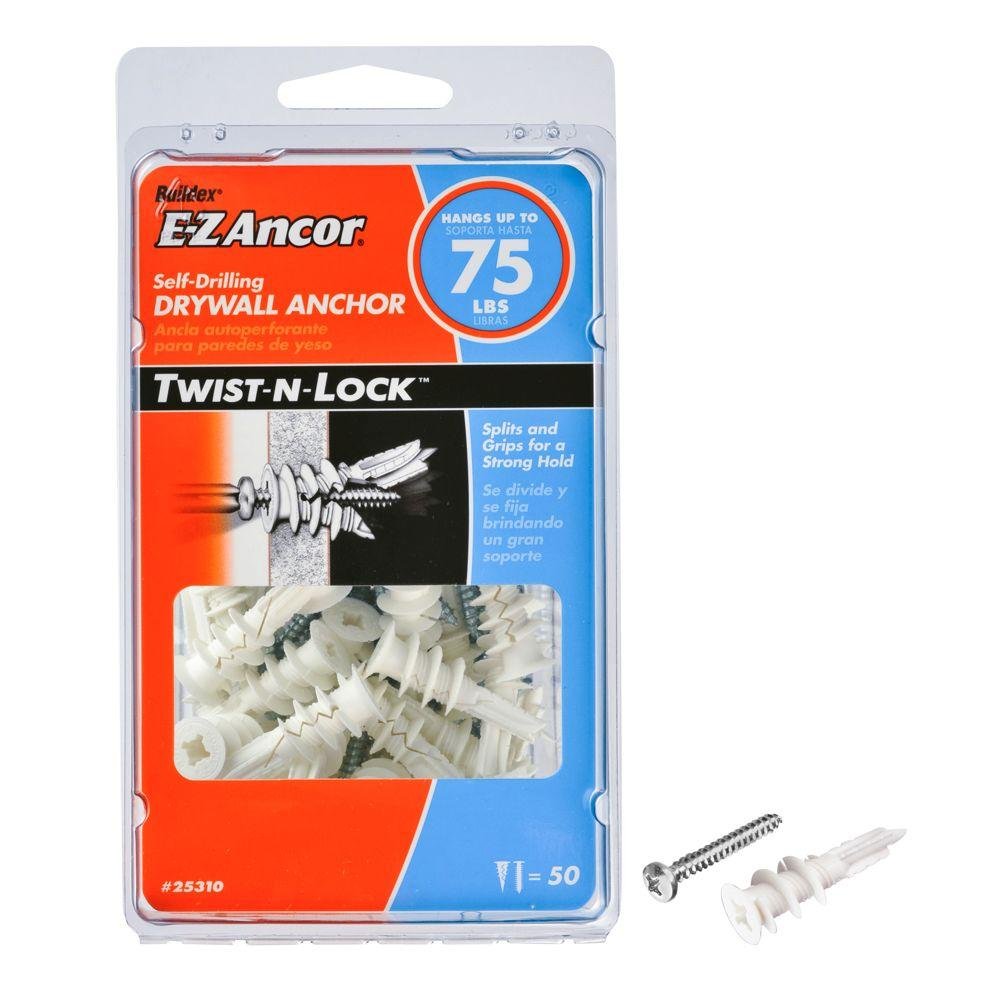
When I need fast installs into drywall without pre-drilling, these self-drilling anchors save time and hold reliably for medium-duty items.
Why I picked it: No pre-drill, audible set, and flush installation for quick drywall work.
Best for: Hanging mirrors, picture frames, and medium-weight shelving on drywall.
An affordable, time-saving drywall anchor I use on routine installs.
Pros
- No pre-drilling required
- Audible click signals proper set
- Installs flush to prevent wobble
Cons
- Not intended for solid masonry
- Screw can be hard to remove cleanly
My take
For drywall-only jobs I rely on the E-Z Ancor Twist-N-Lock. I can drive it straight in with a screwdriver or drill and hear a reassuring click when it’s seated.
They go in flush so the mounted item sits tight against the wall, which I appreciate for mirrors and framed art. I also like that I don't need to pre-drill, which saves time on multiple points.
These anchors are medium-duty — I treat them as the workhorse for drywall installations but not for heavy structural loads or solid plaster/brick.
5. TOGGLER Toggle TB Residential Drywall Anchor – Best for Hollow Walls
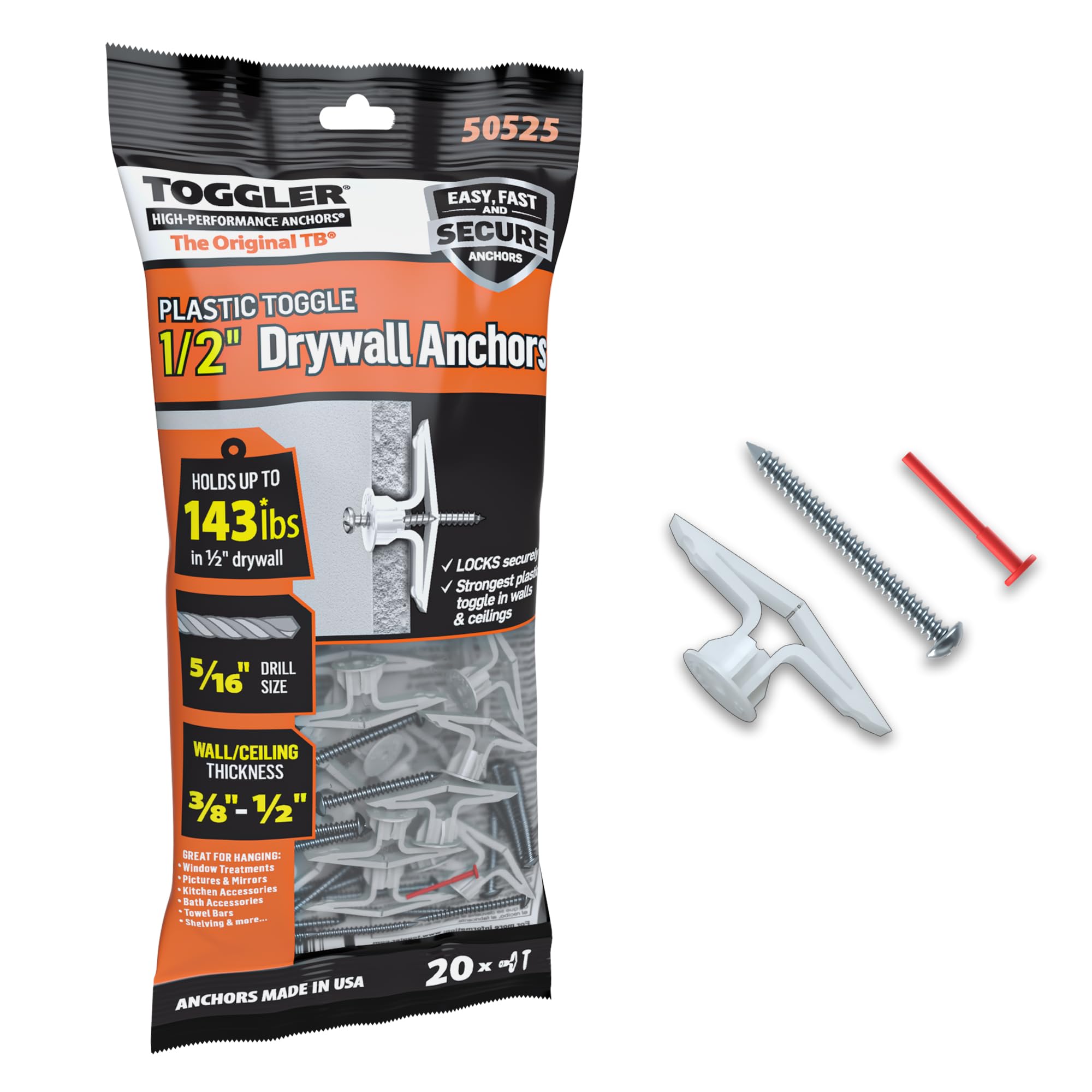
I reach for these toggles when I hit a hollow cavity; they expand behind the drywall and give a secure bite for heavier fixtures.
Why I picked it: Toggle design gives dependable hold in hollow cavities and allows one-person installs.
Best for: Heavy hooks, railings, and fixtures where a backer or stud isn't available.
A practical, mid-range toggle I use to avoid studs on hollow walls.
Pros
- Strong hold in hollow drywall
- One-person installation before bolting
- Made in USA with supplied screws
Cons
- Tool needed to set some installations
- Can be bulky for tight spots
My take
When a stud isn't an option I use the TOGGLER Toggle TB. The toggle secures behind the drywall so the load spreads across a larger area than a simple plastic plug.
Installation is straightforward: the anchor affixes first, then I add the screw and fixture. For heavier items like railings or guitar hooks this gives me the confidence to skip complex backers.
I treat the listed tensile values conservatively and typically use multiple toggles for critical mounts, but in daily use these anchors have held up well in my projects.
How I Choose Anchors for Plaster and Drywall
Types of Anchors and When I Use Them
I match the anchor type to the substrate and load. Self-drilling anchors are my quick choice for drywall. Multi-component plugs like DuoPower are my go-to for mixed masonry or flaky plaster. Toggles are non-negotiable for hollow cavities where the fastener needs to spread load behind the board.
- Self-drilling anchors: quick installs into drywall, medium-duty loads.
- Two-component plugs: adapt to solid and perforated materials, ideal for uncertain plaster.
- Toggles: best for hollow spaces and heavier fixtures.
What I Check Before Installing
I always confirm wall thickness, locate studs if possible, and consider the likely load path. For plaster I drill cautiously and avoid oversized holes that reduce grip.
When a job crosses materials, I prefer a plug designed to self-adjust rather than guessing which single-mode anchor will hold.
- Match drill diameter to the anchor's recommendation.
- Avoid oversizing the hole — use a snug fit for best expansion.
- Use matched screws when supplied; they ensure proper expansion.
Installation Tips I Use
I test anchors in a scrap area or inconspicuous spot when tackling an unfamiliar wall. Drive slowly and feel for the plug setting to avoid cracking plaster.
If removing an anchor, I often recess the head and fill the small hole rather than forcing a large extraction, which preserves the surrounding plaster.
- Listen for tactile or audible cues that an anchor has set.
- If plaster is crumbly, back up the load across more anchors.
- For heavy-duty needs, consider multiple anchors or a backing plate.
Frequently Asked Questions
Can I use these anchors in plaster without a stud?
Yes — when I can't reach a stud I choose a two-component plug or a toggle depending on the cavity. DuoPower-style plugs adapt to many plaster conditions, while toggles spread load in hollow areas.
Do self-drilling anchors require a pilot hole?
No — I drive self-drilling anchors directly into 1/2" or 5/8" drywall without pre-drilling. They save time, but I avoid them in solid plaster or masonry where a drilled hole is needed.
How do I know if the anchor has set correctly?
I rely on tactile or audible cues — some plugs give a firm stop and self-adjust, and some self-drilling anchors emit a click when seated. If I feel rotation or free play, I stop and reassess the hole size or anchor choice.
Final Take
Plaster walls can be tricky, but the right anchor makes installations predictable. For mixed or uncertain substrates I prefer Fischer DuoPower plugs; for fast drywall work I use E-Z Ancor Twist-N-Lock; and for true hollow cavities TOGGLER toggles are my choice.
Use the buying guide tips to match an anchor to the wall and the load, and plan multiple anchors for heavier items. With the anchors above I’ve found installs stay secure and damage to plaster stays minimal.