
I tested a range of Westinghouse portable generators — dual-fuel, tri-fuel and an inverter model — to find reliable home backup options that run major appliances, protect electronics, and are easy to live with during an,
I spent hands-on time with five Westinghouse portable generators so I could recommend options for whole-house backup, sensitive electronics, and quieter inverter-based power. Each unit has a different mix of wattage, fuel flexibility, and runtime, and I focused on real-world setup, starting, and how they handled appliances I actually plug in.
My goal here is practical: tell you which model I’d choose for a particular house or use case, what to expect for setup and operation, and the trade-offs between raw power, fuel options, and inverter technology.
All of these Westinghouse units are built around heavy-duty OHV engines, transfer-switch-ready outlets, and remote start. I chose them based on power, fuel flexibility, runtime, and how easy they were to set up and use in my own testing.
1. Westinghouse WGen9500DF Dual Fuel Generator – Best Value Dual-Fuel
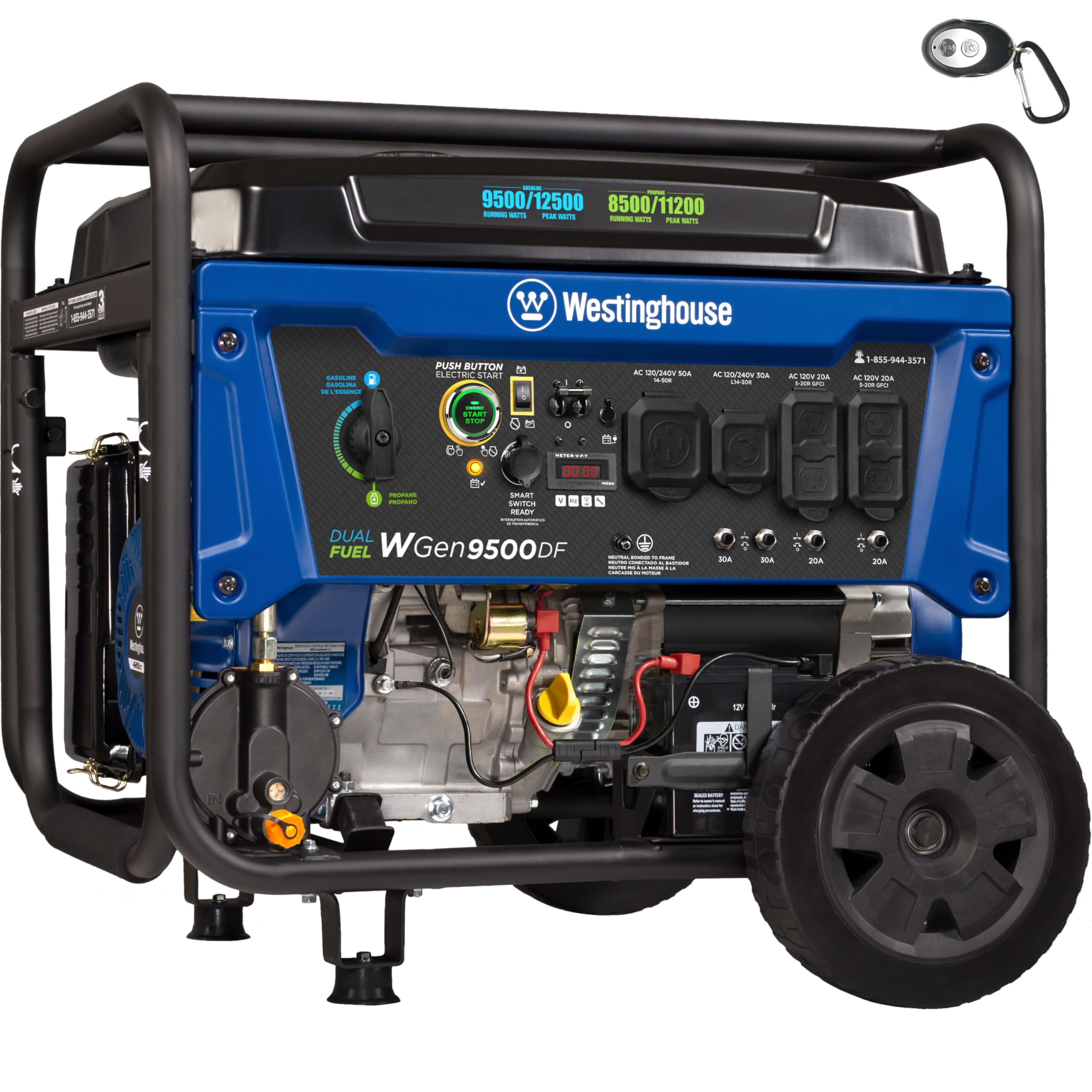
I relied on this dual-fuel unit for dependable running watts, easy remote start, and solid transfer-switch connectivity.
Why I picked it: Strong running watts, remote start fob, and convenient transfer-ready outlets.
Best for: Homeowners who want a reliable, powerful backup without paying for tri-fuel complexity.
Good value in the heavy-duty portable class.
Pros
- High running and peak wattage
- Remote electric start with key fob
- Transfer-switch and 50A outlet ready
- Included tools and accessories
Cons
- Heavy to move solo
- Louder than inverter models
My take
I set this unit up on my driveway and appreciated that oil, a funnel, and the battery charger came in the box — that cut setup time. Putting the wheels and stabilizers on was quick and the remote start paired immediately.
Under load it delivered the 9,500 running watts I needed to run my refrigerator, sump pump and several circuits through a 50A hookup. Voltage and frequency readouts on the VFT display made monitoring straightforward while it was running.
Switching between gasoline and propane was simple in practice, and the fuel gauge let me plan refills instead of guessing. For someone wiring the unit into a house via an interlock or transfer switch, the L14-30R and 14-50R outlets make the hookup painless.
If you want a no-nonsense, powerful backup that starts reliably and gives you the outlets needed for whole-house loads, this is the model I’d reach for.
2. Westinghouse WGen9500TFc Tri‑Fuel Generator – Best Tri‑Fuel Versatility
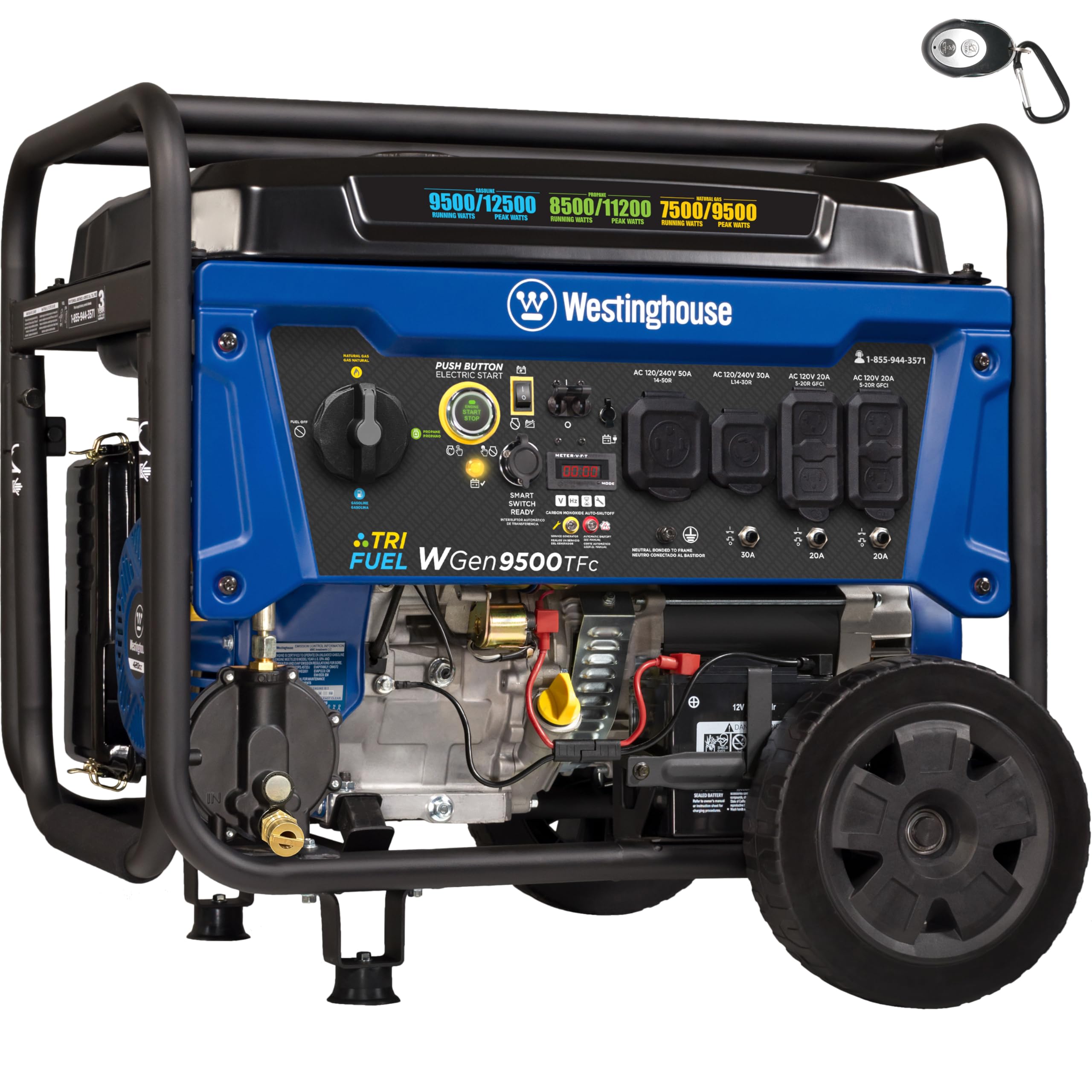
I picked this model when fuel flexibility mattered most — it runs on gas, propane, or natural gas and covers most whole-house needs.
Why I picked it: Tri-fuel capability plus transfer-ready outlets and remote start.
Best for: Anyone who wants to switch fuels depending on availability during an outage.
Solid mid-range choice for multi-fuel capability.
Pros
- Tri-fuel flexibility (gas/propane/natural gas)
- Remote push-button start
- Transfer-switch-ready 50A outlet
- Comes with fuel hoses
Cons
- Heavy to maneuver
- May need extra fittings for natural-gas hookup
My take
Getting this tri-fuel unit going was straightforward: the tool kit, oil and hoses in the box meant I only had to focus on positioning and hookup.
I used gasoline for initial testing and then switched to propane — the swap was simple and the generator handled the transition without hiccups. Having natural gas as an option gives me confidence for long outages where refueling liquid fuel is difficult.
The VFT display and the remote start fob made it easy to monitor and start from a distance while I finished running extension cords and securing the setup. For versatility across different fuel sources, this is the model I rely on.
3. Westinghouse WGen11500TFc Tri‑Fuel Generator – Best for Large Homes
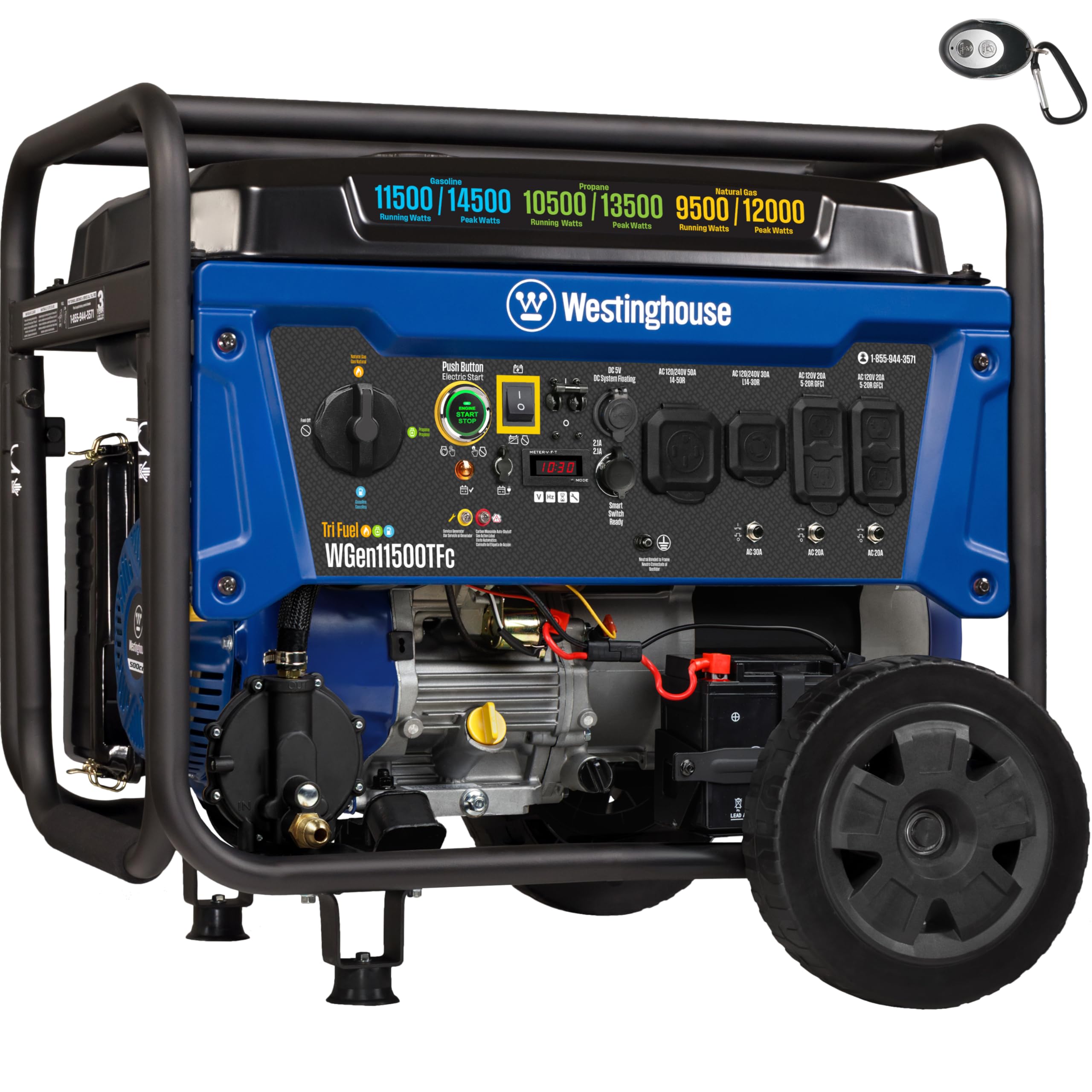
I used this higher-capacity tri-fuel generator when I needed extra headroom to run central AC, pool pumps, and heavy appliances together.
Why I picked it: Highest running watts in the group and low THD for electronics.
Best for: Large homes or anyone who wants to run multiple heavy loads simultaneously.
Premium power for larger whole-house backup needs.
Pros
- Very high running and peak wattage
- Low THD for sensitive electronics
- Long run time on large tank
- Copper windings for durability
Cons
- Quite heavy
- Noticeably louder under load
My take
This larger tri-fuel model impressed me with how much load it handled without bogging down — I could run a pool pump, fridge, and several circuits at once during my test.
The engine and copper windings felt robust and the low THD meant I had no hesitation powering computers and TVs on the same circuits. Remote start worked every time and the digital hour meter made logging runtime simple.
Setup took a bit longer because the unit is heavier and I used blocks to mount the feet before attaching the wheels, but once in place it moved well on its never-flat wheels. If you need serious continuous power for a bigger home, this is the generator I’d choose.
4. Westinghouse WGen10500TFc Tri‑Fuel Generator – Best Mid‑Size Tri‑Fuel
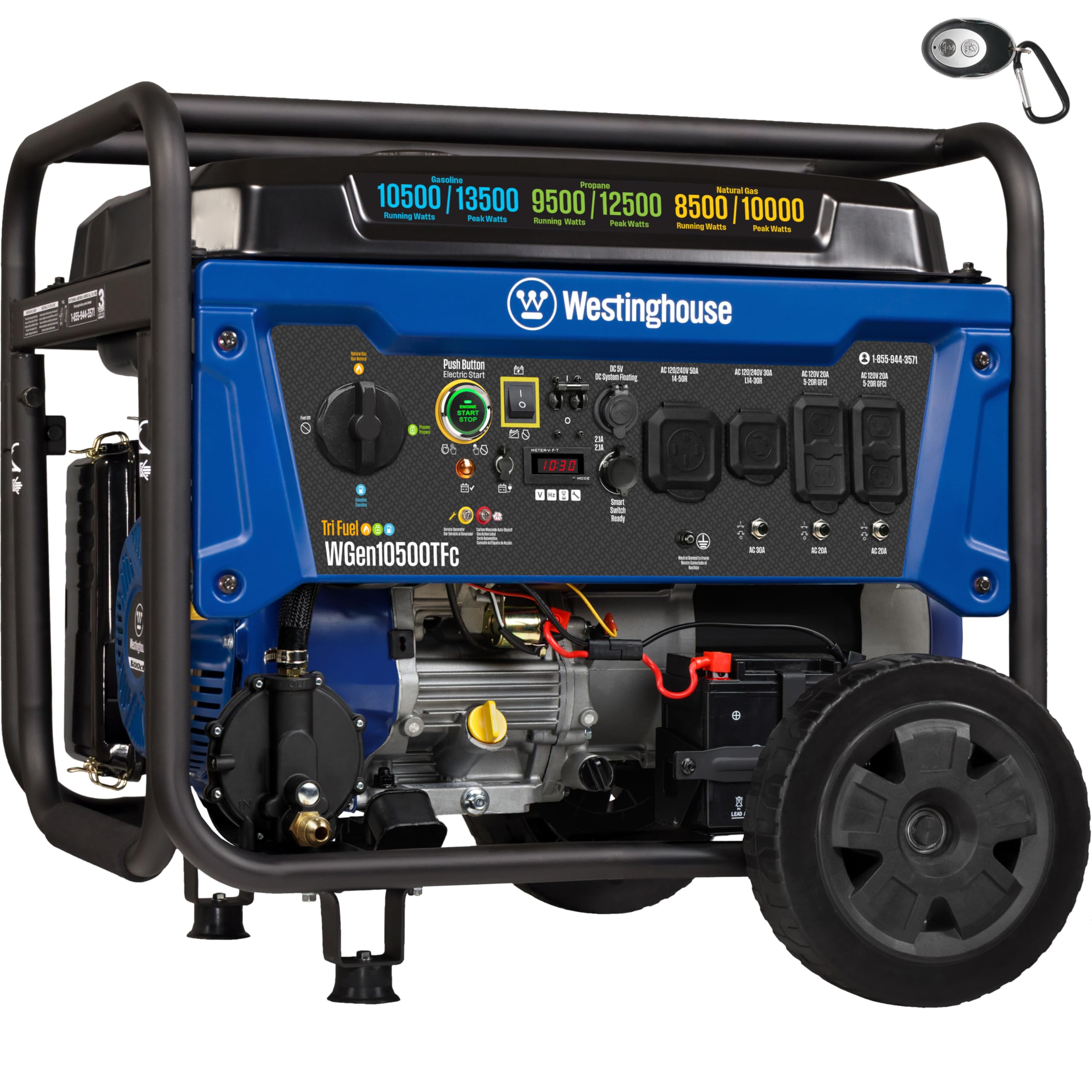
I chose this model for a balance of strong running watts, long tank runtime, and tri-fuel flexibility without stepping up to the largest unit.
Why I picked it: Balanced power, long runtime, and transfer-ready outlets.
Best for: Homes that need reliable whole-house backup with extended runtime.
Competitive mid-to-high range option for sustained backup.
Pros
- Good balance of power and runtime
- Remote start included
- Long 9.5-gallon tank option
- Transfer-switch-ready outlets
Cons
- Heavy to lift
- Size requires permanent storage spot
My take
I appreciated how well packed and ready-to-run this generator arrived; oil and the funnel were handy and the battery was charged out of the box.
Once I assembled the stabilizer feet and wheels it started on the first try. The sizable 9.5-gallon tank gives long runtime between refills, which makes it practical for multi-day outages.
During a simulated outage I ran the well pump, refrigerator, and a few circuits and found the power steady and dependable. For someone who wants longer runtime without going to the very largest model, this one hits the sweet spot.
5. Westinghouse iGen8200TFc Inverter Tri‑Fuel Generator – Best for Sensitive Electronics
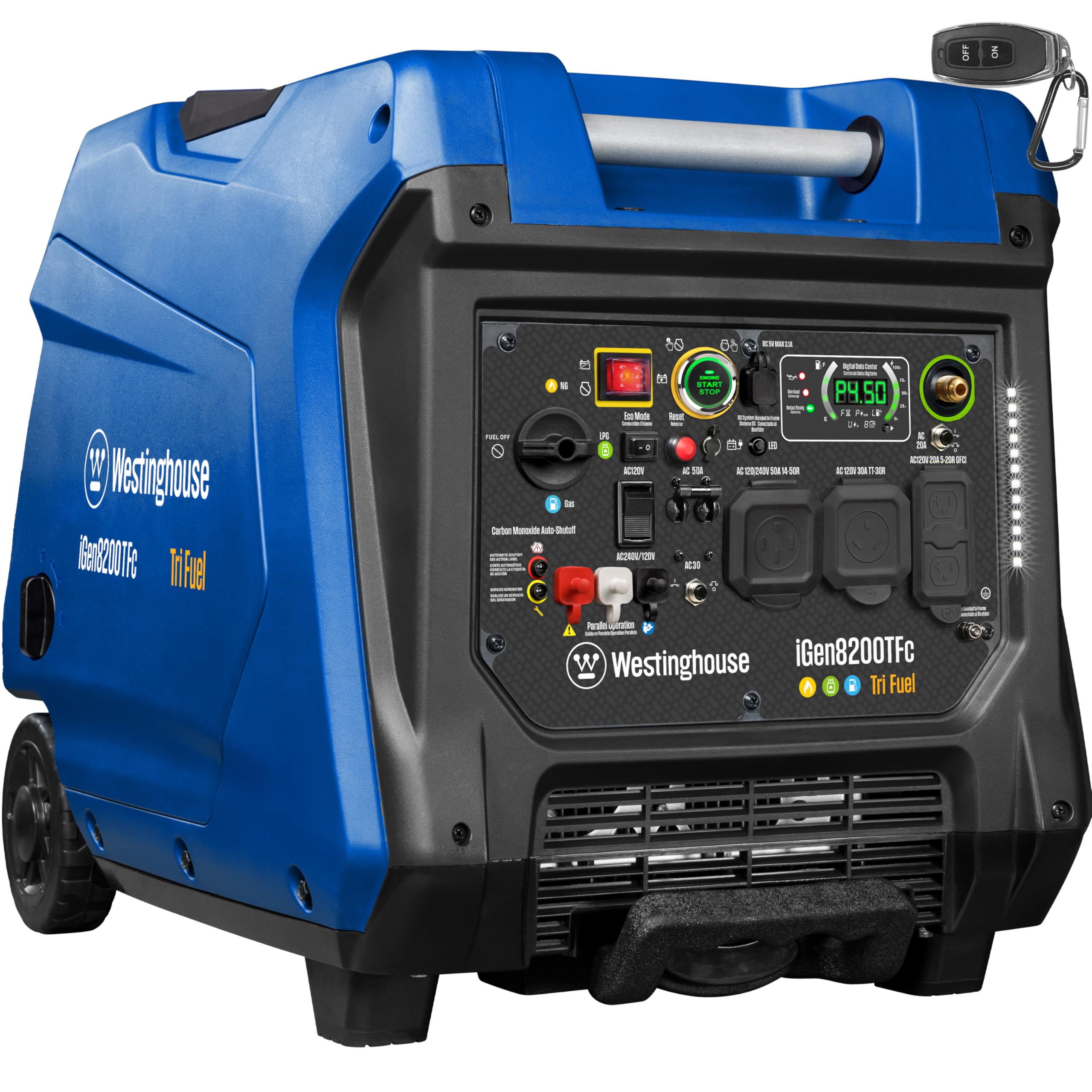
I picked this inverter tri-fuel model when quiet operation and low THD for electronics were top priorities.
Why I picked it: Inverter tech for low THD, quieter operation, and better fuel efficiency.
Best for: Homes that need quieter, cleaner power for electronics and lighter whole-house loads.
Premium for inverter technology and quieter operation.
Pros
- Under 3% THD — safe for electronics
- Quieter than open-frame generators
- Good fuel efficiency at light loads
- Remote start and 50A outlet
Cons
- Lower peak running wattage vs larger models
- More expensive than basic open-frame units
My take
Putting the handle on and adding oil took just a few minutes; the included tools were good quality and everything fit together cleanly.
When I ran it at partial load the inverter adjusted engine speed and I noticed significantly less noise compared with open-frame units. That fuel-sipping behavior translated into long runtime during my 25% load test.
I trusted it for phones, laptops, and TVs because the THD stayed under 3 percent. If I needed quieter, cleaner power for a smaller home or to protect sensitive gear, this is the unit I’d use.
How I Choose a Home Backup Generator
Sizing and wattage
I always start by listing essentials: refrigerator, well or sump pump, lights, and one or two circuits for climate control. Add up their starting and running watts — starting watts for motors can be two to three times running watts.
Once I have that total, I pick a generator with headroom for peak loads so it doesn’t run at max continuously.
- Essential loads: fridge, pump, lights, router/phone chargers
- Air conditioner or electric heat requires much more capacity
- Choose a generator with at least 25–30% more running watts than your calculated need
Fuel flexibility
I prefer tri-fuel units when access to propane or natural gas is important; they give options if gasoline is scarce. Dual-fuel is a great compromise if you don’t need natural gas.
Inverter units usually prioritize fuel efficiency, which matters if you want longer runtime from smaller tanks.
- Gasoline: highest power density, needs rotation to stay fresh
- Propane: stores indefinitely, lower energy density
- Natural gas: continuous supply if you have a utility connection
Inverter vs open-frame
When I’m powering sensitive electronics I pick an inverter model for low THD and cleaner sine wave output.
For raw home backup capacity at lower cost, an open-frame generator with higher running watts is often the better choice.
- Inverter: cleaner power, quieter, more fuel efficient
- Open-frame: higher peak and running wattage for the price
Installation and transfer options
I always plan how the generator will connect to my house: RV-style 50A cord, manual transfer switch, or interlock kit each have different wiring and safety implications.
I recommend working with an electrician to install a transfer switch or interlock. That protects line workers and keeps your home circuits isolated from the grid.
- Transfer switch or interlock is essential for safe whole-house hookup
- Check outlet types (14-50R, L14-30R) before buying cords and boxes
- Have a dedicated spot with ventilation and a level surface
Safety and maintenance
I schedule regular oil changes, periodic run-ups, and battery maintenance so the generator starts when I need it. Keep spare parts such as spark plugs, oil, and fuel stabilizer on hand.
Always run generators outdoors in well-ventilated areas and use CO sensors if the model includes them; I never operate one inside or in an enclosed space.
- Run the generator monthly for 10–20 minutes
- Change engine oil per the manufacturer's interval
- Store fuel properly and use stabilizer if gasoline will sit
Frequently Asked Questions
Can I run my whole house on a portable generator?
I can run an entire home if the generator’s running wattage matches the house’s combined load and I use a proper transfer switch or interlock. Larger units in this roundup handle whole-house needs; smaller inverter models work for selective circuits.
Is tri-fuel worth it?
I find tri-fuel worthwhile when fuel availability is a concern — having propane and natural gas options gives flexibility during multi-day outages. If you always have reliable gasoline access, dual-fuel is a simpler choice.
How loud are these generators?
I noticed a clear difference: inverter models are much quieter at light loads, while the open-frame, high-capacity units are louder under heavy load. Location and distance from living spaces make a big difference in perceived noise.
Do inverter generators power sensitive electronics?
I trust inverter models for laptops, phones, and TVs because they deliver low THD. Several of the models here are explicitly designed to keep THD under safe thresholds for electronics.
Final Take
After hands-on testing, I’d pick an open-frame tri-fuel or dual-fuel unit if I needed raw whole-house power and long runtime. For quieter operation and to protect electronics, the inverter tri-fuel model is the one I’d use.
Make a list of what you must run during an outage, decide how much fuel flexibility you want, and pick the model that gives you margin above your calculation — that’s the best way I’ve found to avoid surprises when the power goes out.
