
I tested silicone and acrylic caulks on trim, baseboards, and exterior gaps so you can pick the right sealant for paintability, waterproofing, and durability.
I spend a lot of time sealing trim and baseboards, so I selected products that cover the range of needs I run into: paint-ready latex for quick finish work, 100% silicone for water-prone areas, and budget options for routine touch-ups.
Each product here earned a spot because I’ve used it on real projects—doors, window trim, bathroom thresholds, and exterior sills—and I’m sharing where each one shines and where it doesn’t.
For baseboards I prioritize paintability when painting is planned and 100% silicone where water or heavy movement is expected; acrylic-latex caulks make the best compromise for most interior trim jobs.
1. GE All Purpose Silicone Caulk (Clear) – Best Overall
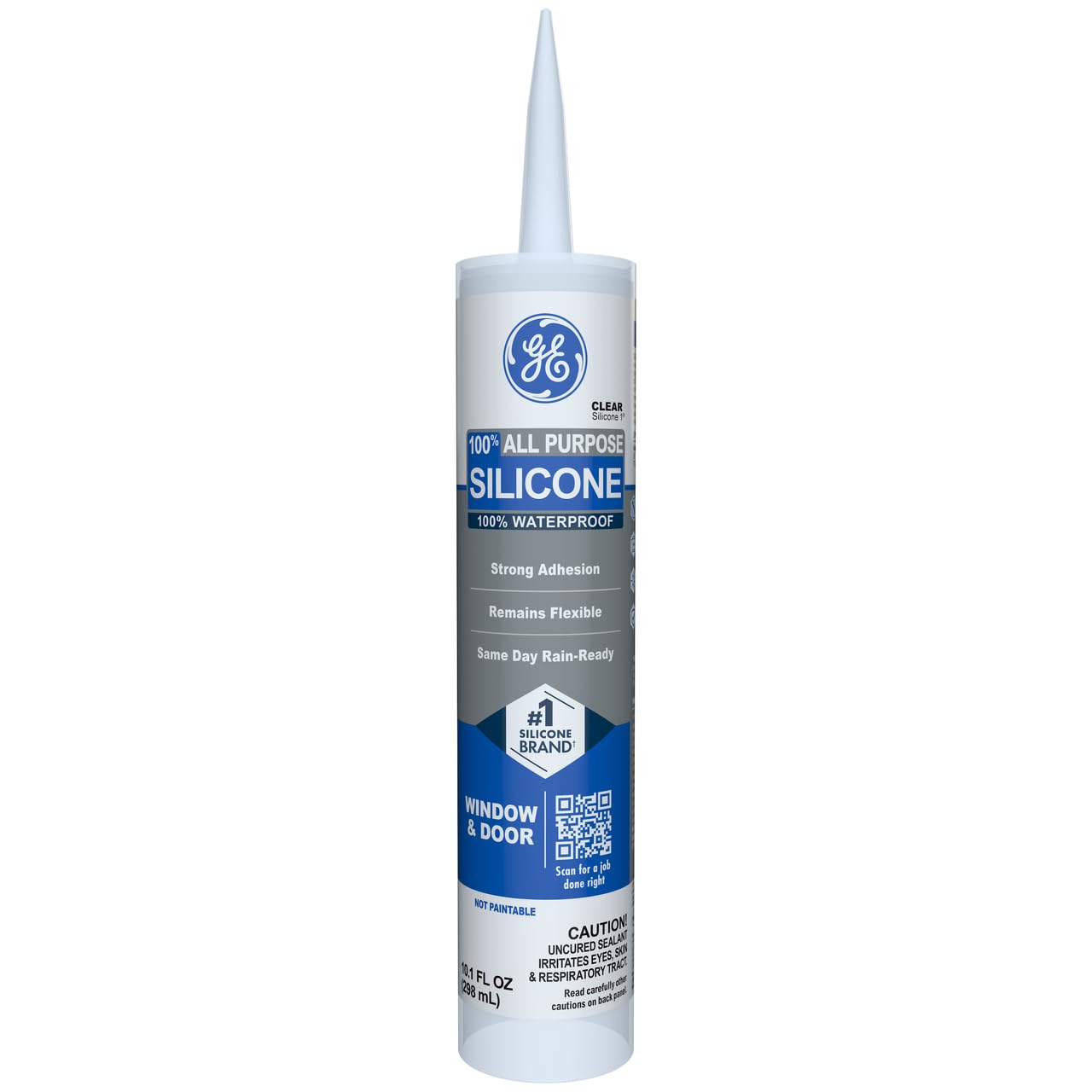
A 100% silicone, clear sealant that gives a durable, waterproof seal and fast rain readiness.
Why I picked it: I chose it for its full-silicone formula, strong adhesion, and quick rain-ready time.
Best for: Sealing gaps where water resistance and a discreet clear finish matter.
A solid mid-range silicone—worth the cost for long-lasting waterproofing.
Pros
- 100% waterproof silicone
- Strong adhesion to many materials
- Same-day rain-ready in about 12 hours
- Clear finish blends into trim
Cons
- Strong odor during application
- Not paintable once cured
- Requires solvent for full cleanup
My take
I reach for this GE All Purpose Silicone when I need a truly waterproof joint. The clear formula goes on smoothly and knocks down to a clean bead that disappears against white trim and tile.
On a kitchen sink and around exterior light fixtures I saw reliable adhesion and a seal that handled wet conditions without pulling away. Its same-day rain-ready claim held up for me—after roughly half a day the bead resisted moisture.
The trade-off is the smell. I work with ventilation whenever I use this; it can be eye-watering in small, closed rooms. If you need to paint over a baseboard, I use a paintable acrylic instead because silicone won’t accept paint.
Overall, this is my go-to when durability and waterproofing are the priority and a clear, unobtrusive finish is desired.
2. DAP Alex Plus Acrylic Latex Caulk (White) – Best Paintable
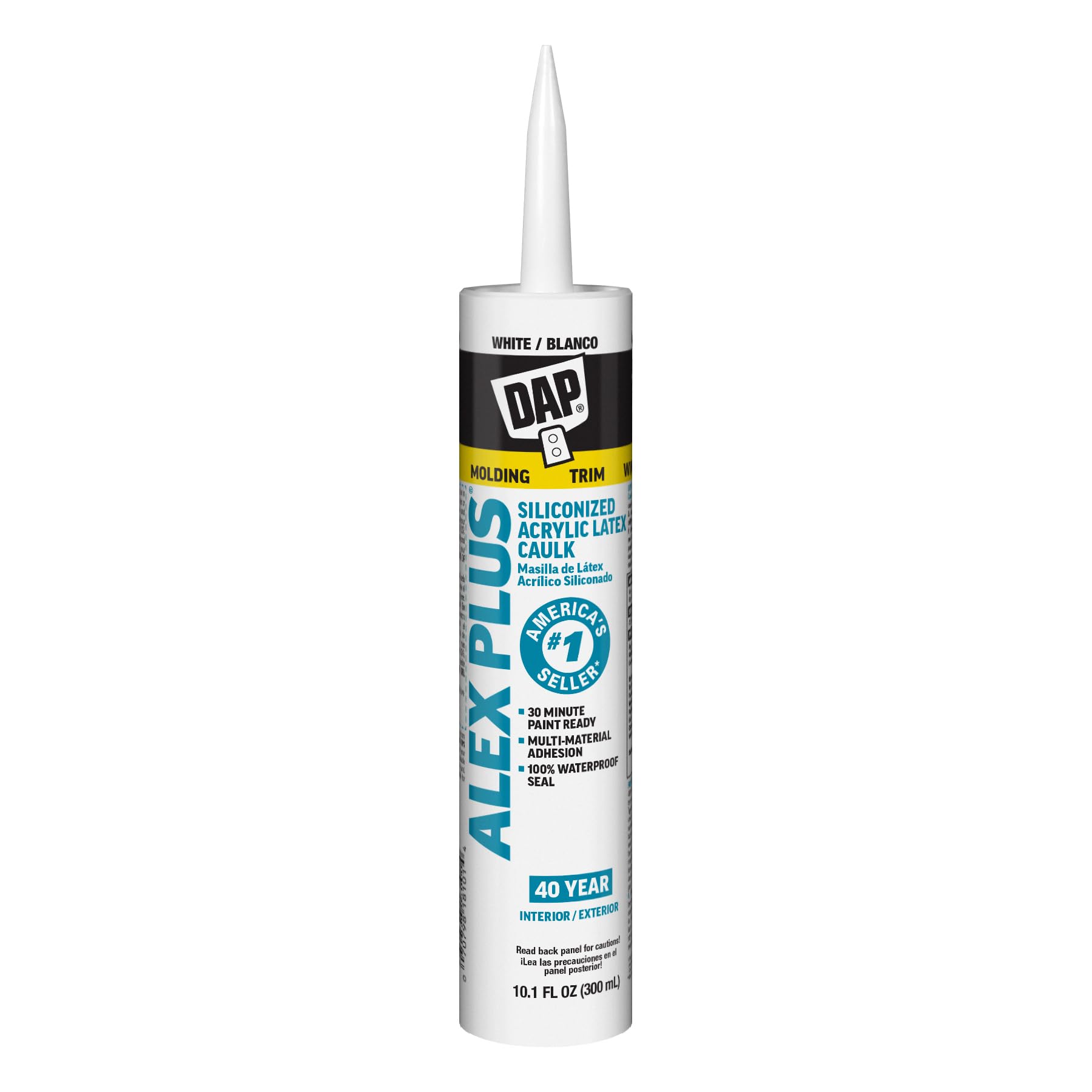
A siliconized acrylic-latex caulk that tools easily, cleans up with water, and paints quickly.
Why I picked it: I picked it for fast paintability and low odor, which speeds finishing on trim jobs.
Best for: Baseboards, trim, and molding when I plan to paint right away.
An affordable, professional-feel option that saves time on paint projects.
Pros
- Paintable in about 30 minutes
- Low odor and water cleanup
- Siliconized for flexibility
- Smooth, easy tooling
Cons
- Occasional dried bits in tube
- Not as waterproof as silicone
My take
Alex Plus is the product I use when a quick paint job is on the schedule. It tools silky-smooth, and the 30-minute paint window genuinely shaves time from a project.
I taped and filled gaps on baseboards, wiped the excess with a damp cloth, and started painting within an hour with no bleeding or shine-through. The siliconized formula keeps the bead flexible so it resists cracks as the house settles.
Small annoyances showed up occasionally—some tubes have little dried flecks near the plunger or rim—but they didn’t affect the finished joint once I removed the bits before applying.
For interior trim work where appearance and quick turnaround matter, this is my first choice.
3. DAP Acrylic Latex Caulk Plus Silicone (White) – Best Value
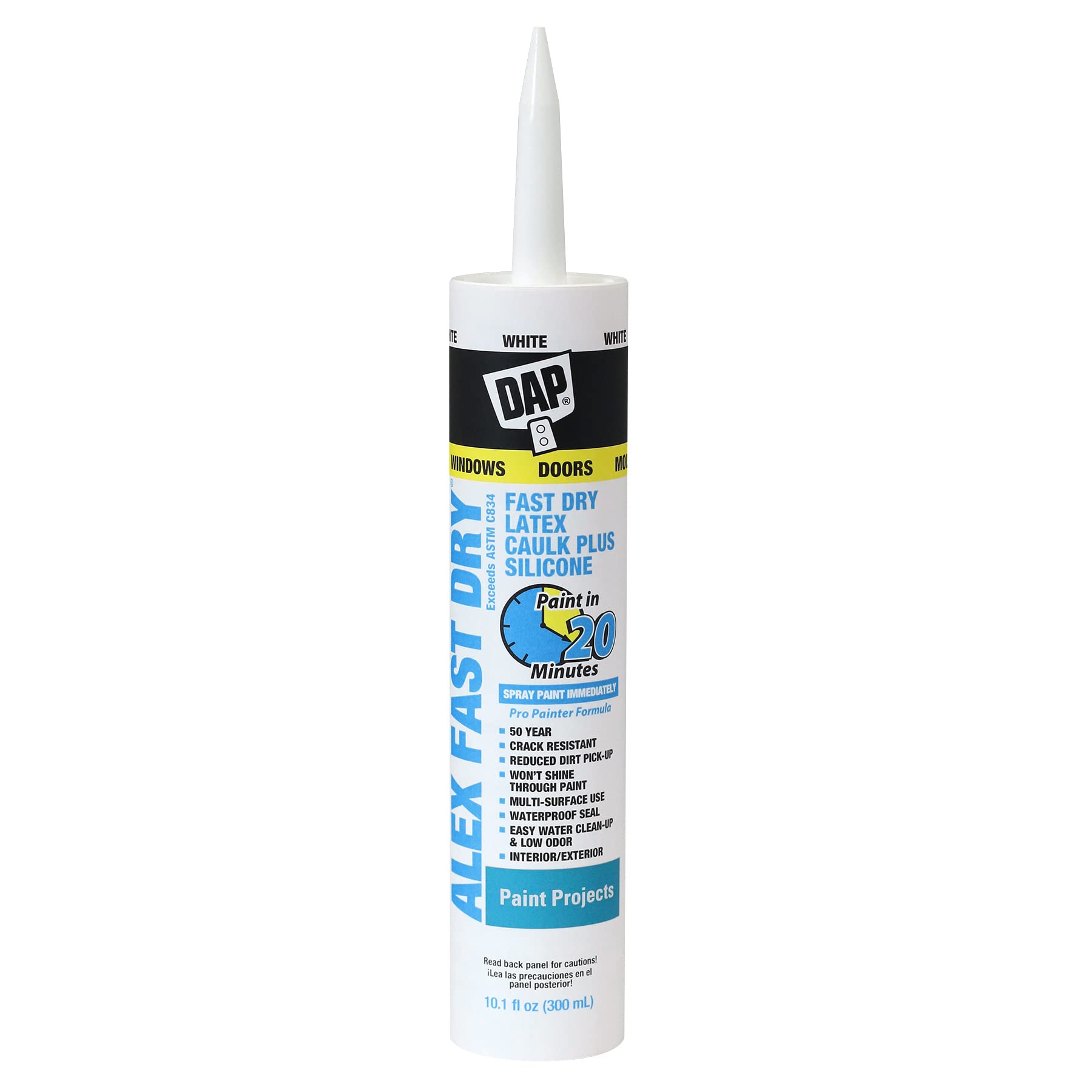
A budget-friendly acrylic-latex with silicone additives, paintable and backed by a long durability claim.
Why I picked it: I chose it for everyday touch-ups where cost and decent performance matter.
Best for: General-purpose baseboard sealing and smaller trim fixes.
Very affordable—great for routine maintenance and multiple small jobs.
Pros
- Paintable in 40 minutes
- 35-year durability guarantee
- Indoor/outdoor use
Cons
- Some tubes can ooze after use
- Matte finish may need touch-ups
My take
When I’m doing routine trim work or multiple small gaps, this DAP formula gives me reliable results without fuss. It dries to a matte white that blends well under paint.
Application is straightforward and cleanup is simple with water. I’ve noticed occasional oozing from the tube if left under pressure, so I keep a paper towel handy while tooling.
The product’s durability claims and flexible cured bead make it dependable for baseboards, and its low cost lets me stock up for whole-house touch-ups.
4. GE Advanced Silicone 2 Window & Door Sealant (Light Gray) – Best for Exterior
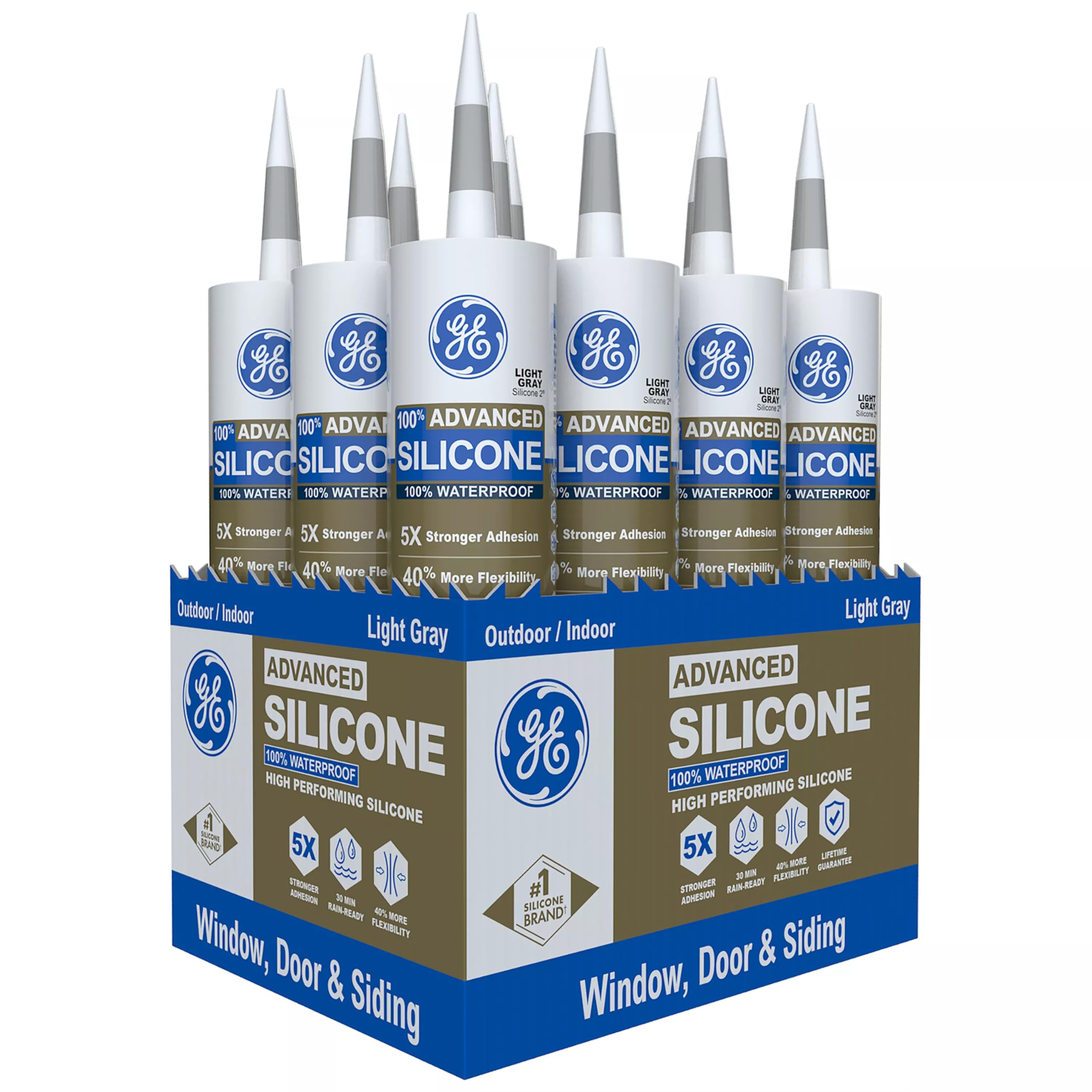
A neutral-cure, low-odor silicone that cures fast and offers extra flexibility and adhesion for exterior trim.
Why I picked it: I use it outdoors because of the neutral-cure low odor, quick rain readiness, and superior flexibility.
Best for: Exterior baseboards, windows, doors, and trim exposed to weather and movement.
A higher-end, bulk-friendly choice for larger exterior projects.
Pros
- Low-odor neutral-cure silicone
- Rain-ready in about 30 minutes
- 40% more flexible than many silicones
- Excellent adhesion to many surfaces
Cons
- Higher cost per tube
- Light gray may need color matching
My take
For exterior trim and windows I prefer the Advanced Silicone 2. Its neutral-cure chemistry produced noticeably less odor in my workshop and around living spaces compared with old-school acetic silicones.
I used it on door frames and siding seams; the bead held under temperature swings and stayed flexible rather than brittle. The 30-minute rain-ready claim matched my experience on warm days.
Application felt easier to manage than some tubed silicones, and cleanup off tools was straightforward when I caught it before skinning. Because it’s sold in multi-packs, I keep several tubes on hand for full-entryway or whole-house exterior work.
How I Choose Caulk for Baseboards
Match the caulk to the job
I always start by deciding whether I need paintability or waterproofing. If I’m painting baseboards, acrylic-latex (often siliconized) wins for its quick paint window. If the area is wet or outdoors, 100% silicone is the safer bet.
Think about movement: baseboards near doors or floor transitions move with temperature and settling. I favor more flexible formulas in those spots.
- Paint over? Use acrylic-latex or siliconized acrylic.
- Wet or exterior? Choose 100% silicone.
- High movement? Look for increased flexibility claims.
Key specs I check
Cure time and rain readiness matter when I’m scheduling work around weather. Faster rain-ready or water-ready times let me finish projects on tighter timelines.
Odor and cure chemistry affect where I use the caulk. I avoid strong-acidic-odor silicones indoors and pick neutral-cure low-odor silicones when indoor application is unavoidable.
- Paint time: 30–40 minutes is ideal for trim.
- Rain-ready: 12–30 hours varies—plan accordingly.
- Odor: low-odor or neutral-cure for indoor work.
Application tips that save time
Preparation makes the result look professional. I remove old caulk, clean dust and oils, and keep a damp rag handy for cleanup. A light bead and steady motion gets a smoother finish than overfilling gaps.
Tooling immediately after application gives the cleanest joint. I use a finger dampened with a little soapy water for latex and a dedicated tooling pad for silicone.
- Cut a proper nozzle angle for bead control.
- Tool within minutes for best adhesion and finish.
- Use ventilation when working with strong-smelling silicones.
Frequently Asked Questions
Can I paint over silicone caulk?
I don’t paint over 100% silicone because paint won’t stick reliably. For paintable baseboards I use acrylic-latex or siliconized acrylic products that accept paint after their listed paint time.
How long before I can paint a fresh bead?
From my experience, siliconized acrylics like DAP Alex Plus are paintable in about 30 minutes, while some acrylic-latex formulas take around 40 minutes. Always follow the product’s specified paint time and test a small area if unsure.
Do all silicones smell the same?
No. I’ve found acetic-cure silicones can have a sharp vinegar-like odor, while neutral-cure silicones (marketed as low-odor) are much gentler and more comfortable for indoor use.
Final Take
If I need paintability and a fast finish on baseboards, I reach for DAP Alex Plus. For water-prone areas and outdoor trim I trust GE’s silicone formulas, and for routine, budget-friendly jobs the DAP acrylic-latex value option covers most needs.
Pick the product that matches the conditions—paint, movement, and moisture—and prep and tool the bead carefully for the best long-term result.
