
I tested five fertilizers I trust on trees and landscape plants. From quick-soluble formulas that feed instantly to slow-release pellets that feed for months, I explain when I use each one and how I apply them for the th
I work with trees in yards and containers, and I rely on fertilizer choices that match a tree’s stage and setting. For quick green-up and fast root uptake I reach for water-soluble formulas; when I want low-maintenance, steady nutrition for established specimens I favor slow-release pellets.
Below I compare five products I’ve used on ornamental and fruit trees: a classic all-purpose soluble, convenient pre-measured packets, a straight 20-20-20 blend with micronutrients, a high-phosphorus bloom booster, and a smart-release granular that feeds for months. I explain where each makes the most sense and how I apply them to avoid burning roots or overstimulating top growth.
Across these picks I weighed speed versus longevity, ease of use, and nutrient balance. Soluble feeds (Miracle-Gro variants and Jack’s) give immediate results and greater control over timing; Osmocote’s smart-release pellets are my low-effort choice for long-term feeding. The Bloom Booster is a specialty pick when I want more flowers rather than general tree growth.
1. Miracle-Gro Water Soluble All Purpose Plant Food – Best Overall
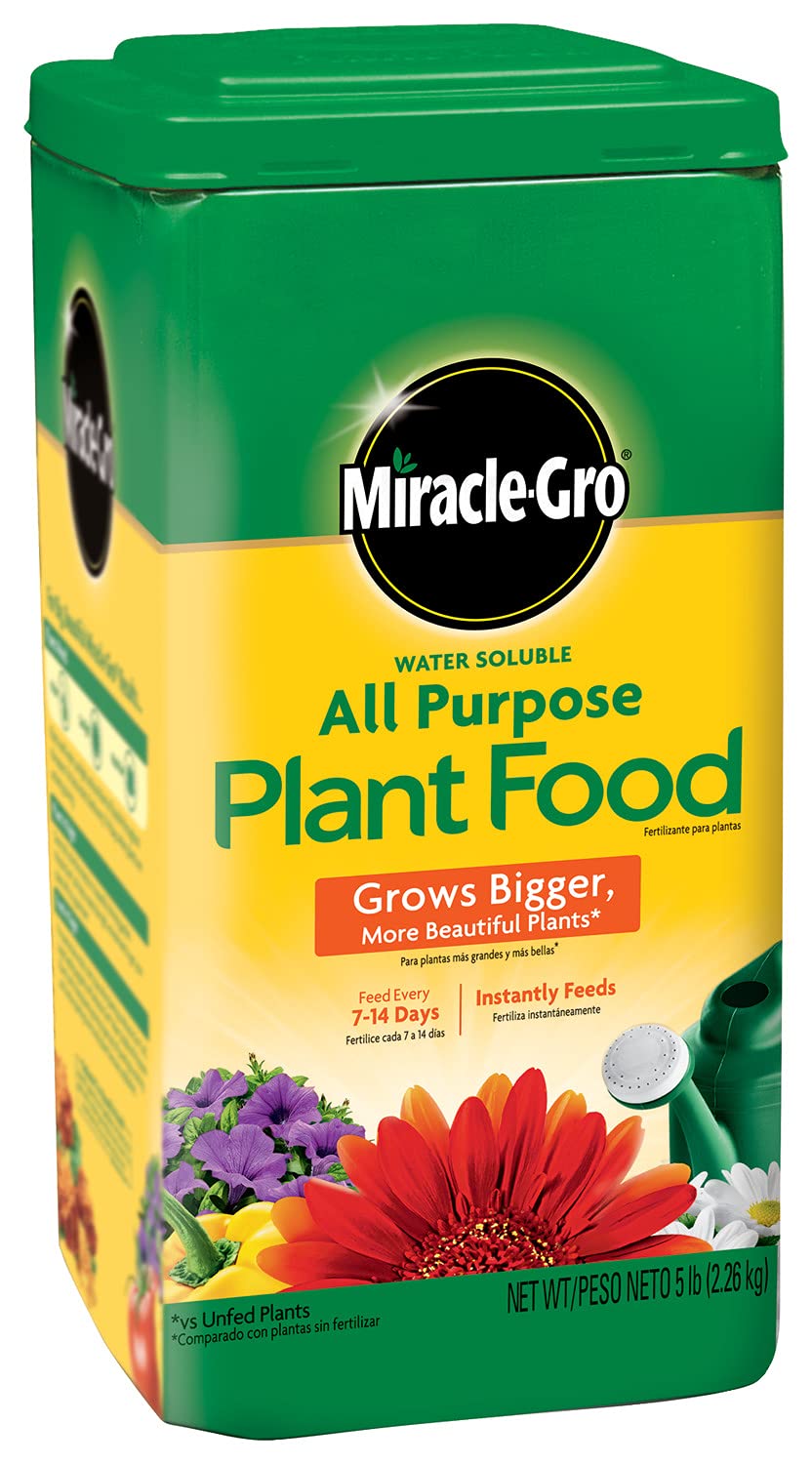
My go-to soluble all-purpose fertilizer for fast, reliable feeding on trees and landscape plants.
Why I picked it: It’s versatile, fast-acting, and feeds a broad range of trees and shrubs.
Best for: Established and young trees that need quick nutrient uptake.
Good value for bulk soluble fertilizer.
Pros
- Fast-acting feed that reaches roots quickly
- Wide compatibility with many plant types
- Clear mixing instructions included
Cons
- Requires regular reapplication
- Needs measuring and mixing
- Not slow-release
My take
I use this Miracle-Gro when I want immediate results: the 24-8-16 NPK floods roots with nitrogen for quick green-up while still supplying phosphorus and potassium. For trees I focus the solution at the soil line to encourage root uptake rather than wetting foliage.
Application is straightforward: the scoop included makes it easy to dose for containers or in-ground specimens. I reapply on the manufacturer’s 7–14 day schedule when I need a growth push, but I cut frequency back for young saplings to avoid overstimulating top growth at the expense of roots.
One 5 lb container treats a lot of ground, so I keep it on hand for seasonal feeding. When I’m working a large planting area I’ll dilute in a watering can and soak the root zone rather than drench leaves. That routine keeps trees vigorous without burning when I follow the directions.
2. Miracle-Gro Watering Can Singles – Best for Convenience
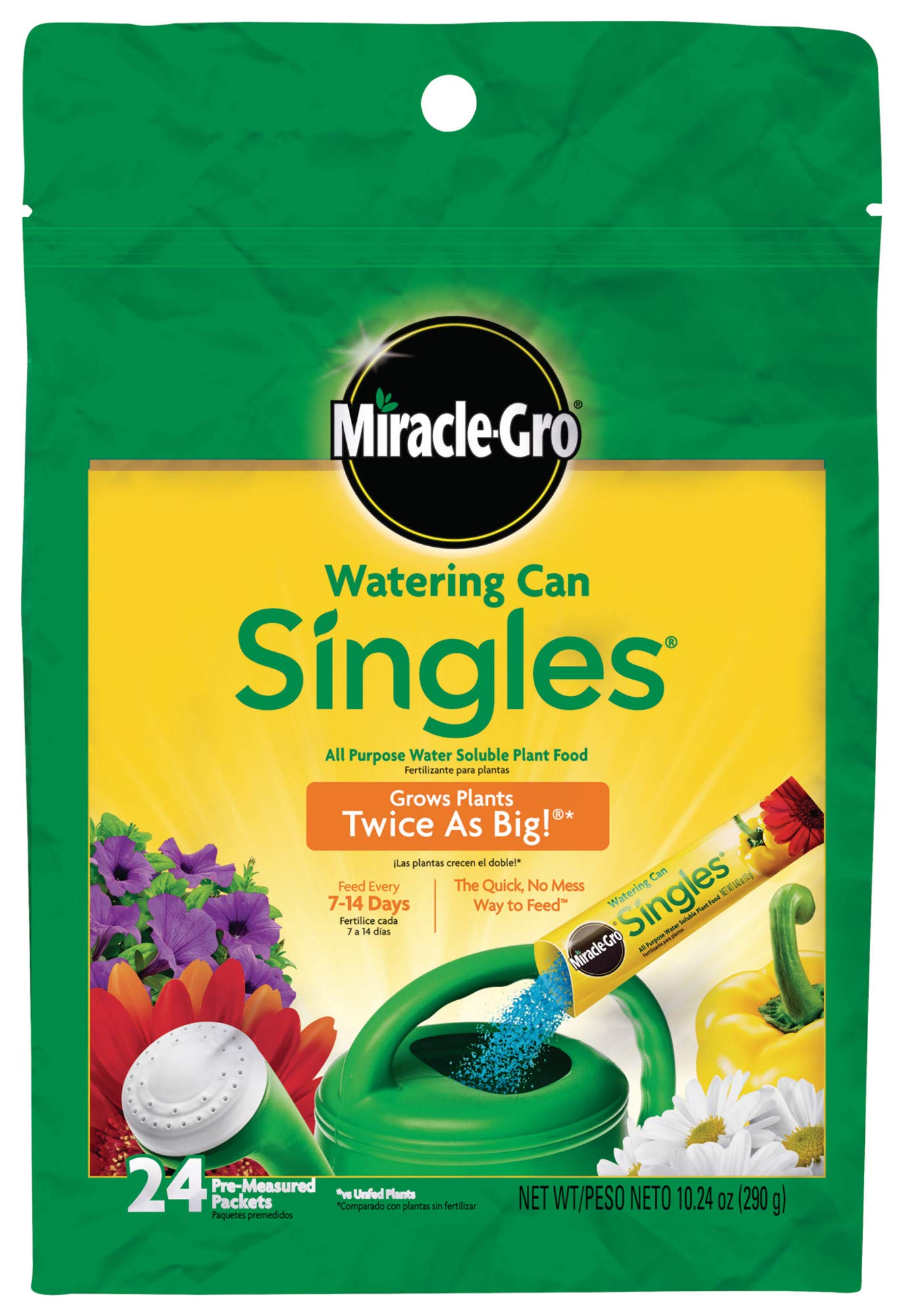
Single-use packets that let me feed while I water with no measuring or mess.
Why I picked it: Pre-measured packets eliminate guesswork and waste.
Best for: Busy gardeners and sporadic feeding of trees and container specimens.
Convenient and cost-effective for small-scale use.
Pros
- Pre-measured, no mess application
- Easy to use on the go
- Works with indoor and outdoor trees
Cons
- Higher per-use cost than bulk
- Limited coverage per packet
- Not long-lasting
My take
For quick top-ups I’ve leaned on these singles because they remove all the measuring hassle. I tear one into a watering can, add water, and feed pots or the root zone of small trees in minutes.
The formula mirrors Miracle-Gro’s all-purpose nutrition, so trees show faster growth and fuller foliage after a couple of applications. I mix at the recommended strength for outdoor plants and apply every 7–14 days when I want a visible lift.
When I’m traveling between sites or caring for a few container trees, these packets are a real timesaver. I do mind the per-packet cost for large landscapes, so I reserve them for targeted feeding rather than whole-property maintenance.
3. Jack's Classic 20-20-20 All Purpose Fertilizer – Best Balanced NPK
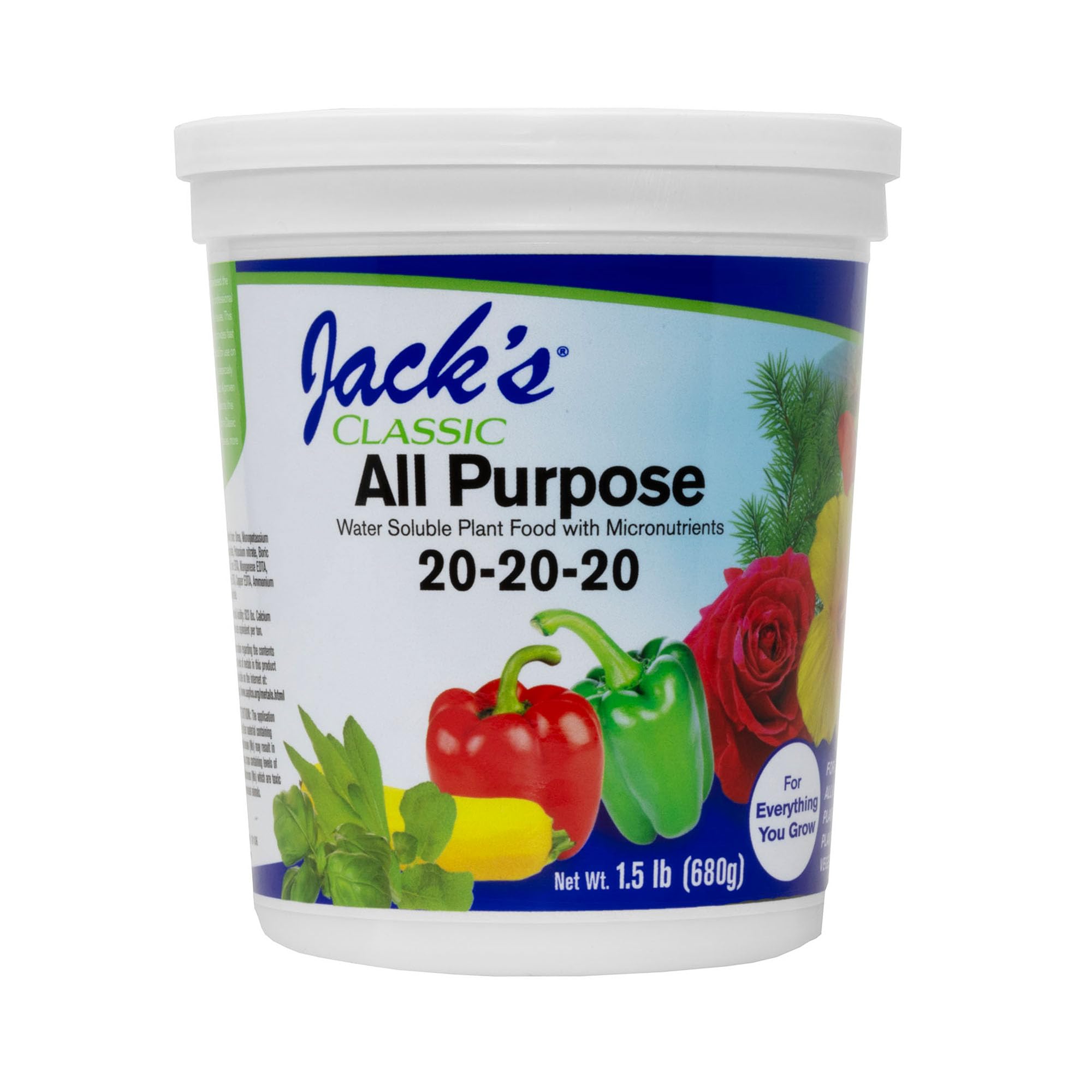
A true 20-20-20 balanced soluble that I use for consistent, all-around growth.
Why I picked it: Even N-P-K and added micronutrients for balanced development.
Best for: Periods when I want steady leaf and root development across species.
A solid mid-range choice for precise mixing and foliar feeding.
Pros
- Balanced 20-20-20 NPK formula
- Includes micronutrients
- Good for foliar and root feeding
Cons
- Requires careful measuring
- Can be too strong if overused
- Smaller package sizes
My take
I turn to Jack’s Classic when a balanced feed is what a tree needs—new growth, root development, and leaf expansion all benefit from an even 20-20-20 mix plus micronutrients. It dissolves quickly and I can use it as a foliar spray or a root drench.
On young fruit trees I use a diluted solution weekly during active growth to encourage strong, compact development without pushing excessive top growth. For established shade or ornamental trees I switch to less frequent feedings to maintain vigor.
The included measuring spoon helps me mix predictable concentrations. Because it’s concentrated, a little goes a long way when I’m making multiple gallons of feed for row plantings or nursery stock.
4. Miracle-Gro Bloom Booster 10-52-10 – Best for Blooming
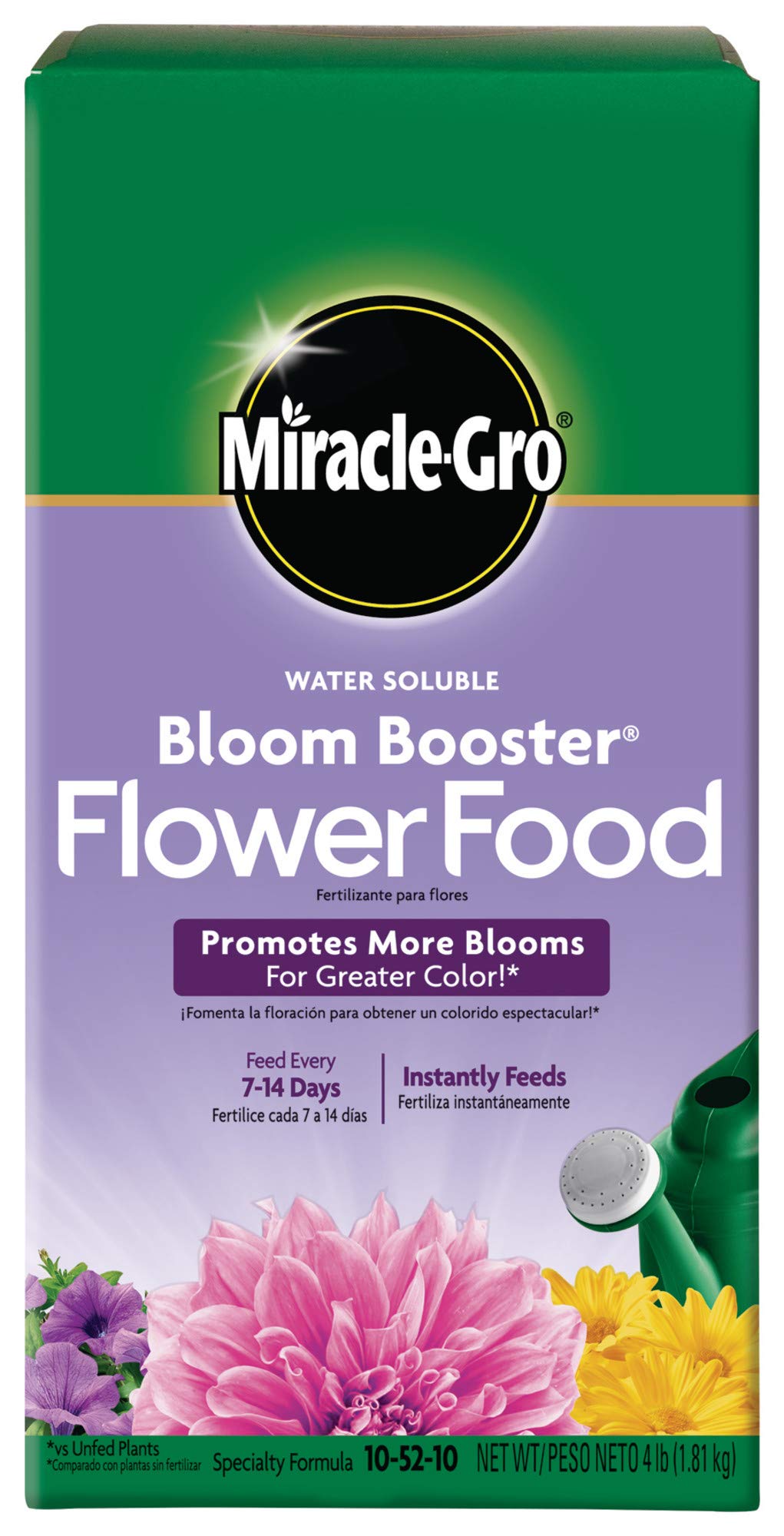
A high-phosphorus bloom formula I use when I want more flowers and fruit set.
Why I picked it: High phosphorus promotes flowering and fruit development.
Best for: Flowering trees, fruit trees, and potted flowering specimens.
Worth it when bloom production is the priority.
Pros
- High phosphorus for better blooms
- Dissolves instantly
- Excellent for containers and beds
Cons
- Not for general vegetative feeding
- Frequent use can unbalance soil
- Bag reseal could be improved
My take
When I want more flowers or to encourage fruit set on fruiting trees, this bloom booster is my tool of choice. The 10-52-10 formula supplies a phosphorus surge that pushes flowering without an overabundance of leafy growth.
I apply it sparingly around fruit trees during pre-bloom and early bloom stages, following the recommended dilution so petals and blossoms get the benefit without risking salt build-up. It dissolves easily and delivers visible results on flowering ornamentals.
Because it’s focused on blooms, I don’t use this as my sole fertilizer. In my programs it’s a complement to a balanced feed: bloom booster during flowering windows, balanced or slow-release feed at other times.
5. Osmocote Smart-Release Plant Food Plus – Best Long-Lasting Release
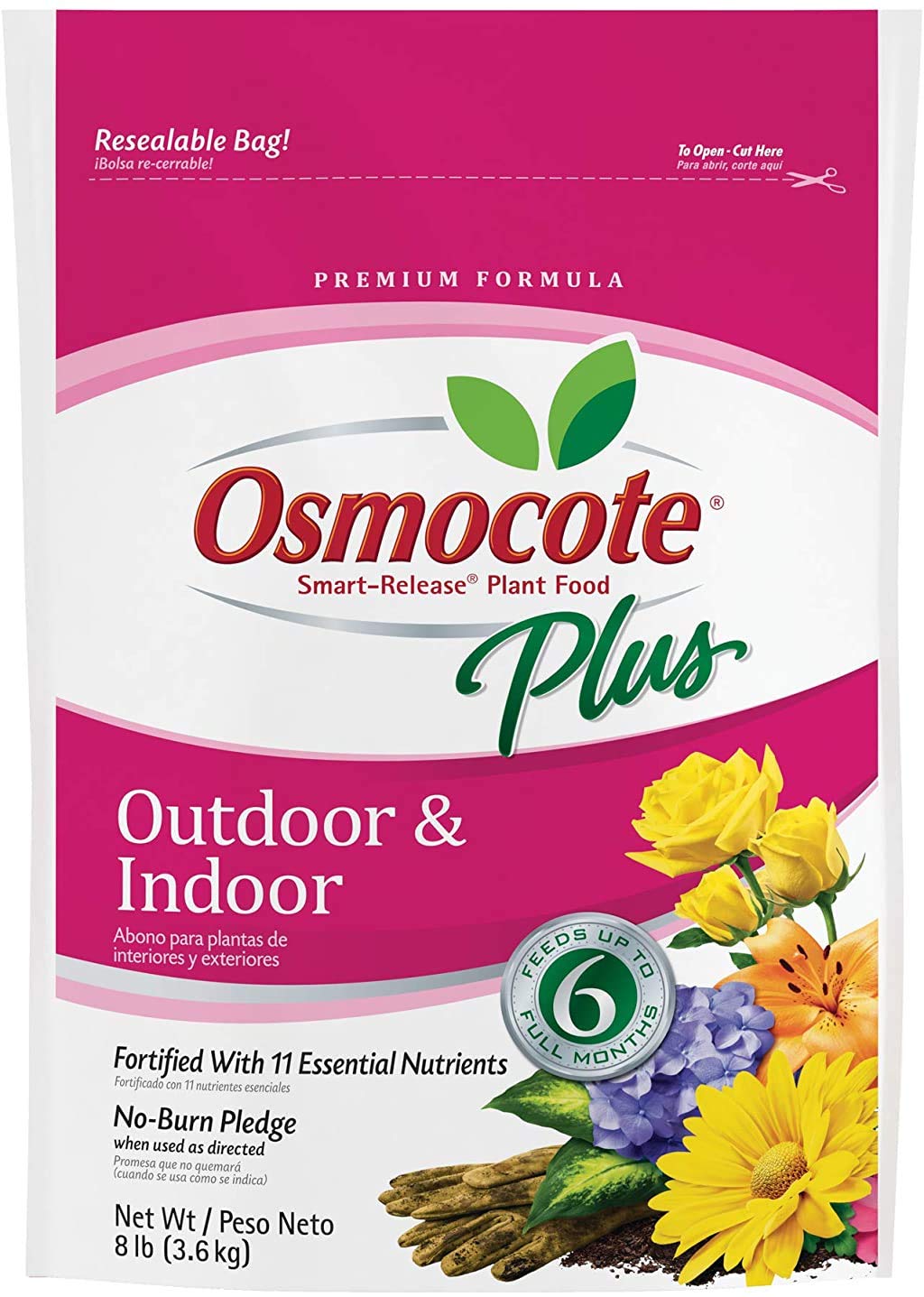
My low-maintenance pick: granules that feed steadily for up to six months.
Why I picked it: Smart-release pellets simplify feeding and reduce application frequency.
Best for: Established trees and containers when I want steady, low-effort nutrition.
A longer-term investment that reduces reapplication chores.
Pros
- Feeds up to six months
- All-in-one granules with micronutrients
- Low risk of burning when used correctly
Cons
- Harder to spot-treat quickly
- Higher upfront cost per bag
- Requires proper mixing into soil
My take
I recommend Osmocote when I want to set-and-forget feeding for containers or established trees. The resin-coated beads release nutrients slowly with each irrigation cycle, so I don’t have to mix liquid feeds every week.
For mature landscape trees I work the recommended scoop into the top inch or two of soil around the drip line and water in. That slow, steady release keeps foliage healthy across seasons without the peaks and troughs of soluble formulas.
If I need a quick response—like green-up in spring—I’ll supplement Osmocote with a light soluble feed, but for routine maintenance it’s my go-to because it’s forgiving and consistent.
How I Choose Fertilizer for Trees
Match the formula to the tree’s need
I always consider what I want the tree to do: push new shoots, set flowers and fruit, or receive steady baseline nutrition. That determines whether I use a high-nitrogen all-purpose feed, a high-phosphorus bloom booster, or a slow-release product.
Soil tests are ideal, but when I can’t test I follow a conservative approach: balanced feeds for overall health, bloom boosters only for flowering windows, and slow-release for low-maintenance trees.
- Nitrogen-heavy blends: promote leaf and shoot growth
- High-phosphorus blends: encourage flowering and fruit set
- Balanced NPK: steady overall development
- Slow-release: best for long-term maintenance
Soluble vs. slow-release
I use water-soluble fertilizers when I need immediate uptake—spring green-up, transplant recovery, or foliar sprays. They give quick results but need regular reapplication.
Smart-release granules are my choice for hands-off feeding. They reduce the risk of over-application and are excellent for containers and mature trees that get regular irrigation.
- Soluble: fast results, frequent applications
- Slow-release: months of feed, low maintenance
- Combine both when you need rapid response plus sustained nutrition
How and where I apply fertilizer to trees
I concentrate fertilizer at the root zone—around the drip line for established trees and closer to the trunk for young transplants—rather than on leaves. For soluble feeds I soak the base so nutrients move into the root zone.
With granules I work them into the top 1–3 inches of soil and water thoroughly to activate the coating.
- Young saplings: lighter rates and less frequent feeding
- Mature trees: feed around the drip line
- Always water after applying granular fertilizers
Avoiding fertilizer burn and imbalance
I start at half the recommended strength on new or sensitive trees and watch growth for several weeks before increasing. Over-fertilizing damages roots and encourages weak, leggy growth.
Rotate fertilizer types seasonally if you suspect micronutrient shortage, and don’t rely on one product year-round unless a soil test confirms it’s appropriate.
- Follow label rates and reduce dose for young trees
- Avoid applying to dry, drought-stressed trees
- Consider a soil test for persistent nutrient problems
Frequently Asked Questions
How often should I fertilize my trees?
I generally feed fast-acting soluble formulas every 7–14 days during active growth, but I use slow-release granules every six months. For young trees I reduce frequency and strength—less is safer while roots establish.
Can I use bloom booster on fruit trees?
Yes—I use a high-phosphorus bloom booster around pre-bloom and early bloom to encourage flower and fruit set, but I don’t rely on it for general nutrition. Balance it with a standard feed before and after the flowering window.
Is it better to foliar spray or apply to the soil?
I prefer soil drenching for trees because roots access the nutrients more reliably; foliar sprays are useful for quick corrective feeding or micronutrient applications but are less practical for large trees.
Will smart-release granules burn my tree roots?
When I follow the package rates and water them in, smart-release granules are low risk. Problems occur when granules are over-applied or not watered after application.
Final Take
For rapid response and flexible timing I reach for water-soluble solutions like Miracle-Gro or Jack’s. For hands-off maintenance and steady nutrition I prefer Osmocote’s smart-release beads. When flowers or fruit are the goal, the Bloom Booster gives a targeted phosphorus boost.
Think about a tree’s age and your maintenance willingness: young trees need gentler, less frequent feeding; established trees tolerate stronger and longer-lasting options. With proper application and watering, any of these products can keep trees healthy and productive.
