
I tested four go-to algaecides — from copper concentrates to non-metallic preventatives — and I explain which one I reach for depending on the type of algae, pool surface, and maintenance plan.
I spend my summers keeping several pools swim-ready, so I’ve tried a wide range of algaecides. Over the years I learned that the right product depends on the algae type, whether you use salt or chlorine, and whether you need a one-off rescue treatment or weekly preventative care.
Below I walk through four algaecides I rely on, explain when each shines, and give practical dosing and compatibility notes so you can pick the right product for your pool.
I grouped these picks by what I actually reach for: a fast rescue, a mustard-algae specialist, an all-in-one fast killer, and a non-metallic preventative for regular maintenance.
1. Clorox Pool&Spa Algaecide – Best Overall
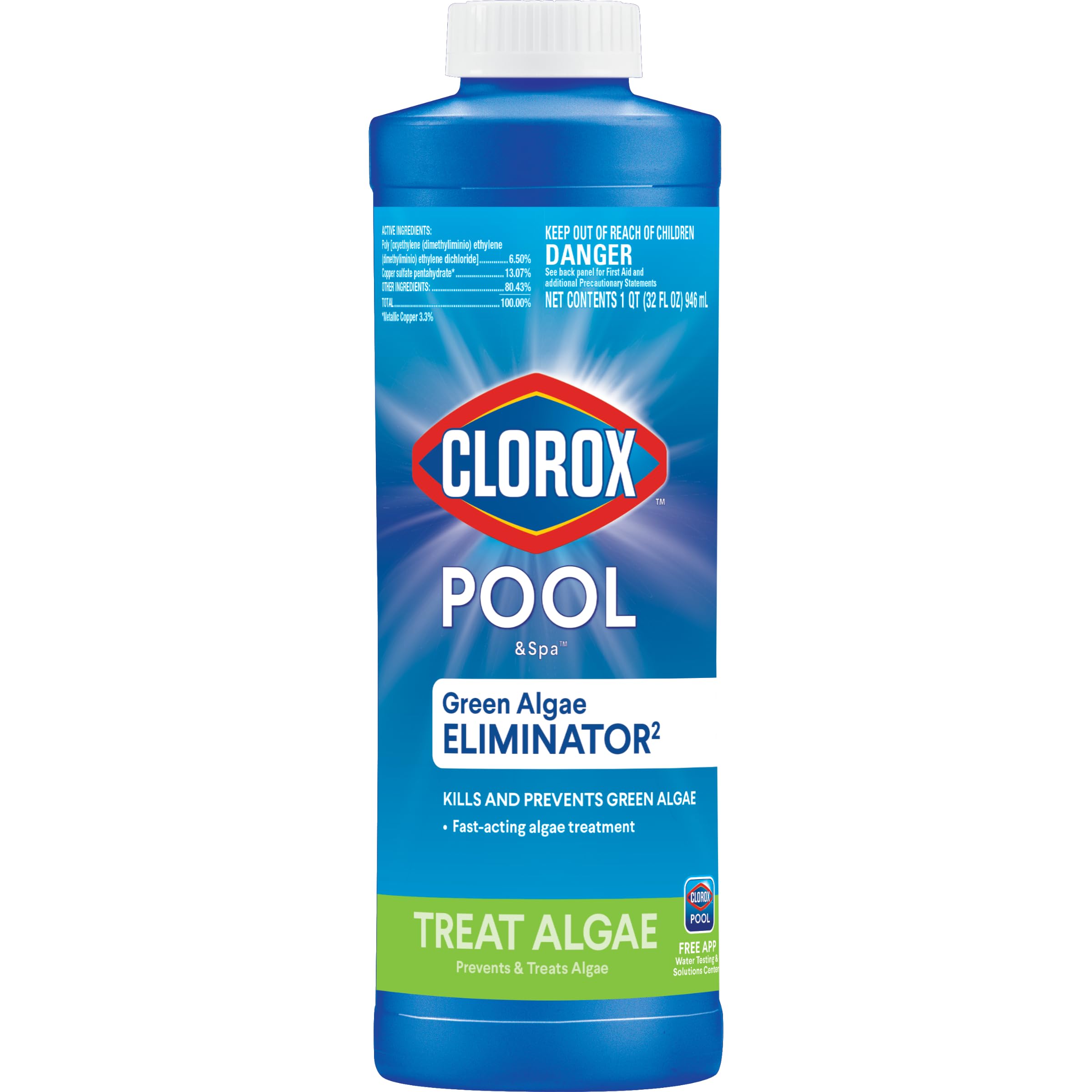
A dependable, fast-acting non-foaming formula I use to clear common green algae and keep water crystal clear with routine dosing.
Why I picked it: Fast, non-foaming treatment that worked quickly on green algae and is salt-pool compatible.
Best for: Quickly clearing green algae and weekly maintenance on chlorine or salt pools.
Affordable and effective for both rescue treatments and ongoing upkeep.
Pros
- Clears green algae fast
- Non-foaming formula
- Works in salt and chlorine pools
- Pairs with Clorox Pool App dosing
Cons
- Needs brushing and filtration alongside
- Not a specialized copper treatment
My take
When my backyard pool went cloudy green, I reached for this Clorox formula and saw dramatic improvement within a day. I applied it after shocking, brushed the walls, and ran the filter; the combination cleared visible algae in about 24 hours.
I like that it’s non-foaming — no surface residue to skim — and that it’s listed as compatible with salt systems. I also used the Clorox Pool app for quick dose guidance, which made measuring easier.
For weekly upkeep I add a small maintenance dose and keep normal chlorine levels and filtration. For stubborn outbreaks I still rely on good brushing and filtration along with this product; it works best as part of a routine, not as a standalone miracle.
2. In The Swim Super Algaecide (Chelated Copper) – Best for Mustard Algae
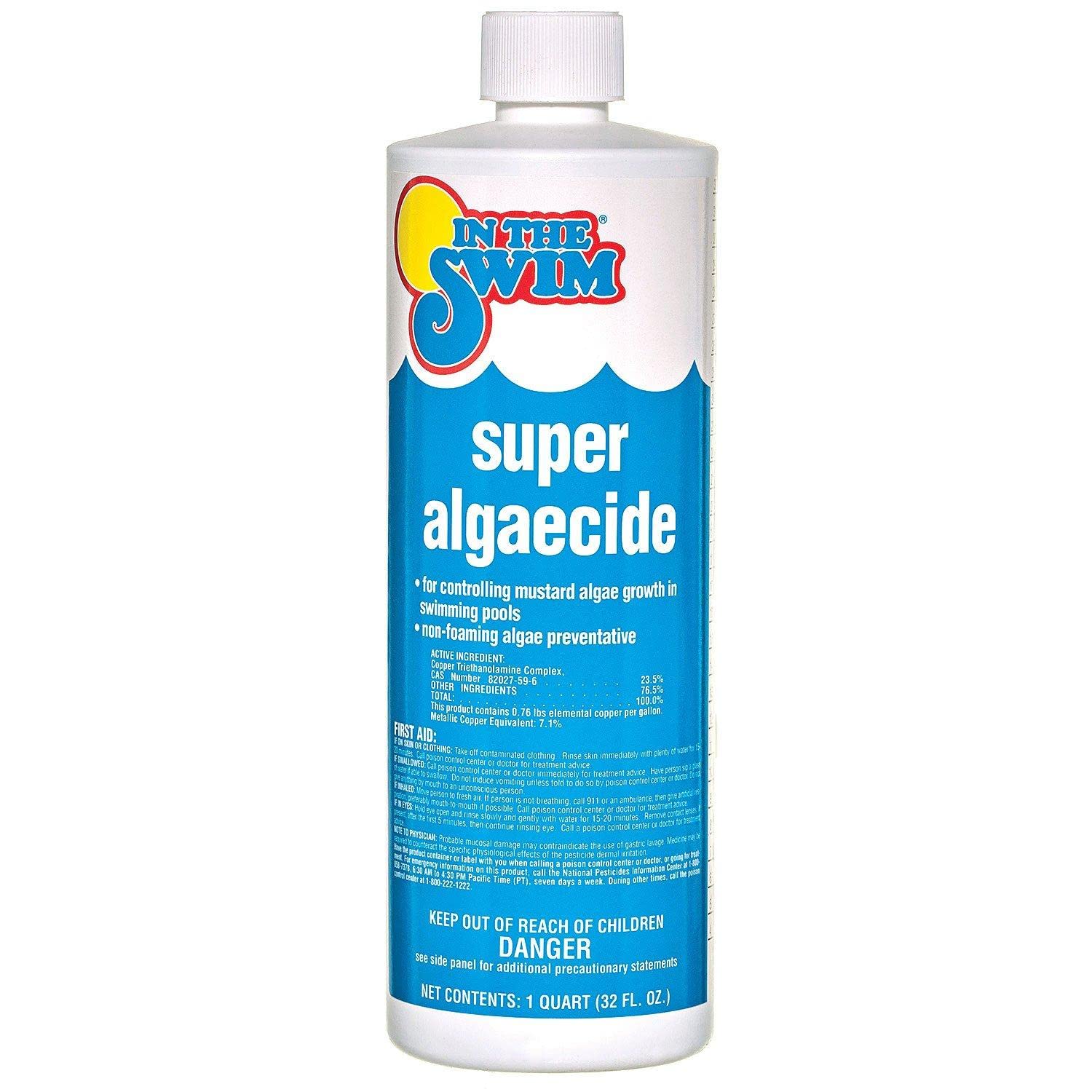
A concentrated copper-based formula I use when yellow or mustard algae show up — small doses go a long way and it’s low-odor and non-foaming.
Why I picked it: Highly concentrated chelated copper that quickly tackles yellow and mustard algae with minimal odor.
Best for: Above-ground or inground pools struggling with mustard/yellow algae and during spring openings.
Moderately priced but concentrated, so you get strong performance from small doses.
Pros
- Powerful on mustard/yellow algae
- Low odor and non-foaming
- Highly concentrated—small doses
- Allows immediate swimming per product notes
Cons
- Contains copper—stain risk on sensitive surfaces
- Not ideal if avoiding metal-based algaecides
My take
I reached for this In The Swim copper formula after battling persistent mustard algae. One treatment made the difference — the yellow algae faded within days and didn’t return after a follow-up dose a week later.
Because the formula is concentrated I only needed small, measured amounts for my pool, which stretched the bottle across multiple treatments. I appreciated the low odor and the fact that it didn’t foam on the surface.
A word of caution from my experience: copper will work well, but it can stain if overused or if your pool surfaces are particularly sensitive. I calibrate doses carefully and avoid using copper products if I’m trying to protect certain finishes.
3. Clorox XtraBlue Algaecide – Best for Fast Results
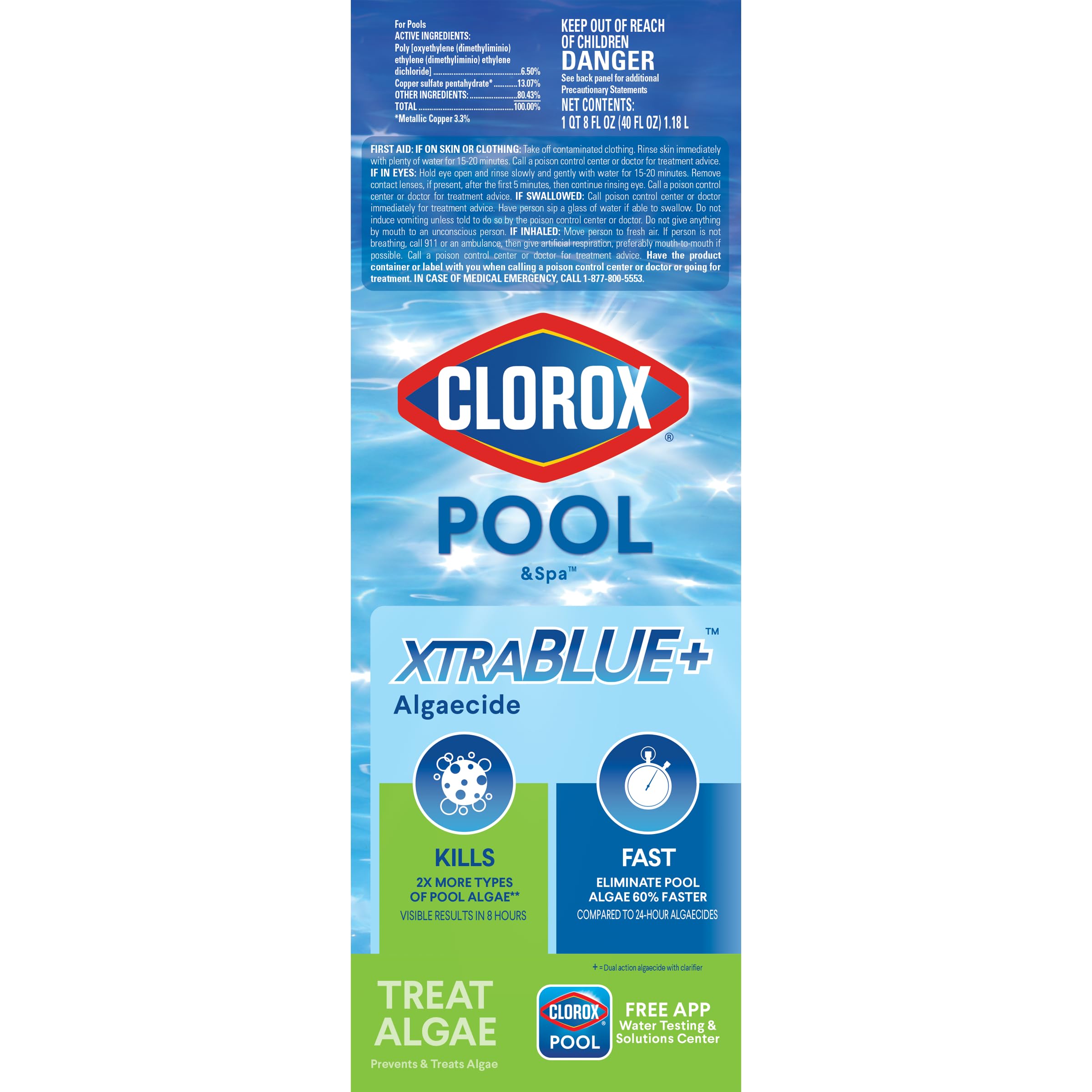
An all-in-one, fast-acting algaecide that I turn to for broad-spectrum cleanup — green, mustard, and black algae clear up quickly and it’s non-staining.
Why I picked it: Broad-spectrum formula that kills multiple algae types quickly without staining.
Best for: Pools needing rapid, all-around algae control and larger pools up to the product's coverage.
A bit more of a premium option, but it treats large volumes and acts quickly.
Pros
- Kills green, mustard, and black algae
- Non-staining formula
- Fast-acting—results in about 24 hours
- Compatible with salt pools
Cons
- May be overkill for tiny pools
- Higher upfront concentration for large pools
My take
When I had a stubborn patch of algae that wouldn’t budge, I shocked the pool and added XtraBlue an hour later. Within a few hours the cloudiness dropped and by the next day the water looked as clear as when I first filled the pool.
I appreciate that it’s advertised as non-staining and compatible with salt systems — I’ve used it safely in both my chlorine and salt setups with consistent results.
This is the bottle I reach for when I want a single, broad-spectrum treatment that handles whatever algae shows up, but I still combine it with brushing and filtering for the fastest recovery.
4. In The Swim Algaecide 60 Plus (Non-Metallic) – Best Non-Metallic Preventative
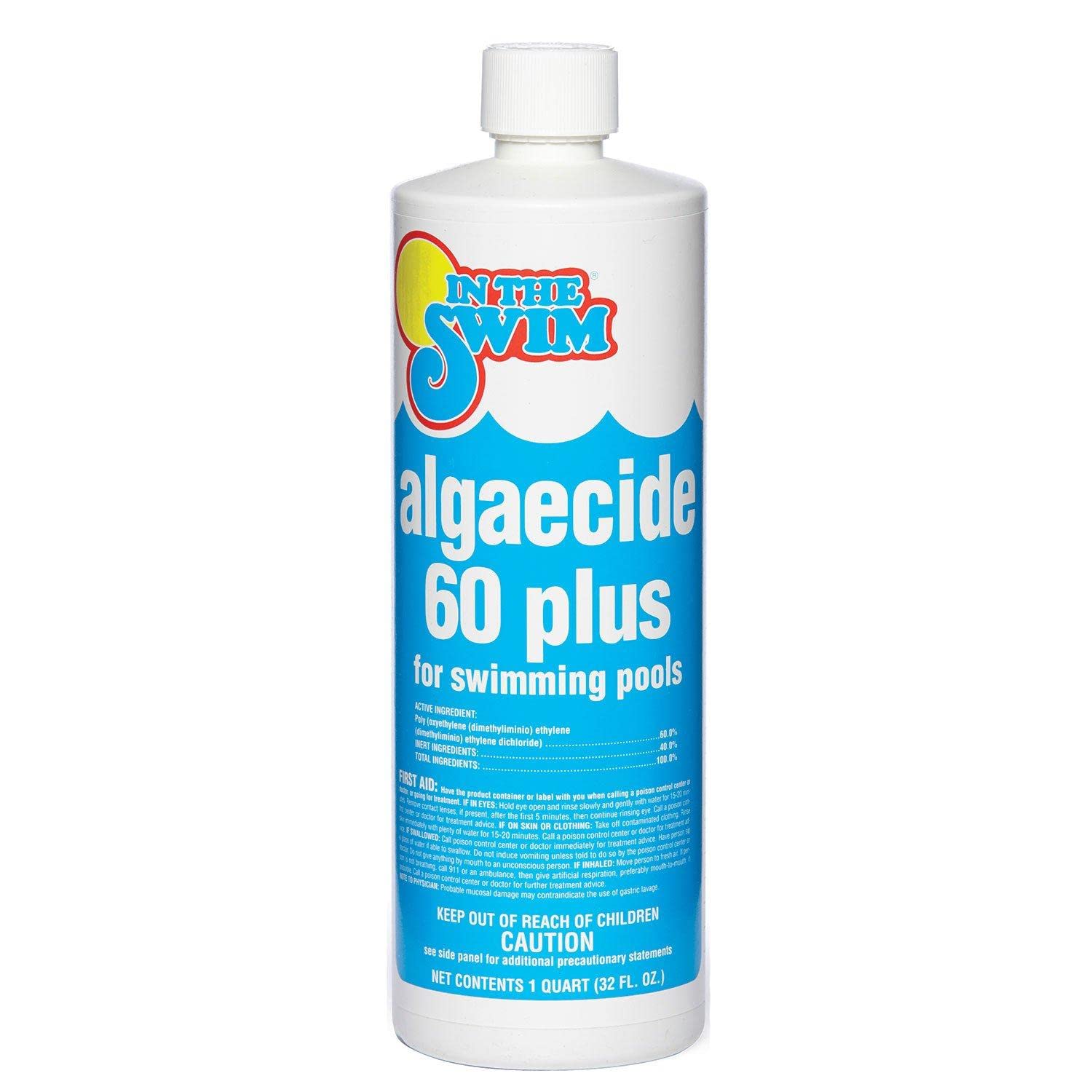
A pH-tolerant, non-metallic algaecide I use for weekly maintenance and for pools with features like spas and waterfalls where staining is a concern.
Why I picked it: Non-metallic, pH-tolerant formula that works with multiple sanitizers and avoids staining risks.
Best for: Pools with attached spas, waterfalls, or wells and anyone who wants a non-staining weekly preventative.
Good long-term value — one bottle lasts a season with routine use.
Pros
- Non-metallic—won’t stain
- pH tolerant across ranges
- Compatible with many sanitizers
- Low odor and non-foaming
Cons
- Heavier initial dose for outbreaks
- Requires consistent maintenance dosing
My take
I use Algaecide 60 Plus as my go-to weekly preventative because it’s pH tolerant and plays nicely with chlorine, bromine, biguanide, and salt systems. That flexibility makes it a simple choice for mixed setups.
For general maintenance I dose smaller amounts every one to two weeks; for visible outbreaks I use the larger initial dose recommended on the label and usually see a clear pool within a day or two.
In hot months I found that regular 4–8 ounce doses (adjusted for my pool size) kept the walls algae-free. One container typically lasts me a whole season when used for maintenance.
How I Choose a Pool Algaecide
Key factors I consider before buying
I match the algaecide to the algae type first — copper formulas excel at yellow/mustard algae, while broad-spectrum products work better for black or mixed outbreaks.
Pool compatibility matters: I check whether the product is safe for salt systems, attached spas, or delicate pool finishes.
I always plan treatment as part of a three-step approach: correct chemistry (chlorine or sanitizer), physical agitation (brushing), and filtration. An algaecide speeds recovery but doesn’t replace those basics.
- Type: copper vs non-metallic — copper handles mustard algae well; non-metallic avoids staining
- Compatibility: salt, chlorine, bromine, biguanide, and spa features
- Formulation: non-foaming and low-odor are easier to use
- Coverage & concentration: concentrated formulas need smaller doses
- Application timing: some products can be used immediately; always follow label directions
Frequently Asked Questions
Can I swim right after adding algaecide?
I always follow the product label. Some formulas (like certain In The Swim concentrates) state no wait is required; for others I circulate the water and wait the recommended time. When in doubt, I run the pump for 15–30 minutes and skim before jumping in.
Will copper algaecide stain my pool?
From my experience, copper-based algaecides work very well on mustard and yellow algae but can stain delicate surfaces if overused. I avoid copper if I’m worried about finishes and measure doses carefully.
How often should I use algaecide for maintenance?
I typically add a maintenance dose every one to two weeks during warm months. For preventative regimes I follow the manufacturer’s maintenance recommendations and increase doses only when I see visible algae.
Do I need to shock the pool before using algaecide?
I usually correct sanitizer levels first. For severe outbreaks I super-chlorinate, then apply algaecide as a follow-up — that combination cleared stubborn growth fastest in my experience.
Final Take
I keep one of these four algaecides on hand depending on the situation: a reliable Clorox for general green algae, a copper concentrate for mustard outbreaks, XtraBlue for fast, broad-spectrum knockout, and a non-metallic product for routine, stain-free maintenance.
If you’re unsure, start by identifying the algae type and your pool chemistry, then pick the product above that matches those needs. With proper dosing, brushing, and filtration, you should see lasting results.
