
I tested a range of primers and paint-bases to find products that bond to slick cabinet surfaces, block stains, and build a durable base for topcoats. These choices cover everything from quick small repairs to heavy-duty
I refinished several sets of kitchen cabinets and painted a handful of doors and drawers while testing these primers side-by-side.
My goal was to find primers that actually stick to slick, factory-finished cabinet surfaces, block old stains and tannins, and give a smooth base that topcoats will love.
Below I explain where each product performs best and how I used them—so you can pick the right primer for your cabinet project.
For simple wood or drywall cabinets I focused on coverage and hide; for slick, laminate, or glossy cabinetry I prioritized bonding primers like Stix and KILZ; for furniture-style cabinet doors where VOCs matter I leaned toward Fusion Mineral Paint.
1. Rust-Oleum Painter's Touch Latex Primer – Best Overall
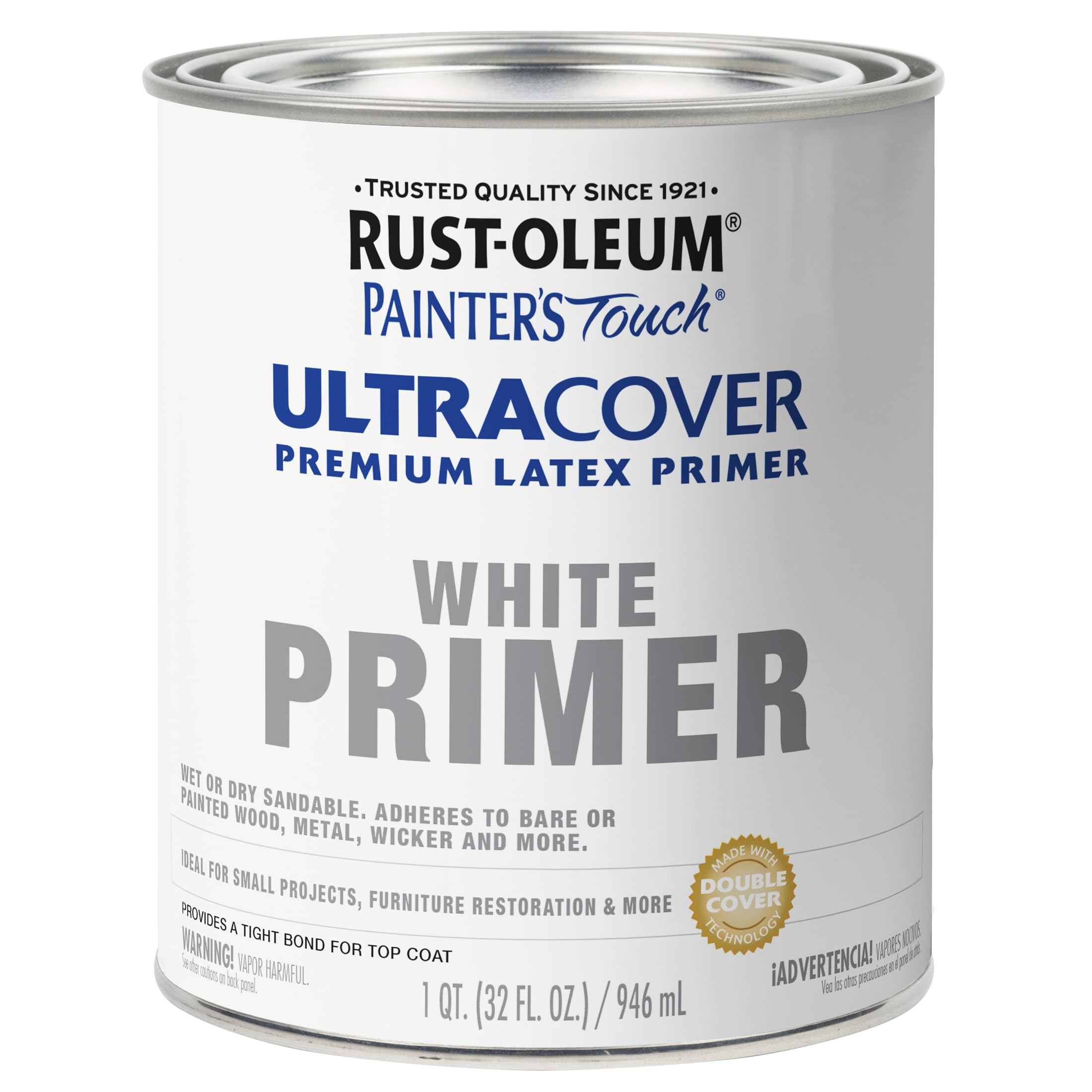
A versatile, water-based acrylic primer that dries fast, hides well, and works on many surfaces.
Why I picked it: I relied on this for quick cabinet refreshes because it goes on smoothly, dries fast, and minimizes blemishes.
Best for: General cabinet refreshes, wood doors, and trim where fast turnaround matters.
Affordable, good value for small to medium projects.
Pros
- Dries to touch quickly
- Low odor water-based formula
- Smooth, flat finish hides imperfections
- Multi-surface use (wood, metal, masonry)
Cons
- Often needs a second coat for perfection
- Not marketed as a heavy-duty bonding primer
My take
I used Rust‑Oleum Painter's Touch on both kitchen cabinet frames and a pantry door. The latex acrylic spread easily with a small roller and brush and dried to the touch in about 30 minutes as advertised.
The flat finish helped minimize dings and grain without drawing attention to them, which reduced my sanding time. One coat covered most of the surface, but I applied a second coat on darker wood for a uniform base before topcoating.
Cleanup was simple with soap and water, and the smell stayed mild while I worked in the kitchen. For straightforward cabinet updates where I wasn’t battling glossy factory finishes, this is the go‑to option I reach for.
2. Bulls‑Eye 1‑2‑3 Water-Based Primer – Best All-Purpose Sealer
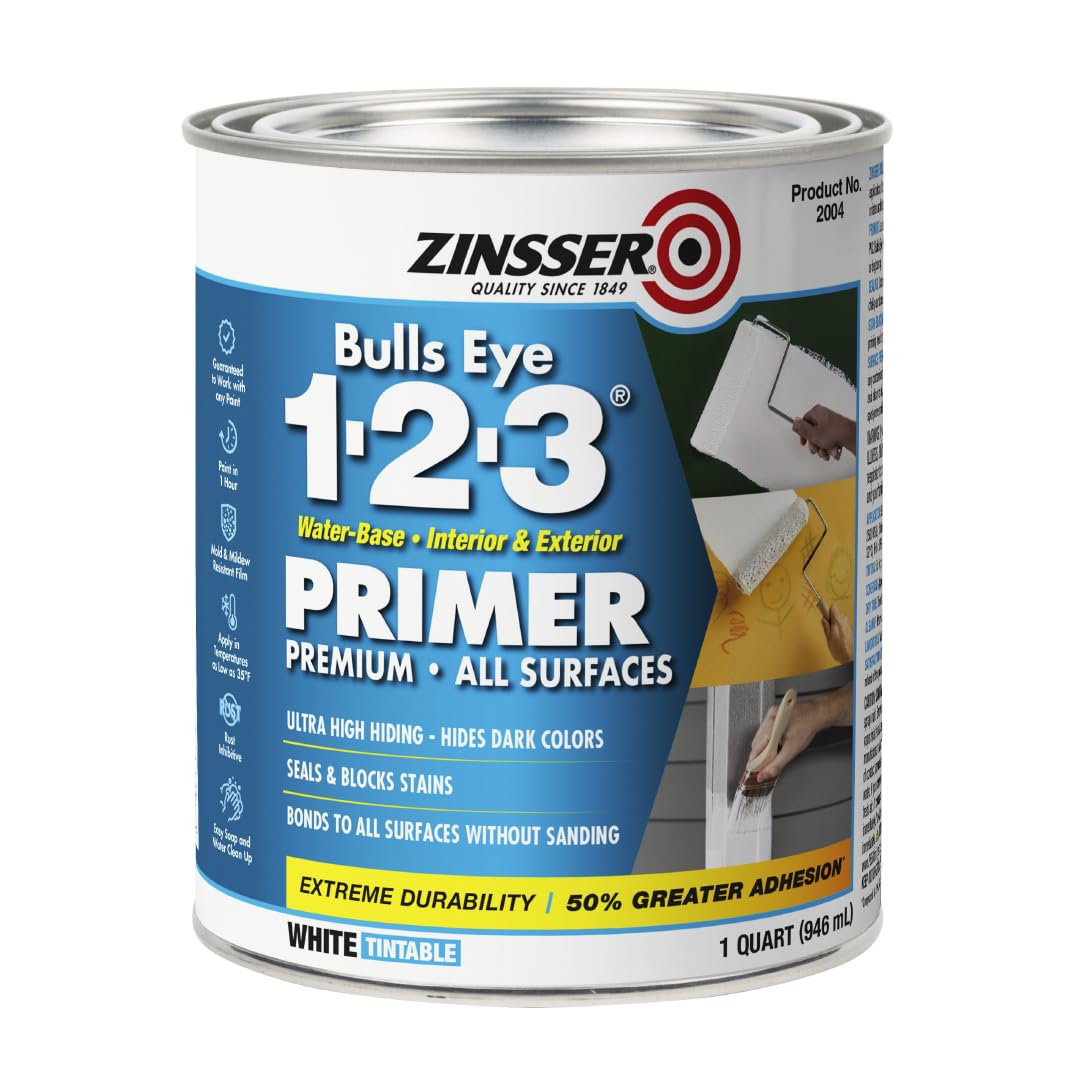
A dependable water-based primer/sealer that bonds to glossy surfaces and blocks tough stains.
Why I picked it: I chose it when I needed a versatile sealer that sticks to slick finishes without heavy sanding.
Best for: Glossy cabinet surfaces, metal parts, and areas with bleed-through stains.
Budget-friendly and stretches well for the money.
Pros
- Bonds to glossy surfaces without scuff sanding
- Formulated to block stains and odors
- Works at lower application temperatures
- Rust-inhibitive for metal
Cons
- Thicker consistency can be hard to spread
- May require careful brushing on edges
My take
When I had to seal factory-finished cabinet doors and a couple of metal radiator covers, Bulls‑Eye 1‑2‑3 earned its place. It adheres to glossy surfaces better than ordinary primers and saved me the time of aggressive sanding.
The primer’s stain‑blocking resins stopped old tannins and a couple of strong colors from bleeding through, which meant fewer topcoat layers later on. It dries reasonably fast and didn’t overwhelm my workspace with fumes.
Because it runs a little thick, I used a good synthetic brush and worked in shorter strokes along edges to avoid visible brush marks. For an all-purpose sealer that handles tricky surfaces, I turn to this primer.
3. Fusion Mineral Paint (Zero‑VOC) – Best Zero‑VOC Option
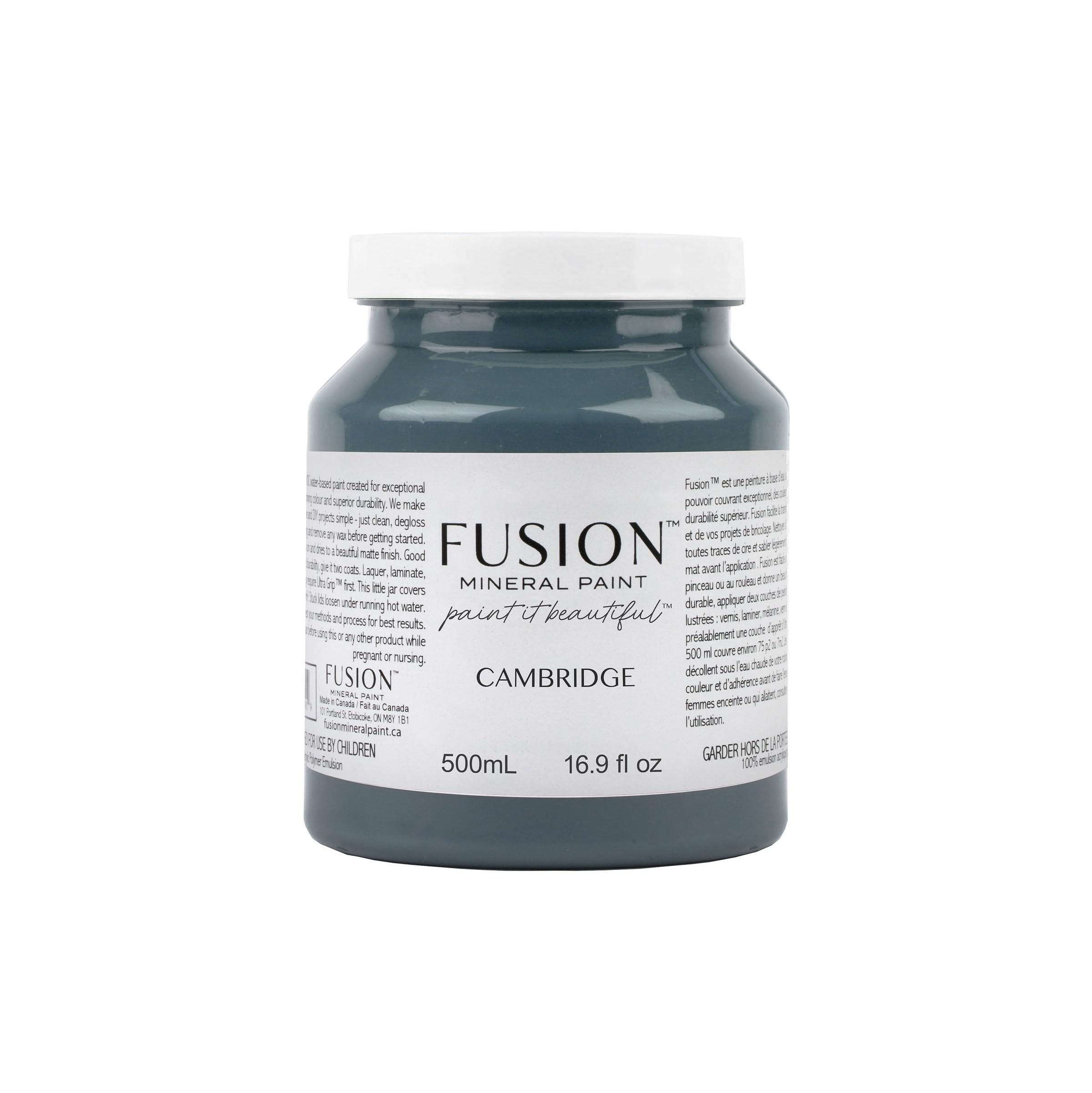
A true zero‑VOC paint with a built-in topcoat that often needs minimal prep and delivers a furniture‑quality finish.
Why I picked it: I picked this when I wanted a low‑odor, no‑fuss finish on cabinet doors and appliance panels.
Best for: Interior cabinet doors, furniture-style cabinets, and projects where VOCs matter.
Premium option—worth it for small pieces and high‑finish results.
Pros
- Truly zero VOC, minimal odor
- Built-in topcoat reduces steps
- Goes on thick and smooth
- Often one coat covers
Cons
- More expensive for large kitchens
- May need frequent stirring to avoid streaks
My take
I used Fusion Mineral Paint on a set of shaker-style doors and appreciated how little prep it required—the built-in topcoat left a durable, low‑sheen finish that felt like an upgrade compared with ordinary primer + paint.
Application was forgiving: the paint levels beautifully and often covered in one coat on previously primed wood. I noticed pigment settling if I left the tester tub too long between passes, so I kept stirring as I worked.
This is the product I choose when low odor and a high-quality final surface matter most, especially on smaller runs of cabinet doors and visible furniture pieces.
4. INSL‑X Stix Waterborne Bonding Primer – Best for Hard-to-Coat Surfaces
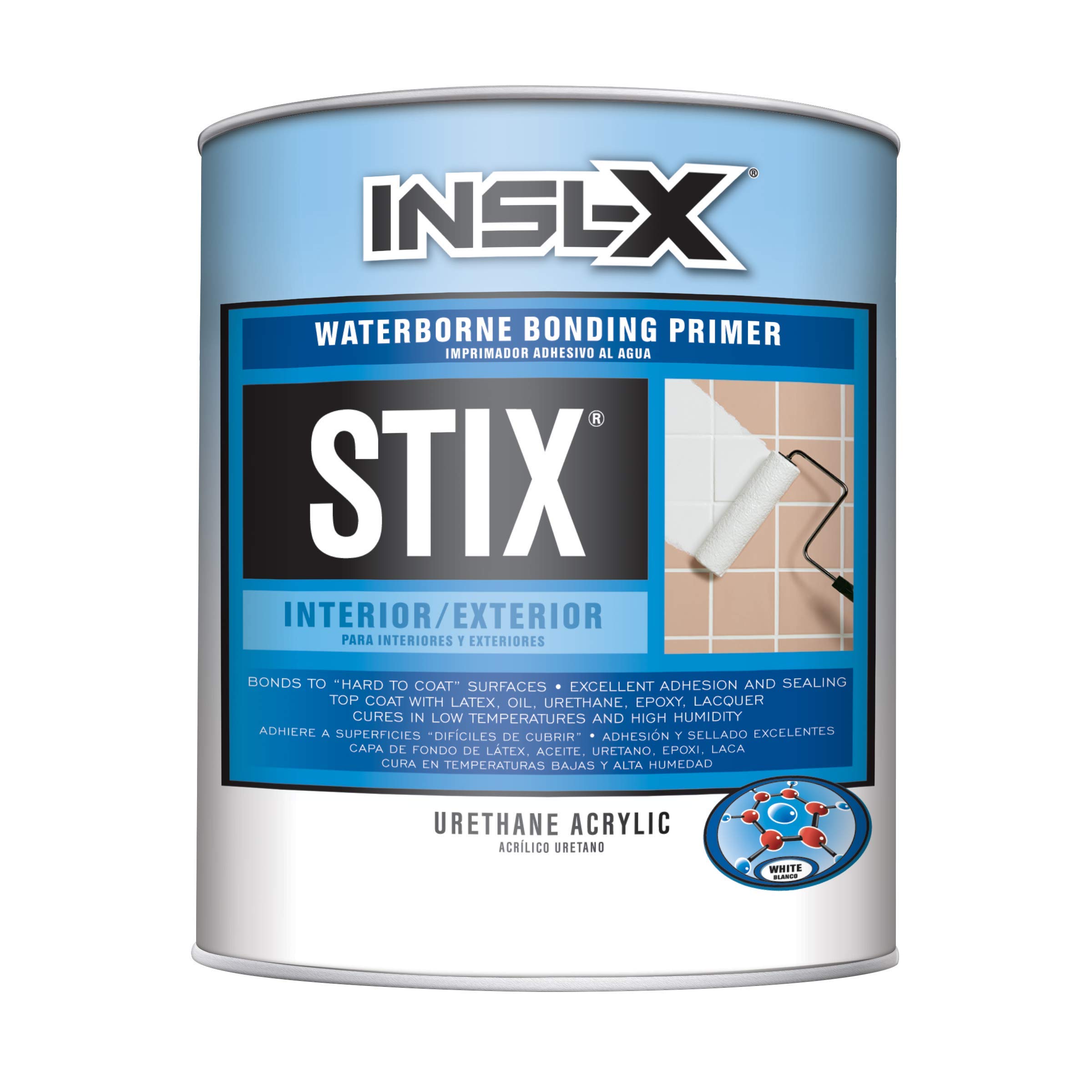
A premium acrylic‑urethane bonding primer that excels at sticking to glossy, plastic, and otherwise hard‑to‑coat cabinet surfaces.
Why I picked it: I reached for Stix any time cabinets had slick finishes, tile backsplashes, or PVC trim that regular primers wouldn’t bite into.
Best for: Laminate or factory-finished cabinets, tile, PVC, and surfaces that refuse to hold paint.
Mid‑range to premium—worth the cost when adhesion is critical.
Pros
- Unparalleled adhesion to glossy substrates
- Cures in cool temperatures
- Topcoats easily with most paints
- Soap and water cleanup
Cons
- High‑performance formulas can need touch‑ups
- May show thinner spots on very uneven surfaces
My take
Stix was my choice for a kit of pre‑finished cabinet doors and a tiled appliance panel. After light scuff sanding and a thorough cleaning, the primer grabbed onto the slick surfaces in a way ordinary latex primers never did.
It cut out my need to fall back to oil‑based primers for adhesion, and cleanup with soap and water was a practical benefit during a multi‑day project. I still laid on two thin coats for the most uniform surface before topcoating.
If you’re trying to make paint stick where nothing else has, Stix is the bonding primer I trust to create a sound base.
5. Rustins Quick Drying White Primer – Best for Small Projects
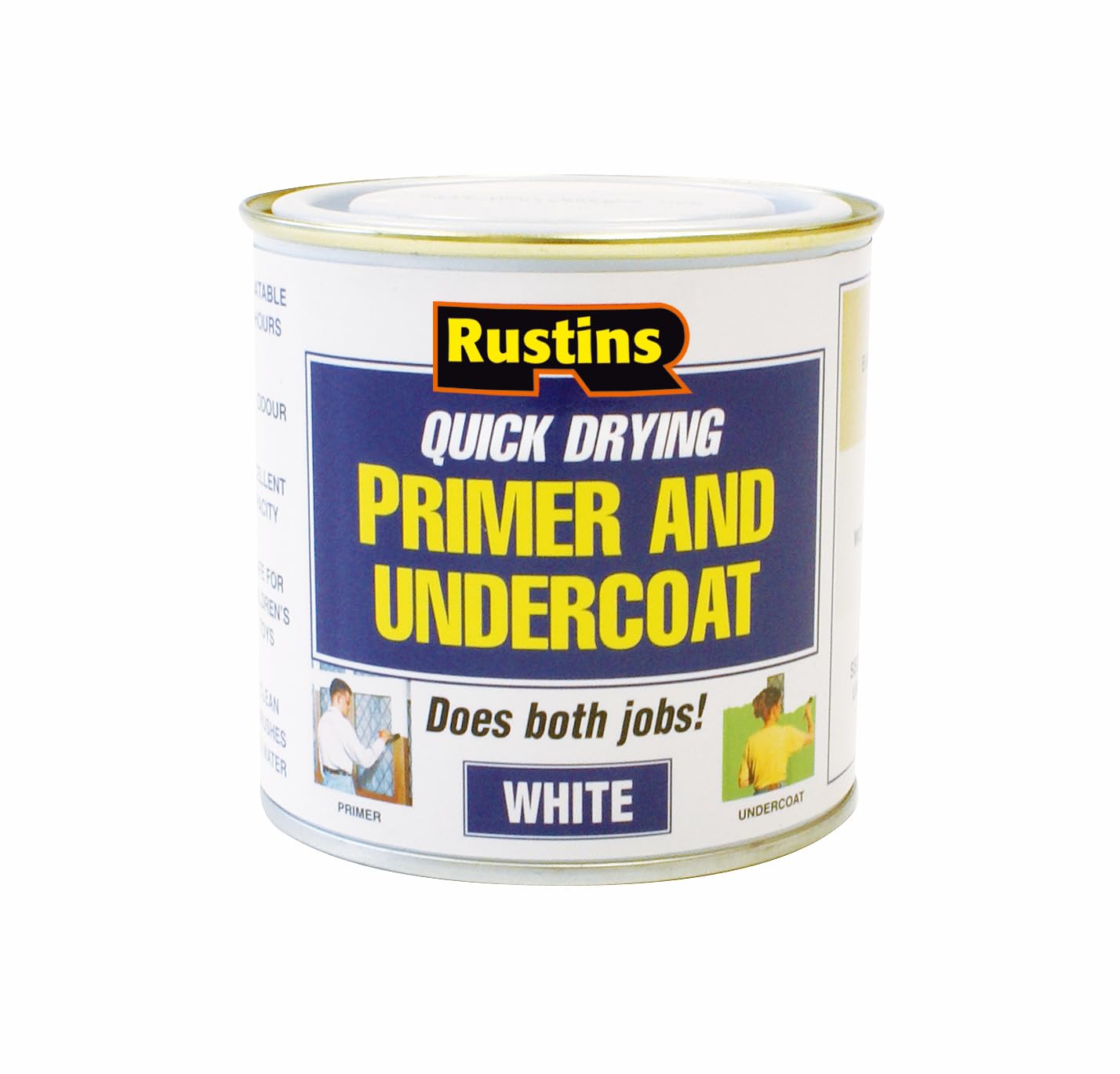
A fast‑drying small‑format primer that levels well for quick door and trim fixes.
Why I picked it: I used Rustins when I wanted rapid turnaround on a single door or a handful of drawers.
Best for: Small cabinet doors, bathroom vanities, and touch-ups.
Good for one-off projects; watch can size relative to project scope.
Pros
- Fast drying time
- Smooth leveling finish
- Low odor during application
Cons
- Small can size can limit larger jobs
- Premium per‑ounce cost on tiny tins
My take
For a tired bathroom door and a handful of drawer fronts, Rustins’ quick‑dry primer saved me time. Two coats leveled out the surface and left it looking almost like a finished paint—perfect for those one-off fixes.
The odor was mild and it handled like a larger can product, but I made sure to check quantities: the small can is handy, but I had to buy more for anything beyond a couple of doors.
If you’re doing a weekend touch‑up, this primer gets the job done fast and cleanly.
6. Stone Coat Epoxy Undercoat – Best for Epoxy Projects
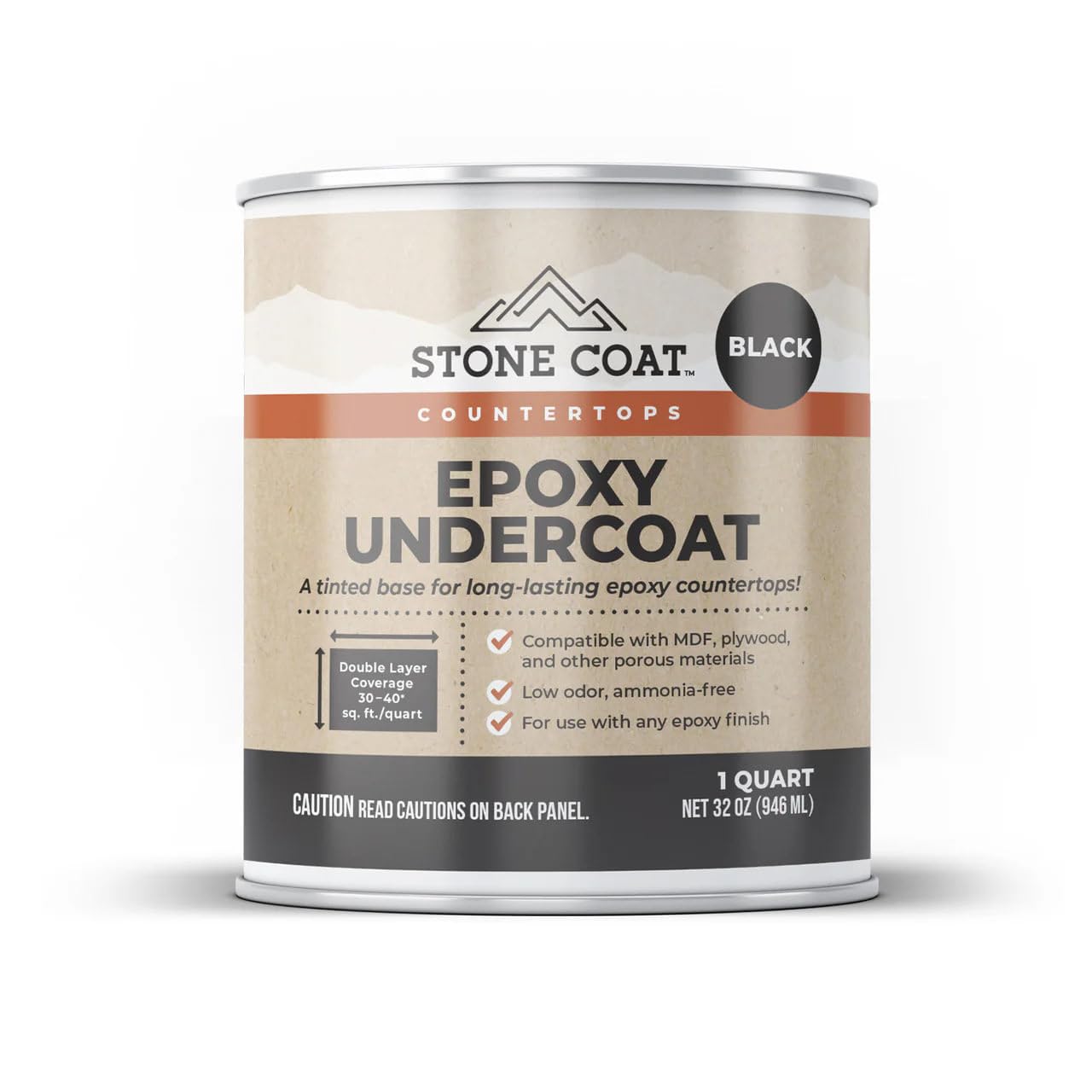
An epoxy undercoat formulated to seal porous surfaces and create a dense foundation before epoxy topcoats.
Why I picked it: I used this undercoat when preparing MDF and plywood for epoxy coatings and for cabinet tops that needed a glassy finish.
Best for: Countertops, cabinet tops, and projects where a resin topcoat follows.
Targeted product—smart buy if you plan to use epoxy systems.
Pros
- Designed specifically for epoxy systems
- Seals porous substrates well
- Non‑toxic and easy to work with
- Creates a denser look under epoxy
Cons
- Limited coverage per quart
- Usually requires two coats for full hide
My take
When I prepped a laminate counter and some MDF cabinet shelves for an epoxy topcoat, the Stone Coat undercoat sealed the surface and gave me a uniform base that made the resin finish much easier to work with.
I applied two thin coats with a microfiber roller and noticed the undercoat hid the substrate well but didn’t always achieve 100% hide in one pass—expect two coats for best results.
This is the undercoat I reach for whenever an epoxy resin top layer is in the plan.
7. KILZ Adhesion High‑Bonding Primer – Best for Tough Bonds
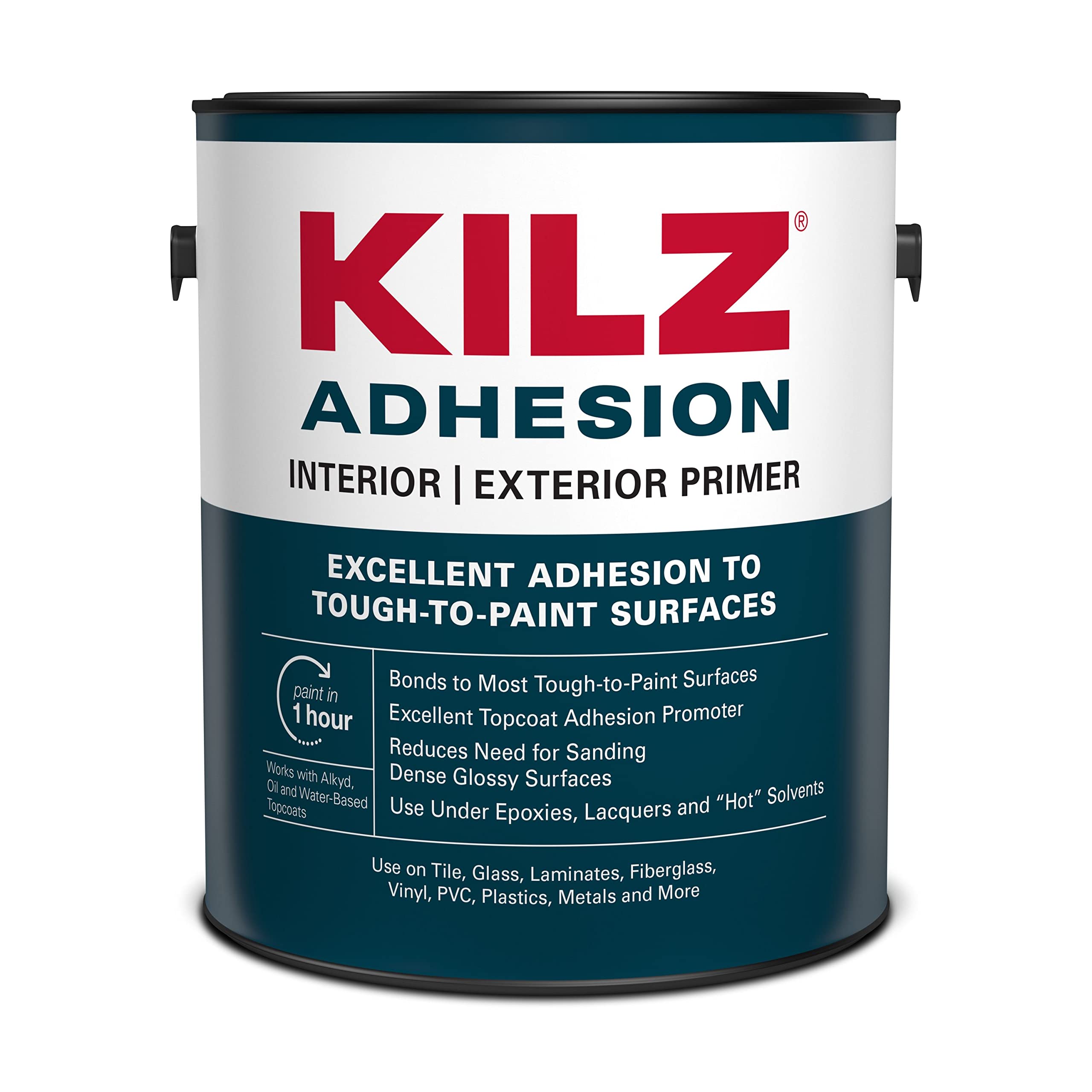
A high‑adhesion primer that bonds to very slick surfaces and reduces the need for aggressive sanding.
Why I picked it: I used KILZ when I wanted confidence that the topcoat wouldn’t lift or peel from slick, factory‑finished cabinetry.
Best for: Extremely slick or glossy cabinets, Formica, and other hard‑to‑coat surfaces.
A professional‑grade choice—worth it for problem surfaces.
Pros
- Exceptional adhesion to slick substrates
- Reduces need for heavy sanding
- Fast drying and recoat times
- Works with water or oil topcoats
Cons
- Very tenacious when cured—clean drips quickly
- Take precautions when spraying
My take
KILZ Adhesion earned its place on my toughest prep days. I used it on varnished six‑panel doors and shiny cabinet trim that I didn’t want to sand down completely.
The primer went on velvet‑smooth with a roller, dried quickly, and allowed me to topcoat with my usual trim paint without adhesion failures. I was careful to clean any drips while wet because the cured film is incredibly stubborn.
For any cabinet surface that usually makes me dread painting, KILZ Adhesion is my insurance policy against peeling and lifting.
How I Choose a Primer for Kitchen Cabinets
Adhesion and Surface Type
I start by identifying the cabinet surface: raw wood, previously painted wood, laminate, or glossy factory finish. Adhesion requirements drive the primer choice.
For slick or plastic‑faced cabinets I go straight to bonding primers like KILZ or Stix; they save me hours of sanding and reduce the risk of peeling.
- Raw wood: use a general acrylic primer for good sealing.
- Glossy or laminate: pick a bonding primer (KILZ, Stix).
- Metal or radiators: choose a rust‑inhibitive sealer like Bulls‑Eye.
Stain Blocking & Tannin Sealing
If I’m covering dark stains, watermarks, or old tannin bleed, I pick a primer formulated to block stains so I don’t need multiple topcoat layers.
Bulls‑Eye 1‑2‑3 and Rust‑Oleum Painter's Touch are solid choices when stain blocking is a priority.
- Tough dye/tannin bleed: use a dedicated stain blocker.
- Rust or metal stains: use a rust‑inhibitive primer.
VOC, Odor and Indoor Use
I consider VOCs when I’m working in a lived‑in kitchen. Fusion Mineral Paint is truly zero‑VOC and ideal for tight spaces.
Water‑based primers generally have lower odor and easier cleanup than solvent options, which I prefer for interior cabinet work.
- Zero‑VOC: best for occupied homes and nursery or kitchen environments.
- Water cleanup reduces mess and simplifies tools.
Coverage, Dry Time, and Project Size
Coverage and dry times matter for cabinet runs. For a full kitchen I prioritize higher‑coverage quarts or gallons; for single doors, small cans are convenient.
Fast‑drying primers speed up recoat time and help me finish in phases without long waits.
- Large kitchens: choose high‑coverage primer gallons.
- Small projects: quick‑dry small cans save waste.
- Bonding primers may require thinner, even coats.
Epoxy and Resin Work
When an epoxy topcoat is part of the plan, I always use a compatible epoxy undercoat like Stone Coat to create the dense base the resin needs.
Standard primers aren’t formulated for resin systems, so matching the undercoat to the topcoat chemistry matters.
- Use epoxy undercoat for resin countertops and cabinet tops.
- Apply two thin coats for best seal before resin.
Frequently Asked Questions
Do I need to sand cabinet surfaces before priming?
I lightly scuff glossy or factory‑finished surfaces before priming; that simple step helps water‑based primers grab better. For very slick substrates I rely on a bonding primer to eliminate heavy sanding.
Can I use a paint with built‑in topcoat instead of primer plus paint?
For small doors and furniture I often use Fusion Mineral Paint because the built‑in topcoat saved me a step and produced a durable finish. For full kitchen runs or problematic surfaces I prefer a separate primer then paint for maximum coverage and adhesion.
How many coats of primer will my cabinets need?
I usually apply one even coat on light or previously primed wood; for dark stains, porous substrates, or to build a uniform base I plan on two thin coats.
Which primer should I use under an epoxy topcoat?
I use a product designed for epoxy systems—Stone Coat Epoxy Undercoat—because it seals porous surfaces and creates the dense foundation resin needs.
Final Take
I’ve found there’s no single primer that’s perfect for every cabinet project—substrate and desired finish drive the choice.
For everyday cabinet refreshes I reach for Rust‑Oleum Painter's Touch or Bulls‑Eye 1‑2‑3; for slick surfaces I use KILZ or INSL‑X Stix; and for low‑odor, furniture‑quality finishes I turn to Fusion Mineral Paint.
Pick the primer that matches your surface and finish goals, follow good prep steps, and you’ll drastically reduce the work your topcoat needs to do.
