
I tested a range of RV and portable toilets — from simple bucket seats to full residential-style bowls — so you can pick the right toilet for boondocking, vanlife, cabins, or emergency backup.
I spent time using each of these toilets in real-world situations: van conversions, a winter cabin without running water, weekend camping, and a shop without plumbing. That mix helped me compare comfort, odor control, emptying, and durability.
This roundup separates simple, budget-friendly options from full portable cassette toilets and fixed RV fixtures so you can match the toilet to how you travel and how often you’ll use it.
If you want a no-fuss, ultra-cheap emergency solution, a bucket seat works. For multi-day boondocking and daily use in a van or cabin, detachable-holding cassette toilets strike the best balance. If you’re converting a bus or want a residential feel, a ceramic RV toilet is the more permanent—but heavier—choice.
1. Thetford Porta Potti 345 – Best Mid-Size Portable
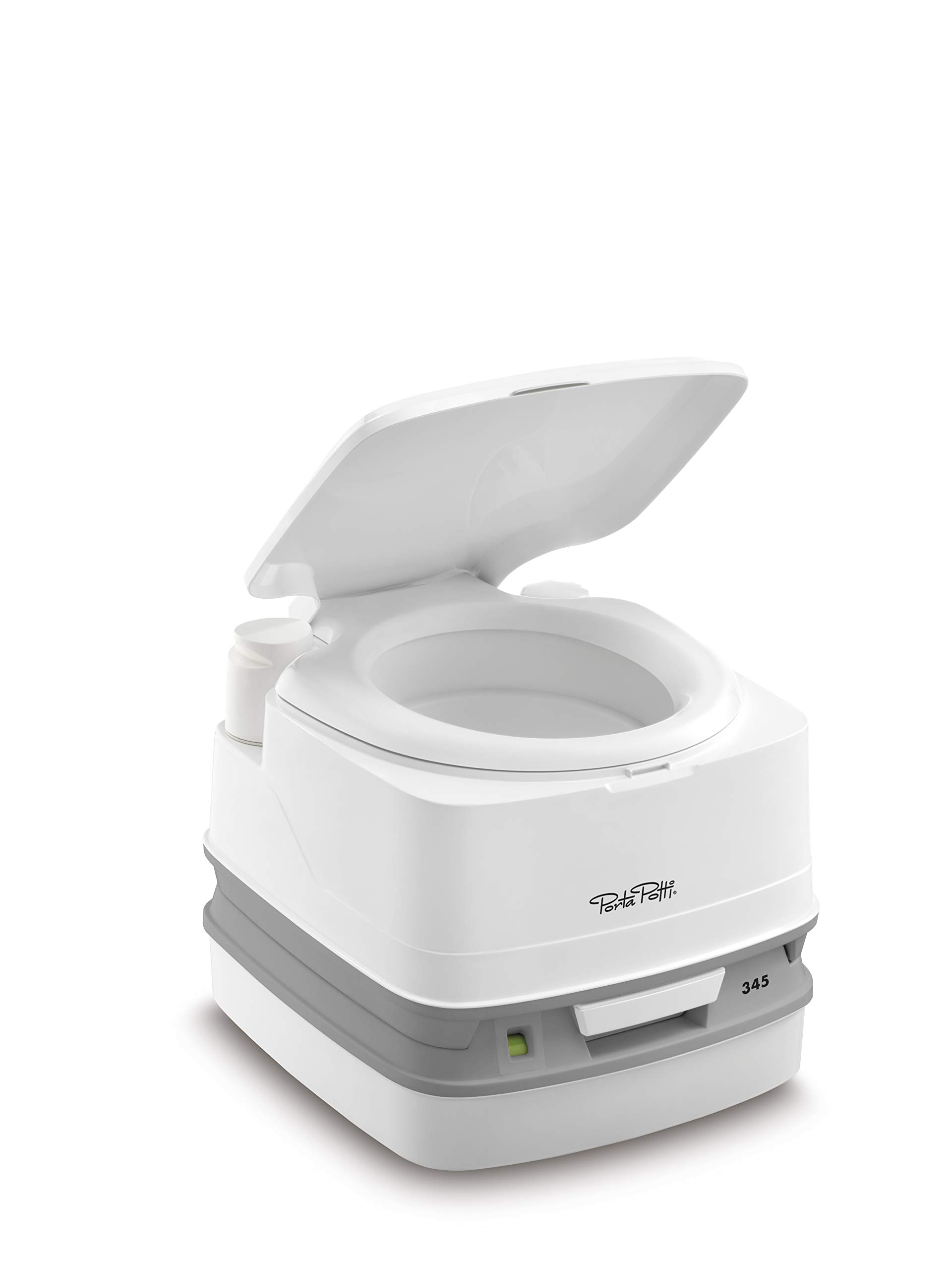
A solid medium-sized cassette-style porta potty with a piston pump flush and a visible waste-level indicator.
Why I picked it: Sturdy, household-height comfort with a reliable piston flush and a clear waste-level indicator.
Best for: Weekend camping, winter cabin use, and van setups that need a no-frills cassette toilet.
Midrange portable cassette—good value for regular use.
Pros
- Household-height seat
- Piston-pump flush is reliable
- Visible waste-level indicator
- Lightweight for its class
Cons
- No flush-water level indicator
- Manual pump needs effort
My take
I used the Porta Potti 345 as a winter toilet in a cabin with the water shut off and it performed exactly as I wanted: comfortable seat height, easy piston-pump flushing, and a clear waste-level indicator that kept me from surprise empties.
The 15 L flush-water tank and 12 L waste tank are a sensible balance for short-term off-grid use. I topped the water with RV antifreeze on freezing nights and added drop-in black tank treatment to control smell; together they kept odors away.
The build feels durable and it's light enough to move around the van or cabin. If you want a fully automatic electronic flush, look elsewhere, but I appreciated the low-maintenance manual design and Thetford’s solid fit-and-lock that prevented leaks during my uses.
2. Camco 5-Gallon Bucket Toilet with Seat – Best Budget
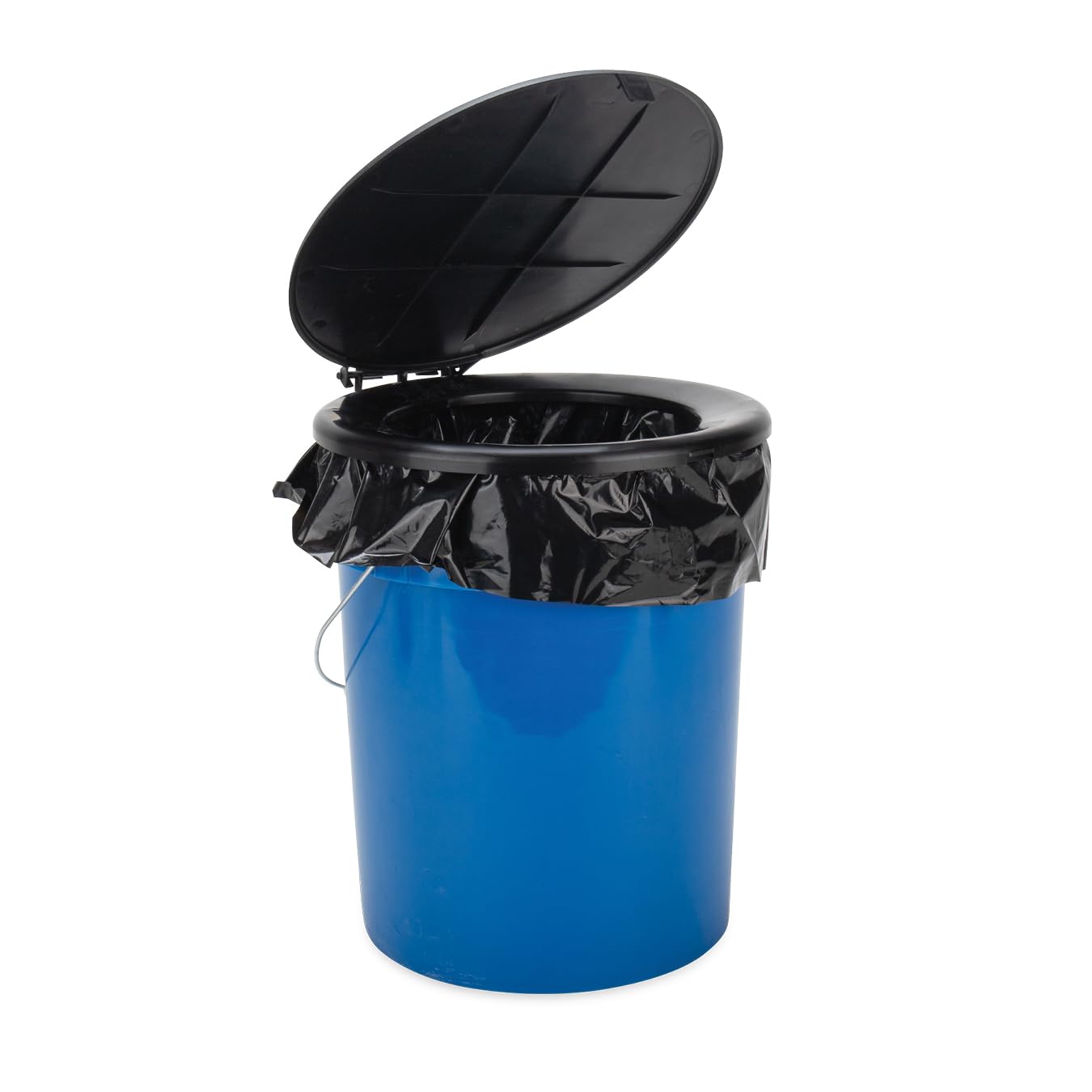
A straightforward, ultra-affordable bucket toilet that snaps a seat and lid onto a 5-gallon bucket and includes disposable liners.
Why I picked it: Lowest-cost, simplest emergency or occasional-use option that’s easy to store and maintain.
Best for: Emergency kits, occasional camping, kids, or a backyard/shop backup toilet.
Very affordable and replaceable accessories.
Pros
- Extremely affordable
- Lightweight and portable
- Easy to clean interior
- Includes disposable liners
Cons
- Minimal comfort on long use
- Seat/lid can feel flimsy
My take
I keep the Camco bucket seat in my vehicle and have used it on road trips and in a workshop without plumbing. It transforms a standard 5-gallon bucket into a sanitary option, and the included disposable bags make cleanup quick.
Comfort is limited compared with cassette or fixed toilets, but it’s perfect for short emergencies, kids, or when a cheap, storable solution is needed. The snap-on lid seals well enough to contain odors for short trips.
3. Camco 5.3-Gallon Portable Toilet (41541) – Best for Frequent Use
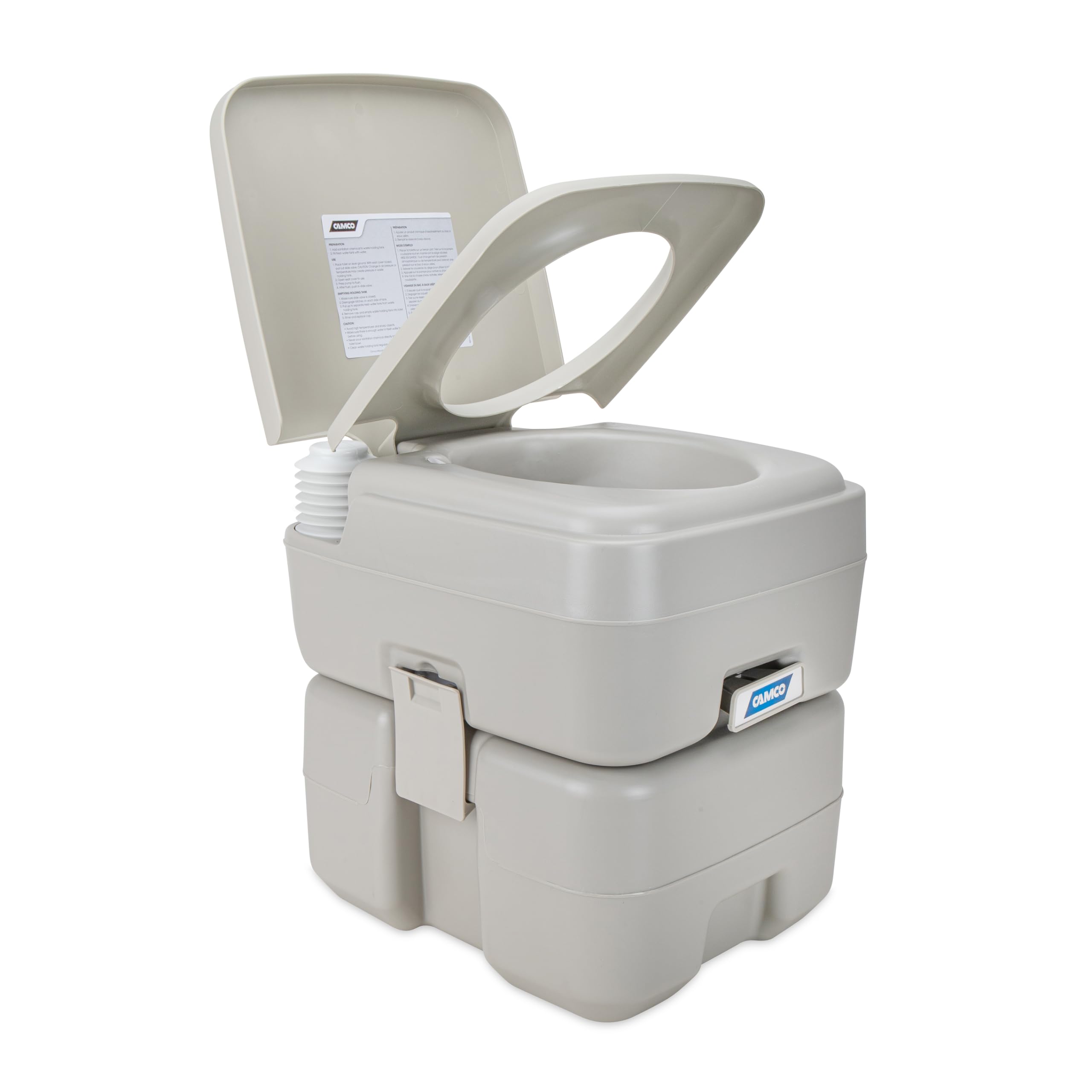
A robust cassette-style toilet with a detachable holding tank, sealing slide valve, and bellows flush for reliable, odor-locked operation.
Why I picked it: Detachable tank and sealing slide valve make emptying clean and low-odor for regular campers.
Best for: Frequent boondocking, boat use, and people who want an easy-to-empty portable cassette.
Practical mid-to-upper tier portable for regular use.
Pros
- Odor-locking holding tank
- Efficient bellows flush
- Detachable for easy emptying
- Supports up to 330 lb
Cons
- Heavier than simple portables
- Requires storage space
My take
I used the Camco 5.3-gallon unit for several trips and appreciated the sealed slide valve and detachable tank—the dump process is straightforward and largely odor-free when I used the included treatment pods.
The bellows pump gives a solid bowl rinse without plumbing. It’s heavier than a bucket or the smallest portables, but that weight comes with sturdiness and a comfortable seating experience. For daily or near-daily use on trips, this hit the sweet spot for me.
4. SereneLife 5.2-Gallon Portable Toilet – Best for High Flush Count
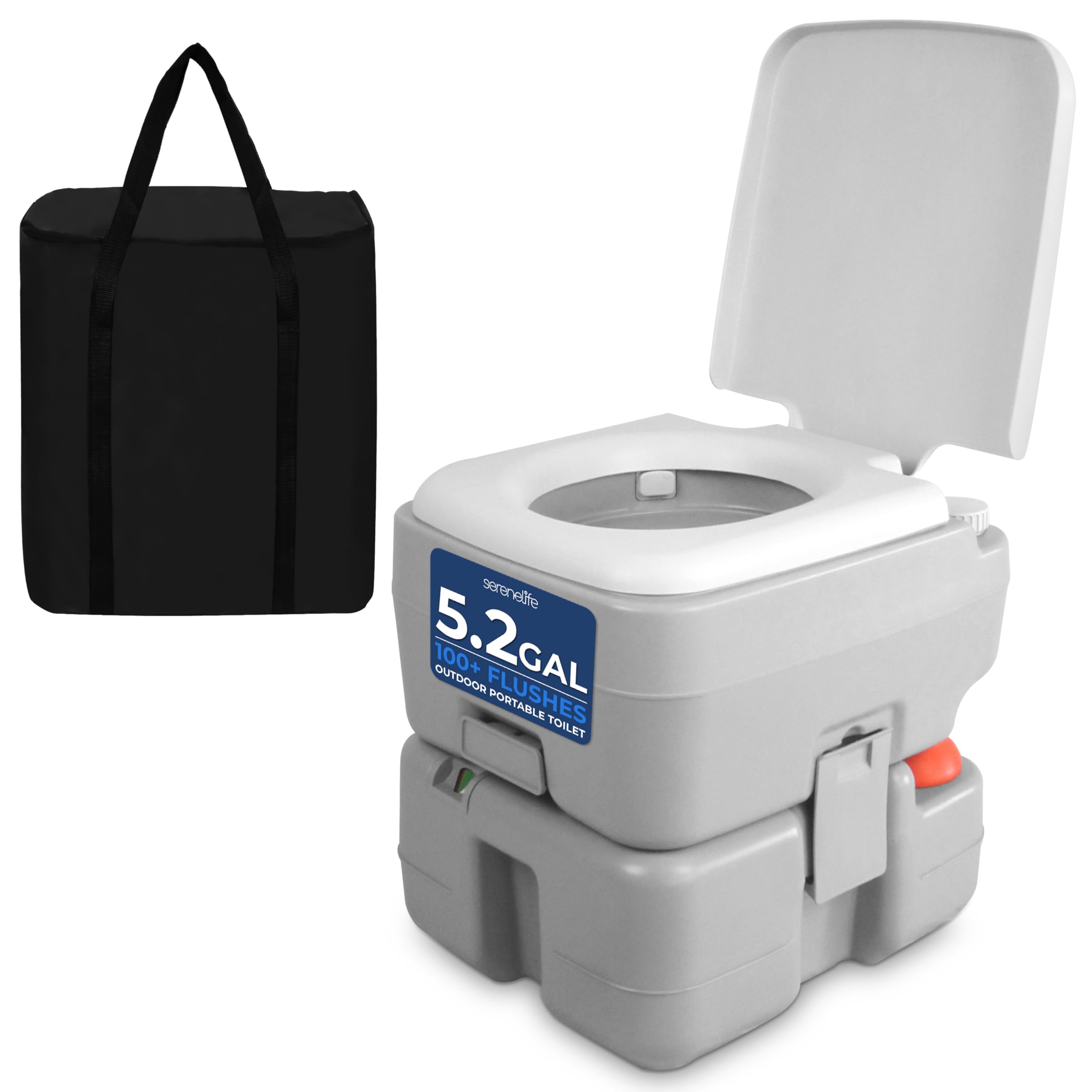
A full-size seat portable with a push-button flusher and a larger top water tank for dozens of flushes between refills.
Why I picked it: Large water tank and push-button flush mean more uninterrupted use between refills.
Best for: Long weekends, groups, or anyone who wants many flushes without refilling.
Good value for larger-capacity portables.
Pros
- Full-size comfortable seat
- Push-button flusher
- 80+ flushes per fill
- Double-sealed drain valve
Cons
- Seat feels a bit flimsy
- Unit can be heavy when full
My take
I chose the SereneLife for trips where I wanted many flushes without constant refilling. The 3.2-gallon water tank and push-button flusher delivered long stretches of use—perfect for weekend trips with several people.
The double-sealed drain valve blocked odors reliably, and the rotating no-splash pour spout made emptying cleaner. I did find the seat a little less substantial than a residential seat, but overall it performed very well for extended use.
5. Dometic 320 Series RV Toilet – Best Residential Upgrade
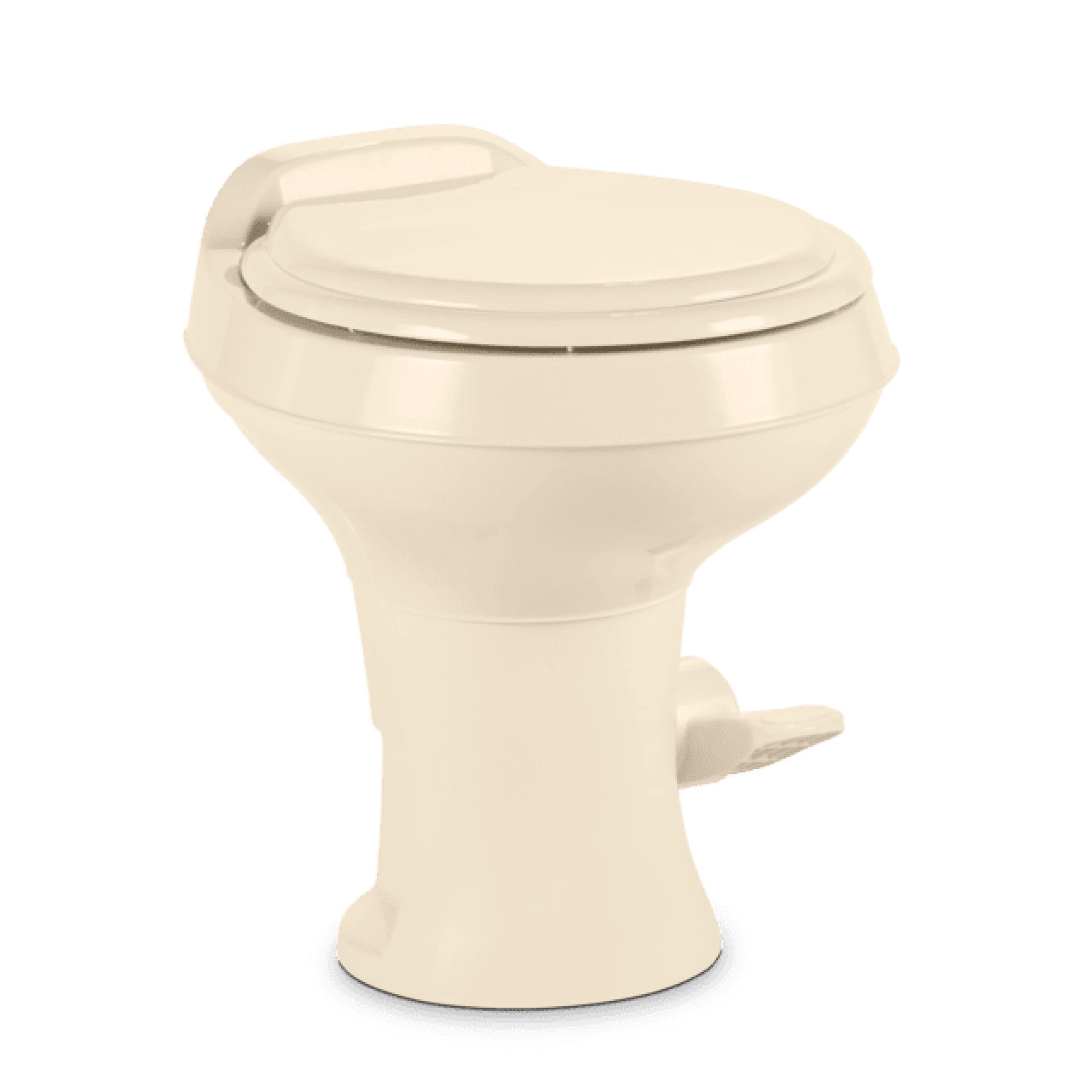
A full-size, vitreous ceramic RV toilet that gives a true residential feel with an ergonomic foot pedal and efficient gravity flush.
Why I picked it: The most residential-feeling RV toilet with a deep ceramic bowl and efficient one-pint flush.
Best for: Bus conversions, permanent RV upgrades, and anyone wanting a home-like ceramic bowl.
Higher-cost option aimed at long-term installations.
Pros
- Full-size ceramic bowl
- Residential wood seat
- Very water efficient
- Ergonomic foot pedal
Cons
- Heavier and bulkier
- Hardware inserts can fail
My take
I installed the Dometic 320 in a bus conversion and it transformed the space; the deep vitreous ceramic bowl and wood seat feel like home and make long trips more comfortable.
Installation went smoothly with standard plumbing parts but I did take extra care with the mounting hardware—some models use nylon inserts that can loosen over time, so I checked torque and fit as part of my install routine.
This is the option I chose when I wanted durability and a residential look rather than a portable cassette; it’s heavier and more permanent, but that’s the trade-off for a true home-style toilet in an RV.
6. Thetford Aqua-Magic Residence Hi Profile – Best High-Profile RV Toilet
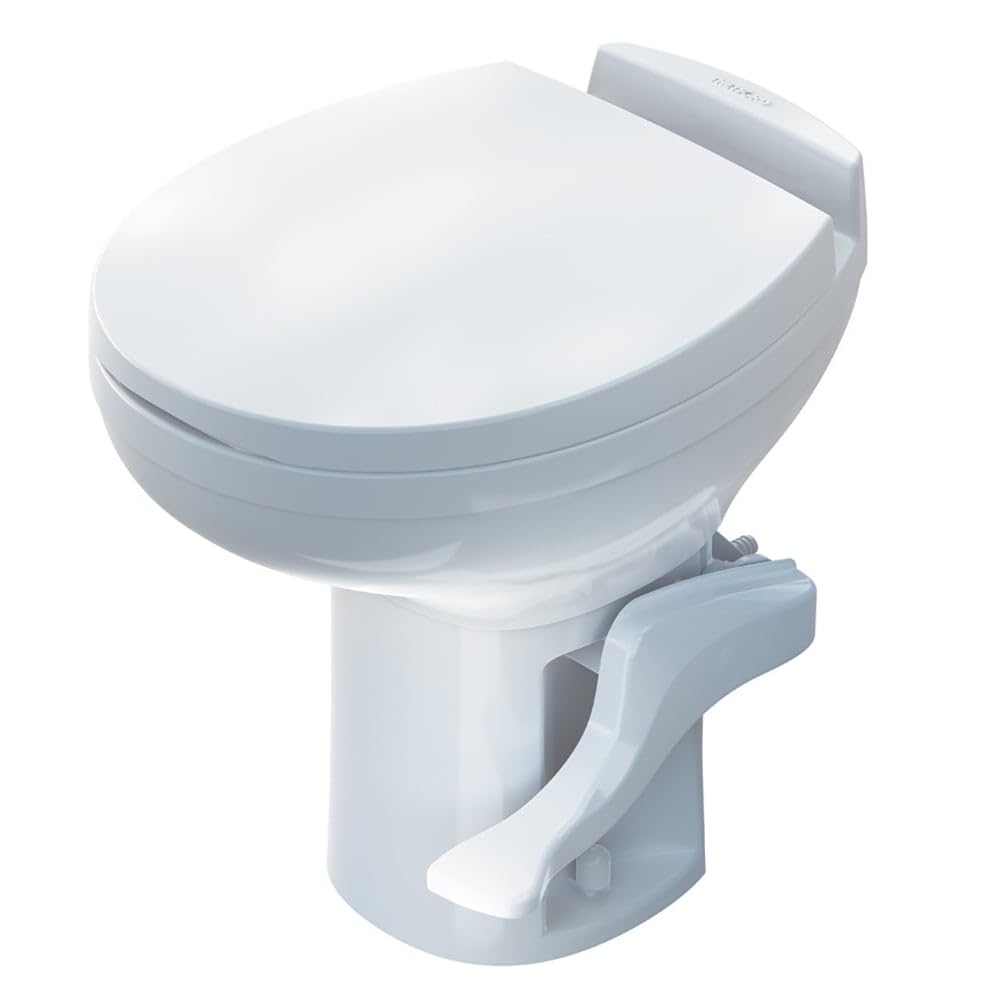
A lightweight, high-profile RV toilet with a single-pedal control, antimicrobial seat, and a smooth flush path for easier cleaning.
Why I picked it: Comfortable height and a single-pedal system that’s easy to operate and clean.
Best for: RVs needing a taller seat and easy-to-clean flush path.
Moderately priced RV fixture with user-friendly features.
Pros
- Comfortable high profile
- Antimicrobial seat
- Single-pedal water control
- Lightweight
Cons
- Narrow pedestal can feel less stable
- May need a riser for ideal height
My take
I paired the Aqua-Magic Residence with a riser and the extra height made sitting and standing easier—especially useful on conversions where knees and mobility matter.
The single-pedal operation is intuitive: half-press for water, full-press to flush. The flush path is straight and easy to keep clean, and the antimicrobial seat helped reduce odors and upkeep between deep cleans.
It’s lighter than a ceramic toilet, which made install easier for me, though the narrower pedestal felt a touch less substantial than some wider-base units.
7. Thetford Porta Potti 365 – Best for Vanlife
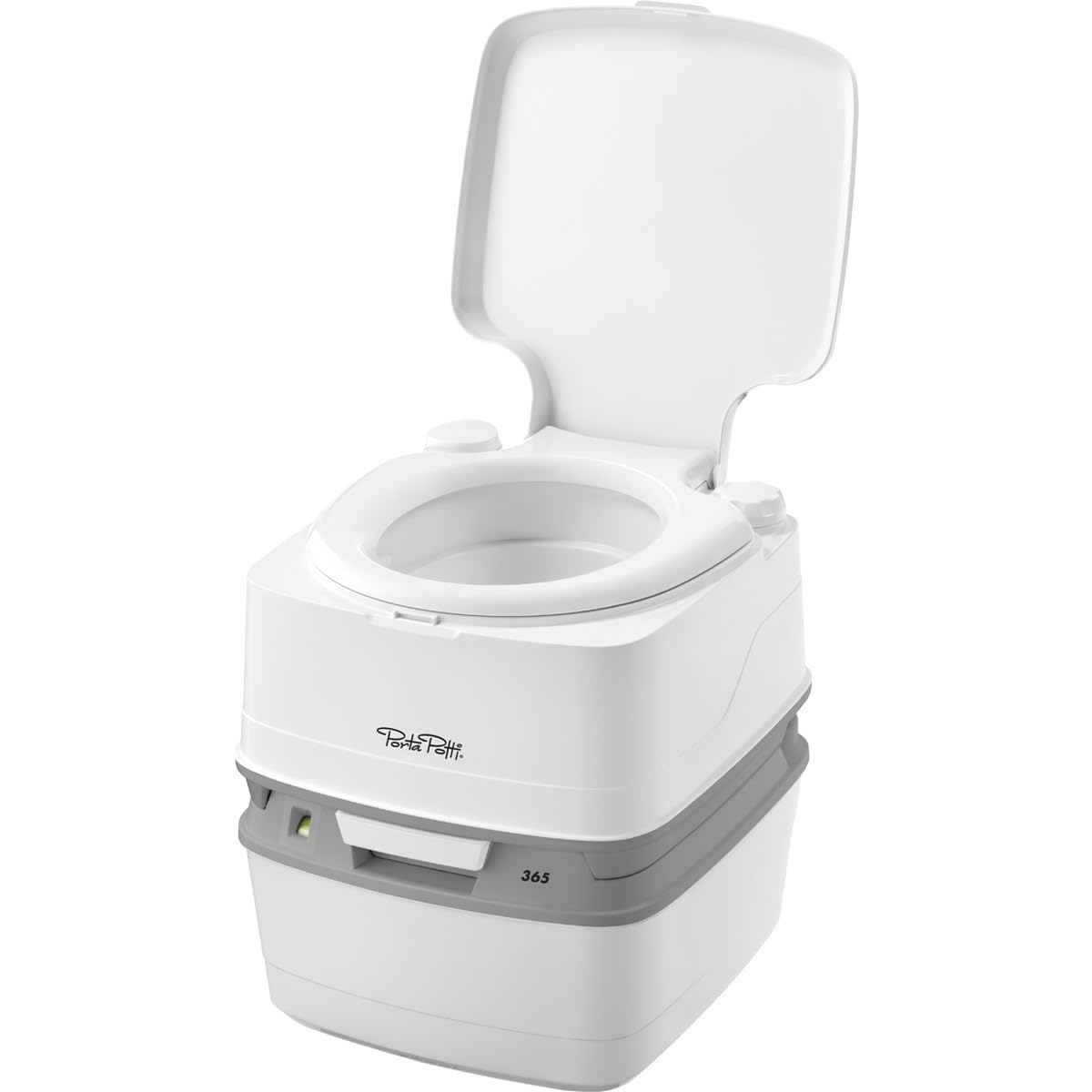
A well-built, taller portable toilet designed for multi-day van trips with a sealed valve and easy pour-out spout.
Why I picked it: Normal toilet height plus a sealed waste valve made multi-day van use comfortable and odor-free.
Best for: Van conversions, boats, and multi-day boondocking where space and odor control matter.
Premium portable that lasts with proper care.
Pros
- Normal toilet height
- Sealed valve prevents odors
- Rotating pour-out spout
- Removable seat for cleaning
Cons
- Can slosh if transported full
- Special cleaners recommended
My take
I used the Porta Potti 365 in a van conversion for trips up to several days and it handled daily use without smelling or leaking when treated with proper black tank chemicals.
Its ergonomic handle and piston flush made it feel more like a household fixture than a temporary toilet, and the rotating pour spout took the awkwardness out of emptying.
One caution from my travels: don’t transport the bottom tank full—road vibrations can cause slosh and leaks. Empty or secure it before hitting the road and you won’t have problems.
How I Choose an RV or Portable Toilet
Types of Toilets
I separate toilets into four practical types: bucket-seat solutions, small portable buckets with snap-on seats, cassette/detachable holding-tank portables, and fixed residential-style RV toilets. Each type has a different trade-off between cost, comfort, and installation.
- Bucket seat: cheapest and simplest, great for emergencies.
- Snap-on bucket toilet: still cheap, slightly more comfortable, uses disposable liners.
- Cassette/detachable: best balance for multi-day use and cleaner emptying.
- Residential RV toilet: permanent, heavy, and most comfortable.
Capacity and Flush Type
I look at water-tank and waste-tank sizes and how the flush is driven. Larger water tanks and push-button or bellows flush systems reduce the frequency of refills and give a more home-like flush.
- Bellows or piston flushes work without power.
- Push-button systems are easier for high flush counts.
- Check waste-tank volume against number of users and trip length.
Odor Control and Treatments
I always plan a routine for odor control: use drop-in treatments, enzyme products, or RV-specific chemicals in the waste tank and some treatments in the water tank if required. Proper sealing valves and slide gates are essential to keep smells contained.
- Use drop-in or liquid black tank treatments.
- Keep drain valves and seals clean to prevent odors.
- Empty regularly—don’t transport full tanks when possible.
Comfort, Size, and Installation
I match seat height and bowl shape to the user. For bus conversions and long trips, a residential-style seat pays off. For vans and compact rigs, portable cassettes offer the best compromise.
- Prioritize seat height if mobility is a concern.
- Check mounting footprint for residential replacements.
- Consider weight and storage location for portables.
Maintenance and Emptying
I plan how I’ll empty and clean: detachable tanks with pour spouts are easiest, while bucket systems require bag changes. Carry gloves, a small brush, and neutralizing treatments for fast maintenance.
- Use pour spouts and slide valves for neater emptying.
- Store a small kit: gloves, bio-enzymes, brush, and spare bags.
- Inspect seals periodically and replace if leaking or brittle.
Frequently Asked Questions
How often will I need to empty a portable cassette toilet?
From my experience it depends on tank size and users: mid-size 12–13 L waste tanks usually need emptying every couple of days for two people, while smaller buckets might need daily attention. I plan trips around available dump stations when possible.
Can I use regular household cleaners on portable toilet components?
I avoid standard bleach-based cleaners on plastic seals and valves; they can dry out seals. I use RV-specific cleaners and enzyme treatments recommended for black tanks to protect gaskets and finishes.
Is a residential ceramic toilet worth the hassle for a conversion?
If I want a home-like experience and intend to keep the vehicle long-term, a ceramic RV toilet is worth the weight and install effort. It gives a better seat and durable bowl, but I recommend checking mounting hardware and possibly upgrading mounting inserts for longevity.
How do I prevent smells in a porta potty during a multi-day trip?
I add a proper black-tank treatment to the waste tank, keep the drain valve closed, and use a drop-in deodorizer. For cold weather I’ll also add RV antifreeze to water tanks to prevent freezing and reduce smell issues.
Can I transport a portable toilet while the waste tank is full?
I don’t transport a full holding tank. Road vibration and motion can cause slosh and possible leaks. I empty or securely fasten the tank before travel to avoid accidents.
Final Take
I picked each toilet because it performed well for a specific use case: budget backup, frequent boondocking, vanlife, or a permanent residential upgrade.
If you want my short advice: choose a bucket seat for emergencies, a cassette portable for frequent off-grid use, and a ceramic RV unit for long-term, residential-style comfort.
