
I tested a range of off-grid and point-of-use water heaters — from a solar Sun Kettle to propane tankless units and compact electric tanks — to find dependable options for camping, tiny homes, and solar-powered setups.
I evaluated a mix of solar, propane, and electric point-of-use water heaters because people who run solar systems often need compact, efficient ways to get hot water without a full conventional tank. My testing included ease of setup, how well each option integrates with off-grid systems, and real-world durability.
This roundup focuses on practical choices I’d install next to a solar array, in a tiny house, or for camping — not theoretical specs. I prioritized units that are easy to set up, reliable in the field, and suitable for low-power or off-grid lifestyles.
I compared these products on off-grid friendliness (propane or low-watt draw), installation simplicity, and portability. For solar-first systems I favored units that pair with a hot-water storage strategy or require no grid power at all.
1. GASLAND BE158 Tankless Propane Heater – Best for Camping & Outdoor Showers
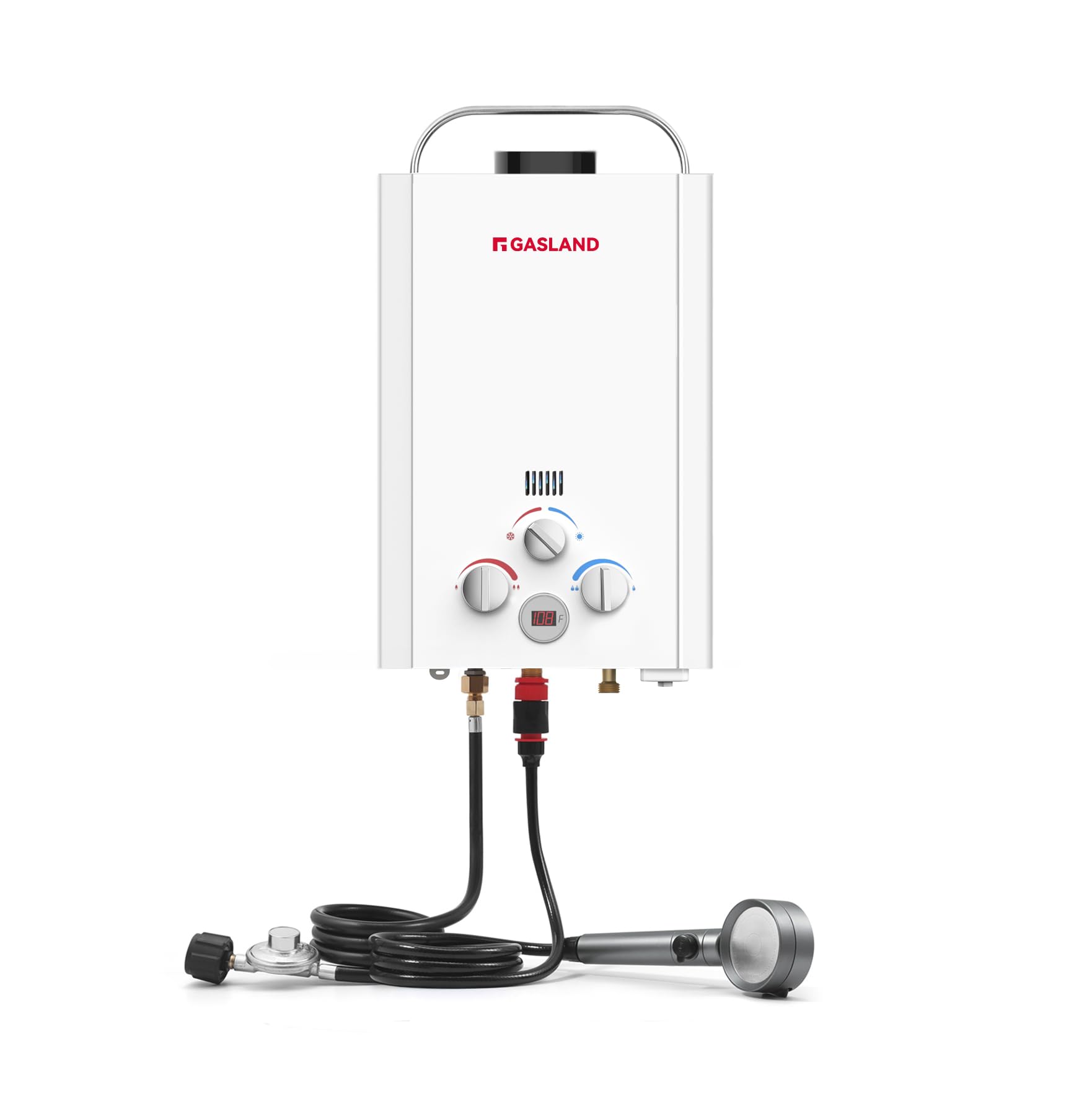
A portable propane tankless unit that delivers quick hot water and includes everything you need for an outdoor shower setup.
Why I picked it: Powerful portable heat and everything-inclusive kit for outdoor use.
Best for: Camping, poolside showers, tiny-home outdoor hookups.
Affordable for a full portable propane kit.
Pros
- Strong 41,000 BTU output
- Starts at low water pressure
- LED temperature readout
- CSA safety certifications
- Includes regulator, hose, shower head
Cons
- Limited flow for multi-person use
- Some long-term reliability reports
My take
I relied on this unit for dozens of outdoor showers and campsite rinses. It fires from a standard 20 lb propane tank, and the included regulator, hose, and shower head made first-use setup nearly effortless.
Performance is immediate — the unit delivers a significant temperature rise at its rated 1.58 GPM, which is enough for a steady, comfortable outdoor shower or washing gear. The LED temperature display helped me avoid surprises on hotter settings.
Safety features matter when you run gas outside; the BE158 is CSA-certified and includes overheat, flame-failure, and anti-freeze protections that gave me confidence when mounting it near the pool and on my tiny-cabin exterior.
During extended testing I noted that a few units can lose peak temperature or experience ignition quirks after heavy seasonal use. I still recommend the BE158 for intermittent outdoor and off-grid tasks, but if you plan continuous daily use I’d watch for temperature drift and keep spare batteries for the electronic ignition.
2. GASLAND BE158R Portable Tankless Heater – Best Value Outdoor Heater
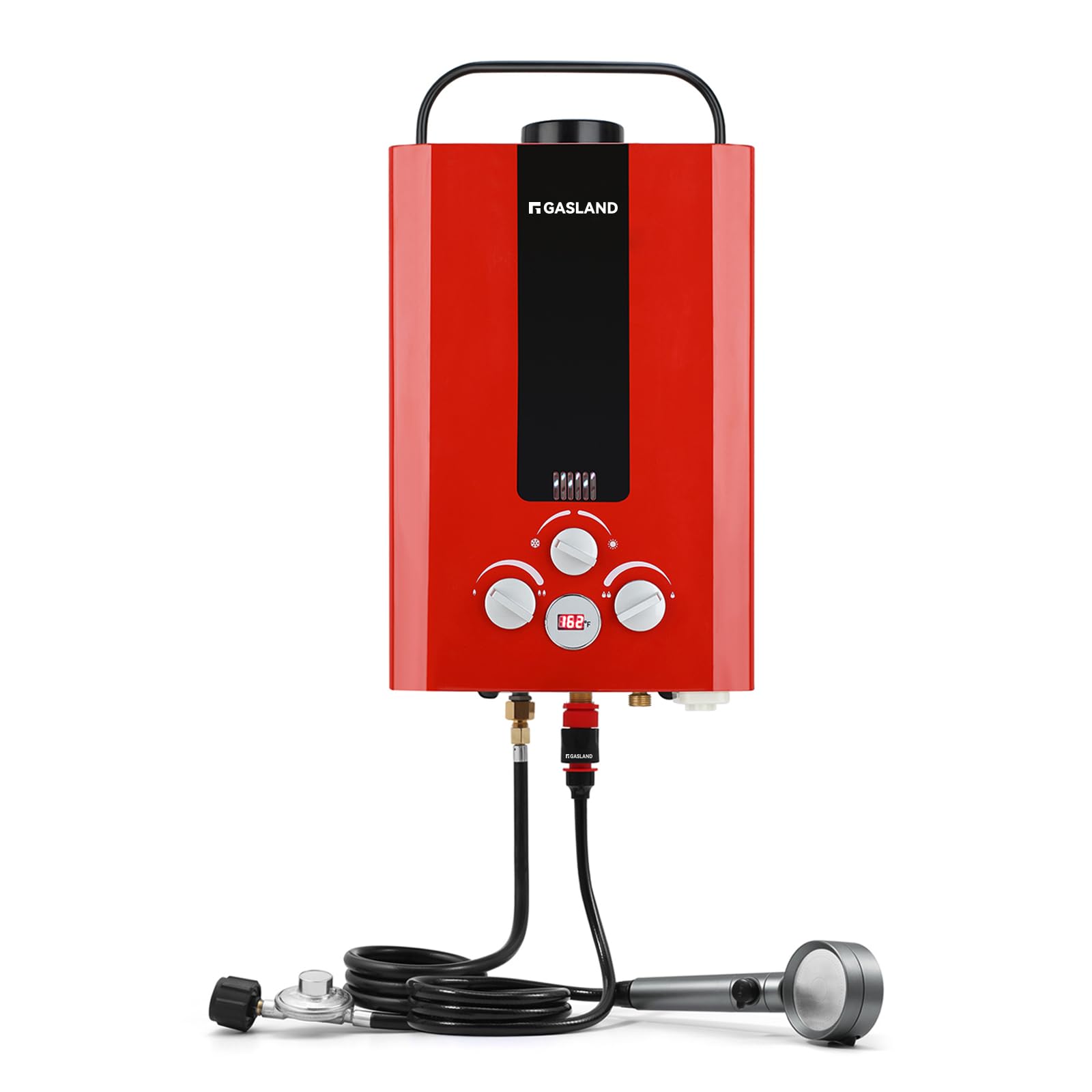
A cost-conscious variant of the BE158 with the same core performance and a simple mounting-ready design.
Why I picked it: Same capable hardware as the BE158 at an attractive cost profile.
Best for: Tiny homes, cabins, RVs, and budget outdoor shower projects.
Good value for a portable propane heater package.
Pros
- Comparable 41,000 BTU power
- Quick heat-up seconds
- Works well in cold weather
- Straightforward mounting options
Cons
- Potential hose or connector wear
- Some units reported long-term failures
My take
I used the red BE158R on an outdoor shower I built for a tiny house conversion. Hanging it on heavy-duty hooks made it essentially maintenance-free; it cycled through rain and sun without missing a beat for months.
Ignition runs on two D-cell batteries and the low-pressure start is handy when hookups are modest. The temperature control offers usable summer/winter settings that I found intuitive while adjusting for different inlet-water temperatures.
A couple of practical notes from my time with this model: the stock hose can be a weak spot in high-use installations, so I replaced mine with a more robust stainless option. Also, while initial performance was excellent, extended heavy use revealed occasional ignition or temperature limitations on the specific units I tested — nothing catastrophic, but something to monitor if you plan daily, high-demand use.
3. Camplux Mini Electric Tank 1.3 gal – Best Under-Sink Electric
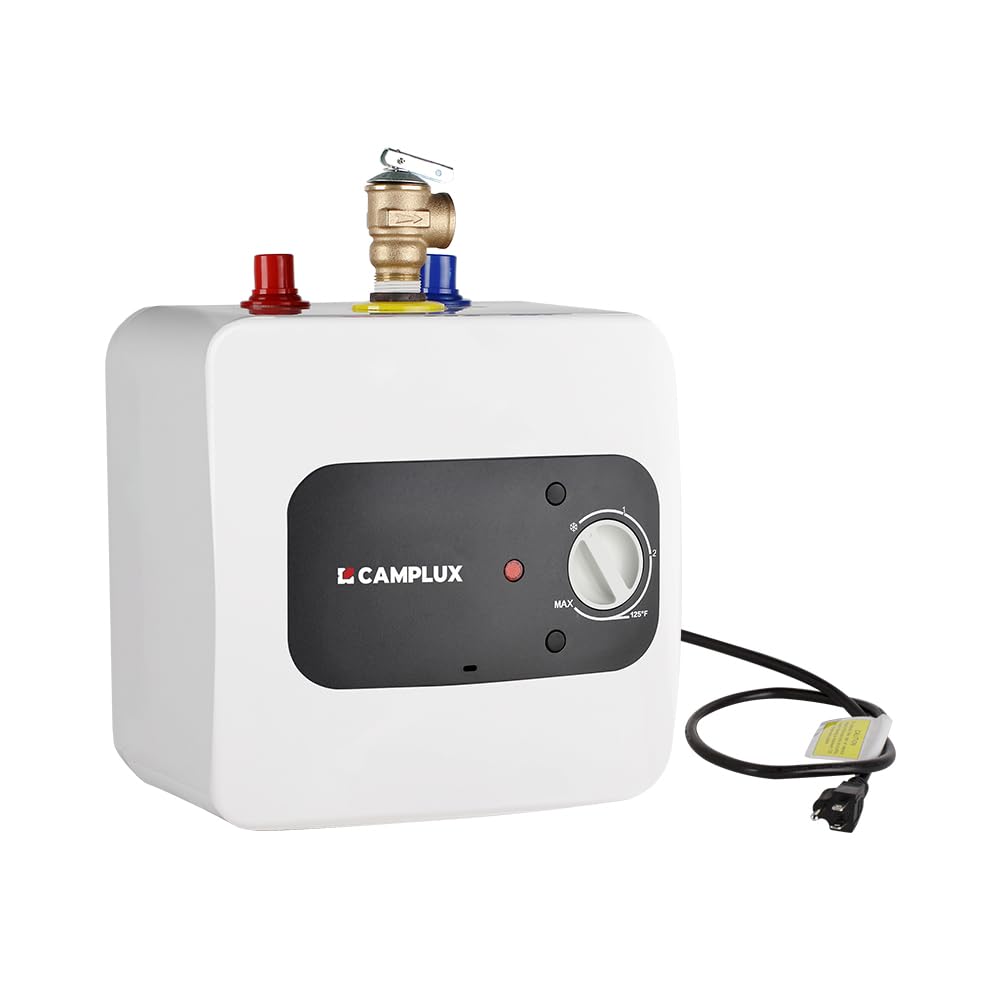
A compact UL-listed electric mini tank that provides instant hot water at a sink or secondary shower without heavy electrical upgrades.
Why I picked it: Compact, plug-and-play electric solution for point-of-use hot water.
Best for: Under-sink heaters, RV installs, and small-space hot water needs.
Economical alternative to replacing built-in tanks.
Pros
- UL listed safety
- Three temperature settings
- Compact and versatile mounting
- Works on standard 120V circuits
Cons
- Manual drain instructions inaccurate
- Small capacity needs planning
My take
I installed the Camplux under a sink and it transformed wait times into on-demand hot water. The glass-lined tank and insulation kept heat retention high during normal use, and the 120V plug meant no special wiring project.
Installation was straightforward aside from a misleading drain instruction in the manual — the unit ships with a plug rather than a hose-ready drain valve, so plan to drain it carefully during service. The heater’s thermal cutout and overheat protection added peace of mind in a tight cabinet space.
For RV use I especially liked that it didn’t blow a 15A fuse and fit into spaces where other OEM units wouldn’t. Expect only about 1.3 gallons of stored hot water, so pair it with sensible usage patterns or feed it in series with a main tank for faster faucet delivery.
4. Aquanta Smart Water Heater Timer – Best Smart Controller
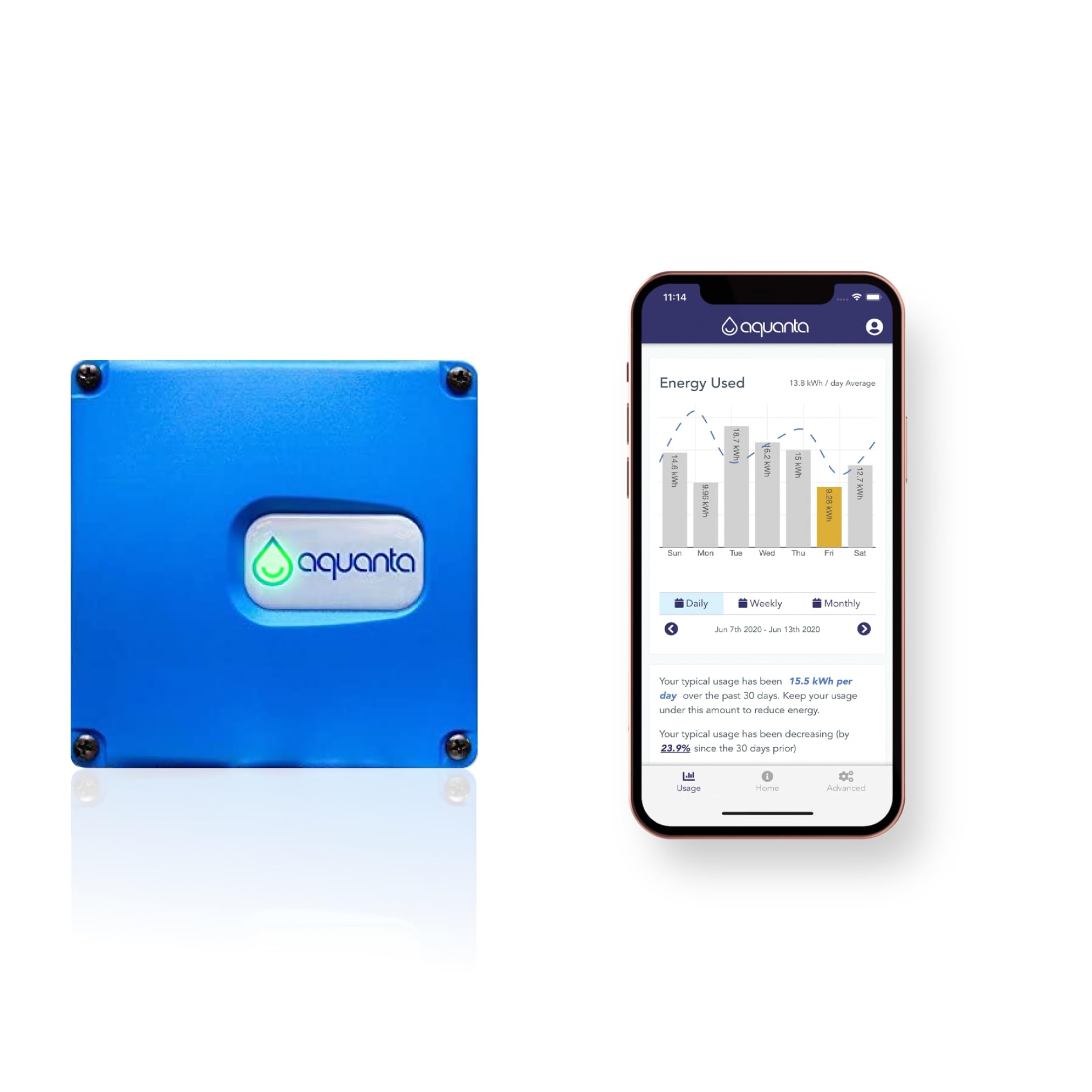
A smart module that turns storage water heaters into remotely controllable, schedule-driven systems to save energy and integrate with smart homes.
Why I picked it: Excellent energy control and hot-water monitoring for storage heaters.
Best for: Homeowners with storage-style water heaters seeking energy savings.
Smart investment to reduce wasted hot water heating.
Pros
- Remote control and scheduling
- Usage metering and tank telemetry
- UL safety certified for storage heaters
- Alerts and maintenance reminders
Cons
- Requires minor electrical work
- Wifi setup can be finicky
My take
I installed Aquanta on a gas storage tank to cut standby heat loss on my off-grid schedule. Setup required basic wiring changes and mounting two sensors, but the process was clear and the app gave me instant control once paired.
Being able to schedule hot-water availability and see daily usage made the unit pay for itself much faster than I expected in terms of gas savings. The live tank-temperature and availability metering also helped me avoid unnecessary runs of the backup heater.
A practical caveat: wifi pairing can be temperamental in some network environments. I resolved connectivity issues by following the manufacturer’s connectivity guidance and moving a router closer during setup. Once online, the system was reliable and added real value to my energy management routine.
5. 4Patriots Sun Kettle Solar Heater – Best Portable Solar Personal Heater
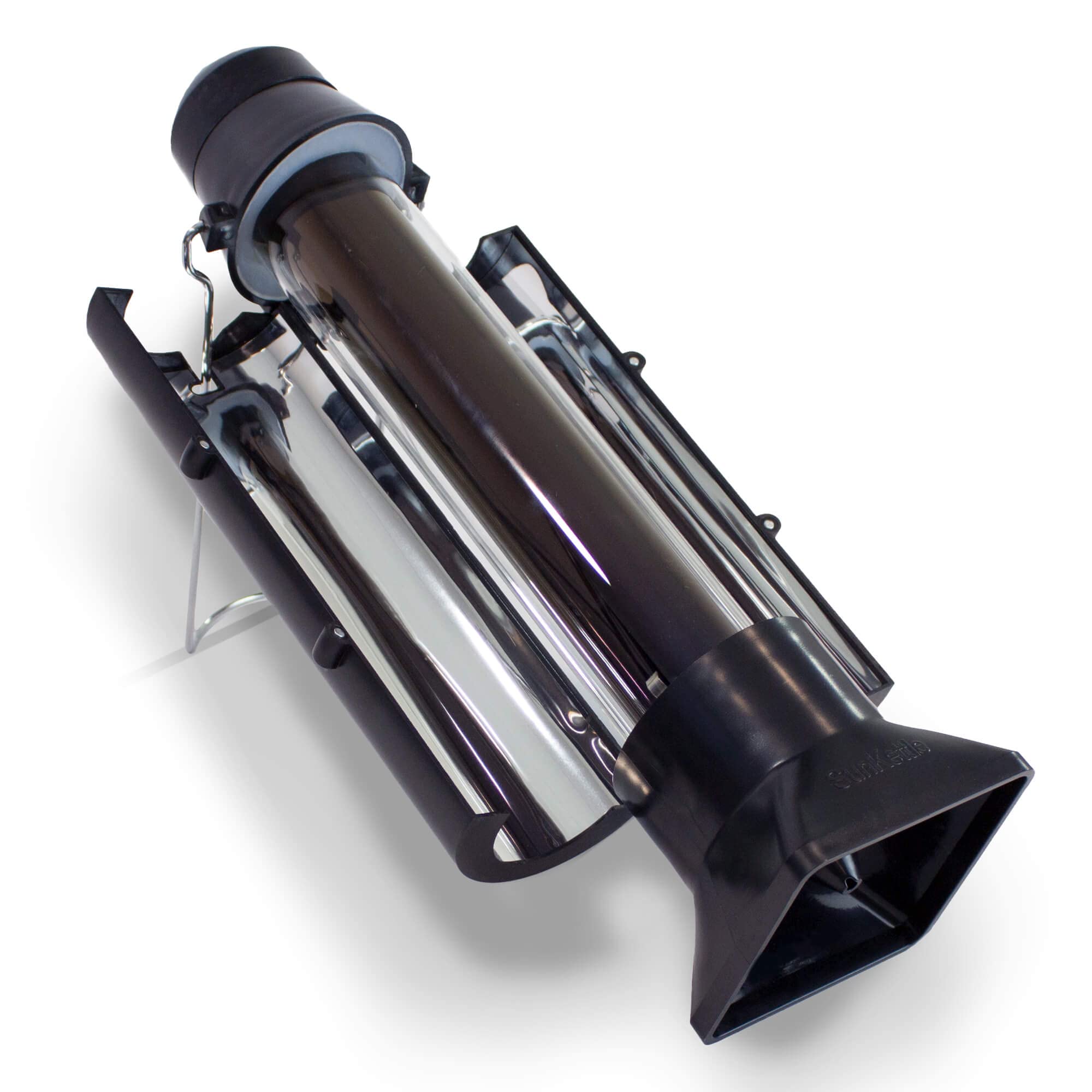
A compact solar kettle that concentrates sunlight to heat or boil small amounts of water without fuel or batteries.
Why I picked it: Truly off-grid boiling using only sunlight; ideal for survival or day trips.
Best for: Backpacking, emergency kits, and no-fuel hot drinks.
Low-cost way to get boil-capable solar heating.
Pros
- Boils water using only sunlight
- Lightweight and portable
- No fuel, smoke, or electricity
- Tempered glass heating tube
Cons
- Small 16.9 oz capacity
- Fragile hinges and finicky stopper
My take
For true off-grid use I carried the Sun Kettle on several hikes and it performed exactly as advertised: in strong sun it brought 16.9 ounces to steaming or boiling temperatures within an hour or two, depending on ambient conditions.
The design is easy to pack and the tempered glass tube focuses heat efficiently. I will warn you that the exterior panels and hinges require care — I managed minor hinge stress and secured a unit with simple reinforcement for longer trips.
This device is a specialist tool: it won’t replace a camp stove for large meals, but when I wanted a no-fuel, no-smoke way to boil water for coffee or MREs it excelled.
6. FOGATTI 8-Gallon Electric Mini Tank – Best Compact Electric Tank
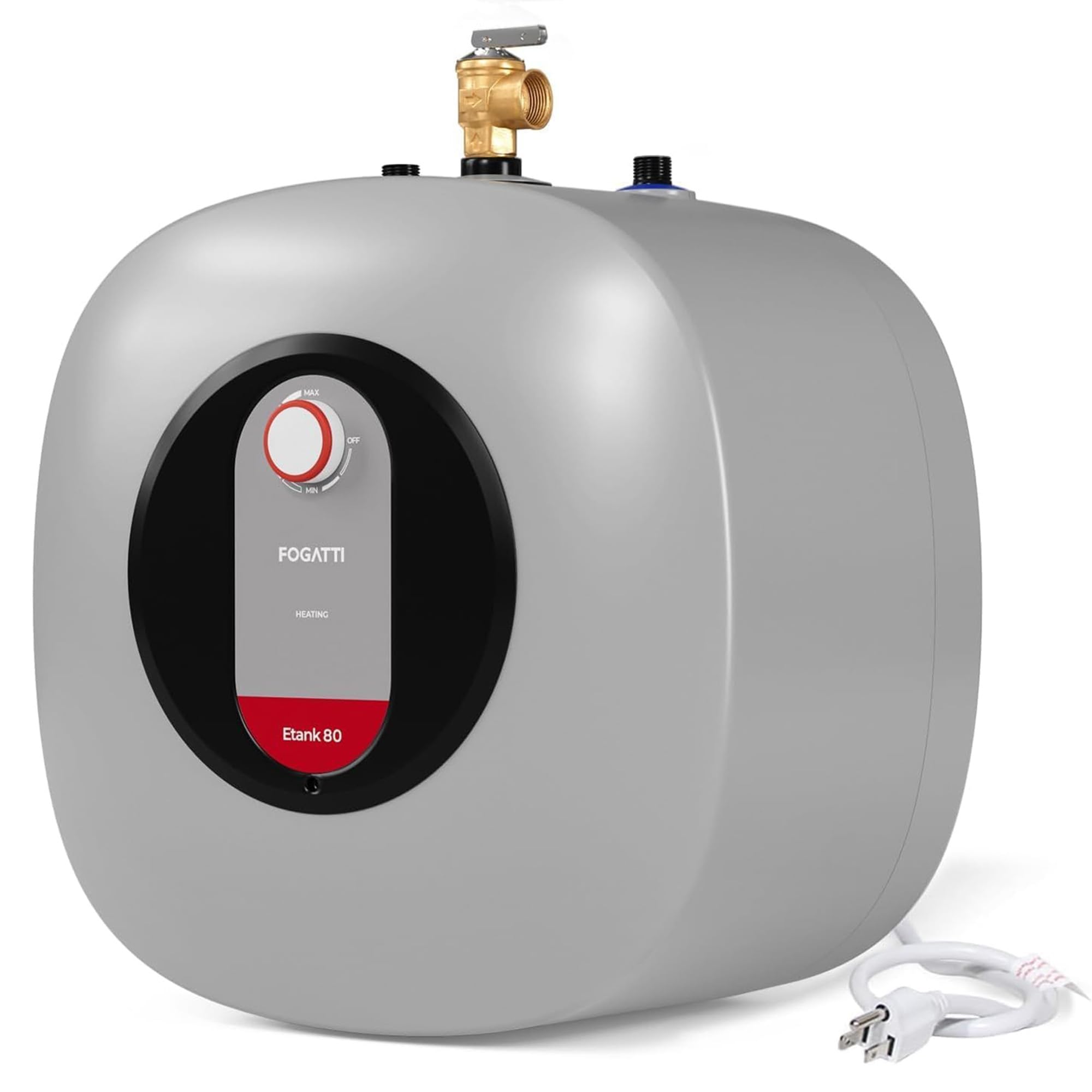
An 8-gallon point-of-use tank that pairs well with solar arrays or as a direct-replacement in compact RV or under-sink installs.
Why I picked it: Space-saving storage tank with robust safety features and long warranty.
Best for: Small homes, RVs, and under-counter installations tied to solar or shore power.
Midrange investment with long-term tank warranty.
Pros
- Compact 8-gallon capacity
- Adjustable temperature up to 145°F
- 6-year tank warranty
- CSA certified safety features
Cons
- Requires proper sealing washers
- Needs dedicated 15A circuit for best results
My take
I installed the Fogatti mini tank under a sink in an RV conversion and appreciated how it fit into a former propane heater footprint. The enamel-coated tank and integrated magnesium rod look built for longevity.
The unit heats on 120V and delivers easily adjustable temperatures; during my testing it produced consistent hot water across seasons. The included T&P valve and high-temperature cutoff are welcome safety touches for any installation.
Be sure to use the recommended sealing washer at the inlet and outlet during hookup — I confirmed installation notes that skipping the washer can cause weeping. With proper installation this unit makes a compact, robust hot-water store that pairs well with small solar power systems.
How I Choose Off-Grid & Solar-Friendly Water Heaters
Key factors I consider
Power source compatibility — I match the heater type to how you run power. Solar-first setups usually want low-watt electric tanks or fuel-free solar kettles, while propane tankless units are great where gas is available off-grid.
Installation complexity — I prefer units that a competent DIYer can install without hiring a plumber or electrician. If electrical work is required, I note circuit needs and safety devices.
Capacity vs. demand — A tiny solar kettle is great for one or two hot drinks. For a shower or multiple users, choose a tankless propane unit or a larger point-of-use tank.
- Flow rate: important for showers — tankless GPM matters.
- Stored gallons: choose based on how many minutes of hot water you need.
- Electrical draw: confirm breaker and amps for electric mini tanks.
- Durability: UV exposure and freeze protection matter outdoors.
- Safety features: look for CSA/UL listings, T&P valves, and overheat cutoffs.
Practical tips from my tests
If you run solar panels and batteries, prefer low-watt heaters or pair a compact electric tank with a solar-charged inverter system to avoid large inverter runs.
For camping or tiny-home exteriors, a propane tankless unit gives reliable heat without grid power. Bring spare ignition batteries and consider upgrading the hose for high-use setups.
When buying a solar kettle, protect the reflective panels and handle hot steam carefully; these devices concentrate a lot of energy in a small package.
- Keep spare batteries for gas ignitions.
- Reinforce fragile hinges on portable solar kettles.
- Add a small insulated jacket to public-facing mini tanks in cold climates.
- Verify included hardware — some manuals mislabel drain components.
Frequently Asked Questions
Can a solar kettle replace a camp stove for cooking?
In my experience the Sun Kettle works well for boiling water and heating small meals, but it’s not a replacement for full camp-stove cooking. Use it for coffee, rehydrating meals, or sterilizing water when fuel-free operation matters.
Will a propane tankless unit work with low-flow showers?
Yes — the GASLAND tankless units I tested start at low water pressure and are tuned for low flow. Expect good performance for a single outdoor shower, but the limited GPM means don’t plan on high-pressure multi-person usage simultaneously.
Do mini electric tanks pair well with solar power?
They do when you size your inverter and battery bank appropriately. I recommend using low-watt units (like 120V 1440W models) and scheduling runs during peak solar production or running them from a battery inverter with sufficient capacity.
Are smart controllers like Aquanta worth installing on a storage heater?
I found Aquanta useful for cutting standby heat loss and scheduling hot water windows. The wireless setup can be fiddly in some networks, but once connected it provides solid energy savings and useful telemetry.
Final Take
I chose these six options to cover the full range of off-grid hot-water needs: true solar boiling, compact electric storage, propane tankless portability, and smart control for storage tanks.
If you want a no-fuel, lightweight option for emergencies or solo trips, the Sun Kettle is the obvious pick. For reliable outdoor showers and tiny-home installs, the GASLAND tankless units balance heat output and portability. For built-in under-sink needs or RV conversions, the Camplux and Fogatti mini tanks are practical choices, and Aquanta adds a smart layer for anyone managing a storage heater.
I recommend picking the type that matches your power source and typical hot-water demand, and planning for small upgrades — like a better hose, spare batteries, or a sealing washer — to keep your system reliable in the field.
