
I tested five portable table saws across power, fence accuracy, rip capacity, and portability to find the best options for beginners and small shops.
I picked and used these table saws because I wanted options that balance accuracy, power, and portability for someone just getting into woodworking or running a small jobsite.
Across these machines I focused on fence quality, rip capacity, motor torque, build durability, and how easy each saw was to move and set up.
If you’re starting out, I’ll help you decide whether you should prioritize a compact footprint, a rolling stand, a worm drive’s torque, or a budget-friendly package.
I compared fence systems, rip capacity, motor power, portability, and built-in storage to highlight where each saw shines for a beginner.
1. DEWALT DWE7485 Compact Table Saw – Best Overall
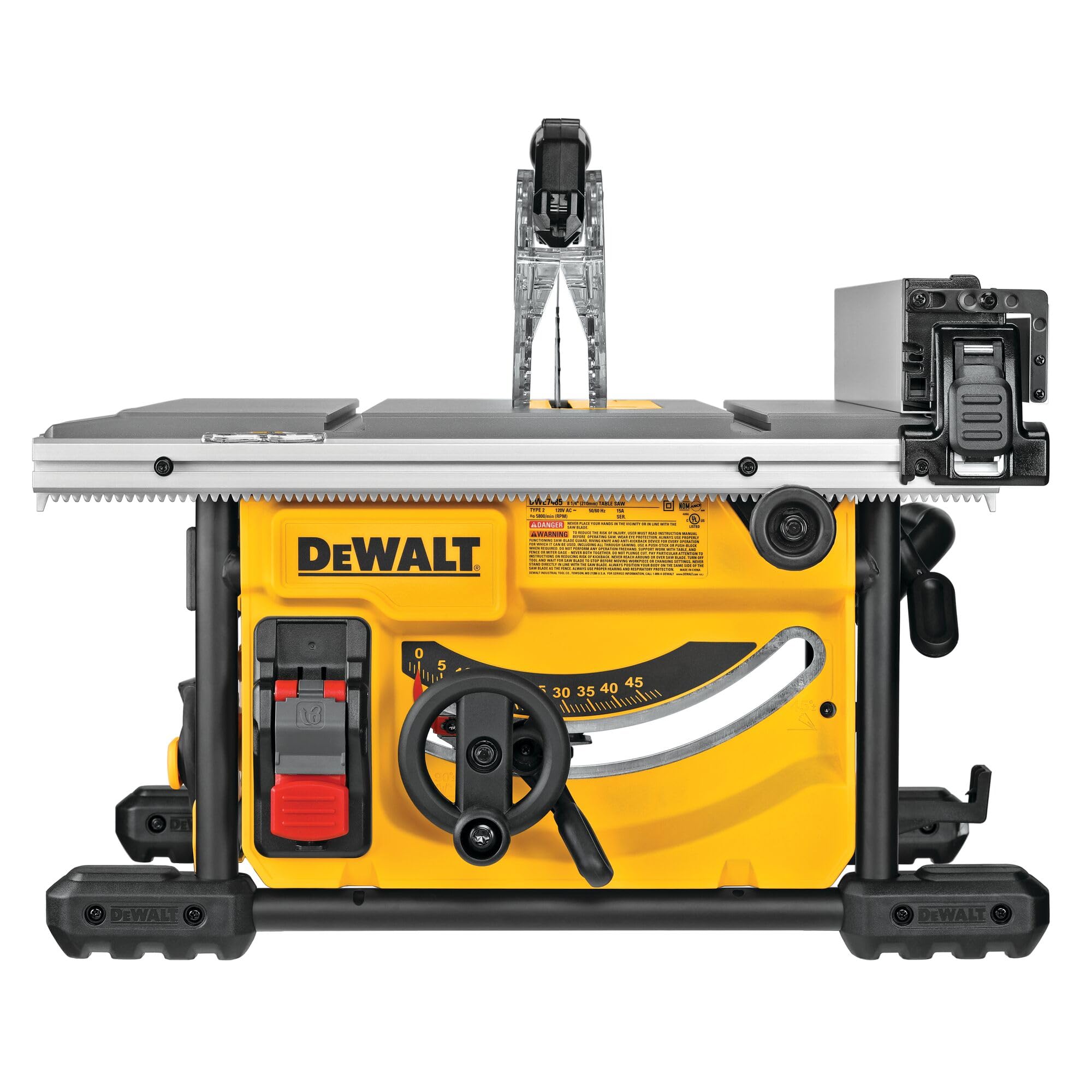
I found this compact DeWalt to be the most balanced saw for beginners who want jobsite toughness, accuracy, and enough rip capacity for sheet goods.
Why I picked it: Strong 15A motor, smooth rack & pinion fence, and 24.5" rip capacity.
Best for: Beginners who want a portable, accurate jobsite saw that handles plywood.
Excellent value for the performance and build quality it delivers.
Pros
- Powerful 15‑amp motor
- Rack & pinion fence for accurate adjustments
- 24.5" rip capacity for 4×8 sheets
- On-board storage for accessories
- Compact, durable roll‑cage base
Cons
- Smaller blade than full‑size 10" saws
- Heavier than some compact models
My take
I reached for the DWE7485 when I needed a saw that travels well but still cuts like a workhorse. The 15‑amp, 5,800 rpm motor slices through hardwood and plywood without bogging down.
The rack and pinion fence is the feature I appreciated most; adjustments are fast and repeatable, which made ripping long panels much less fiddly than with a typical contract saw fence.
Storage for the guard, miter gauge, wrenches, and push stick keeps my setup tidy on site. The metal roll‑cage base feels like it will survive the knocks and drops of a busy job.
Safety features like the non‑through riving knife and anti‑kickback pawls gave me confidence to train safe cutting technique, and the Site‑Pro modular guarding system made guard changes tool‑free and quick.
2. DEWALT DWE7491RS 10-Inch Table Saw with Rolling Stand – Best with Rolling Stand
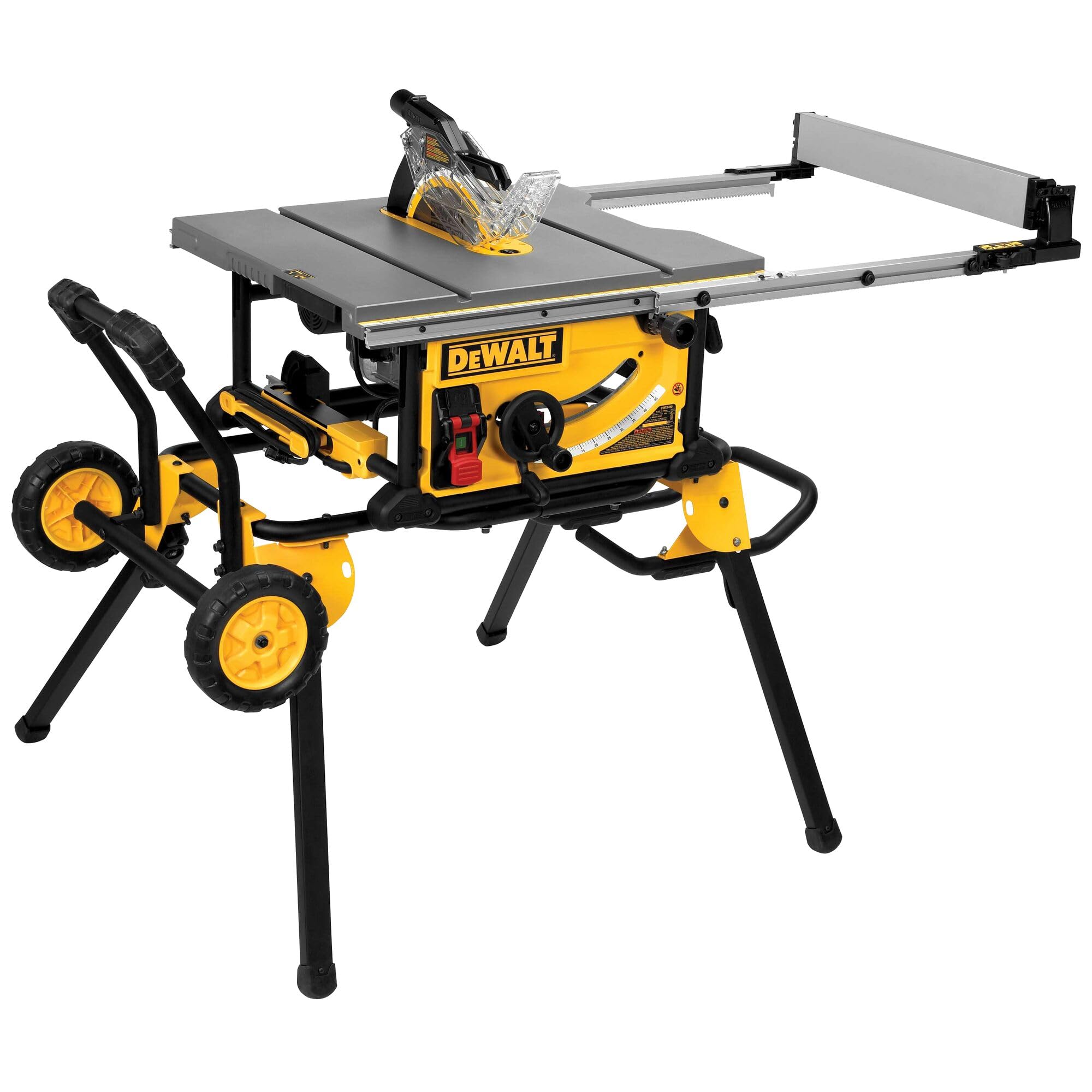
I recommend this DeWalt when mobility and larger rip capacity matter—its rolling stand and 32.5" rip make single-person sheet work easier.
Why I picked it: 32.5" rip capacity plus a stable rolling stand and the same rack & pinion precision.
Best for: People who move their saw between job sites or need larger rip widths.
A step up in cost for the convenience of the wheeled stand and bigger rip capacity.
Pros
- Large 32.5" rip capacity
- Rolling stand for quick transport
- Rack & pinion fence system
- Onboard storage for accessories
- Strong 15‑amp motor
Cons
- Stand assembly can be fiddly
- Stand legs need care to avoid wear
My take
I found the DWE7491RS to be the most convenient choice when I needed to move the saw around sites. The wheeled stand folds and deploys quickly, and the whole package feels stable once set up.
With a 32.5" rip capacity I comfortably ripped large shelving and trim without wrestling the material, and the flip‑over fence option helps with narrow rip cuts.
The motor handled hardwood ripping smoothly, and the onboard storage kept everything close at hand during longer jobs. Assembly takes some time but the payoff is a portable saw that behaves like a shop unit.
3. SKIL TS6307 10-Inch Jobsite Table Saw – Best Value
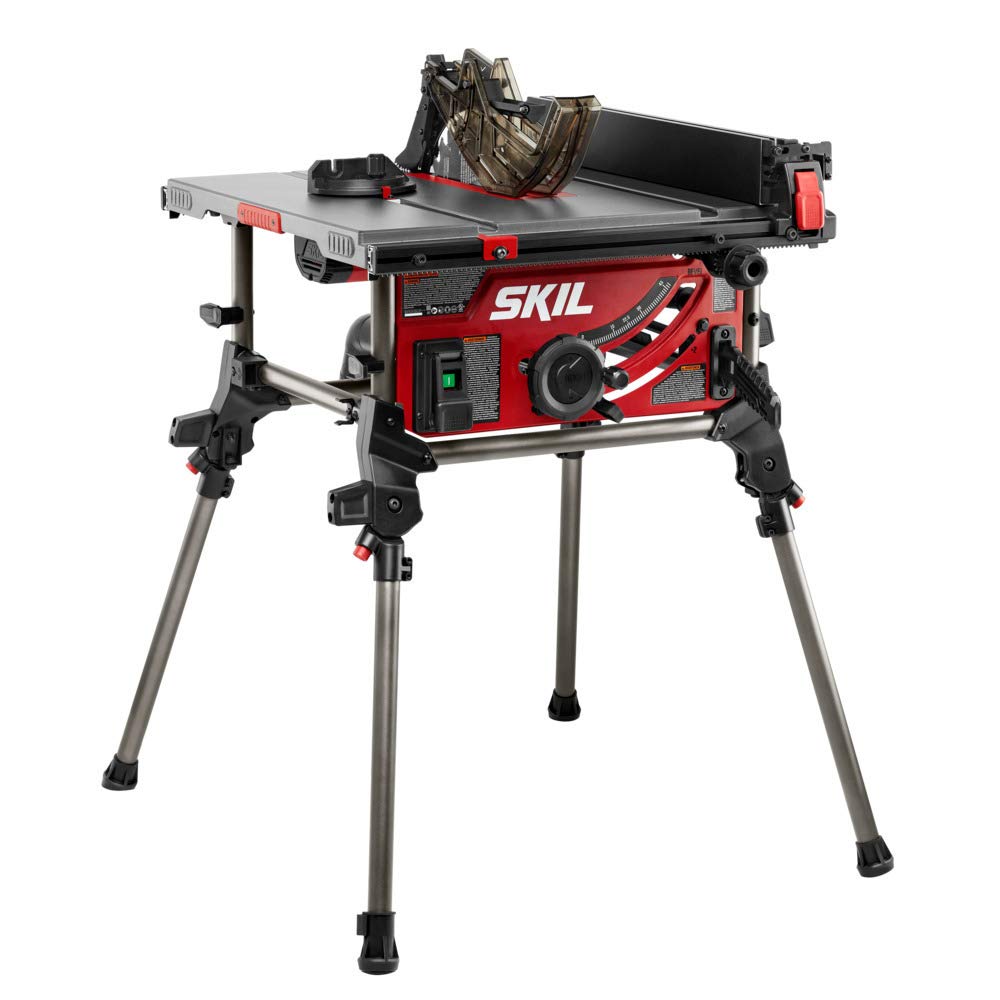
I picked the SKIL TS6307 for budget‑minded beginners who still want a rack & pinion fence, folding stand, and useful dust control.
Why I picked it: Rack & pinion fence, folding stand, dust port, and good power for the price.
Best for: Beginners and hobbyists who want the most features for their money.
Very affordable option without sacrificing essential features.
Pros
- Rack & pinion fence for accuracy
- Integrated folding stand
- Parallel blade micro‑adjustment
- Dust port elbow for cleaner work
- Good cutting power
Cons
- Fence gears feel a bit crunchy
- Not as heavy‑duty as premium models
My take
I used the TS6307 as a second saw in my garage and was impressed with how much capability it packs into its price. The rack and pinion fence behaves like more expensive saws, and the blade alignment micro‑adjustment made truing the blade quick.
The integrated foldable legs make storage painless; I can tuck the saw on a shelf when not in use. The dust port elbow helped keep a lot of debris out of my workspace during longer ripping sessions.
If you want the core features—solid fence, decent rip capacity, and portability—without spending big, this is a saw I’d pull out of the shop more often than not.
4. SKIL SPT99-11 Worm Drive Table Saw – Best for Heavy Ripping
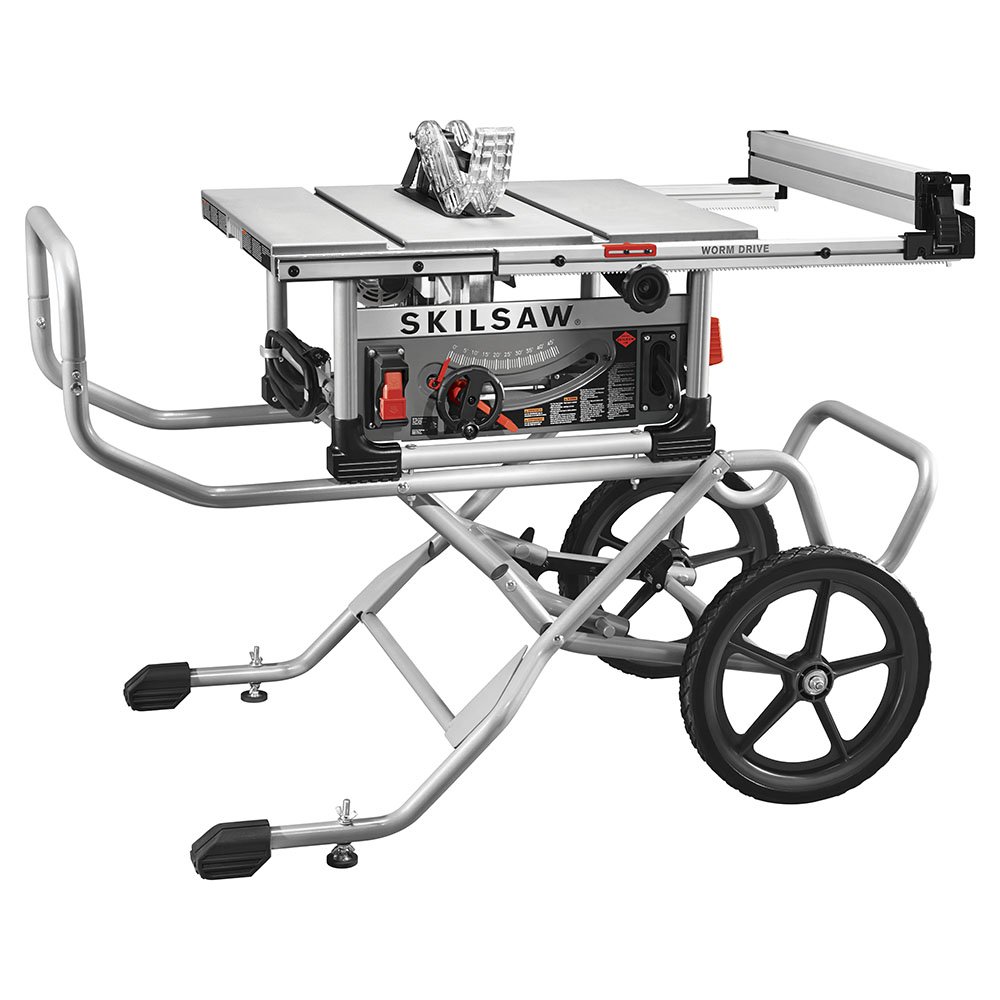
When I needed raw torque for dense hardwoods or ripping larger stock, this worm drive Skil gave me the confidence and cut depth to get it done.
Why I picked it: Worm drive torque, 3‑5/8" depth, and 30.5" rip capacity for heavy ripping jobs.
Best for: Cutting dense hardwoods and long ripping runs where torque matters.
A premium jobsite option that favors durability and torque over minimal weight.
Pros
- High torque worm drive gearing
- 3‑5/8" cutting depth
- 30.5" rip capacity
- Rugged rolling stand with large wheels
- Dust port for cleaner work
Cons
- Higher price point
- Fence ruler calibration can be off
My take
I reached for the SPT99-11 when I had to rip dense timbers; the worm drive power train keeps speed under load and never sounded strained while cutting oak and other dense species.
The deep cut capacity let me slice through oversized stock in a single pass, which saved time on larger projects. The big wheels and easy‑load handles made it simple to move the saw across tricky terrain.
Assembly of the mobile base took a bit of patience, but the saw came accurate out of the box and the rack & pinion fence stayed smooth even under heavier work.
5. SKIL SPT99T-01 8-1/4-Inch Portable Worm Drive Saw – Best Compact Worm Drive
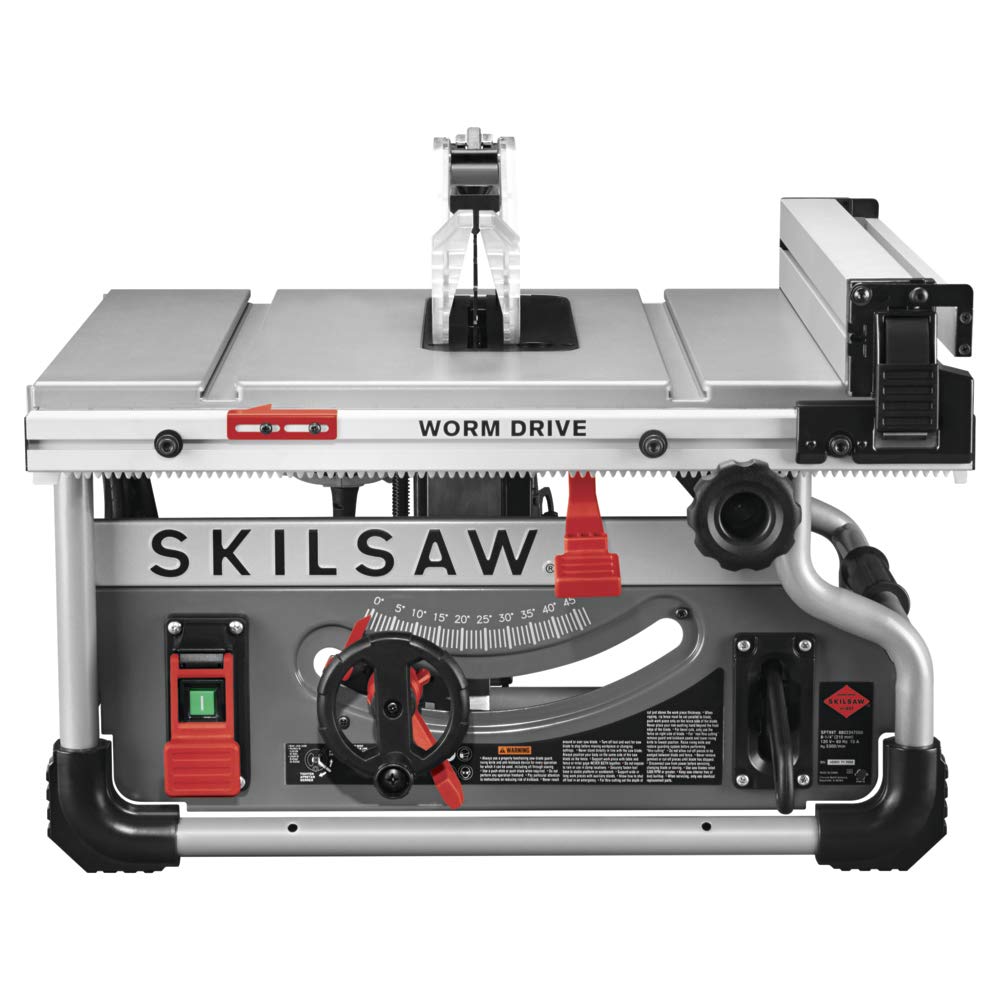
I liked this compact worm drive model when I wanted a lighter, metal‑built saw that still delivered surprising torque and accurate cuts.
Why I picked it: Compact worm drive torque, all‑metal construction, and 25" rip capacity in a portable package.
Best for: Users who need a powerful, transportable saw with a small footprint.
A solid midrange choice that blends worm drive performance with portability.
Pros
- Legendary worm drive torque
- All‑metal construction
- 25" rip capacity for sheet work
- Lightweight and easy to move
- Rack & pinion fence
Cons
- Smaller 8‑1/4" blade limits some cuts
- Accessories are basic out of the box
My take
I found the SPT99T-01 to be a fantastic compromise when I needed worm drive power without hauling a full 10" unit. It’s sturdy yet light enough to toss in the truck for short jobs.
The fence locks up positively and runs smoothly, and the saw was true right out of the box in my experience. It powered through pressure‑treated lumber and hardwoods without bogging down.
My only gripe is the smaller blade size; I sometimes wished for the extra cutting diameter of a 10" wheel, but for jobsite portability and torque this little worm drive performed well.
How I Choose a Table Saw for Beginners
Key features I look for
I focus on fence accuracy, rip capacity, motor power, portability, and safety features when testing beginner table saws.
Those factors determine whether a saw will save me time and frustration as I learn or as I take on projects around the house or jobsite.
- Motor and torque: I prefer 15‑amp motors or worm drive gearing for clean cuts under load.
- Fence system: Rack & pinion fences give me repeatable, accurate rips every time.
- Rip capacity: I match rip width to the sheet goods or board sizes I plan to cut.
- Portability: Rolling stands or integrated folding legs make setup and transport far easier.
- Safety: Non‑through riving knives, anti‑kickback pawls, and tool‑free guarding matter to me.
Practical buying tips
If you mostly cut 2x stock and small panels, a compact saw with good fence accuracy is ideal. If you plan to rip sheet goods solo, prioritize rip capacity and a stable stand.
Consider whether you want worm drive torque for dense hardwoods or a direct drive motor for slightly lighter weight and simplicity.
- Choose a 10" saw if you want maximum cutting depth and dado compatibility.
- Pick a model with onboard storage to keep guards and wrenches handy.
- Check dust port placement and use a container or vacuum for safer, cleaner work.
Frequently Asked Questions
What blade size should a beginner choose?
I usually recommend a 10" table saw if you want the most cutting depth and dado capability. An 8‑1/4" or 8‑1/4" worm drive is fine for portability and many jobs, but limits max depth and dado options.
Do I need a rolling stand or folding legs?
If I move the saw between sites I always prefer a rolling stand for speed and stability. For occasional use, integrated folding legs save space and weight in the truck or garage.
How important is the fence system for a beginner?
A lot. I find rack & pinion fences make accurate, repeatable rips far easier, which helps me learn faster and reduces wasted material.
Is worm drive worth it for new woodworkers?
I choose worm drive when I expect to rip dense woods or need extra torque. For casual hobbyists focused on portability, a direct drive 15‑amp motor often covers most needs.
Final Take
I recommend the DeWalt DWE7485 if you want the best all‑around balance of accuracy, portability, and power.
Choose the DWE7491RS when mobility and large rip capacity are top priorities.
Pick the SKIL TS6307 for the most feature‑for‑your‑money option, or step up to a SKIL worm drive if you need serious torque for heavy ripping work.
