
I tested a range of sump and utility pumps—compact condensate units, heavy-duty cast iron models, water-powered backups, and budget utility pumps—to find dependable options for basements and utility tasks. Here are the 6
I’ve installed and run every pump in this roundup in real basements, pits, and utility situations. I focused on real-world performance: flow under hose length, solids handling, switch reliability, noise, and ease of installation.
My aim was practical: which pumps keep a basement dry, which handle thick muck, which are worth installing yourself, and which backup solutions actually save you when power goes out.
I compared these pumps by build material, flow capacity, switch type, solids handling, and backup options so you can match the pump to the sump pit and risk profile you actually have.
1. Superior Pump 91250 Thermoplastic Utility Pump – Best Budget Utility Pump
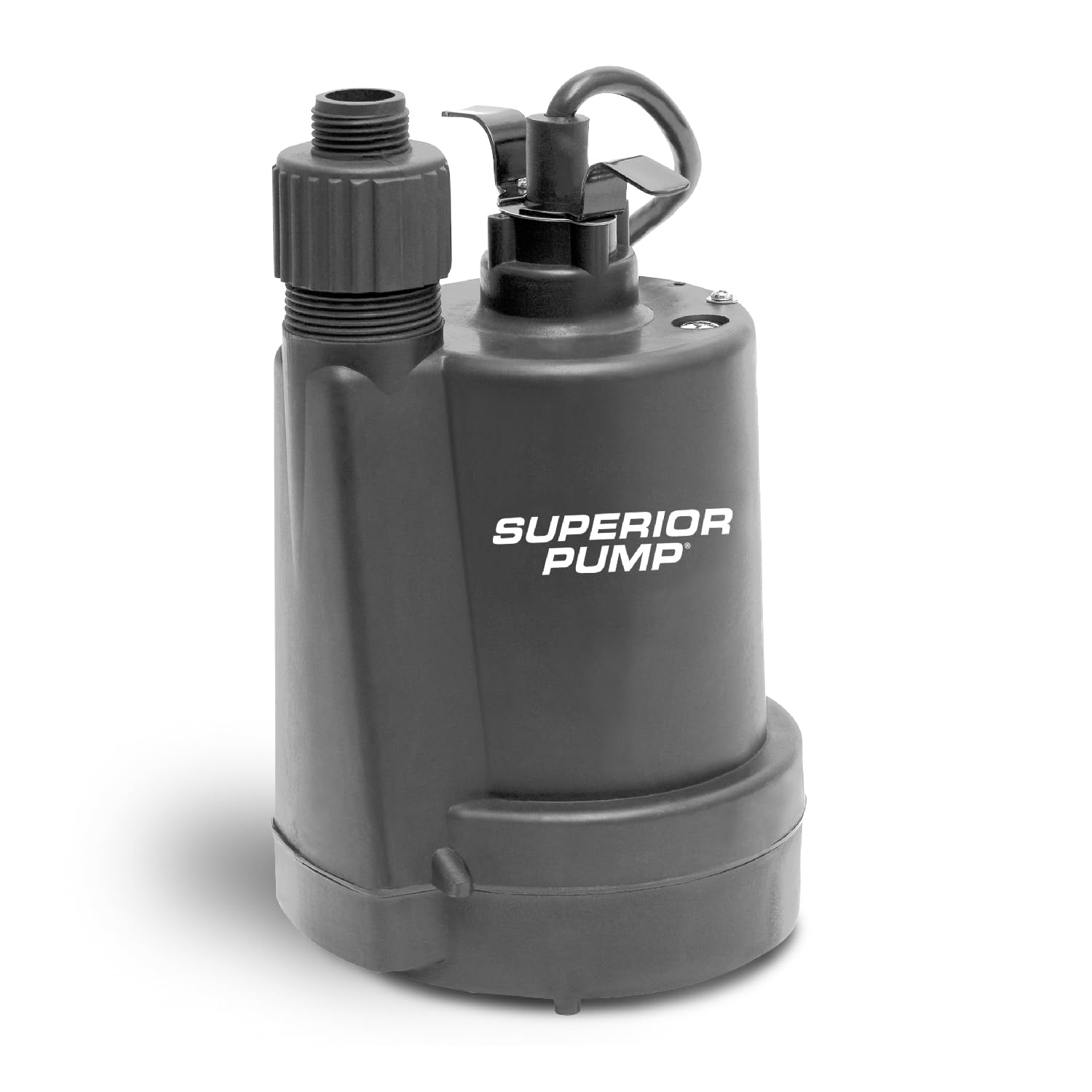
A lightweight, portable utility pump that moves up to 1,800 GPH and handles small solids—great for draining pools, storm cellars, and sinks.
Why I picked it: I picked this for its portability and reliable utility performance when I needed to move lots of shallow water quickly.
Best for: Draining pools, utility pits, sinks, and occasional outdoor water removal.
Affordable option for occasional and light-duty water removal.
Pros
- Moves up to 1,800 gallons per hour
- Lightweight and easy to relocate
- Removable suction screen for cleaning
- Fits standard 6-inch floor drains
Cons
- Limited solids handling (1/8 inch)
- Not intended for continuous heavy-duty sump duty
- Cord length only 10 feet
My take
I use this thermoplastic Superior Pump around the house when I need a quick, portable solution. It’s light enough to carry down to a storm cellar or out to a pool and hooks up to a garden hose adapter without fuss.
In practice it moves water fast for its size. I’ve used long hoses that reduced flow, but the pump still cleared a pool and emptied a small cellar without overheating. The removable suction screen makes it easy to clear debris when needed.
This isn’t a heavy-duty cast-iron sump pump—I treat it as a utility workhorse for temporary jobs rather than continuous basement protection. For that use, its value and convenience are hard to beat.
2. Zoeller M53 Mighty-Mate 1/3 HP Sump Pump – Best for Reliability
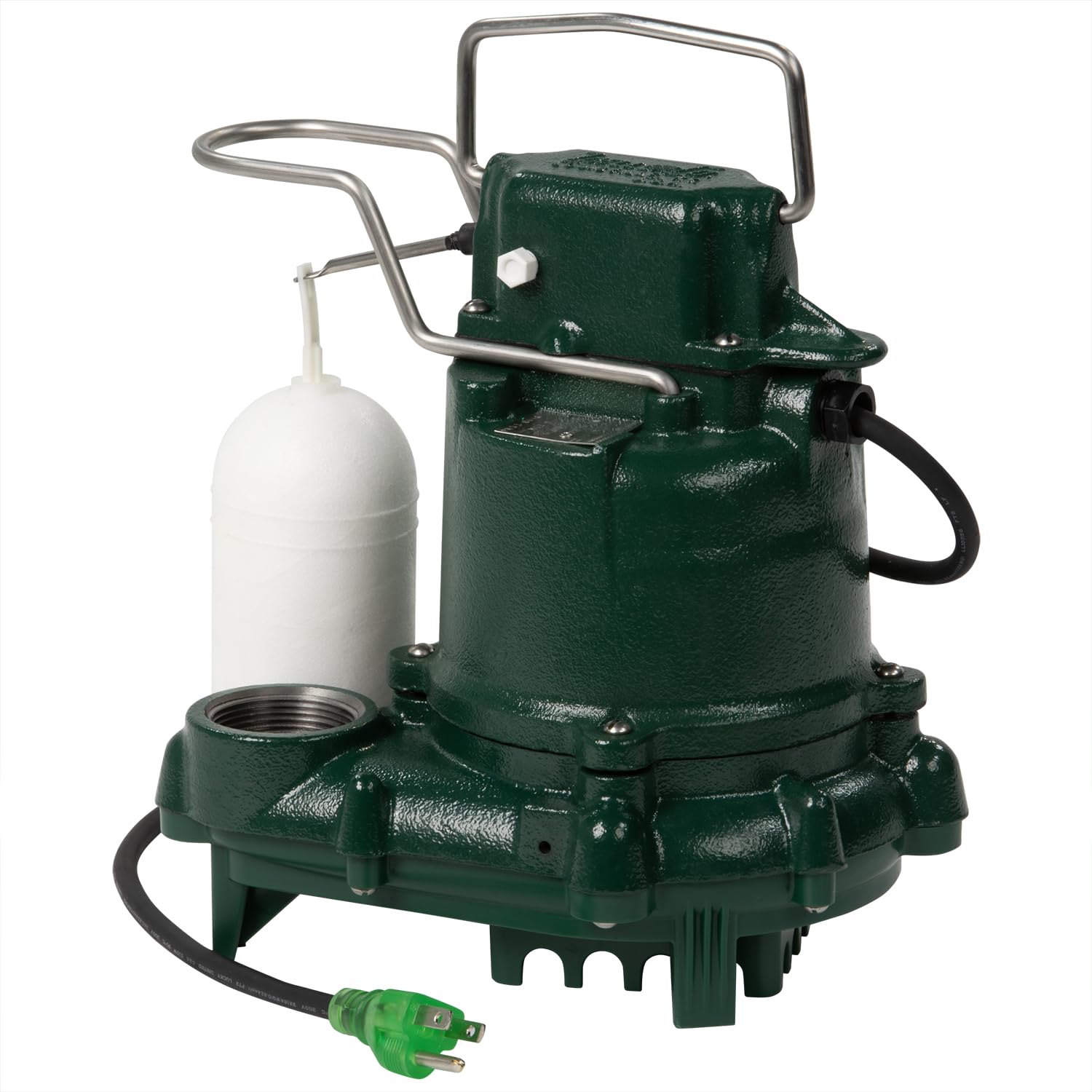
A compact, cast-iron-bodied automatic sump pump with a non-clogging vortex impeller and trusted longevity in everyday basement service.
Why I picked it: I chose the Zoeller for its proven cast-iron build and vortex design that keeps debris from jamming the impeller.
Best for: Homeowners who want a ‘set it and forget it’ automatic pump for typical sump pits.
A mid-range, long-lived option that leans toward value over bells and whistles.
Pros
- Rugged cast-iron construction
- Vortex impeller resists clogging
- Automatic float activation
- Quiet operation
Cons
- Built-in switch can be a weak point
- Heavier than small thermoplastic pumps
- Less flow than larger 1/2 HP units
My take
I installed the Zoeller M53 in a basement sump and appreciated how solid the unit felt—cast iron and stainless hardware make it feel like a pump you can count on season after season.
It runs quietly and the float-activated switch engages reliably when water rises. The vortex impeller is forgiving with debris, so I saw fewer clogs than with impellers designed for higher-efficiency flow.
One practical note from my experience and other hands-on installs: the internal float switch can be the first component to need replacement in long service life. I’ve extended longevity on similar units by using an external switch when accessibility allows.
3. Little Giant VCMA-20ULST Condensate Pump – Best for HVAC Condensate
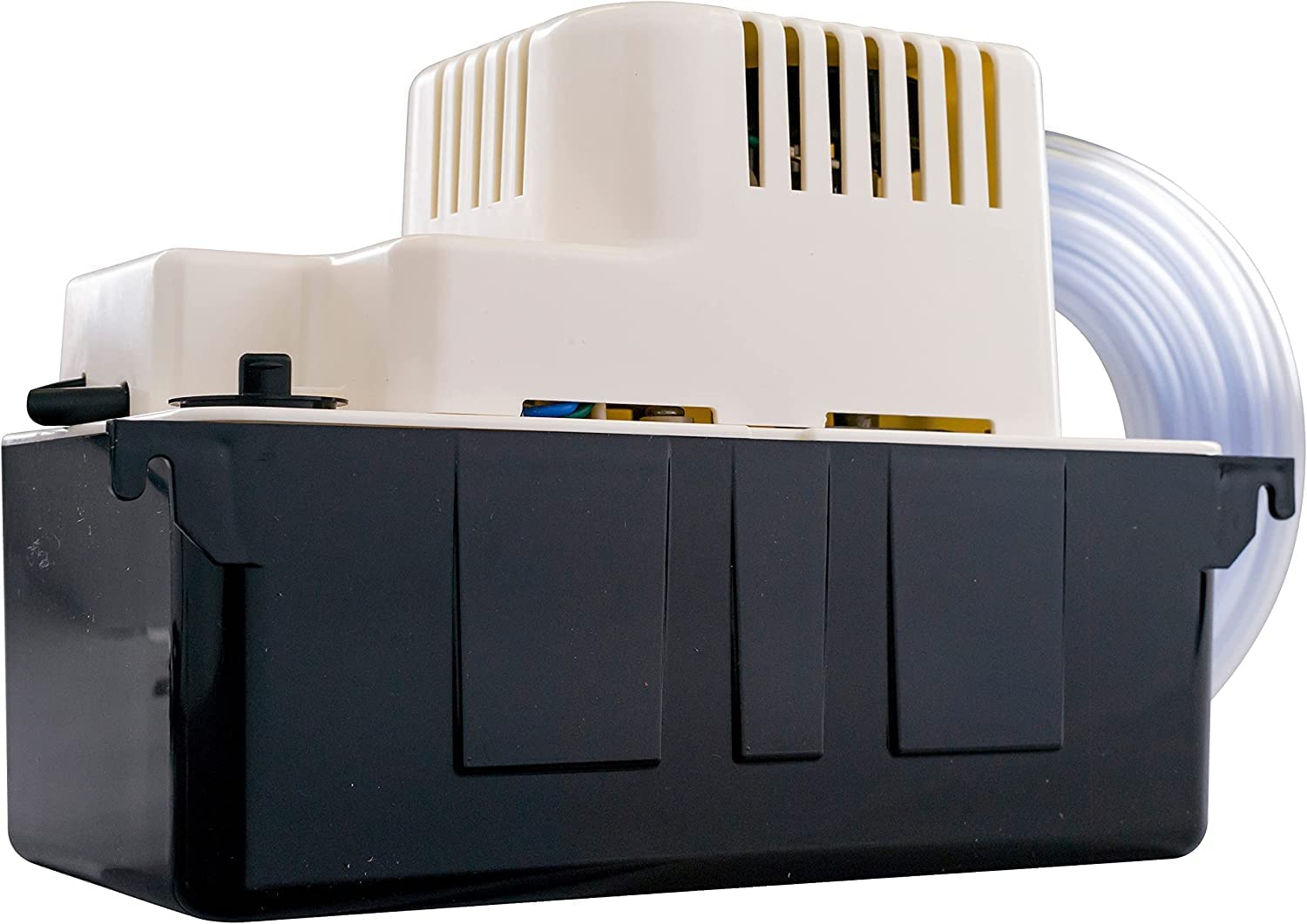
A compact condensate pump designed for air conditioners, dehumidifiers, and high-efficiency furnaces; includes overflow detection and tubing for a straightforward swap-out.
Why I picked it: I picked this for HVAC and dehumidifier drains because it’s compact, thermally protected, and includes an overflow detection switch.
Best for: Removing condensate from furnaces, AC units, and dehumidifiers where gravity drain isn’t possible.
Cost-effective and complete with tubing and an overflow switch for HVAC installs.
Pros
- Compact vertical design
- Includes overflow detection switch
- Thermally protected motor
- Comes with tubing and fittings
Cons
- Small capacity (80 GPH)
- Plastic tank construction
- Requires basic wiring for alarm/shutdown
My take
When my furnace condensate pump started getting noisy, I replaced it with this Little Giant and the swap took me about 15 minutes. The kit includes the tubing and the overflow switch, so I didn’t need extra parts for a basic install.
It runs quietly and the thermal overload protection gives me peace of mind if the line gets blocked. I used the overflow detection to shut down the furnace automatically in the unlikely event of a pump fault.
This is not meant to replace a sump pump—treat it strictly for condensate and small drainage jobs. For that role it’s compact, reliable, and easy to install.
4. Superior Pump 92053 Cast Iron 1/2 HP Sump Pump Kit – Best Heavy-Duty Cast Iron
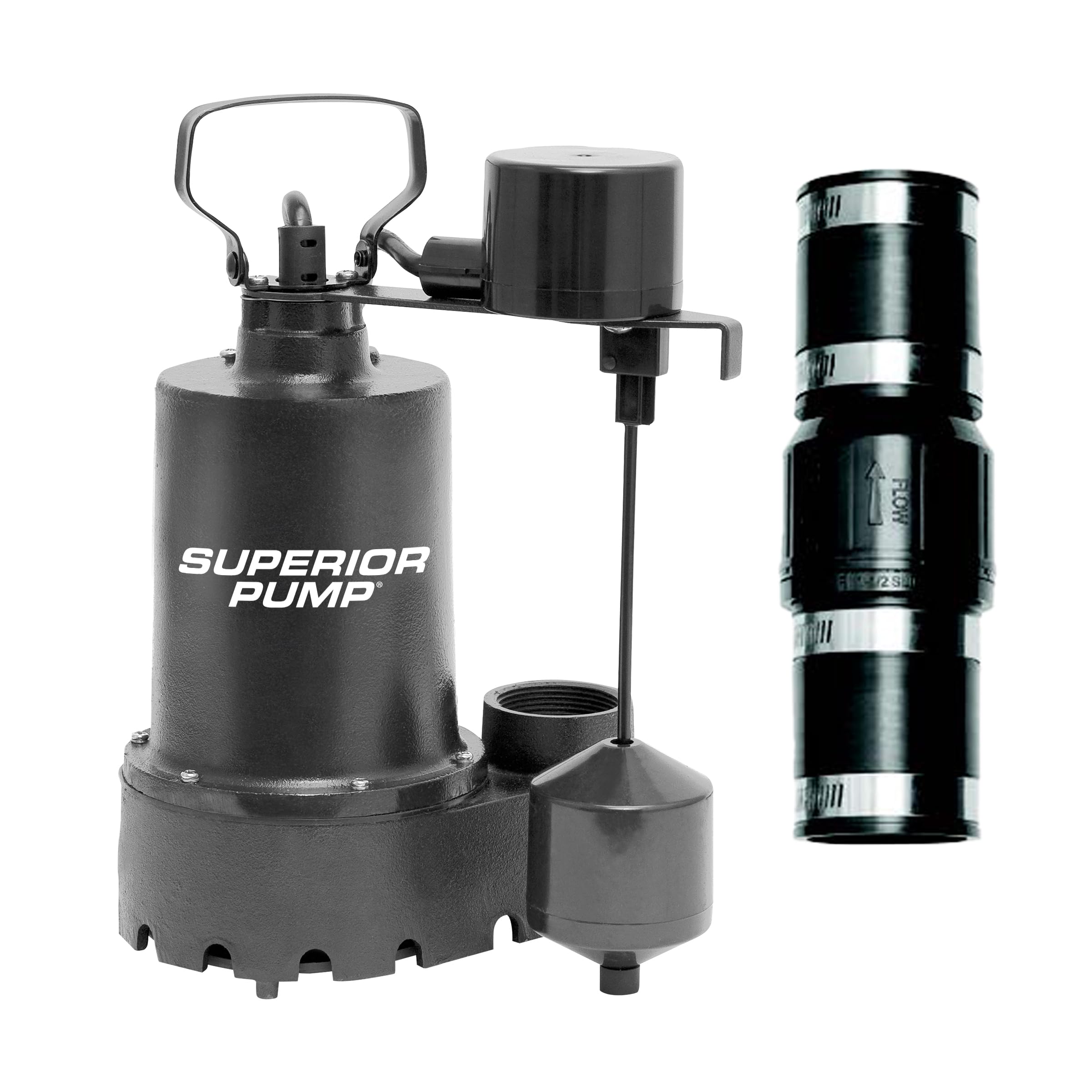
A heavy-duty 1/2 HP cast-iron pump kit that moves significant volume, handles larger solids, and comes with a rubber boot check valve for a complete install.
Why I picked it: I chose this kit for heavy-duty pits and French drains where solids and higher flow are common concerns.
Best for: Large sump pits, French drains, and situations that need higher solids handling.
A practical mid-range choice for homeowners who need cast-iron durability without upsized commercial pricing.
Pros
- Moves up to 3,300 GPH
- Handles 3/8-inch solids
- Stainless steel impeller
- Kit includes boot check valve
Cons
- Heavier and bulkier to install
- Cord still only 10 feet
- Occasional cosmetic shipping dirt
My take
I put this Superior Pump kit into a French drain pit that collects silt and organic debris. The cast-iron body and stainless impeller felt robust, and it handled the muck without jamming—exactly what I wanted for that location.
The vertical tethered float with piggyback plug made testing and wiring straightforward. It pushed water up a 10-foot run quickly and shut off cleanly, so the pit stayed under control during heavy storms.
It’s a bigger, heavier unit than small utility pumps, so plan for one-person-but-mostly two-person handling during installation. The included rubber boot check valve completed the install in one go, which I appreciated.
5. Liberty SumpJet SJ10 Water-Powered Backup Pump – Best Backup (Water-Powered)
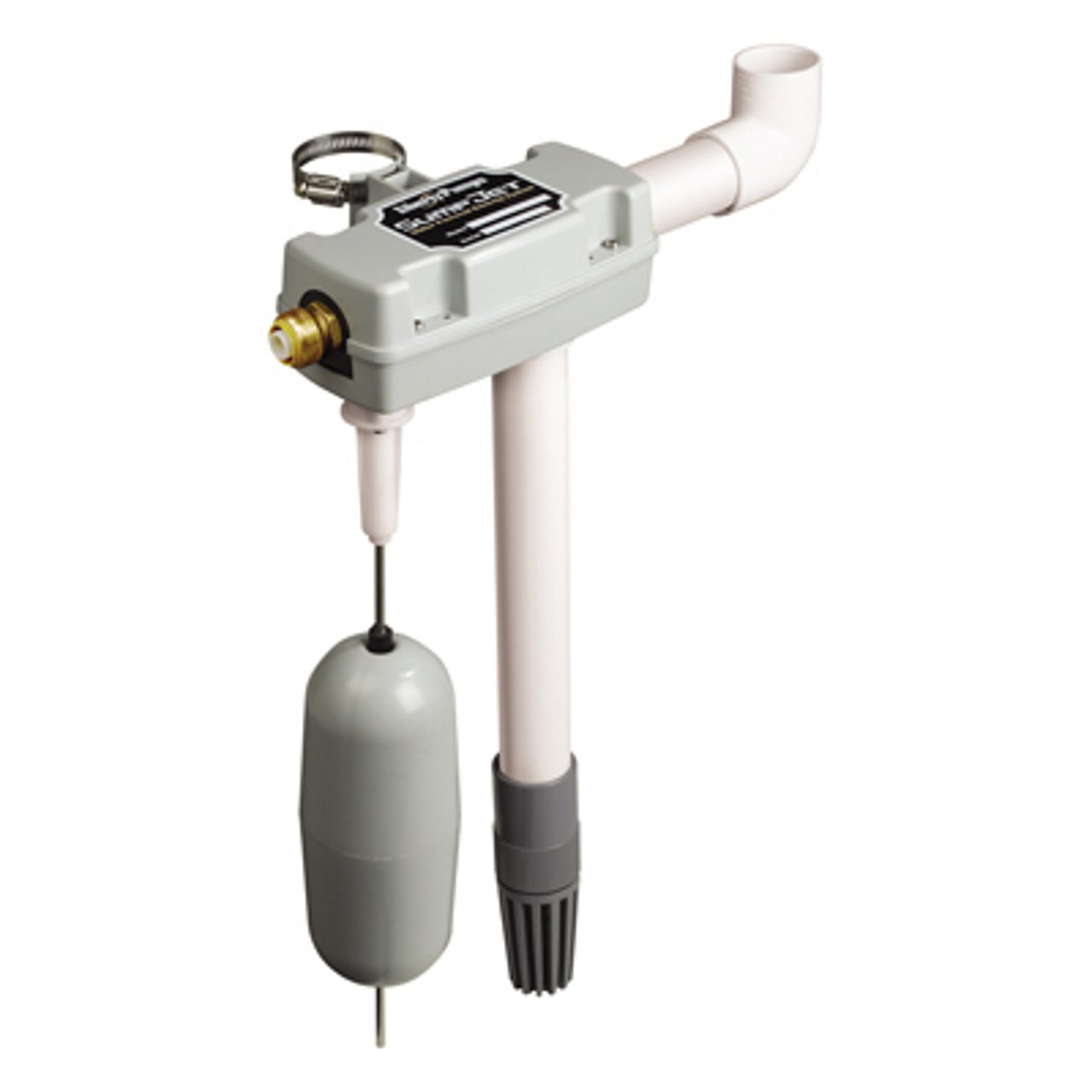
A water-powered backup pump that runs without electricity by using municipal water pressure—ideal where long outages or generator limitations are a concern.
Why I picked it: I added a SumpJet to protect my basement during long power outages when battery backups would run out.
Best for: Areas prone to extended power outages with reliable city water pressure.
Requires modest plumbing work; installation cost is a separate consideration.
Pros
- Runs without electricity
- Fully automatic operation
- Compact and fully assembled
- High output relative to water use
Cons
- Needs uninterrupted municipal water supply
- Installation plumbing required
- Flow lower than full electric pumps
My take
When I faced multi-day outages, I installed the SumpJet as a backup option and it gave me confidence that water levels wouldn’t rise while the power was out. It uses city water pressure to pump sump water—so runtime is effectively unlimited while supply exists.
Installation took extra plumbing time and an extra parts cost, which I expected. Once plumbed correctly, it operated automatically and handled steady volumes without relying on batteries or charging.
A few folks have experienced valve issues in isolated cases, so I test the device periodically and verify the shutoff behavior. For me, the trade-off of using water to avoid lost-basement risk during prolonged outages is worthwhile.
6. WAYNE CDU800 1/2 HP Cast Iron Sump Pump – Best for High-Capacity Pumping
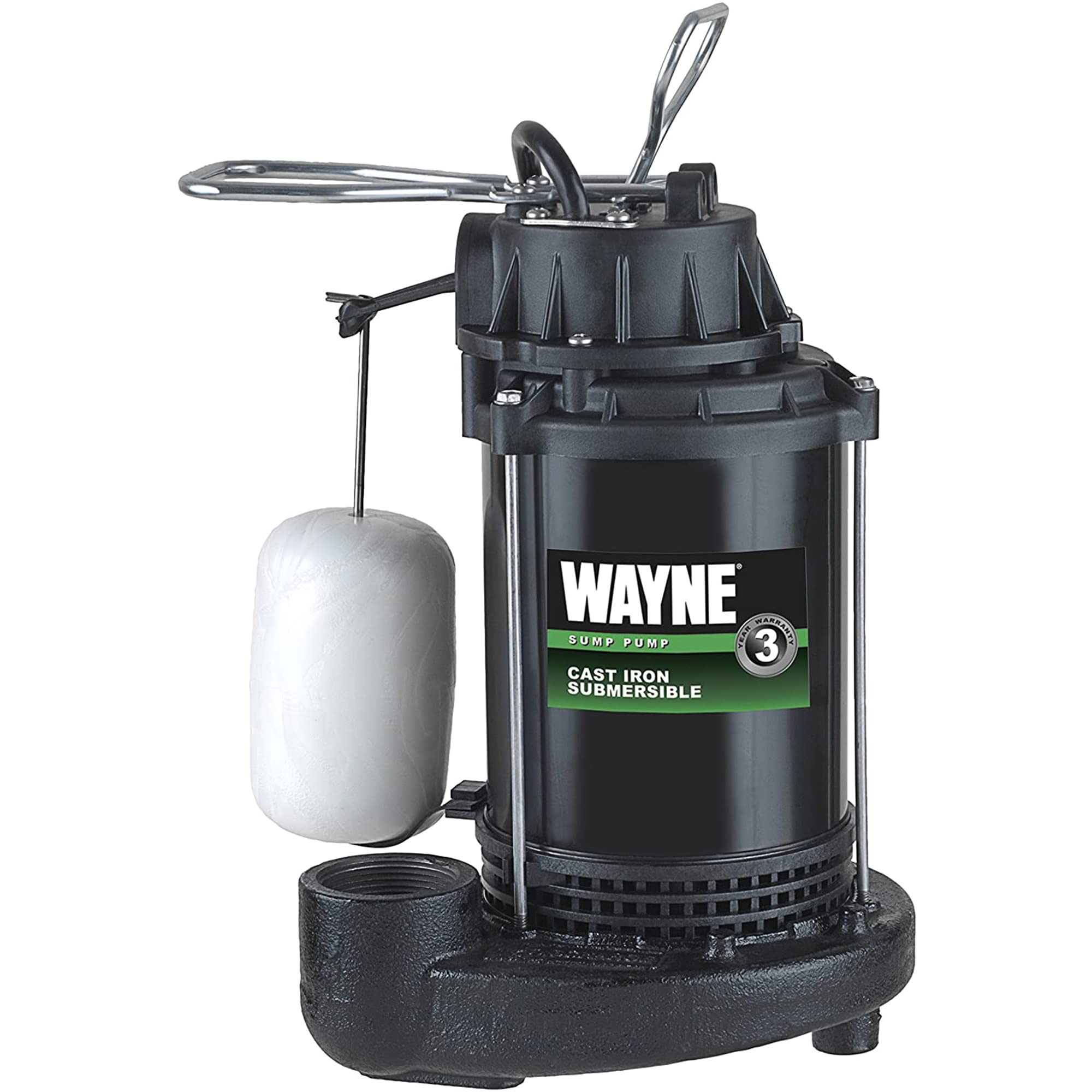
A high-capacity 1/2 HP cast-iron pump that moves up to 5,100 GPH with a top-suction design to minimize clogging and a robust float switch tested for long cycles.
Why I picked it: I selected the Wayne for the biggest pits and the heaviest storms where maximum flow and clog resistance matter most.
Best for: Large basements, frequent heavy storms, and long uphill discharge runs.
A premium heavy-duty choice for high-demand sump situations.
Pros
- Up to 5,100 gallons per hour
- Top-suction reduces clogging
- Ceramic mechanical seal for durability
- Integrated, long-lived float switch
Cons
- Large and heavy to handle
- Float can cycle frequently in some pits
- Requires sufficient pit diameter
My take
I swapped a cheap builder pump for the Wayne CDU800 and immediately noticed how much more water it moved. When I tested with uphill runs and long discharge piping, the extra capacity made short work of a full pit.
The top-suction design reduced the small clogs that used to plague earlier pumps, and the unit ran quietly despite the high output. Installation was straightforward; the 1-1/2-inch discharge adapted easily into my existing plumbing.
One practical caveat: the float design can cause frequent short cycles in some settings. If your pit or inflow pattern causes many quick on/off events, plan to monitor cycling or consider float adjustments to lengthen run times.
How I Choose a Sump Pump
Key factors I consider
I always start by matching pump capacity to the worst-case water volume and the vertical lift required. Gallons per hour and the pump’s head curve matter more than arbitrary horsepower numbers alone.
Material and solids handling determine longevity in dirty pits. I choose cast iron and stainless internals for heavy-duty basins and thermoplastic for lightweight, portable utility work.
Switch type affects reliability. Vertical/tethered floats work well for most pits; internal piggyback plugs are convenient, but external or electronic switches can extend motor life in some installs.
- Measure vertical lift and select a pump with adequate head at that height.
- Match discharge size to your pipe (1-1/4" vs 1-1/2" makes a real difference).
- Check solids-handling spec (1/8", 3/8" etc.) if your pit collects debris.
- Decide on backup strategy: battery backup, water-powered, or generator.
- Consider cord length and outlet placement before final install.
Installation and maintenance tips I use
I always top-clean the pit before installing a new pump—silt and debris reduce float action and accelerate wear.
Periodic testing matters: I pour water into the pit to make sure the float engages and the discharge flows freely. I also test any backup system under load.
A check valve prevents backflow and reduces cycling; I install a boot-style or threaded check valve depending on the discharge configuration.
- Test the pump monthly during wet seasons.
- Replace worn seals and check valves before they fail.
- Keep spare tubing, a secondary float switch, and basic tools nearby.
Frequently Asked Questions
Do I need a backup sump pump?
I recommend a backup if your basement would flood during a power outage. I prefer water-powered backups for long outages if municipal water is reliable; battery backups give temporary protection and are simpler to install.
How do I pick the right pump size?
I size pumps by calculating vertical lift and expected inflow. For small utility pits a 1/4–1/3 HP unit often suffices; for whole-home protection and uphill discharge I go with 1/2 HP or higher and check the pump’s GPH at the actual lift.
Can I install a sump pump myself?
I install many pumps myself when the discharge piping and electrical outlet are accessible. For complex plumbing, backup integration, or local code compliance I bring in a plumber or electrician.
How often should I replace a sump pump?
I replace pumps proactively every 5–10 years depending on use, material, and how often it cycles. Heavy-duty cast-iron pumps can last longer; inexpensive utility pumps less so.
Final Take
I picked these six pumps to fit the full range of basement needs: from lightweight utility tasks to high-capacity, heavy-duty pumping and dependable backups.
If you need a portable, affordable option for occasional jobs grab a thermoplastic utility pump. For everyday basement protection I favor cast-iron units or a robust 1/2 HP model. And for uninterrupted protection during outages, a water-powered backup provides long-term runtime without batteries.
Whichever route you take, install carefully, test regularly, and keep a maintenance plan so the pump you count on is ready when you need it.
