
I tested a range of pottery wheels, kids' starter wheels, and the accessories I rely on in the studio. Here are the tools and wheels I keep coming back to for throwing, teaching, and gifting.
I evaluate pottery wheels and wheel-related tools by throwing on them, using them with students, and living with them in my studio. This roundup covers motorized starter wheels for beginners, compact banding wheels, and the accessories that make throwing easier.
My focus was practical: does the wheel or tool hold up under wet clay, make centering and shaping easier, and save time in cleanup and finishing? I also call out items that are great gifts for younger makers and which accessories are worth the investment.
I compared motorized beginner wheels by ease of use, torque under pressure, and included learning aids; for accessories I focused on durability, grip, and how they perform when wet or left to dry in a busy studio.
1. Blisstime 42-piece Clay Tool Kit – Best Tool Kit
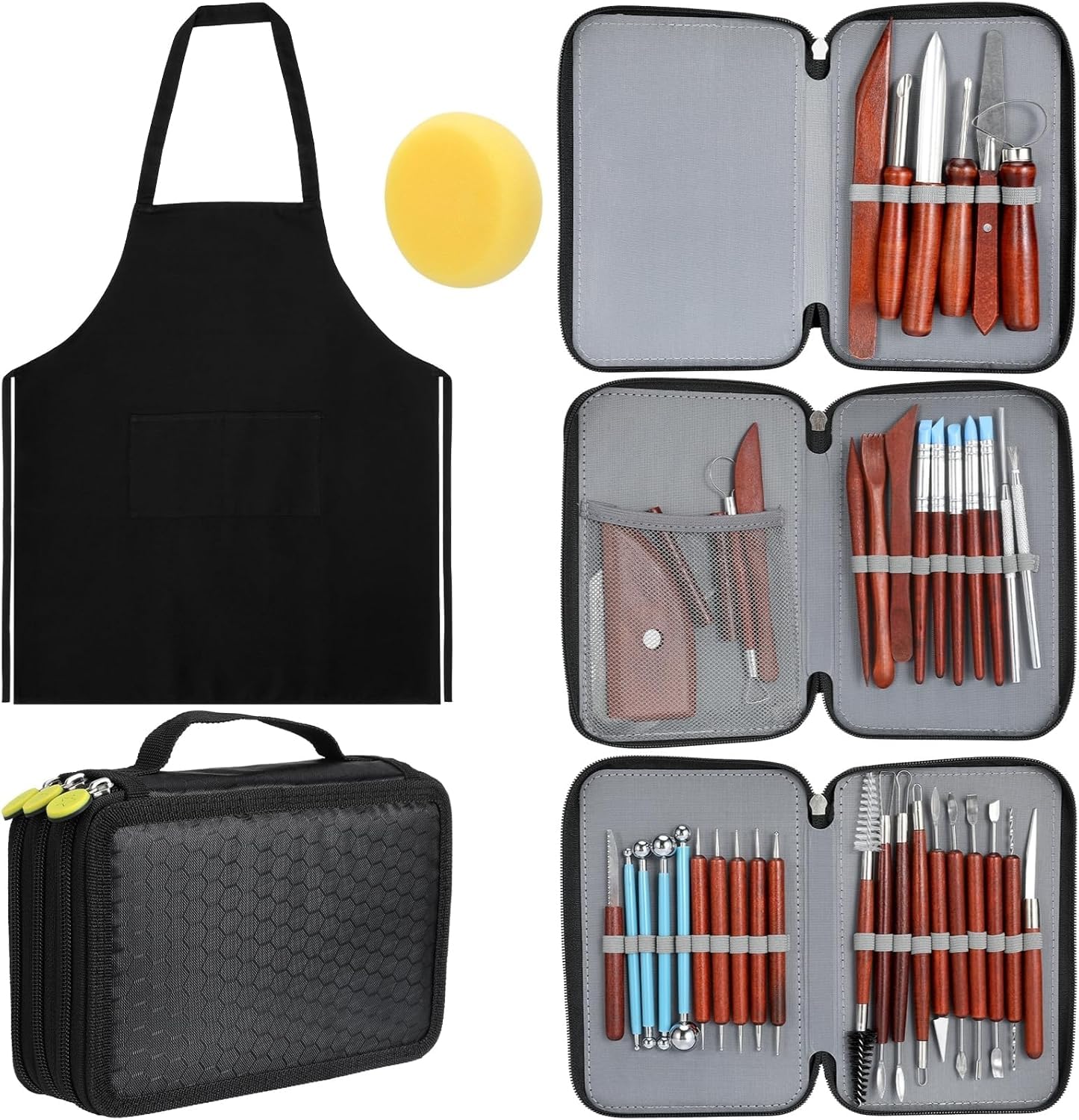
A generous 42-piece set with stainless tips, double-ended tools, and a zip-up case — a practical all-in-one kit I keep in my bag.
Why I picked it: Comprehensive kit with durable tips and a solid storage case for on-the-go use.
Best for: Beginners and makers who want a wide range of shaping and carving tools.
An affordable way to get a large variety of tools in one pack.
Pros
- 42 double-sided tools for many techniques
- Stainless-steel tips resist rust
- Compact zip-up storage case
- Wood and rubber handles feel comfortable
Cons
- Some metal tips are sharp—handle carefully
- Colored wood can bleed when wet
My take
I keep this Blisstime kit in my travel bag because it covers nearly every shaping, scraping, and carving need I hit in a class. The double-sided tools let me switch from broad shaping to fine detail without reaching for another implement.
Most tips are stainless steel and have held up well through repeated studio use; I did notice a few tools are sharper than my older sets, so I store them carefully in the zippered case. The handles—wood and rubber—give a better grip than all-plastic tools when my hands are wet.
For the price and the sheer variety, I found this kit replaced several single-purpose tools I used to stash around the studio. It’s not a substitute for professional MudTools-level implements, but it’s a terrific, practical collection for classes and everyday handbuilding.
2. National Geographic Kids Pottery Wheel (Plug-in) – Best Beginner Electric Wheel
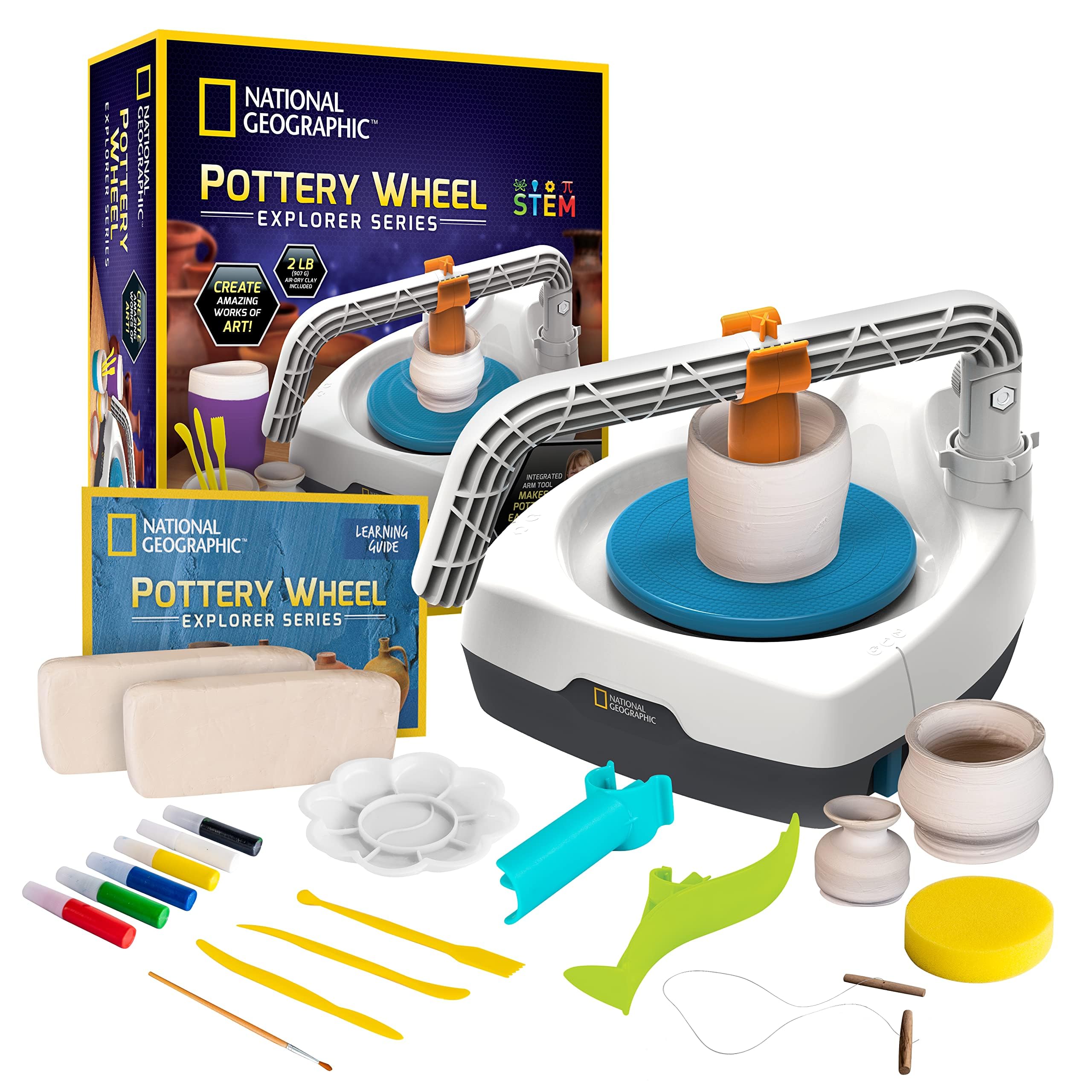
A plug-in, two-speed wheel sold as a complete starter kit with arm attachments, clay, paints, and clear step-by-step lessons I used with kids.
Why I picked it: Integrated arm tools and lesson resources make learning the basics far less frustrating.
Best for: Families and classrooms introducing kids to wheel throwing.
A midrange beginner wheel with bundled learning materials and accessories.
Pros
- 2-speed motor handles basic throwing pressure
- Integrated arm tools aid centering and shaping
- Comes with clay, paints, and learning materials
- Simple setup and plug-in power
Cons
- Included clay may not be very fresh
- Needs adult help for best results
My take
I brought this National Geographic wheel into my studio for weekend family workshops and it quickly proved its purpose: the arm attachments demystify centering and opening for new hands.
The two-speed plug-in motor gives steady rotation under reasonable downward pressure, which is essential when beginners tend to press too hard. The kit's video lessons and illustrated guide are an honest time-saver for parents and teachers who aren’t pottery experts.
A heads-up from my sessions: the included air-dry clay can be a bit stiff if it’s not fresh, and getting the clay to adhere to the platform requires proper wedging and water. With a little prep and adult guidance, kids make great first pieces and enjoy the whole paint-and-decorate finish.
3. Aujazyble Pottery Wheel for Kids – Best Kid-Friendly Wheel
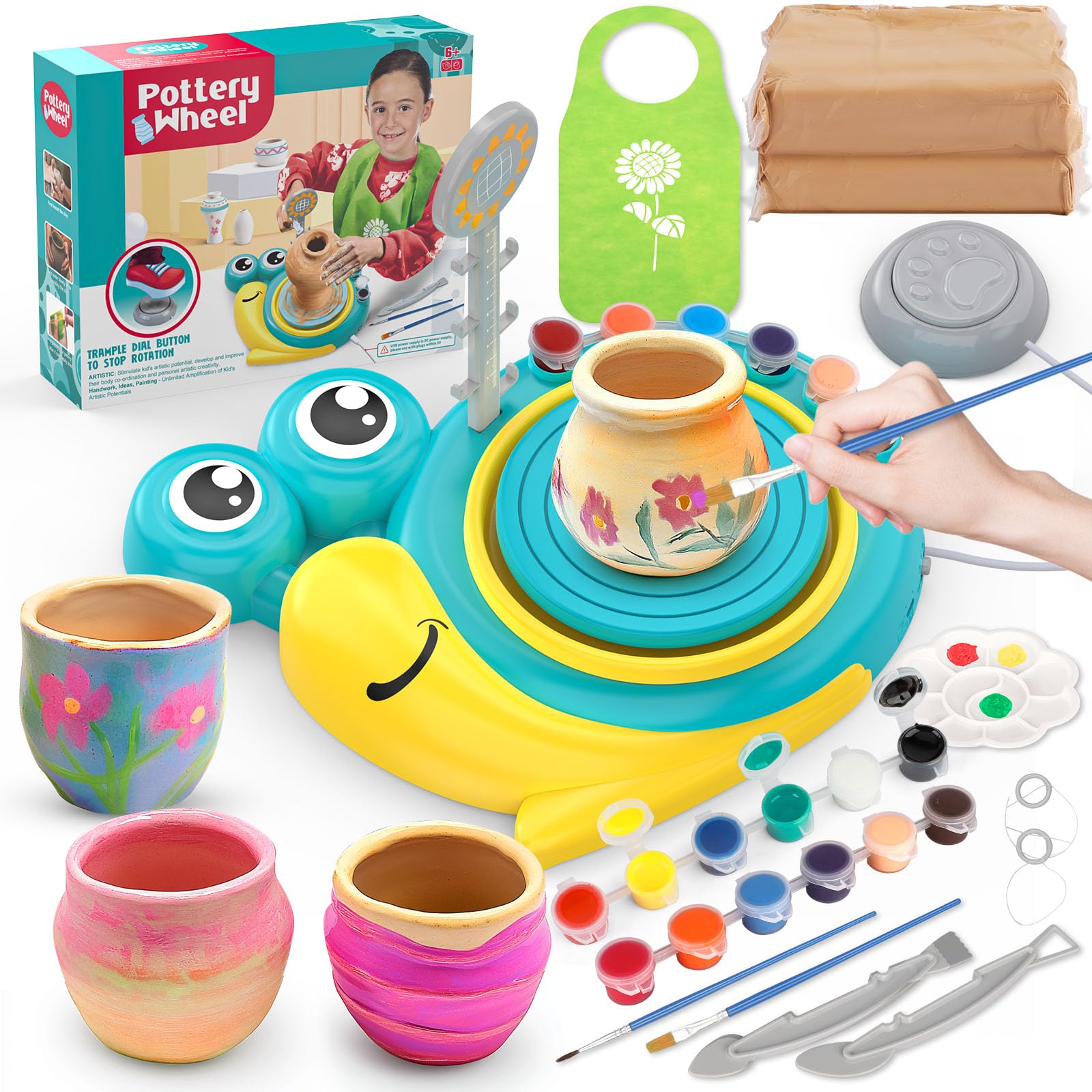
A compact, kid-focused wheel that ships with multiple clays, paints, and tools — I find it excellent for creative, screen-free play with supervision.
Why I picked it: Complete kit and easy controls made pottery approachable for young hands.
Best for: Children ages 8–12 and family craft sessions with adult supervision.
A budget-friendly starter kit that includes all painting and shaping supplies.
Pros
- All-in-one kit with clay and paints
- Sized for small hands and easy controls
- Encourages fine-motor development
- Good for screen-free creative time
Cons
- Learning curve for younger children
- Design may feel juvenile for older kids
My take
I used the Aujazyble wheel with my niece and it gave us hours of focused, creative time. The wheel spins smoothly enough for small projects, and the included paints and brushes mean kids can finish a piece the same afternoon.
It’s clearly designed with beginners in mind: the controls are simple, the wheel base is stable, and the air-dry clay is forgiving. Expect a learning process though—children under eight tend to need significant adult help to center and shape consistently.
For classroom crafts or a weekend craft kit, this is a dependable choice. The real joy here is how quickly kids move from frustration to proud little bowls and pendants they can paint and keep.
4. Mudtools MudSponge 3-Pack – Best Sponges
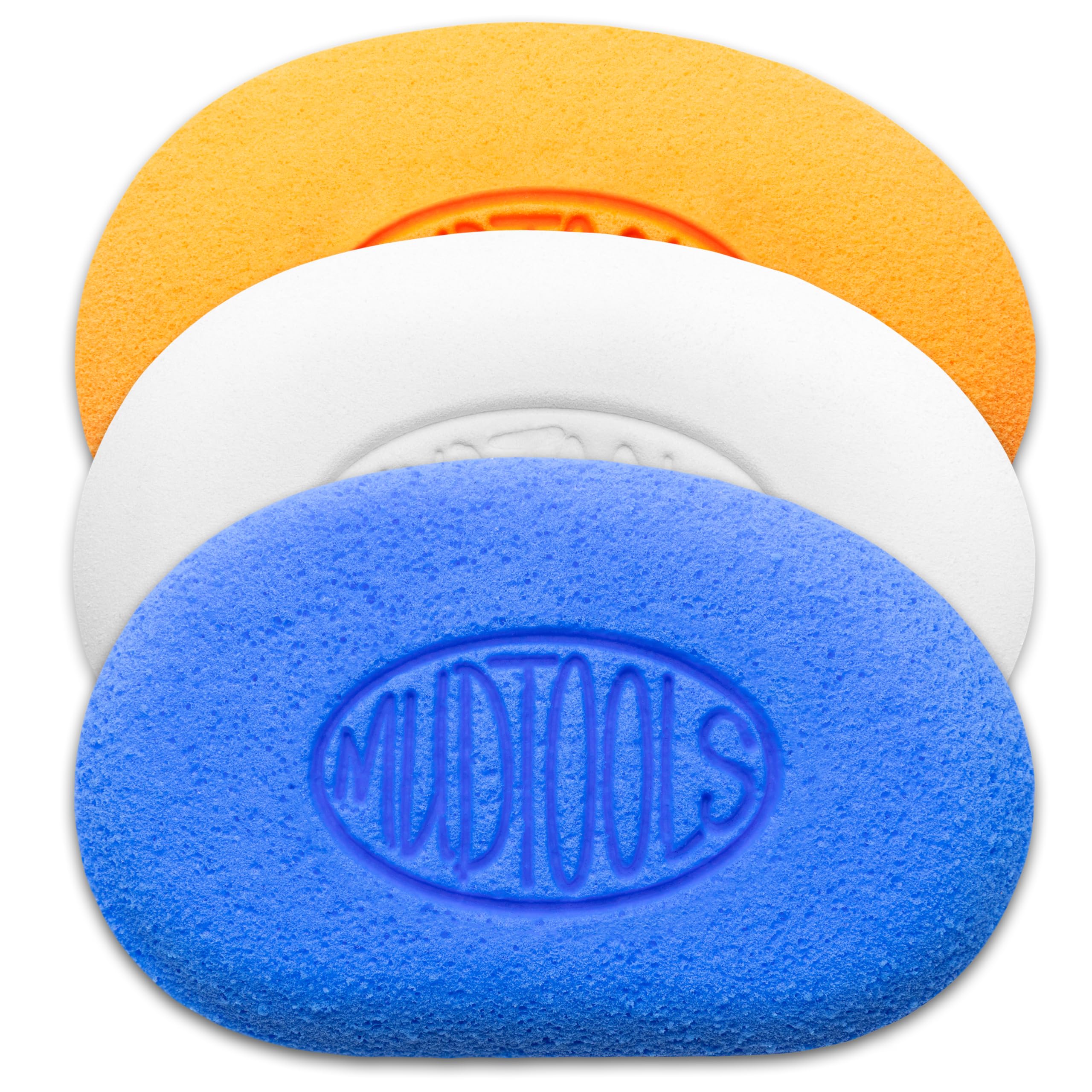
Three specialized sponges for finishing, throwing, and all-purpose use — I reach for these for control over water release and refined surface work.
Why I picked it: Specialized textures let me control moisture and finish reliably.
Best for: Wheel throwers who want precise water control and soft finishing tools.
Worth the investment for studio-level sponge performance.
Pros
- Different textures for specific tasks
- Thin profile improves hand contact
- Hydrates quickly and softens fast
- Durable with regular use
Cons
- Arrive very firm; must fully hydrate
- Natural dye fades with use
My take
Mudtools' white, orange, and blue sponges live on my workbench because each has a clear purpose: the white for finishing, orange for heavy absorption while throwing, and blue as an all-purpose workhorse.
Their thinner profile compared with economy sponges makes a real difference in touch—I'm able to feel the clay and control water release instead of soaking it up all at once. They do arrive hard, but a few minutes of soaking and they’re ready.
These sponges have lasted through months of regular studio work for me. I consider them a small, recurring investment that pays off in cleaner surfaces and fewer glaze defects caused by excess moisture.
5. Speedball 12-inch Universal Pottery Bat – Best Pottery Bat
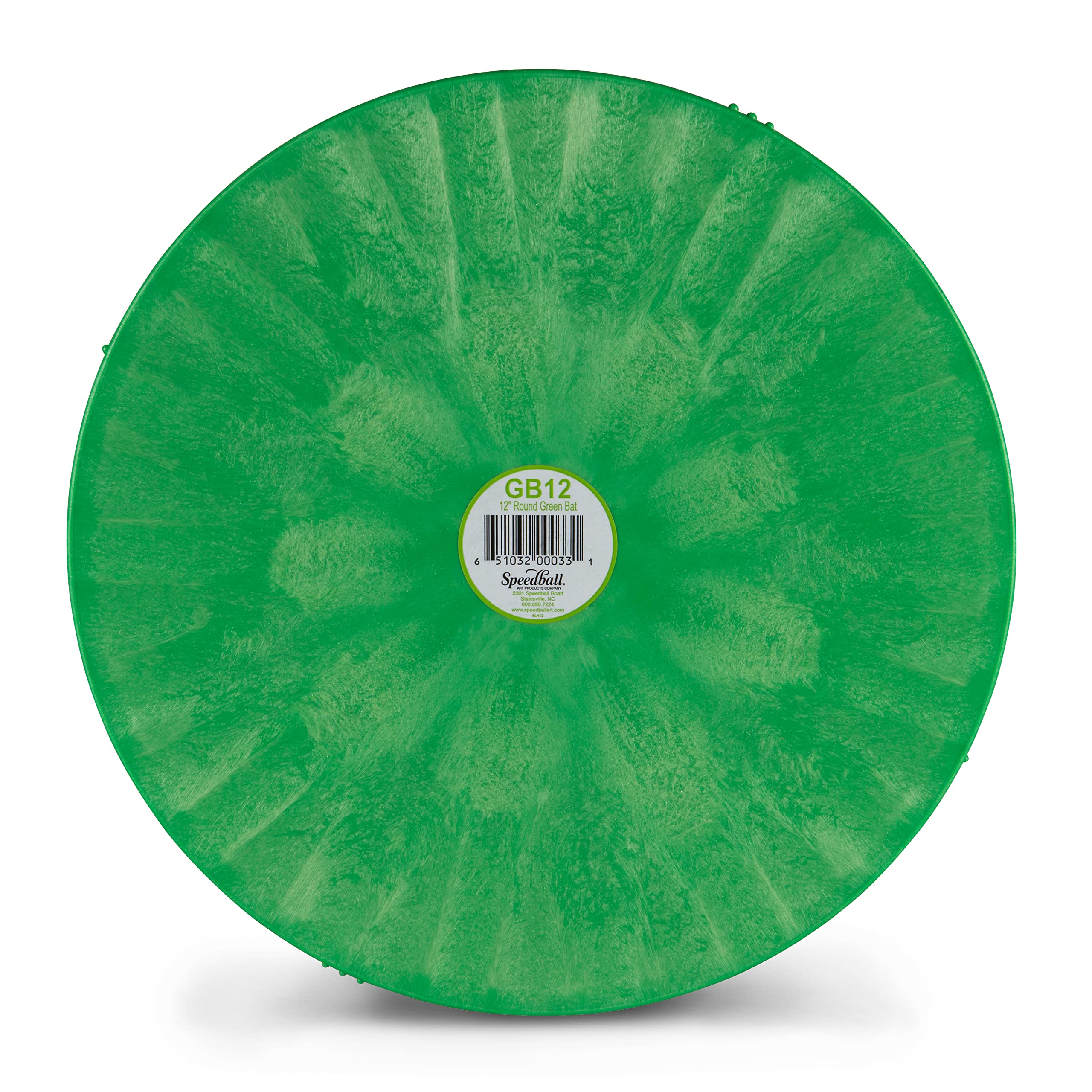
A 12-inch injection-molded bat with an easy-lift rim and ribs for strength — I use these for lifting wet pots without disturbing them.
Why I picked it: Sturdy, easy-lift design makes removing wet work simple and safe.
Best for: Studio and classroom use for easy lifting and organization.
A practical, long-lasting bat that fits most setups.
Pros
- Easy-lift rim for clean removal
- Injection-molded durability
- Ribbed design resists warping
- Lightweight and easy to clean
Cons
- Some pin systems may need different pins
- Not flat-bottomed—can't glue to wheel head
My take
I like Speedball bats for their consistent fit and the easy-lift rim, which lets me remove a vessel in one motion without disturbing the foot. The plastic construction stays flat when wet, so I don't worry about warping.
They’re reinforced with ribs for strength, and the lightweight design makes switching bats during a class fast. Do note: although the bat is described as fitting all pin spacings, a few wheels with oversized pin heads required me to swap to universal-style pins to get a snug fit.
Overall, I consider these a reliable, low-maintenance studio staple that speeds up production and cleanup.
6. Mudwire Green Handle Cutoff Tool – Best Cut-Off Wire
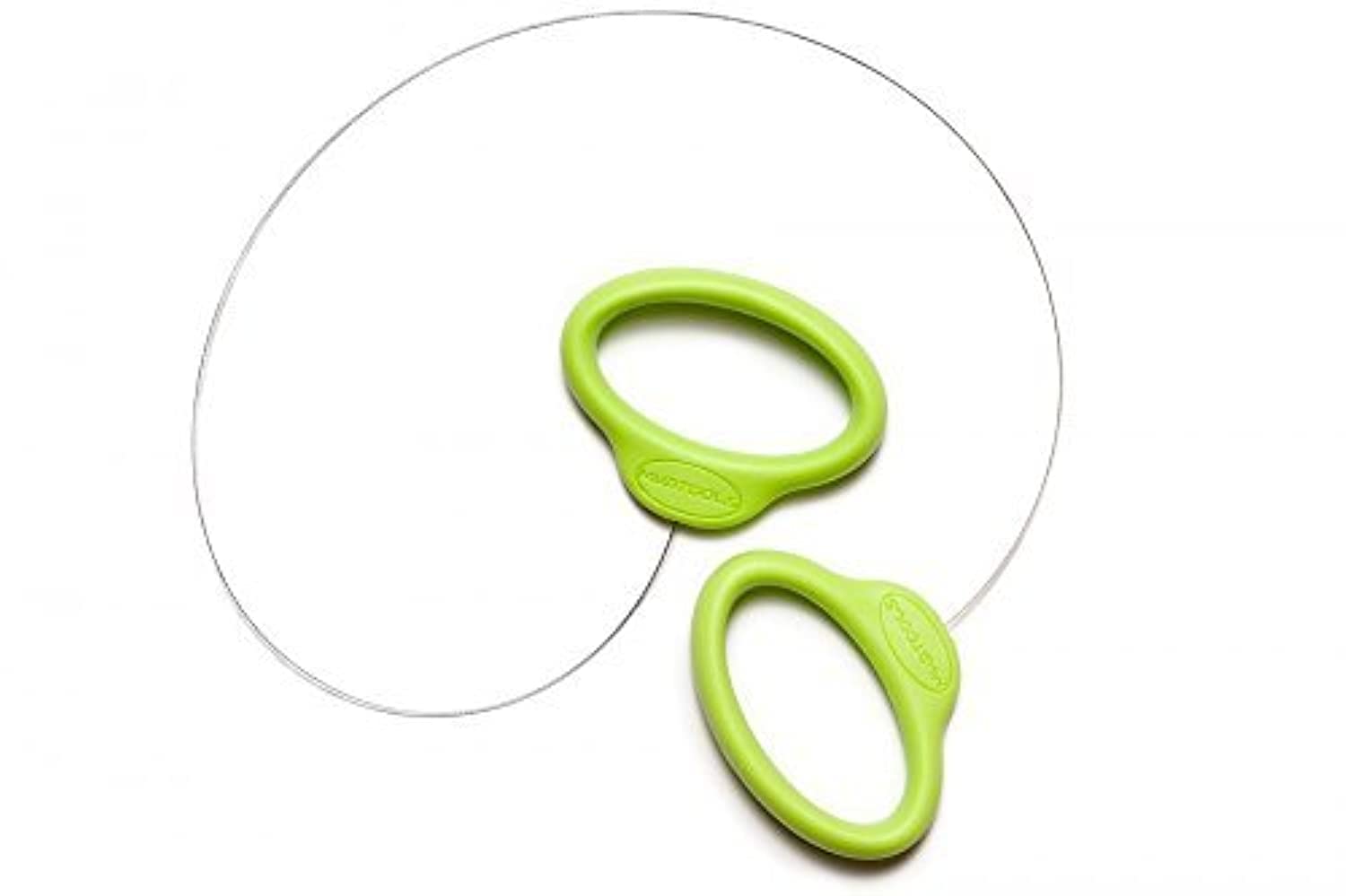
An ergonomic cutoff wire with a braided stainless cable and polymer handle that I use daily to cleanly remove pieces from the wheel.
Why I picked it: Comfortable handle and strong braided cable make clean cuts every time.
Best for: Potters who trim and remove wheel-thrown pieces routinely.
A modestly priced upgrade over flimsy wooden-handled cutters.
Pros
- Ergonomic polymer handle
- Stainless braided cable resists kinking
- Designed for clean cuts
- Durable for daily studio use
Cons
- Some look-alike products exist—check branding
- Not adjustable for non-standard wheel heads
My take
I swapped my old wooden cutter for this Mudwire and appreciated the handle immediately—the grip is secure without wrapping wire around my fingers.
The braided stainless cable slices through the clay cleanly and resists fraying better than cheaper lines. It’s sized to work with standard wheel heads and has become my go-to for reliably freeing finished pieces from the wheel.
If you plan heavy daily use, I recommend checking the exact fit for your wheel head, but for most standard setups this cutter performs like a tool you’ll reach for every session.
7. TEMONTIAN 44-piece Pottery Tool Kit – Best Alternative Tool Set
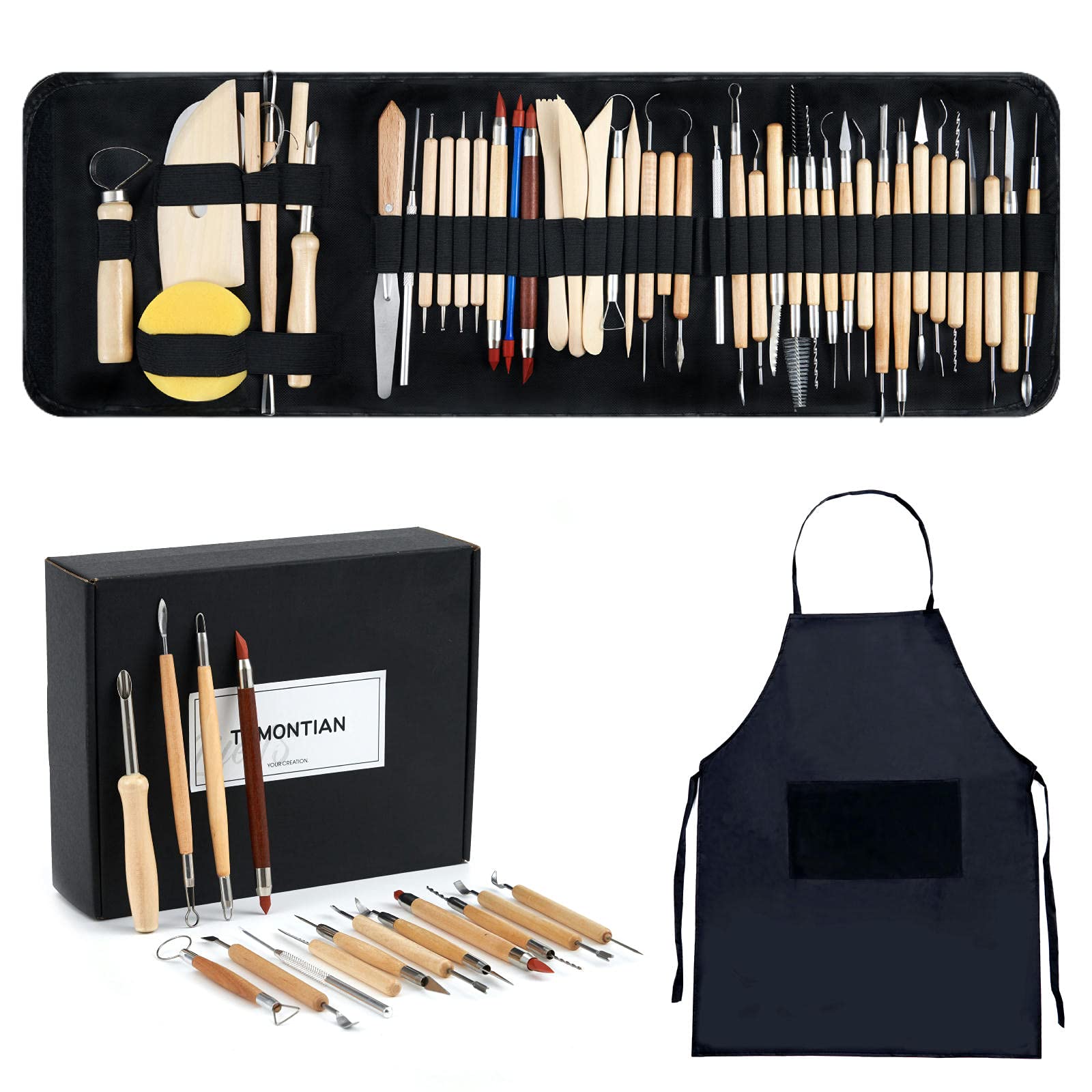
A 44-piece option with wooden handles and corrosion-resistant tips that I keep as a backup kit for classes and gifting.
Why I picked it: Well-rounded assortment with comfortable wooden handles at a good value.
Best for: Beginners seeking a large starter set or gift options.
A value-oriented tool set that competes with similar starter kits.
Pros
- Wide variety of tools for sculpting
- Wooden handles feel comfortable
- Carrying bag makes transport easy
- Durable tips for light studio use
Cons
- Elastic loops can be fiddly to use
- Some tools duplicate common shapes
My take
I keep a TEMONTIAN kit in my classroom supply closet for students who forget tools; it’s inexpensive, comprehensive, and the wooden handles are nicer to hold than cheap plastic.
The metal tips are corrosion-resistant and handle general sculpting and smoothing work without complaint. I will say the storage pouch’s elastic loops can be awkward—sharp tips occasionally nick fingers when stowing them quickly between demonstrations.
For someone starting a class or wanting a giftable starter kit, this set gives a lot of functionality for the price, and it’s a handy complement to a more refined set of personal tools.
8. Falling In Art 7-inch Cast Iron Banding Wheel – Best Manual Banding Wheel
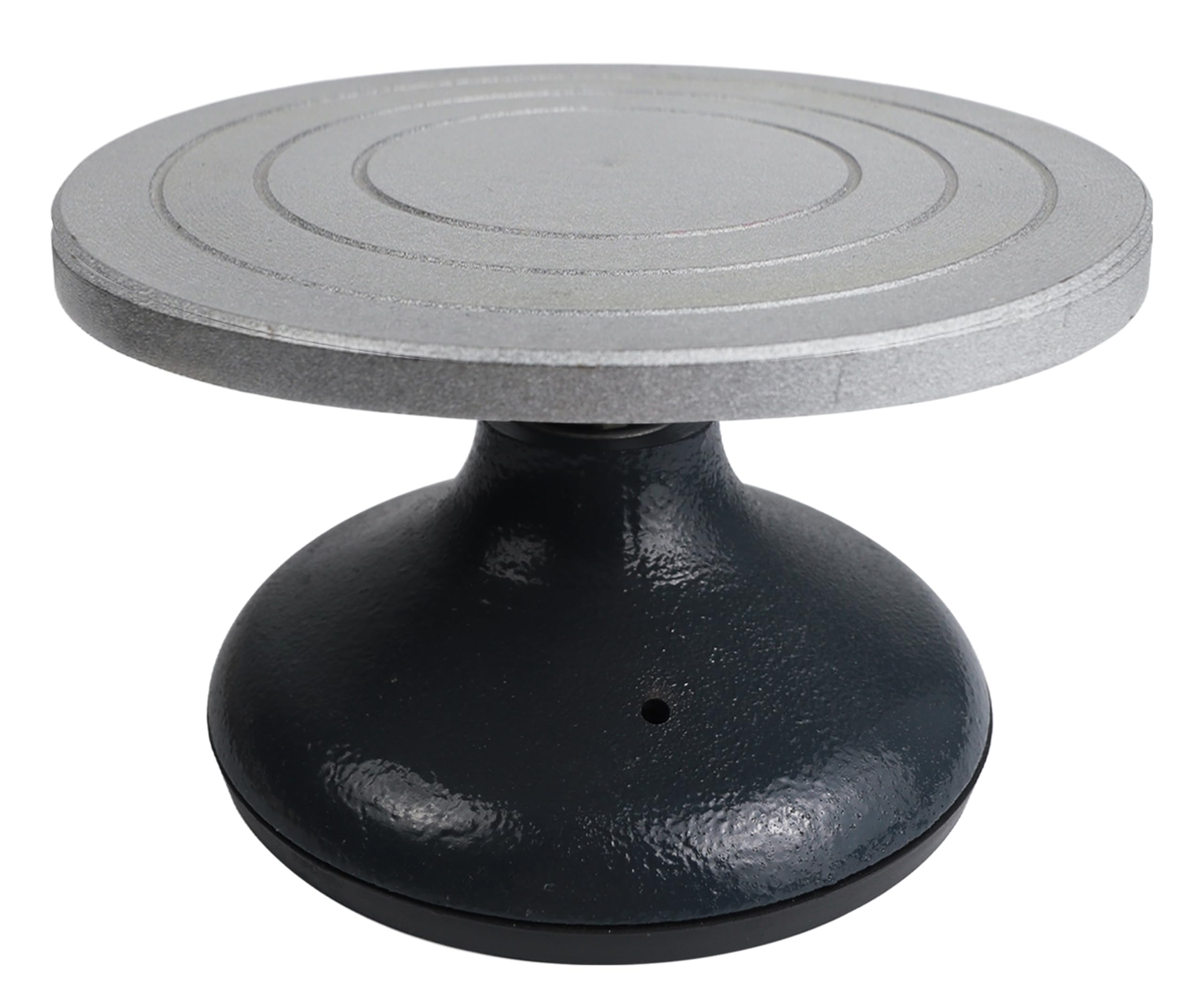
A heavy cast-iron banding wheel with ball bearings and concentric rings that I use for decorating and hand-building where electric rotation isn’t needed.
Why I picked it: Heavy, smooth spin and concentric rings help with balance and detail work.
Best for: Hand-building, decorating, and detailing without electricity.
An economical, heavy-duty manual turntable for studio and tabletop use.
Pros
- Solid cast-iron weight for momentum
- Smooth bearing rotation
- Concentric circles aid centering
- Non-slip rubber base
Cons
- Slight wobble on some units
- Heavy and less portable
My take
I regularly use this Falling In Art banding wheel for painting and adding fine details where a motorized wheel would be overkill. The weight gives it the momentum needed for steady rotation and the concentric circles are genuinely useful when I’m balancing forms.
It spins smoothly thanks to the bearing, though I noticed a faint wobble on the unit I tested—fine for decorating and hand-building, but something to be aware of if you need absolute wobble-free precision.
Overall, it’s a heavy-duty, inexpensive solution for working on wet or dry pieces without a power source, and the non-slip rubber base keeps it where I set it during long decorating sessions.
How I Choose Pottery Wheels and Wheel Accessories
Types of wheels and turntables
I separate wheels into three categories: motorized beginner wheels, manual banding wheels, and compact kids’ wheels. Motorized wheels give torque and steady rotation for throwing larger work, banding wheels are for decorating and hand-building, and kids’ wheels prioritize ease of use and included learning materials.
When I pick a motorized wheel for teaching, torque and speed control come first. For home hobbyists who only need to trim and decorate, a heavy manual turntable often does the job well and costs less.
- Motorized wheels: look for steady torque, smooth speed changes, and durable foot or hand controls.
- Banding wheels: prioritize weight and a reliable bearing for smooth spin.
- Kids’ wheels: choose simple controls and included learning aids to shorten the learning curve.
Accessories I never skip
A dependable cutoff wire, a set of specialized sponges, and a reliable bat system are the basic accessories I use every session. They speed up workflow and reduce damage to finished pieces.
Investing a bit more in sponges and bats saves time—thin studio sponges give me better touch control and plastic bats avoid warping when wet.
- Cutoff wire: choose a braided stainless cable with an ergonomic handle.
- Sponges: get different textures for throwing vs finishing.
- Bats: an easy-lift rim and rigid material make piece removal painless.
Buying tips for kids and classrooms
For children, I focus on simplicity and bundled learning materials. A two-speed motor and arm tools will help younger makers get usable results faster.
In classrooms, durable materials and extras like aprons, spare clay, and multiple bats reduce interruptions and let more students have hands-on time.
- Pick wheels with clear instructions and video lessons when available.
- Buy extra consumables—clay and sponges—so sessions run smoothly.
- Supervise younger children; adult help accelerates early success.
Frequently Asked Questions
Can a kids’ pottery wheel teach real wheel-throwing skills?
Yes. I’ve used kids’ wheels to teach basic centering and opening; the arm tools and two-speed motors in starter wheels accelerate early learning. Expect some adult guidance and a transition to a full-sized wheel as skills progress.
Do plastic bats really avoid warping?
In my experience, injection-molded plastic bats stay flat when wet and resist warping better than MDF. They’re lightweight, easy to clean, and their easy-lift rims make removing pieces much safer.
How do I know which sponges to buy?
I recommend a set with varied textures: a less-absorbent finishing sponge for smooth surfaces, a highly absorbent throwing sponge for water control, and an all-purpose workhorse. Hydrate them before use—the firm feeling on arrival is normal.
Final Take
I keep a mix of these wheels and accessories in my studio because each fills a specific role: compact kids’ wheels for learning and play, manual banding wheels for detailing, and reliable accessories that make throwing repeatable and clean.
If you’re starting out, prioritize a wheel that gives consistent torque and buy a few quality accessories—cutoff wire, studio sponges, and a good bat—because they transform how quickly you get usable results.
Ultimately, pick the combination that matches your space, the age of the makers, and the scale of work you want to create. I’ve included options here that I return to again and again.
