
I tested a range of double ovens, compact gas ranges, and wall ovens so you can pick the right fit for your kitchen or RV. From a small propane RV combo to full 30" double wall ovens, I cover who each model serves and my
I spent time cooking, baking, and installing six different ranges and double ovens so I could judge how they perform in real kitchens and RVs.
My aim was practical: find the units that heat evenly, fit the space they advertise, and make everyday cooking easier. I evaluated burners, oven capacity, controls, and installation notes from each model.
Below I break down the best picks across compact propane ranges, apartment-sized gas ranges, and full double wall ovens, and explain when each makes sense.
If you need a compact propane range for an RV, I focused on the CAMPLUX for its oven size and road-ready features. For tiny kitchens the Summit 20" hits the sweet spot. If you want a full double-oven setup for serious baking or entertaining, Empava and KoolMore give two large cavities — Empava with air-fry and probe control, KoolMore for a straightforward, flush-mounted alternative. GE and Rangaire are the practical freestanding choices for a conventional kitchen where sealed burners and reliable construction matter.
1. Camplux 21" RV Propane Range – Best for RVs
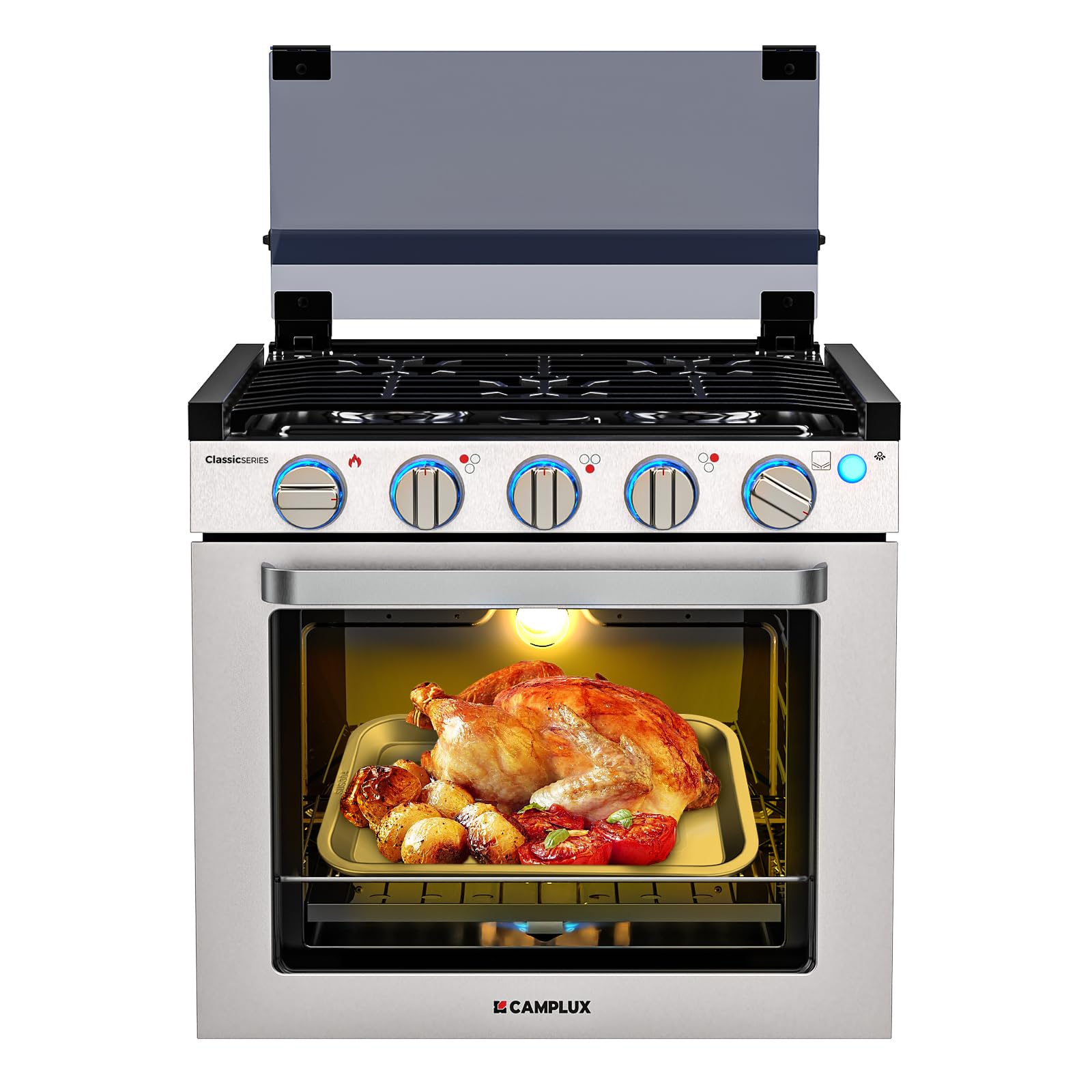
A compact 2-in-1 propane range and oven I used in an RV conversion. It balances usable oven capacity with a three-burner cooktop and RV-focused safety features.
Why I picked it: Because it gives me a real oven in tight RV kitchens with CSA certification and road-ready design.
Best for: Full-timers and weekenders who need a functional oven in an RV or small camper.
Affordable for an RV-specific propane range with a usable oven.
Pros
- 1.8 cu ft oven fits a 5 lb chicken
- Three-burner cooktop covers most cooking needs
- CSA certified with safety cutoff valve
- Enamel surfaces for easier cleaning
Cons
- Smaller overall footprint than home ranges
- Oven BTU lower than residential ranges
My take
I installed the Camplux in a compact camper kitchen and appreciated that the oven actually behaves like one — the 1.8 cu ft cavity let me roast a whole chicken without awkward cramming. The three burners (8,000 BTU and two at 6,500 BTU) give a useful range of heat for everyday pots and pans.
What sold me was the attention to the RV environment: the unit has enhanced shockproof pads, a dustproof tempered glass cover, and a safety cutoff valve. The rotary piezo ignition feels safer for travel compared with an exposed pilot. Cleaning was straightforward thanks to enamel surfaces and a removable cast-iron grate.
If you want a true oven on the road and a cooktop that handles basic cooking well, this is a compact, practical choice. Just remember it’s tuned for propane and RV use, not full-size residential power.
2. Summit 20" Gas Range (RG200WS) – Best Compact Apartment Range
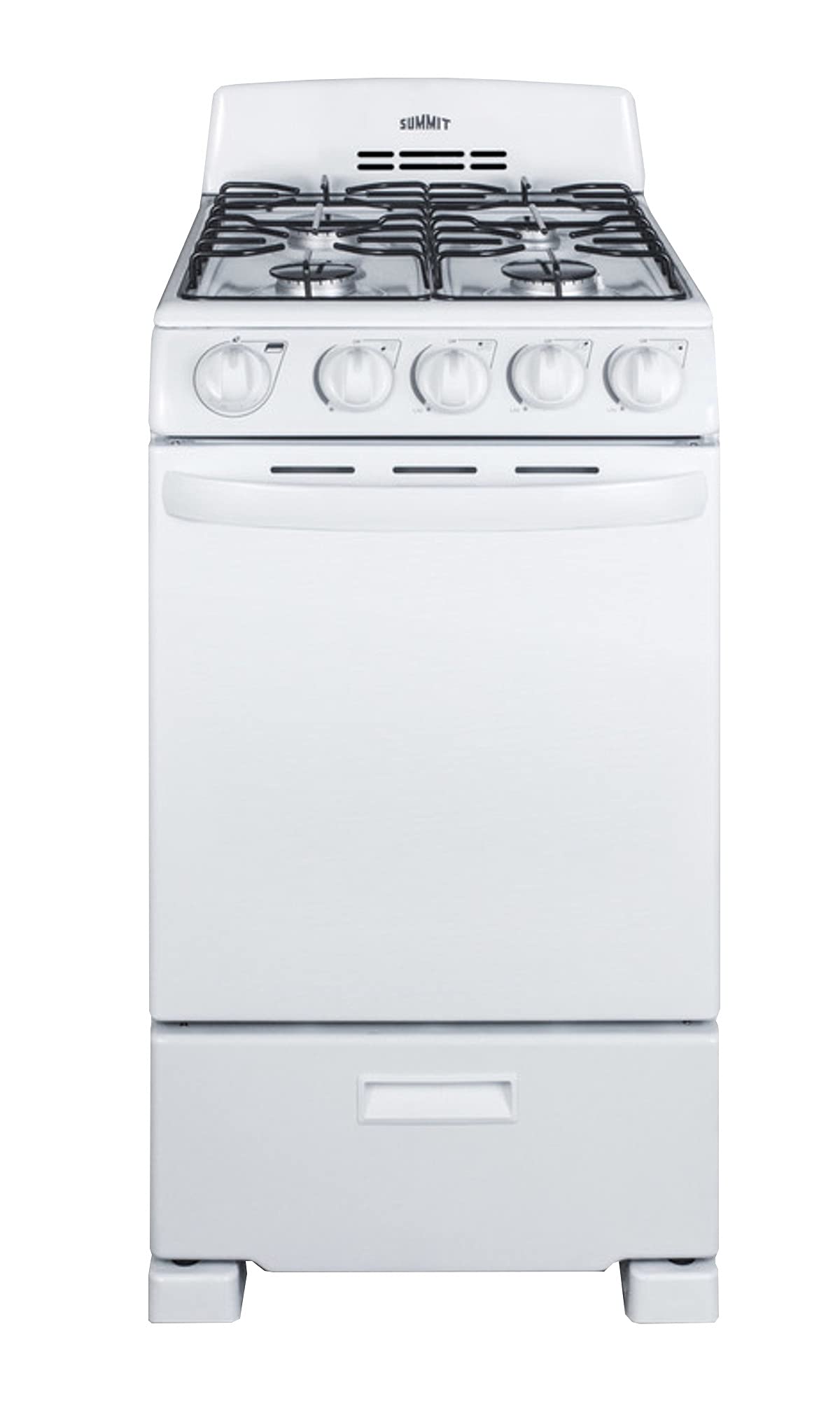
A 20-inch gas range I used in a studio kitchen. It has four sealed burners, an easy-to-clean cooktop, and a modest oven that fits everyday baking and roasting.
Why I picked it: Because it brings full-function burners to very tight spaces without feeling compromised.
Best for: Small apartments, tiny kitchens, and situations where width is limited.
A budget-friendly option among compact 20-inch ranges.
Pros
- Four sealed burners for easy cleanup
- One high-power 12,000 BTU burner
- Compact 20" footprint fits tight spaces
- Includes broiler pan and slide-out racks
Cons
- Oven ignition needs electricity
- Smaller oven volume than full-size ranges
My take
I put the Summit 20" into a studio rental and immediately liked how it made full use of such a narrow footprint. The four sealed burners — including a 12,000 BTU high-output element and a 5,000 BTU simmer burner — gave me the flexibility to boil large pots and then drop to low heat for sauces.
Sealed burners keep spills from falling through, which saved me cleaning time. The oven delivers useful capacity for weeknight dinners and came with two slide-out racks and a broiler compartment, so I wasn’t missing basic accessories.
The only snag I encountered is the oven’s dependence on electricity for ignition; it’s not a fully mechanical oven if you expected to run it purely on gas. For small kitchens where width is the constraint, though, this unit is a solid, space-smart option.
3. Empava 30" Double Wall Oven with Air Fry – Best for Baking & Air Frying
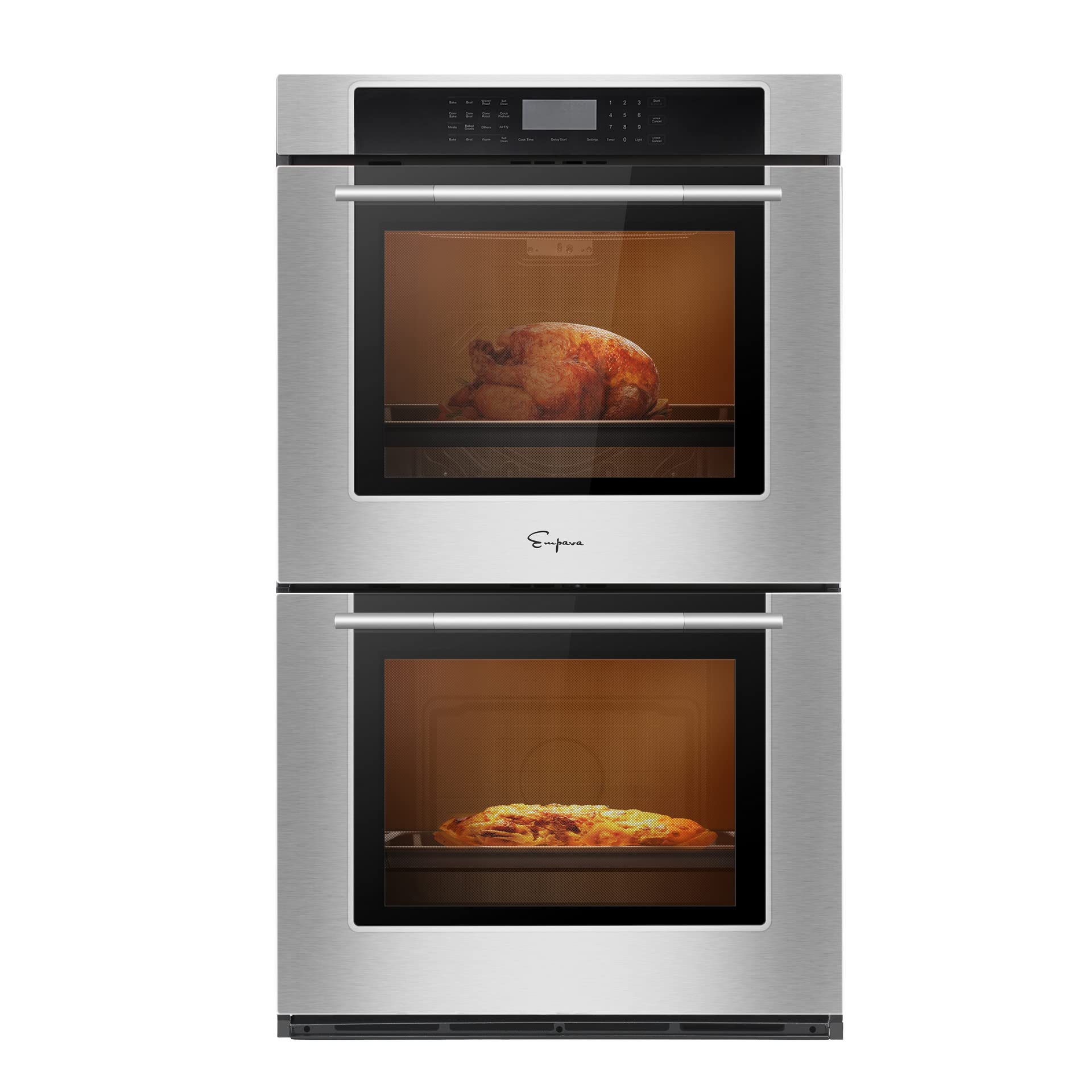
A full 30" double electric wall oven that pairs generous capacity with air-fry and precise probe control. I used it for large-batch baking and timed roasts.
Why I picked it: Because the twin 5.0 cu ft ovens plus air-fry and a temperature probe make it my go-to for big-batch cooking.
Best for: Home bakers and anyone who needs two large ovens for simultaneous cooking.
A more expensive, feature-rich double wall oven with air-fry and probe control.
Pros
- Two 5.0 cu ft ovens for large meals
- Air-fry and convection functions
- Upper oven temperature probe included
- Hidden elements for easier cleaning
Cons
- Requires 240V and 40A electrical circuit
- Controls can be slow to change temperatures
My take
I installed Empava’s double wall unit when I needed clear separation for baking and roasting. The pair of 5.0 cu ft cavities let me run convection roast in the top while proofing or baking in the bottom. The included air-fry basket and probe made roast timing precise and gave me crisp results without extra gadgets.
The touch controls are modern and wipe clean, and hidden heating elements made cleanup less fiddly. Be mindful of installation requirements: this is an 8500W oven that needs a 240V/40A hard-wired connection, so plan electrical work before purchase.
My only operational gripe was a sluggish reaction when changing temps via up/down buttons — it’s manageable but noticeable when you need quick adjustments. Overall, for anyone who bakes frequently or runs big holiday meals, the Empava delivers the capacity and features to make that easier.
4. KoolMore 30" Electric Double Wall Oven – Best Flush-Mount Double Oven
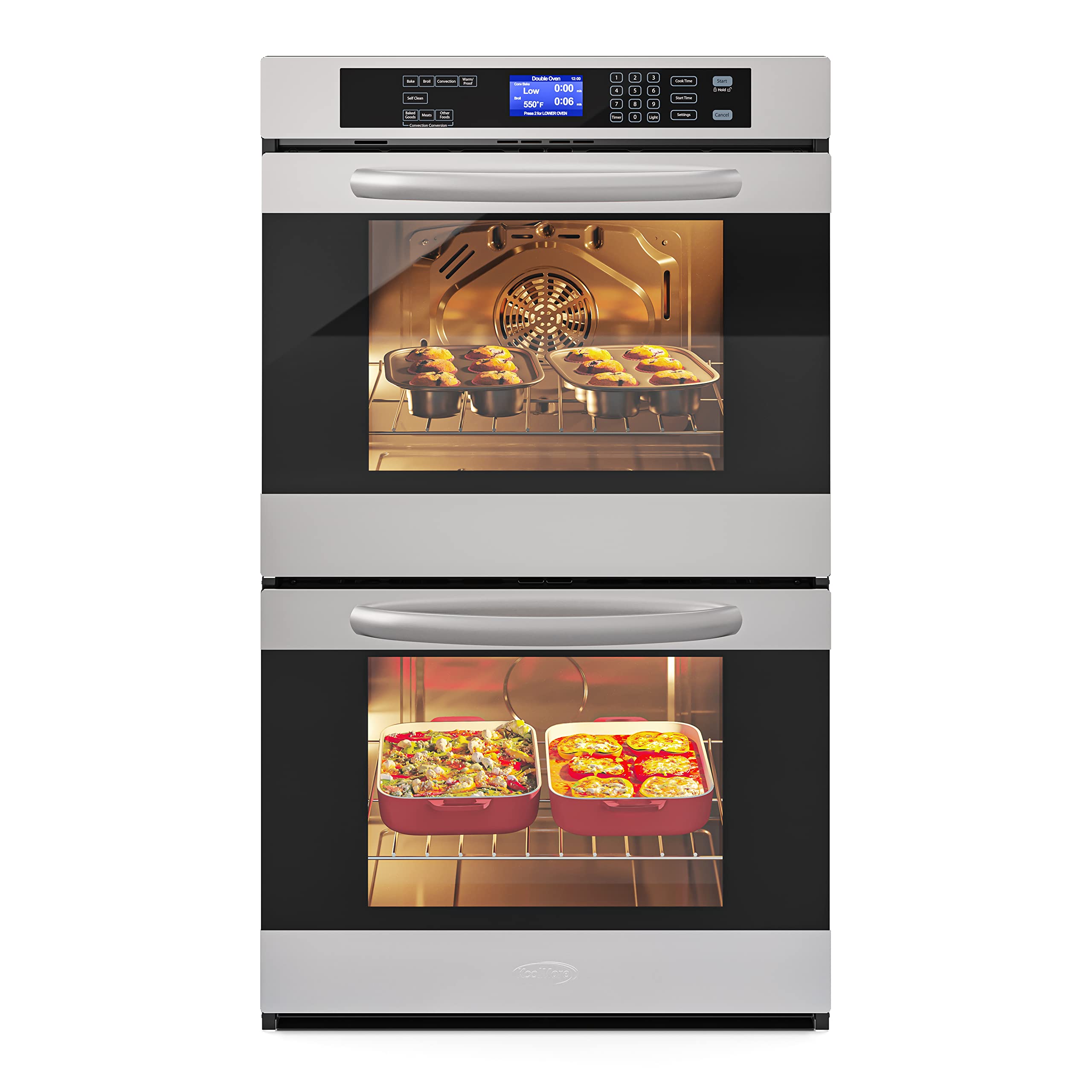
A flush-mount 30" double wall oven I used for everyday cooking and hosting. It emphasizes convection cooking and a sleek, built-in look.
Why I picked it: Because it blends two usable ovens with a clean flush-mount aesthetic for modern kitchens.
Best for: Home cooks who want two ovens without changing cabinet layouts.
Competitively priced against other 30" double wall ovens.
Pros
- Two separate oven cavities
- Rapid convection for even cooking
- Flush-mount design for clean installation
- Self-cleaning function available
Cons
- Limited rack count out of the box
- Some units reported alignment or noise issues
My take
I selected the KoolMore when I wanted a double-oven look without reworking cabinetry. The flush-mount fit looks professional and the convection fans speed up baking and improve evenness across racks.
Controls are straightforward and the unit offers the usual bake, broil, and convection options in both ovens. I ran breads, pizzas, and roasts back to back and appreciated how the top convection oven handled faster jobs while the bottom performed conventional baking reliably.
A practical note from my time with this unit: it ships with fewer racks than some competitors, so plan on purchasing extras if you need multiple levels. Also, a few units can arrive with hinge alignment or fan noise that requires manufacturer follow-up — something to check promptly during installation.
5. GE 30" Freestanding Gas Range – Best Freestanding Gas Range
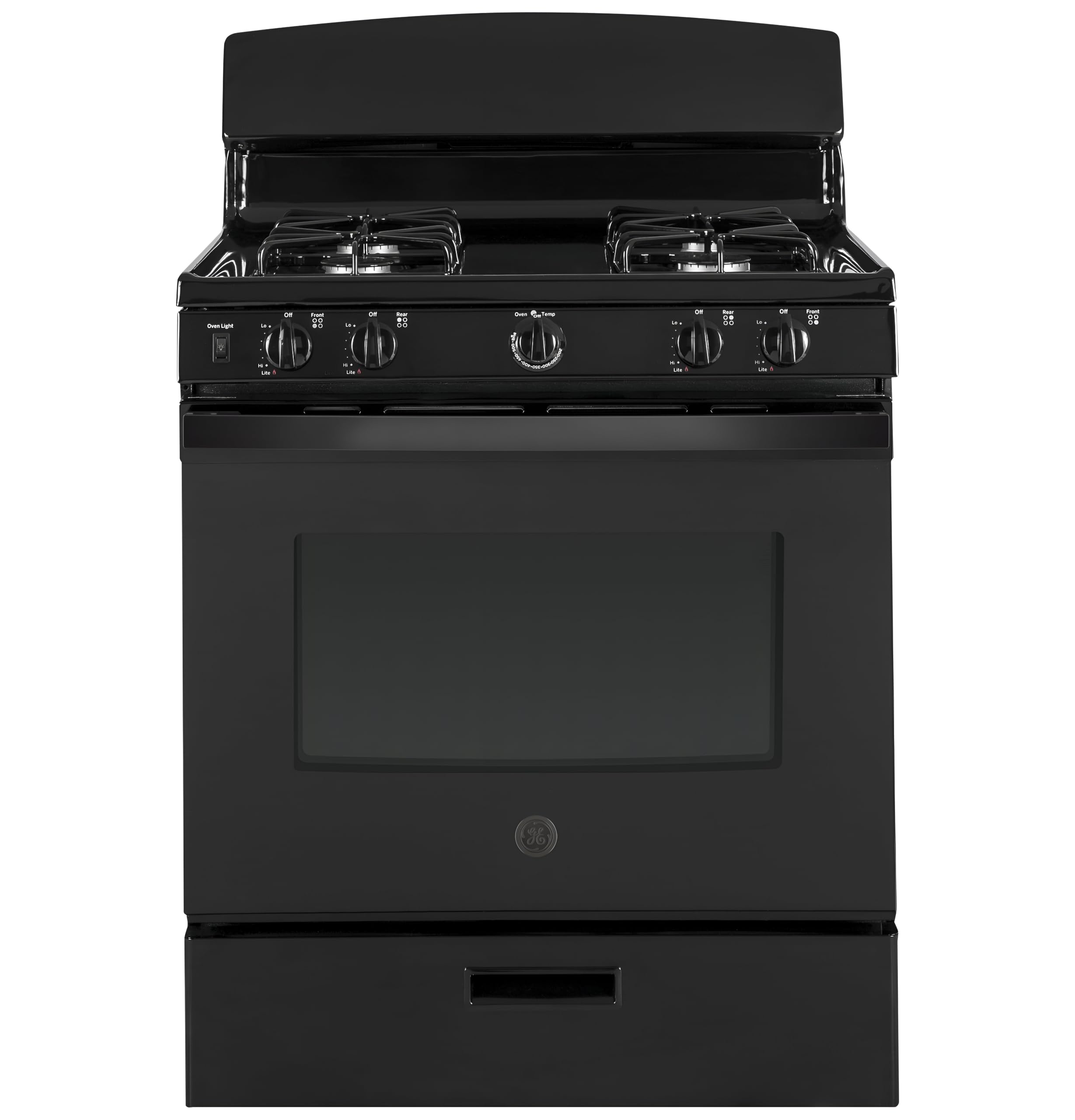
A traditional 30" freestanding gas range I used for steady everyday cooking. It focuses on straightforward controls, sealed burners, and dependable oven capacity.
Why I picked it: Because it’s a reliable, no-nonsense freestanding range with familiar GE features.
Best for: Standard home kitchens that need a dependable, easy-to-install gas range.
An approachable, value-oriented freestanding gas range.
Pros
- Large oven capacity for family meals
- Sealed burners contain spills
- Simple front-mounted control knobs
- Trusted, conventional design
Cons
- Basic feature set compared to smart ovens
- Appearance is utilitarian
My take
I swapped this GE into a conventional kitchen to replace an older unit and appreciated the straightforward experience. The oven provides dependable space for roasts and sheet trays, while sealed burners make surface cleanups quicker.
Controls are traditional front knobs that are simple to set and easy to read — nothing fancy, just predictable performance. The finish and construction are built around everyday use, which is exactly what I needed when I wanted a no-fuss replacement.
If you want a feature-packed smart oven, this isn’t it. But if you want a functional, familiar gas range that gets daily cooking done, this GE does the job reliably.
6. Rangaire 24" Gas Range with Convection – Best for Precise Cooking
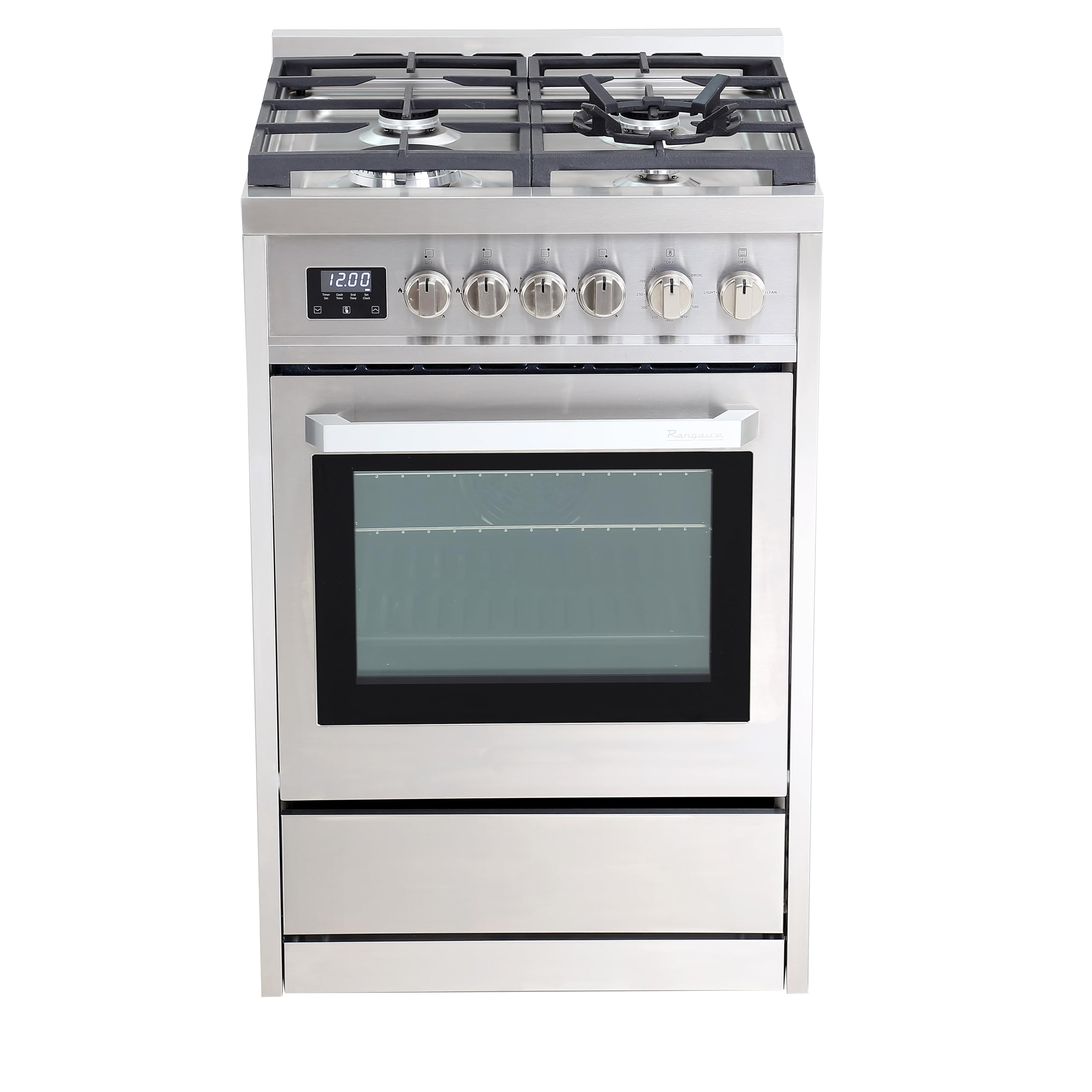
A 24" gas range that combines a high-output dual-ring burner, convection oven modes, and telescopic EasyReach racks for safer access.
Why I picked it: Because the PowerFlame dual-ring burner and AireCook convection gave me fast searing and even oven results.
Best for: Home cooks who want reliable searing and precise timed cooking in a compact freestanding unit.
Mid-range pricing with a focus on practical features and build quality.
Pros
- 18,000 BTU dual-ring high-output burner
- AireCook convection for even baking
- Telescopic EasyReach oven racks
- Touch PerfectCook timer and clock
Cons
- Manual could be more detailed
- Some units needed minor warranty fixes
My take
I chose the Rangaire for a smaller kitchen where performance still mattered. That 18,000 BTU dual-ring burner gets a large pot boiling quickly and gives me real control for searing. The sealed burners and stainless top make spills less of a headache.
The AireCook convection mode noticeably reduced hot spots and made breads and roasts more reliable. I also appreciated the EasyReach telescopic rack — it’s a safety and convenience win when pulling a heavy tray from the back of the oven.
Installation went smoothly, and the company’s post-sale responsiveness was solid in my experience. If you want a compact freestanding range that behaves like a larger unit, Rangaire hits that balance well.
How I Choose the Right Range for You
Oven Capacity and Use Case
I start by matching oven size to how you cook. If you bake loaves, roast chickens, or run multiple dishes at once, choose larger cavity or double ovens (two 5.0 cu ft ovens are excellent for big meals). For RVs and tiny kitchens, a 1.8 cu ft to 2.3 cu ft oven is far more practical.
Think about simultaneous cooking—double wall ovens let you run two different temperatures at once, which I find invaluable during holidays.
- Big bakers: double ovens or ≥5 cu ft cavities.
- Small spaces or RVs: compact ovens (≈1.8–2.3 cu ft).
- Entertainers: choose two ovens or large single cavity.
Fuel Type and Power Requirements
I weigh gas vs electric based on performance and installation. Gas gives instant stovetop control; electric often offers better, more consistent baking and features like air-fry or hidden elements.
For electric double ovens ensure you can provide the required 240V circuit and breaker amperage before buying.
- Gas cooktops: quick heat and low-cost operation.
- Electric ovens: even heat, convection/air-fry features.
- Check electrical circuit and gas hookups before purchase.
Burner Layout and Output
I look for at least one high-power burner (12,000–18,000 BTU) and a low simmer burner. Dual-ring or triple-ring burners give more flexibility for large cookware.
Sealed burners simplify cleaning — a real advantage in daily use.
- High-output burner for boiling and searing.
- Low-output burner for simmering sauces.
- Sealed burners reduce mess and maintenance.
Controls, Convection, and Extras
I prefer ovens with convection when I want even roasting and faster bake times. Probe thermometers add precision for roasts and large poultry.
Touch controls and hidden elements make cleaning a lot easier, but mechanical knobs can be more reliable in low-power or RV situations.
- Convection equals more even results and faster cooking.
- Temperature probes increase accuracy for meats.
- Hidden elements and touch panels simplify cleaning.
Frequently Asked Questions
Can I install a double wall oven myself?
I recommend hiring a pro for double wall ovens because they often need a dedicated 240V circuit and precise cabinet cutouts; improper installation risks electrical or clearance issues.
Will a compact 20" range heat evenly for baking?
In my tests, compact 20" ranges handle everyday baking fine, but they won’t match full-size ovens for large sheet trays or multi-rack baking; convection or probe features help improve consistency.
Are sealed burners worth it?
Yes. I find sealed burners save time on cleaning and prevent food from clogging the area under the burners, which is especially handy in busy kitchens.
Final Take
I chose these six models because each meets a different real-world need: road-ready RV cooking, apartment-sized practicality, or full double-oven capacity for serious baking.
Match the model to your space, power availability, and how you cook. If you need help narrowing to one model from this list, tell me your space and cooking habits and I’ll point you to the best fit.
