
I tested a range of fertilizers—water-soluble, slow-release, and citrus-specific—to find what actually helps citrus trees grow healthy foliage and better fruit. Here are the options I keep on my shelf and why.
I grow citrus in containers and in the ground, and I’ve tested these fertilizers across lemon, orange, and potted Meyer trees.
My goal was practical: products that correct nutrient gaps common to citrus, are easy to apply, and actually produce greener leaves and stronger new growth.
Below I compare quick-acting water-soluble feeds, season-long slow-release formulas, and citrus-targeted blends so you can pick the one that fits your routine.
I split options into water-soluble (fast correction and more frequent feeding) and slow-release (set-and-forget seasonal feeding); citrus-specific blends target common citrus deficiencies like iron and magnesium.
1. Miracle-Gro Water Soluble All Purpose Plant Food – Best Versatile Water-Soluble
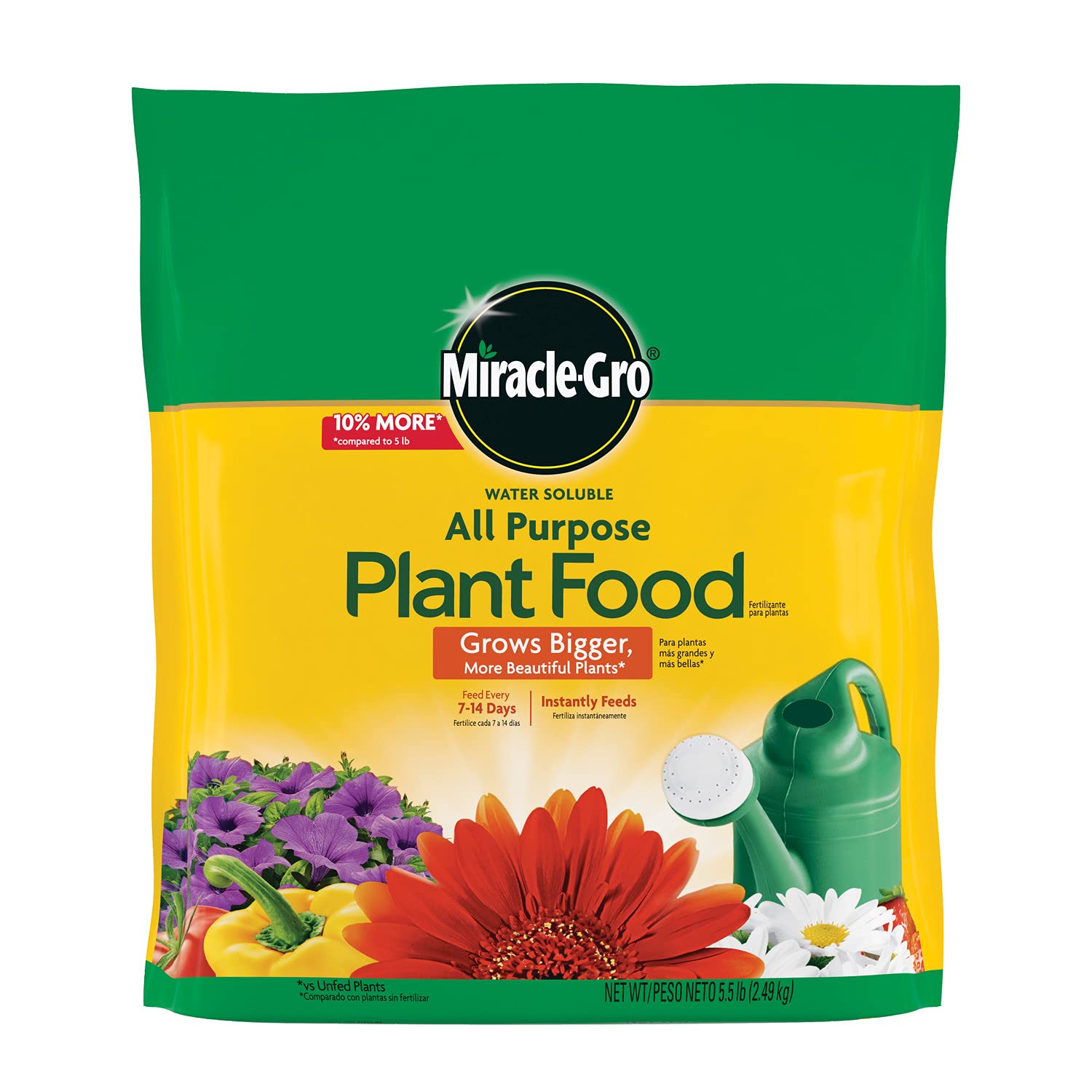
I rely on this when I need fast, predictable nutrient boosts for citrus seedlings and potted trees.
Why I picked it: Fast-dissolving formula and high nitrogen for quick green-up.
Best for: Container citrus, seedlings, and fast corrective feeding.
Great value for frequent, general-purpose feeding.
Pros
- Works instantly when dissolved in water
- High nitrogen for quick leaf green-up
- Covers many plant types, versatile
- Easy-to-follow scoop dosing
Cons
- Requires more frequent applications
- Not specialized for citrus deficiencies
My take
I turn to this water-soluble 24-8-16 formula when my citrus needs an immediate pick-me-up. The granules dissolve quickly and I can feed directly through a watering can or hose sprayer, which I do every two weeks for potted trees.
On my Meyer lemon in a small pot, this product produced rapid green-up and noticeably livelier new growth after the first application. Because the N is high, I’m careful not to overdo it—following the scoops on the package keeps my trees safe.
This is the product I keep for general maintenance and quick corrections. If I need ongoing correction for iron or magnesium, I pair it with a targeted micronutrient treatment rather than rely on it alone.
2. Miracle-Gro Shake 'N Feed All Purpose Plant Food – Best Low-Maintenance Feed
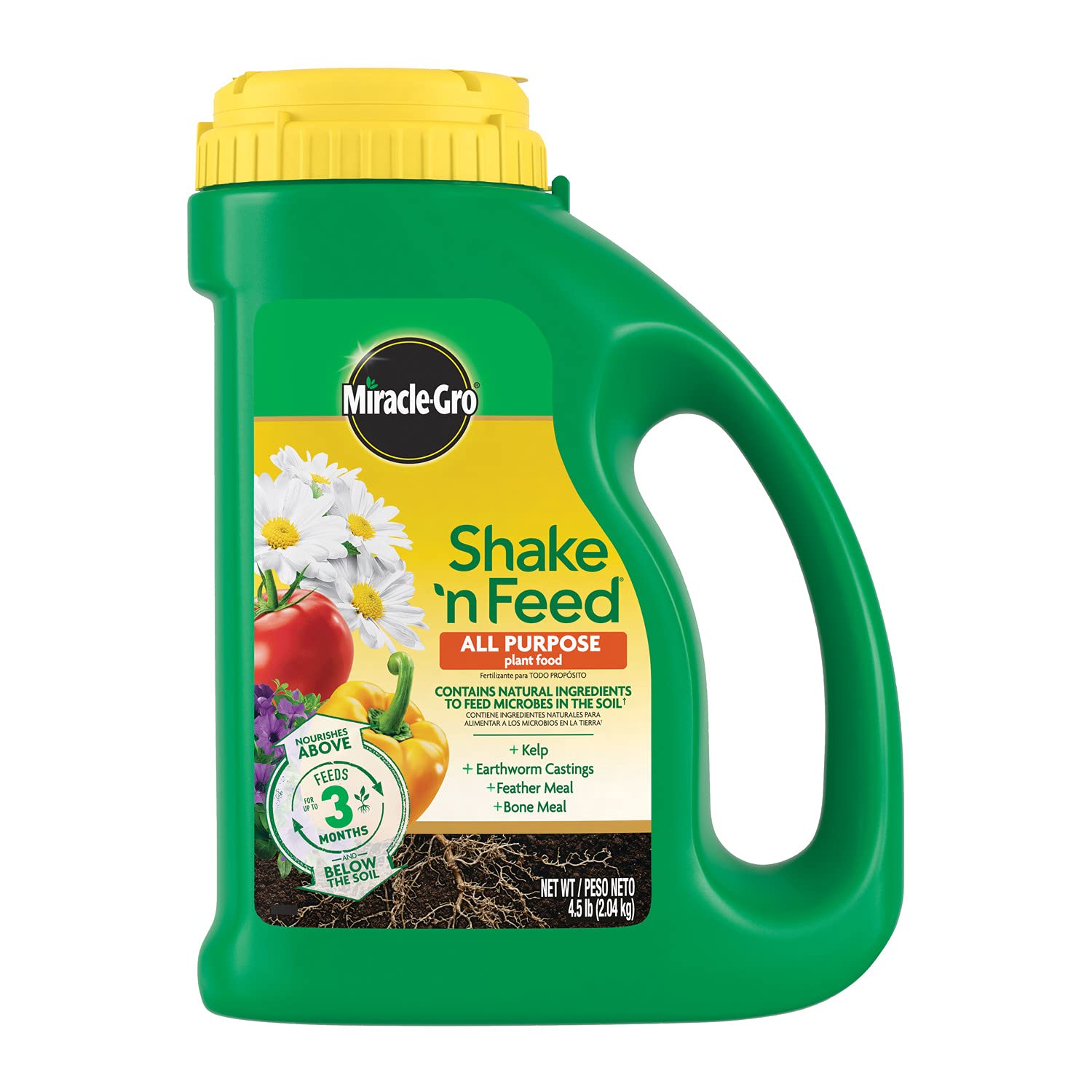
I use this when I want a hands-off feed that keeps citrus fed for months.
Why I picked it: Slow-release, feeds up to three months with natural ingredients.
Best for: In-ground citrus and larger container trees needing seasonal feeding.
Solid mid-range option for seasonal feeding.
Pros
- Feeds up to 3 months
- Simple shake-and-apply
- Contains micronutrients
- Good for in-ground beds
Cons
- Less immediate than water-soluble
- Smaller coverage per container
My take
I apply this granular Shake 'N Feed around the drip line of my in-ground citrus twice a season. The natural ingredients that feed soil microbes help maintain root health without daily attention.
Results are gradual: leaves green up and fruit set seems steadier compared with unfed trees. I appreciate that I only reapply every three months during the growing season.
For potted citrus I mix a light amount into the topsoil at planting. If I want a faster correction, I follow with a water-soluble feed, but for regular maintenance this product keeps things stable.
3. Miracle-Gro Shake 'N Feed Tomato, Fruit & Vegetable – Best for Fruits & Vegetables
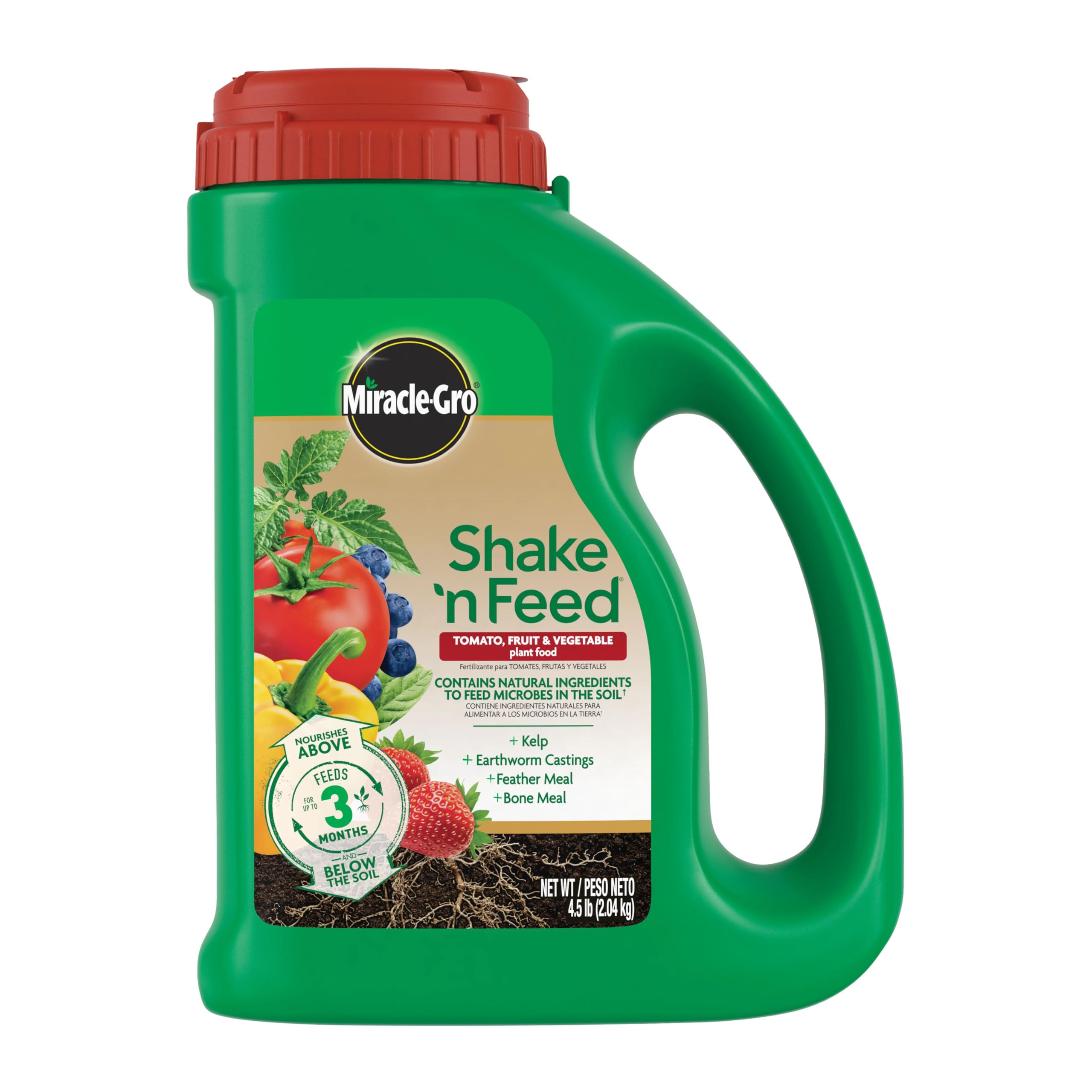
I pick this when I want calcium plus slow-release nutrition for fruit quality on citrus and other edibles.
Why I picked it: Includes calcium and natural inputs for stronger fruit walls.
Best for: Citrus that also needs better fruit set and shelf life.
Good choice for fruit-focused growers.
Pros
- Contains calcium for cell wall strength
- Feeds for up to 3 months
- Natural ingredients support soil biology
Cons
- Formulated with edibles in mind
- Not as fast-acting as soluble feeds
My take
I reach for this formula when I want to support blossom set and fruit quality. The added calcium is something I’ve noticed helping fruit firmness on my lemon and kumquat trees.
Application is simple—shake it on and work it lightly into the topsoil, then water. Over the season I saw steadier fruit development compared with using a generic granular fertilizer.
This isn’t my go-to for instant greening, but it’s a reliable way to support better-quality citrus fruit without daily effort.
4. Jack's Classic 20-20-20 Water-Soluble Fertilizer – Best Balanced Liquid Feed
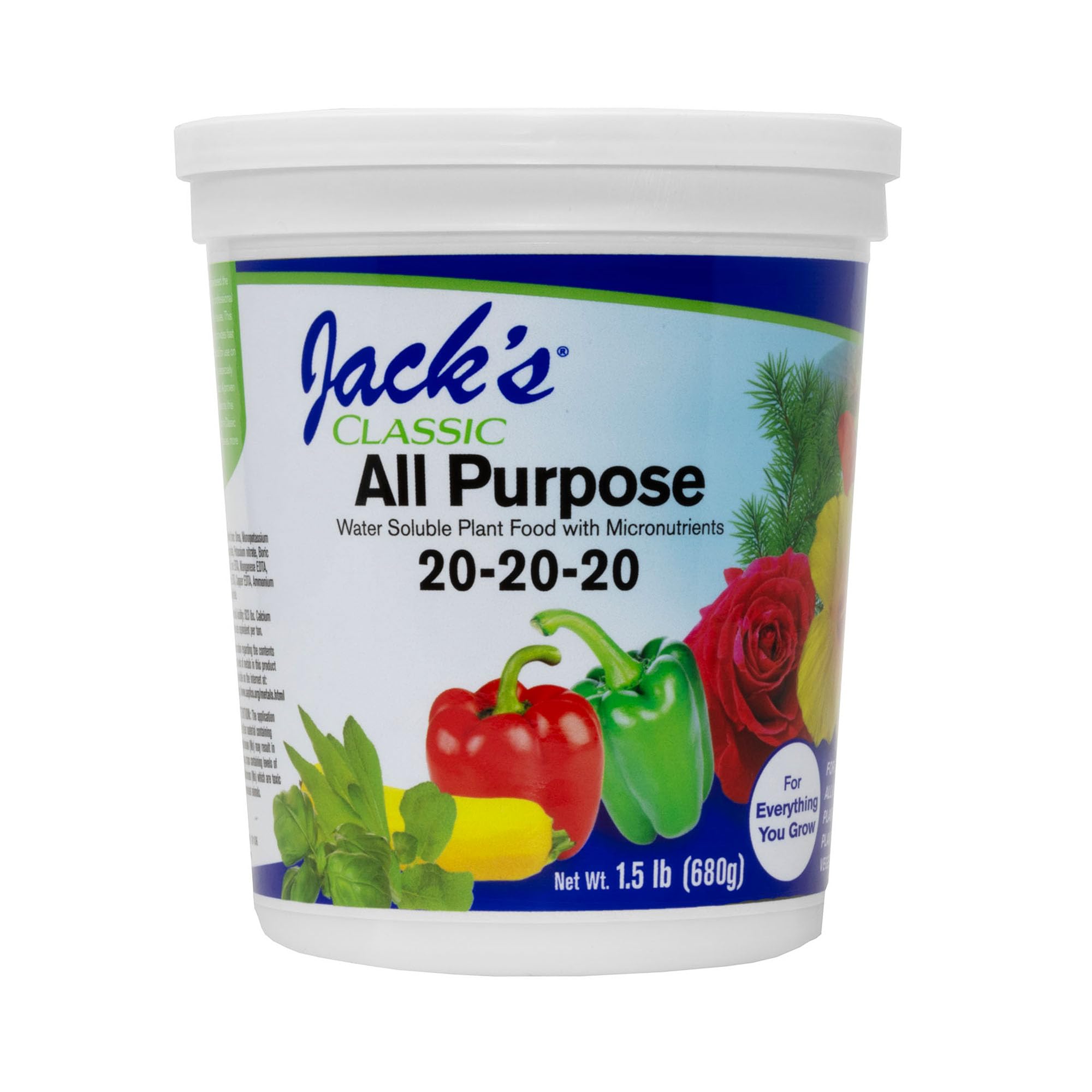
I use Jack’s when I want a very balanced, professional-grade liquid feed for foliar or root application.
Why I picked it: Even 20-20-20 ratio and chelated micronutrients for predictable results.
Best for: Growers who mix custom-strength liquid feeds and use foliar sprays.
More of a specialty, professional-grade option.
Pros
- Balanced NPK for steady growth
- Chelated micronutrients included
- Works for foliar or root feeding
- Dissolves cleanly with little caking
Cons
- Requires measuring and mixing
- Not citrus-specific
My take
I’ve mixed Jack’s to custom strengths for my young transplants and container citrus. The 20-20-20 ratio gives even growth without pushing excessive foliage at the expense of roots.
Because it dissolves cleanly and includes chelated micronutrients, I’ve sprayed it as a foliar feed in cool weather windows to quickly correct subtle deficiencies.
This product is more hands-on than a shake-and-feed; I use it when I want professional control over concentration and timing.
5. Osmocote Smart-Release Flower & Vegetable – Best Slow-Release for Veg & Flowers
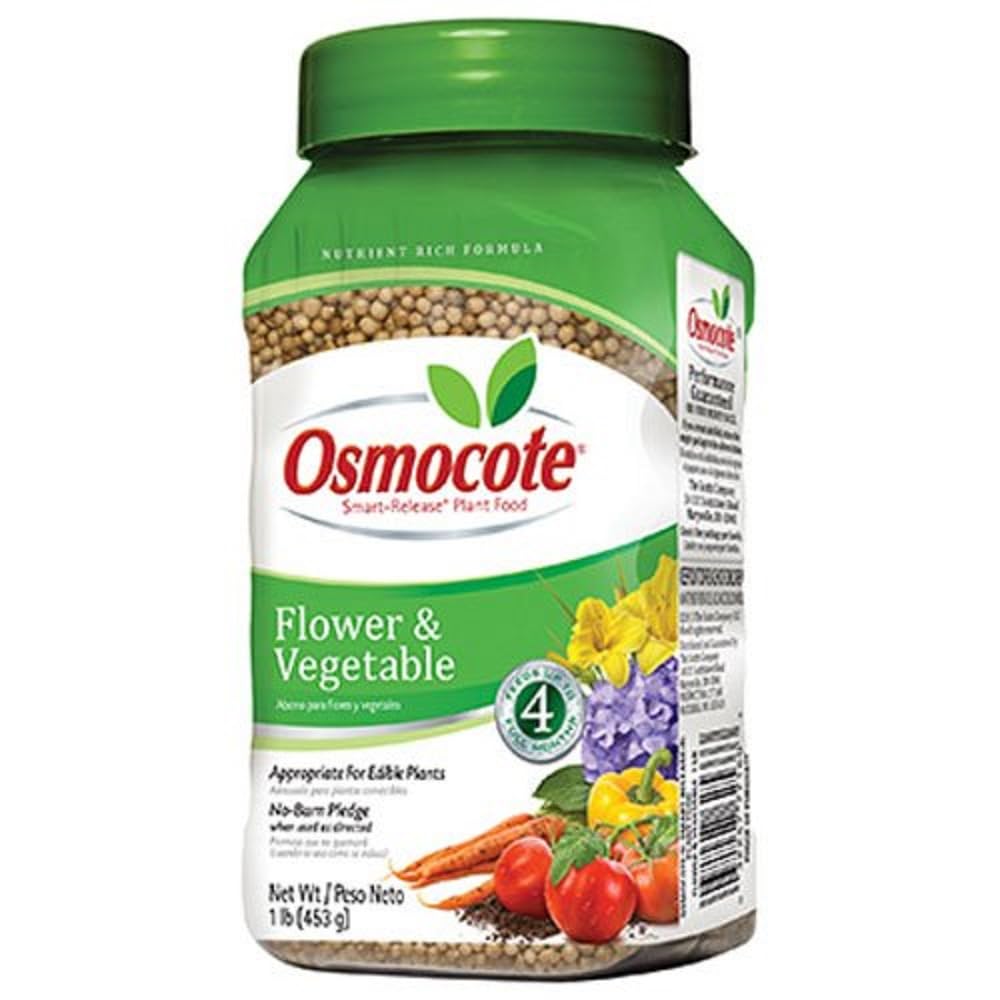
I use Osmocote when I want dependable, temperature-responsive release and a low risk of burn.
Why I picked it: Temperature-controlled release gives season-long feeding with low burn risk.
Best for: Seasonal vegetable plots and citrus in mulched beds.
Premium slow-release—longer-lasting and low-maintenance.
Pros
- Feeds up to 4 months
- Temperature-sensitive release
- Mistake-proof up to 3x recommended rate
- Consistent nutrient delivery
Cons
- Smaller coverage per container
- Some odor if used indoors
My take
I rely on Osmocote for containers and mulched citrus beds where I want season-long, steady feeding. Its release is tied to soil temperature, so nutrients become available when the tree is actively taking them up.
In my use it produced steady root and canopy growth without any burn, even when I mixed a little more than the label’s minimum during transplanting.
I avoid Osmocote for indoor houseplants where odor has been an issue for me, but outdoors it’s one of the most dependable slow-release options I keep on hand.
6. Miracle-Gro Shake 'N Feed Citrus, Avocado & Mango – Best for Citrus-Specific Needs
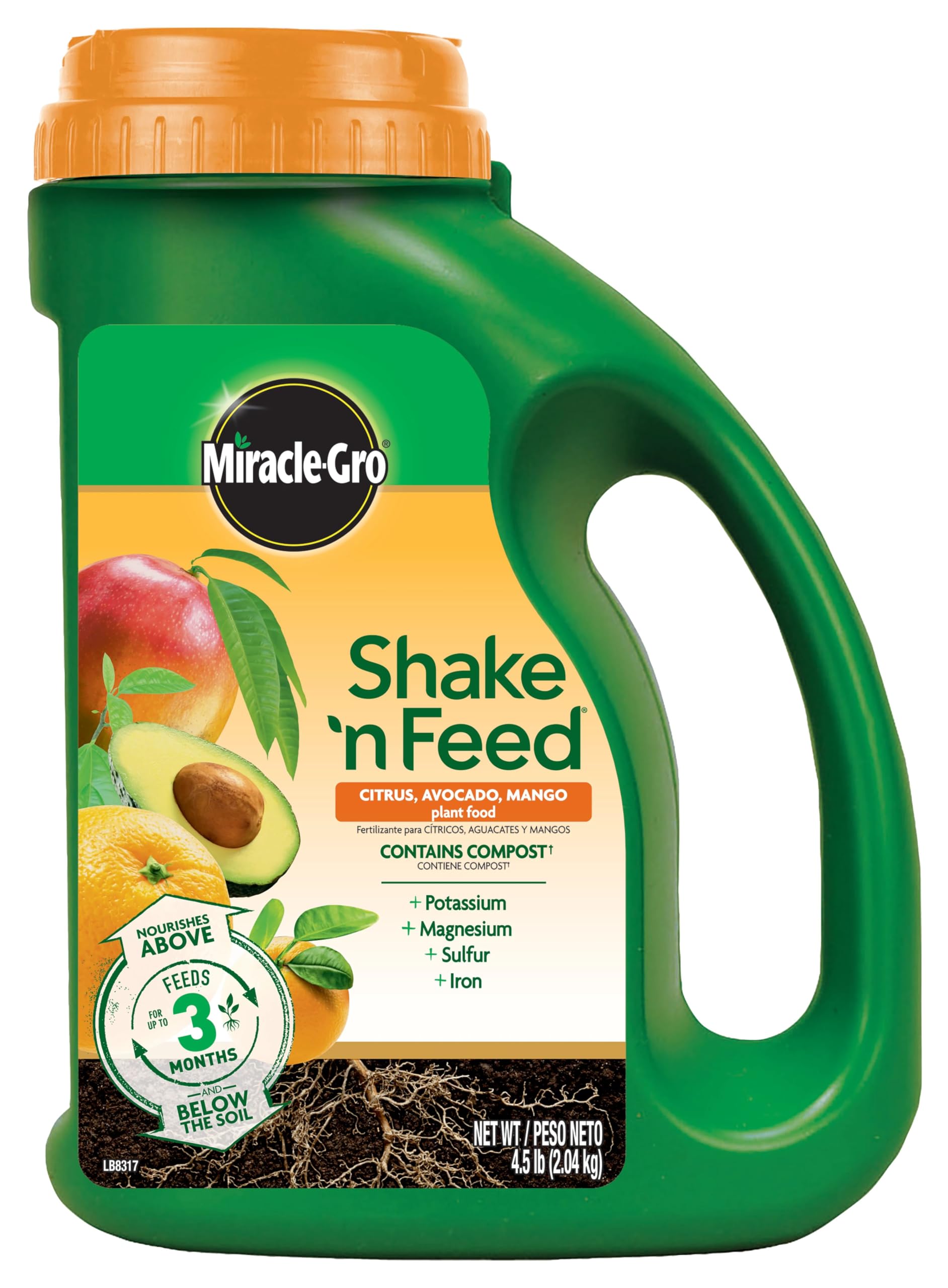
I keep this on my shelf specifically for citrus because it adds potassium, magnesium, sulfur, and iron.
Why I picked it: Formulated to address nutrients that citrus commonly lack.
Best for: Citrus and other acid-loving fruit trees with deficiency symptoms.
Purpose-built formula for citrus growers.
Pros
- Targets citrus nutrient gaps
- Feeds up to 3 months
- Easy shake-and-apply use
Cons
- Less immediate correction
- Requires careful placement around roots
My take
This citrus-specific Shake 'N Feed is the product I reach for when leaves show yellowing between veins or when fruit set is light. The added iron, magnesium and sulfur address the issues I see most often on my trees.
I sprinkle it within the branch spread—avoiding direct trunk contact—work it into the topsoil, and water. The results appear over weeks as leaf color deepens and new flushes look stronger.
For steady citrus health, I find this formula more effective than a generic granular feed because it targets the common deficiencies I’m treating.
7. Miracle-Gro Shake 'N Feed Flowering Trees & Shrubs – Best for Flowering Trees & Shrubs
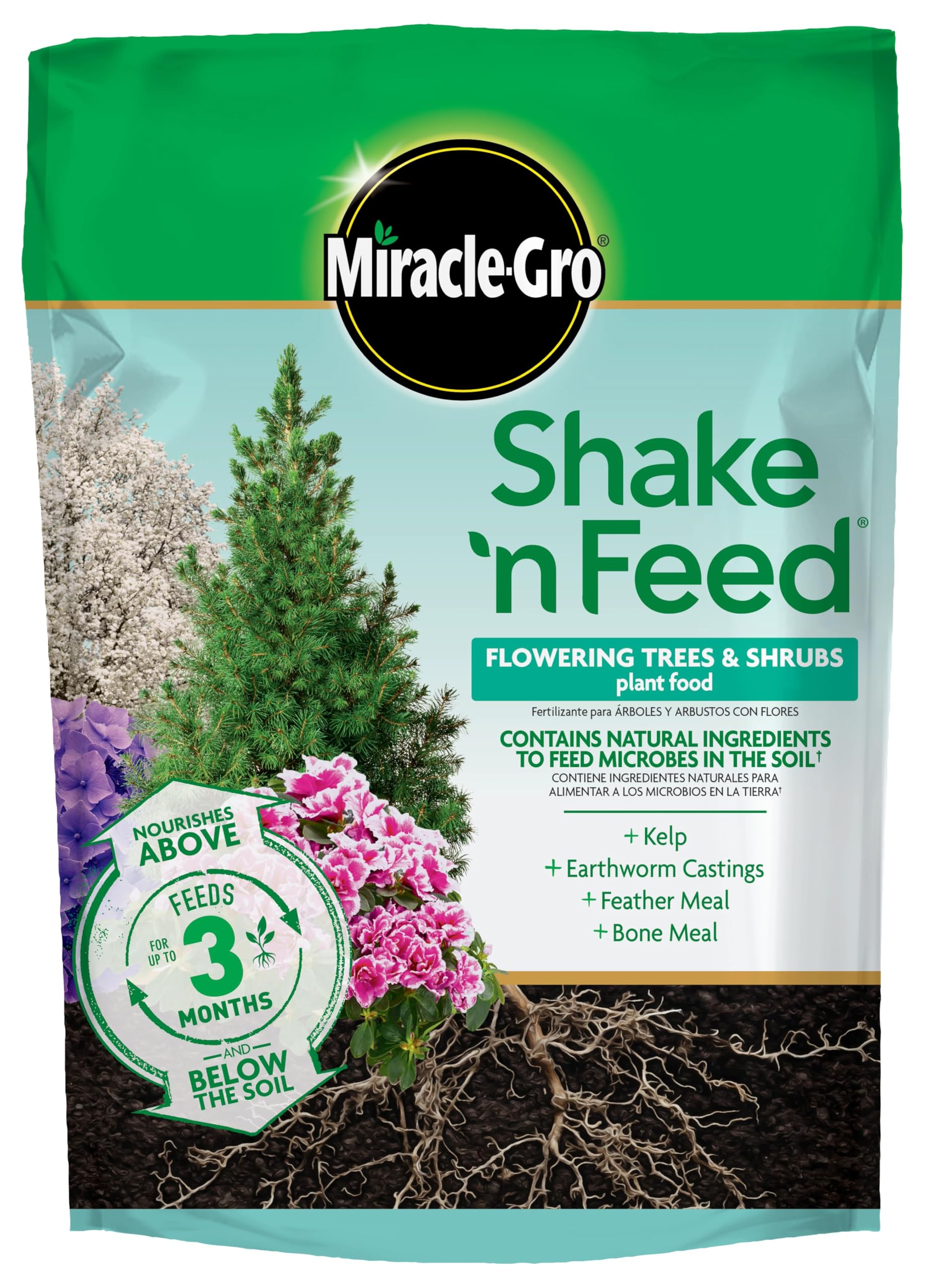
I use this when I want stronger blooms and deeper green foliage on acid-loving ornamental citrus and shrubs.
Why I picked it: Designed for flowering, acid-loving trees and shrubs with organic inputs.
Best for: Flowering citrus varieties and acid-loving companion plants.
Good value for larger landscaping needs.
Pros
- Supports fuller foliage and blooms
- Natural ingredients feed soil biology
- Easy distribution over larger plantings
Cons
- Not tailored strictly to citrus
- Requires seasonal reapplication
My take
I’ve used this on flowering citrus and nearby shrubs to keep the whole bed vibrant. The blend of kelp, bone meal, and castings helps blooms and overall vigor.
On larger shrubs and landscape citrus this is easy to broadcast and water in, and I’ve watched trees develop fuller canopies within a season.
If fruit quality is the top priority I pair it with a citrus-specific supplement, but for combined ornamental and fruit plantings it’s a strong performer.
How I Choose Fertilizers for Citrus Trees
NPK and What I Look For
I always check NPK first. Citrus benefits from a balanced feed but will often respond to slightly higher nitrogen for leaf and shoot growth and increased potassium for fruiting.
If fruit quality is my priority, I prioritize formulas that include calcium and magnesium; for general maintenance I’ll use balanced NPK or slow-release blends.
- Higher nitrogen encourages foliage growth; use carefully on mature fruiting trees.
- Potassium supports fruit size and quality.
- Calcium and magnesium reduce common citrus disorders.
Slow-Release vs Water-Soluble
I choose water-soluble fertilizers when I need fast correction or am managing potted trees that flush quickly.
I prefer slow-release for low-maintenance, long-season feeding in garden beds and larger containers.
- Water-soluble: fast results, more frequent application.
- Slow-release: lower maintenance, season-long nutrient availability.
Micronutrients Matter
I make sure citrus feeds include iron, magnesium, and sometimes sulfur—these correct the yellowing and interveinal chlorosis I commonly see.
Chelated micronutrients and organic inputs that feed soil microbes are bonuses I look for.
- Iron helps against yellow leaves with green veins.
- Magnesium supports deep green color and photosynthesis.
- Chelated forms are more available in a wider pH range.
Application Tips I Use
I apply granular products within the drip line and never pile fertilizer against the trunk.
For water-soluble feeds I water first, then apply the mixed solution to avoid root burn on hot days.
- Avoid trunk contact with granular feeds.
- Water thoroughly after applying slow-release granules.
- Start with half-strength on new transplants, then increase.
Frequently Asked Questions
How often do I feed citrus trees?
I feed potted citrus with a water-soluble fertilizer every 1–2 weeks during the growing season, and I apply slow-release granules every 3–4 months for in-ground trees.
Can I use a general-purpose fertilizer on citrus?
Yes—I use general-purpose balanced fertilizers successfully, but I supplement with iron or magnesium when I see deficiency signs specific to citrus.
How do I avoid burning my citrus with fertilizer?
I prevent burn by following package dilution instructions, applying granules away from the trunk, watering in after application, and starting new transplants at half-strength.
Final Take
I keep at least two types of fertilizer on hand: a water-soluble feed for quick corrections and a slow-release or citrus-specific product for seasonal maintenance.
If you want one single pick for citrus health, choose the citrus-formulated Shake 'N Feed; for fast fixes, keep a water-soluble like Miracle-Gro or Jack’s close by.
With the right feed and consistent application, I’ve found citrus trees reward attention with better foliage, stronger new growth, and improved fruit set.
