
I tested a range of bulbs, panels, bars, and clip lights to find what actually works for seedlings and young plants indoors. These picks cover plug-and-play bulbs, compact panels for tents, multi-head stands, and clip-on
I started this roundup because I wanted reliable lighting solutions for seed starting and early veg that fit real-world setups: lamps, shelves, tents, and single pots.
Across these eight options I looked for the spectrum I use for seedlings, energy draw relative to output, practical controls (timers or dimmers), and how easy each fixture was to place over baby plants.
If you want something that simply screws into a lamp, I highlight that. If you need tent-grade penetration or daisy-chaining for larger racks, I tested options there too.
I grouped these lights by how I used them: bulb replacements for lamps, compact panels for 2×2 tents, larger bars for multi-shelf racks, and clip/stand lights for single pots and tall plants.
1. GE BR30 Full-Spectrum Grow Bulb – Best for Lamp & Shelf Use
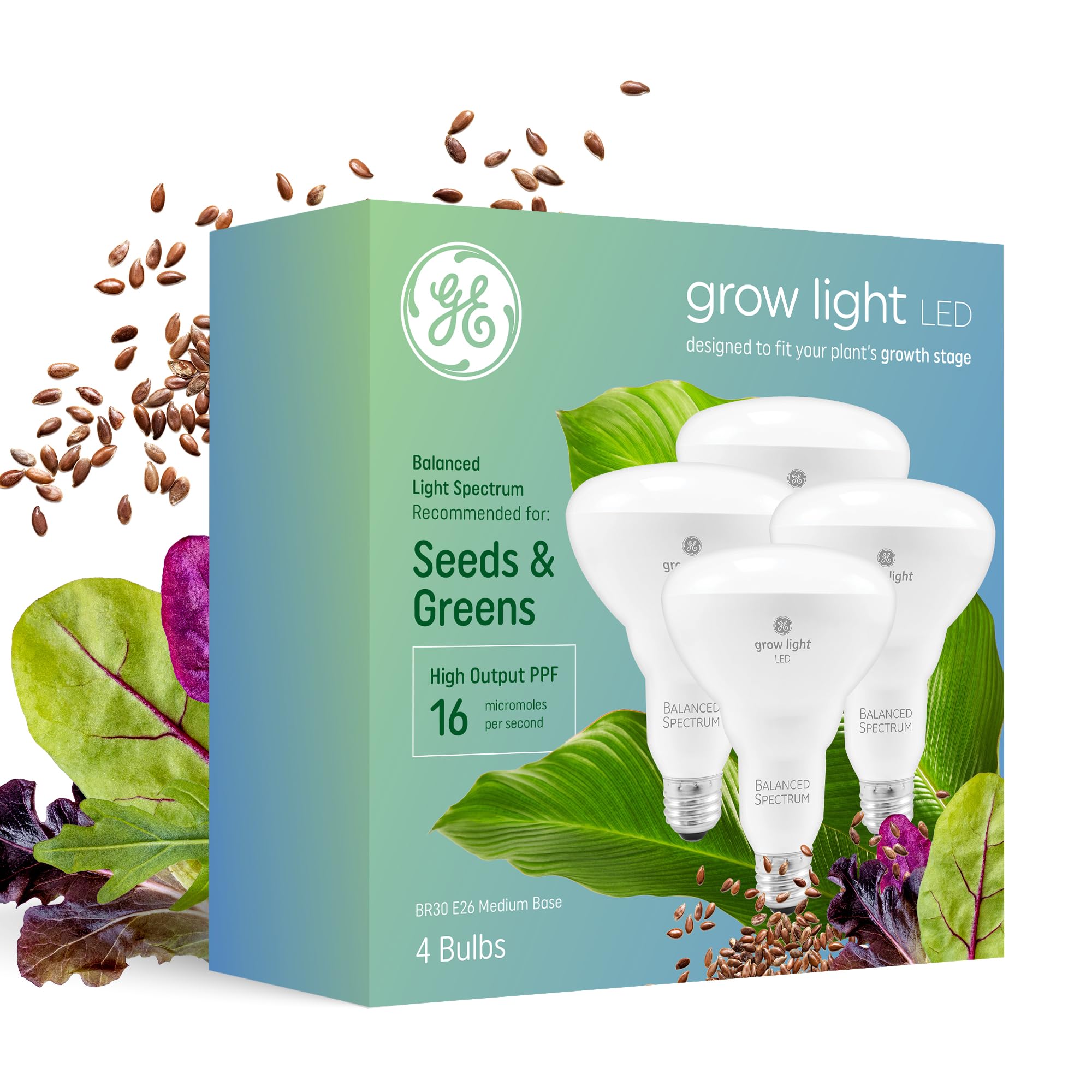
A BR30 LED bulb that gives a natural white appearance while delivering a plant-focused red/blue balance and decent PPF for seedlings and herbs.
Why I picked it: I relied on it when I wanted an unobtrusive bulb that fits standard sockets and gives a natural-looking light.
Best for: People who want an easy bulb swap for table or floor lamps.
Affordable for replacing standard bulbs with full-spectrum output.
Pros
- Fits standard BR30 sockets
- Balanced red/blue spectrum
- Runs cool
- White light for easy plant inspection
Cons
- Limited PPFD for large tents
- No dimming or timer built in
My take
I used the GE BR30 bulbs in a few gooseneck lamps and a floor lamp to supplement low window light, and they immediately improved seedling color and vigor.
The light appears white to my eye, which made it easy to diagnose leaf issues without the harsh purple glow you get from some grow LEDs. Behind that white appearance is a red:blue ratio tuned for chlorophyll and accessory pigments, which I found effective across herbs and leafy greens.
Each bulb is low heat and only draws a few watts, so I left them on long photoperiods for seedlings without worrying about scorching or high temps. The output is best for small clusters or single-shelf setups rather than deep-canopy tent work.
2. Spider Farmer SF1000 100W LED – Best for Small Tents
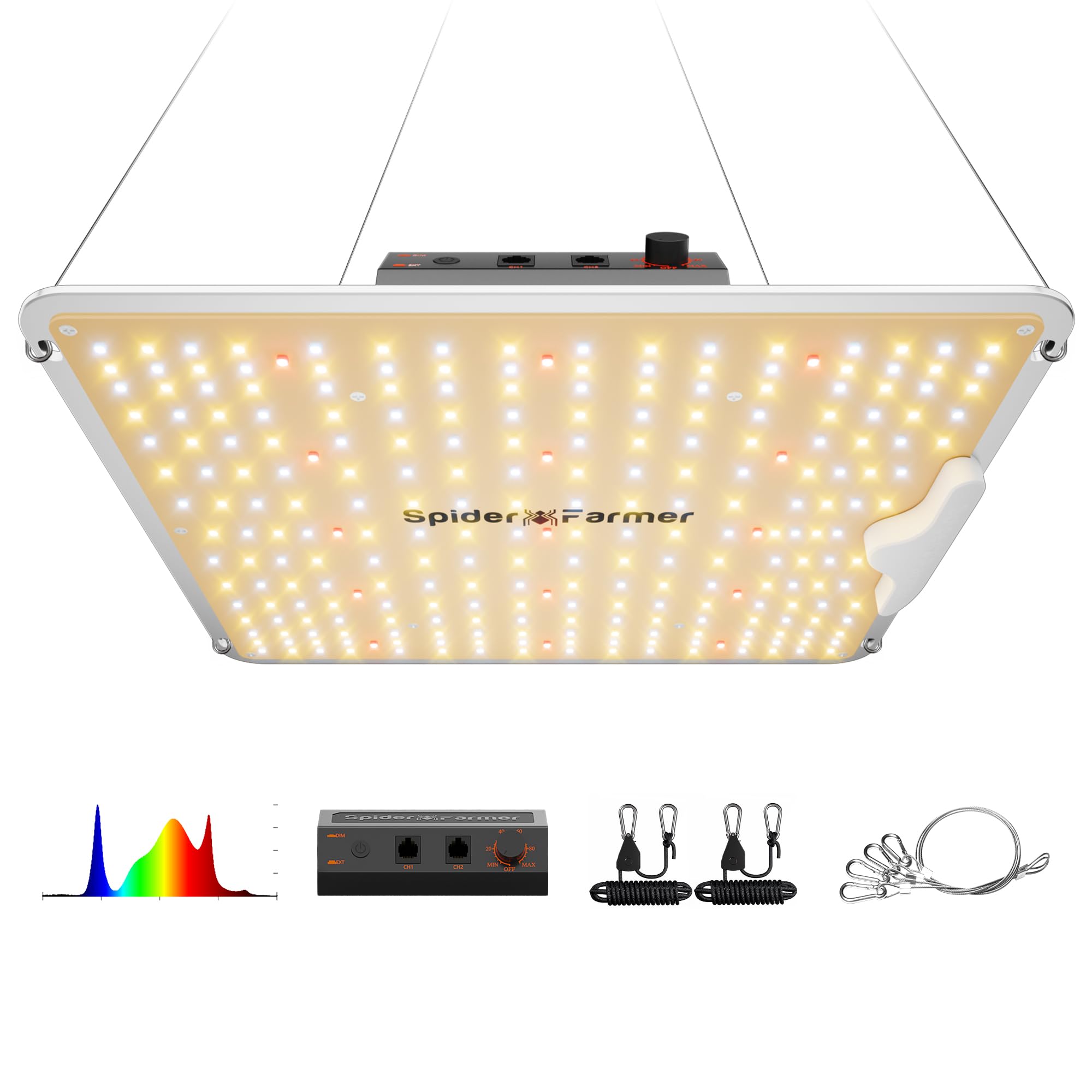
A compact 100W panel with high-efficiency LEDs, a built-in dimmer knob, and a fanless design that I used in 2×2–3×3 tents with strong results.
Why I picked it: I picked it for its high PPE and the convenience of a manual dimmer for seedlings through veg.
Best for: Growers using 2×2 to 3×3 tents who want quiet, powerful light.
Mid-range investment with strong performance per watt.
Pros
- High system efficiency
- Fanless, silent operation
- External dimmer knob
- Full spectrum including IR
Cons
- Smaller footprint for larger canopies
- Edge-mounted diodes can look intense
My take
I ran the SF1000 in a 2×2 tent for early veg and found the light penetrated well and produced compact, stocky seedlings when dialed in lower.
The upgraded LED chips deliver strong blue for root and veg growth, and the dimmer knob made it easy to lower intensity for delicate seedlings without moving the fixture.
Because the unit is fanless it stayed silent in my grow space, and the build quality felt solid enough that I added more units to scale coverage rather than buy larger fixtures.
3. VIPARSPECTRA P700 70W Grow Light – Best for Seedlings on a Budget
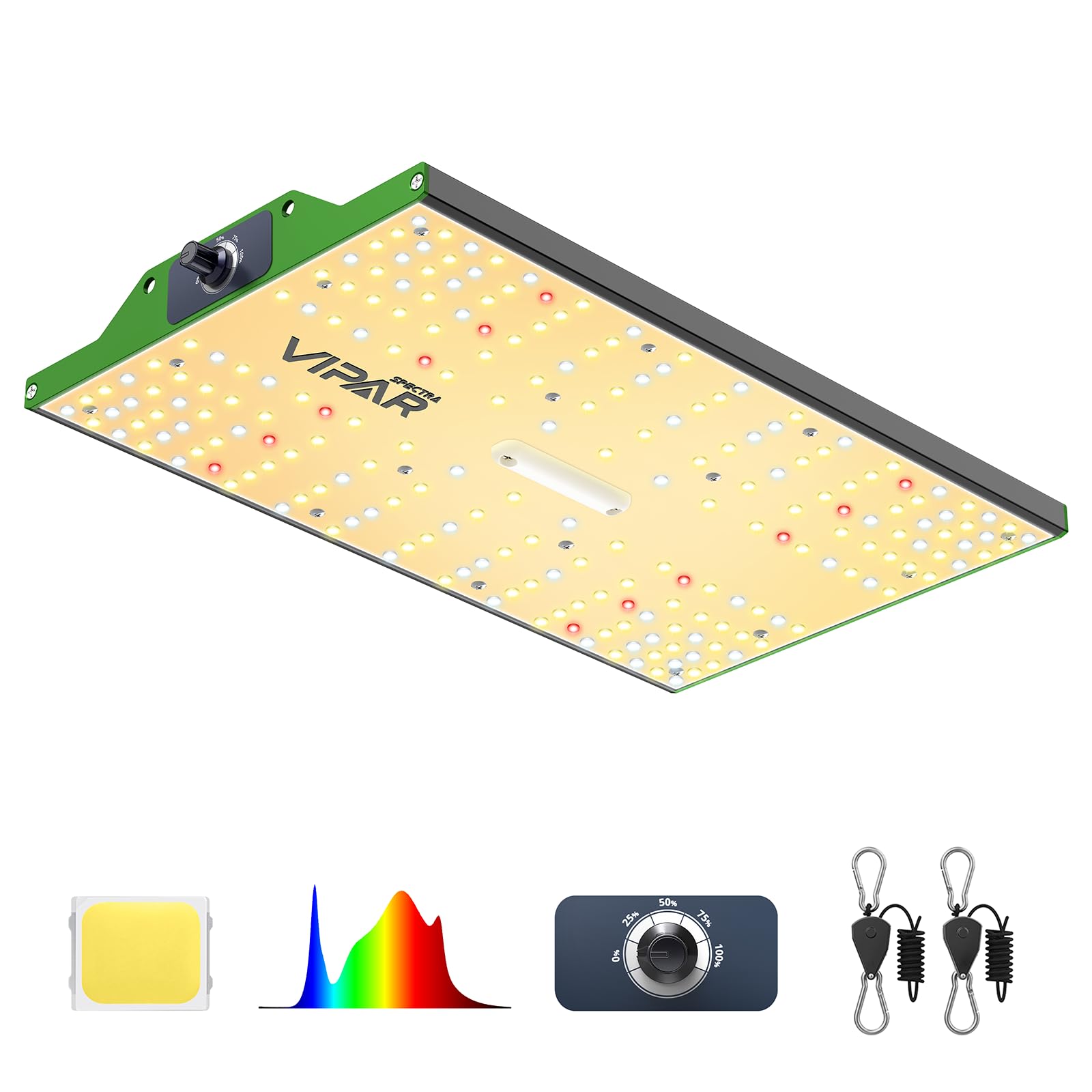
A compact, efficient 70W panel tuned for seedlings and vegetative growth with a 4-level dimmer and fanless heat dissipation.
Why I picked it: I chose it when I needed an efficient, small panel that I could run at low power for delicate starts.
Best for: Seed trays, single-shelf racks, and small 2×2 tents.
Budget-friendly while offering solid lumen and PAR output.
Pros
- Good lumen output for wattage
- Four-step dimmer
- Fanless, low heat
- Balanced red/white spectrum
Cons
- Smaller coverage area
- Build finish varies
My take
I used the P700 over a single seed tray and appreciated how much light it produced for only 70 watts; early seedlings thickened up noticeably within two weeks.
The balanced 3000K/5000K whites plus 660nm red gave me the flexibility to favor veg tones or nudge toward bloom without swapping fixtures.
Heat was minimal thanks to its large aluminum sinks, and the dimmer let me keep seedlings on the gentler settings while running stronger output later in veg.
4. VIPARSPECTRA XS1500 Pro 150W – Best for Uniform Coverage
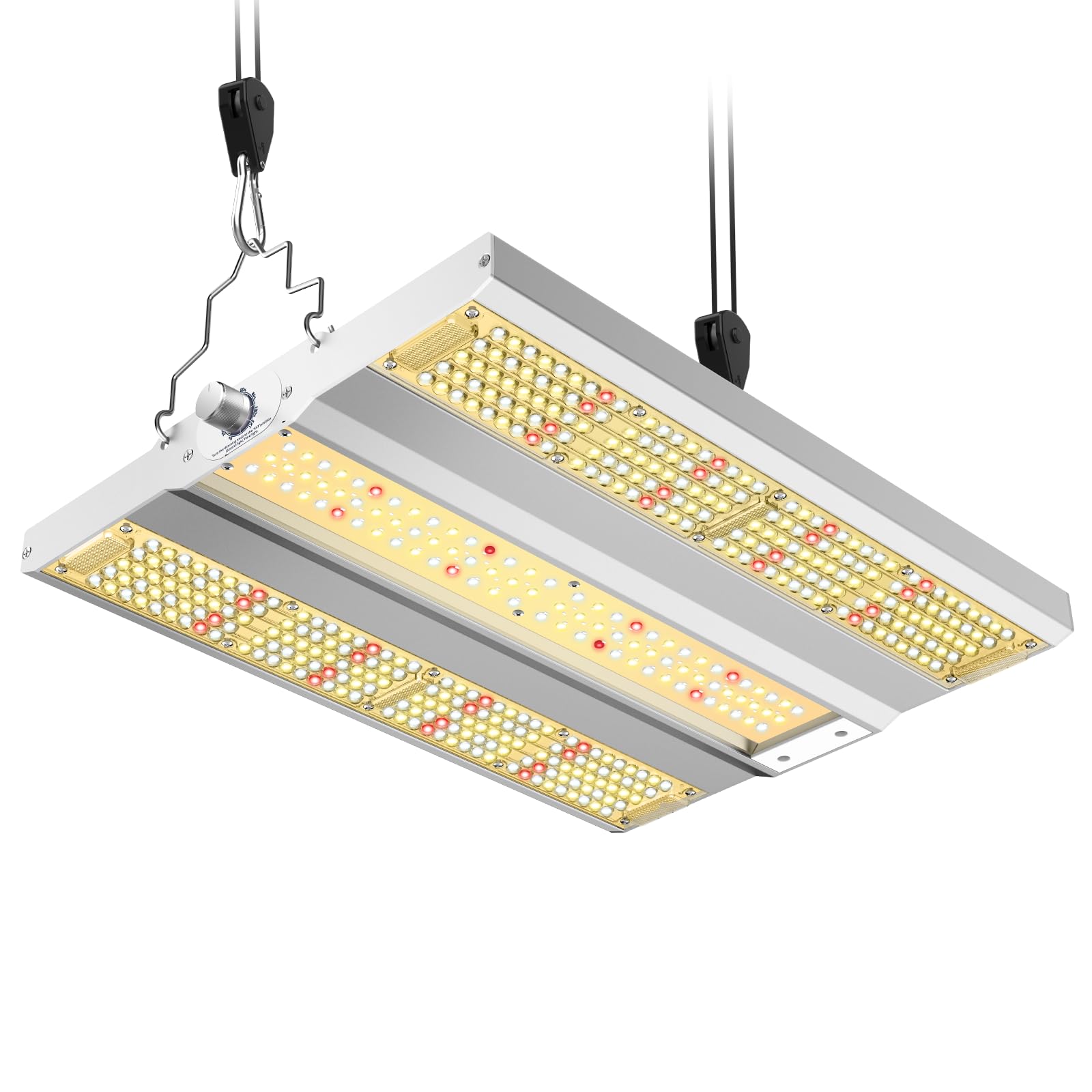
A lens-equipped 150W panel that concentrates light for even PPFD across the canopy, supports daisy-chaining and precise dimming for multi-unit setups.
Why I picked it: I favored it for its optics and daisy-chain dimming when I needed consistent coverage across a 2×2–3×3 area.
Best for: Growers who want even light across trays or small tents.
A solid mid-tier choice with professional features.
Pros
- Optical lenses for uniform PPFD
- Daisy-chain dimming
- Strong PAR for veg
- Efficient heat dissipation
Cons
- Very bright at 100%
- Power cord could be longer
My take
I deployed the XS1500 Pro across a 2×2 bench and immediately noticed fewer hotspots and a more even canopy than with some flat-panel LEDs I’ve used.
The lenses focus light to corners and the dimming/daisy-chain capability made it straightforward to run two panels on a single controller for consistent schedules.
For seedlings I left it at moderate settings; when I cranked it up for veg the PAR numbers supported fuller growth without excessive heat buildup.
5. Kullsinss Faux Woodgrain Halo Grow Lamp – Best for Tall Houseplants
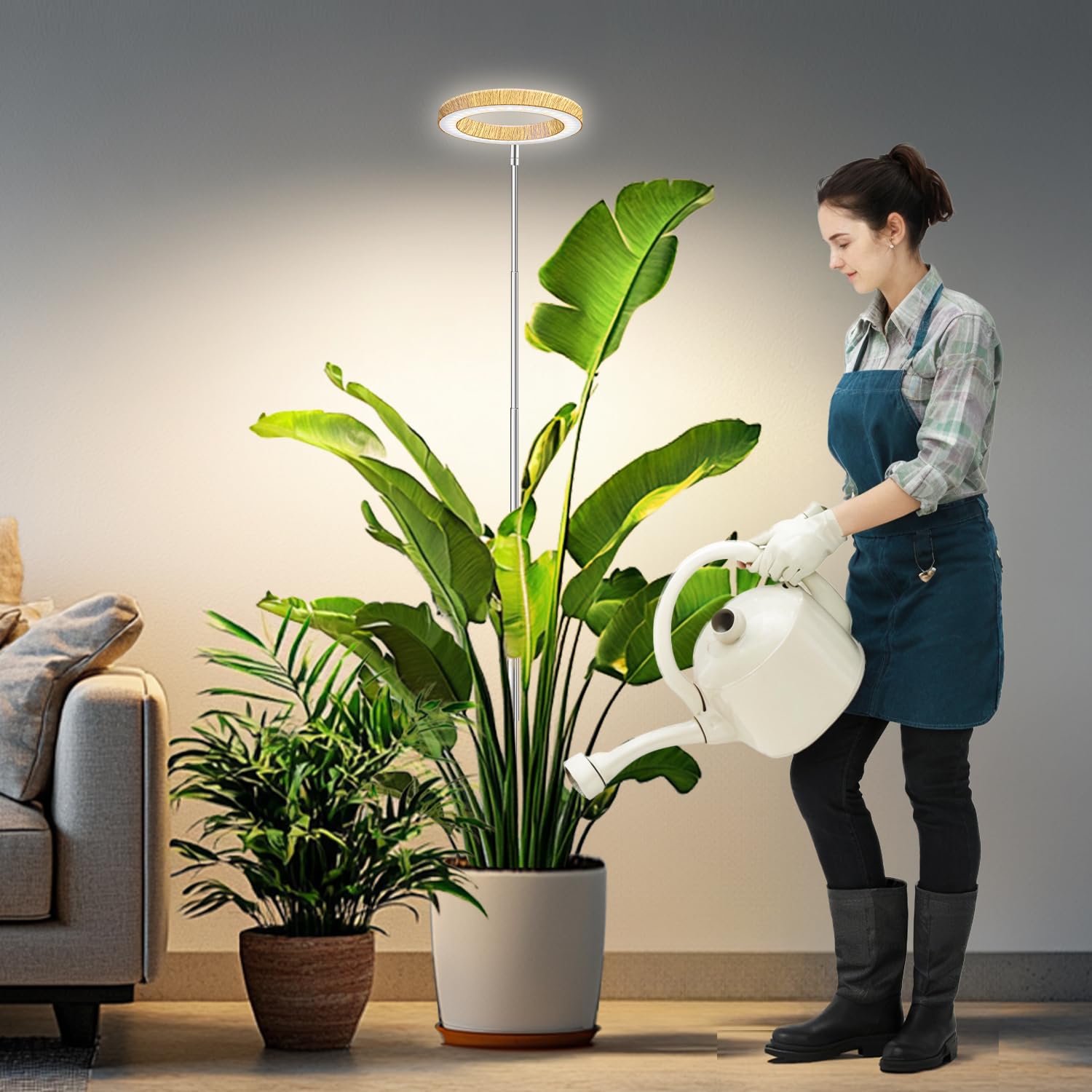
A height-adjustable faux-wood stake lamp that blends with home decor, includes multiple spectra, brightness levels, and timer modes for hands-off lighting.
Why I picked it: I used it when aesthetics mattered and I still needed reliable full-spectrum light for tall or large potted plants.
Best for: Living-room plants, tall specimens, and anyone who wants a decorative grow lamp.
Style-forward and budget-conscious for living spaces.
Pros
- Attractive faux-wood finish
- Height adjusts up to 65 inches
- Multiple spectra and dim levels
- Onboard timer
Cons
- Timer resets on power loss
- Programming quirks to learn
My take
I put the Halo lamp into a tall fiddle-leaf and an overwintering hibiscus, and I liked that it didn’t scream ‘grow light’ in my living room—the faux wood blends in.
The height range and multiple light modes made it easy to tailor intensity as my plants grew, and the timer meant I rarely had to think about schedules.
Be aware that if power is interrupted the timer settings need reprogramming, but otherwise the lamp has been a low-maintenance way to keep large houseplants healthy.
6. AC Infinity IONFRAME EVO3 280W Bar – Best for Serious Growers
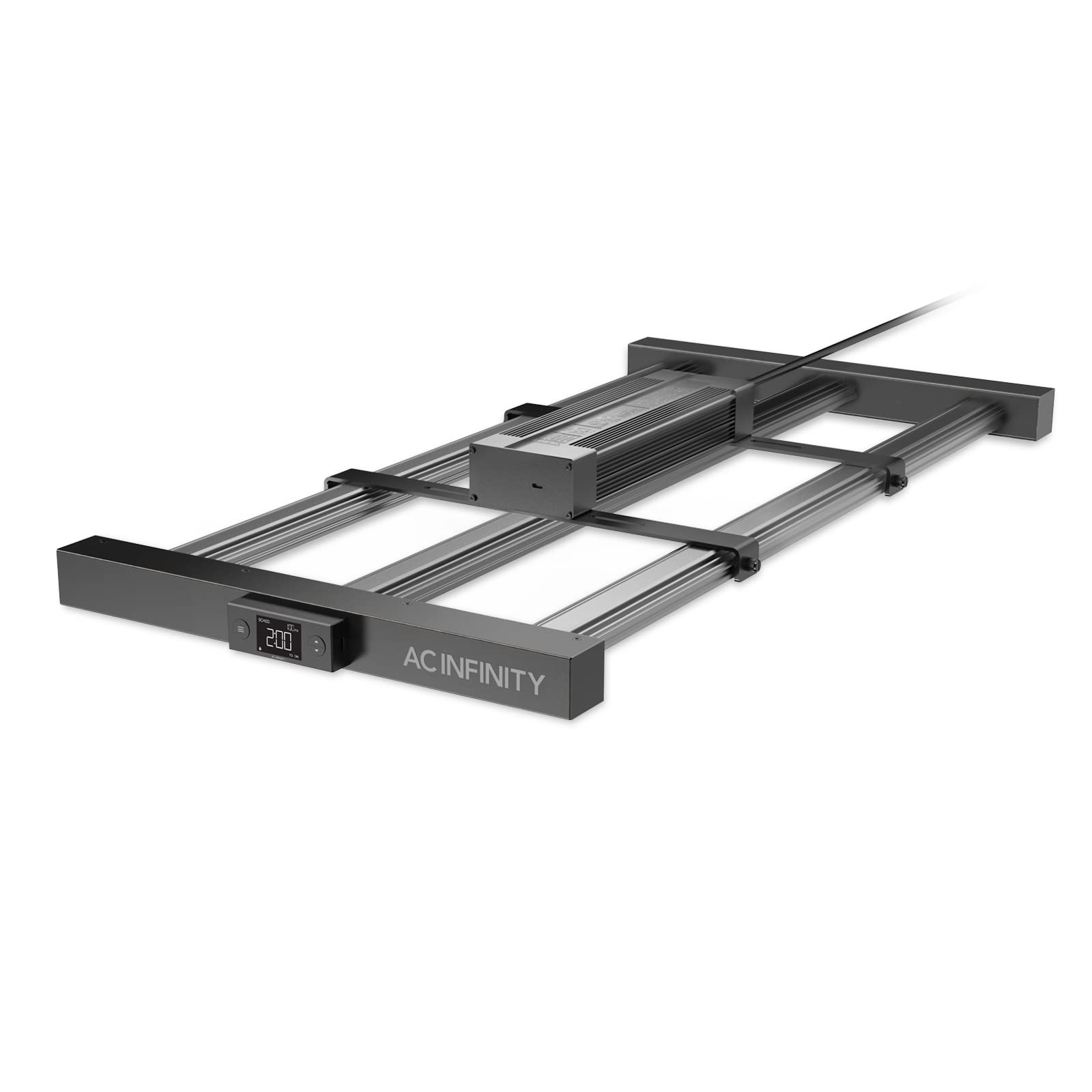
A high-output bar fixture built around Samsung LM301H EVO diodes, with schedule controls, sunrise/sunset dimming, app compatibility, and modular passive cooling.
Why I picked it: I used it when I needed commercial-level efficiency, deep canopy penetration, and advanced scheduling for larger veg areas.
Best for: Grow rooms, multi-shelf racks, and vegging large numbers of seedlings.
A higher-cost, professional-grade investment for heavy use.
Pros
- Top-tier Samsung diodes
- Programmable schedule and dimming
- Even, algorithmic diode spacing
- Removable passive driver
Cons
- Needs good room cooling
- Higher upfront cost
My take
I tested the EVO3 in a larger tent and appreciated the broad, even coverage and deep canopy penetration—it pushed reliable PAR numbers across a 3×5 veg area.
The schedule controller with sunrise/sunset ramps and app support made managing long photoperiods simple, and the removable passive driver gives me options for airflow management.
This unit runs hotter and demands more ventilation than small panels, so I paired it with extra fans in my setup to keep canopy temps ideal.
7. Orchbloom 3-Head Adjustable Grow Light – Best Budget Stand Light
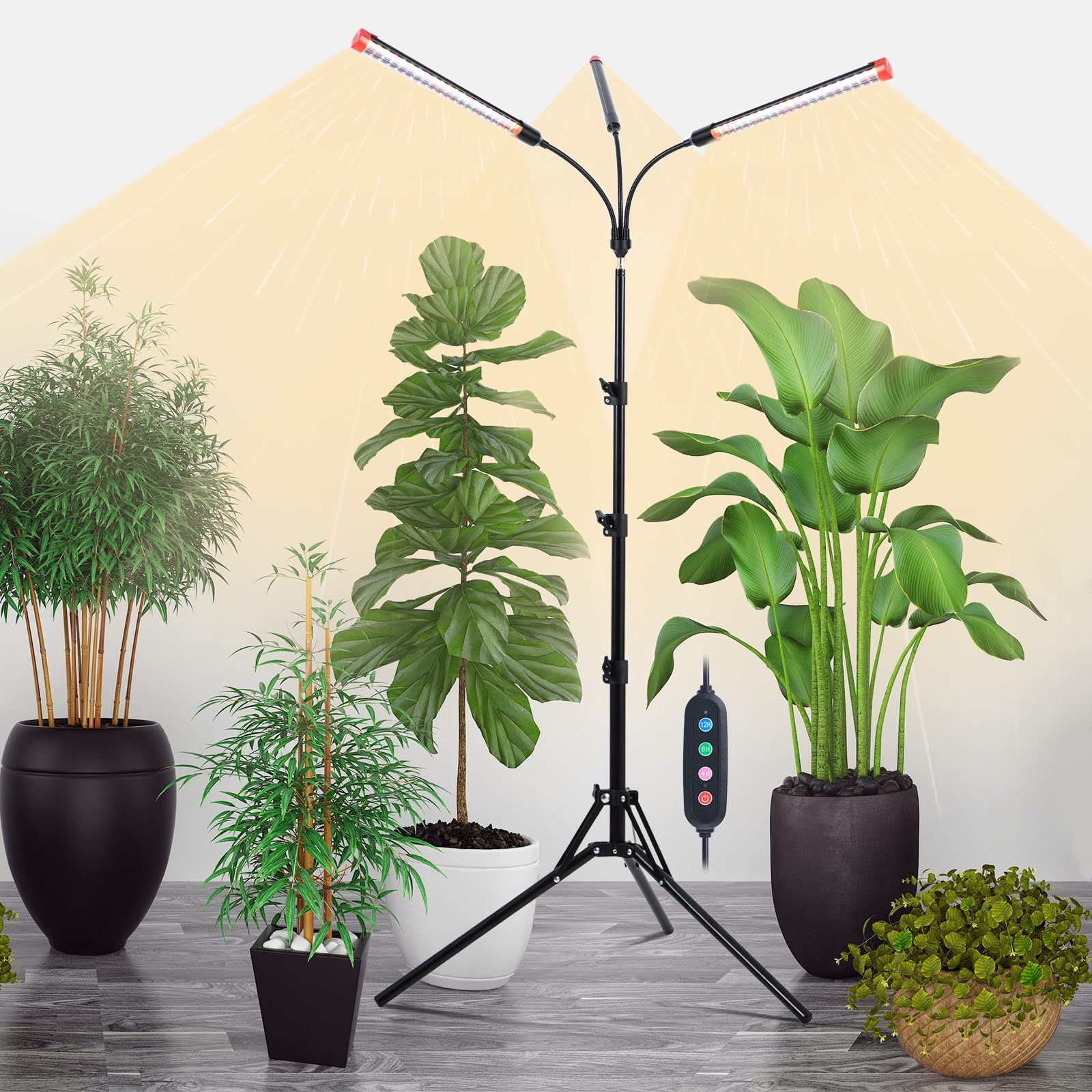
A three-headed lamp on an adjustable stand with multiple timer modes and 360° goosenecks, useful for tall houseplants and corner installations.
Why I picked it: I picked it when I needed flexible coverage for several pots without rigging multiple fixtures.
Best for: Taller floor plants, grouped pots, and multi-pot corners.
Very affordable for multi-head coverage.
Pros
- Three adjustable heads
- Multiple timer modes
- Tall adjustable stand
- Good brightness for the price
Cons
- No fine brightness control
- Height lock can be finicky
My take
I placed the 3-head lamp in a corner with a peace lily, begonia, and a tall fern; the adjustable heads let me aim light where each plant needed it most.
The timer modes were reliable and the stand felt sturdy even at taller heights; when I did push it to the maximum height I had to check the locking mechanism more often.
For the price the lamp delivered honest, useful light that replaced multiple single-head fixtures in my living space.
8. SANSI Clip-On Pot Grow Light (4-Pack) – Best for Single Pots & Desks
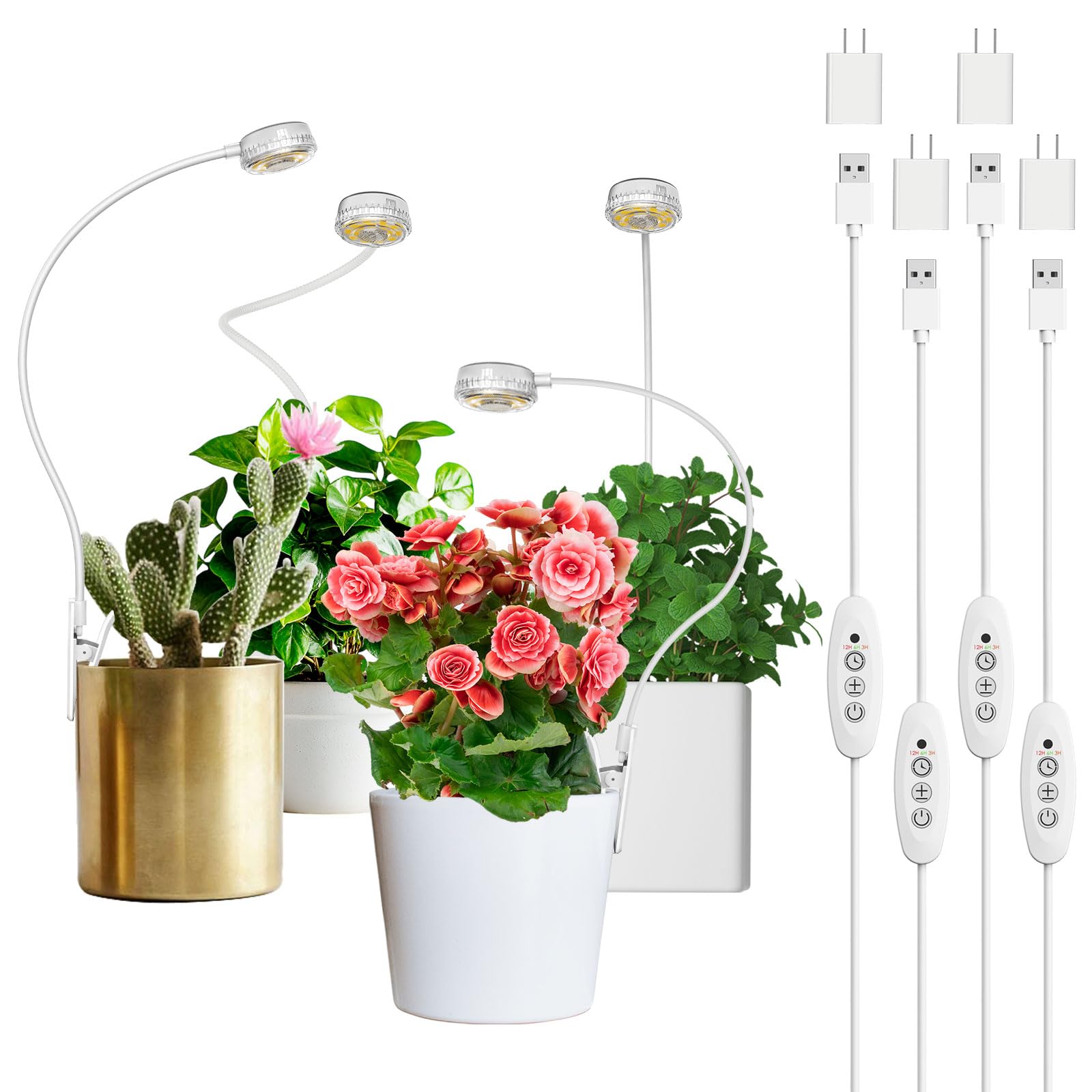
Small ETL-listed clip lights with a neutral 4000K tone, multiple dim levels, and reliable clip/gooseneck mounting for desktop and pot use.
Why I picked it: I used these when I needed targeted light for individual pots or compact displays.
Best for: Succulents, small potted herbs, desktops, and windowsills.
Good value for compact, low-voltage clip lights.
Pros
- Compact and lightweight
- 4 dim levels
- 3/6/12hr timer cycles
- USB/5V low-voltage power
Cons
- Clip jaw isn’t deep on every pot
- Limited high-output range
My take
I clipped these on a mix of African violets and succulents and liked how unobtrusive they are; the neutral white color looks natural on a shelf.
The built-in timer cycles and four brightness steps made it easy to set-and-forget lighting for vacation or busy weeks.
Because they run on low-voltage USB power I sometimes powered them from a power bank for temporary displays, which was handy.
How I Choose Grow Lights for Seedlings
Spectrum and Plant Stage
I prioritize a balanced full spectrum for seedlings—strong blue for compact growth and a healthy mix of red for early development.
For seed starting I generally run lights with cooler whites (5000K-ish) or full-spectrum outputs and dial in more red later as plants shift toward bloom.
- Seedlings: favor blue-rich or full-spectrum with moderate intensity
- Veg: maintain blue/white balance and increase intensity
- Bloom: introduce more red wavelengths if flowering
Coverage, PAR and Wattage
I look at PAR/PPFD figures or manufacturer PPE when available; watts alone don’t tell the whole story, but they do indicate energy use.
Match the fixture to your canopy: small bulbs and clip lights for single pots, 70–150W panels for 2×2 benches, and 200W+ bars for multi-shelf or larger tents.
- Small pots: clip lights or BR30 bulbs
- 2×2 tents: 70–150W panels
- Multi-shelf or 4×4: higher-watt bars and daisy-chain options
Heat, Noise, and Ventilation
I always check whether a fixture is fanless; fanless panels run silent but need good passive cooling, while high-output bars often require tent ventilation.
If a fixture runs hot in my space I pair it with additional fans or lower intensity settings to keep canopy temperatures safe.
- Fanless = silent, needs heatsink surface area
- Active cooling = more airflow, possible noise
- Plan ventilation for bars and 200W+ fixtures
Controls, Timers, and Dimming
I value hardware timers or built-in dimming because they remove guesswork; app control is a plus if you want scheduled ramps and remote adjustments.
For seedlings I typically run 14–18 hour photoperiods and use dimming to reduce intensity while plants are small.
- Built-in timers for simplicity
- Dimming for flexibility through life stages
- App/scheduler for multi-light sync
Fit and Installation
I measure my shelf/tent and consider fixture footprint: panels and bars have recommended coverage, bulbs and clips are more forgiving but offer smaller effective areas.
Think about mounting: clamps, hangers, stakes, or standard lamp sockets all change how and where a fixture can be used.
- Measure canopy area first
- Choose mount type that fits your space
- Consider cord length and placement
Frequently Asked Questions
How many hours should I run grow lights for seedlings?
I usually run lights 14–18 hours per day for seedlings. I favor uninterrupted daily schedules and use timers to maintain consistency; dimming helps shorten photoperiod stress when needed.
Can I use a BR30 bulb in a regular lamp for seedlings?
Yes—I used BR30-style grow bulbs in standard floor and desk lamps. They give a natural-looking white light and are great for small groups of seedlings, though they won’t replace a panel for tent work.
Do I need extra fans for high-output bar fixtures?
I do add fans when running bar-style, high-watt fixtures because they push more PAR and tend to generate higher ambient heat. Proper ventilation keeps canopy temps stable and prevents heat stress.
Final Take
I selected these lights to cover common seed-starting setups: lamp swaps, small panels for tents, compact bars for racks, and clip/stand options for single pots.
If you want simple, plug-and-play lighting for a few trays, start with the GE BR30 or a clip-on; if you’re working inside a tent or scaling up, choose a panel or bar with dimming and scheduling.
No matter the route, I recommend pairing the light with sensible ventilation and a timer so your seedlings get consistent, healthy hours of light.
